
Central Bank of Iraq, Baghdad, Iraq

Structure as Architectural Identity
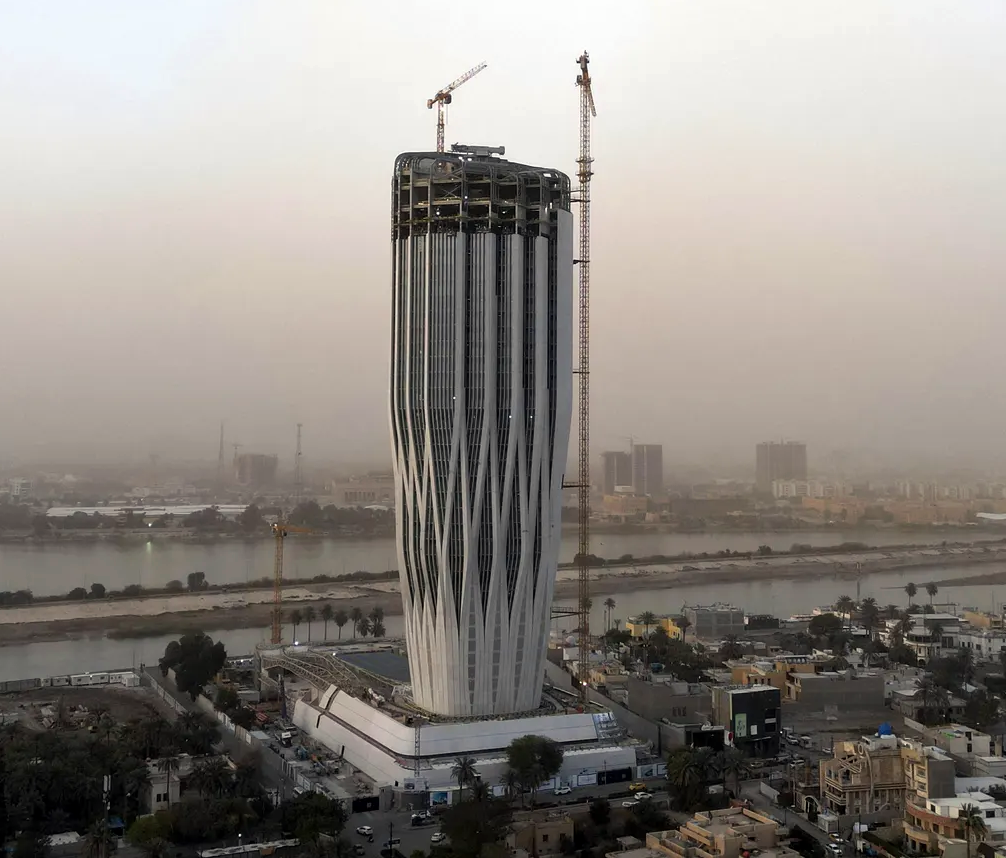
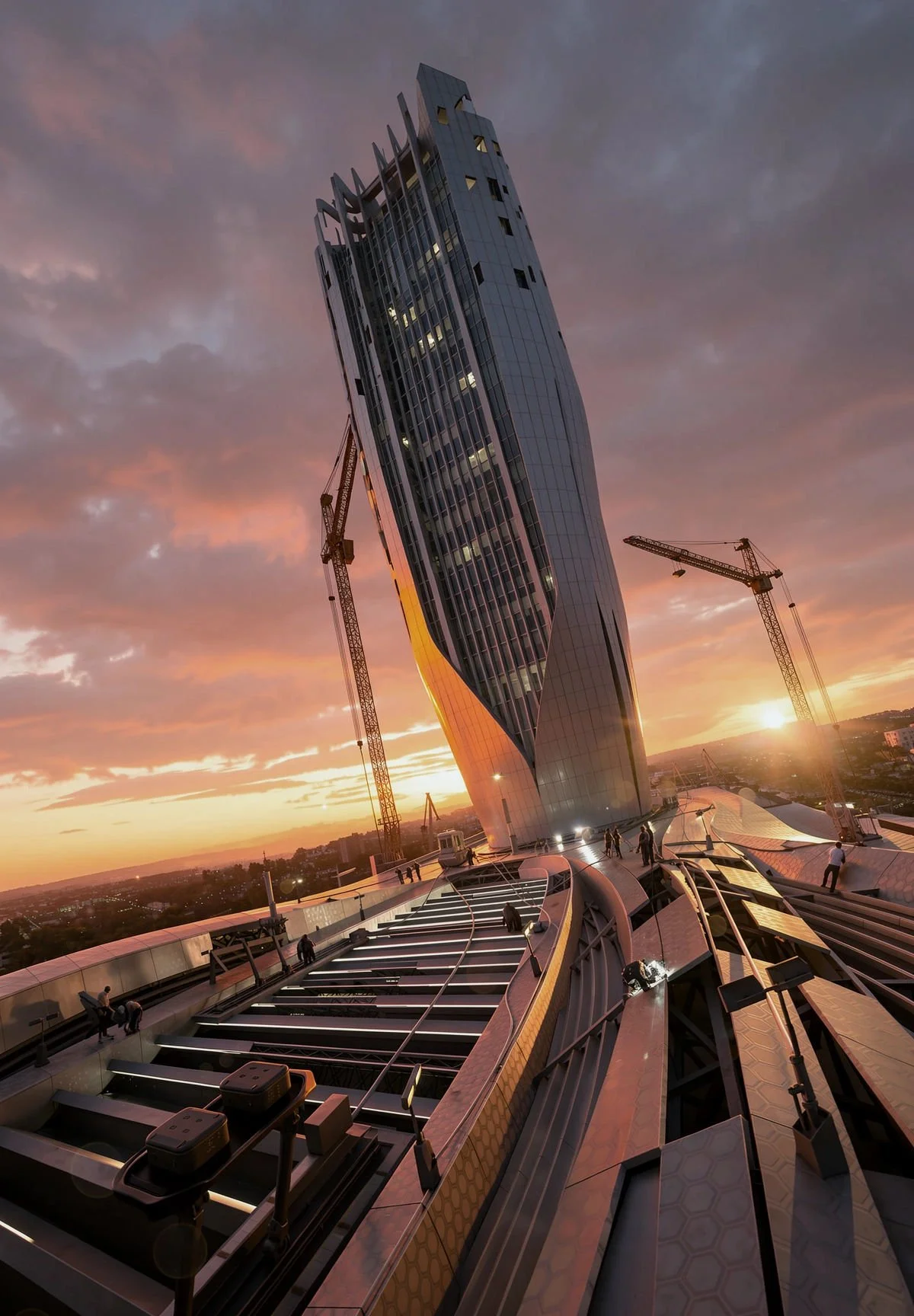
The headquarters of the Central Bank of Iraq comprises a podium and tower rising approximately 170 metres above the city of Baghdad, providing around 90,000 square metres of accommodation. Designed by Zaha Hadid Architects and constructed by DAAX Construction, the building establishes a distinctive presence within the skyline through the integration of structure, enclosure and environmental performance.
Newtecnic was responsible for the façade design engineering during detailed design and construction documentation, developing the building envelope in close coordination with the structural system.
The project demonstrates how architectural identity can emerge directly from structural organisation. Rather than applying a façade to an independent tower, the building uses its structural framework to generate architectural expression, environmental control and spatial character simultaneously.
Beyond the Conventional Curtain Wall
In many tall buildings, structure and façade operate as separate systems. The structural frame carries loads while the façade functions as an independent environmental enclosure attached to the outside of the building.
This separation has become one of the defining characteristics of contemporary high-rise construction. Structural systems are often concealed behind glazing, while façades operate as independent layers responsible for weather protection and environmental control.
The Central Bank of Iraq adopts a different approach.
The structural exoskeleton is not concealed behind the envelope. Instead, it becomes the primary architectural element through which the building is perceived. Structure, enclosure and environmental moderation operate together as parts of a single architectural system.
The project therefore returns to a long architectural tradition in which structure contributes directly to architectural identity while simultaneously addressing environmental performance.
The Exoskeleton as Organising Framework
The most distinctive feature of the tower is its external structural frame.
This exoskeleton wraps the building and establishes the primary visual order of the façade. Rather than functioning solely as a structural device, it organises the relationship between solid and void, light and shadow, transparency and enclosure.
The pattern of structural members creates a varying density across the building envelope. Areas of greater structural concentration provide increased solar protection and visual solidity, while more open areas allow greater daylight penetration and outward views.
The exoskeleton therefore operates simultaneously as structure, environmental filter and architectural expression.
Its significance lies not simply in its appearance but in the way multiple architectural functions are combined within a single system.
Structure and Climate
Baghdad presents demanding environmental conditions for high-rise construction. Intense solar radiation, high temperatures and significant seasonal variation place considerable demands on building envelopes.
The structural frame contributes directly to the environmental performance of the building by providing depth across the façade surface. This depth creates areas of shade that reduce direct solar exposure and moderate heat gain before sunlight reaches the primary enclosure behind.
Unlike applied shading systems, the environmental performance is embedded within the architectural organisation of the building itself.
The structural system therefore performs more than one task. It carries load, controls solar exposure and contributes to the visual identity of the tower simultaneously.
This integration reflects a broader principle of architectural design in which individual systems are expected to perform multiple roles rather than operate independently.
Vertical Transformation
One of the most important characteristics of the tower is the gradual transformation of the exoskeleton as it rises.
At lower levels the structural frame appears denser and more substantial. Higher in the tower, the pattern progressively opens and becomes lighter, increasing transparency and visual permeability.
This variation serves several purposes.
Structurally, it reflects changing requirements as loads reduce towards the top of the building. Environmentally, it modifies the relationship between shading, daylight and views. Architecturally, it introduces a sense of vertical progression that reinforces the tower's scale and proportion.
The building therefore avoids the uniform repetition often associated with tall buildings. Instead, the architectural language evolves across the height of the tower in response to changing structural and environmental conditions.
Façade Engineering as Coordination
The development of the façade required close coordination between architectural geometry, structural engineering and environmental performance.
Because the structural frame forms such a prominent part of the building envelope, the interface between structure and enclosure became a critical area of design development. Connections, movement joints, waterproofing systems and maintenance strategies all needed to be resolved without compromising the architectural clarity of the exoskeleton.
The role of façade engineering was therefore not limited to designing the enclosure itself. It involved coordinating multiple systems so that structure and façade could operate together as a coherent whole.
This process illustrates the increasingly interdisciplinary nature of contemporary architectural practice, where successful buildings emerge through collaboration between architectural and engineering disciplines rather than through sequential design processes.
Construction and Realisation
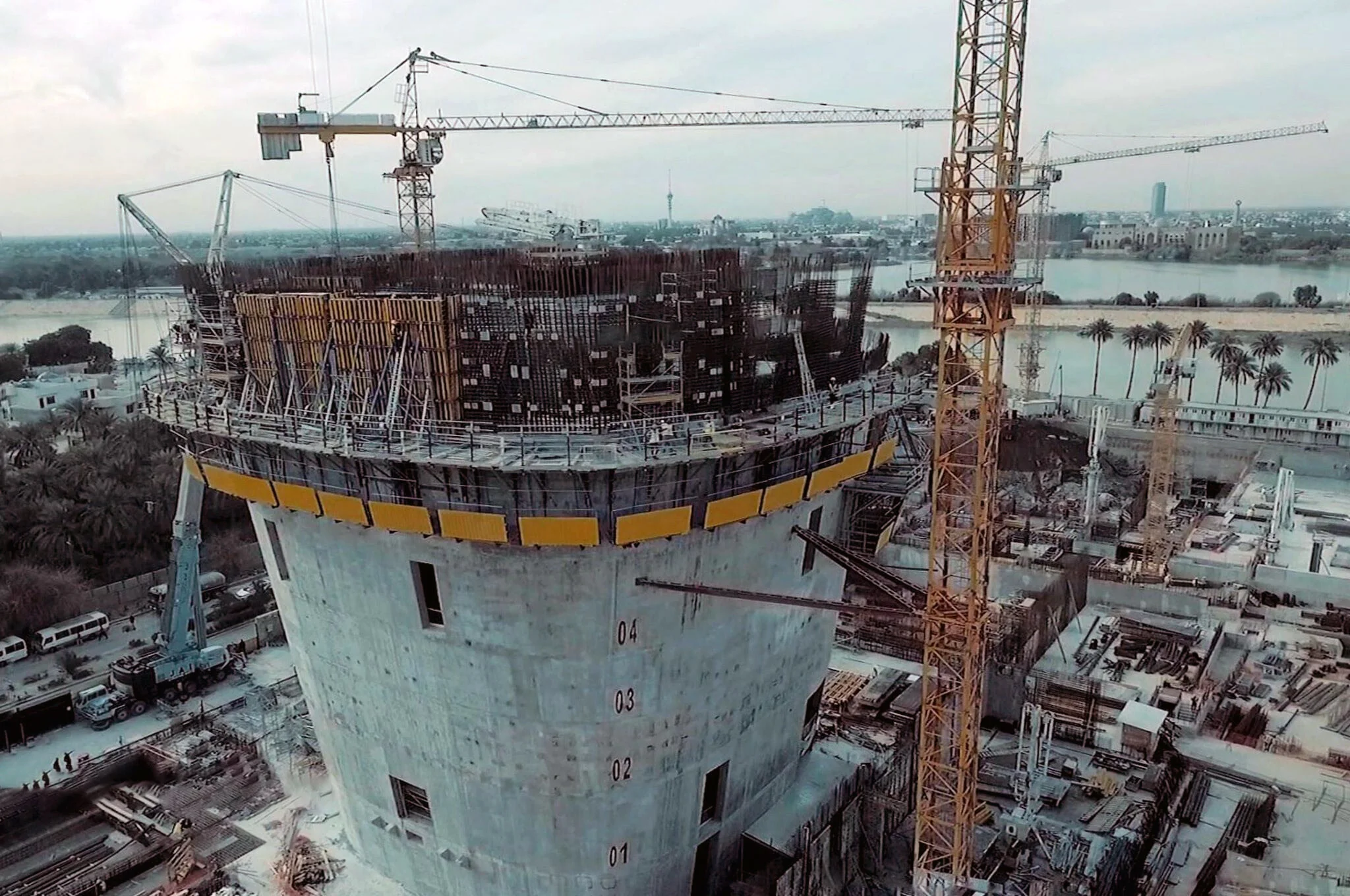
Projects that integrate structure and façade so closely require careful consideration of construction methodology.
The exoskeleton and enclosure must be coordinated from the earliest stages of design to ensure that tolerances, movement requirements and installation sequences remain compatible. Structural performance, fabrication constraints and maintenance access all influence the development of the architectural form.
The project therefore demonstrates that architectural expression is not independent of construction logic. The appearance of the building emerges directly from the way its systems are organised, fabricated and assembled.
Architecture becomes the visible consequence of coordinated technical decisions.
The Relationship Between Structure and Enclosure
Historically, some of the most significant developments in architecture have occurred when structure and enclosure are conceived together rather than separately.
The Central Bank of Iraq continues this lineage by demonstrating how structural systems can contribute simultaneously to environmental performance and architectural character.
The exoskeleton is not an applied motif or decorative layer. It is an active participant in the performance of the building. Its geometry influences daylight, shading, views and perception while contributing to the structural stability of the tower.
This integration produces a level of coherence that would be difficult to achieve through independent systems.
Project Significance
The Central Bank of Iraq demonstrates how architecture can emerge through the integration of structural and environmental performance rather than through the application of form alone. The project shows that structure can operate simultaneously as load-bearing framework, environmental moderator and architectural expression.
Through the close coordination of façade engineering, structural design and architectural intent, the building establishes a coherent relationship between appearance and performance. The resulting tower is significant not simply because of its height or visual presence, but because it illustrates how multiple technical requirements can be unified within a single architectural system.
More broadly, the project demonstrates an enduring principle of architectural design: the most powerful forms often emerge when structure, environment and enclosure are developed together as parts of an integrated whole rather than as separate disciplines.