
International Terminal, Houston, TX, USA
Further information and case study for this project can be found at the De Gruyter Birkhäuser Modern Construction Online database
The following architectural case study is not available at Modern Construction Online
Houston International Airport Terminal — Structured Flow and Civic Space
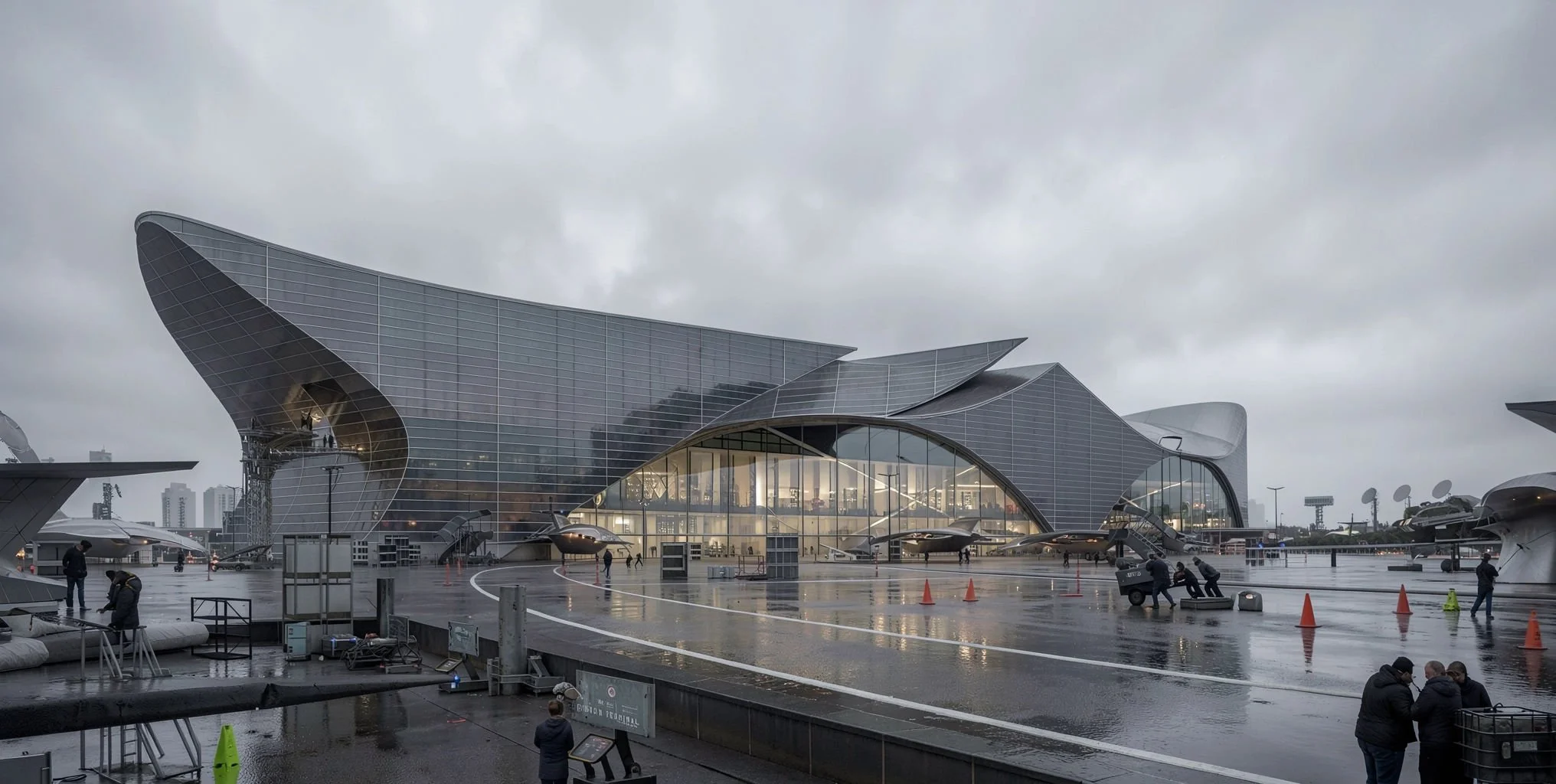
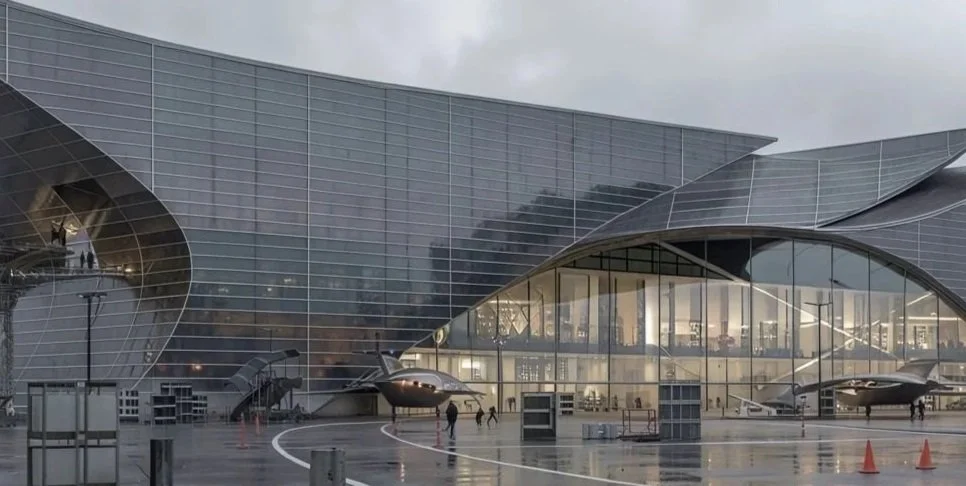
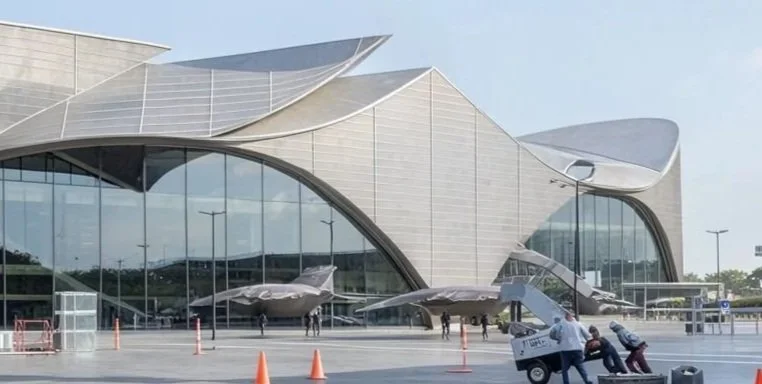
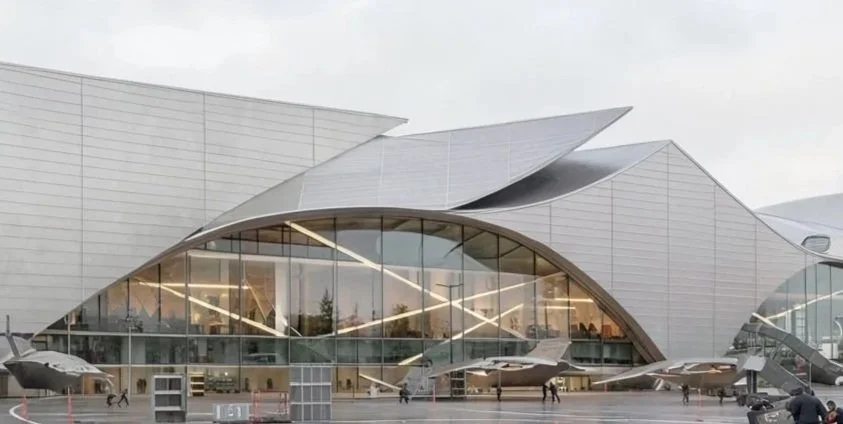
This project reimagines the airport terminal as both a highly efficient piece of transport infrastructure and a significant public building. Designed and engineered by Newtecnic, the terminal combines clear passenger movement, environmental performance and architectural identity within a unified and adaptable framework.
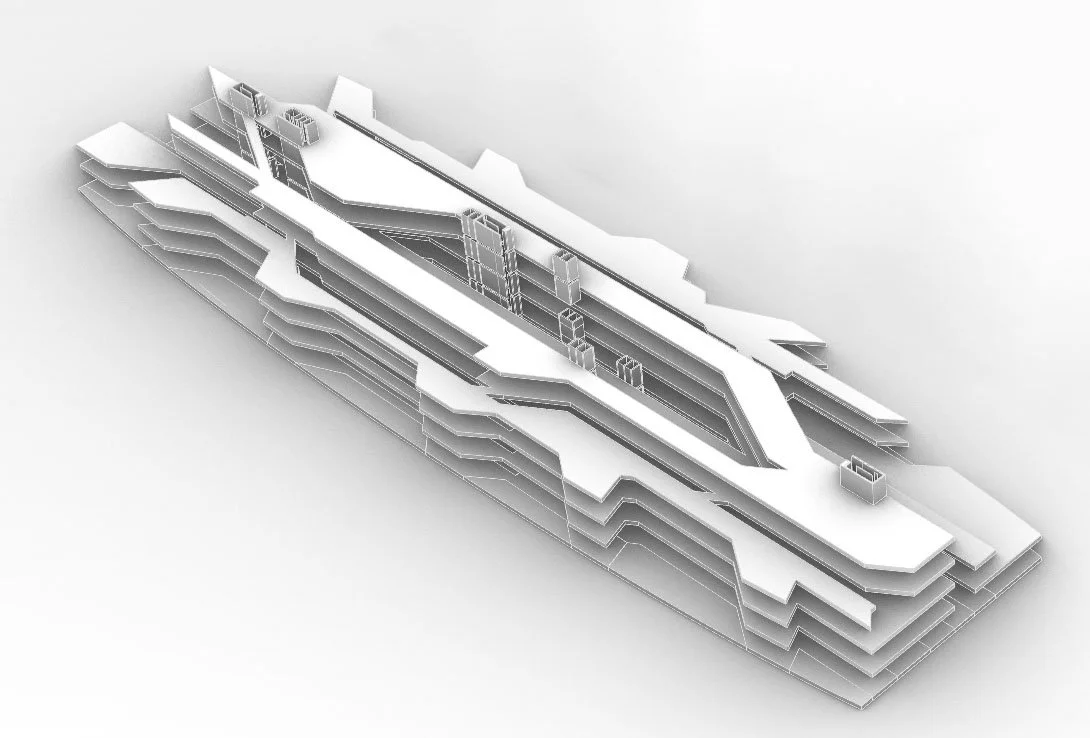
The design is organised around the principle of structured flow. Passenger journeys are arranged through a clear sequence of arrival, processing, waiting and departure spaces that simplify movement while maintaining a strong sense of orientation. Rather than treating circulation as a purely operational requirement, the architecture uses space, structure and light to create an intuitive and engaging experience for travellers.
A central ambition of the project is to transform infrastructure into civic space. Airport terminals are often experienced as complex and stressful environments. This design seeks clarity, openness and legibility, creating generous public spaces that support movement while providing moments of pause, gathering and orientation. The building becomes both a transport facility and a public environment.
The terminal is organised vertically, with infrastructure and servicing located below ground, passenger processing and public facilities at ground level, and departure lounges elevated above. This arrangement creates operational efficiency while maintaining clear relationships between different functions and simplifying future adaptation.
Structure plays a significant role in defining the character of the building. Large-span structural systems create open and flexible interiors capable of accommodating changing operational requirements over time. Structural elements contribute directly to the architectural expression of the terminal, establishing rhythm, scale and spatial order throughout the building.
The building envelope is developed as an integrated environmental system. Glazing, shading devices and opaque façade elements work together to moderate solar gain, control daylight and improve energy performance while maintaining visual connections to the surrounding airfield and landscape. Environmental performance is therefore embedded within the architecture rather than treated as a separate technical layer.
Natural light is introduced throughout the terminal to improve orientation and create a more comfortable passenger experience. Carefully controlled daylight reduces reliance on artificial lighting while reinforcing the clarity of circulation routes and public spaces. Light, structure and enclosure operate together to shape the atmosphere of the building.
Adaptability is fundamental to the design. The terminal is planned to accommodate future changes in operational requirements, airline demands and passenger volumes. Structure, servicing systems and the building envelope are organised to support modification and expansion without requiring major disruption to ongoing operations. Flexibility is therefore understood as a long-term architectural strategy rather than a short-term technical solution.
Architecture, engineering and construction are developed as interconnected systems throughout the project. Structural, environmental and enclosure strategies are coordinated from the outset, allowing performance requirements and architectural ambitions to evolve together. The resulting building achieves efficiency through integration rather than through the addition of separate technical solutions.
The project demonstrates how contemporary infrastructure can move beyond pure utility. By combining operational clarity, environmental performance and architectural coherence, the terminal creates a public building that supports movement, orientation and civic identity while remaining capable of adapting to future demands.
The result is an airport terminal whose character emerges from the coordinated integration of space, structure, environment and construction. Infrastructure becomes architecture, and architecture becomes an integral part of the experience of travel.