
Western Metro Station, Riyadh, Saudi Arabia
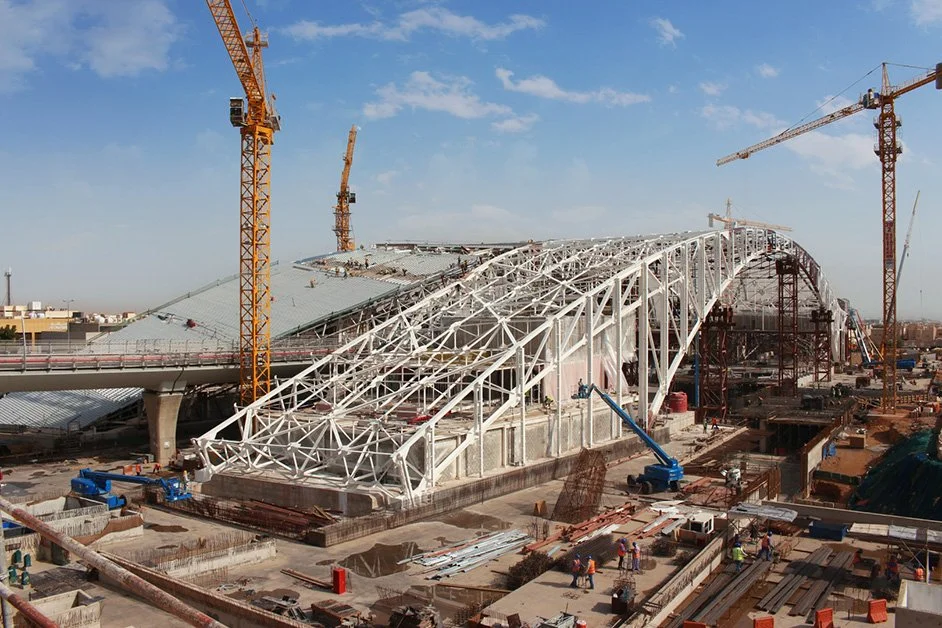
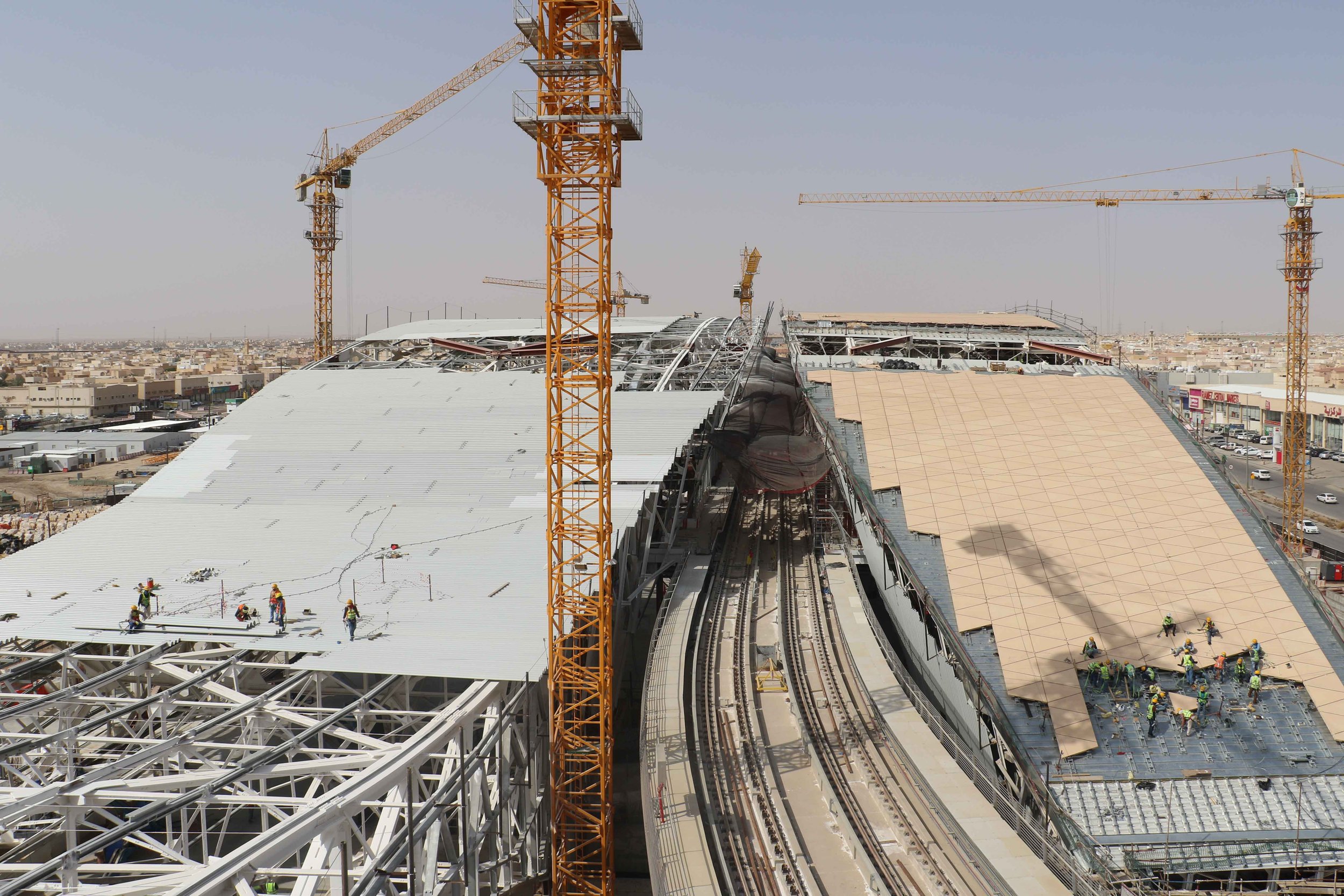
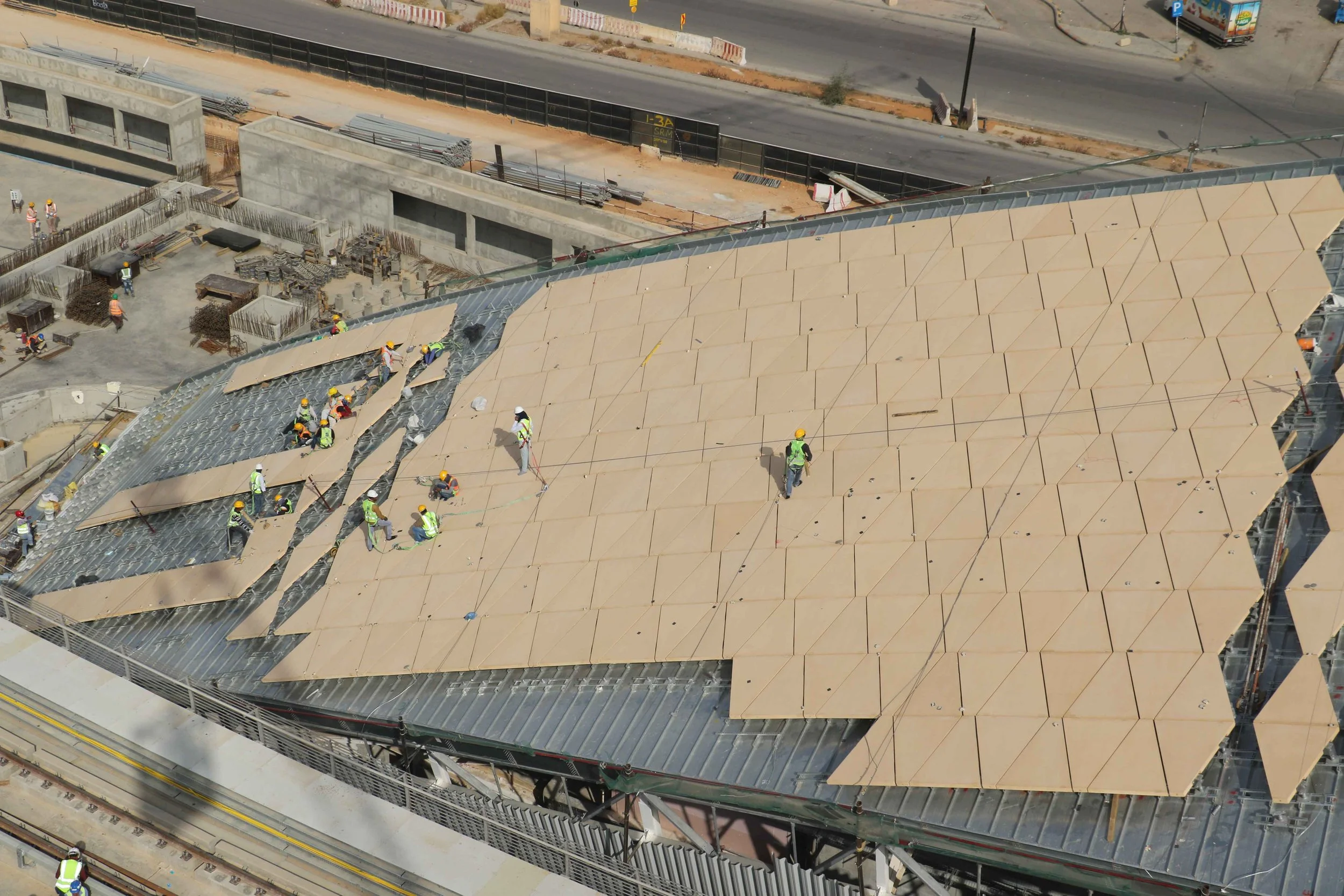
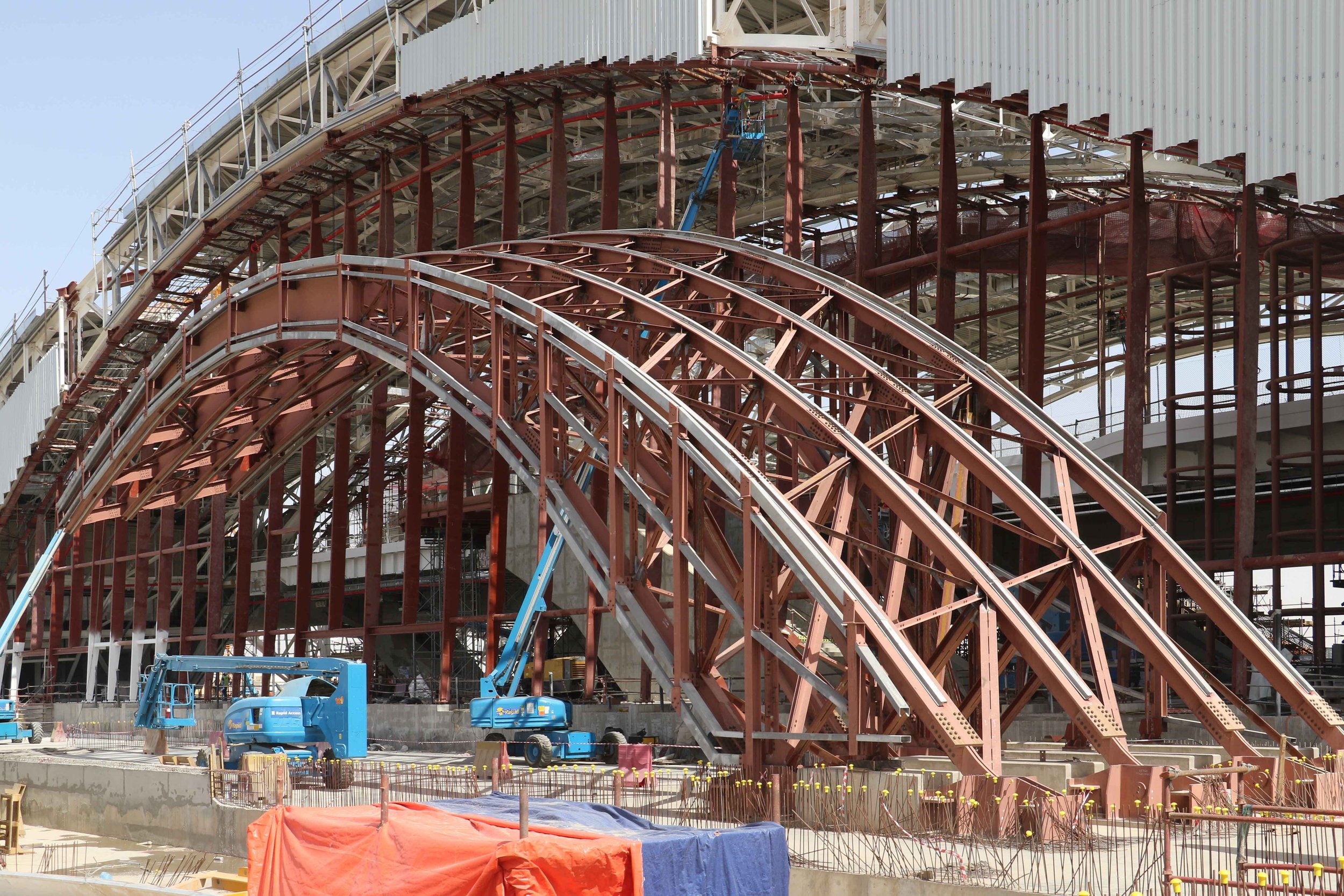
Further information and case study for this project can be found at the De Gruyter Birkhäuser Modern Construction Online database
The following text is not available at Modern Construction Online
Infrastructure as Civic Architecture
The Western Metro Station forms part of the Riyadh Metro network, one of the largest urban transport infrastructure projects undertaken in the Middle East. Beyond its role as a transport interchange, the station contributes to the transformation of public mobility within Riyadh and represents a significant investment in the civic infrastructure of the city.
Newtecnic provided façade engineering for the project, developing an envelope system that integrates environmental performance, architectural identity and contemporary construction technology within a single coordinated strategy.
The project demonstrates how major infrastructure can move beyond purely functional requirements to become a form of civic architecture, where environmental performance and public identity are developed together rather than independently.
The Façade as Environmental Filter
In hot desert climates, the building envelope performs a critical environmental role. Direct solar radiation, high ambient temperatures and intense daylight conditions place considerable demands upon public buildings, particularly those occupied continuously throughout the day.
Rather than treating the façade as a simple weather barrier, the Western Metro Station develops the envelope as a filtering system positioned between the external environment and the occupied interior.
The façade moderates sunlight, controls heat gain and shapes visual experience simultaneously. Environmental performance is therefore embedded within the architectural organisation of the building rather than being dependent solely upon mechanical systems.
This approach establishes the envelope as an active environmental device rather than a passive enclosure.
Reinterpreting the Mashrabiya
The architectural strategy draws upon a long tradition of environmental moderation found throughout the architecture of the Middle East.
Historically, screens, latticework and shading devices were used to regulate sunlight, improve comfort and create privacy while maintaining visual and environmental connection with the surrounding city. These systems were often highly sophisticated climatic devices despite their apparent simplicity.
The Western Metro Station reinterprets these principles through contemporary materials, fabrication technologies and performance analysis. The perforated aluminium screen is not a reproduction of traditional forms but an evolution of their underlying environmental logic.
The project demonstrates how architectural continuity can emerge through the adaptation of principles rather than the replication of historic images.
Light, Shadow and Public Space
One of the most significant qualities of the façade is its ability to transform daylight into a spatial material.
As sunlight passes through the perforated screens, patterns of light and shadow move across circulation spaces, waiting areas and public concourses throughout the day. The envelope therefore influences not only environmental performance but also the character of the interior environment.
This filtered daylight reduces glare, improves visual comfort and creates a more varied and humane public experience than would be possible through conventional glazing alone.
The façade becomes an instrument through which climate contributes directly to architectural atmosphere.
The Double-Skin Strategy
The environmental performance of the building depends upon the interaction between two separate but coordinated layers.
The external perforated screen provides the first level of environmental protection, intercepting solar radiation before it reaches the building enclosure. Behind this layer, a glazed inner envelope establishes the primary environmental separation between interior and exterior conditions.
The cavity between the two systems functions as an environmental buffer zone. Heat accumulation is reduced, cooling loads are moderated and the performance of the internal enclosure is improved.
Rather than relying upon a single component, environmental performance emerges through the relationship between multiple layers operating together as a unified system.
The project illustrates how contemporary façades increasingly function as assemblies of interacting environmental components rather than as singular construction elements.
Digital Fabrication and Environmental Precision
The effectiveness of the screen depends upon the careful calibration of its geometry.
The density, size and distribution of perforations influence daylight penetration, solar control, visibility and overall environmental performance. These relationships were analysed through environmental modelling and translated into fabrication information using digitally controlled manufacturing processes.
Digital fabrication allowed complex geometric patterns to be produced with consistency and precision across large areas of the building envelope. At the same time, the technology enabled environmental requirements to be embedded directly within the geometry of the screen.
The project demonstrates how contemporary fabrication technologies allow environmental intelligence to become part of the physical construction of the building itself.
Structure, Maintenance and Longevity
The visual simplicity of the façade conceals a substantial level of technical coordination.
A dedicated support structure was developed to accommodate construction tolerances, structural movement, maintenance access and long-term durability. These requirements are particularly important within Riyadh's harsh climate, where high temperatures, dust and solar exposure place significant demands upon external materials and assemblies.
The support system allows the screen to maintain its visual continuity while ensuring that operational and maintenance requirements can be accommodated throughout the life of the building.
This integration of architectural and operational considerations reflects the broader objective of infrastructure design: creating systems capable of performing reliably over extended periods of public use.
Public Identity and Urban Presence
Transport buildings occupy a distinctive position within the city. They are simultaneously pieces of infrastructure, public institutions and civic landmarks.
The Western Metro Station uses the façade to establish a recognisable public identity without relying upon monumental form or decorative imagery. Its visual character emerges directly from the environmental systems that define its performance.
The building therefore communicates its purpose through the organisation of light, shade, depth and materiality. Architectural expression and environmental function become inseparable.
This approach reinforces the idea that civic identity can emerge from performance as effectively as from symbolism.
Project Significance
The Western Metro Station demonstrates how contemporary infrastructure can respond simultaneously to climate, culture and public identity. Through the integration of perforated screening, environmental buffering and digital fabrication, the project transforms the building envelope into an active environmental system capable of shaping both performance and experience.
More broadly, the project illustrates how traditional environmental principles can be reinterpreted through contemporary technologies without losing their cultural relevance. The façade operates simultaneously as climate moderator, civic marker and architectural expression, demonstrating how infrastructure can contribute meaningfully to the public life and identity of the city.