
Zayed International Airport in Abu Dhabi, UAE
Further information and case study for this project can be found at the De Gruyter Birkhäuser Modern Construction Online database
The following text is not available at Modern Construction Online
Structure as Architectural Infrastructure
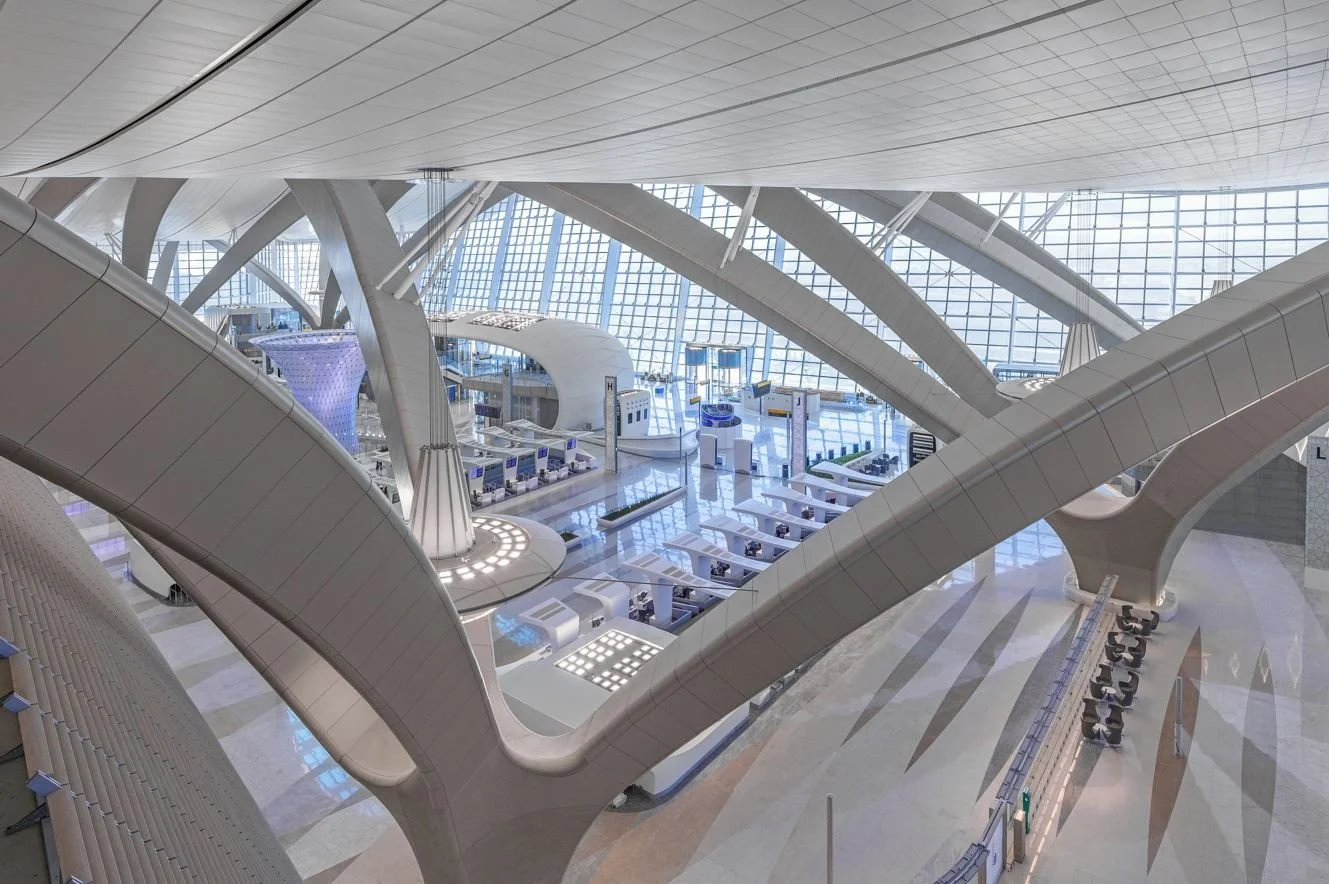
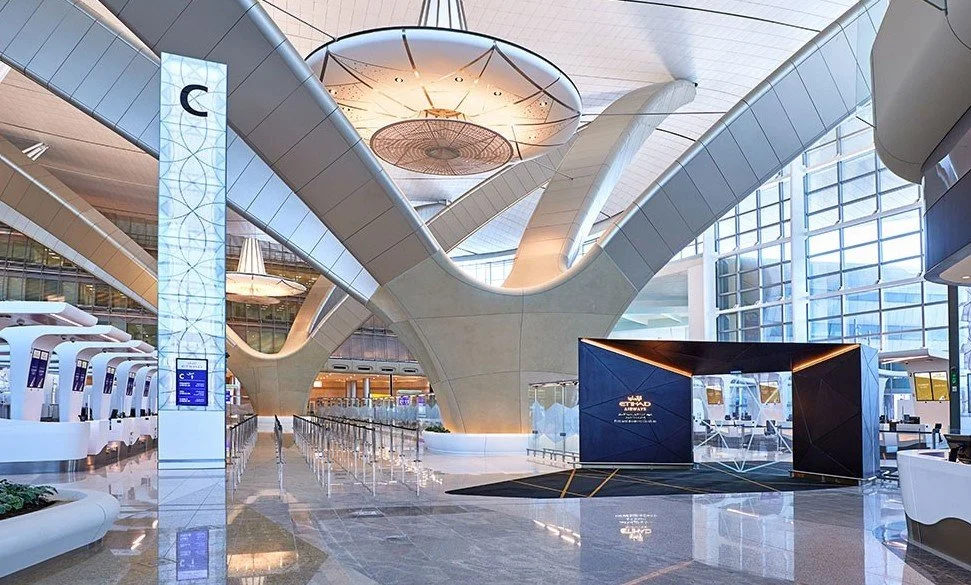
Zayed International Airport is one of the largest airport terminals in the Middle East, providing a major gateway to Abu Dhabi and the wider region. Designed by Kohn Pedersen Fox Associates (KPF), the terminal is defined by vast column-free public spaces supported by a series of monumental Y-shaped structural columns that organise the principal passenger concourses.
Newtecnic provided contractor-side technical support for the development and delivery of the glass fibre reinforced concrete (GRC) casing system that encloses these primary structural elements. The project demonstrates how structure, architecture and building services can be integrated within a single coordinated system capable of operating simultaneously at the scale of engineering infrastructure and public space.
Architectural Strategy
Large transport buildings are often organised around repetitive structural systems that provide the long spans necessary for circulation, security, retail and passenger processing. While structurally efficient, these systems can easily become visually repetitive or technically fragmented as architectural finishes, services and maintenance systems are applied independently.
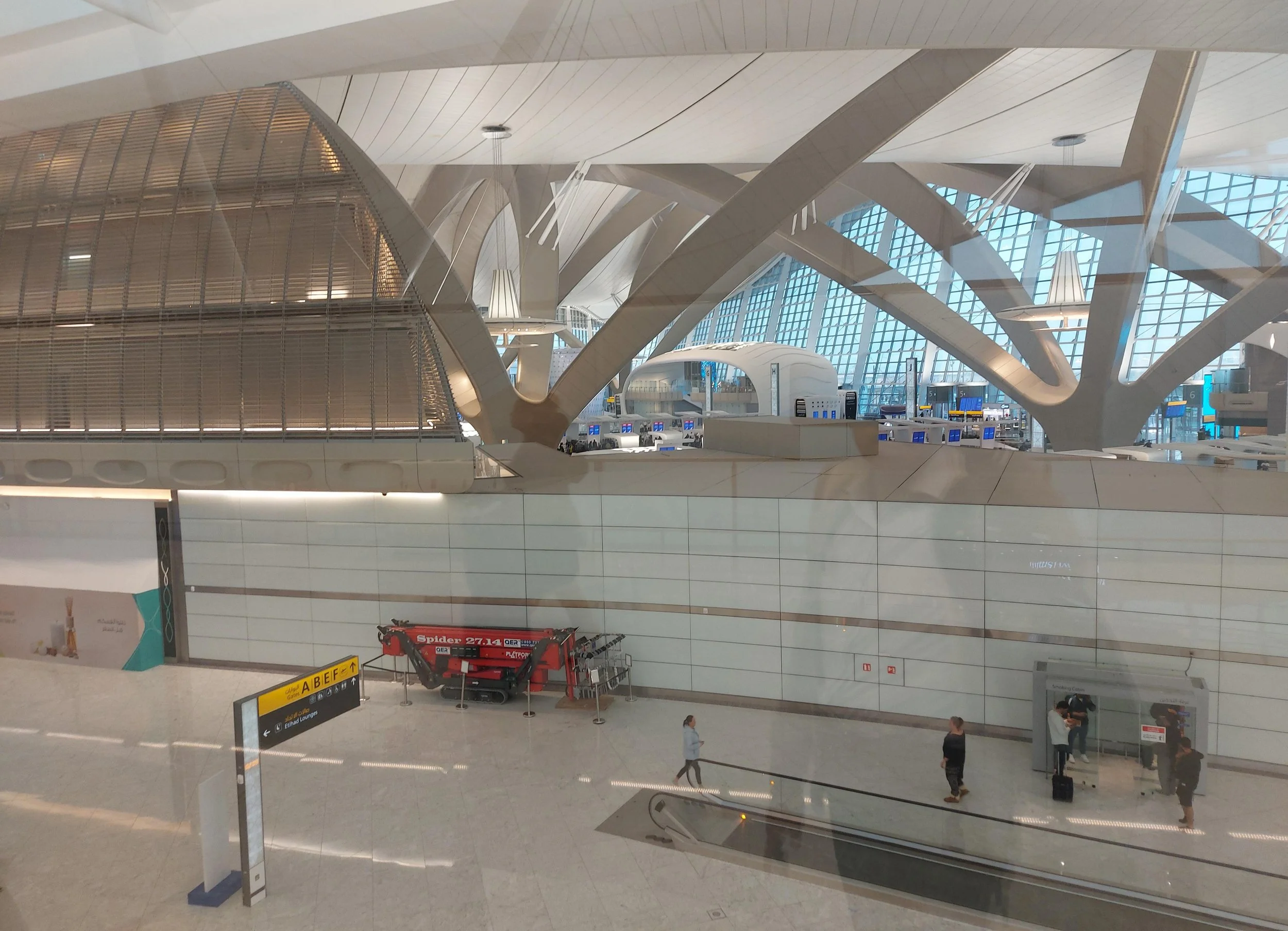
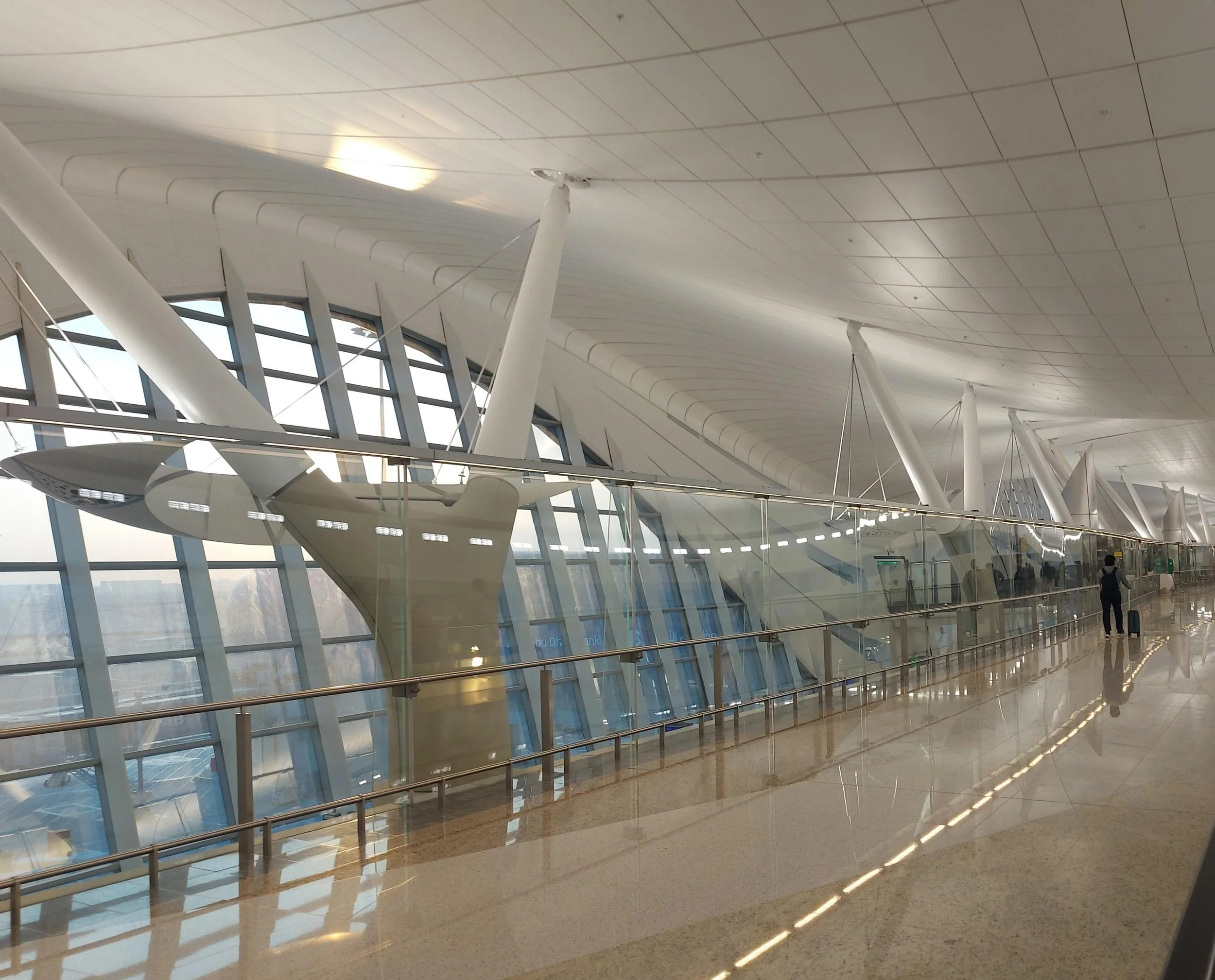
At Zayed International Airport, the structural columns were conceived as primary architectural elements rather than simply engineering components. Their branching geometry establishes a spatial order that extends throughout the terminal, providing visual continuity across the large interior volumes while reinforcing wayfinding and orientation.
Rather than concealing the structural logic of the building, the design transforms it into a defining characteristic of the passenger experience. The columns become part of the architecture itself, establishing a coherent relationship between structure, enclosure and space.
From Structure to Integrated System
The column casings perform significantly more functions than architectural cladding alone.
Within each enclosure, structural elements, mechanical services, electrical systems, access routes and maintenance requirements are brought together within a single coordinated assembly. The casing therefore operates as a form of architectural infrastructure, consolidating multiple technical systems while maintaining the visual clarity of the interior environment.
This integration reduces visual clutter within the terminal and allows the public spaces to remain legible despite the considerable technical complexity required to support airport operations.
The project demonstrates how architectural components can absorb and organise technical complexity rather than simply concealing it.
Material Strategy
Glass fibre reinforced concrete was selected because it offered a combination of qualities particularly suited to the project.
The material provides the freedom necessary to produce large three-dimensional forms while remaining relatively lightweight compared with conventional precast concrete construction. This reduced loads on the primary structure and simplified installation within the completed terminal environment.
GRC also enabled the smooth, continuous surfaces required by the architectural design. The material could accommodate the changing geometry of the branching columns while maintaining consistency of appearance across hundreds of individual components.
The resulting forms possess the visual solidity associated with monolithic construction while benefiting from the efficiency of prefabricated production.
Geometry and Rationalisation
Although the completed columns appear as continuous sculptural forms, their construction required extensive geometric rationalisation.
Each branching column changes in section, curvature and orientation as it rises through the terminal. The challenge was therefore to transform complex geometry into a coordinated family of manufacturable components capable of being produced economically and assembled accurately on site.
Digital modelling played a central role in this process. Three-dimensional models allowed the geometry to be coordinated simultaneously with the structural frame, building services and installation requirements. Individual components could then be rationalised for fabrication while maintaining continuity across the completed forms.
The project illustrates how digital workflows allow complex architectural geometries to be translated into repeatable manufacturing processes without compromising design intent.
Fabrication and Assembly
The casing system was developed as a prefabricated assembly manufactured under factory-controlled conditions.
Precision moulds ensured consistency of geometry, surface finish and colour across large numbers of components. Off-site fabrication also improved quality control and reduced the amount of specialist work required within the operational airport environment.
A concealed support system was developed to accommodate construction tolerances, structural movement and maintenance access while preserving the visual continuity of the completed columns. Carefully coordinated joints allowed individual elements to be assembled into forms that appear monolithic despite being constructed from multiple prefabricated components.
The project demonstrates the advantages of industrialised construction methods when applied to large-scale architectural interiors.
Repetition, Variation and Identity
One of the most significant aspects of the project is the way it transforms repetition into architectural identity.
Airport terminals require highly repetitive structural systems to achieve economy and efficiency. At Zayed International Airport, this repetition becomes a source of architectural coherence rather than monotony.
Each column belongs to a common family of elements, yet the changing geometry created by branching forms introduces variation across the terminal. This balance between repetition and difference establishes a strong visual order while maintaining the richness necessary for large public environments.
The result is an architecture that derives its identity from the disciplined coordination of structure and construction rather than from applied ornament or isolated formal gestures.
Project Significance
The Zayed International Airport terminal demonstrates how major transport infrastructure can achieve architectural quality through the integration of structure, services, material technology and fabrication.
Rather than treating enclosure as a separate architectural layer applied to engineering systems, the project develops a single coordinated assembly capable of performing structural, operational and architectural functions simultaneously. Through the use of digital modelling, prefabricated GRC construction and integrated technical coordination, the column casings transform a structural necessity into a defining component of the passenger experience.
More broadly, the project illustrates how contemporary construction technologies allow architecture to emerge from the organisation of systems themselves, where structure, servicing and enclosure are combined within coherent and durable forms capable of supporting both operational performance and civic identity.