
Student Accommodation — Environmental Patterns and Habitation
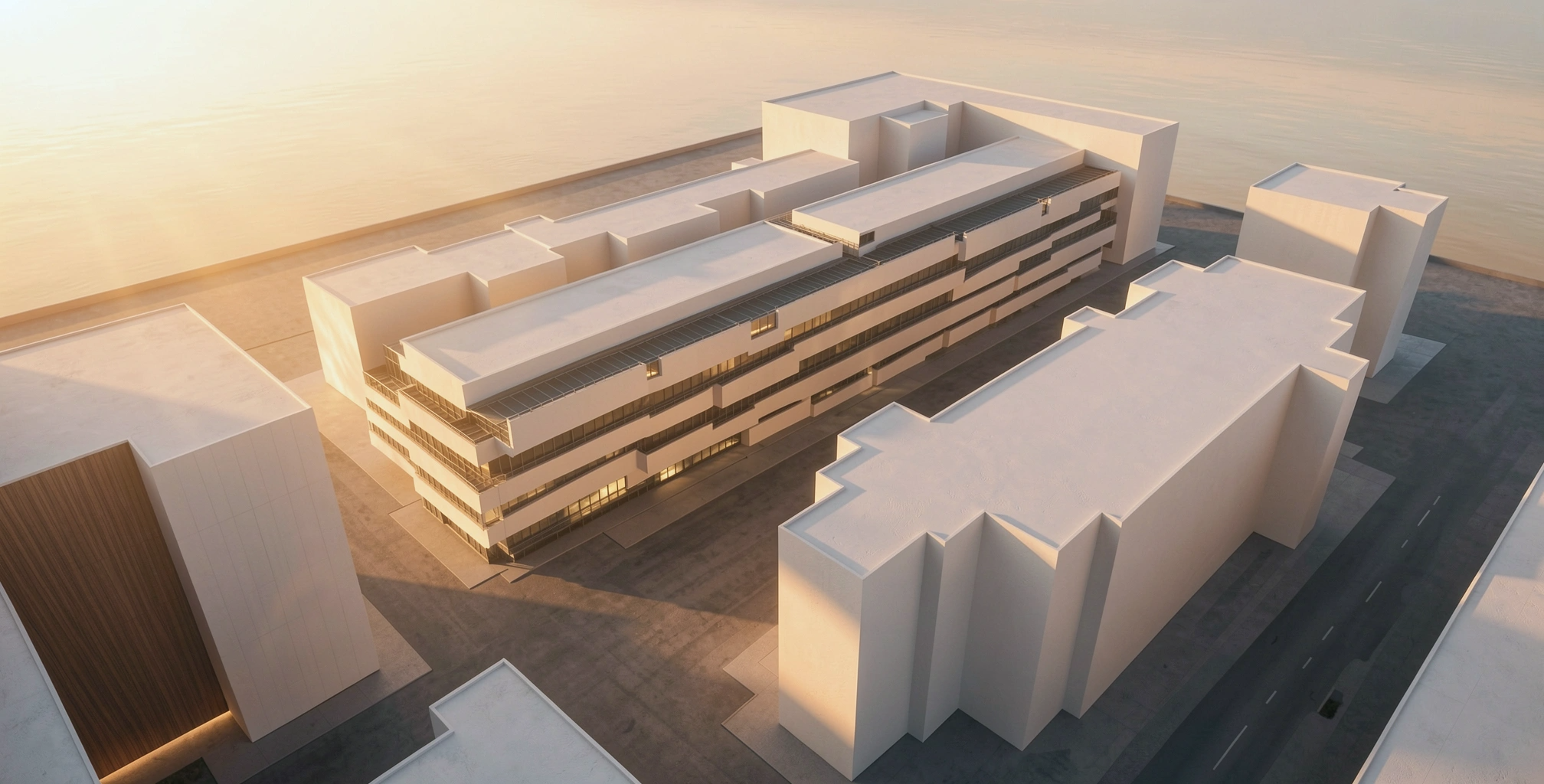
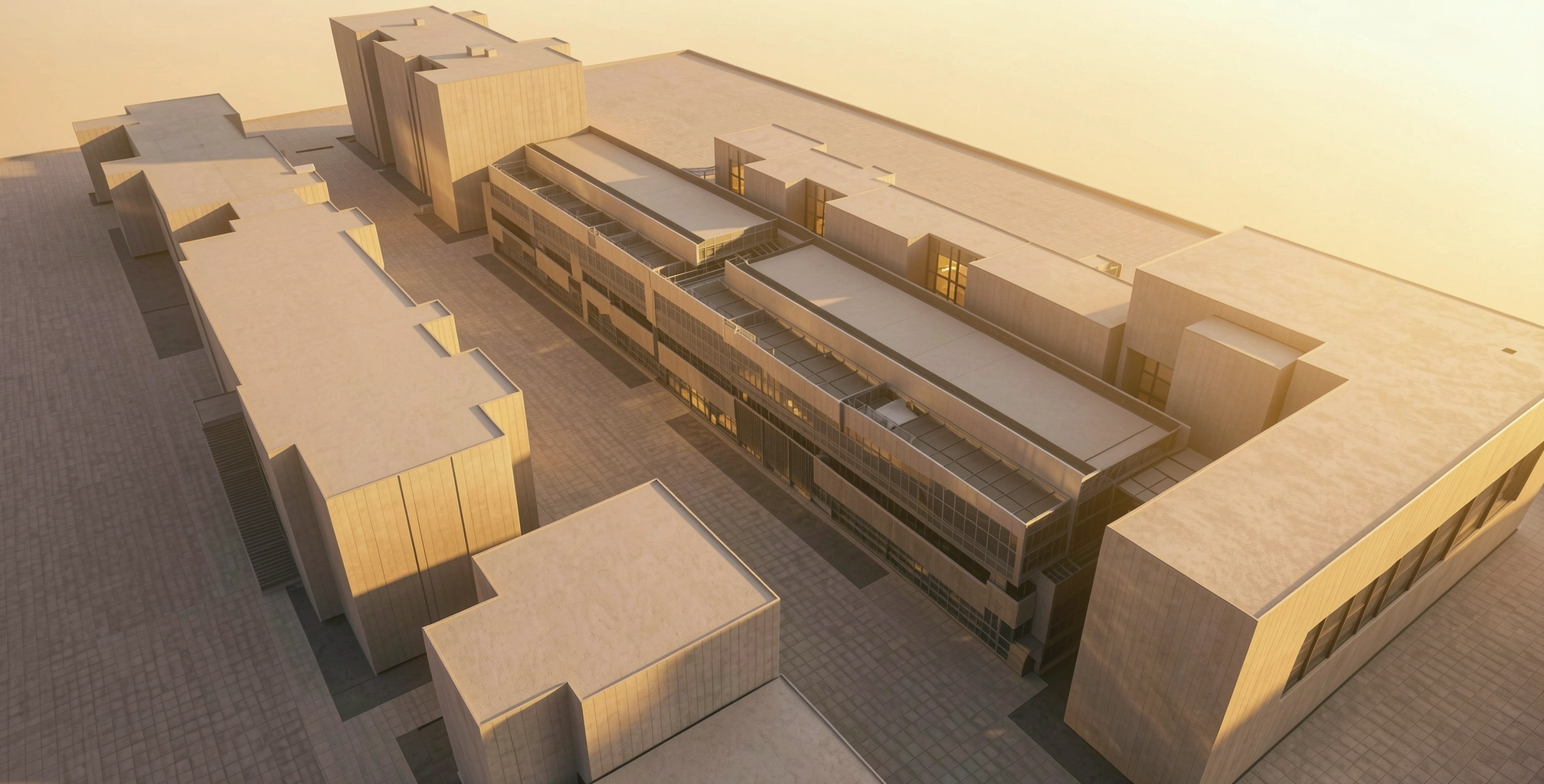
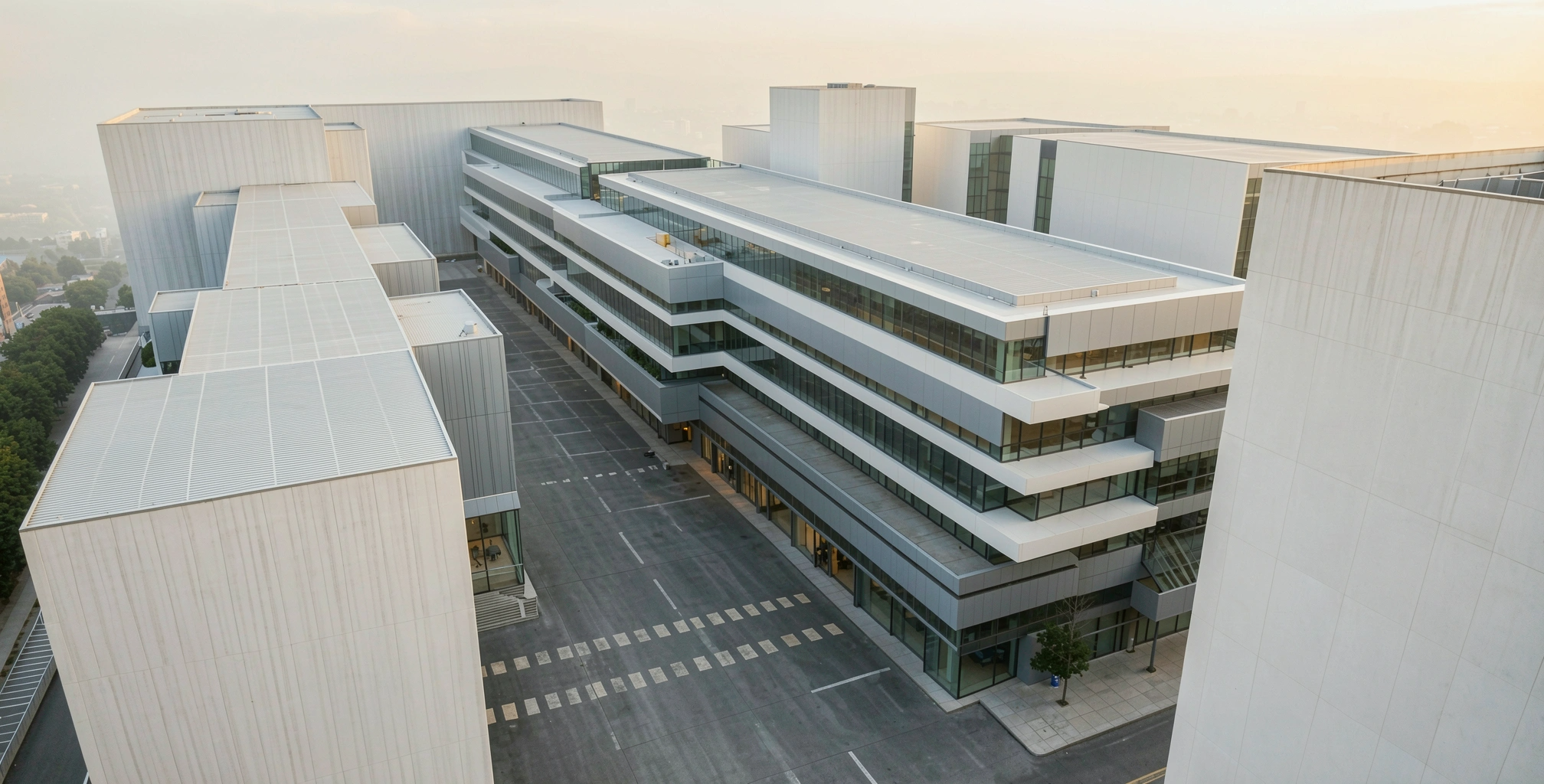
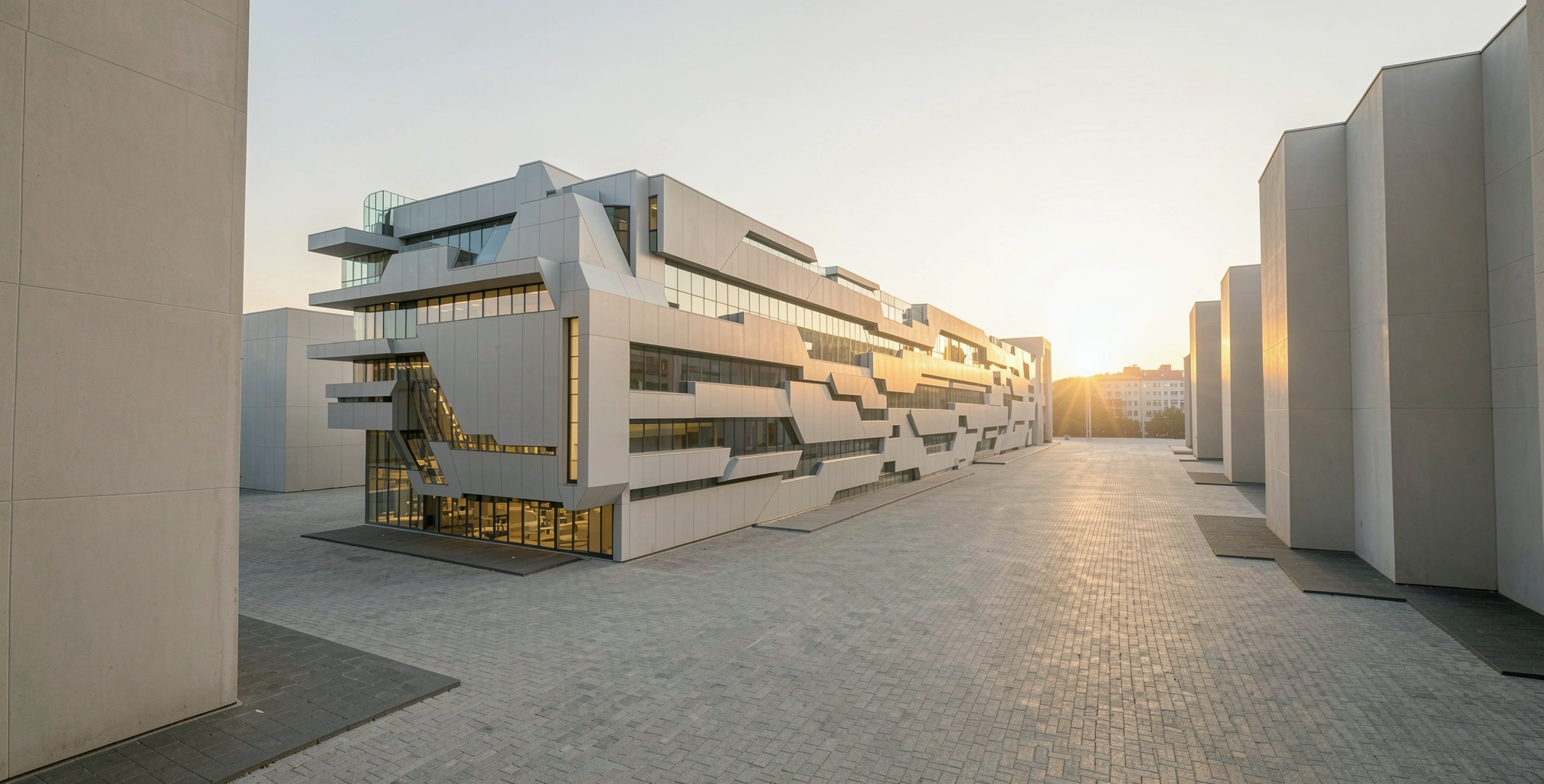
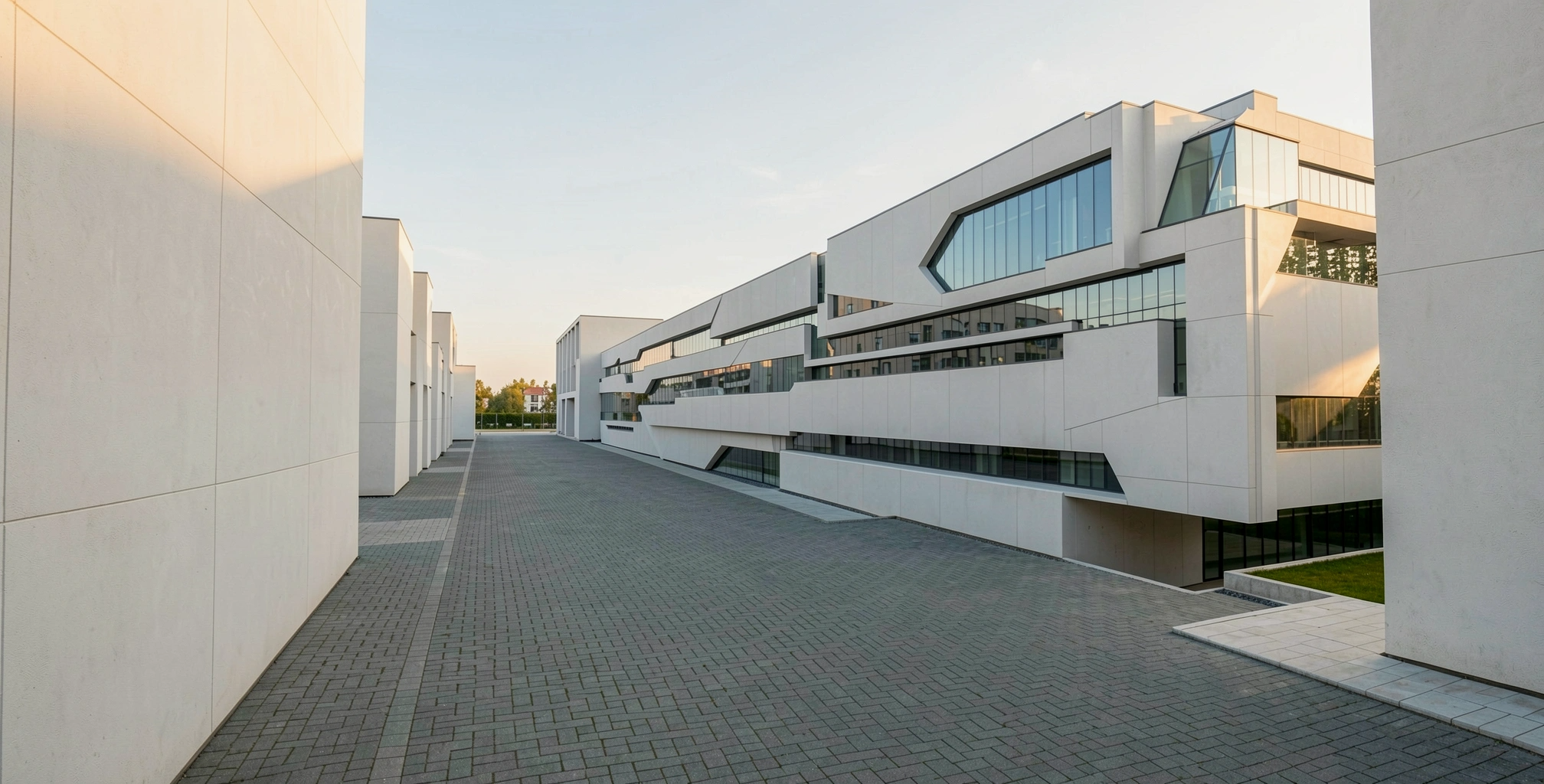
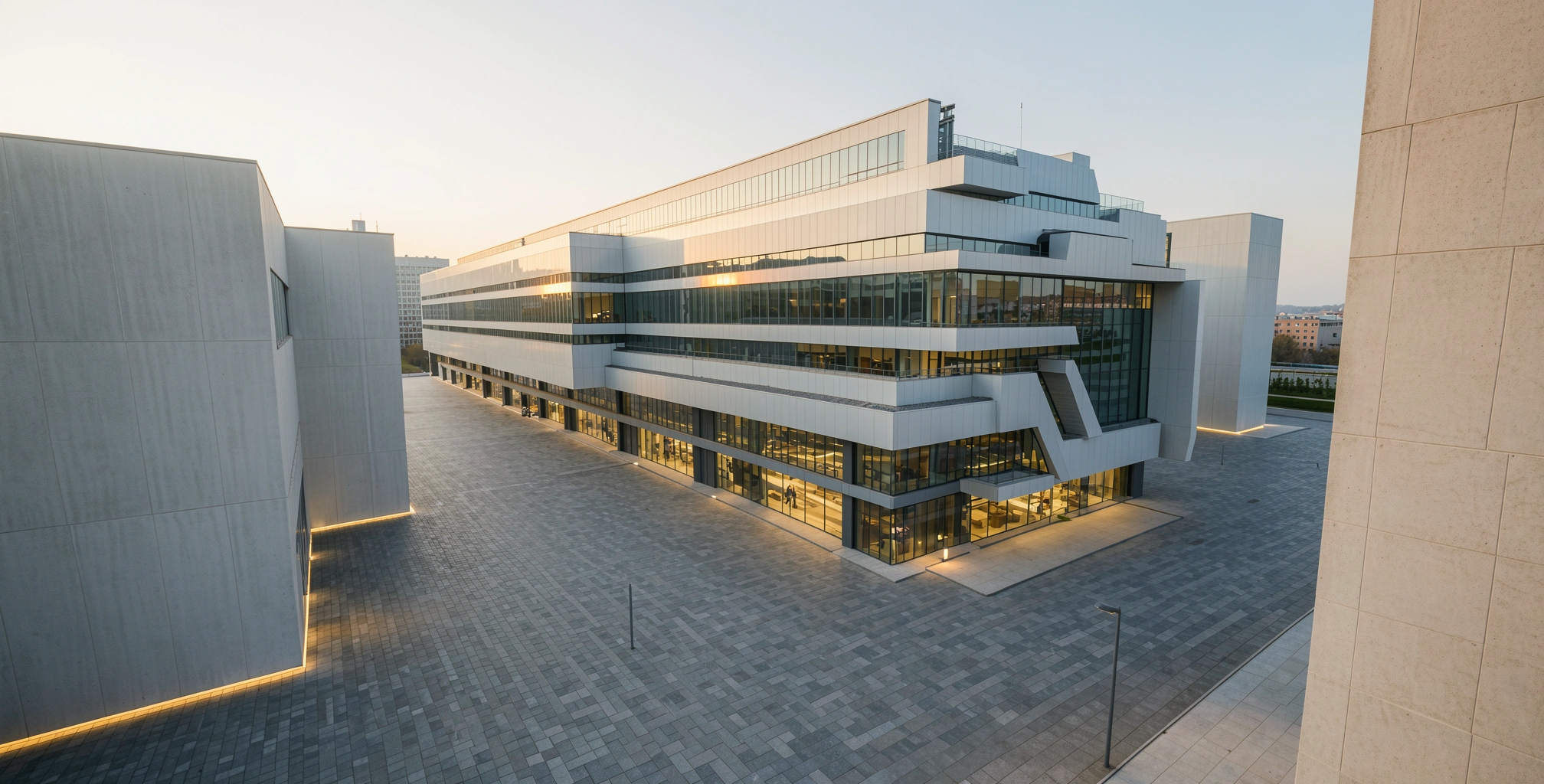
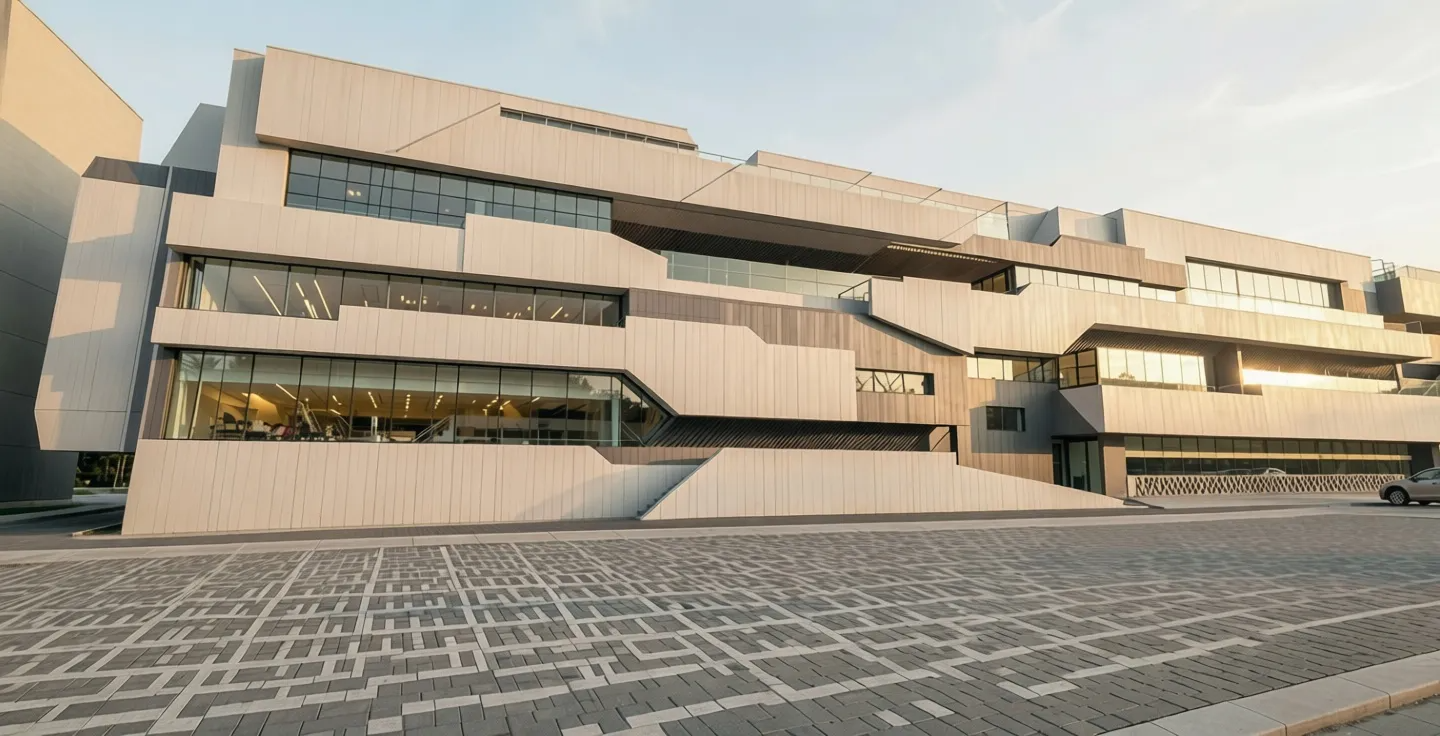
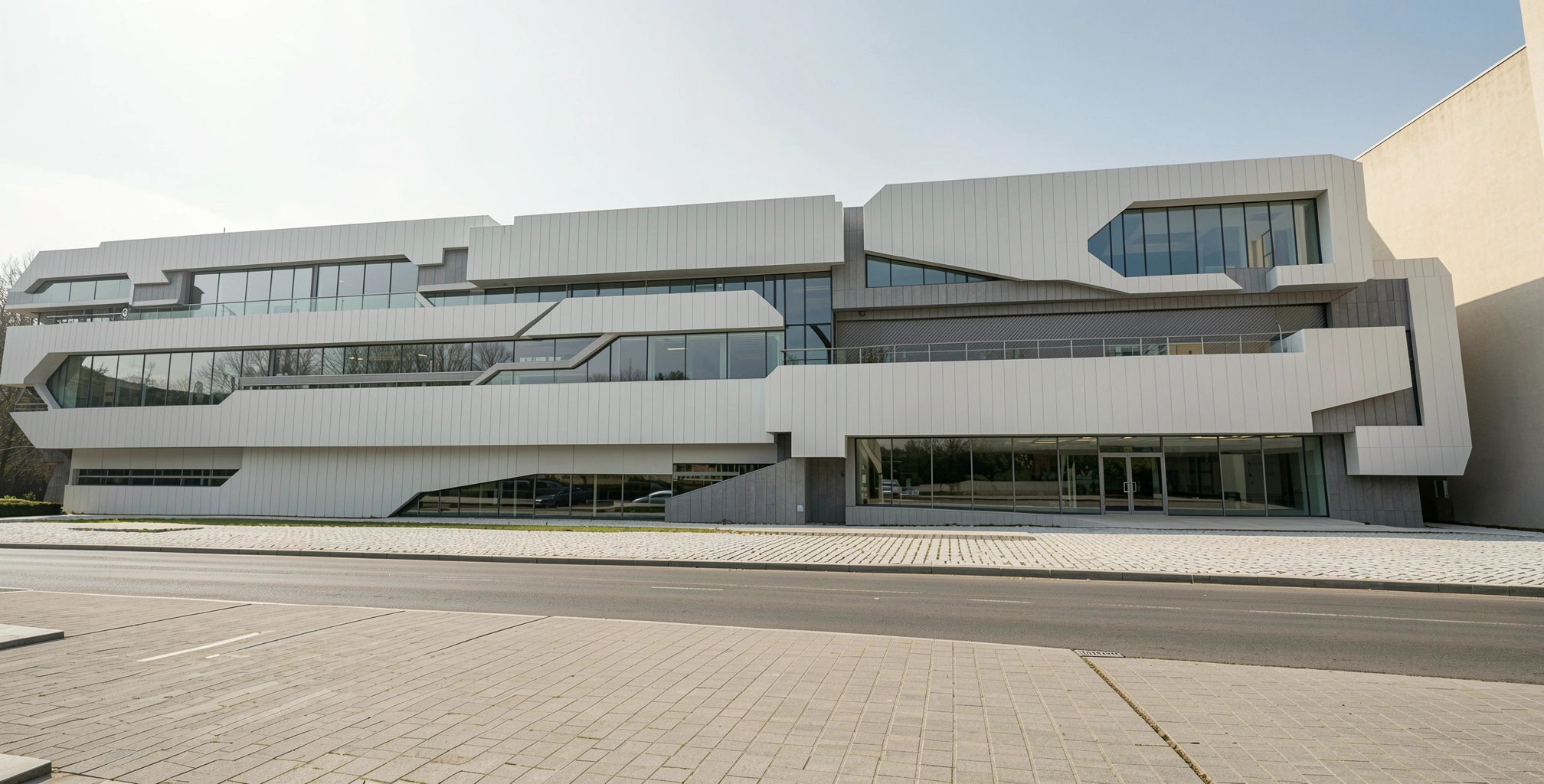
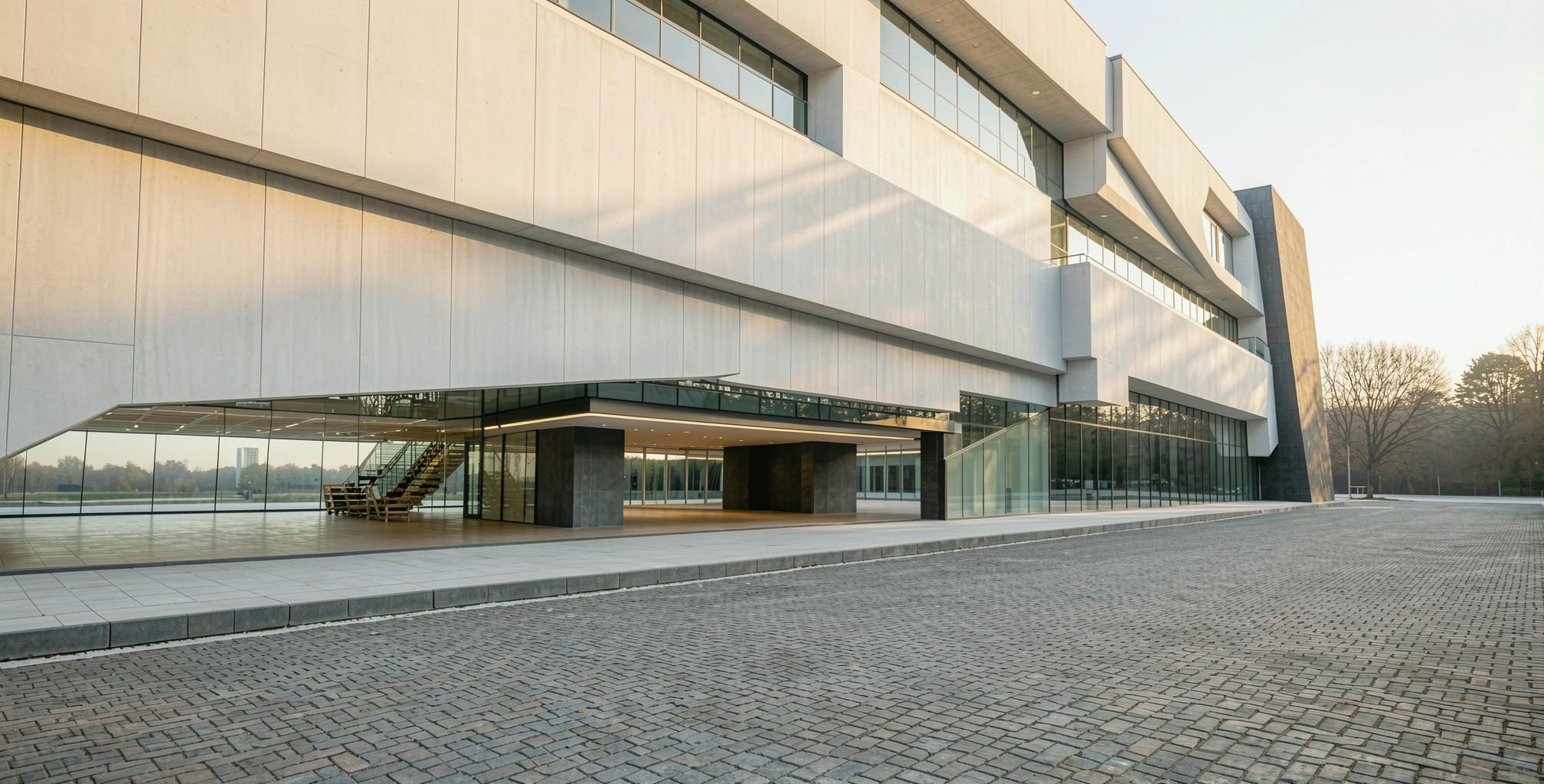
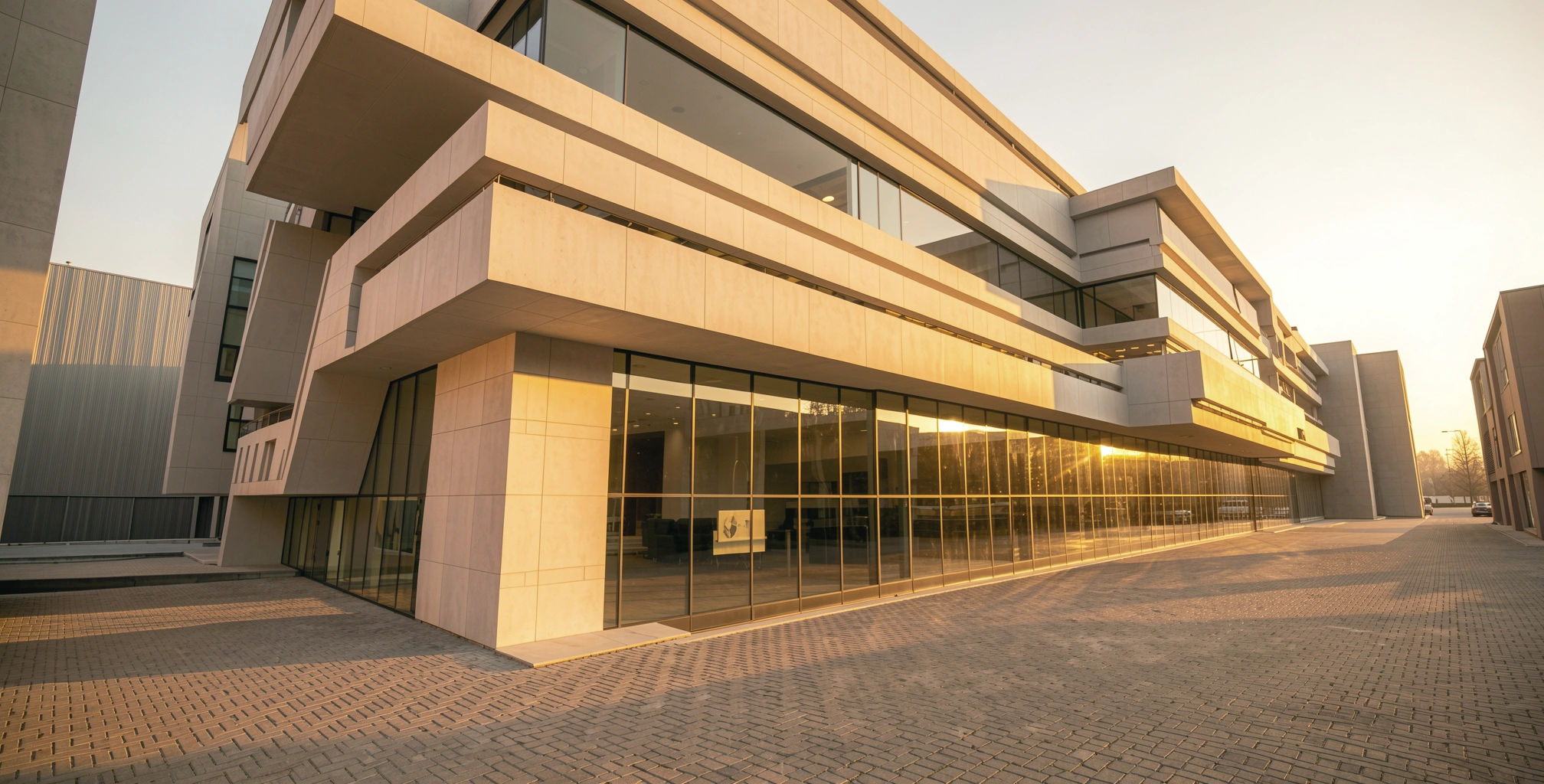
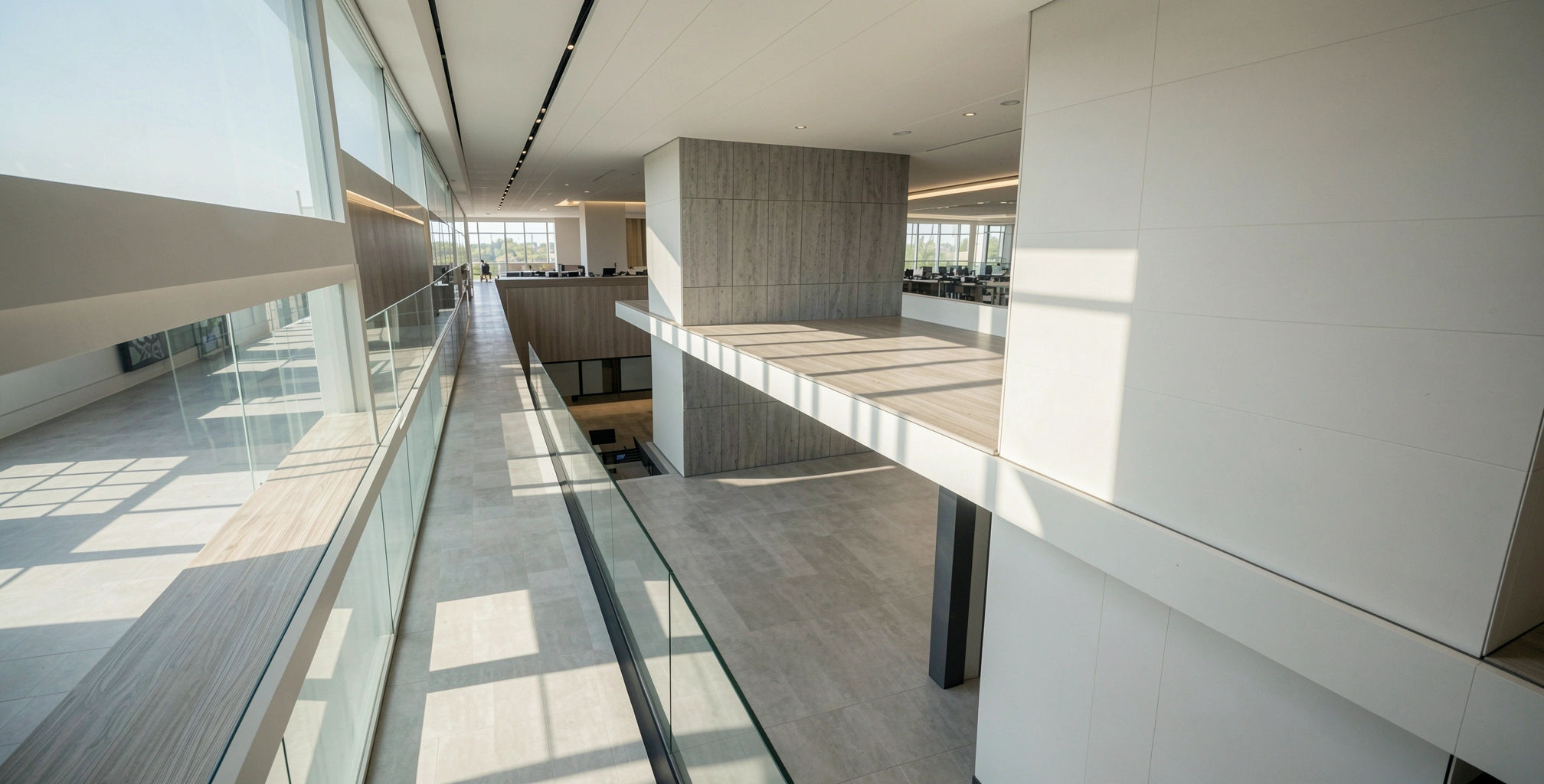
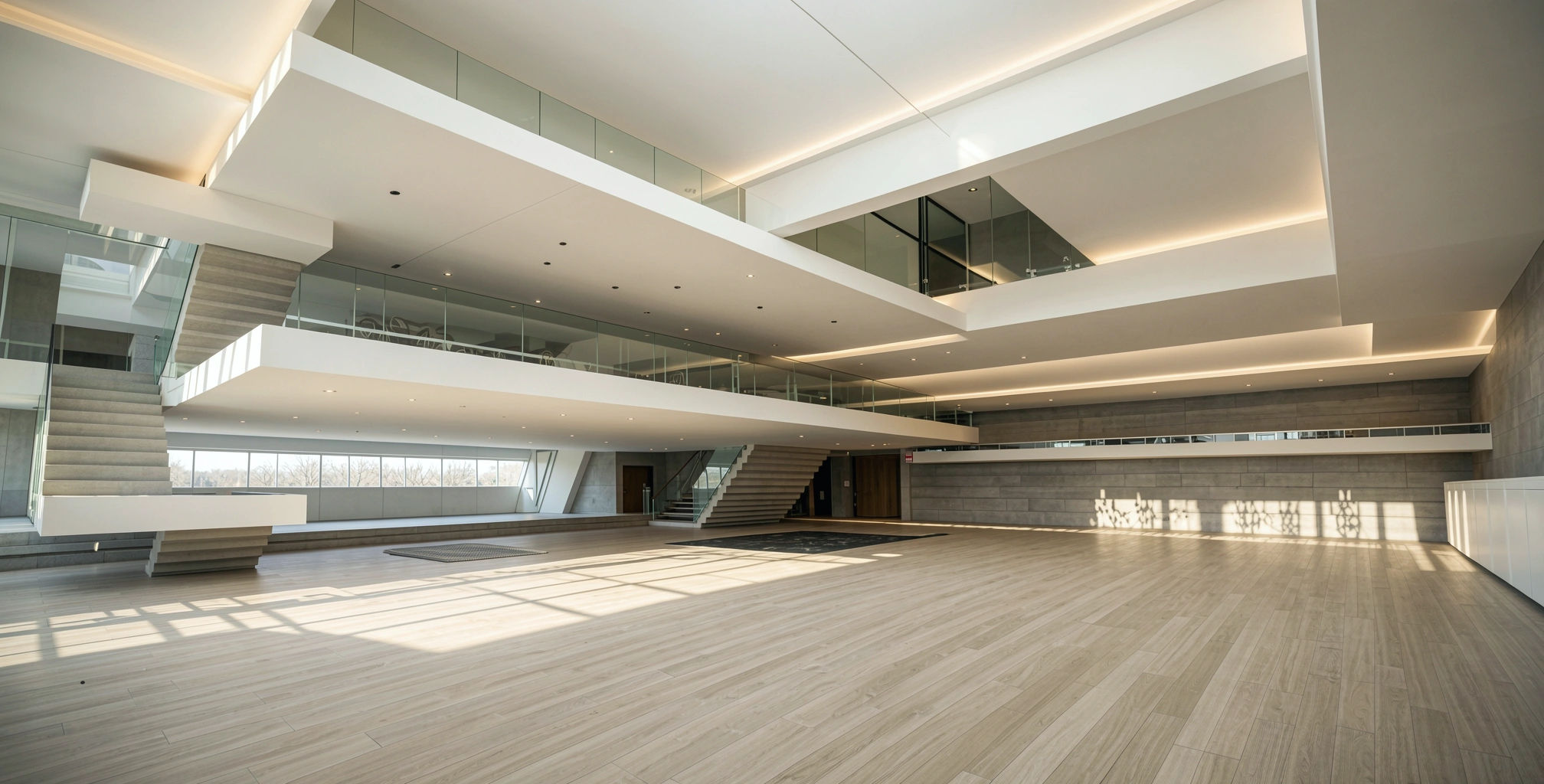
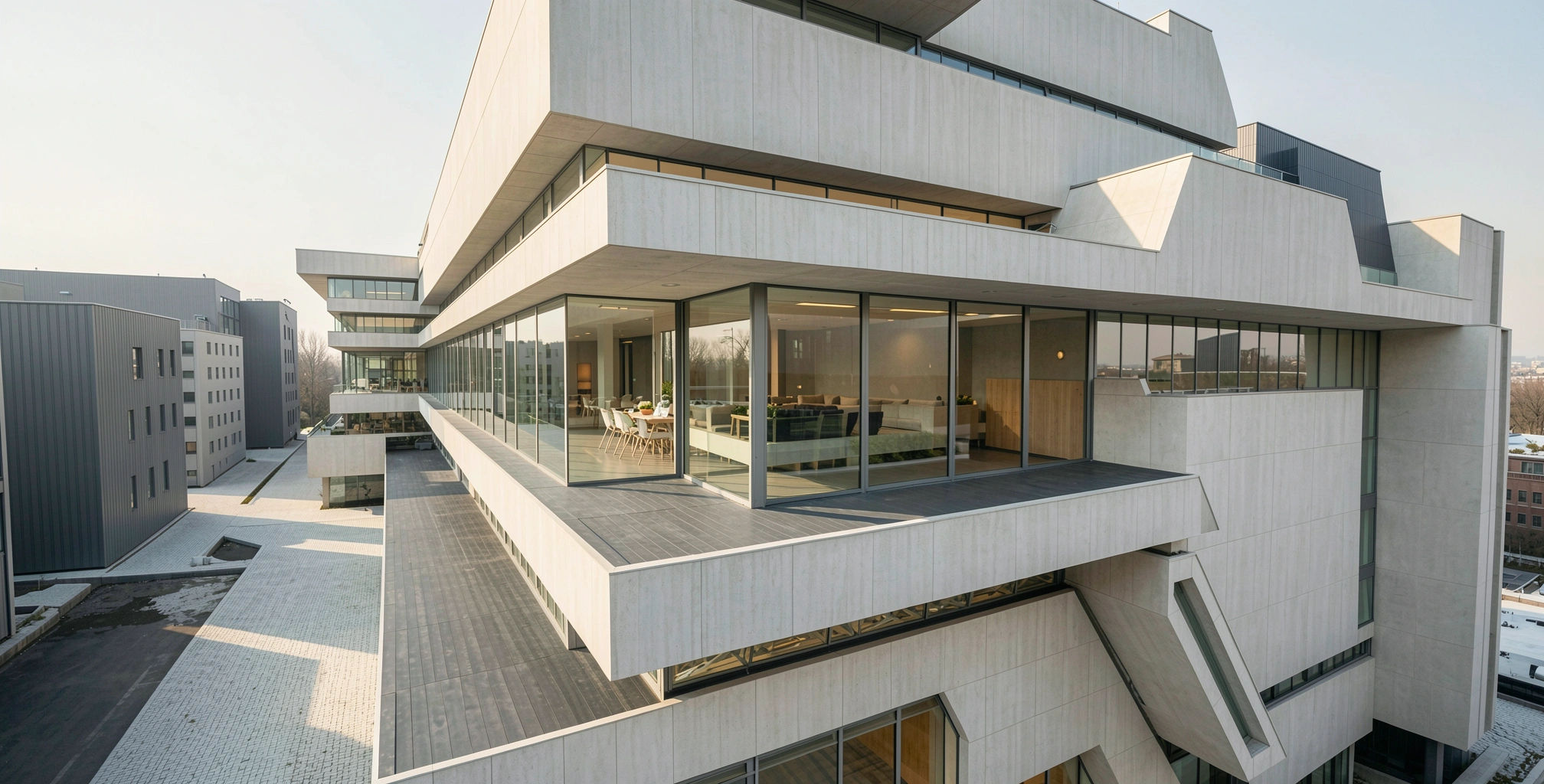
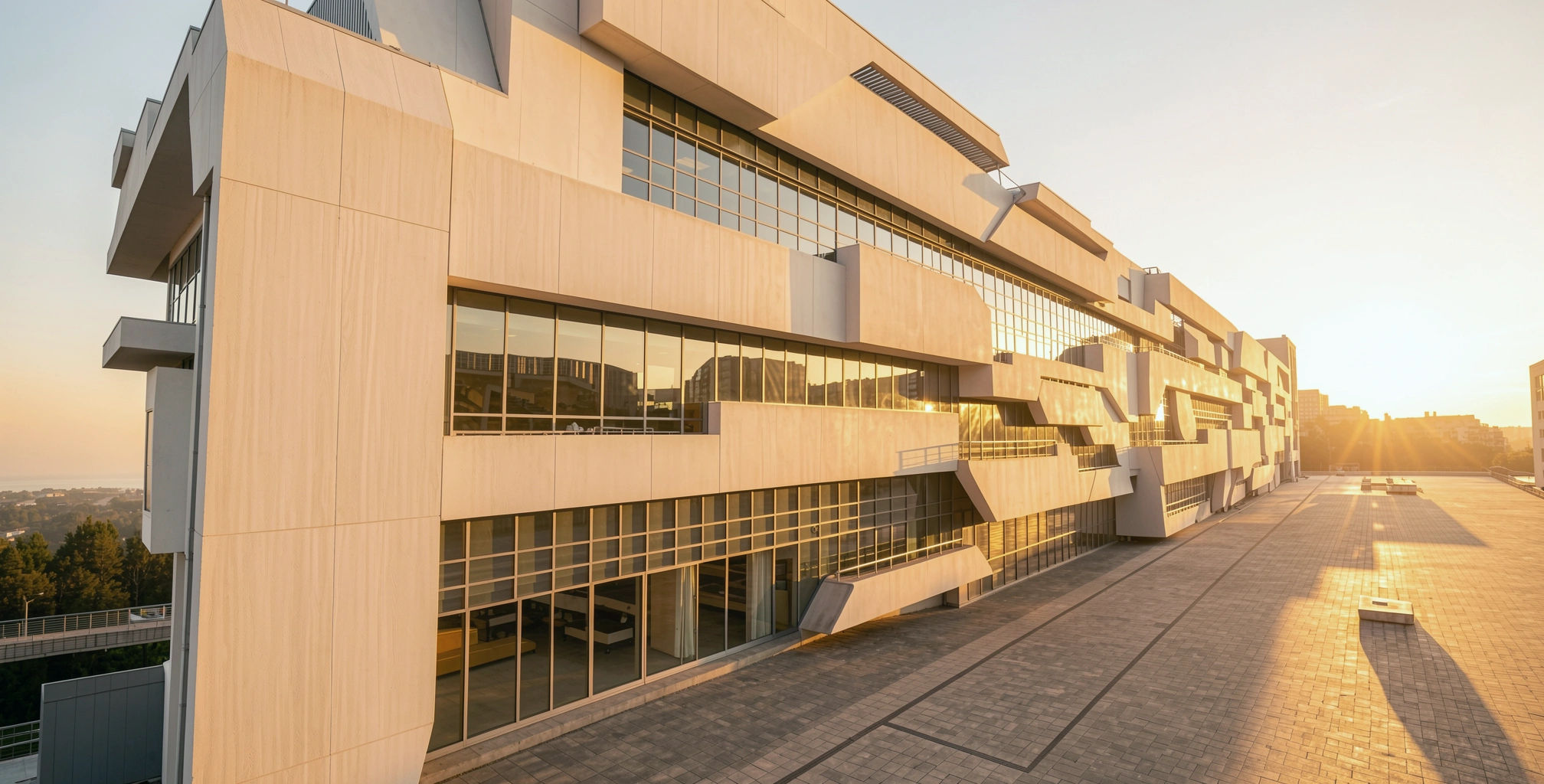
This project explores how environmental performance can be embedded within the organisation of student living rather than added through separate technical systems. The design is based on the principle that patterns of habitation, environmental conditions and structural order can be developed together, creating accommodation that is comfortable, adaptable and resource-efficient.
The building is organised through a regular structural framework that establishes the arrangement of residential units, circulation spaces and shared facilities. Floor slabs span between beams and columns arranged on a consistent grid, allowing accommodation, communal areas and circulation routes to be coordinated within a clear and adaptable structural system. The organisation of the building supports both individual privacy and collective occupation, creating a balance between personal space and shared living.
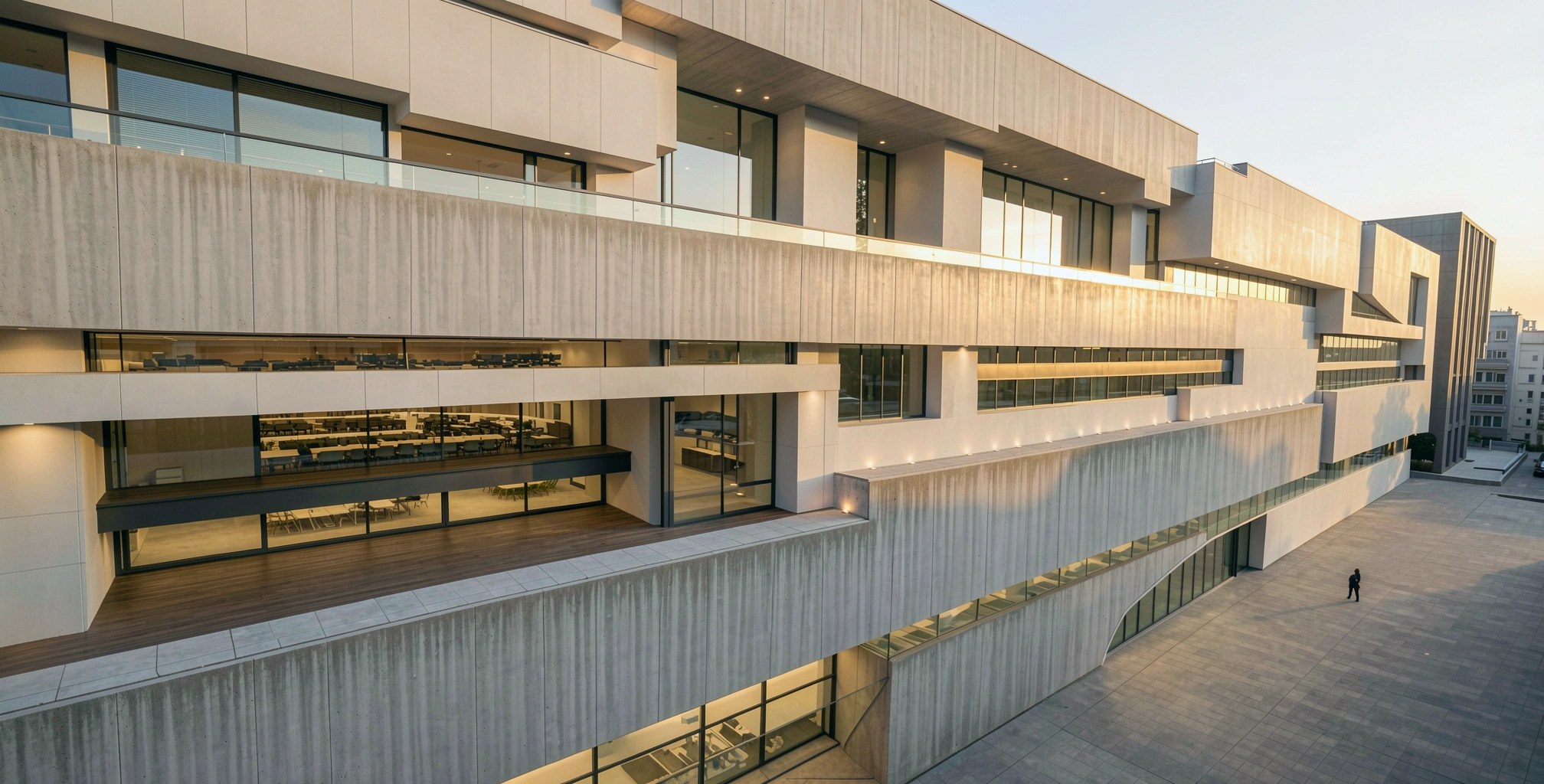
Environmental performance is achieved primarily through the arrangement of space rather than through dependence upon mechanical systems. The building is conceived as a sequence of environmental zones ranging from enclosed residential rooms to semi-external galleries, terraces and circulation spaces. These intermediate zones act as environmental buffers, moderating external conditions while encouraging natural ventilation, daylight and social interaction.
The accommodation is arranged to maximise opportunities for cross-ventilation. Rather than relying on enclosed internal corridors, circulation spaces are organised to support air movement throughout the building. Fresh air is introduced through naturally ventilated routes, while the positioning of openings, galleries and communal spaces encourages continuous environmental exchange. This strategy improves comfort, reduces reliance on mechanical cooling and creates a closer relationship between occupants and the surrounding climate.
Thermal mass forms an important part of the environmental strategy. Structural elements absorb heat during the day and release it gradually as temperatures fall, helping to stabilise internal conditions and reduce temperature fluctuations. During cooler evening periods, natural ventilation allows accumulated heat to be removed from the building fabric, preparing the structure for the following day. Environmental performance therefore emerges through the coordinated interaction of material behaviour, ventilation and occupation.
Service cores perform multiple functions within the organisation of the building. In addition to providing circulation and servicing infrastructure, they act as environmental moderators and acoustic buffers between different patterns of use. Communal and active areas are separated from quieter residential spaces through the careful positioning of these elements, improving both environmental comfort and residential amenity.
Material selection reflects the dual requirements of durability and environmental performance. Structural elements are designed to support both enclosed rooms and semi-external spaces, while finishes and protective systems respond appropriately to varying levels of environmental exposure. Connections between structure, façade and environmental systems are coordinated to accommodate movement, weathering and long-term performance while maintaining clarity of construction.
The environmental organisation of the building is expressed directly through its architecture. The distribution of enclosed and semi-external spaces is visible within the façade, where solid and open elements correspond to patterns of occupation, daylight and ventilation. Structural rhythm establishes the arrangement of galleries, terraces and rooms, allowing environmental performance and architectural expression to emerge from the same organisational logic.
This project demonstrates how student accommodation can be shaped by environmental intelligence rather than mechanical dependence. By integrating structure, material behaviour, ventilation and habitation within a coherent framework, the building creates a living environment that is both socially engaging and environmentally responsive. Architecture emerges through the coordination of environmental conditions and patterns of occupation, allowing performance and experience to develop together.