
Residential Hotel — Environmental Calibration within Structural Order
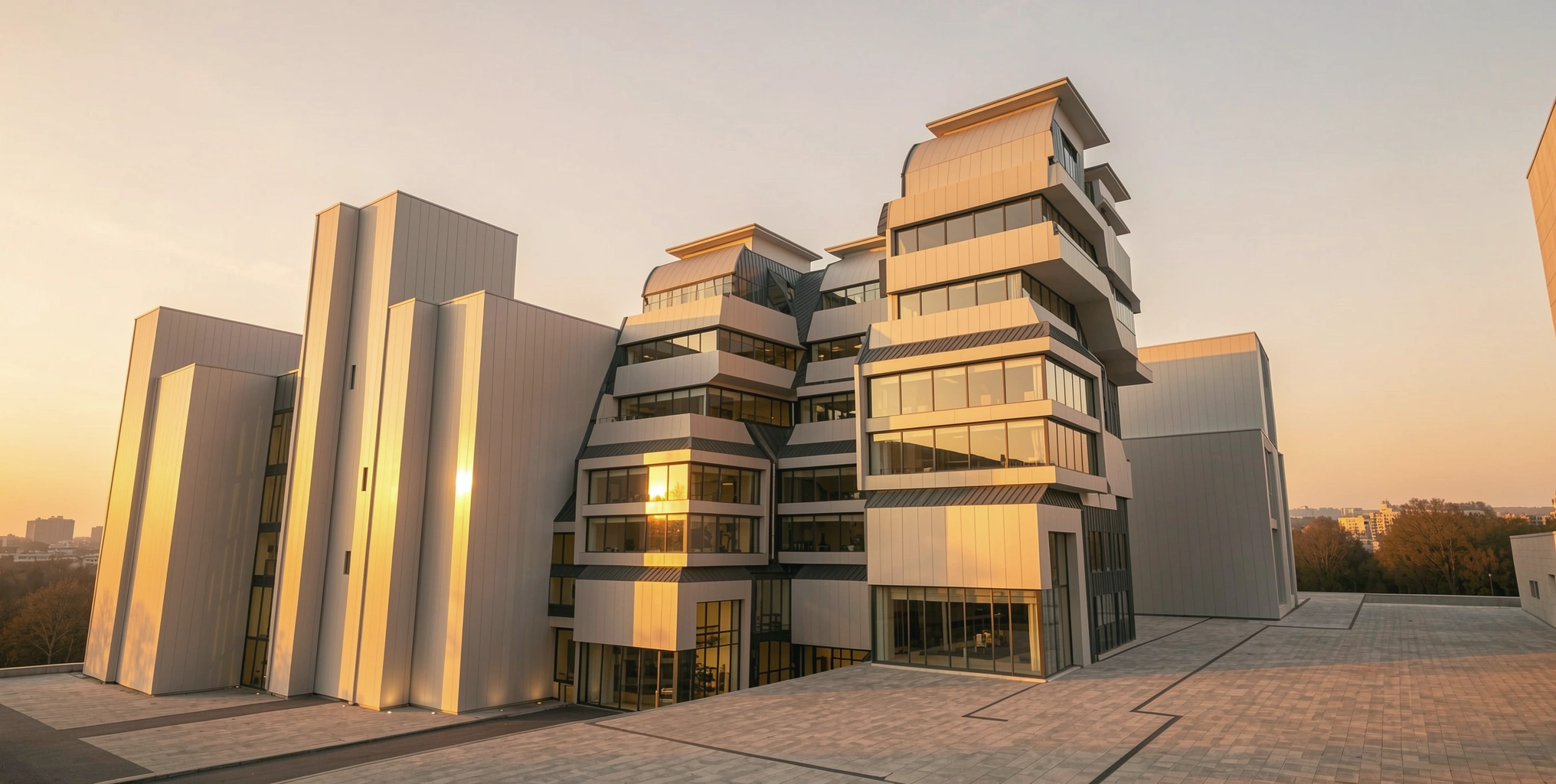
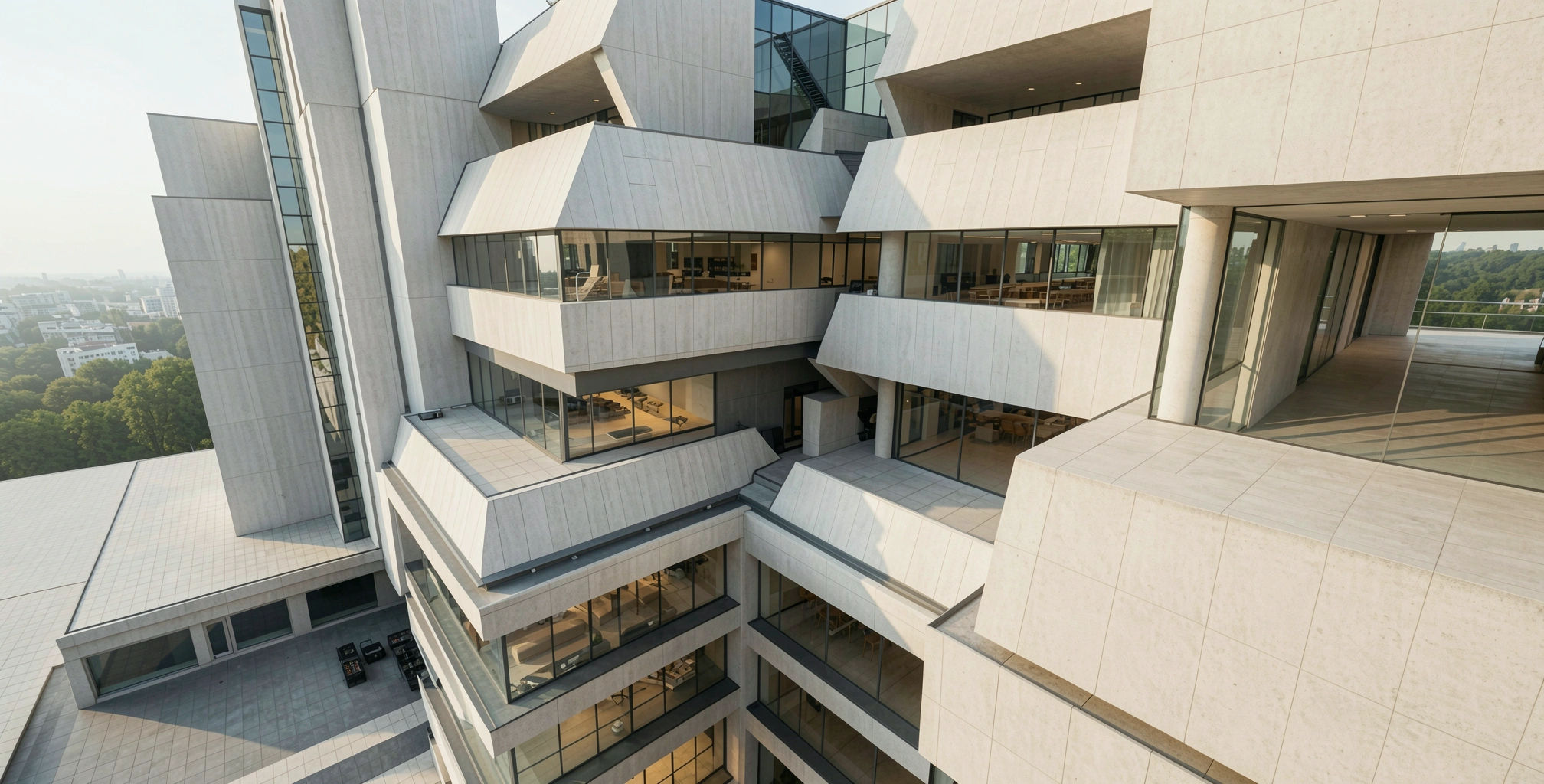
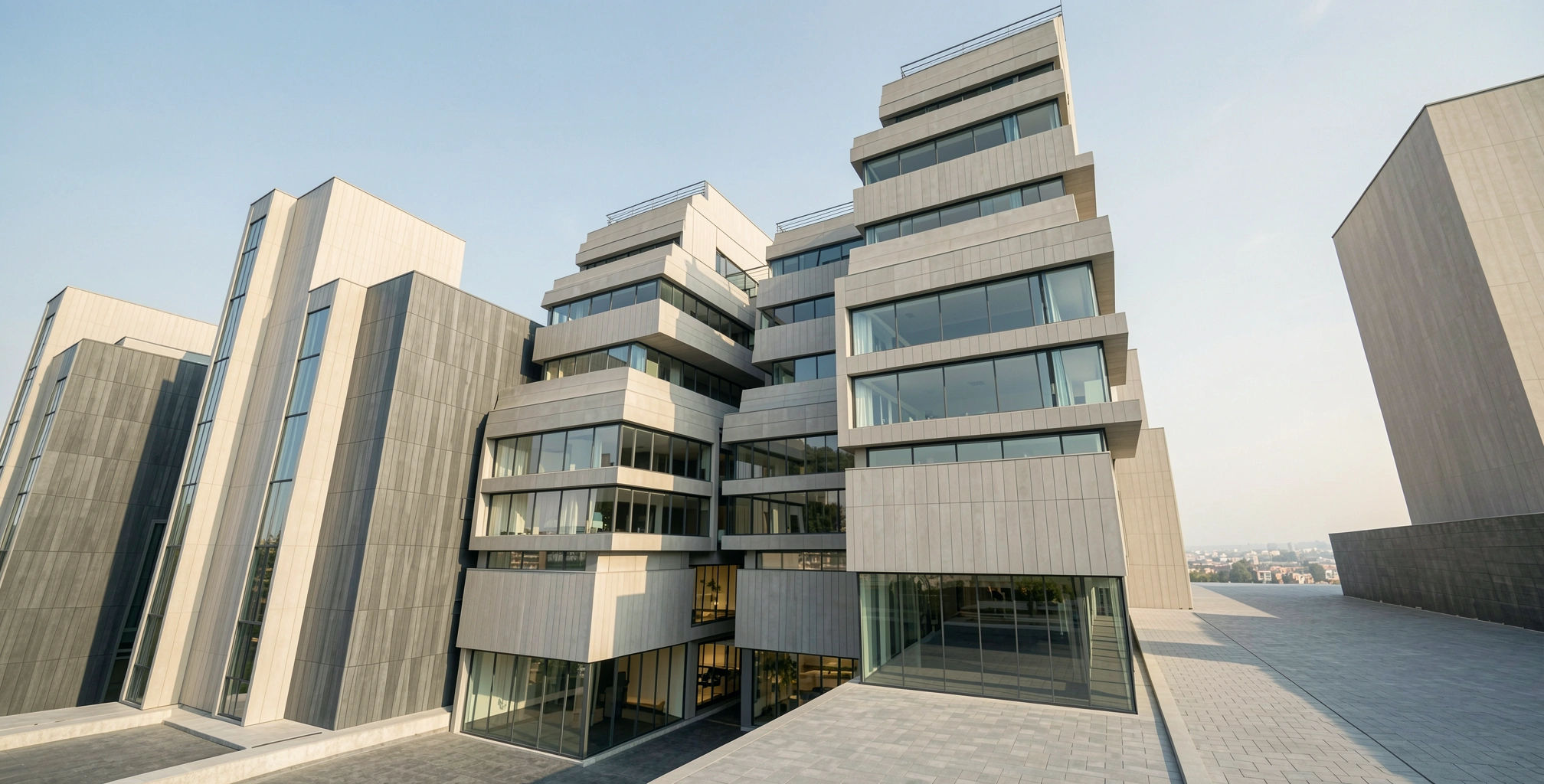
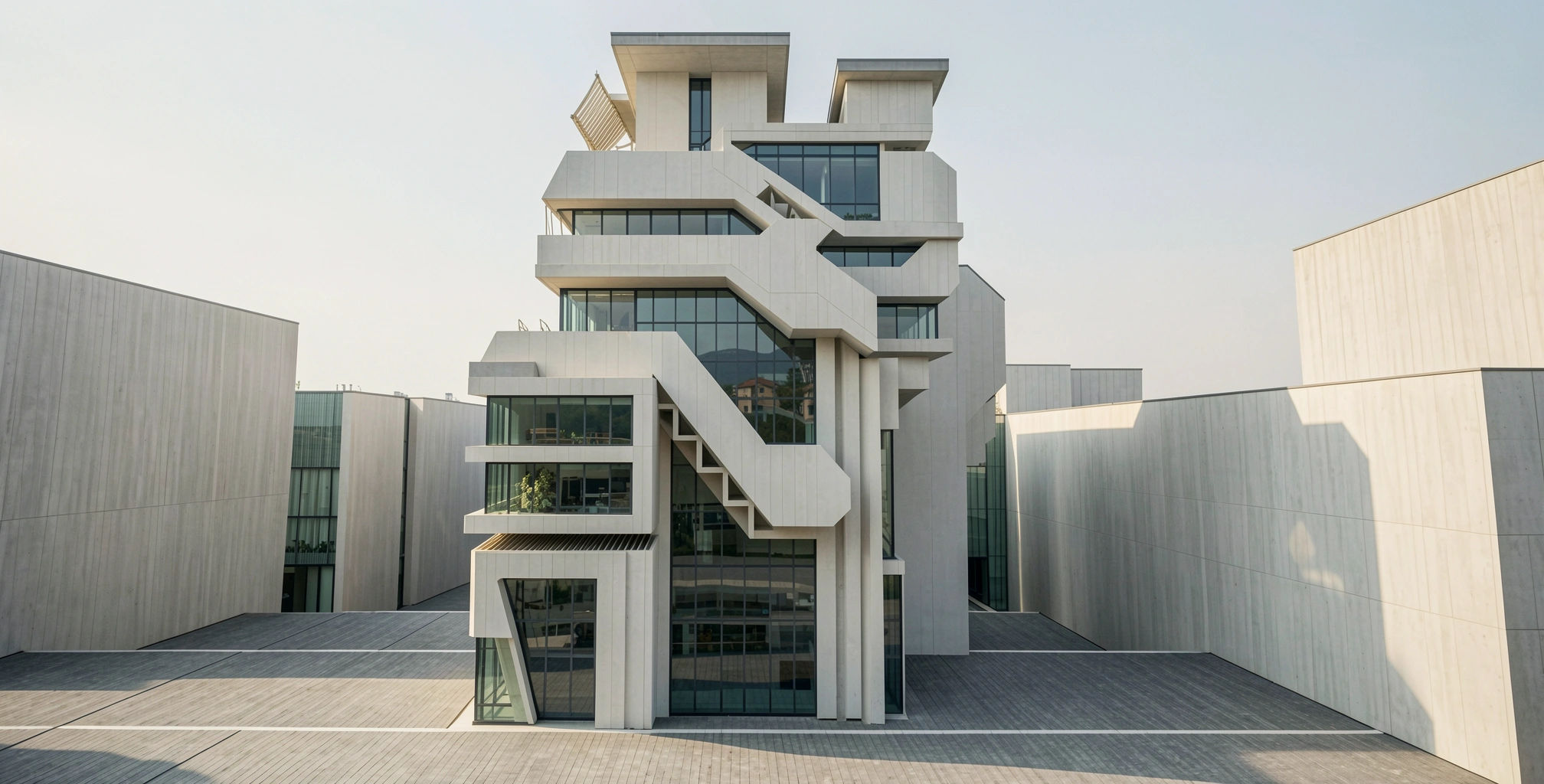
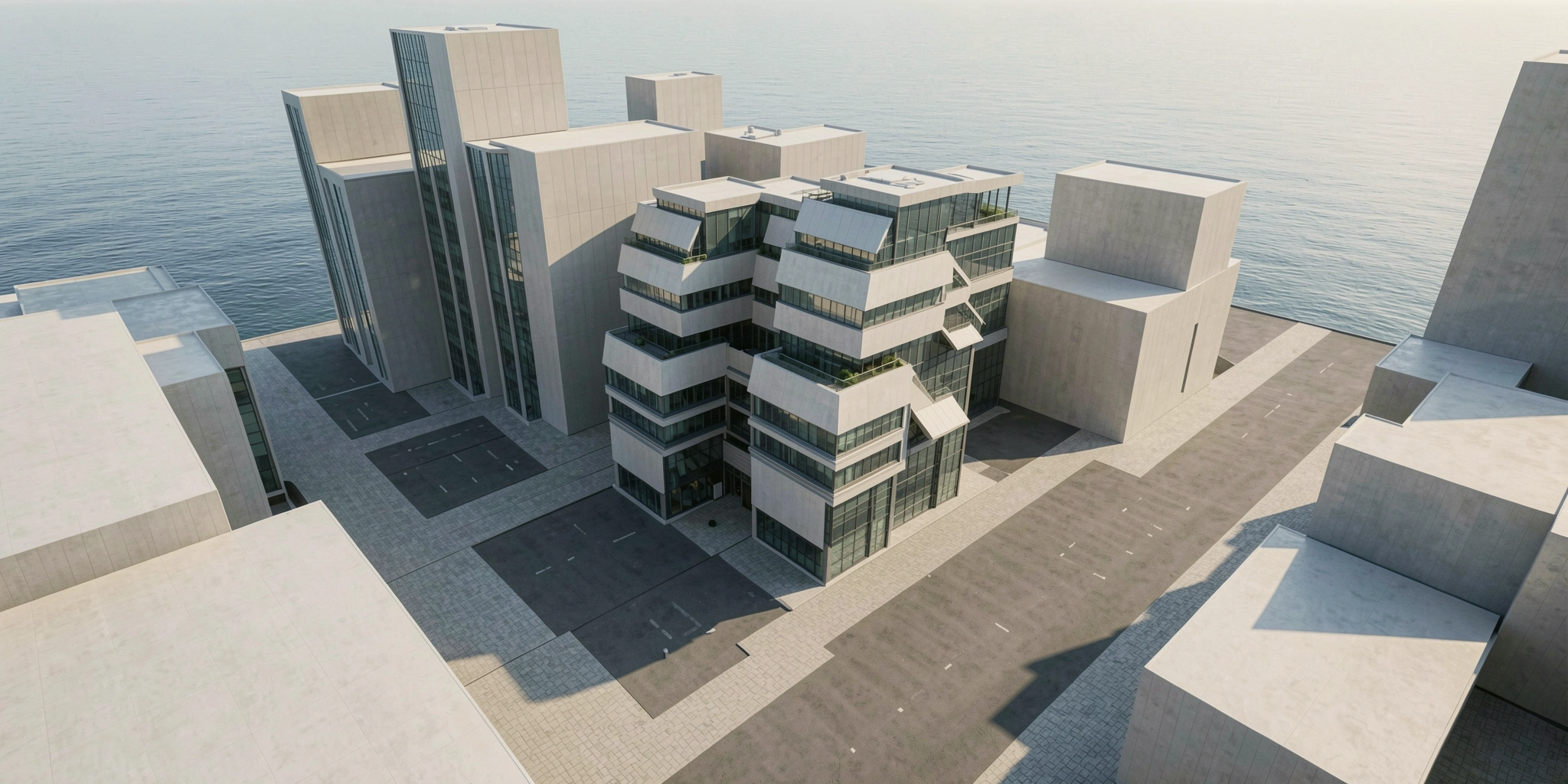
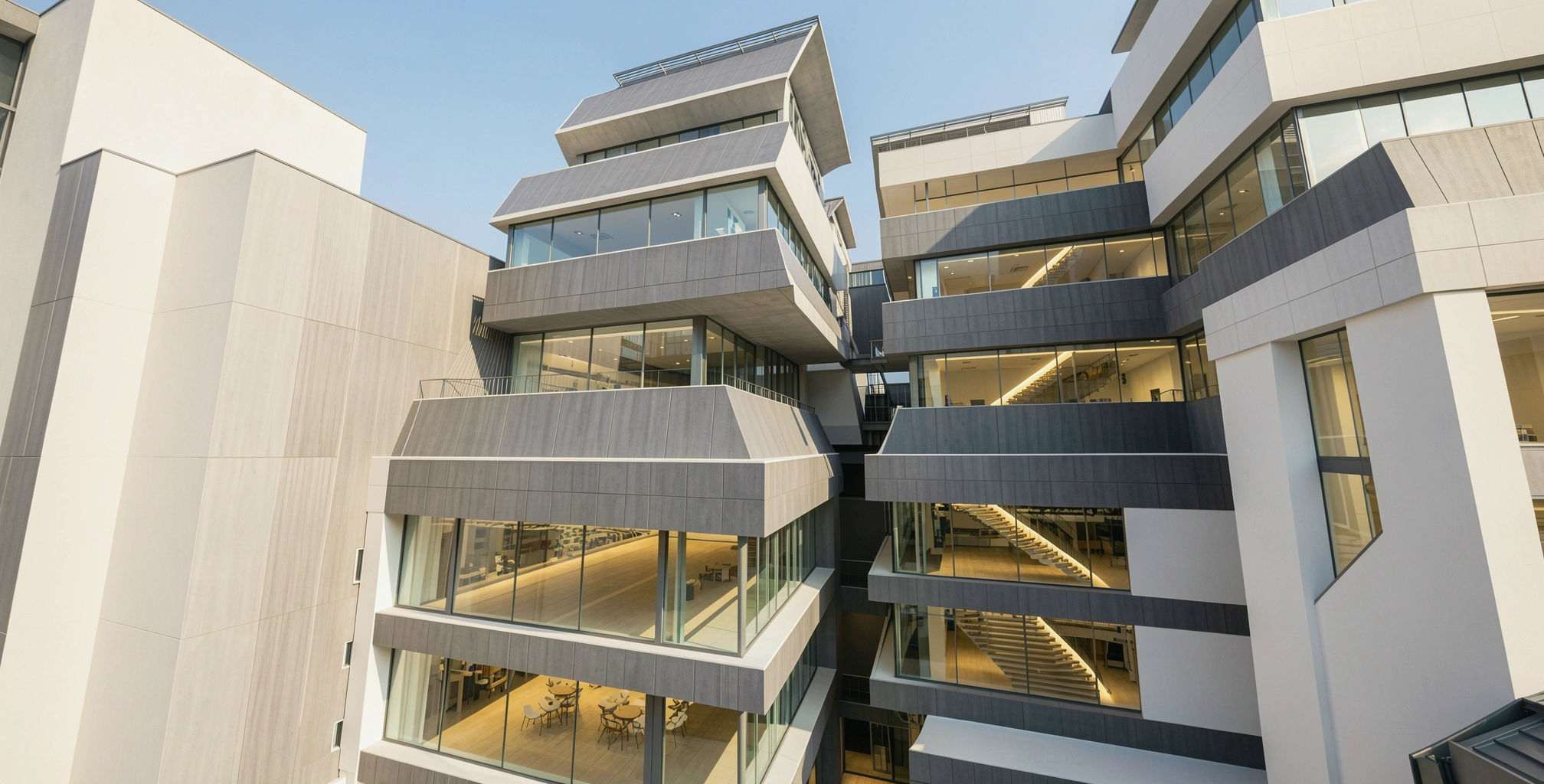
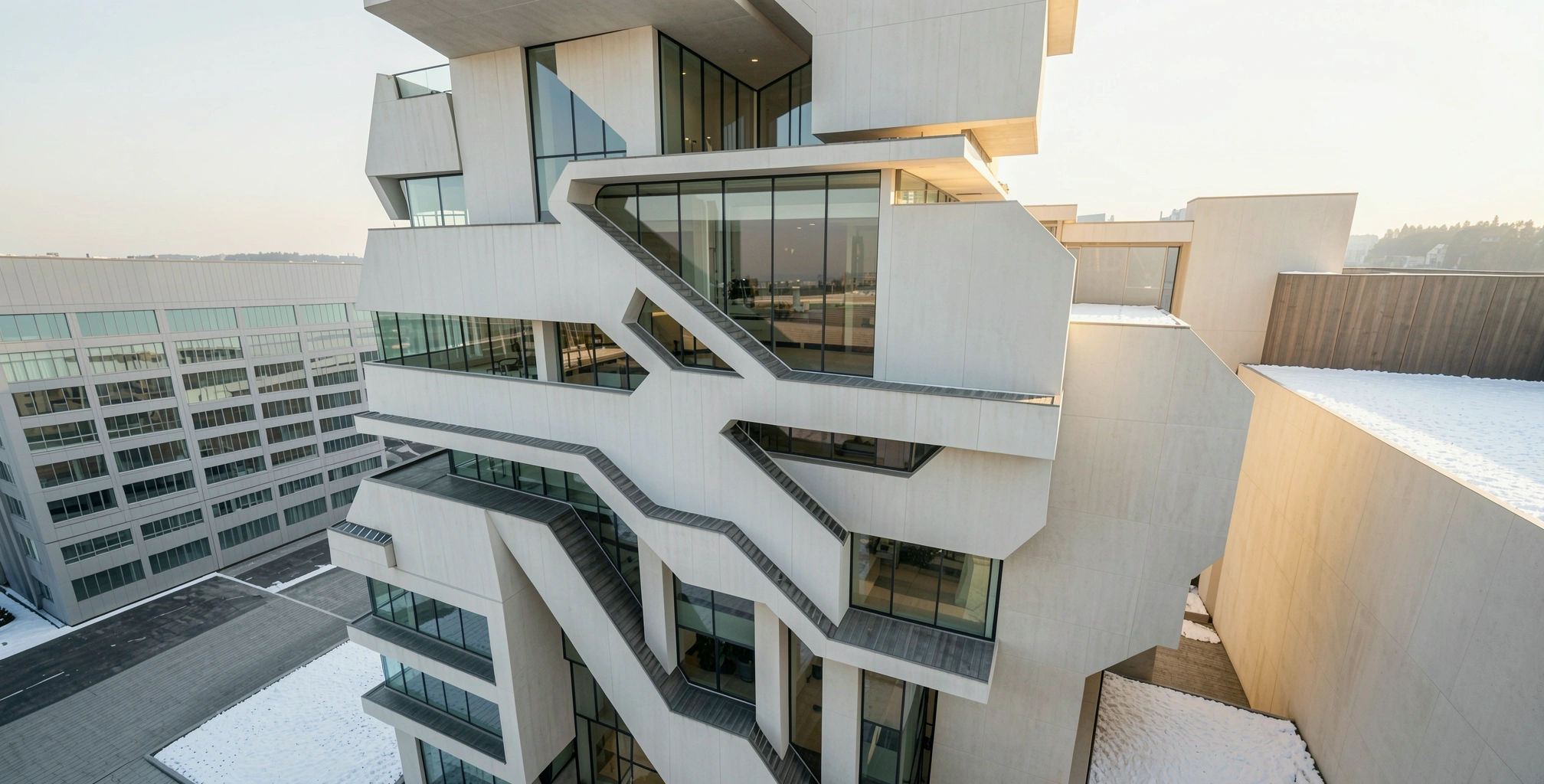
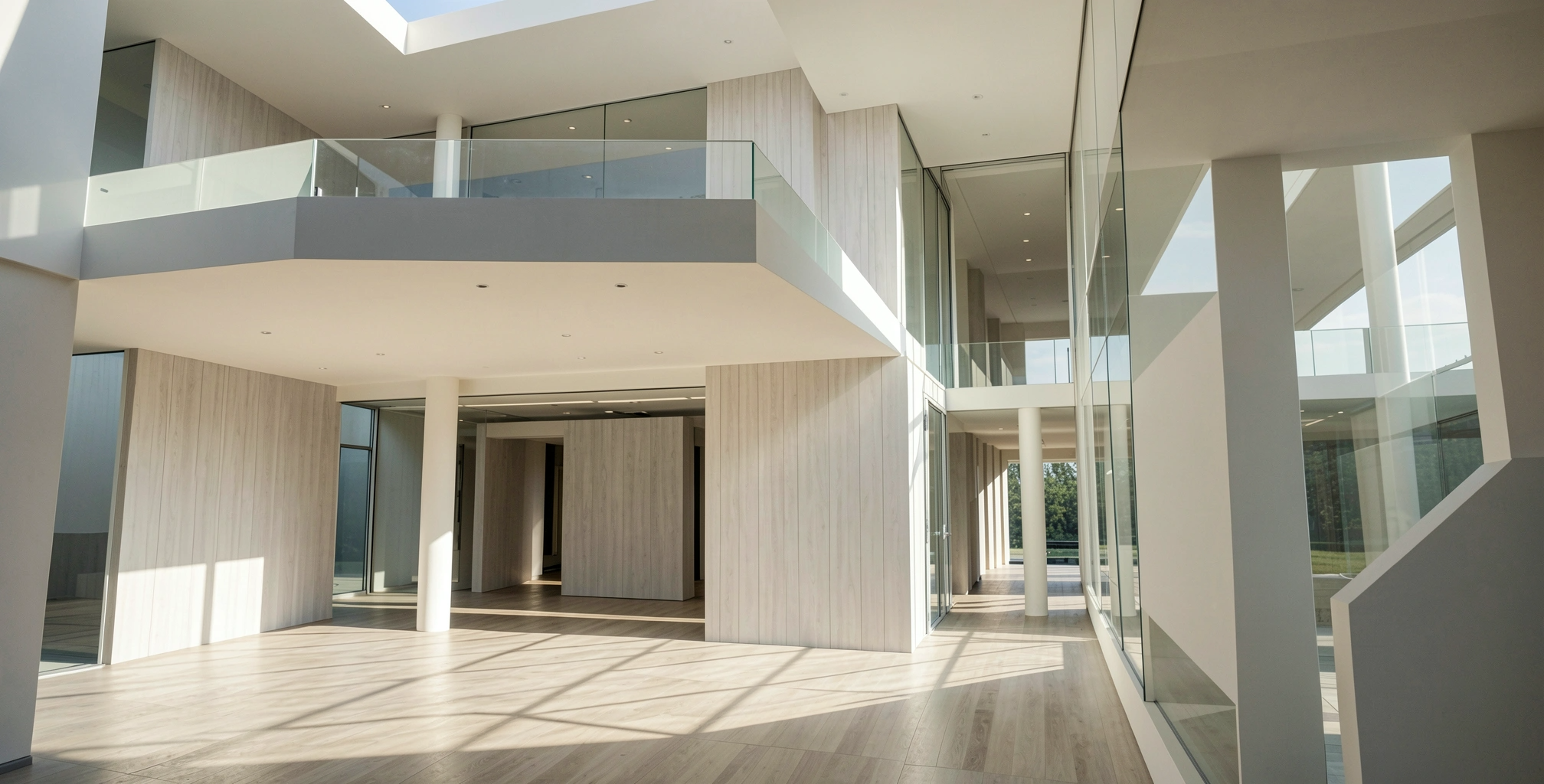
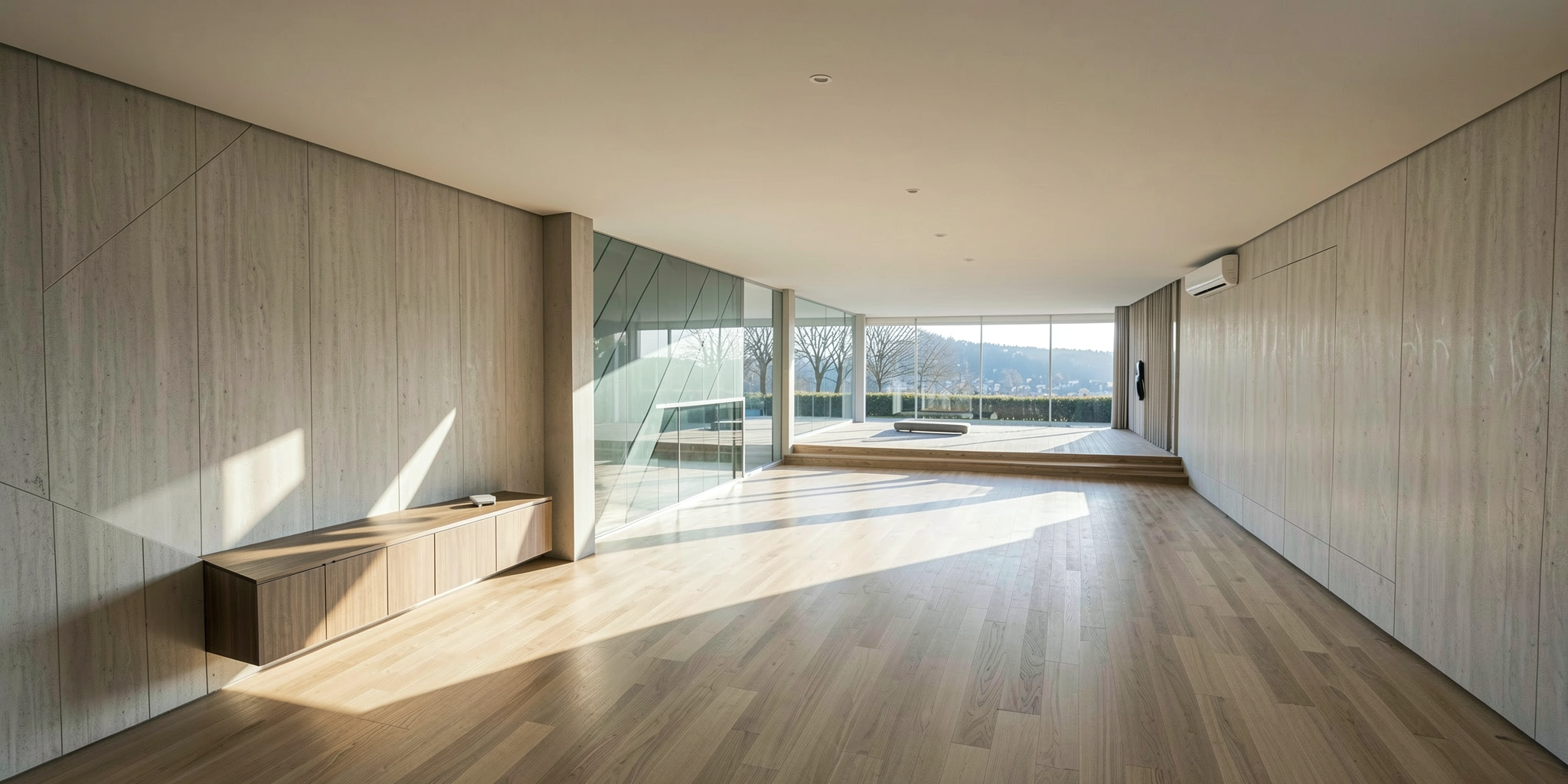
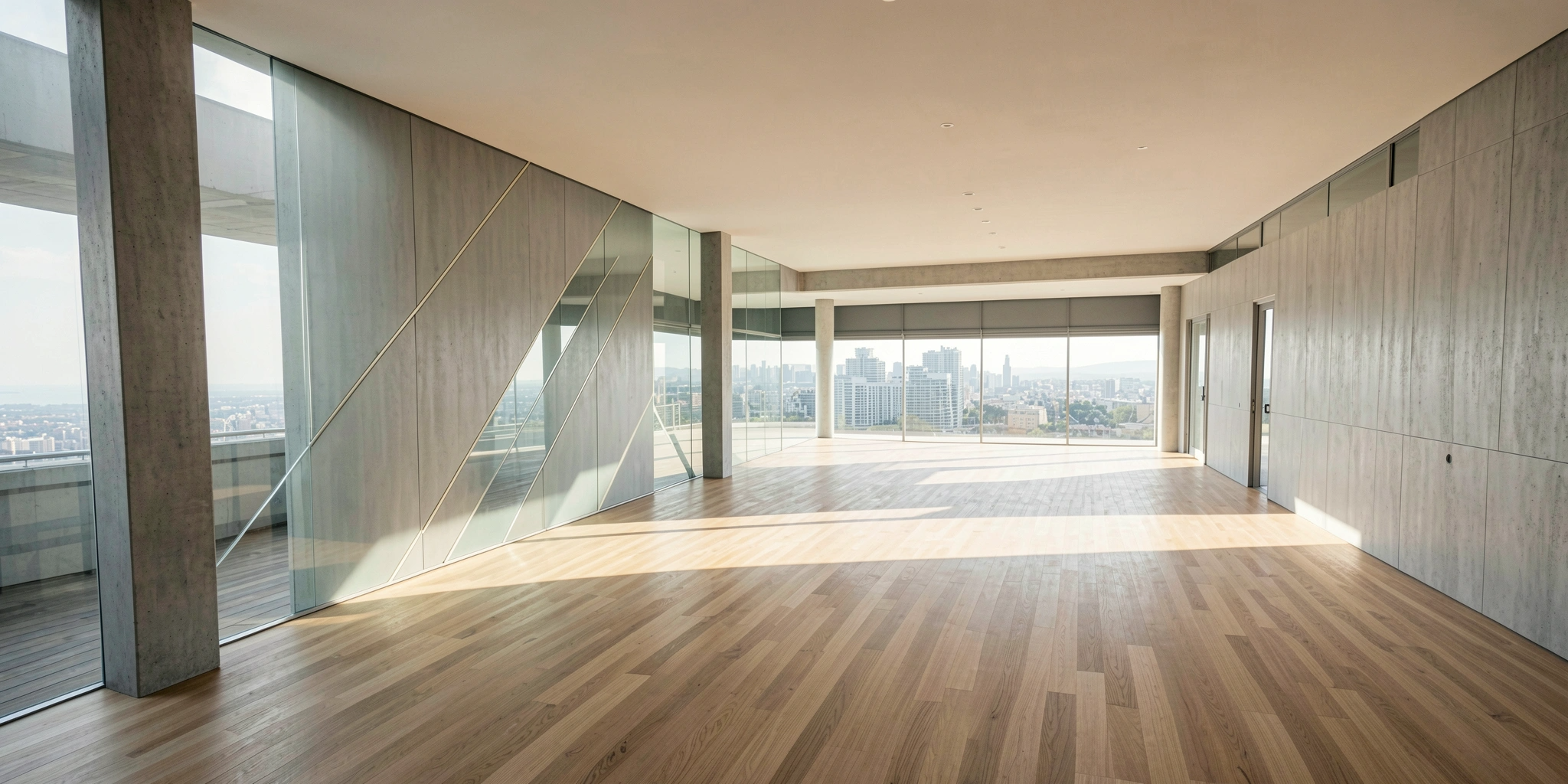
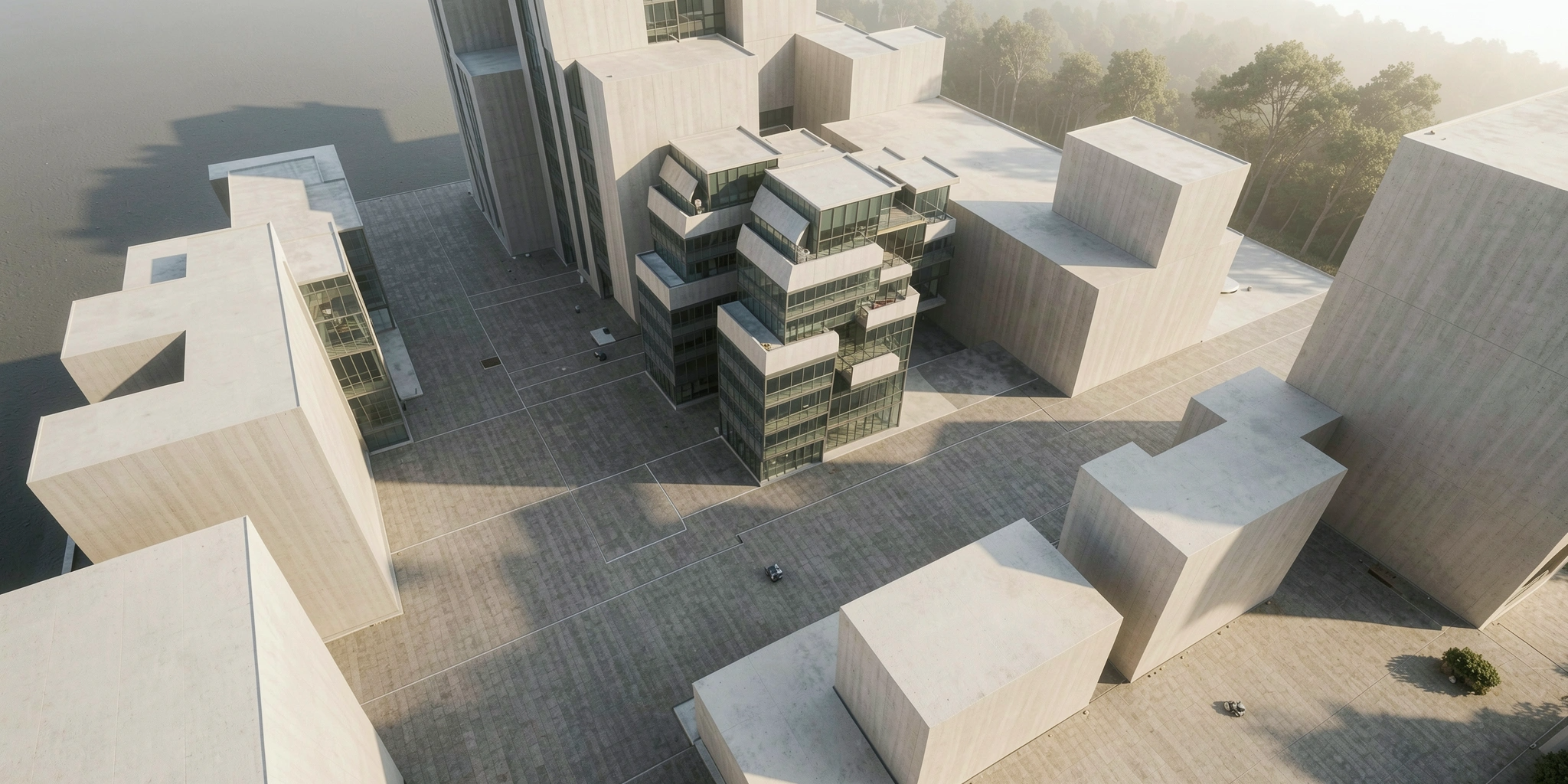
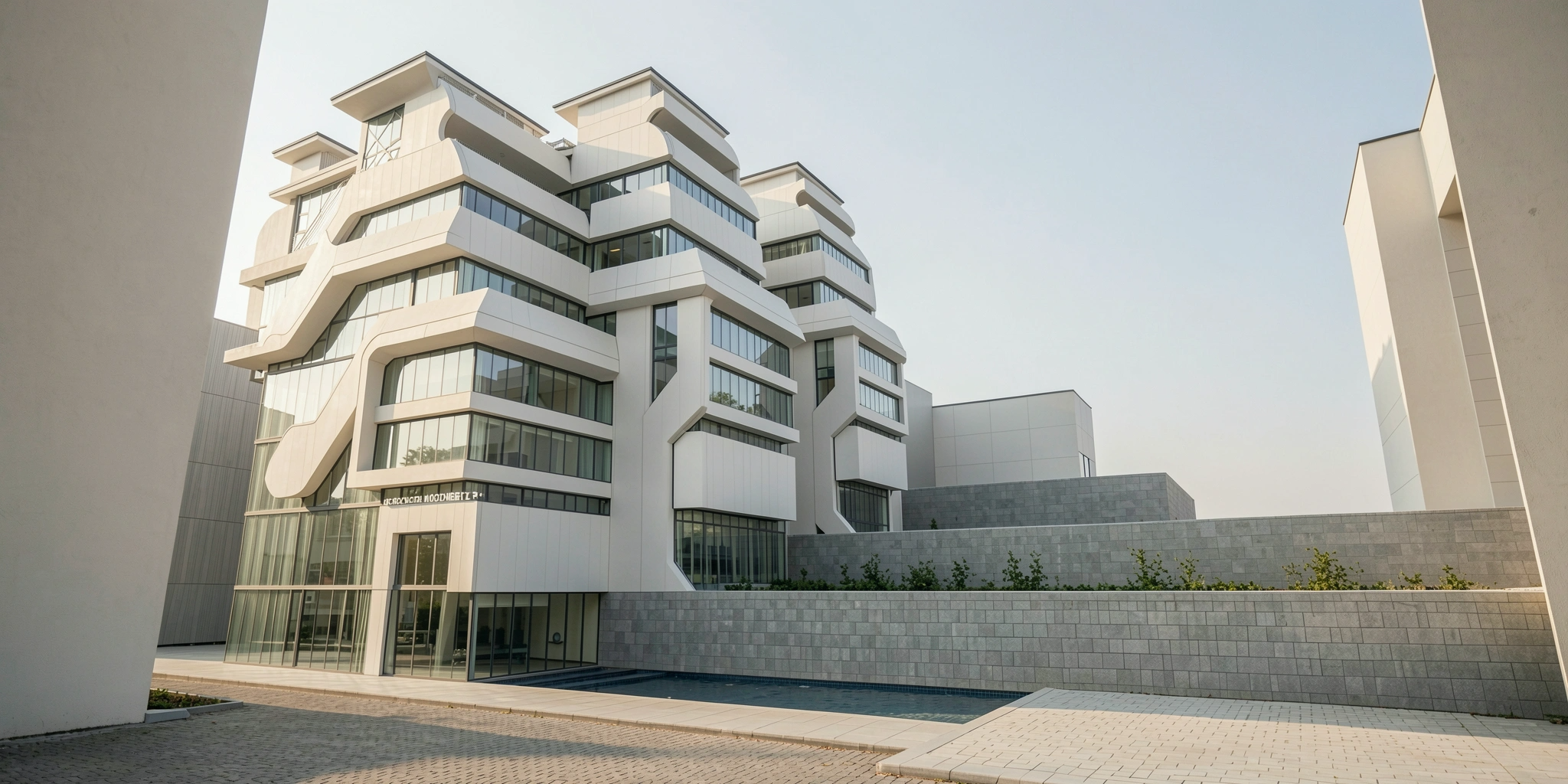
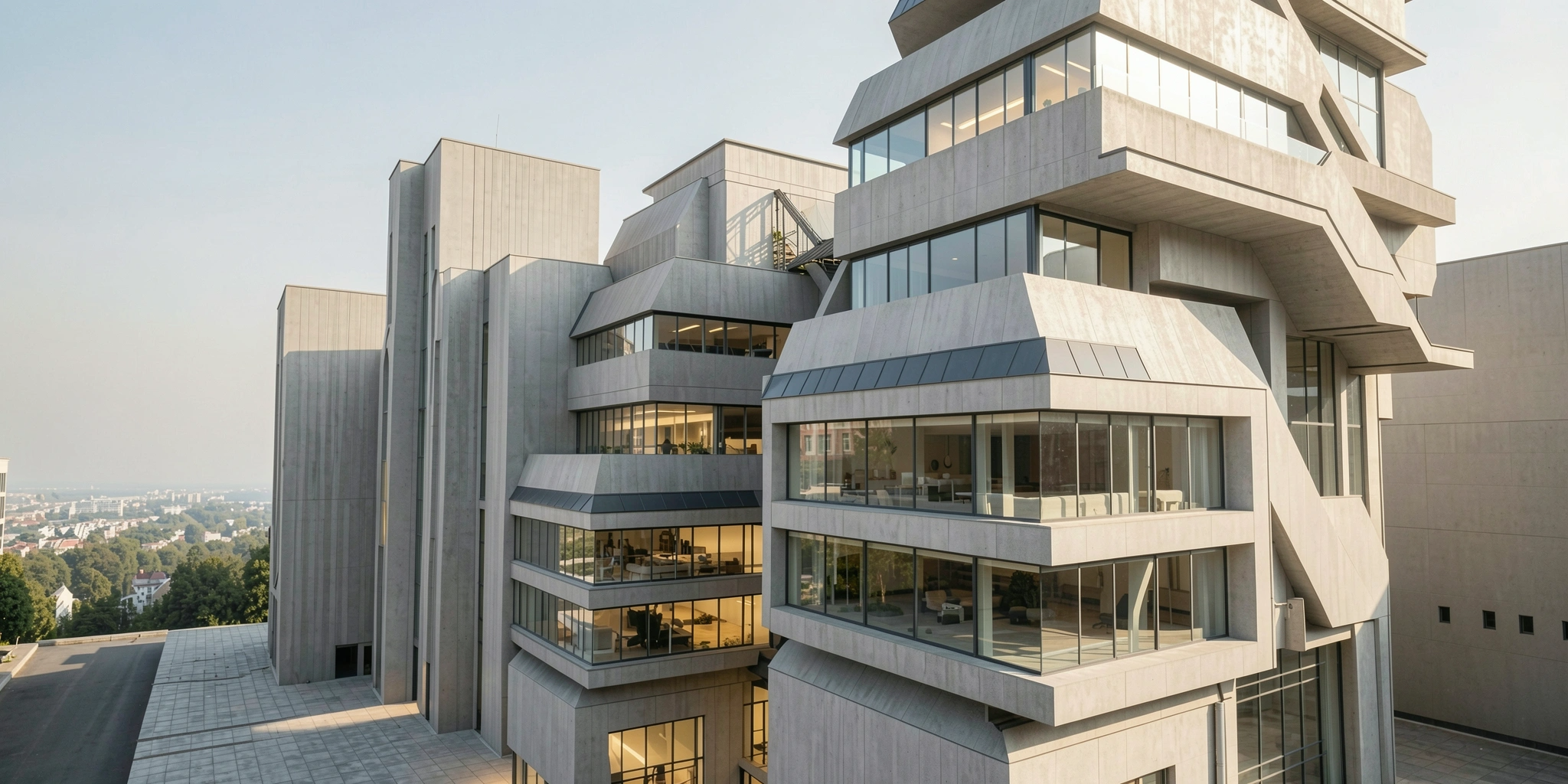
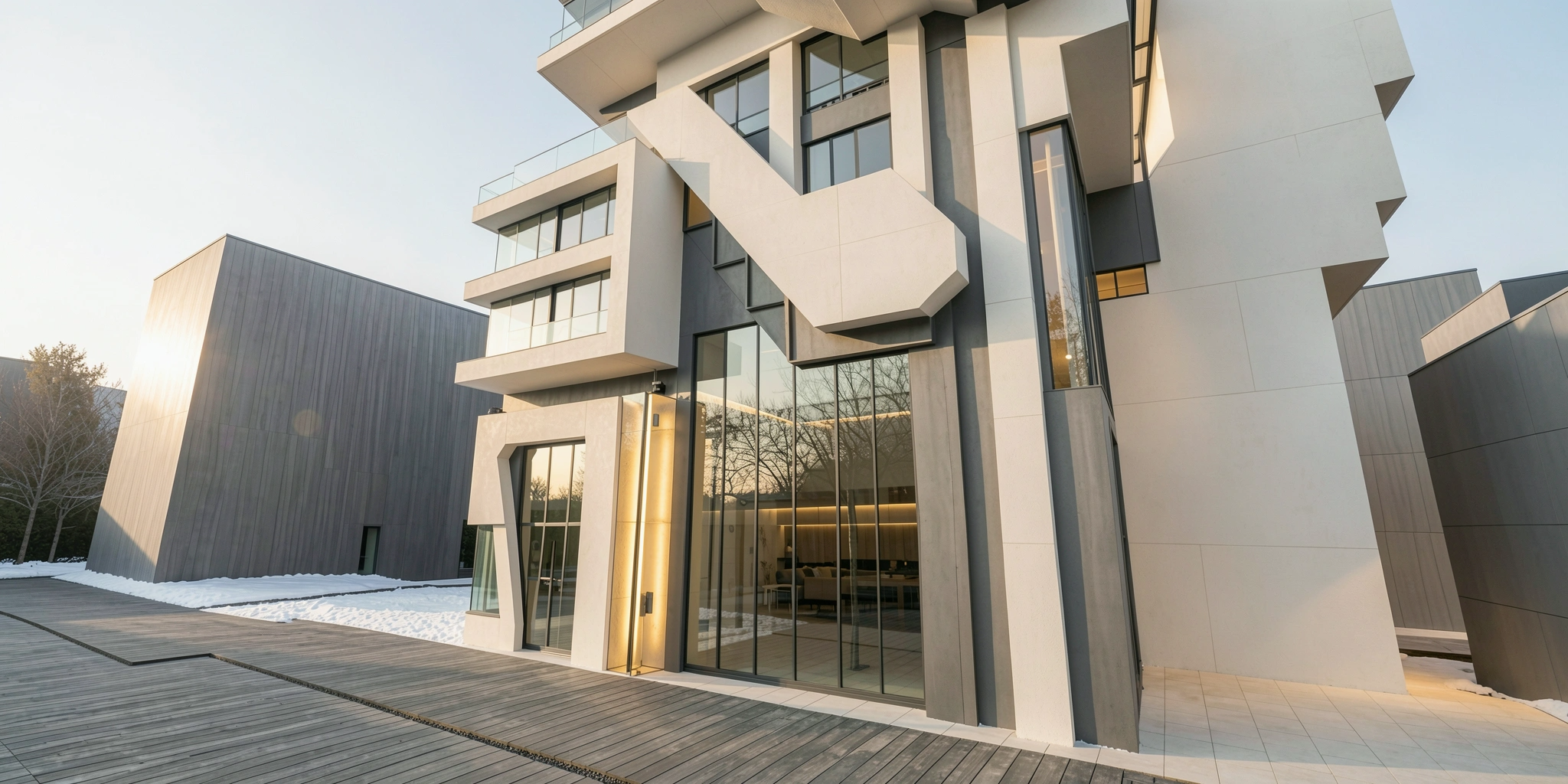
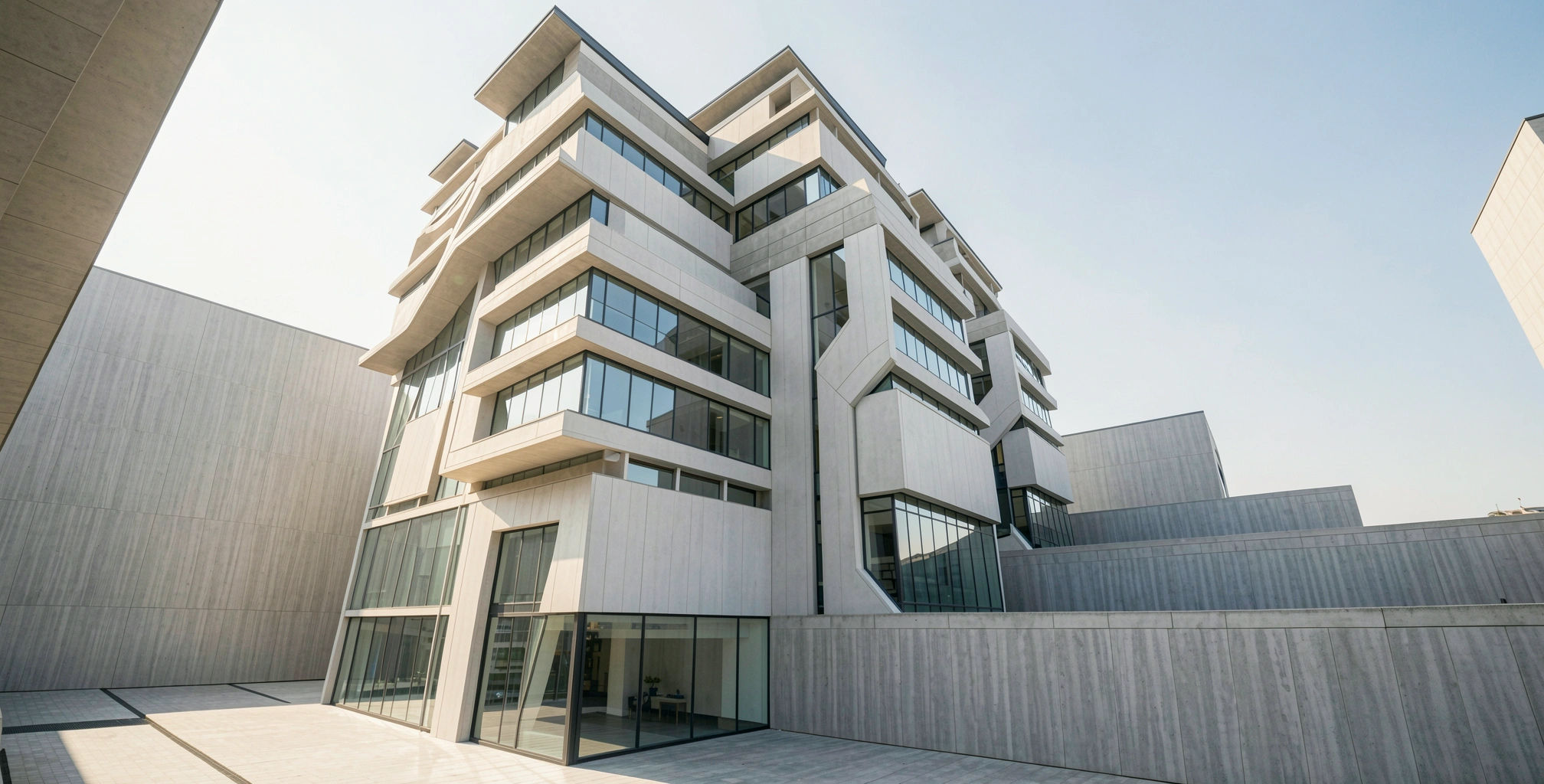
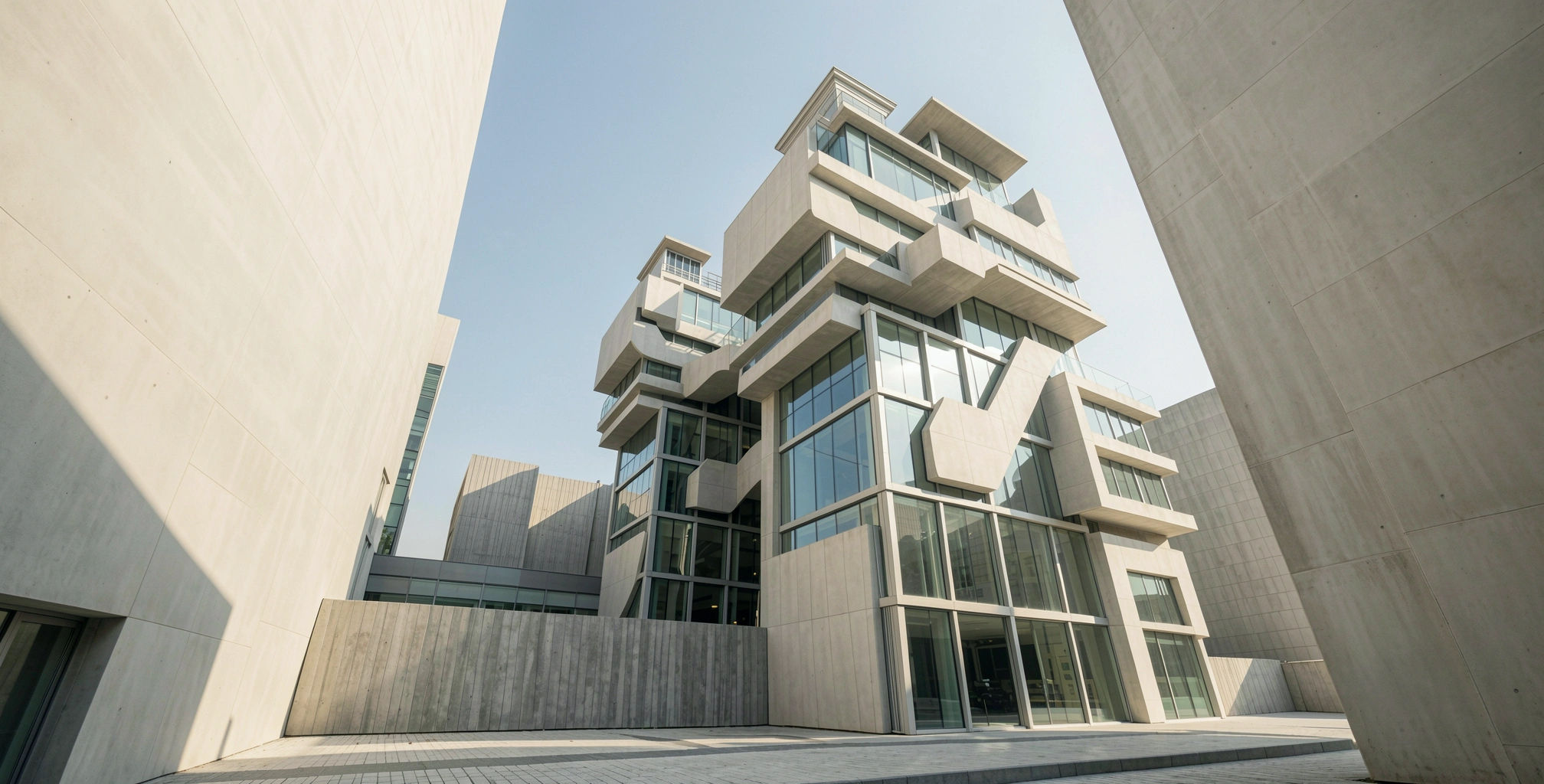
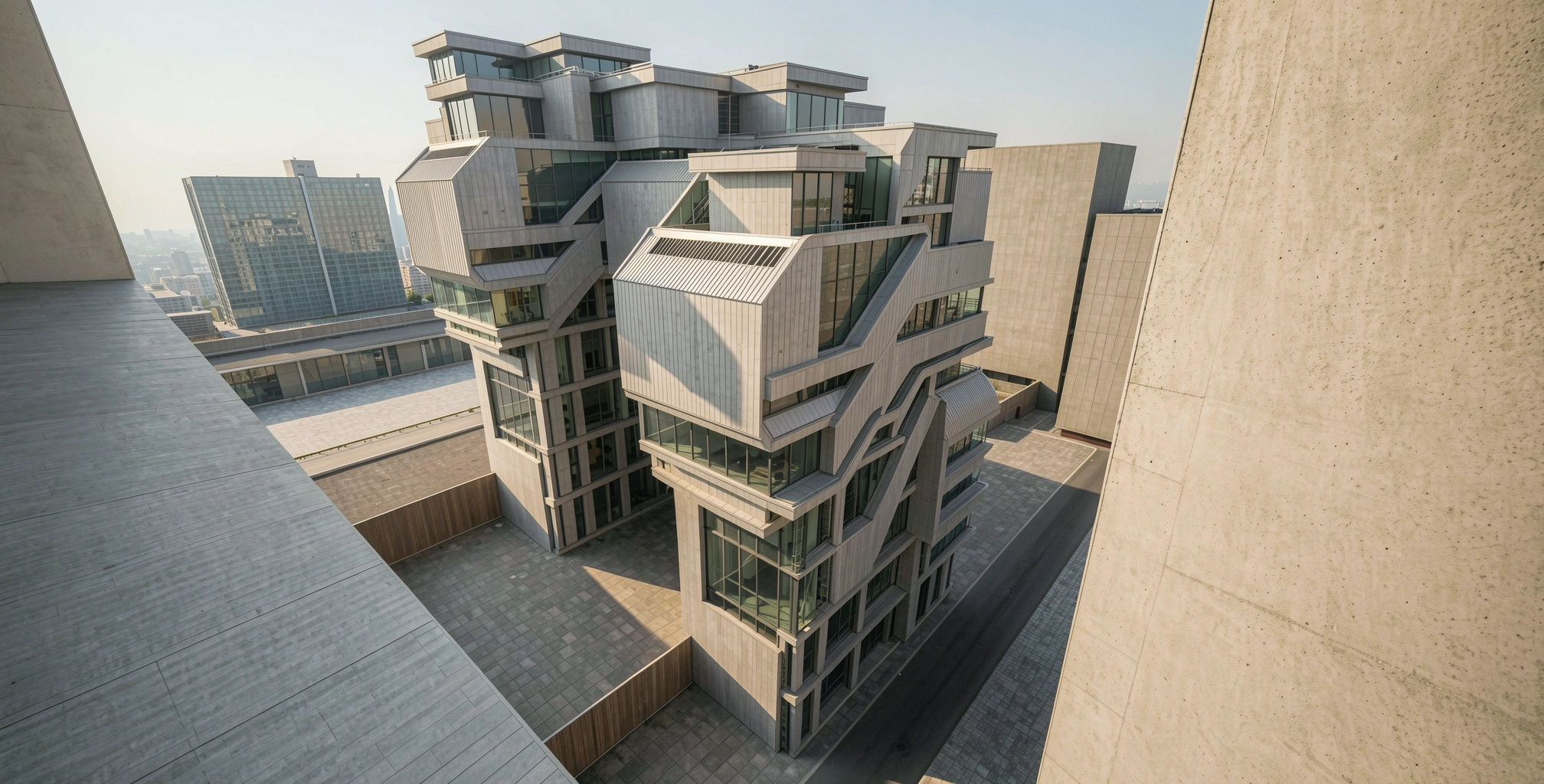
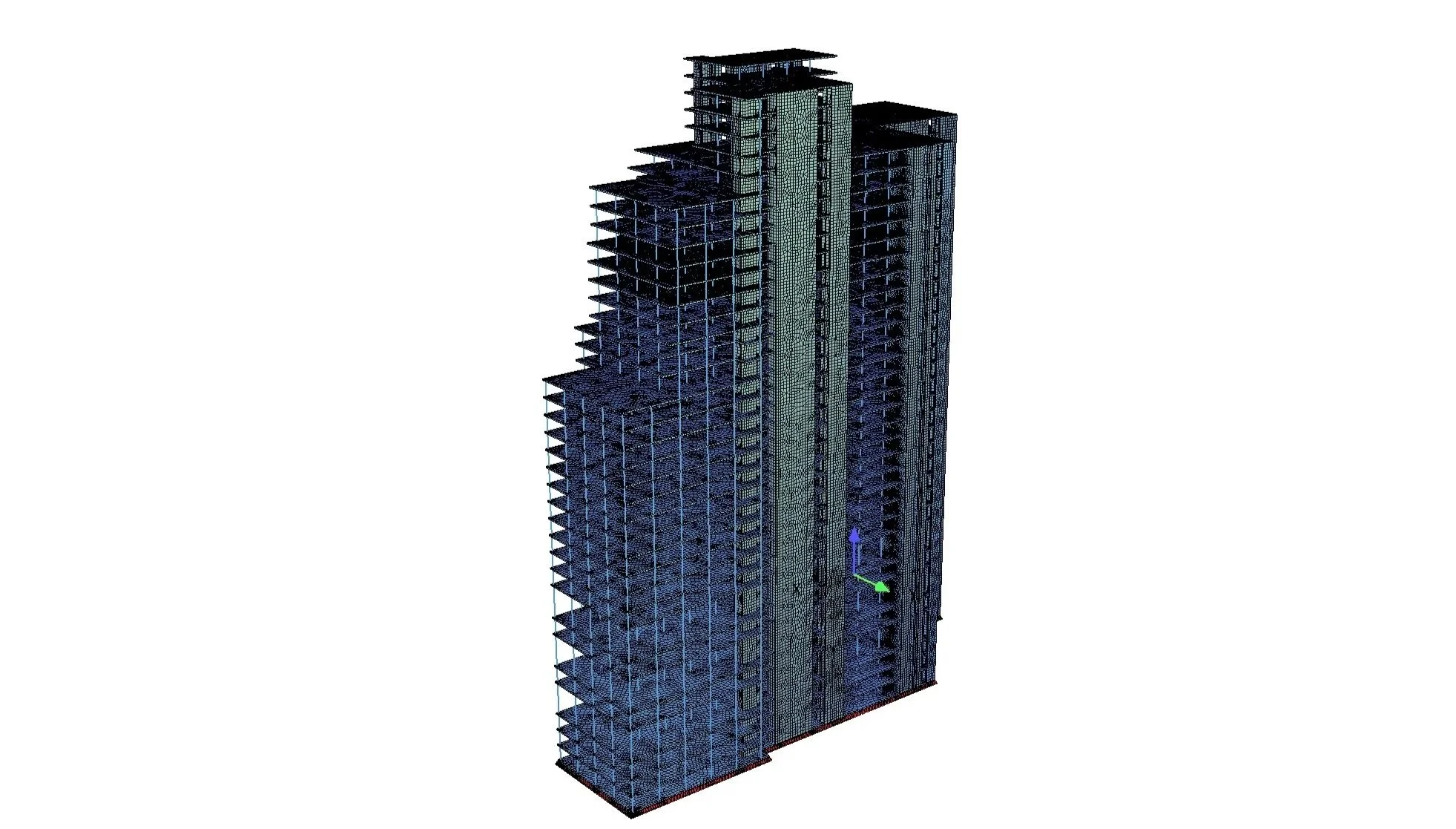
The Residential Hotel is organised around the principle that environmental performance should emerge through the arrangement of structure, space and enclosure rather than through the application of technical systems alone. The project uses a regular structural framework as a stable organisational order within which environmental conditions can be carefully adjusted in response to orientation, climate, privacy and patterns of occupation.
A reinforced concrete frame establishes the primary structure of the building. Columns and floor slabs are arranged on a regular grid, creating clear load paths and a repeatable framework for construction. This structural order supports a diverse range of apartment layouts while providing the consistency necessary for efficient construction and long-term adaptability. The façade is aligned directly with the structural frame, ensuring that enclosure and structure operate as coordinated systems rather than independent layers.
Within this framework, individual apartments are conceived as distinct environmental units. Each dwelling is organised to maximise access to daylight, natural ventilation and external views while maintaining privacy and acoustic comfort. Rather than relying on deep-plan arrangements and internal lightwells, the building is shaped to increase exposure to the external environment, allowing living spaces to benefit from multiple sources of light and air.
The façade plays a central role in this environmental strategy. Balconies, recesses and projecting elements create a series of intermediate zones between interior and exterior conditions. These spaces provide shading, moderate solar gain and support natural ventilation while extending the living environment beyond the enclosed apartment. The building therefore operates through a layered environmental envelope rather than a simple boundary between inside and outside.
Environmental responses vary according to orientation and exposure. Elevations subject to greater solar gain incorporate deeper shading elements and more substantial environmental buffering, while more protected elevations allow increased glazing and greater access to daylight. Openings are positioned to support cross-ventilation through apartments, enabling fresh air to move naturally through living spaces while reducing dependence on mechanical systems.
Privacy and environmental performance are developed together. The arrangement of openings, balconies and façade projections allows daylight and ventilation to be maximised without compromising visual separation between neighbouring apartments. Acoustic performance is similarly integrated within the environmental strategy, ensuring that natural ventilation can be achieved while maintaining comfortable internal conditions in an urban setting.
Material selection and detailing support this environmental calibration. Shading devices, glazing systems and cladding elements are dimensioned in relation to the structural grid while allowing controlled variation in depth, projection and performance. Fixing systems accommodate thermal movement and construction tolerances, ensuring that environmental adjustments can be achieved without compromising alignment or durability.
The external appearance of the building emerges directly from these environmental decisions. Differences in façade depth, shading and articulation correspond to changing environmental requirements across the building. The structural framework provides a consistent order, while variations in the envelope express differences in solar exposure, daylight access and patterns of occupation.
This project demonstrates how residential architecture can achieve richness and variety through environmental response rather than formal complexity. By integrating structure, enclosure and climate within a coordinated architectural framework, the building creates living environments that are comfortable, adaptable and closely connected to their surroundings. Architectural expression emerges from the careful calibration of environmental performance, making the operation of the building visible through its construction.