Theoretical Basis of a Structural Strategy for a College Campus Building

Log in to Modern Construction Online for project case study

Introduction

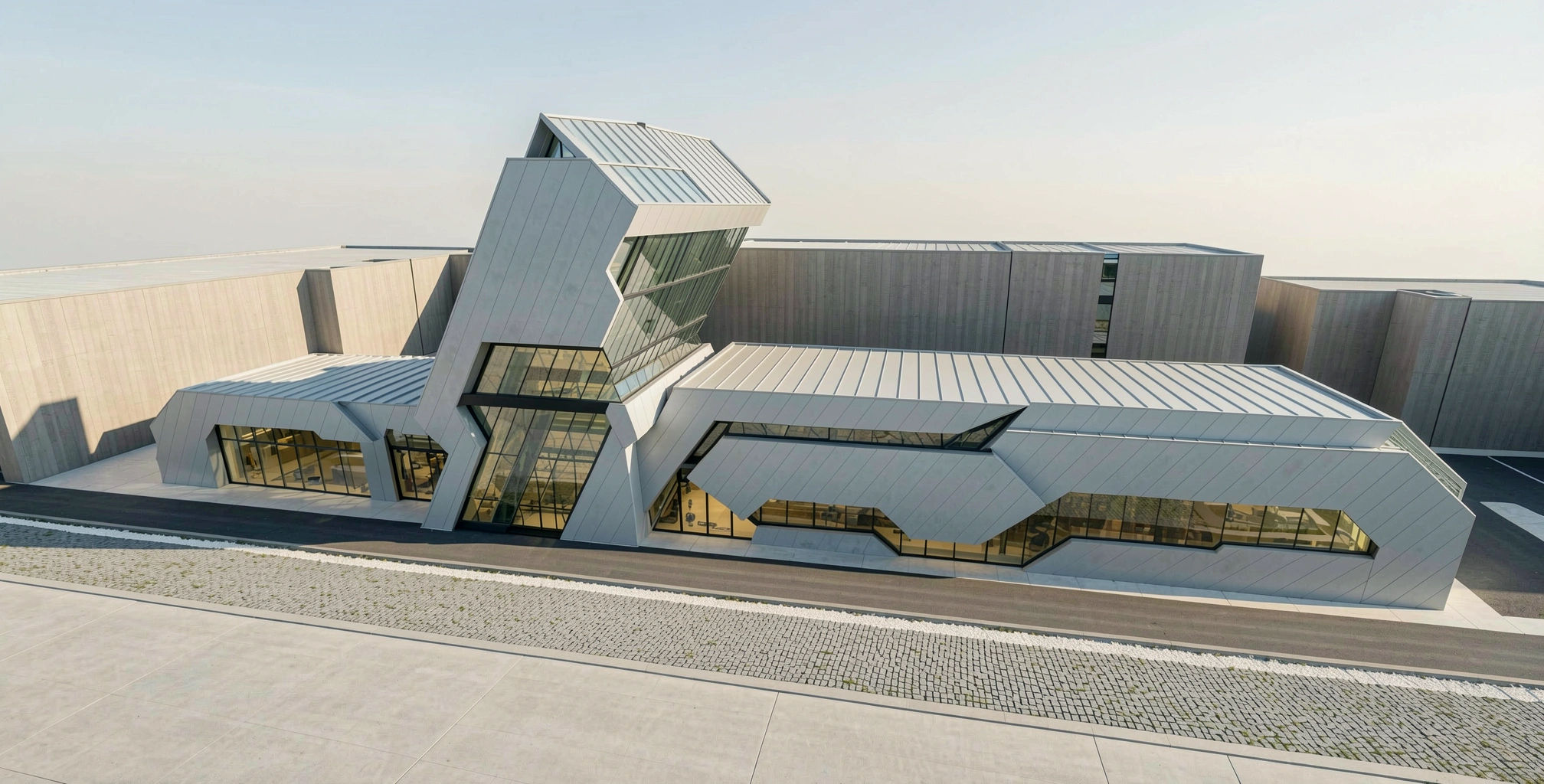
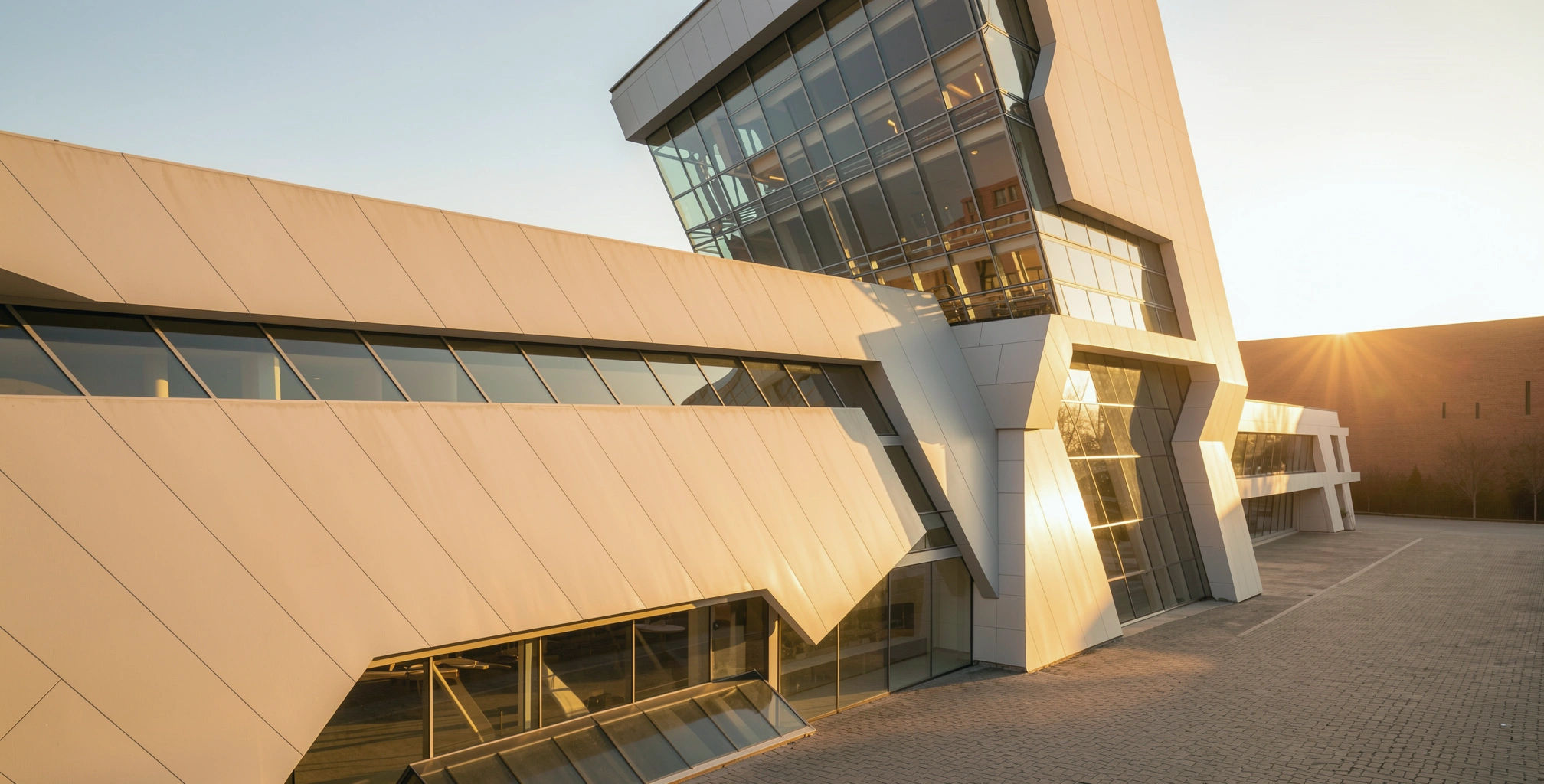
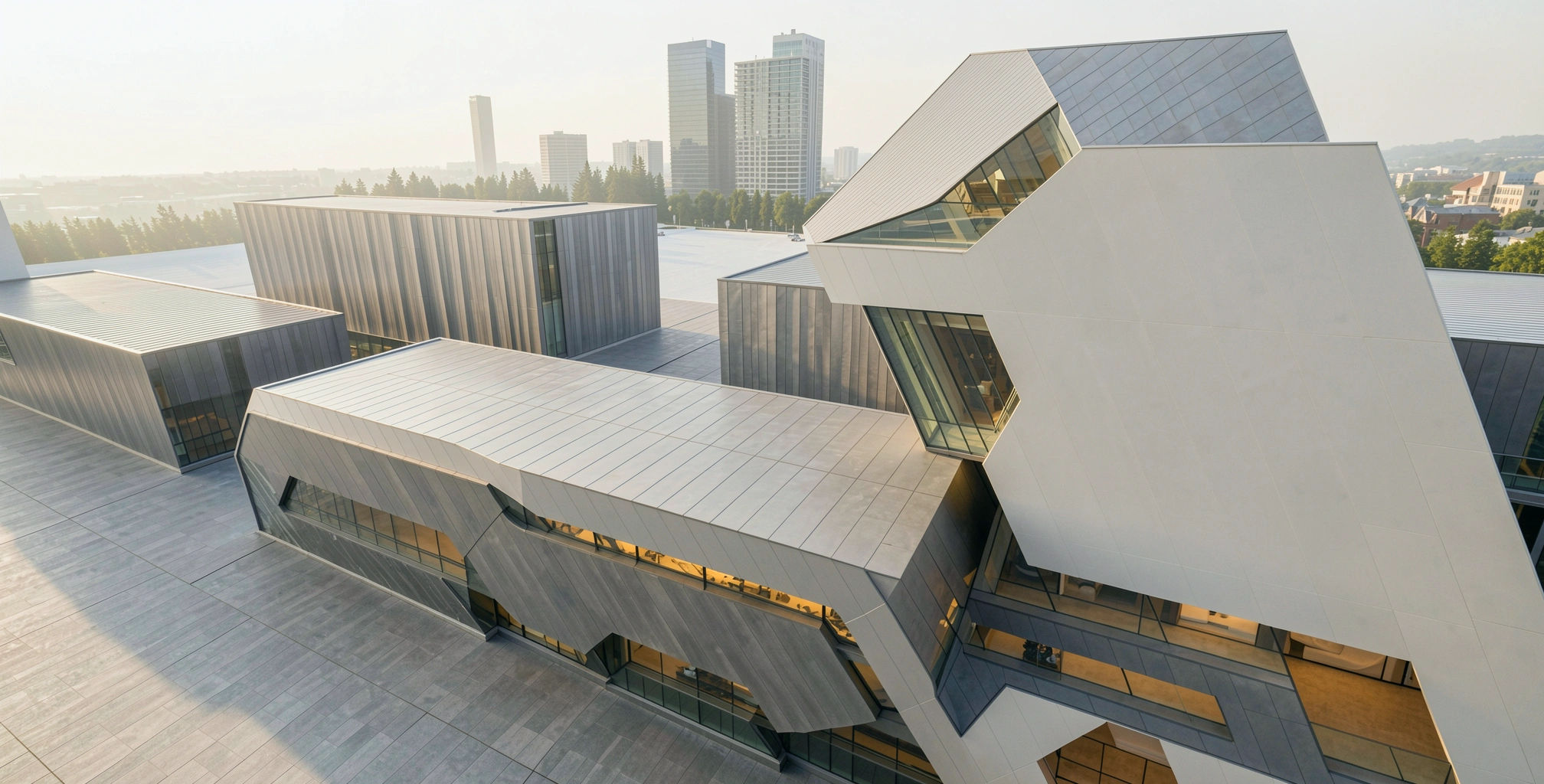
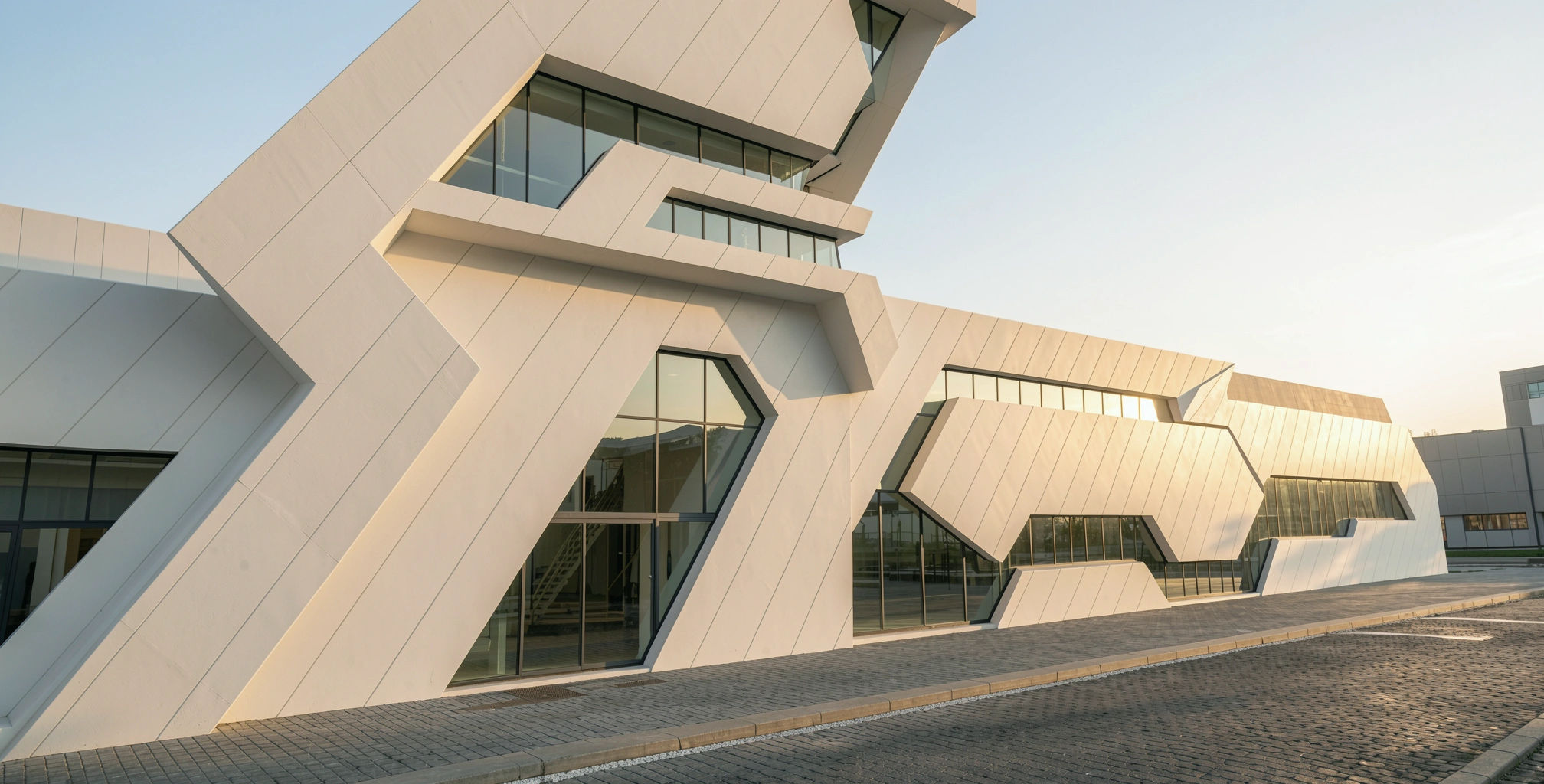
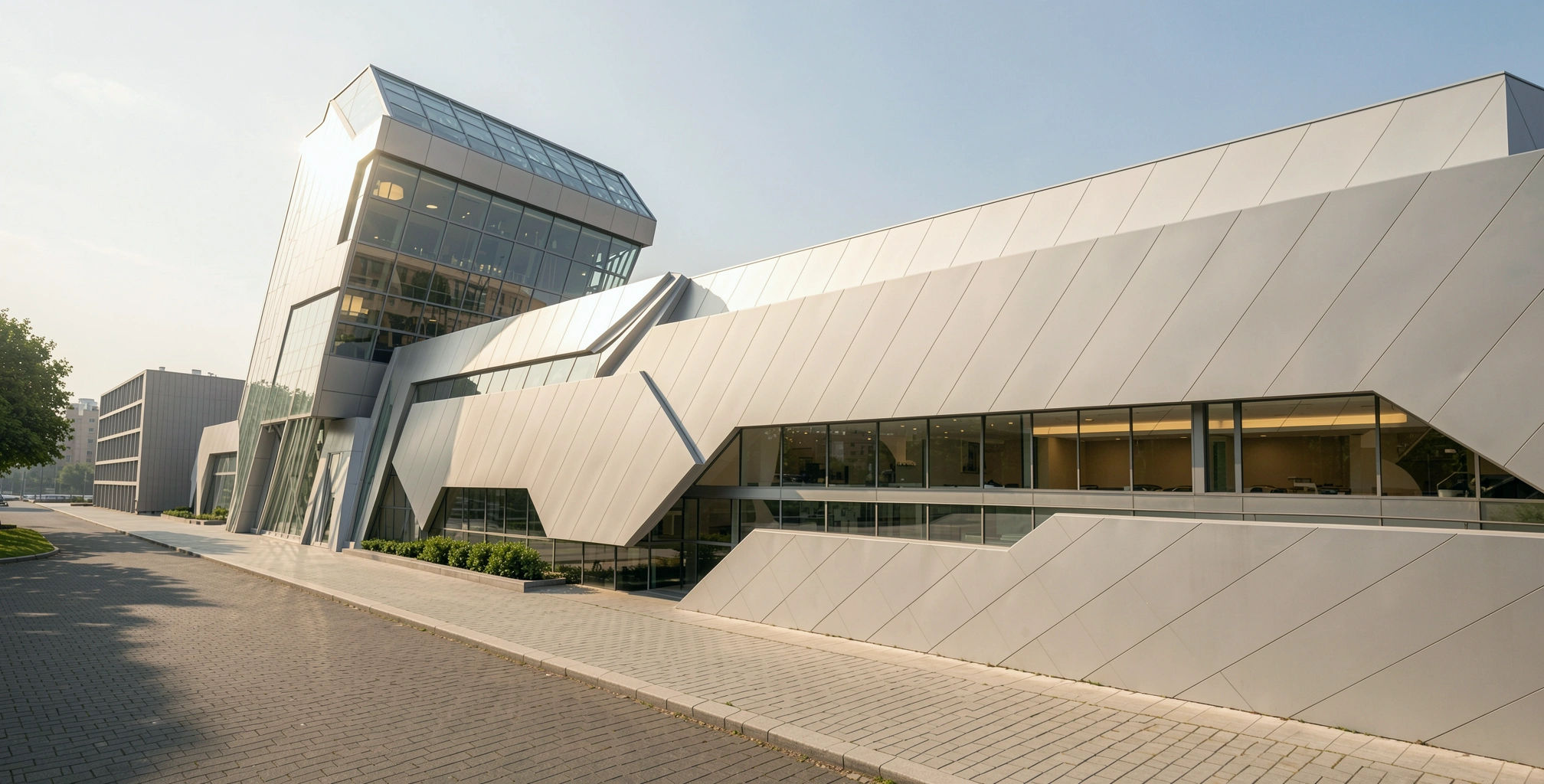
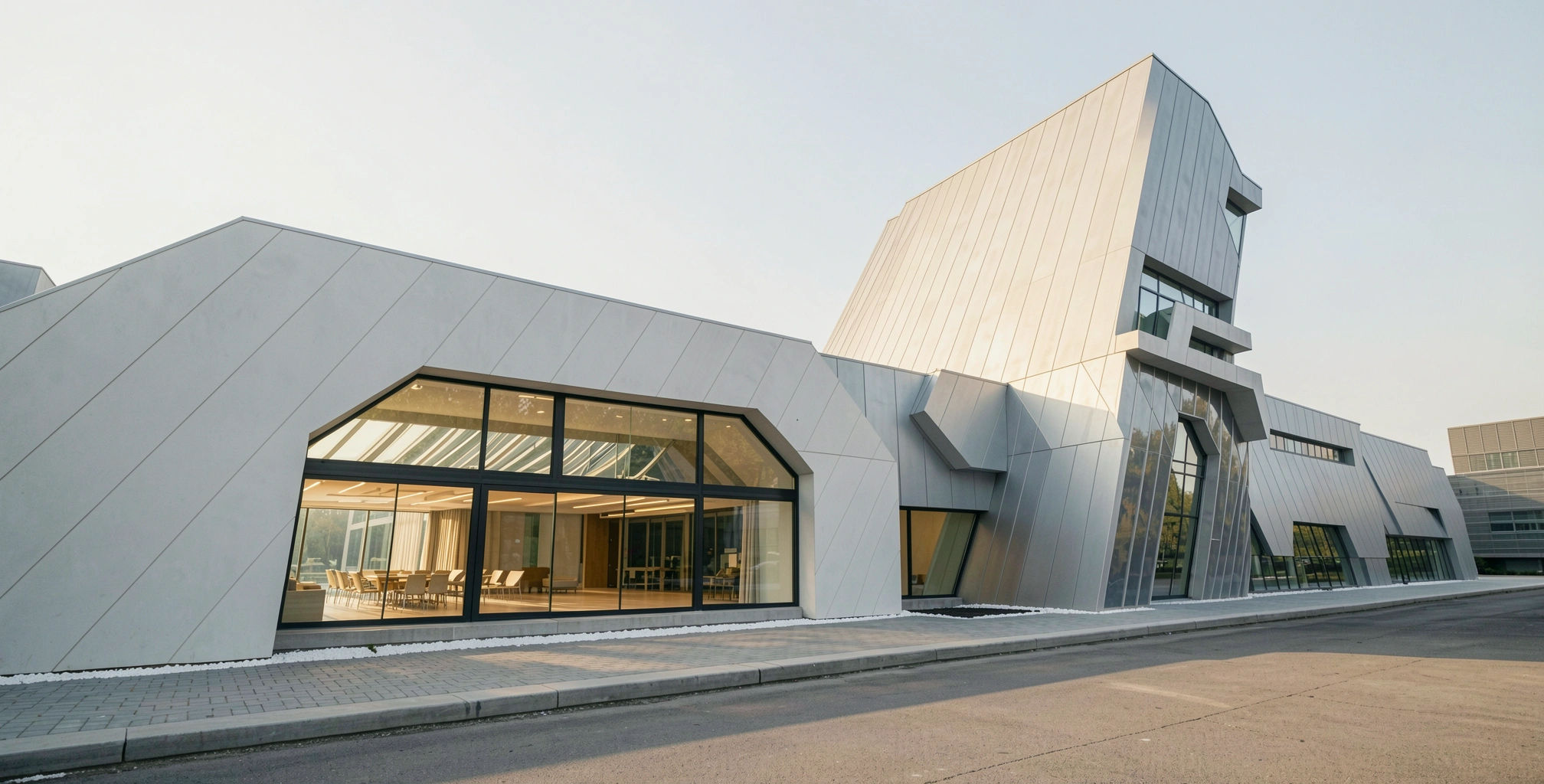
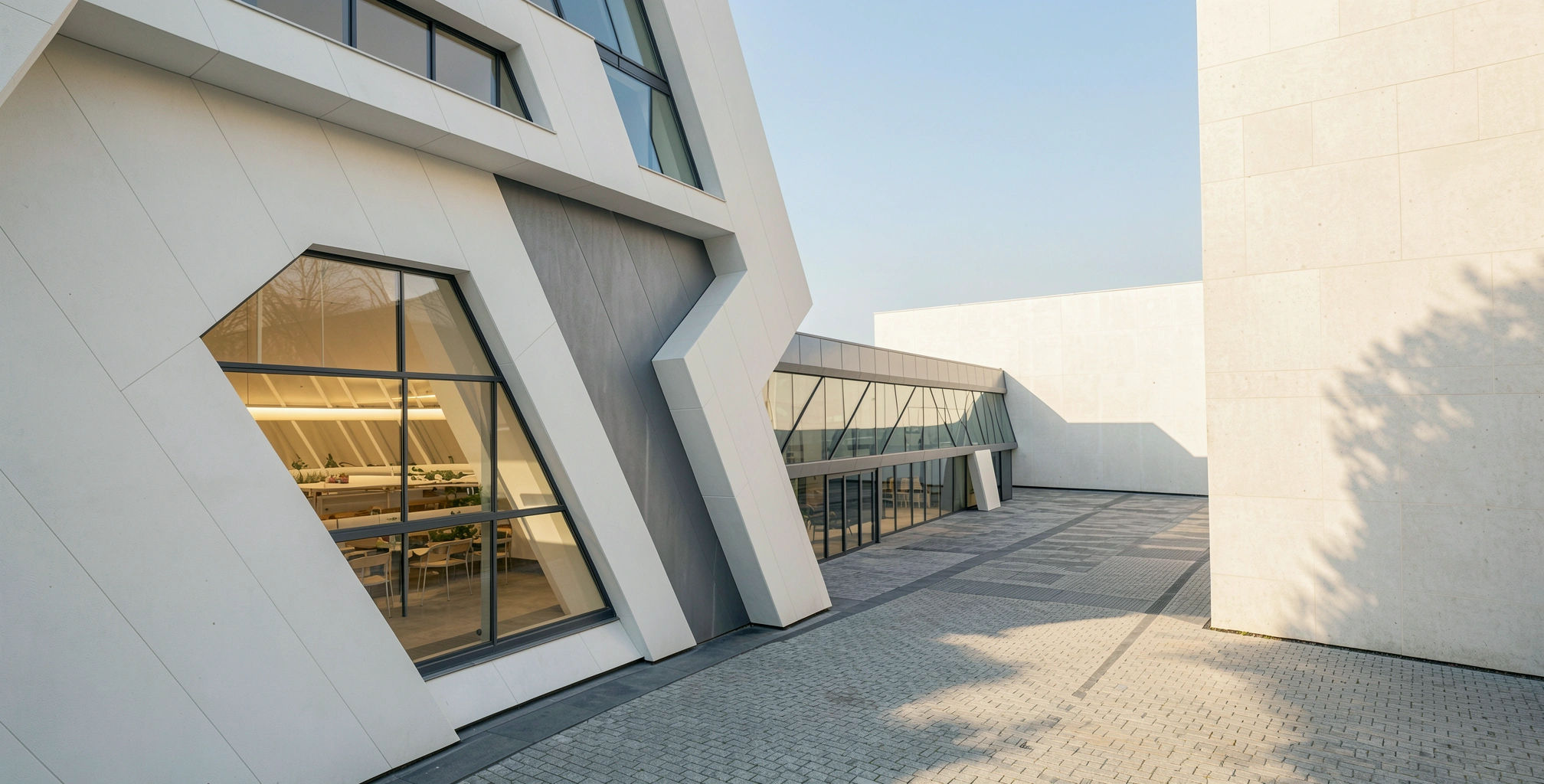
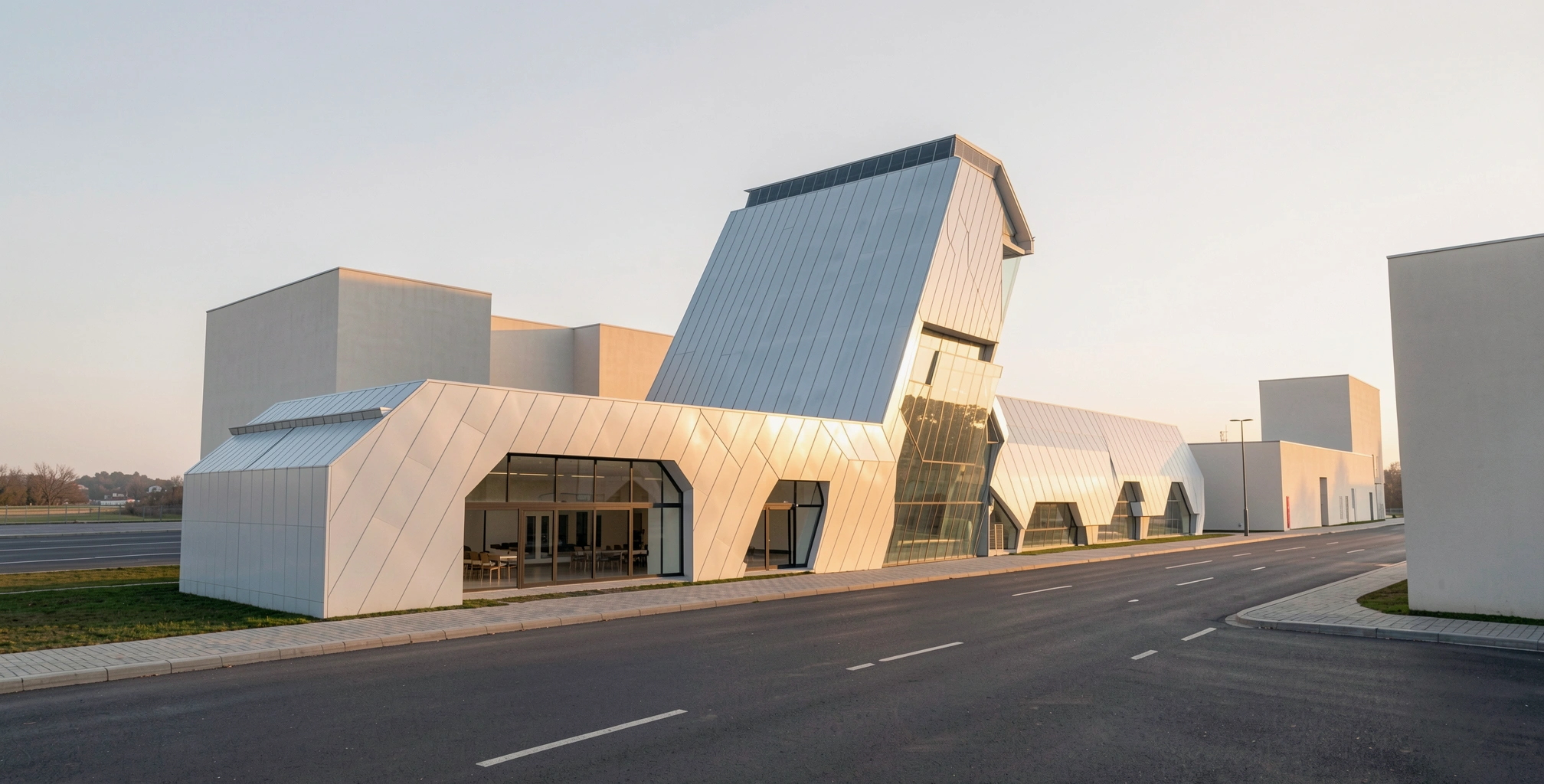
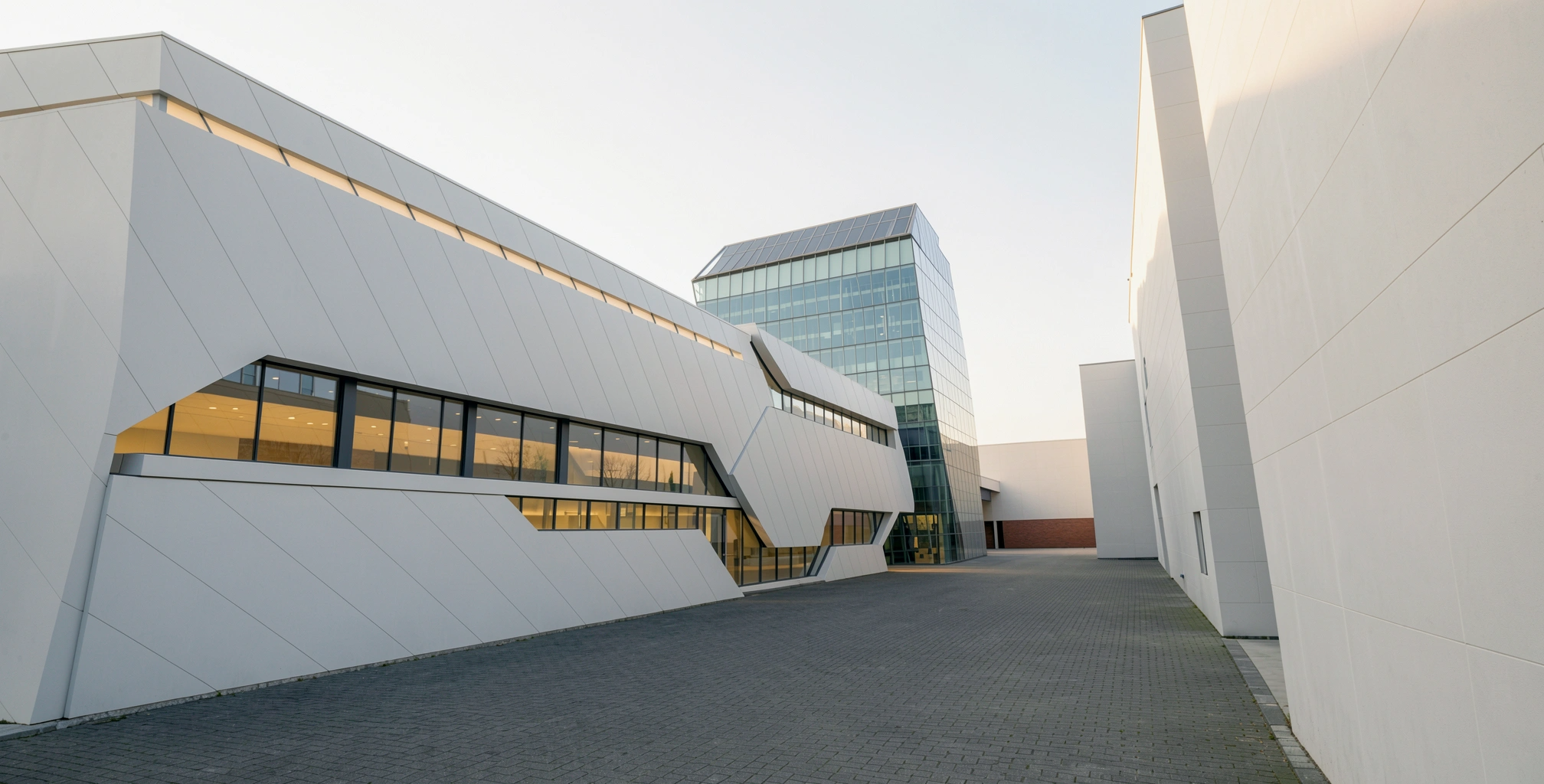
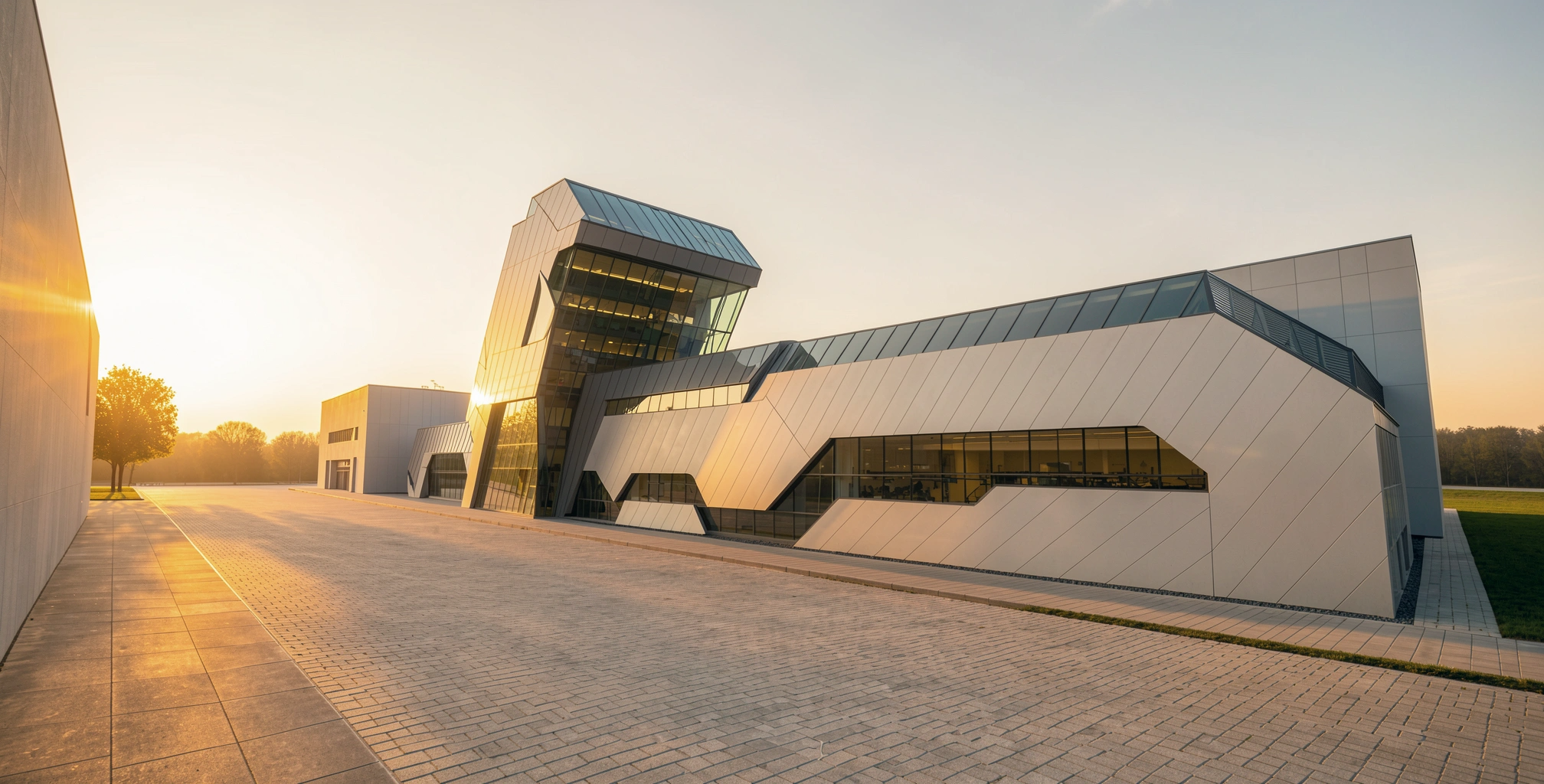
The structural strategy adopted for this college campus building responds holistically to its spatial programme, environmental context, and construction objectives. Located in a temperate climate, the building balances thermal performance, material economy, and daylight optimisation. Central to this strategy is a reinforced concrete frame supporting glass-fibre reinforced concrete (GFRC) façade panels, integrated diaphragm walls, and a rational grid system that aligns with spatial and climatic needs. The design is further shaped by a strong relationship between structure and envelope, allowing architectural articulation without compromising structural clarity or buildability.

Structural Typology and Material Rationalisation

A reinforced concrete frame provides the building’s primary structural system, selected for its inherent fire resistance, acoustic performance, durability, and capacity to provide thermal mass—particularly effective in temperate climates where seasonal variation demands adaptive thermal moderation (Givoni, 1998; Macdonald, 2001). Concrete’s high heat capacity helps to stabilise indoor temperatures by absorbing daytime heat and releasing it at night, thus reducing reliance on active cooling systems (Olgyay, 2015). Flat slab construction is employed throughout the floor decks. This system, characterised by the absence of beams, enables simpler service integration, enhanced floor-to-floor spatial efficiency, and flexibility in spatial planning. It also contributes to faster construction by using repetitive formwork and reducing coordination complexity between structural and mechanical systems (Keller, 2016). GFRC panels supported directly by the concrete frame eliminate the need for secondary steelwork, which is advantageous for both thermal performance—by reducing thermal bridging—and long-term maintenance (Schlaich & Bergermann, 2005). These panels allow complex façade geometries and are lightweight, which minimises dead loads on the frame. In locations using twin-wall concrete systems, diaphragm walls with an insulation layer between two leaves provide high-performance envelopes that combine thermal mass with enhanced U-values (Smith & Quale, 2017). The twin-wall approach also permits offsite manufacturing, improving precision and reducing on-site labour and waste. Together, these systems enable an efficient construction sequence and support sustainability goals through material optimisation and prefabrication.

Environmental Control and Daylighting Integration

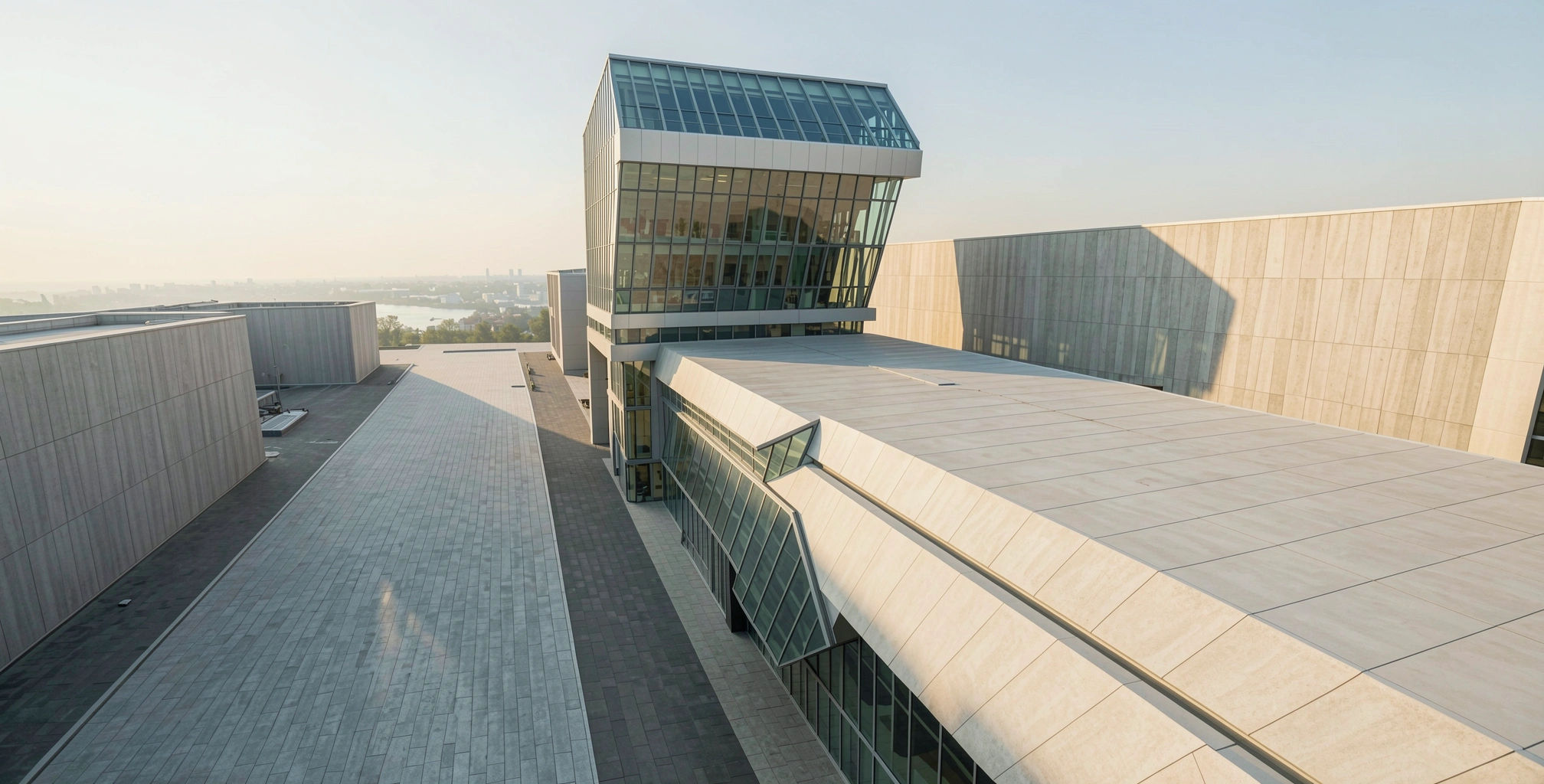
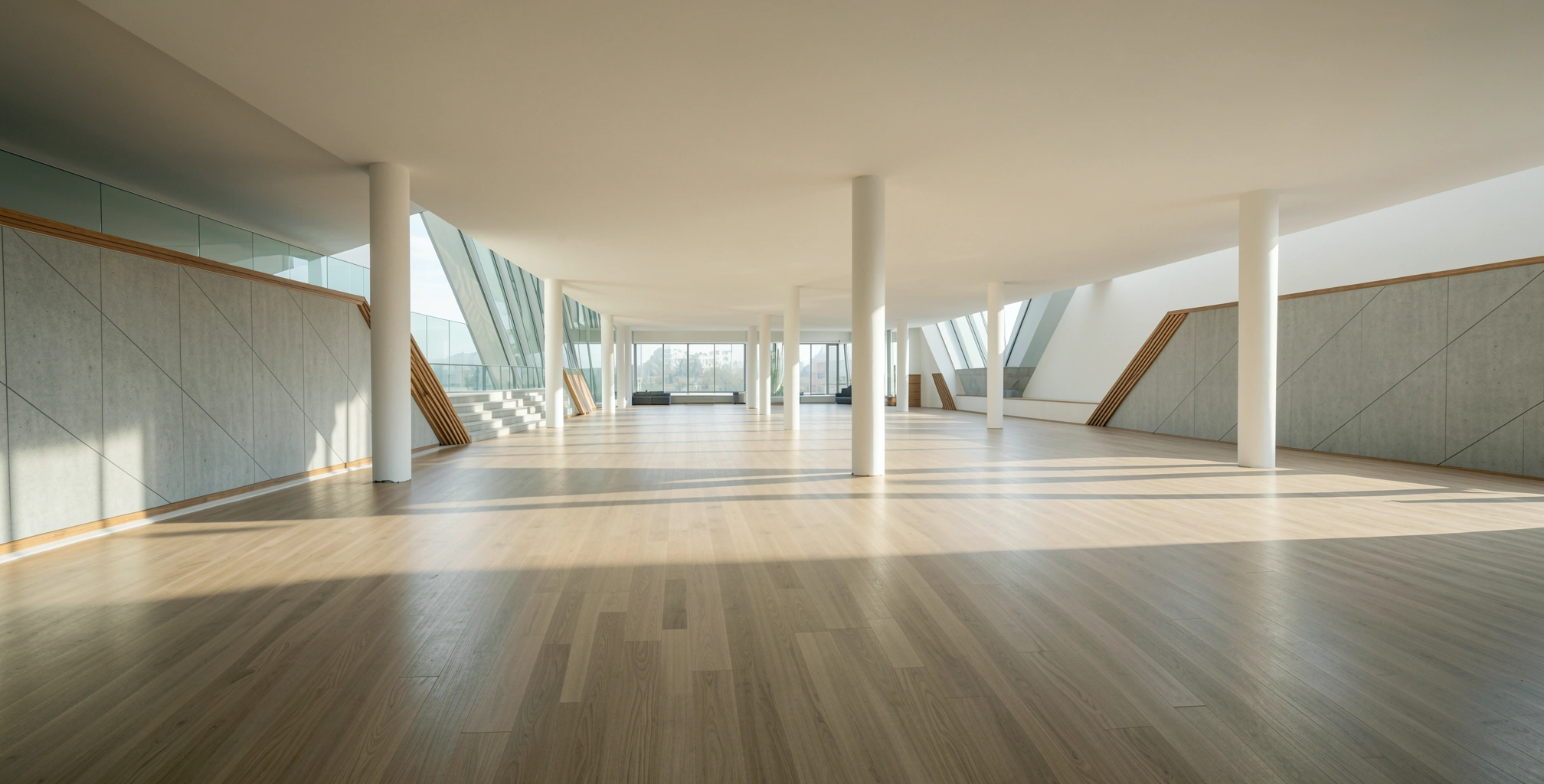
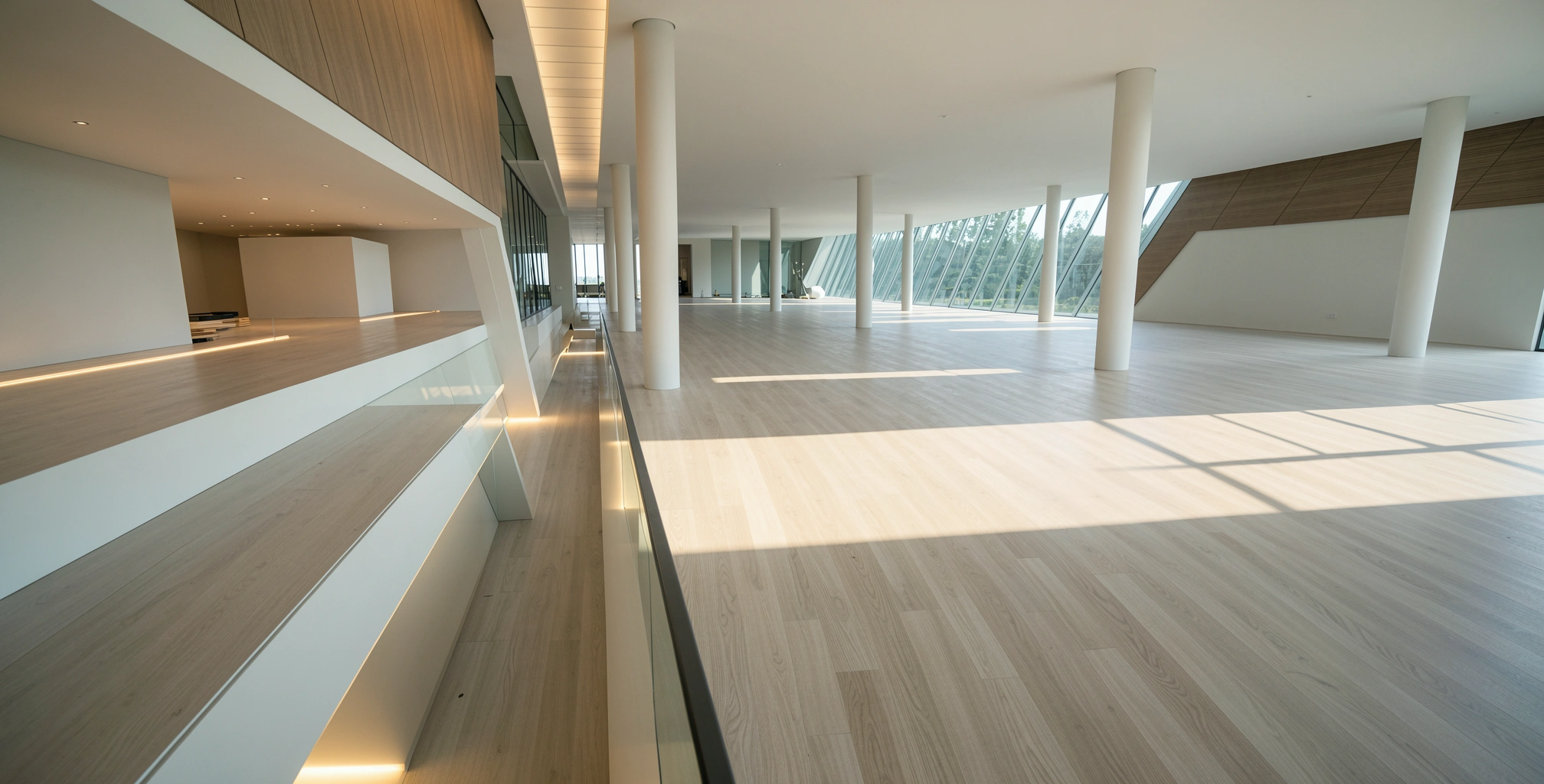
In a temperate climate, the integration of structural and environmental systems is critical. Rooflights are strategically positioned and deeply shaded to prevent overheating while admitting diffuse daylight. These openings align with the structural grid, avoiding conflict with load paths and minimising the need for secondary framing. The central glazed ‘street’ acts as both a spatial and environmental spine, drawing natural light deep into the plan and serving as a thermal buffer zone. This approach supports visual connectivity and reduces the need for artificial lighting during daytime hours. Techniques such as vertical crevices and roof slots—designed in concert with the structural bays—extend daylight penetration while minimising glare and heat gain. These methods follow daylighting principles that recommend controlled light admission through structural apertures and light shafts (Reinhart & Mardaljevic, 2004). Option 3 illustrates the structural-environmental synergy most clearly: the omission of floor slab areas, rather than perforation, allows for open light wells that maintain slab integrity. This demonstrates a progressive approach to environmental integration without structural compromise.

Structural Cores, Bracing and Fire Compartmentation

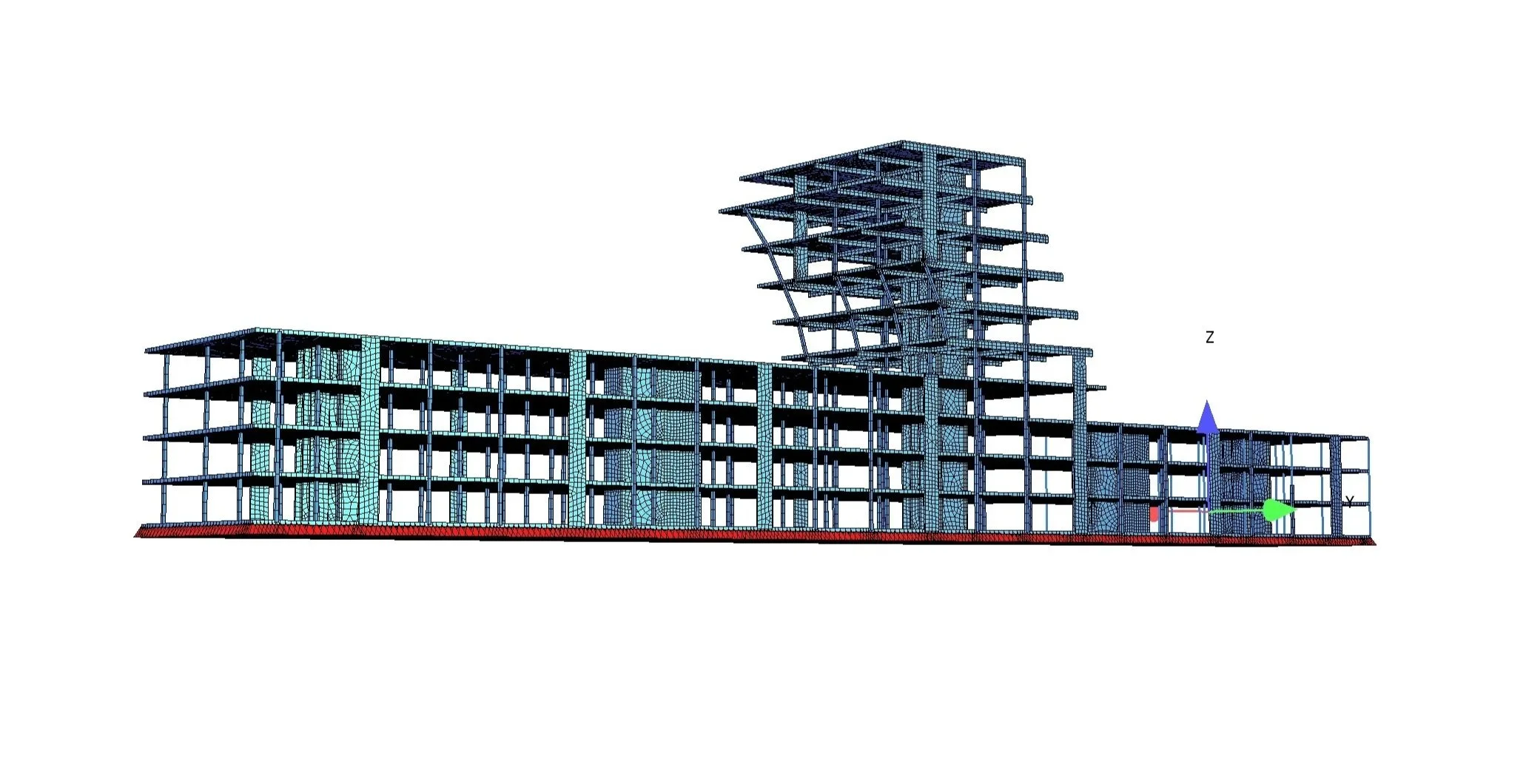
Lateral stability is provided by a series of concrete cores, which accommodate circulation, storage, and service spaces. These cores are distributed across the plan to provide balanced torsional resistance and reduce structural eccentricity under lateral loading scenarios such as wind and seismic events (Macdonald, 2001). The building’s fire strategy is embedded within its structural organisation. Transversely oriented staircases, located within concrete cores, provide direct, protected escape routes. The central street is compartmentalised into three distinct fire zones, with fire-rated enclosures and horizontal fire stops aligned to the structural grid. Rooftop equipment areas are similarly compartmented, ensuring compliance with fire resistance regulations and facilitating straightforward maintenance access (Thomas & Purkiss, 2008).

Comparative Analysis of Structural Options

Option 1: Disaggregated Structural Volumes

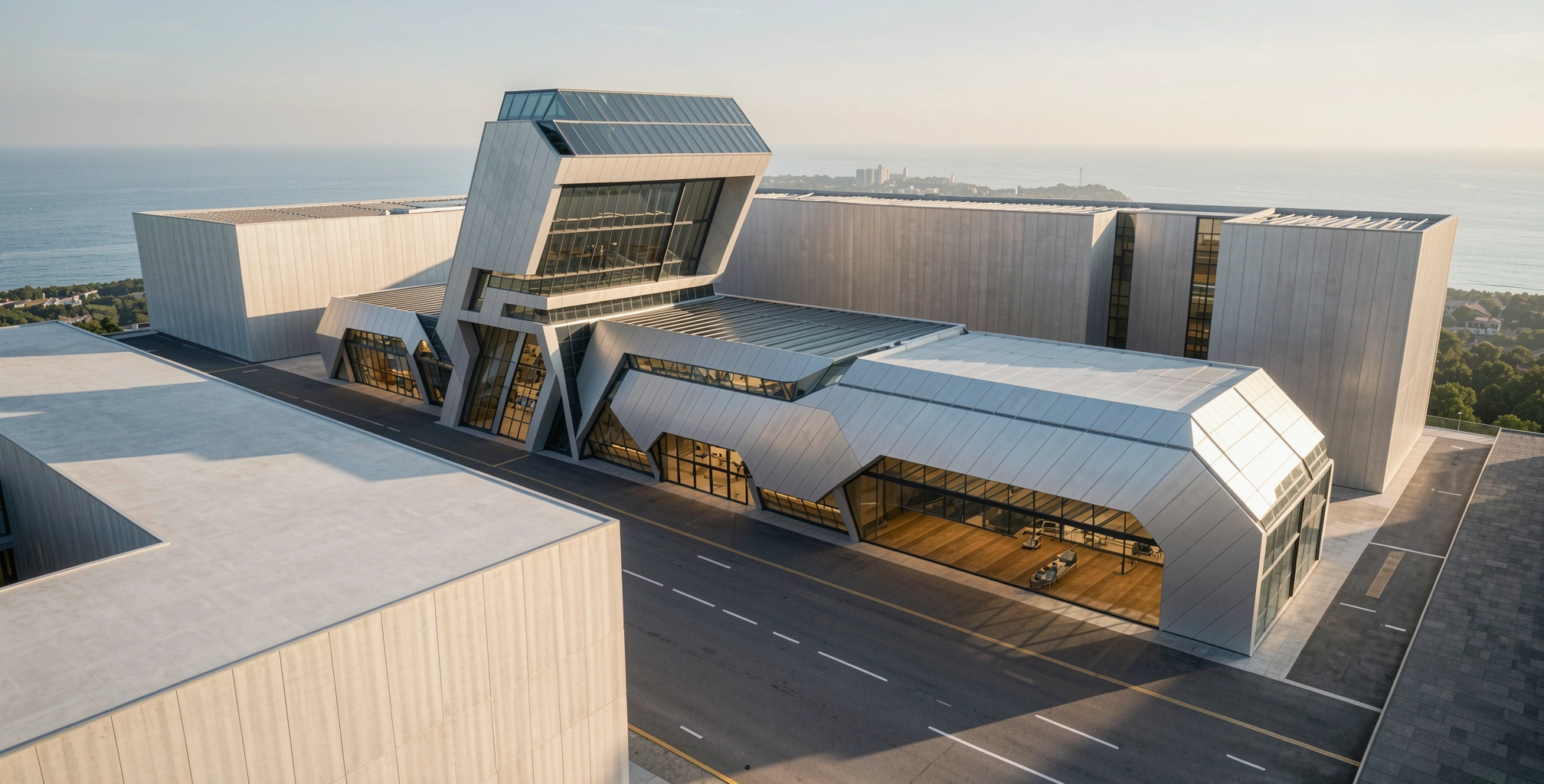
Option 1 divides the building into three structurally independent components: a central tower and two flanking blocks. This segmentation allows for movement joints between forms, accommodating differential settlement and thermal expansion. The tower uses inclined columns arranged in a triangulated or diagrid configuration, enabling efficient load transfer and creating expressive architectural form. Such systems are structurally efficient for tall or narrow forms, as they reduce lateral deflections and frame depth (Engel, 2007). The flanking blocks utilise conventional orthogonal frames with vertical columns and centrally placed structural cores. This separation provides clarity in construction sequencing and allows independent phasing or maintenance strategies for each block.

Option 2: Uniform Vertical Structural Grid

Option 2 retains the division into three volumes but introduces a consistent column grid throughout, simplifying construction and enabling efficient use of formwork. Structural voids—slot openings—are introduced within slabs to allow light to filter through the building, maintaining the spatial and environmental ambitions of the scheme. These interventions create dynamic internal views and enhance the perception of depth and layering in circulation spaces, while maintaining a standardised structural language. Interface zones between the tower and adjacent blocks employ inclined or transfer elements, requiring careful detailing but preserving internal flexibility.

Option 3: Integrated Structural Monolith

In Option 3, the building is conceived as a single structural volume. This unification minimises the number of structural bays and reduces material use by eliminating duplication of columns and beams. Omitting areas of slab within structural bays, rather than cutting into slabs, maintains the slab’s shear and flexural performance while enabling vertical light shafts and visual connections. This monolithic approach allows for the reuse of formwork, reduced construction joints, and faster programme delivery. The structural cores, common to all three options, remain central, supporting vertical loads and bracing the entire structure. From a performance standpoint, this option demonstrates the highest efficiency in terms of structural rationalisation, daylight integration, and material economy—making it particularly suited to institutions targeting sustainability metrics such as embodied carbon reduction and operational energy performance (Guy & Farmer, 2001; Addis, 2007).

Overview

The structural strategy of this campus building is a product of interdisciplinary thinking, where architectural intent, environmental response, and engineering efficiency converge. Through the use of flat slab reinforced concrete frames, GFRC façade systems, and prefabricated diaphragm walls, the project delivers robustness, adaptability, and high environmental performance. The comparative exploration of three design options—ranging from disaggregated volumes to integrated monolith—demonstrates the potential of structural systems not only to support architectural form but to drive it. In doing so, the building exemplifies a performance-led approach appropriate to contemporary educational environments in temperate climates.

References

Addis, B., 2007. Building: 3000 Years of Design, Engineering and Construction. London: Phaidon Press.

Engel, H., 2007. Structure Systems. 4th ed. Ostfildern: Hatje Cantz.

Givoni, B., 1998. Climate Considerations in Building and Urban Design. New York: Van Nostrand Reinhold.

Guy, S. and Farmer, G., 2001. Reinterpreting Sustainable Architecture: The Place of Technology. Journal of Architectural Education, 54(3), pp.140–148.

Keller, T., 2016. Structural Design for Fire Safety. 2nd ed. Chichester: Wiley.

Macdonald, A.J., 2001. Structure and Architecture. 2nd ed. Oxford: Architectural Press.

Olgyay, V., 2015. Design with Climate: Bioclimatic Approach to Architectural Regionalism. Rev. ed. Princeton: Princeton University Press.

Reinhart, C.F. and Mardaljevic, J., 2004. Dynamic daylight simulations: What, why and how? Building and Environment, 39(8), pp.877–887.

Schlaich, M. and Bergermann, R., 2005. Light Structures. Munich: Prestel.

Smith, J. and Quale, J., 2017. Offsite Architecture: Constructing the Future. London: Routledge.

Thomas, I.R. and Purkiss, J.A., 2008. Designers' Guide to EN 1991-1-2: Actions on Structures: General Actions – Actions on Structures Exposed to Fire. London: Thomas Telford.