
Visualise.


Design.


Test.


Visualise · Design · Test
Newtecnic develops projects through a continual process of visualisation, design and testing. Rather than progressing through a fixed sequence of activities, projects move repeatedly between investigation, synthesis and evaluation as architectural, structural, environmental and construction systems are developed together.
Visualisation is used to establish understanding. Models, diagrams, simulations and prototypes allow relationships to be explored, assumptions to be challenged and opportunities to be identified. Design transforms these investigations into coordinated architectural proposals, bringing together spatial, environmental, structural and construction requirements within a coherent framework. Testing evaluates performance, revealing consequences, validating decisions and informing further refinement.
The process is iterative rather than linear. New information often requires earlier assumptions to be revisited, allowing projects to evolve through successive cycles of development. This continual movement between visualisation, design and testing helps reduce uncertainty while improving the integration of architecture, engineering and construction.
The principal areas of investigation are described below and form the basis of Newtecnic's approach to design development.
Design Development
Newtecnic develops projects through a continual process of visualisation, design and testing. Rather than progressing through a fixed sequence of stages, projects move repeatedly between analysis, synthesis and evaluation as architectural, structural, environmental and construction systems are refined.
The principal architectural areas of investigation are:
Architectural Design Method
Spatial Analysis
Functional Arrangement
Spatial Arrangement
Volumetric Arrangement
Environmental Strategy
Structural Strategy
Envelope Strategy
Fabrication Strategy
Construction Strategy
These activities establish the spatial, environmental, material and constructional organisation of a project and provide the framework through which architecture is developed and coordinated.
Alongside architectural development, projects draw upon a parallel process of engineering investigation and technical development.
Engineering Design Method
Research
Current Technologies
Emerging Technologies
Scientific Foundations
Analysis Method
Design Method
Design Management
Design Implementation
These activities provide the technical knowledge, analytical tools and implementation strategies required to support architectural development. They contribute to the evaluation of performance, the investigation of new technologies and the translation of design intent into buildable solutions.
The architectural and engineering design methods operate together rather than as separate processes. Decisions made in one area inevitably influence others. Environmental strategies influence form. Structural decisions affect fabrication. Construction requirements inform spatial organisation. Equally, advances in technology, analysis, materials and implementation inform architectural possibilities.
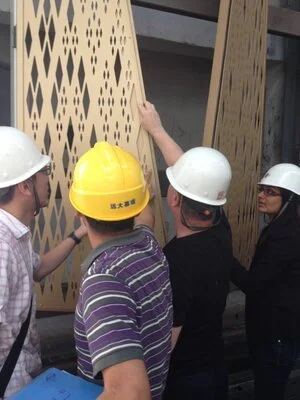
Visualisation, design and testing provide the means through which these relationships are explored, evaluated and refined. Models, simulations, prototypes, calculations and physical mock-ups are used throughout the process to develop understanding, reduce uncertainty and improve the coherence of the final proposal.
The objective is not simply to resolve technical problems. It is to develop architecture in which design intention, engineering knowledge, construction intelligence and environmental performance emerge together through an integrated process of investigation and refinement.