Theoretical Basis of a Structural Strategy for Multi-Block Healthcare Buildings

Log in to Modern Construction Online for project case study

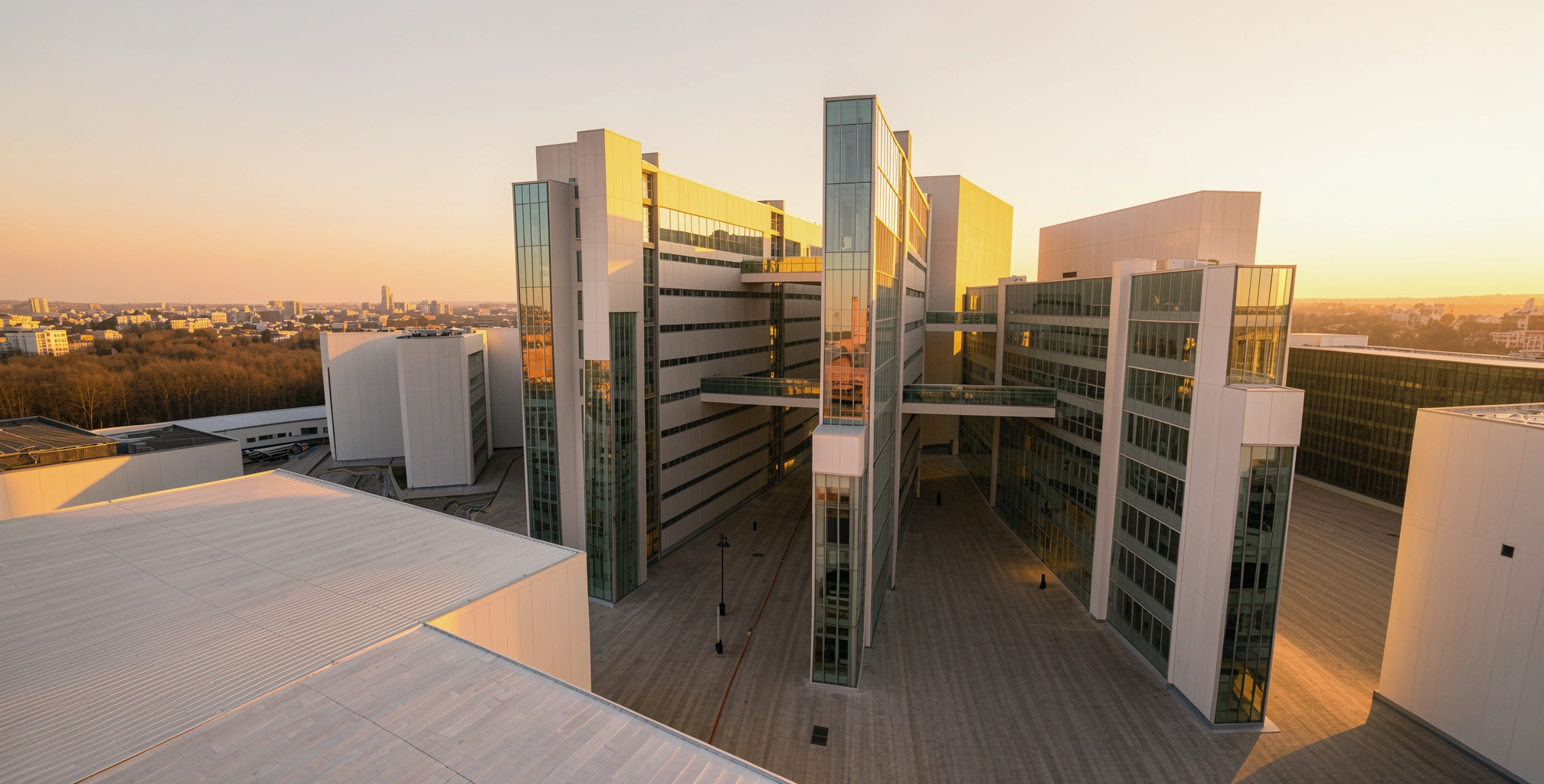
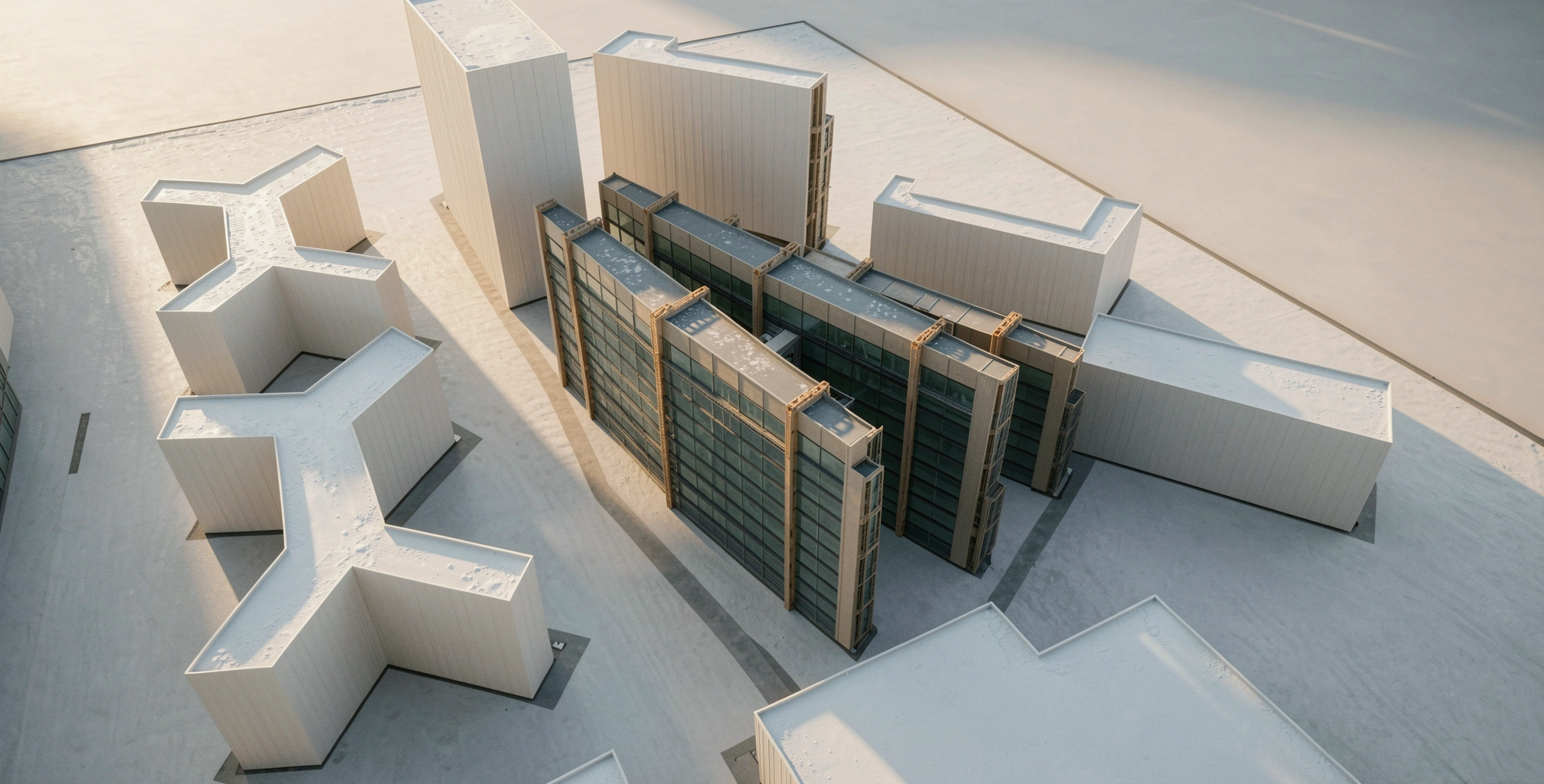
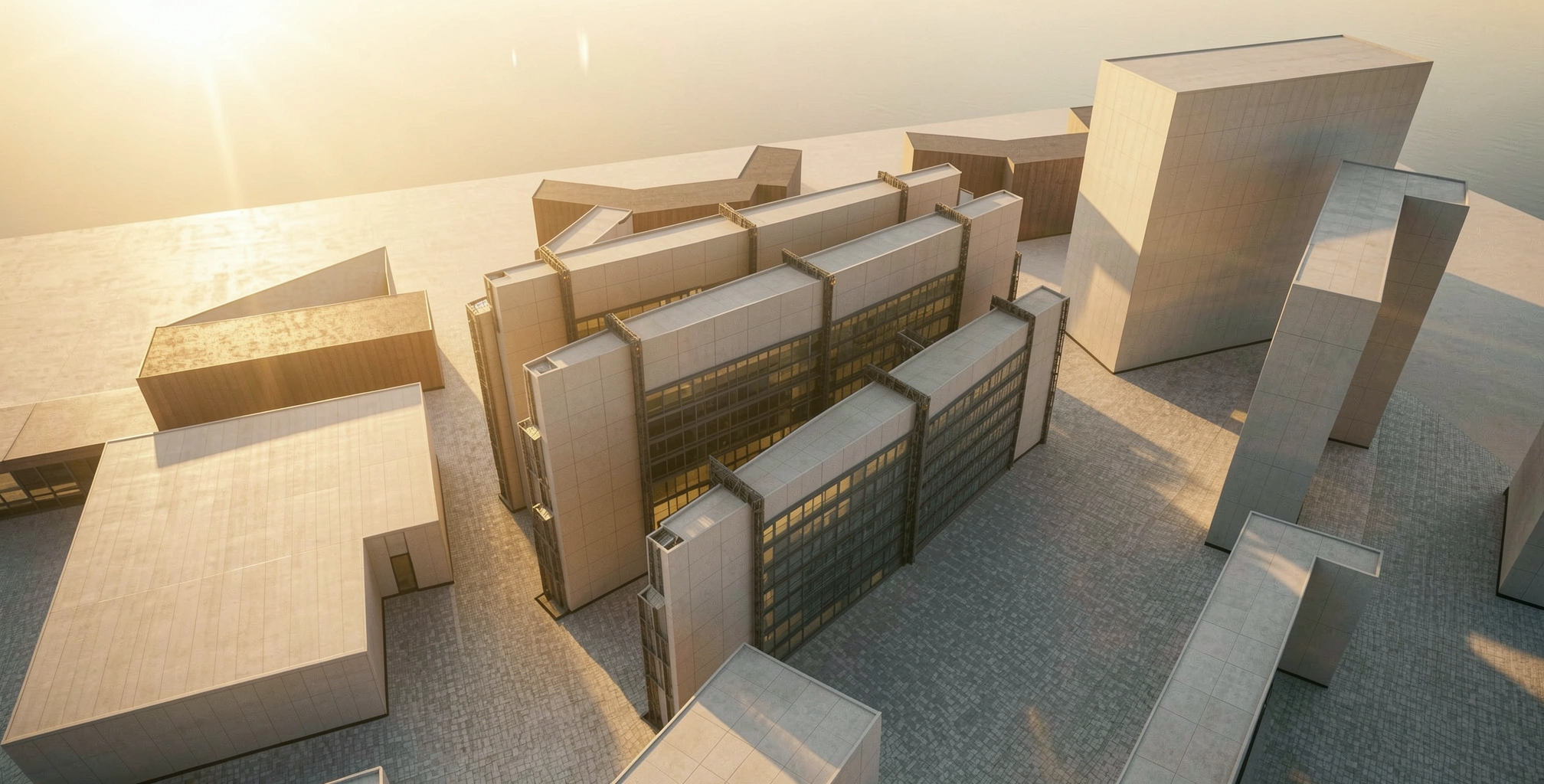
The structural strategy for a complex of healthcare and research buildings in a temperate climate must reconcile multiple competing demands: flexibility for changing clinical and research functions, economy of construction, integration of environmental systems, and responsiveness to form. In the case of the three proposed building blocks, a single structural typology has been developed and adapted across options, each with subtle variations in core position, service configuration, and plan geometry. This approach allows the rationalisation of structure while enabling architectural differentiation and operational flexibility.

Primary Structural System and Typological Flexibility

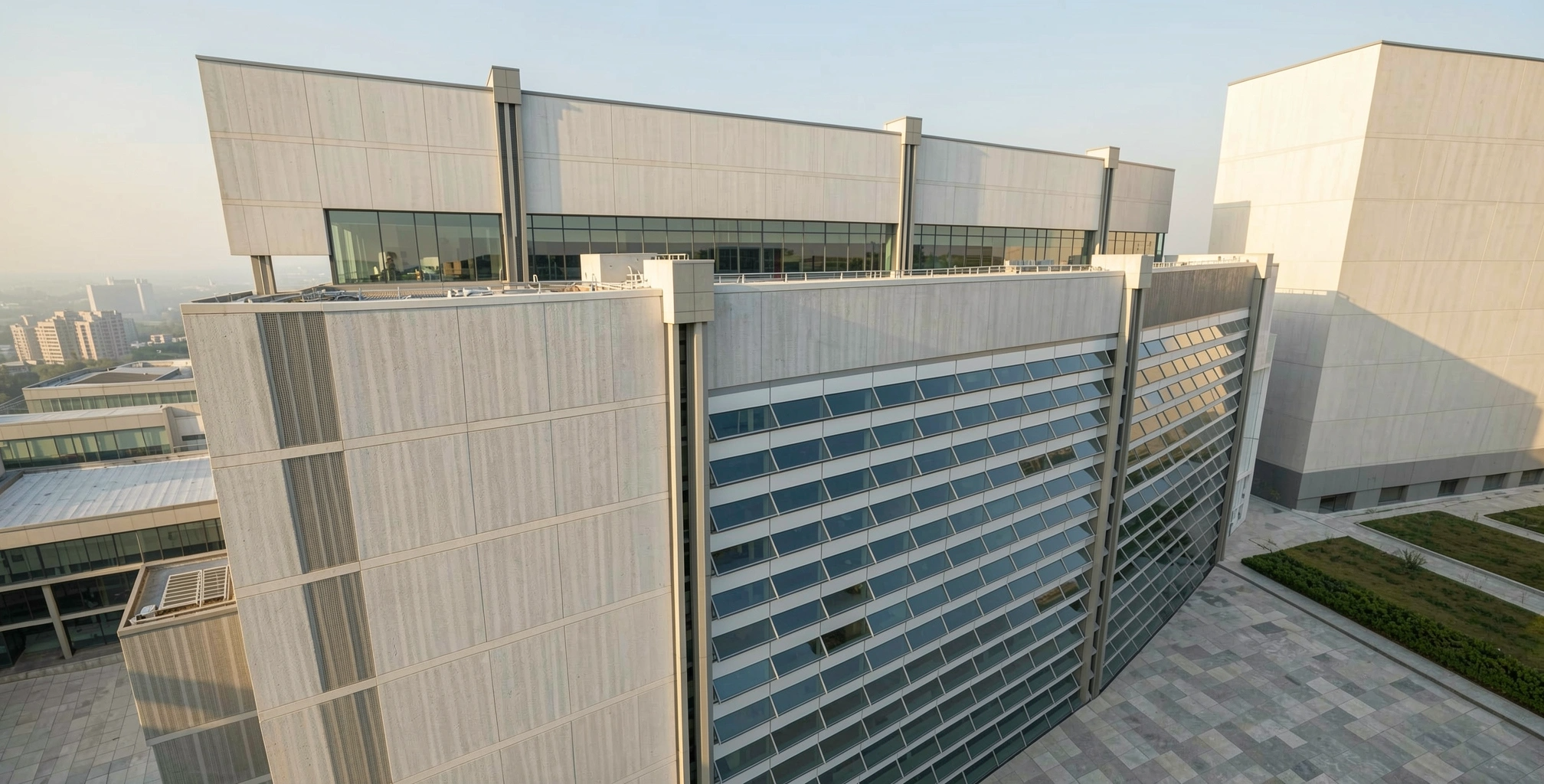
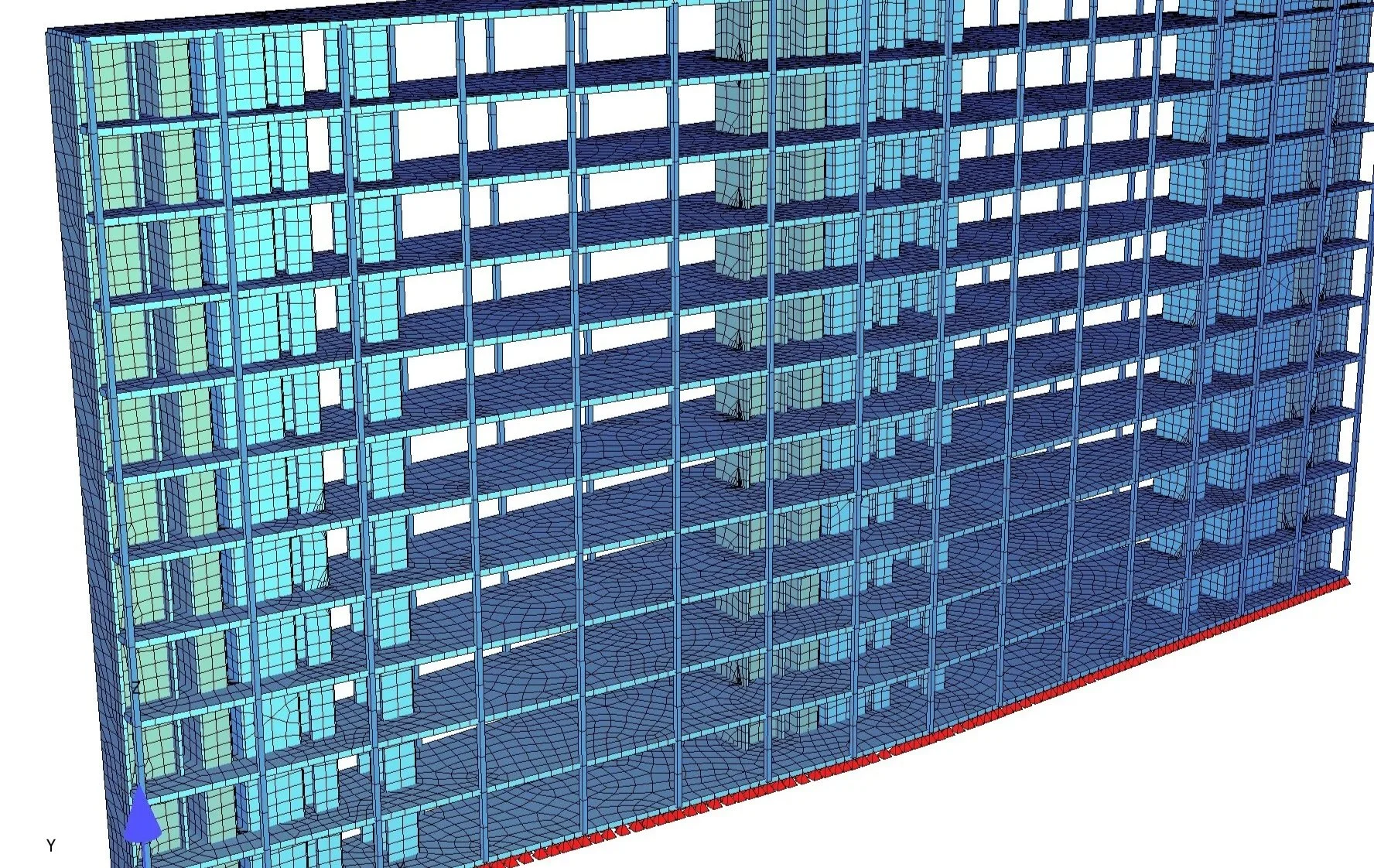
Each block employs a perimeter column frame with downstand beams spanning the full width of the floor plate. The choice to eliminate intermediary columns creates large, uninterrupted internal areas—so-called “clear floor plates”—which are fundamental to future reprogramming and reconfiguration, especially in healthcare environments that evolve rapidly with medical technologies and service demands (Brand, 1994; Verderber and Fine, 2000). The use of braced frames with reinforced concrete slabs supported on steel or concrete beams enables a regularised grid that supports efficient load transfer while leaving the interior free of structural intrusions. This structural openness underpins a “soft space” strategy, where internal partitions, service runs, and clinical equipment can be modified without disrupting the building’s primary load-bearing system (Kendall and Teicher, 2000). Importantly, the design does not rely on structural cores for stability in the centre of the plan. Instead, service modules at the ends of each block act as structural stabilisers, incorporating bracing or shear walls. This decision aligns with the trend in contemporary healthcare design toward non-centralised core placement, enabling greater daylight access, visibility, and internal wayfinding (Lawson, 2012; Schittich, 2001).

Modular Consistency and Local Adaptation

The structural typology is deliberately modular: beam spans, slab depths, and column sizes are determined based on uniform criteria but adjusted slightly per block depending on height, service configuration, and load requirements. Rather than sizing every structural element to suit the most demanding condition, elements are optimised locally, a decision that improves material efficiency and construction economy (Allen and Iano, 2017). This modular consistency enables the use of prefabricated components, such as precast concrete planks in central zones between cores. These components not only speed up construction but also support future-proofing by accommodating future shifts in vertical circulation locations without reworking the structure. Prefabrication in healthcare has been shown to significantly reduce construction time and enhance quality control (Gibb, 1999). The end service modules, structurally continuous with the main frame, are designed as secondary elements. While fixed during initial construction, these zones can be refurbished or replaced independently of the primary structural system, enhancing the lifecycle adaptability of the building—a principle aligned with the “Open Building” methodology (Kendall and Teicher, 2000).

Structural Independence and Environmental Integration

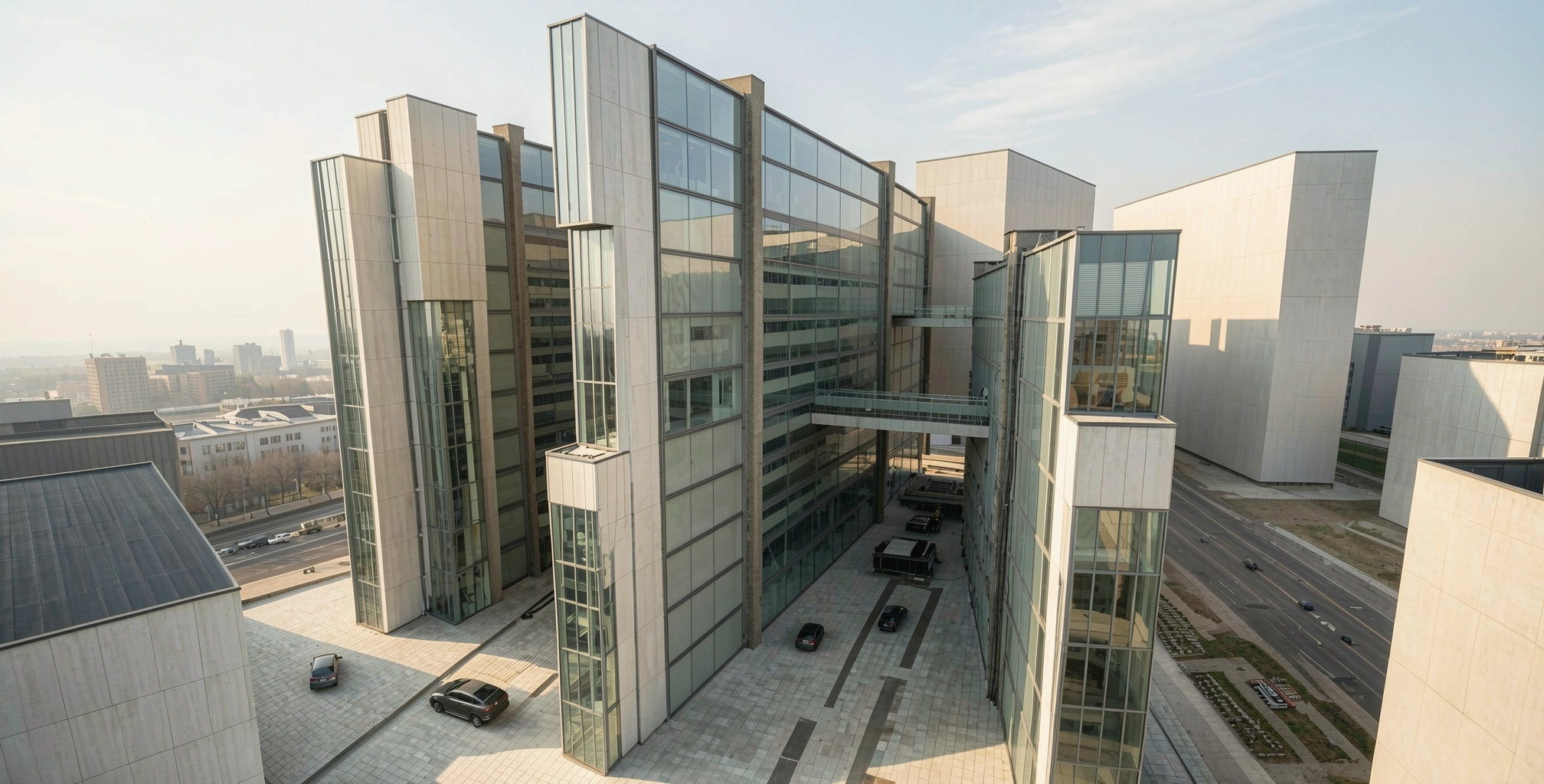
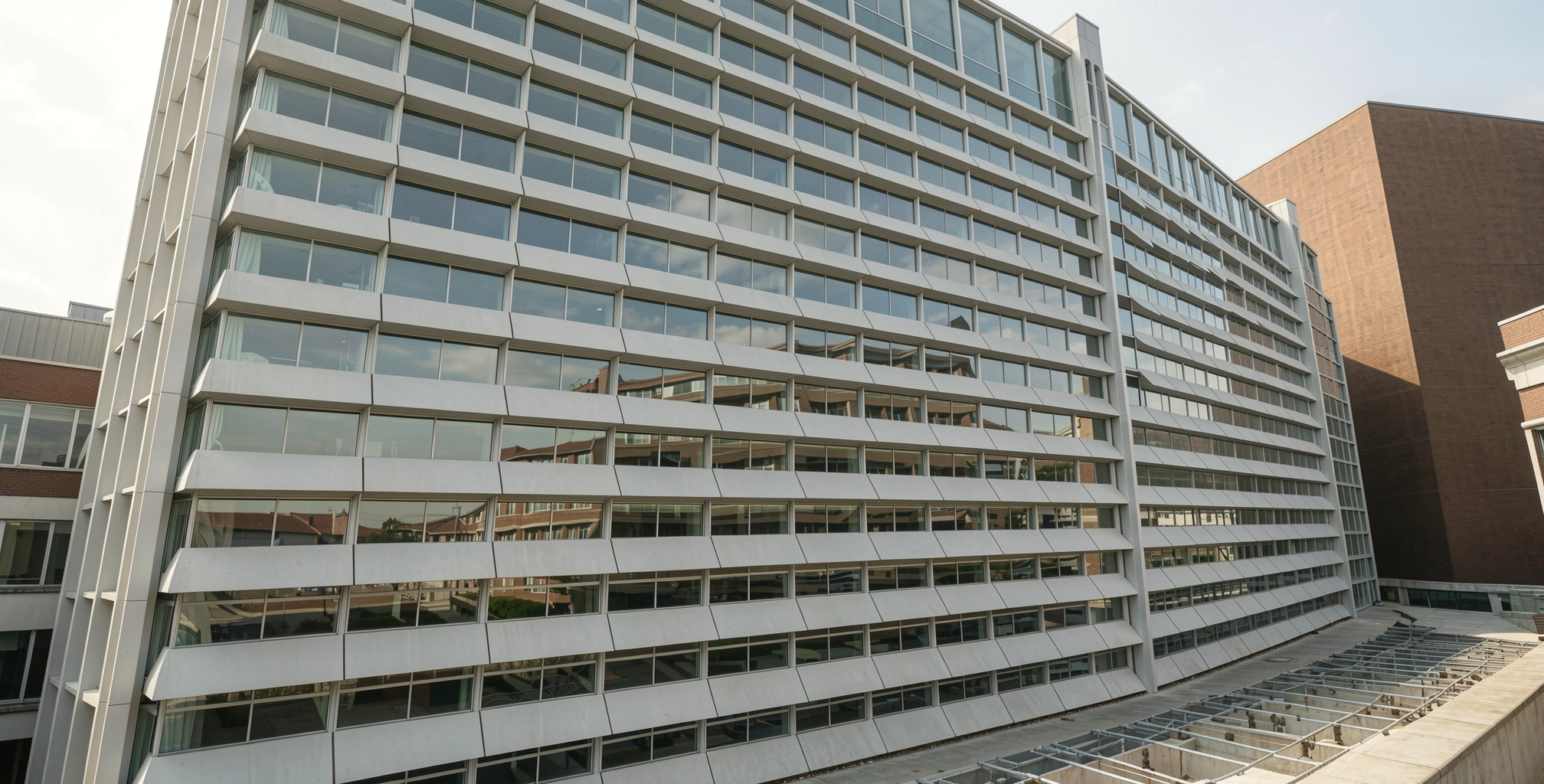
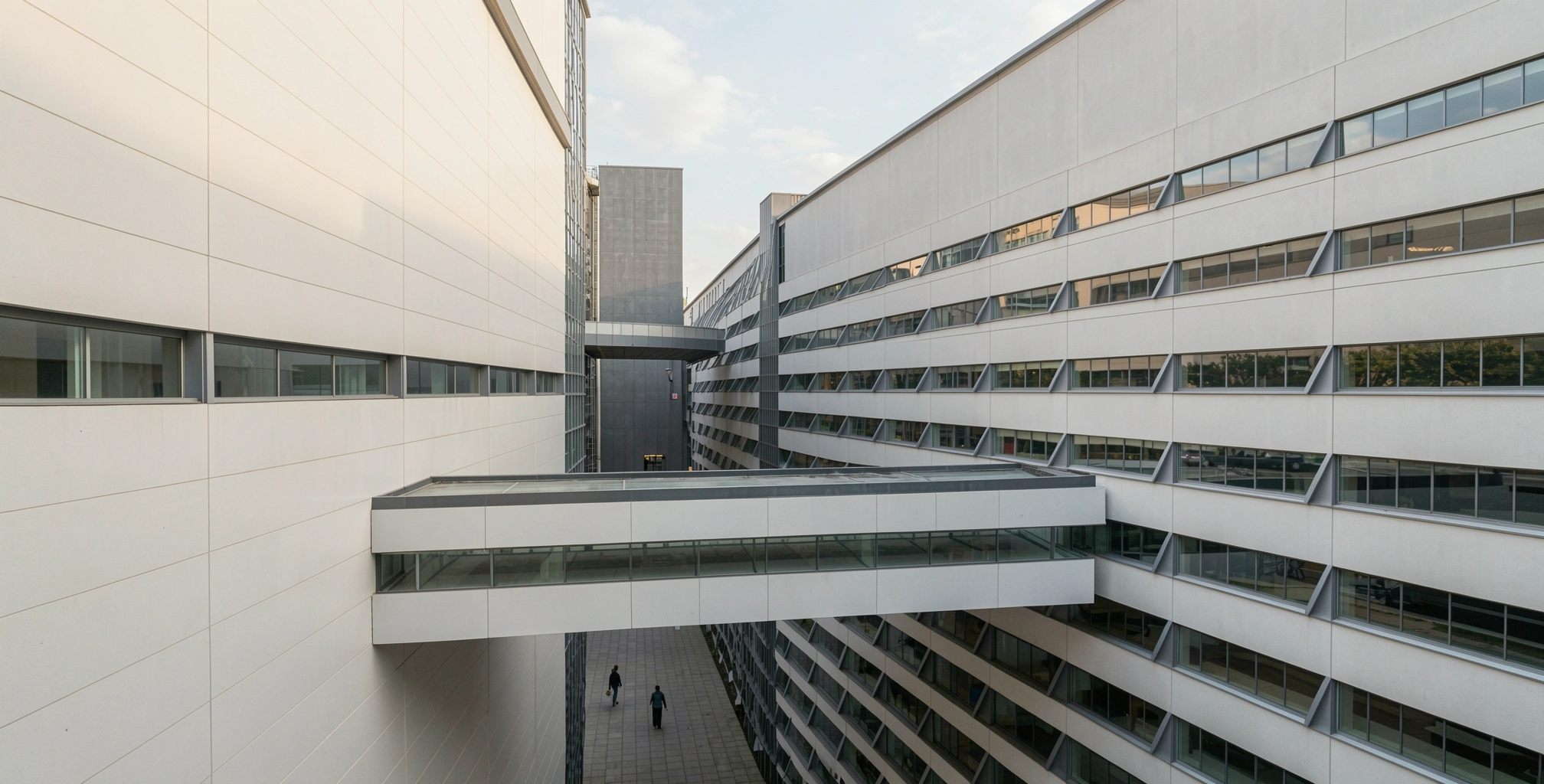
Each building is structurally independent, eliminating the need for below-ground connections that could disrupt thermal envelopes or compromise waterproofing integrity. Inter-block bridges, where present (notably in Option 2), span between buildings without intermediary support. This not only preserves the spatial openness of the landscape but avoids structural bridging, which could introduce differential settlement issues or complicate movement joints (Salvadori and Heller, 1975). The height of each block (8–10 storeys) requires careful integration of vertical loads with lateral stability considerations. In the absence of internal cores, stability is provided by a combination of braced frames and end shear walls, calibrated based on wind and seismic loads in the temperate climate zone (Engel, 2007). The minimal reliance on central stiffening elements increases structural independence and reduces conflicts with flexible internal layouts. Daylight performance, critical in hospital and research environments, is supported by the narrow plan and perimeter column strategy, which enables large window openings without complex structural discontinuities. Locally thickened floor slabs at facade junctions accommodate custom facade systems, allowing each building to respond to its functional programme without altering the overall structure—a key requirement for integrating high-performance envelopes (Hopkins, 2009).

Structural Options and Their Strategic Implications

Option 1: Steel Frame with Clear Spans

In Option 1, the structural frame is fabricated in steel for speed of erection and precision on site—an approach increasingly common in healthcare buildings where construction downtime must be minimised (Lawson, 2012). Downstand steel beams span the full width of the block, supported on a perimeter steel column grid. The central floor zone, located between the end service cores, remains entirely clear, maximising layout flexibility. Structural loads are transferred to the ground via the external frame and end modules. This configuration allows spatial variability within the ‘activity’ space, suiting departments with changing needs. The absence of central structural cores also simplifies integration with MEP systems by allowing horizontal runs across uninterrupted slabs.

Option 2: Irregular Geometry and Structural Adaptation

Option 2 adapts the same basic principle but applies it to angled and inflected floor plates, resulting in non-uniform spans and more complex support detailing. Beams are set closer together to accommodate variable loads and geometries; while this preserves the open plan strategy, it reduces material efficiency and complicates prefabrication (Engel, 2007). Cores located adjacent to the bridges help with stability, but the irregular geometry increases the need for bespoke detailing—particularly at the bridges, where load transfer and thermal movement must be carefully managed (Salvadori and Heller, 1975). While visually compelling, this option demands greater structural coordination and cost.

Option 3: Maximised Open Plan and End-Core Strategy

Option 3 refines the structural strategy by pushing all service cores to the ends of each building, leaving the internal floor plates completely free. This maximises spatial flexibility and enables highly efficient MEP distribution and clinical planning. Downstand beams once again span full-width, with perimeter columns ensuring unobstructed facade and internal views. This strategy aligns most closely with future-flexible hospital models, which prioritise internal adaptability and rapid fit-out changes (Verderber and Fine, 2000). By consolidating structural and service elements at the ends, Option 3 simplifies the internal planning grid and provides the clearest strategy for integrating future technological change without reworking the core structure.

Overview

The structural strategy across the three block configurations leverages the power of a single, modular typology tailored locally to support programmatic, geometric, and environmental variations. Key design decisions—such as the elimination of internal structural cores, the perimeter column layout, and the use of prefabricated components—prioritise adaptability, efficiency, and clarity of construction. Among the three options, Option 3 offers the greatest structural and spatial flexibility, by consolidating all service and structural stiffening functions at the perimeter, aligning with best practices in adaptable, high-performance healthcare infrastructure.

References

Allen, E. and Iano, J. (2017). Fundamentals of Building Construction: Materials and Methods. 6th ed. Hoboken: Wiley.

Brand, S. (1994). How Buildings Learn: What Happens After They're Built. New York: Viking.

Engel, H. (2007). Structure Systems. Basel: Birkhäuser.

Gibb, A.G.F. (1999). Off-site Fabrication: Prefabrication, Pre-assembly and Modularisation. Chichester: Wiley-Blackwell.

Hopkins, R. (2009). Designing the Sustainable Hospital. London: Earthscan.

Kendall, S. and Teicher, J. (2000). Residential Open Building. London: E & FN Spon.

Lawson, M. (2012). Design in Modular Construction. London: CRC Press.

Salvadori, M. and Heller, R. (1975). Structure in Architecture: The Building of Buildings. Englewood Cliffs: Prentice Hall.

Schittich, C. (2001). In Detail: Building Skins. Basel: Birkhäuser.

Verderber, S. and Fine, D.J. (2000). Healthcare Architecture in an Era of Radical Transformation. New Haven: Yale University Press.