
Medical Research Cluster — Permanent Framework and Adaptable Systems
Structural Reasoning
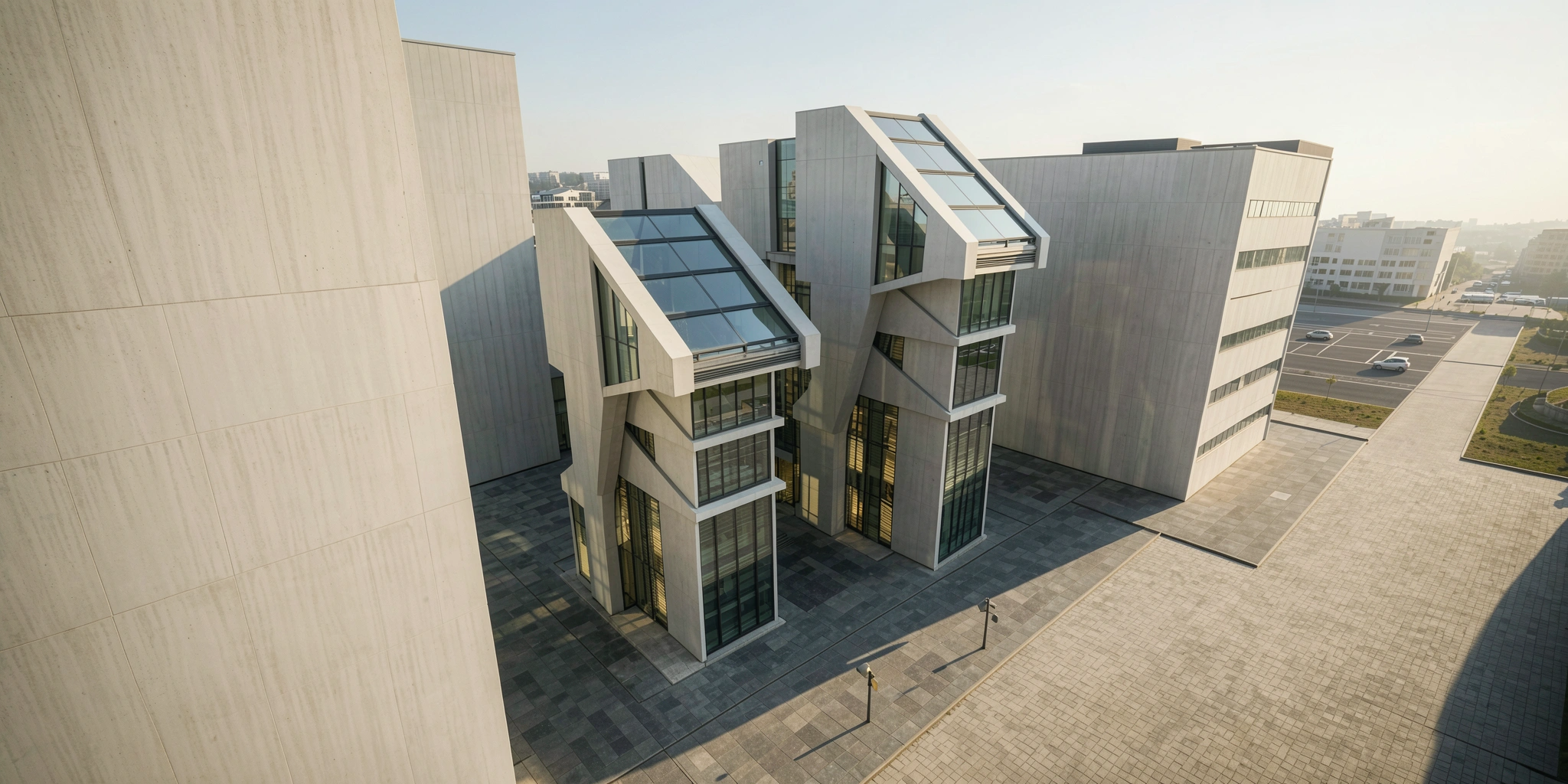
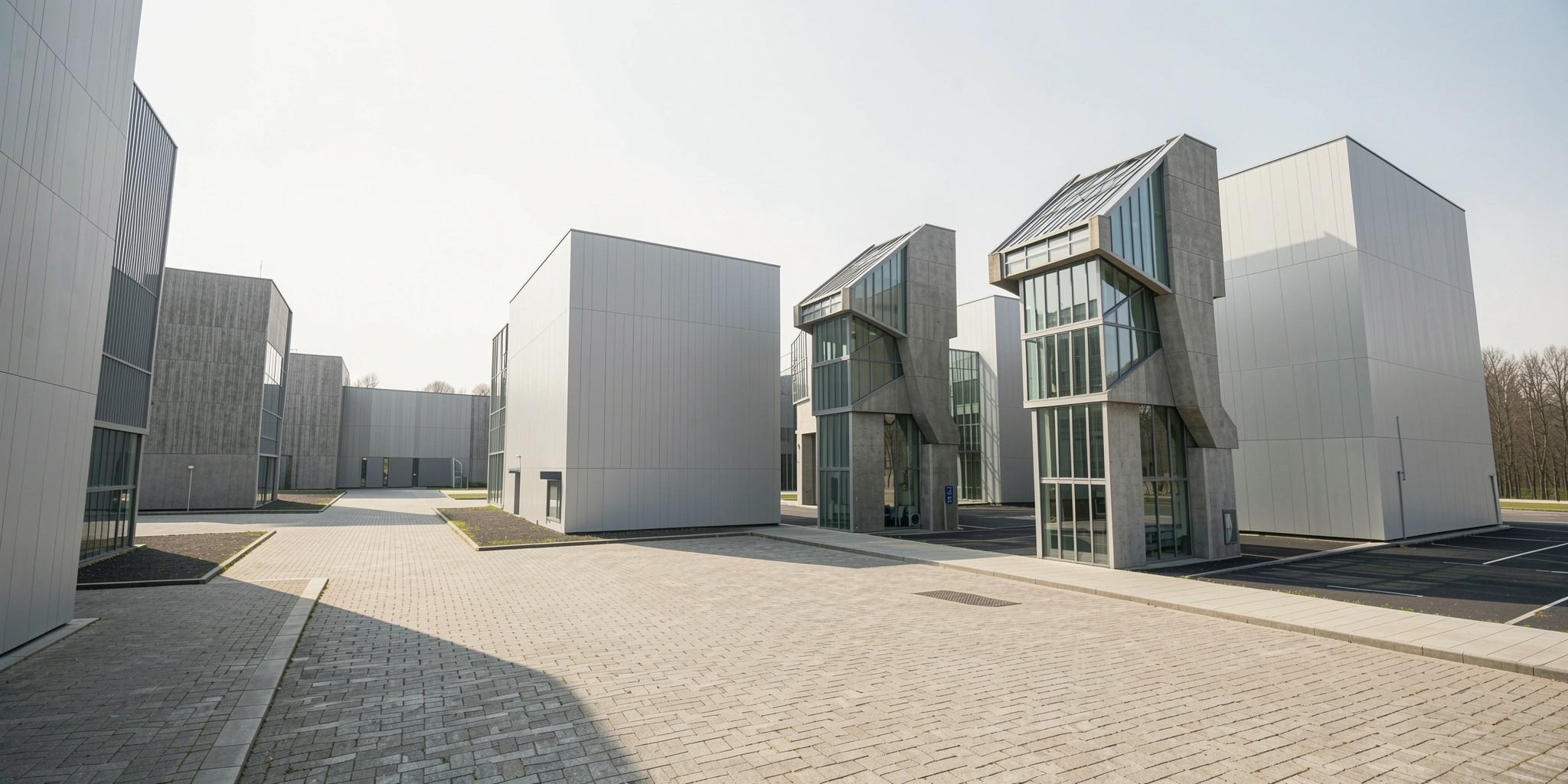
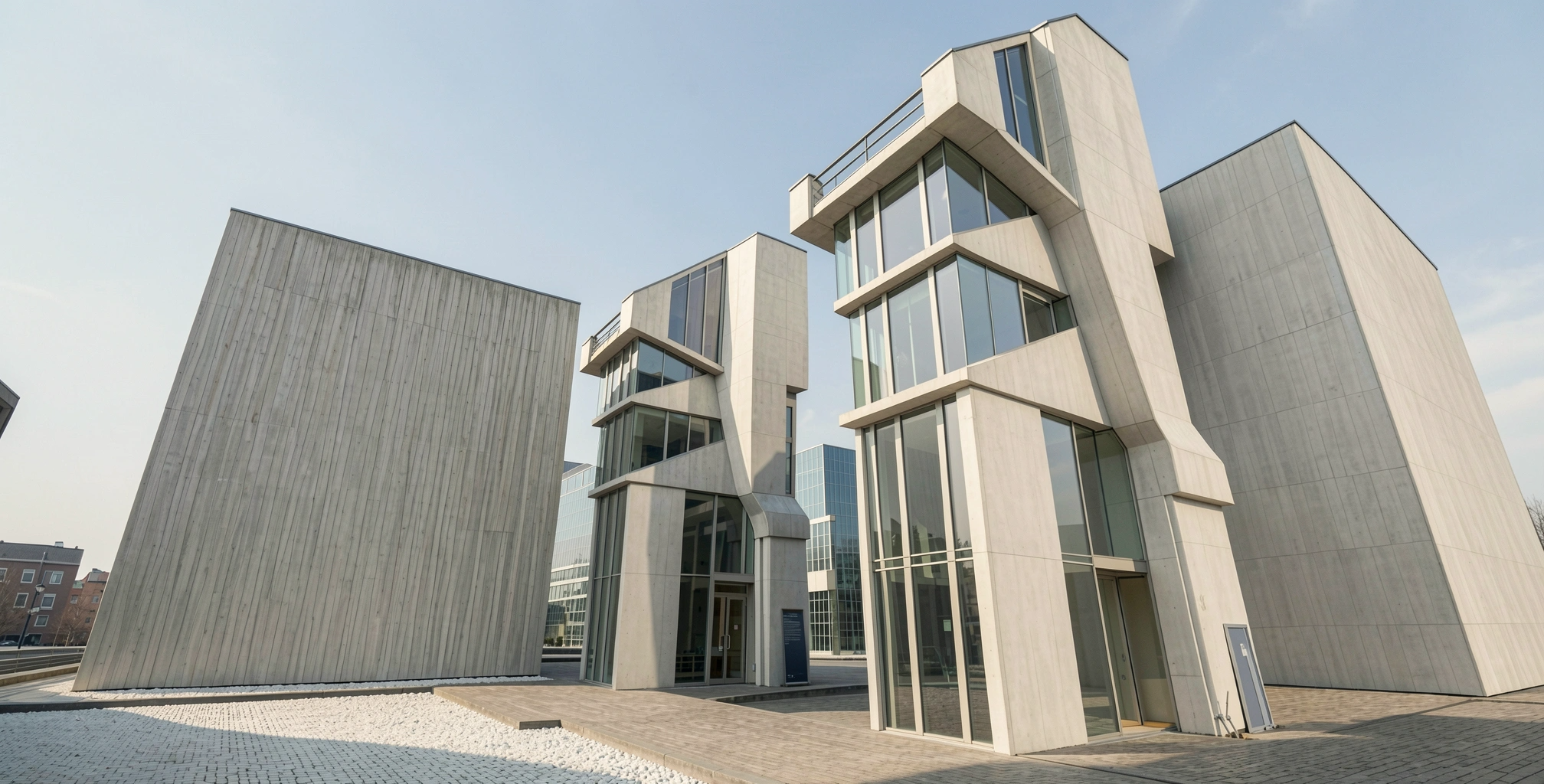
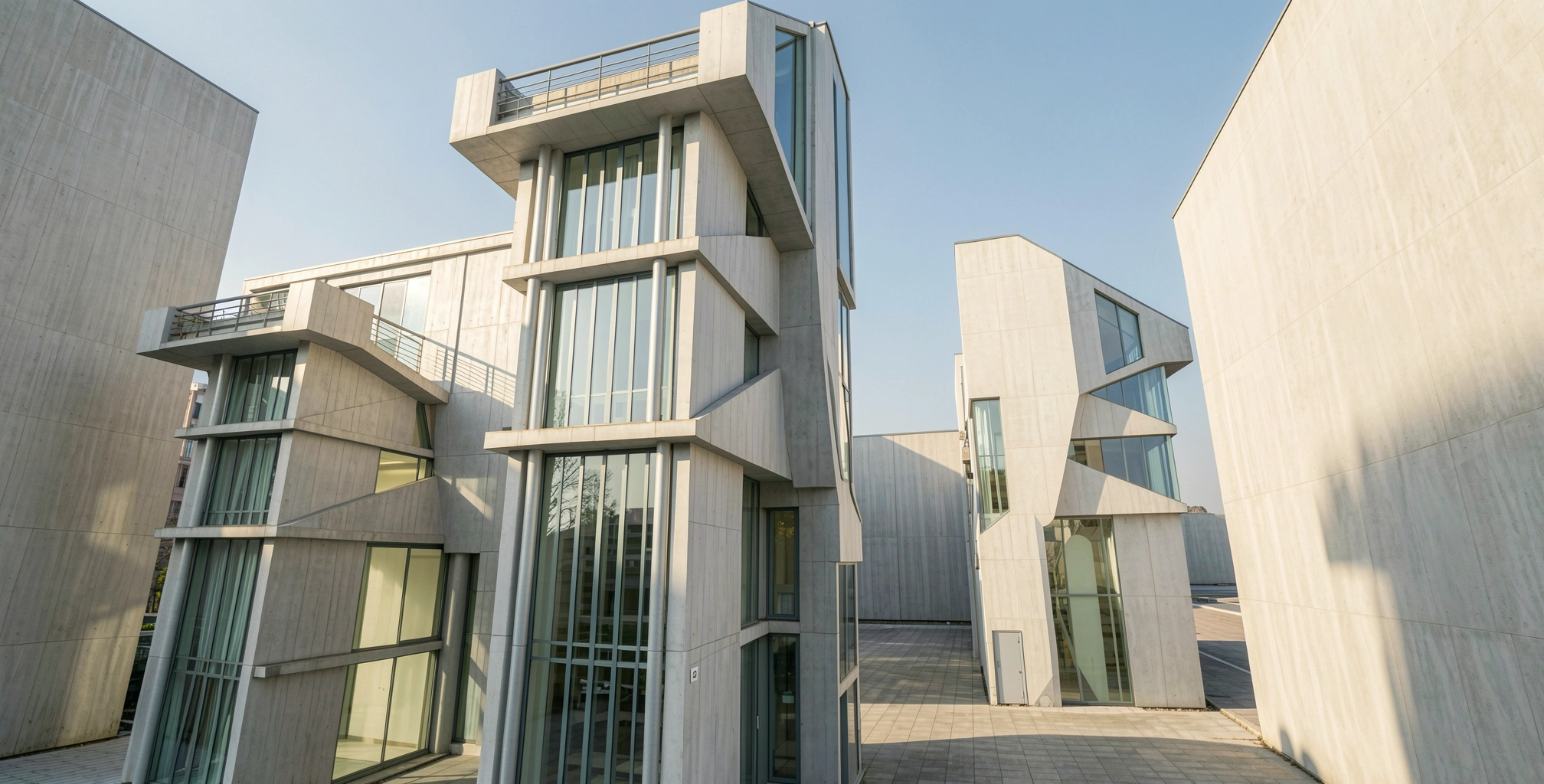
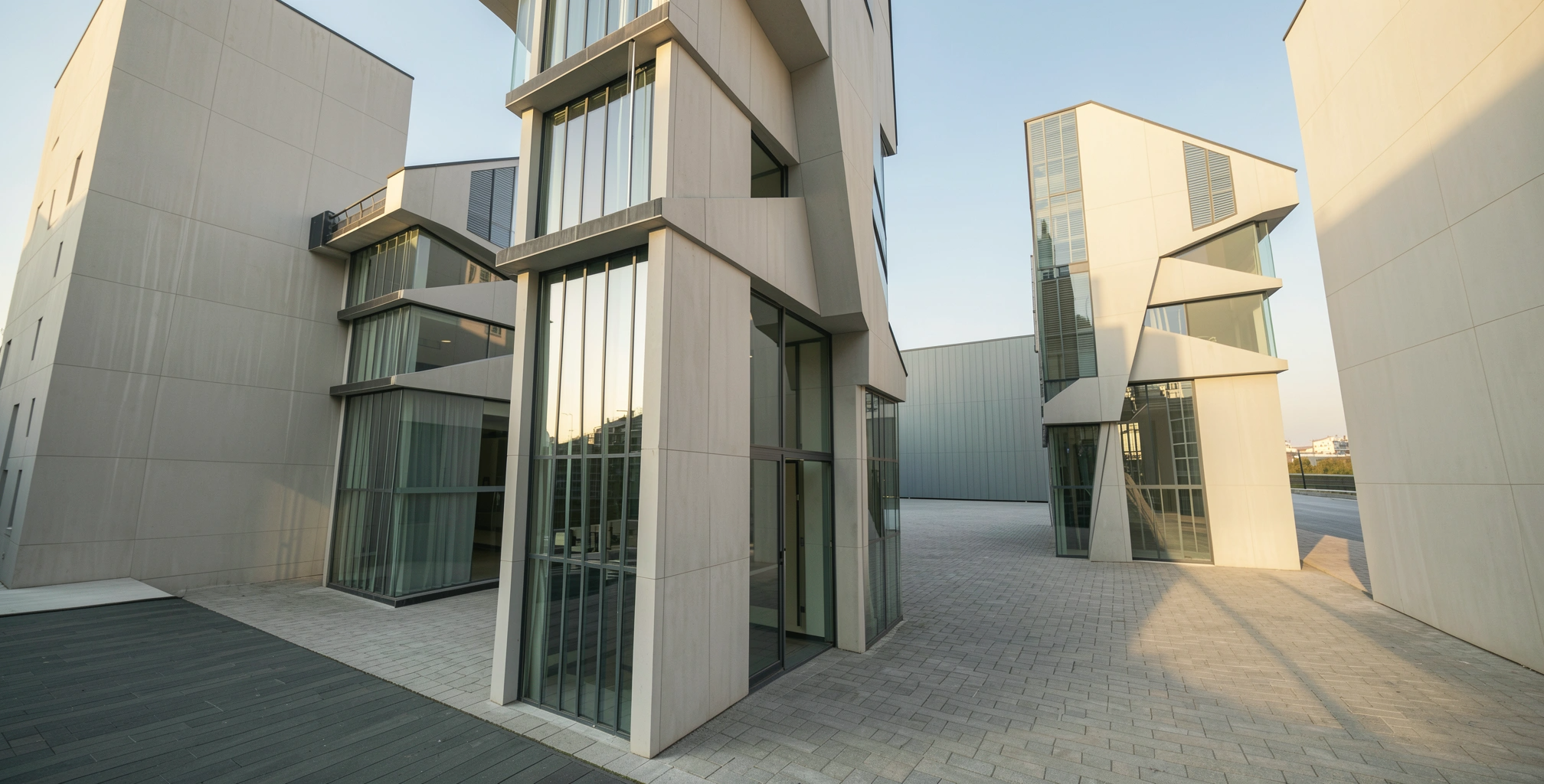
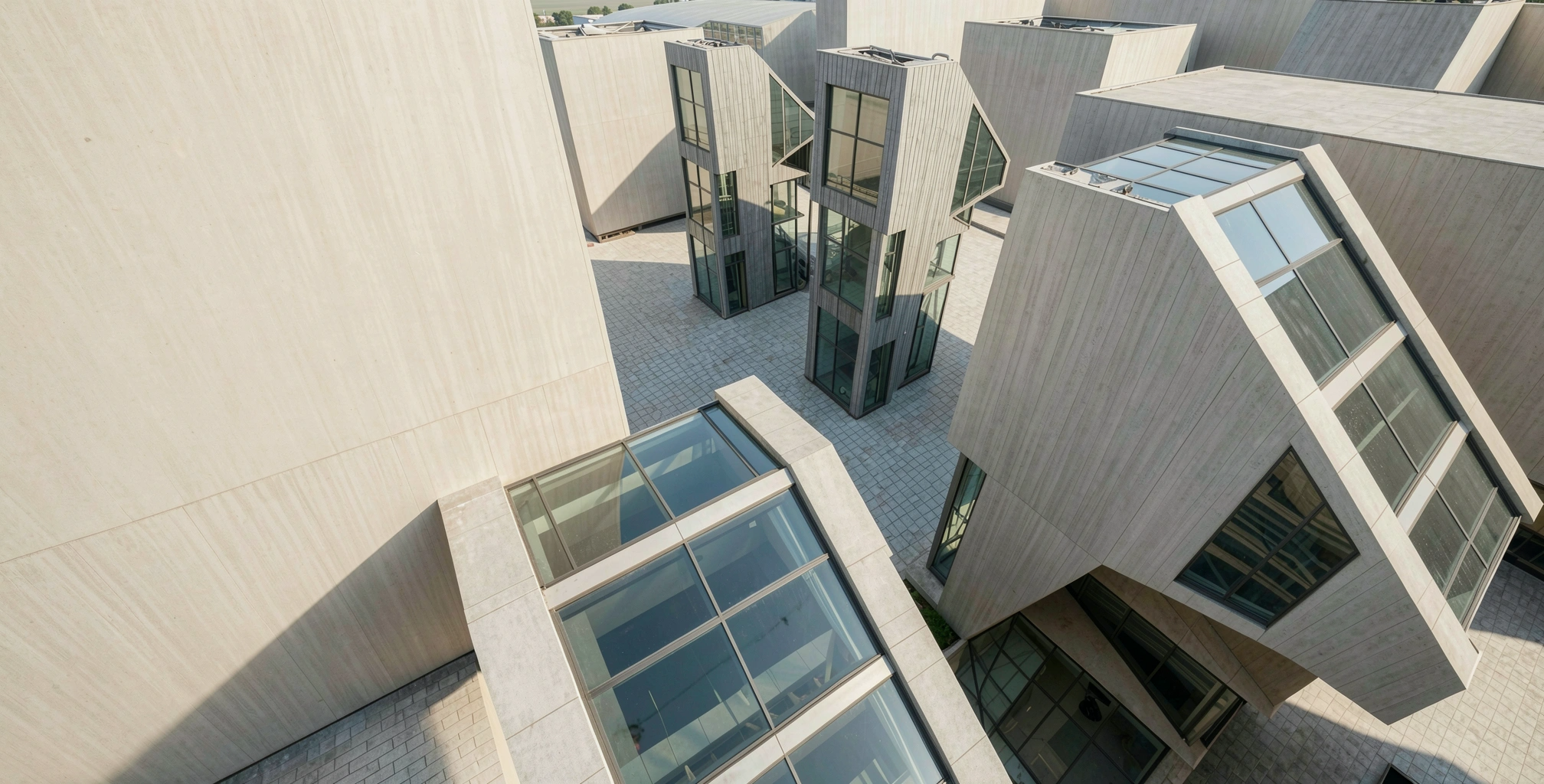
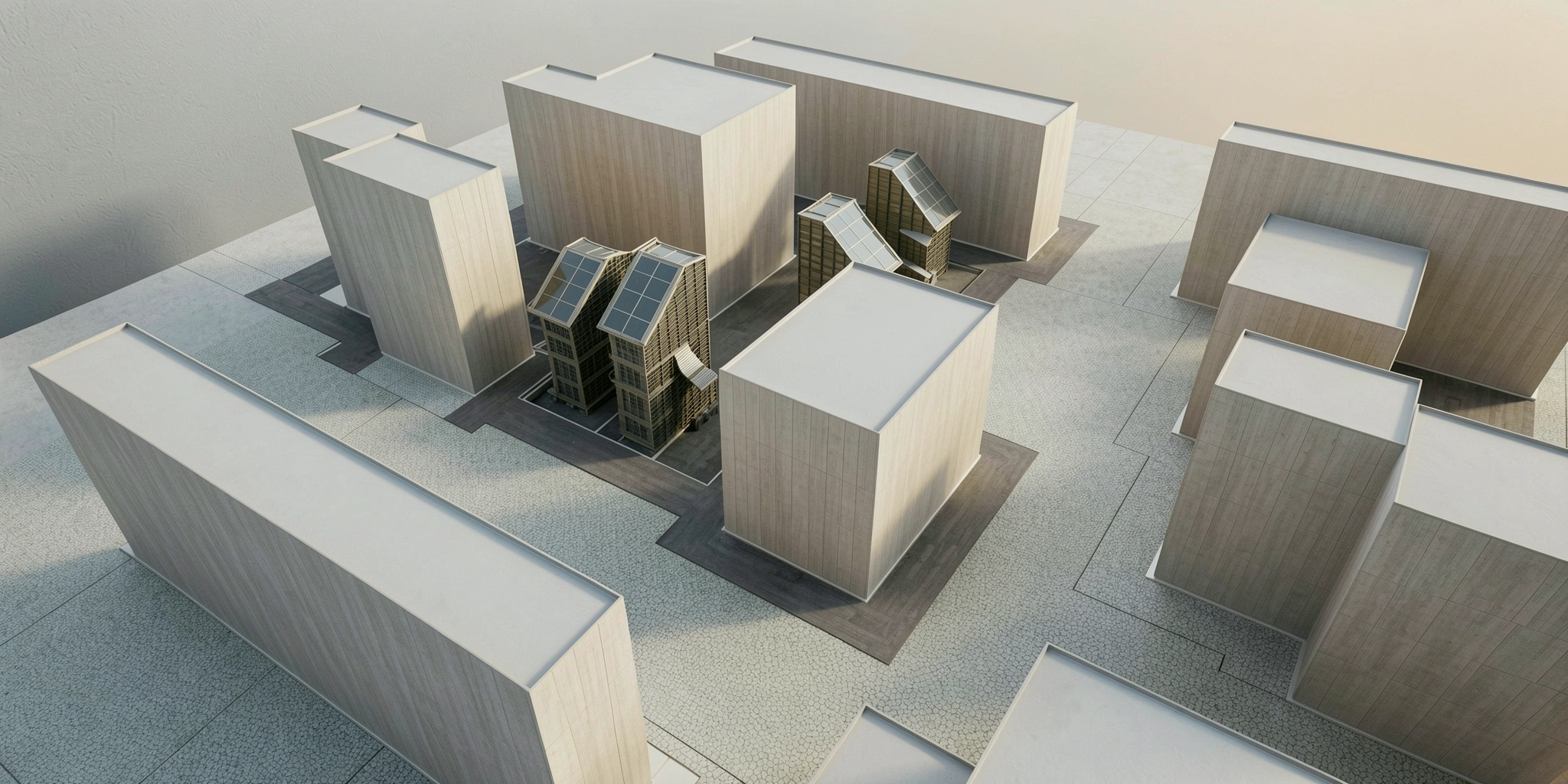
The Medical Research Cluster is conceived as a long-term framework capable of supporting continual scientific and technological change. Rather than treating each pavilion as an isolated object, the buildings are organised as components within a wider research campus, sharing common structural principles, floor levels, servicing strategies, and circulation systems. Structural order therefore extends beyond the individual building to establish continuity across the entire cluster.
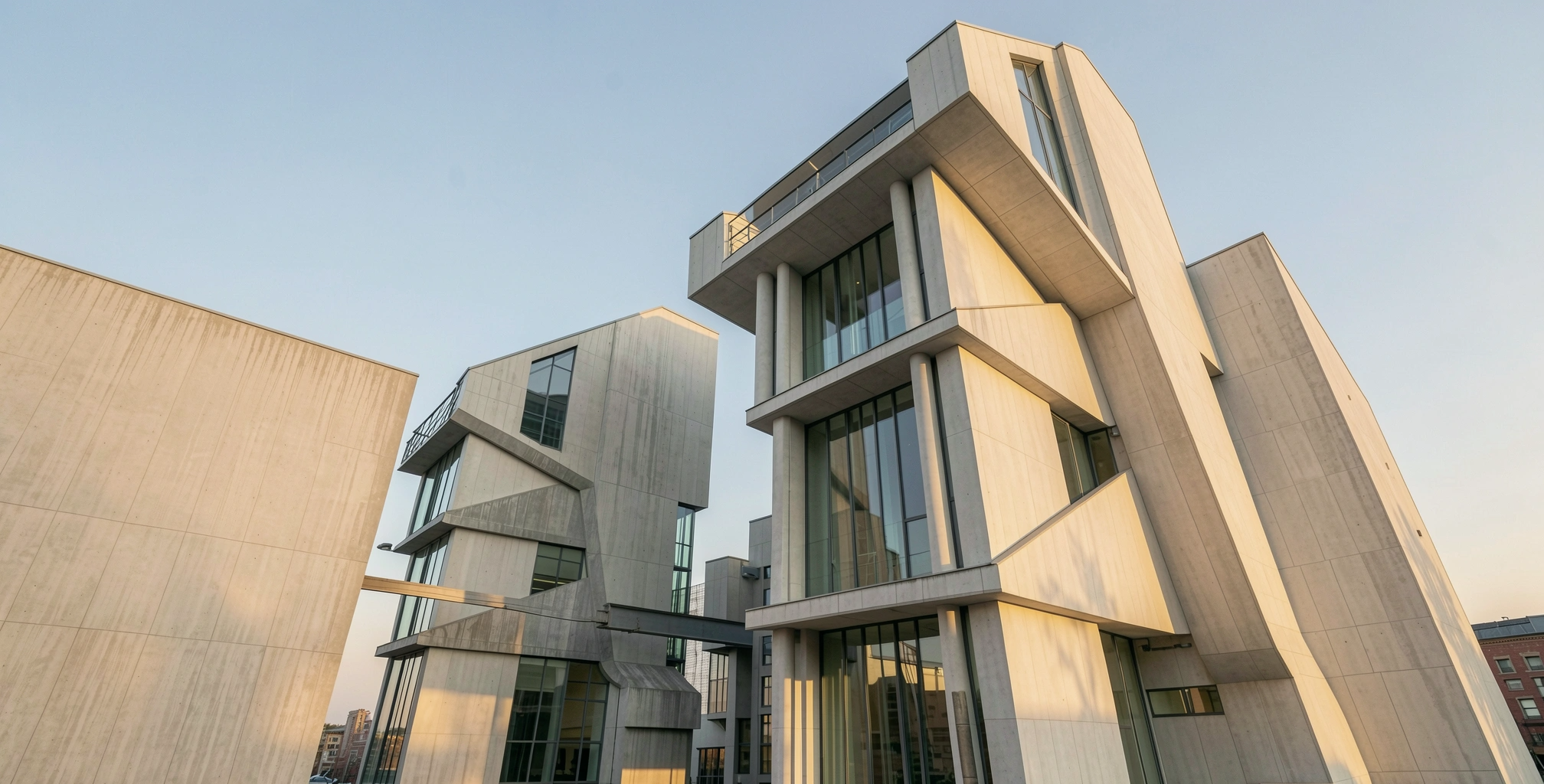
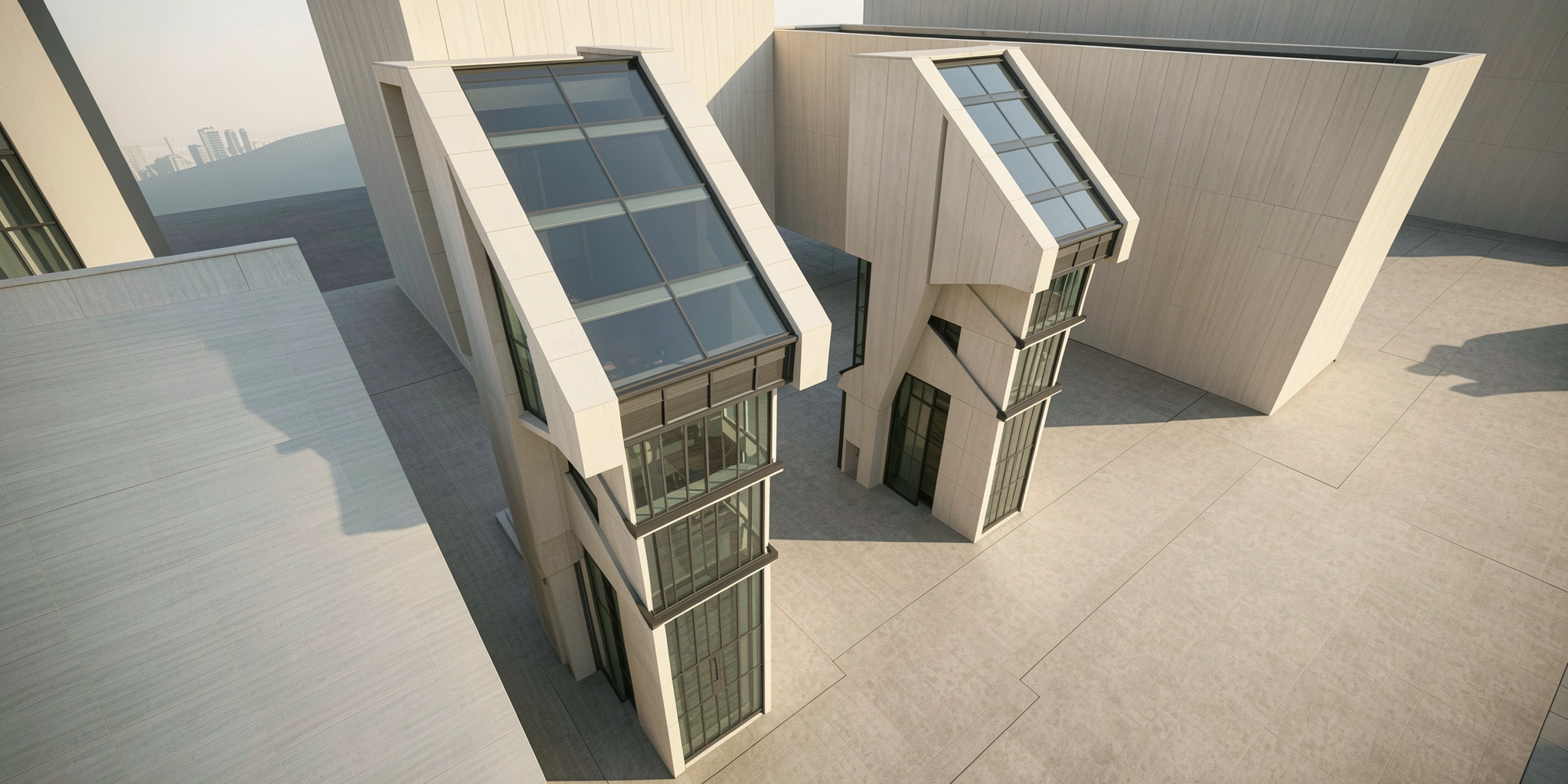
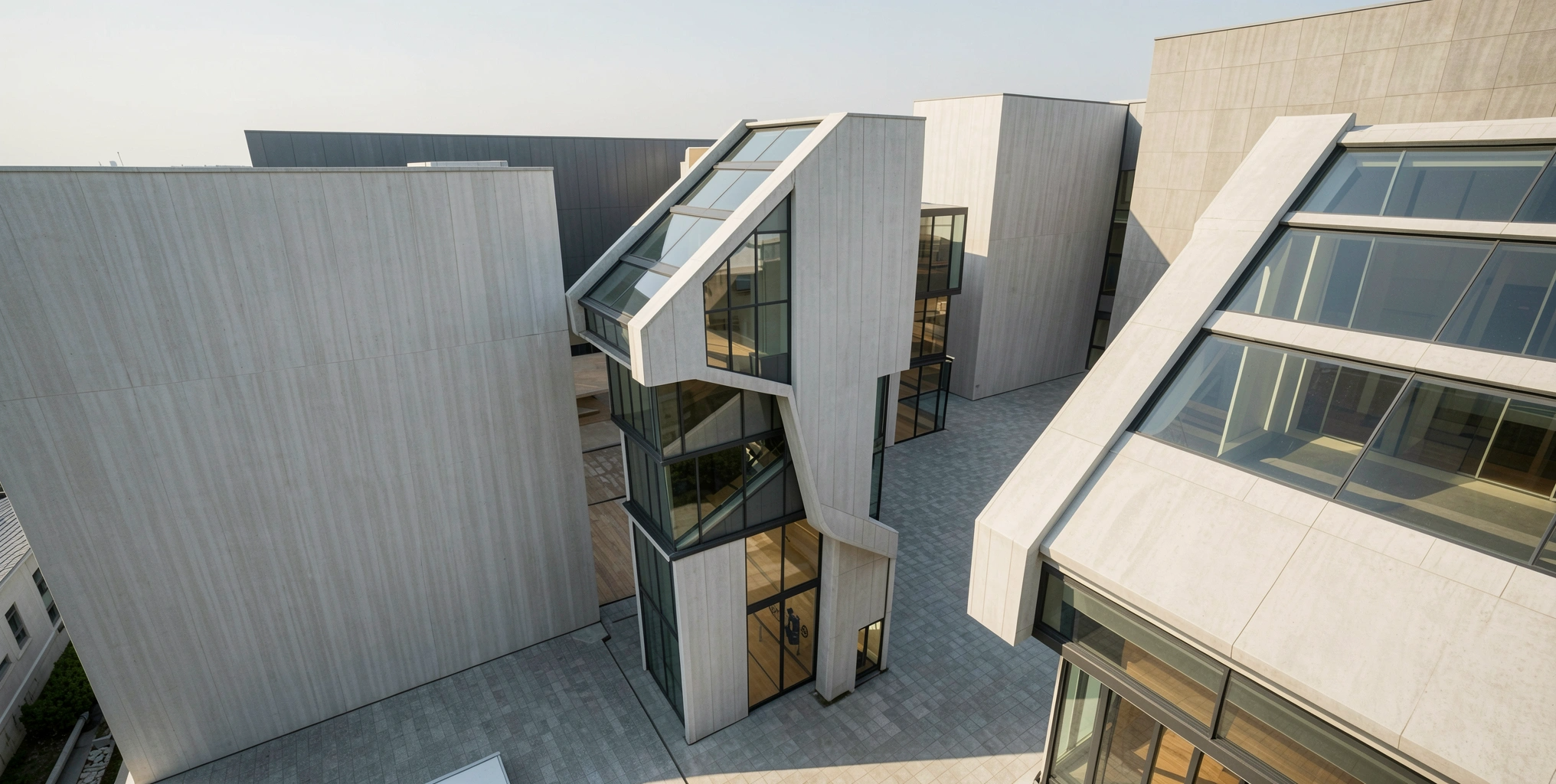
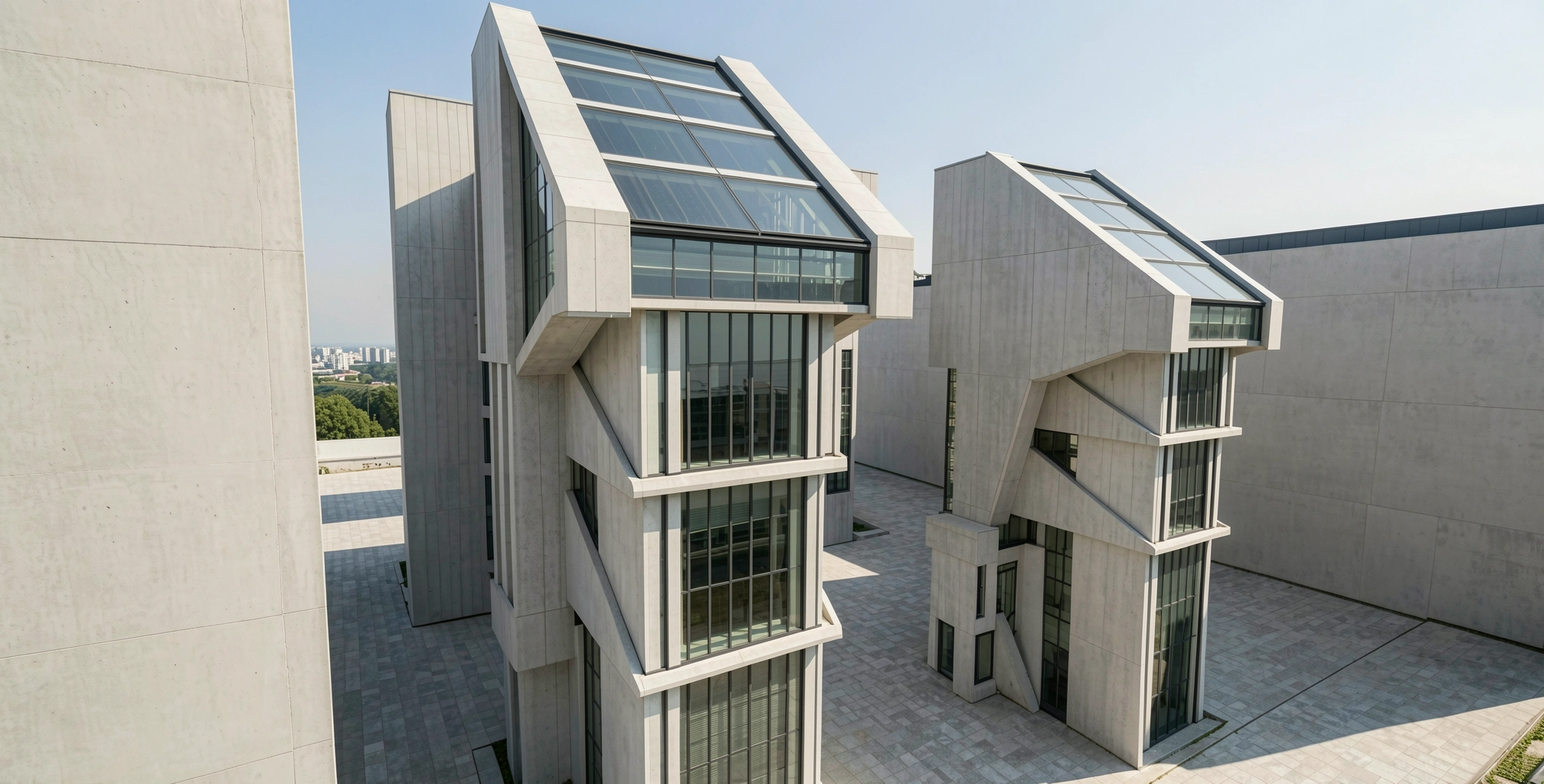
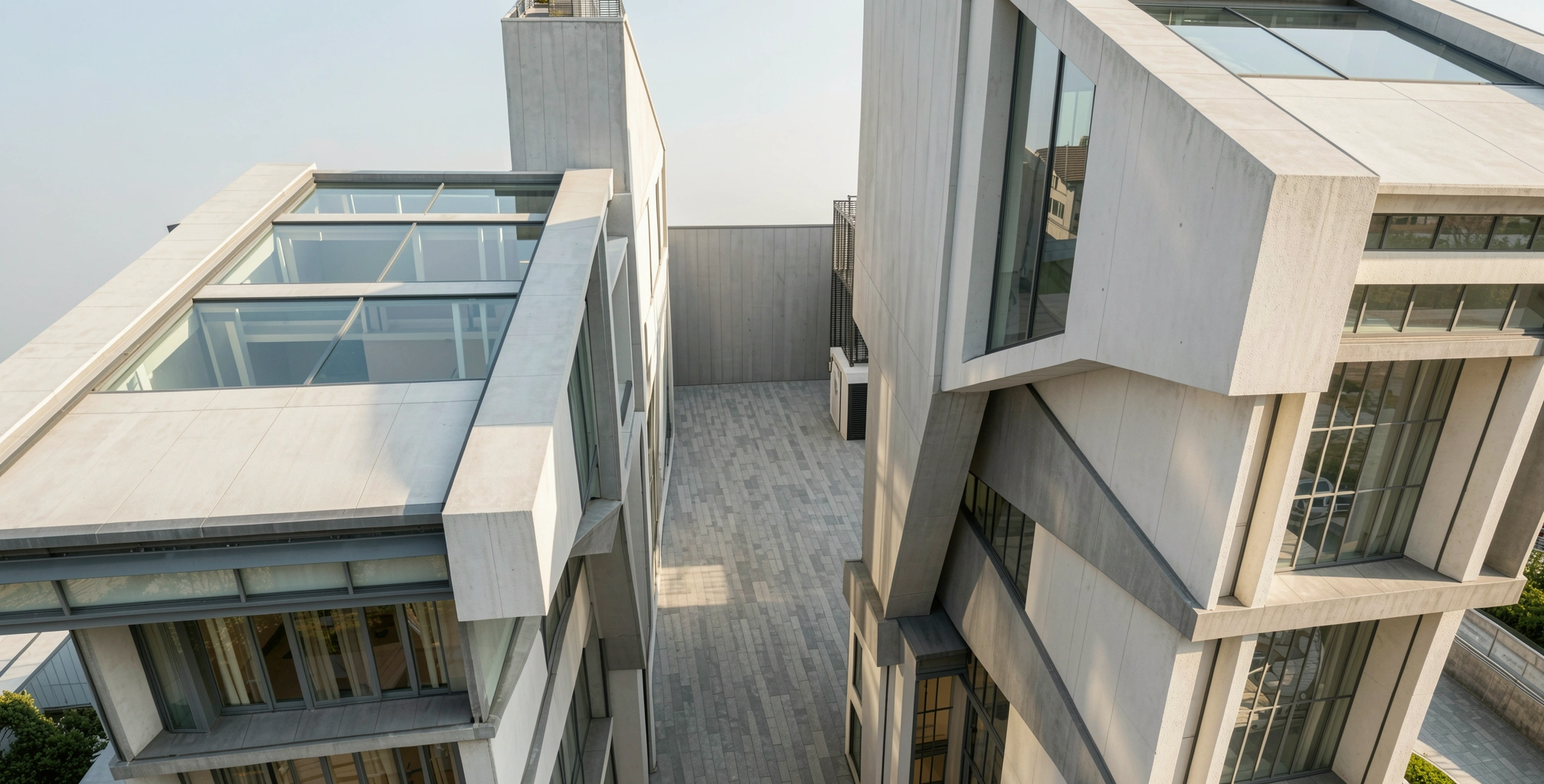
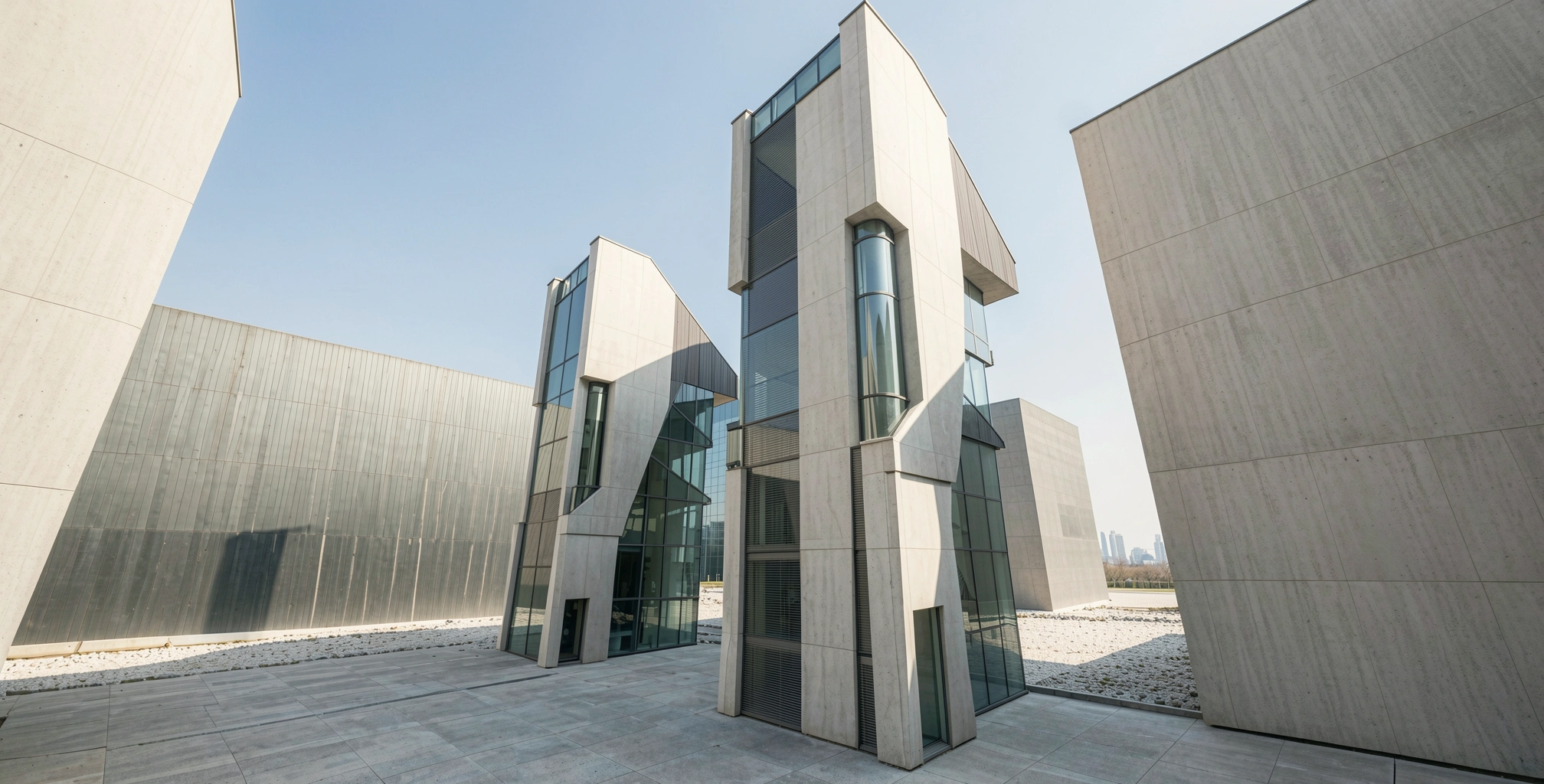
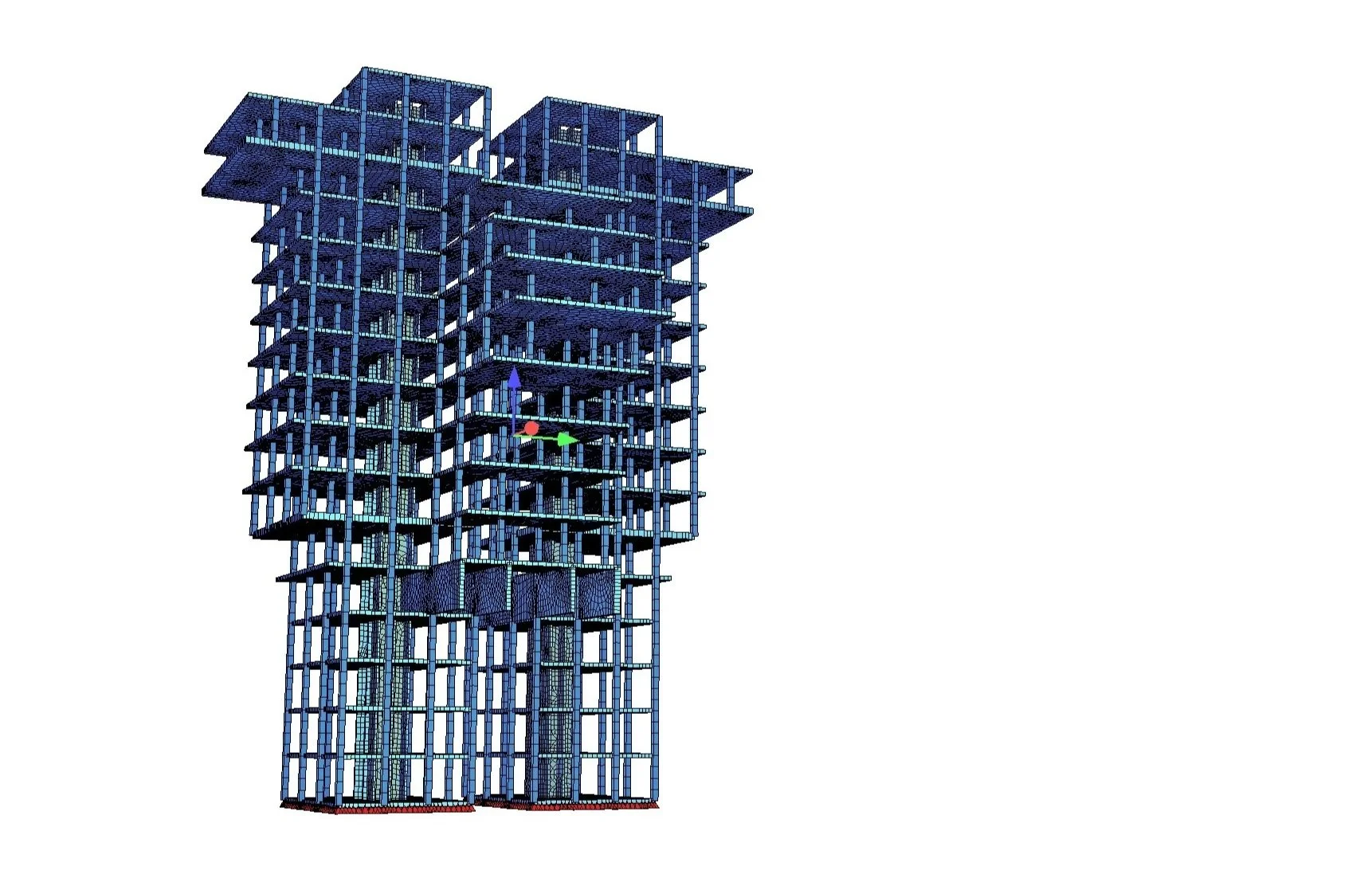
The primary structural system consists of a triangulated steel exoskeleton that carries both vertical and lateral loads while releasing the internal floor plates from significant structural constraints. Loads are transferred through the external frame to the foundations, allowing laboratory spaces, research facilities, and support accommodation to be organised independently of the primary structure. By locating the principal load-bearing elements at the perimeter, the buildings provide large, adaptable internal spaces capable of accommodating changing research requirements over time.
This separation between permanent structure and temporary occupation forms the central architectural proposition of the project. The structural frame is designed to endure, while laboratories, services, equipment, and internal partitions can be modified, replaced, or reconfigured throughout the life of the building without altering the primary structural system.
Material Behaviour
The exoskeleton employs triangulated steel construction to achieve structural efficiency and long-span capability with a relatively lightweight frame. The geometry distributes forces through direct load paths, reducing the need for large internal supports while allowing considerable freedom in the arrangement of research spaces.
At lower levels, reinforced concrete shear walls and stability elements provide stiffness, durability, and robustness where structural demands are greatest. Above, the steel exoskeleton allows rapid assembly, reduced structural weight, and a high degree of prefabrication. This combination establishes a clear hierarchy between permanent structural infrastructure and more adaptable building components.
Prefabricated laboratory modules, service risers, floor cassettes, and stair assemblies are designed as independent systems inserted within the structural framework. These elements can be upgraded or replaced as research technologies evolve, extending the useful life of the buildings while reducing the need for major reconstruction. Structure and fit-out therefore operate on different lifecycles, allowing the building to adapt without compromising its primary framework.
Environmental Response
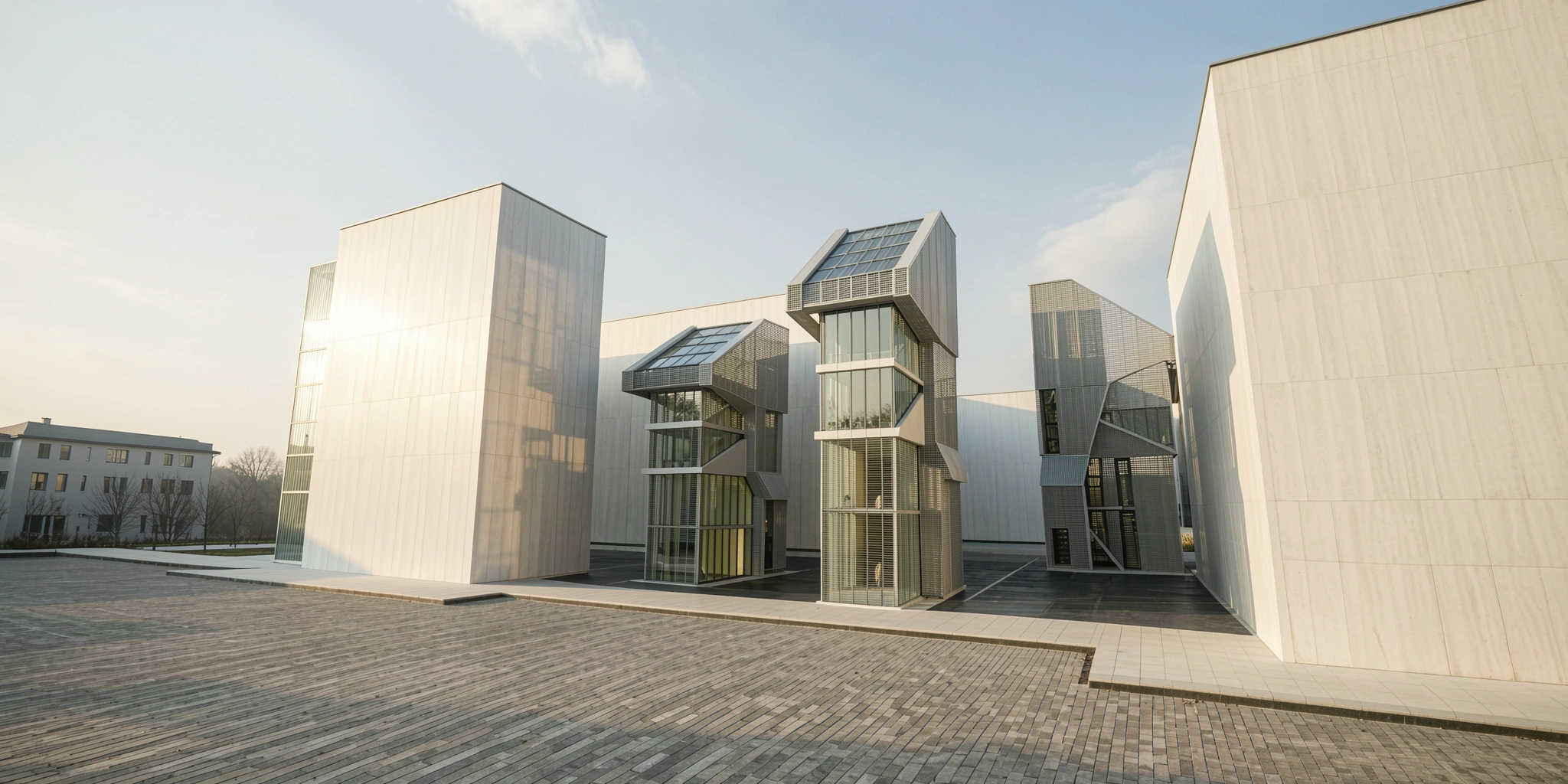
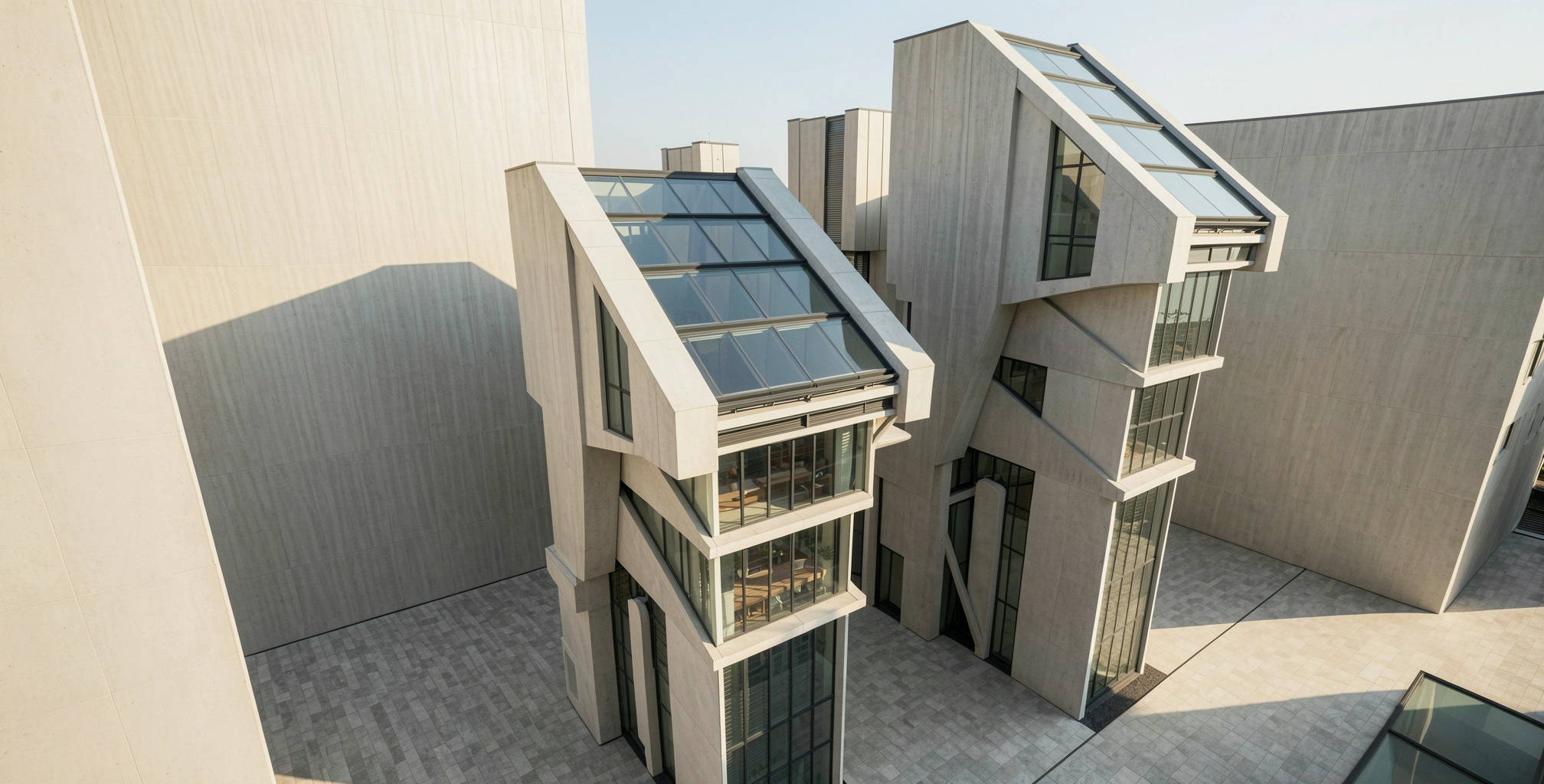
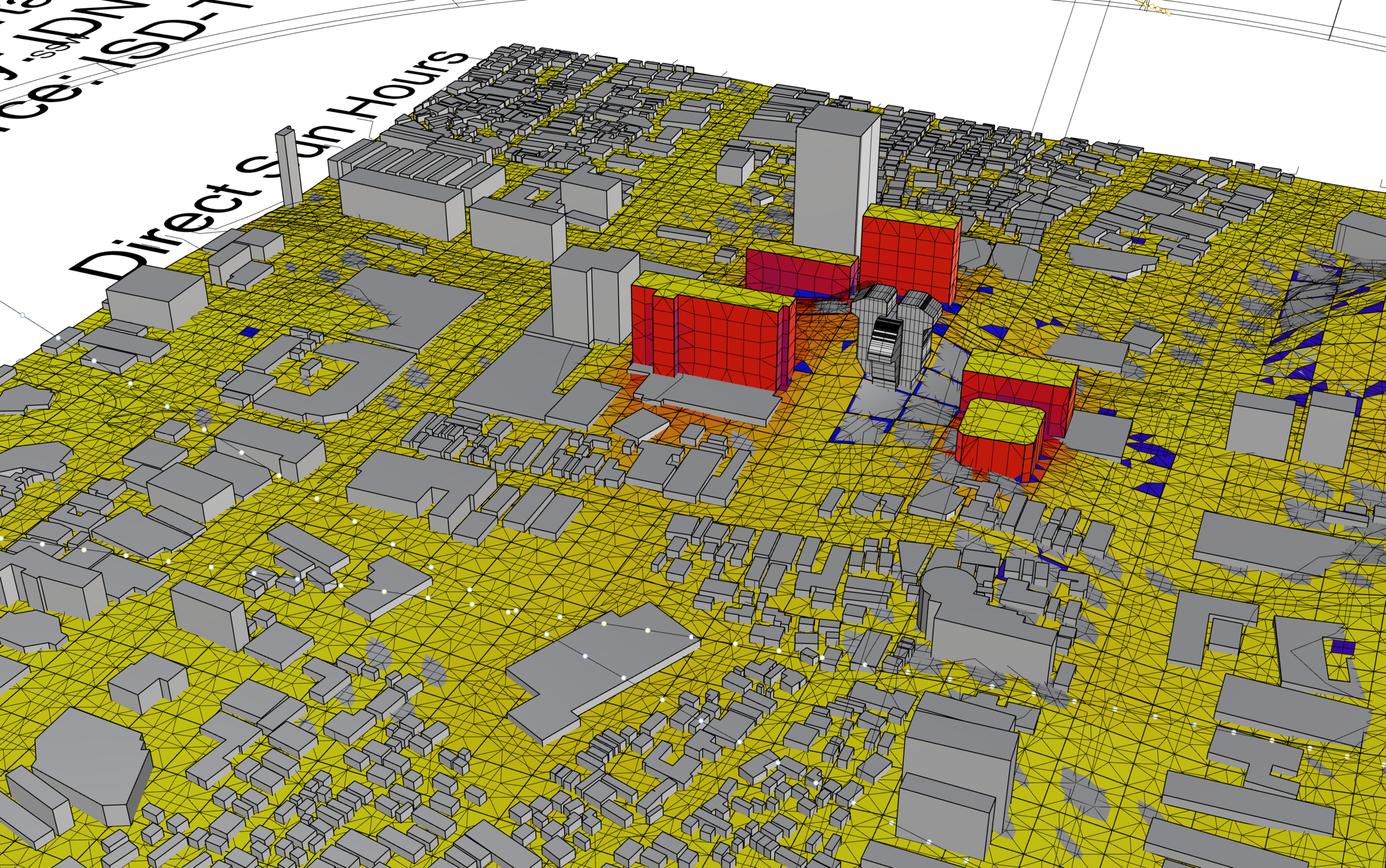
Environmental performance is integrated directly within the structural strategy. The depth and geometry of the exoskeleton provide opportunities for solar control, shading, and environmental moderation while maintaining access to daylight. Structural members support external shading devices, service distribution systems, and environmental control elements without occupying valuable laboratory space.
The separation between structure and enclosure allows façade systems to evolve independently of the primary frame. Insulation, glazing, ventilation systems, and environmental technologies can therefore be modified as performance requirements change. This flexibility is particularly important within research environments where environmental standards, equipment loads, and servicing demands frequently evolve.
The structural framework also supports a layered environmental strategy across the wider campus. Alignment of floor levels, servicing routes, and façade systems allows individual buildings to operate independently while remaining part of a coordinated institutional infrastructure. Environmental performance consequently emerges through the interaction of structural organisation, enclosure design, servicing systems, and operational flexibility rather than through any single technological intervention.
Constructive Expression
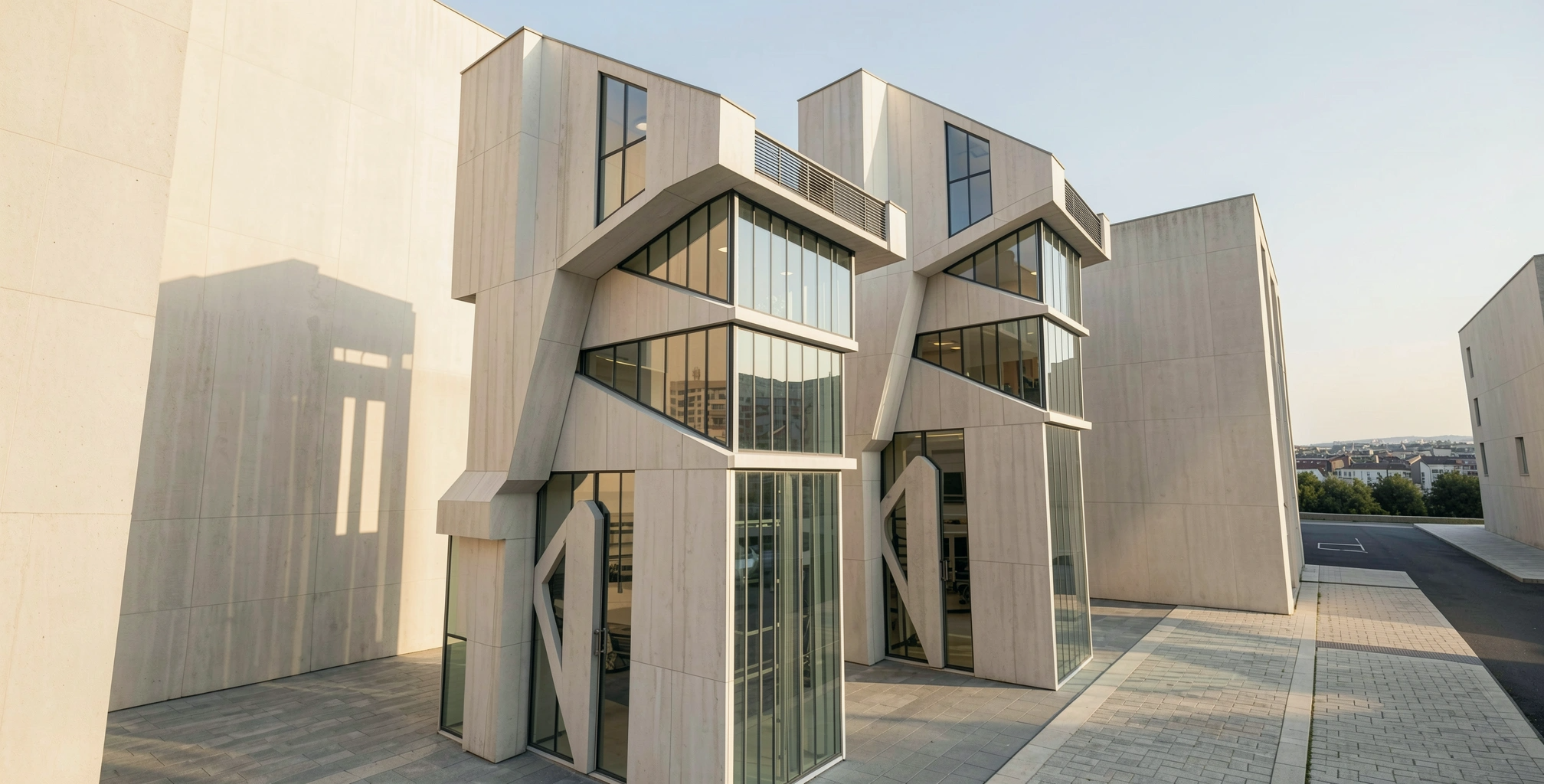
The architectural character of the cluster arises from the distinction between permanent structure and adaptable occupation. The exoskeleton establishes a clear and legible framework that remains visible across the campus, expressing the enduring organisational order of the institution. Within this framework, laboratories, services, circulation systems, and enclosure components can change as research requirements evolve.
Expression therefore emerges from constructive logic rather than formal variation. The visible structural frame communicates stability, continuity, and permanence, while the adaptable internal systems reflect the evolving nature of scientific research. Architecture becomes a framework for change rather than a fixed object.
The project demonstrates how structural systems can support long-term adaptability without sacrificing coherence. By separating permanent and temporary elements, coordinating individual buildings within a larger institutional field, and integrating environmental performance within the structural framework, the Medical Research Cluster establishes a durable architectural order capable of accommodating continual transformation throughout its operational life.