
Mini-Tower Residential Cluster — Environmental Subdivision as Structural Strategy
Structural Reasoning
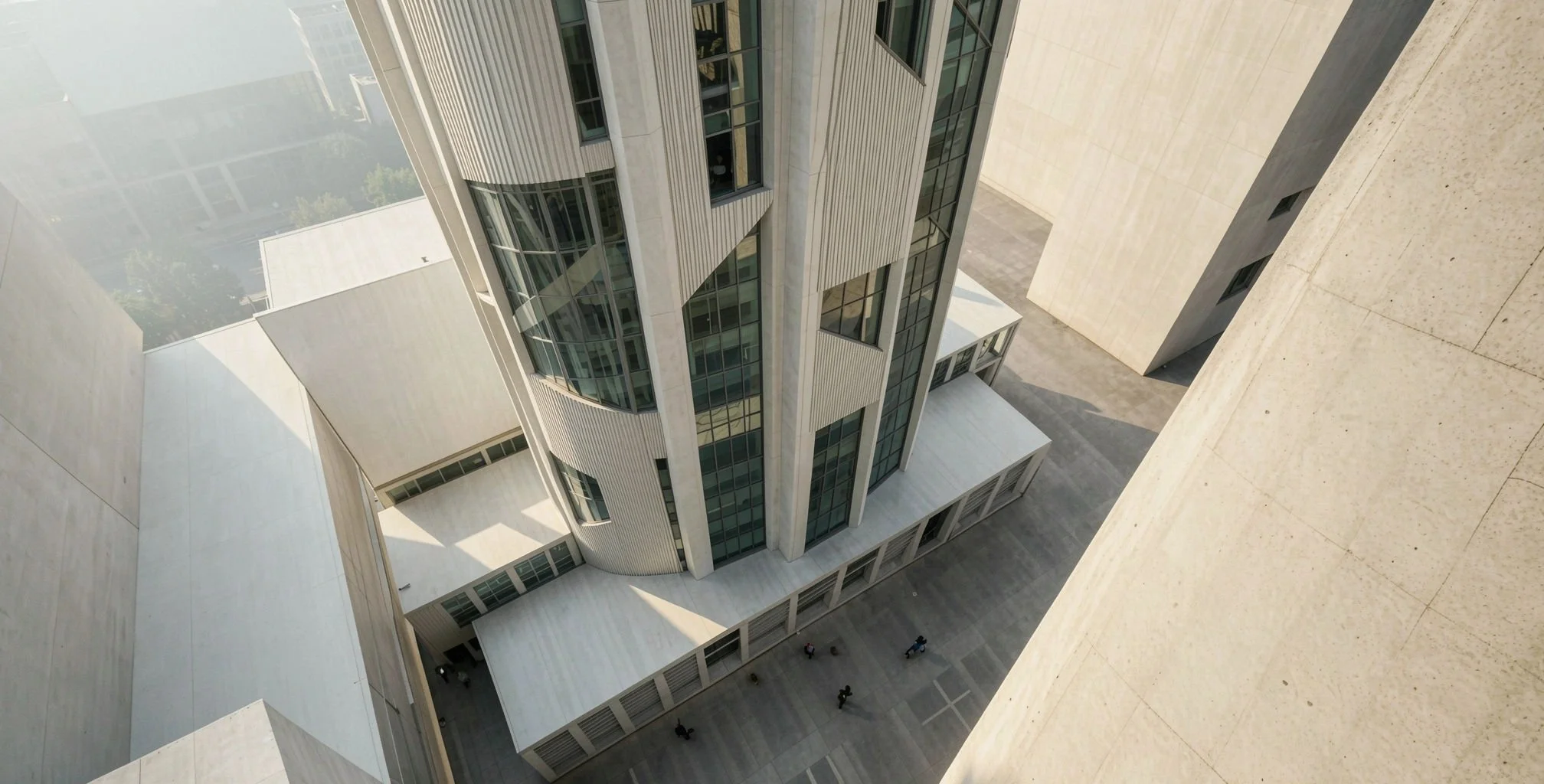
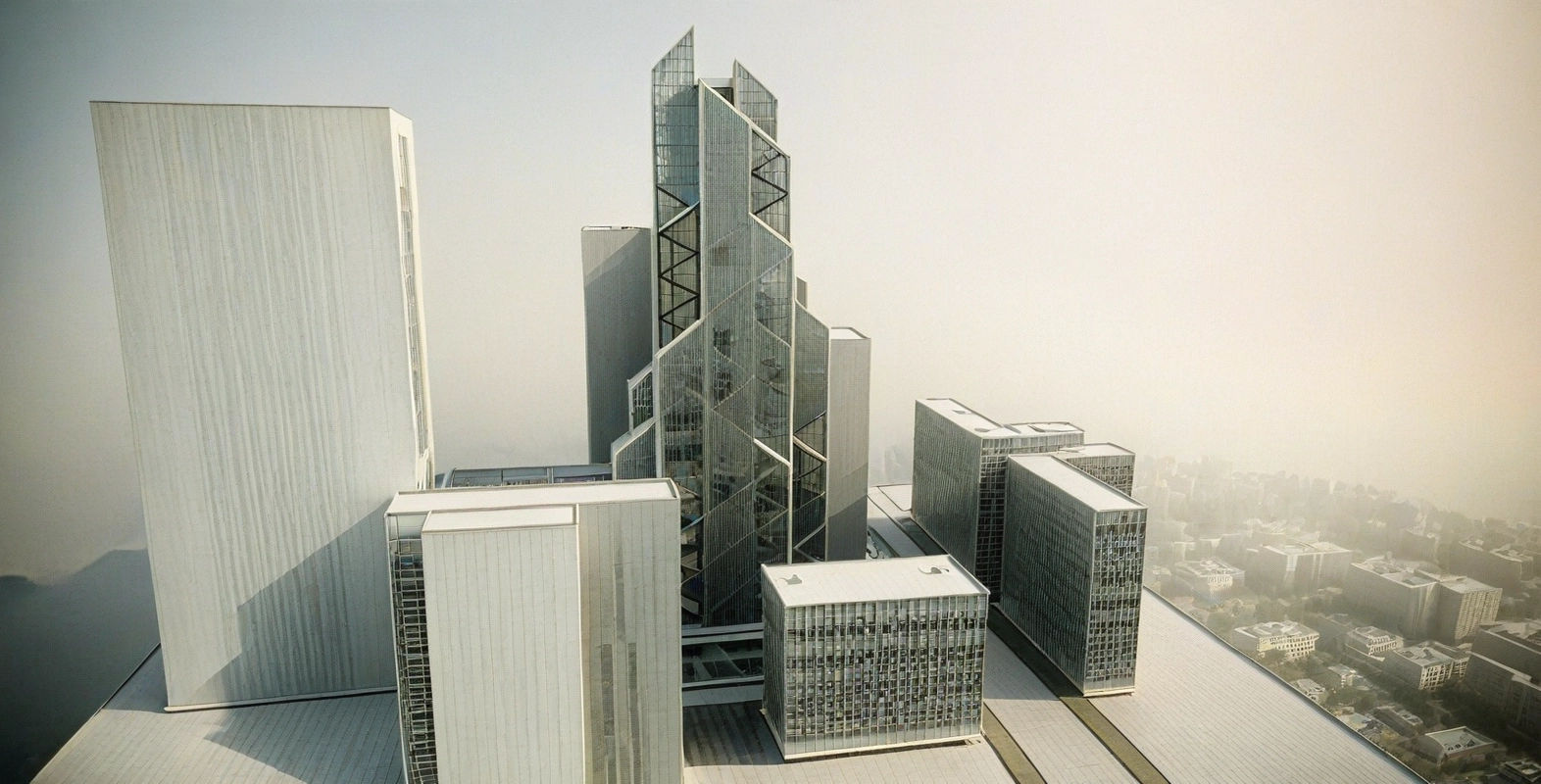
The residential cluster is organised as a series of interconnected mini-towers rather than a single continuous high-rise volume. This subdivision responds simultaneously to structural, environmental, and spatial requirements. While the buildings operate collectively as a unified development, each tower functions as a distinct structural and environmental zone.
Vertical loads are carried through a combination of reinforced concrete cores, perimeter columns, and floor slabs, with forces transferred directly to the foundations through continuous load paths. Lateral stability is provided by the cores together with perimeter structural elements integrated within the external service zones. The organisation of the structure allows each tower to operate as a coherent structural unit while remaining connected to the larger cluster.
The division of the overall mass into smaller towers reduces structural concentration, distributes loads more evenly across the site, and allows differences in height and form to be accommodated without introducing unnecessary structural complexity. Rather than treating the development as a single object, the project establishes a family of related structures organised within a common framework.
Material Behaviour
The structural system combines reinforced concrete and steel according to the differing demands of the building. Concrete provides stiffness, durability, and resistance to lateral loading within the lower portions of the development and within the principal stability elements. Steel is employed where reduced weight, longer spans, or more complex geometries are advantageous.
This hybrid approach allows structural resources to be concentrated where they are most effective. Heavier and more robust elements occur where loads are greatest, while lighter systems are introduced where structural demands reduce. The resulting hierarchy improves material efficiency while maintaining continuity throughout the development.
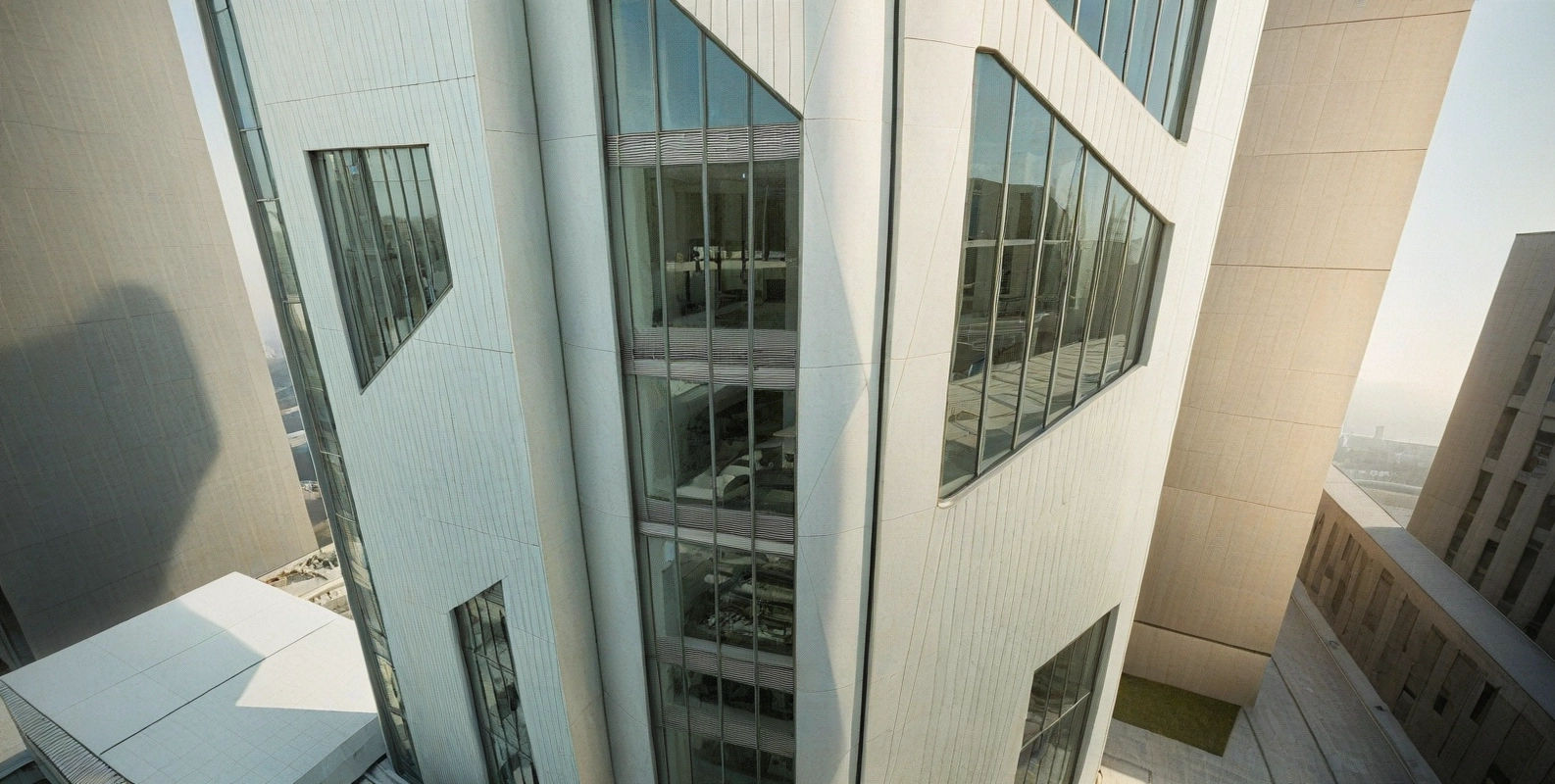
External service structures are conceived as independent but coordinated systems attached to the primary frame. Stairs, risers, and environmental infrastructure are positioned within these zones, reducing the number of penetrations required within the residential floor plates and simplifying future maintenance and adaptation. Prefabricated service modules can therefore evolve independently of the principal structure.
Environmental Response
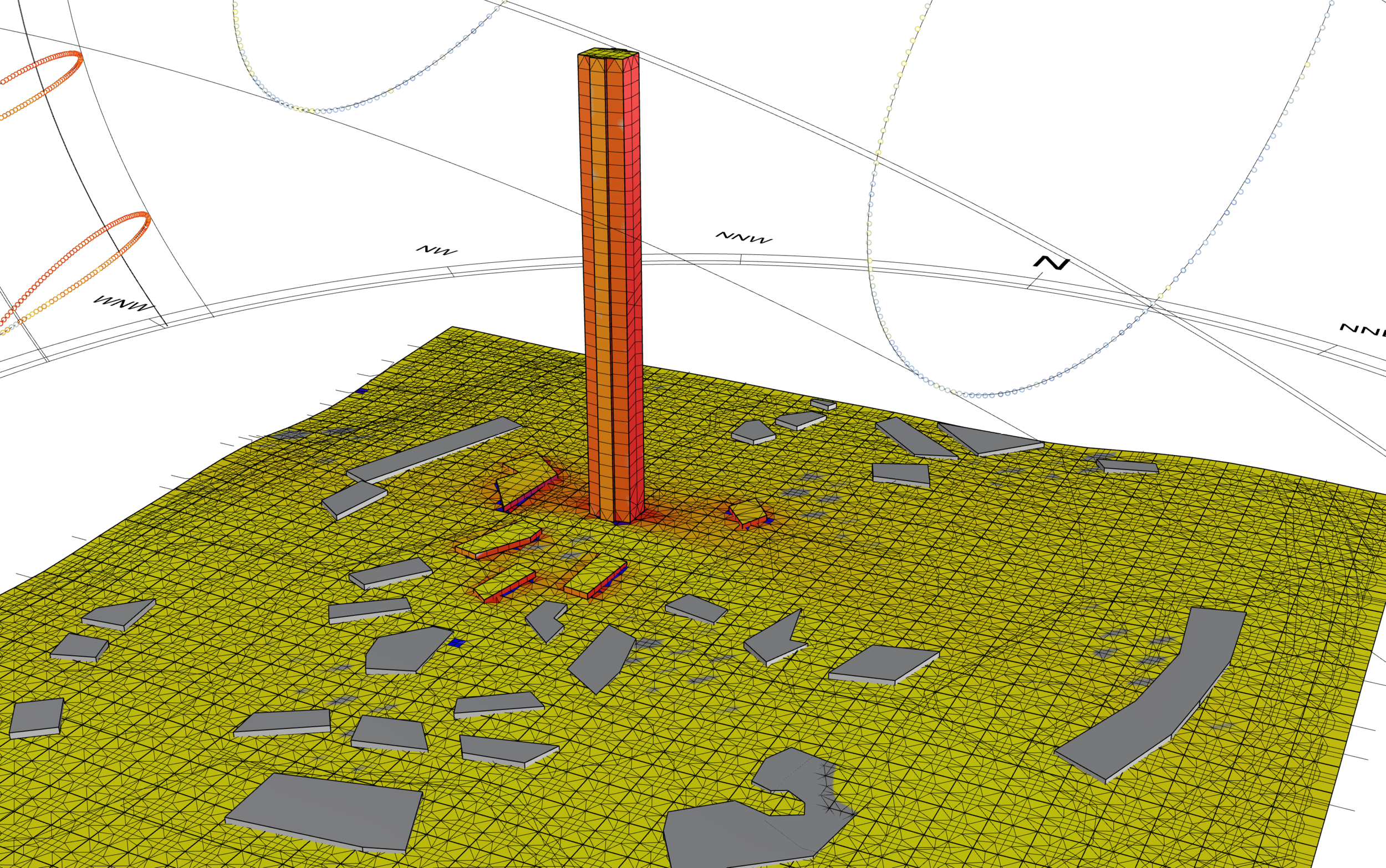
The subdivision of the tower into smaller volumes increases façade exposure and reduces floor depth, allowing a greater proportion of apartments to receive daylight, natural ventilation, and outward views from multiple orientations. Environmental performance consequently emerges from the organisation of the building rather than from the addition of complex technological systems.
The distributed arrangement of the towers creates opportunities for cross-ventilation between building volumes while increasing access to daylight throughout the development. Balconies, recessed façades, and projecting floor plates provide shading and environmental moderation while remaining integrated with the structural framework.
The external service spines contribute to environmental performance by accommodating ventilation routes, environmental infrastructure, and maintenance access outside the principal residential accommodation. This arrangement allows environmental systems to be maintained and upgraded without disrupting occupation while preserving flexibility within individual apartments.
The environmental strategy therefore operates through subdivision, orientation, façade exposure, and integration of services rather than through reliance on large centralised systems.
Constructive Expression
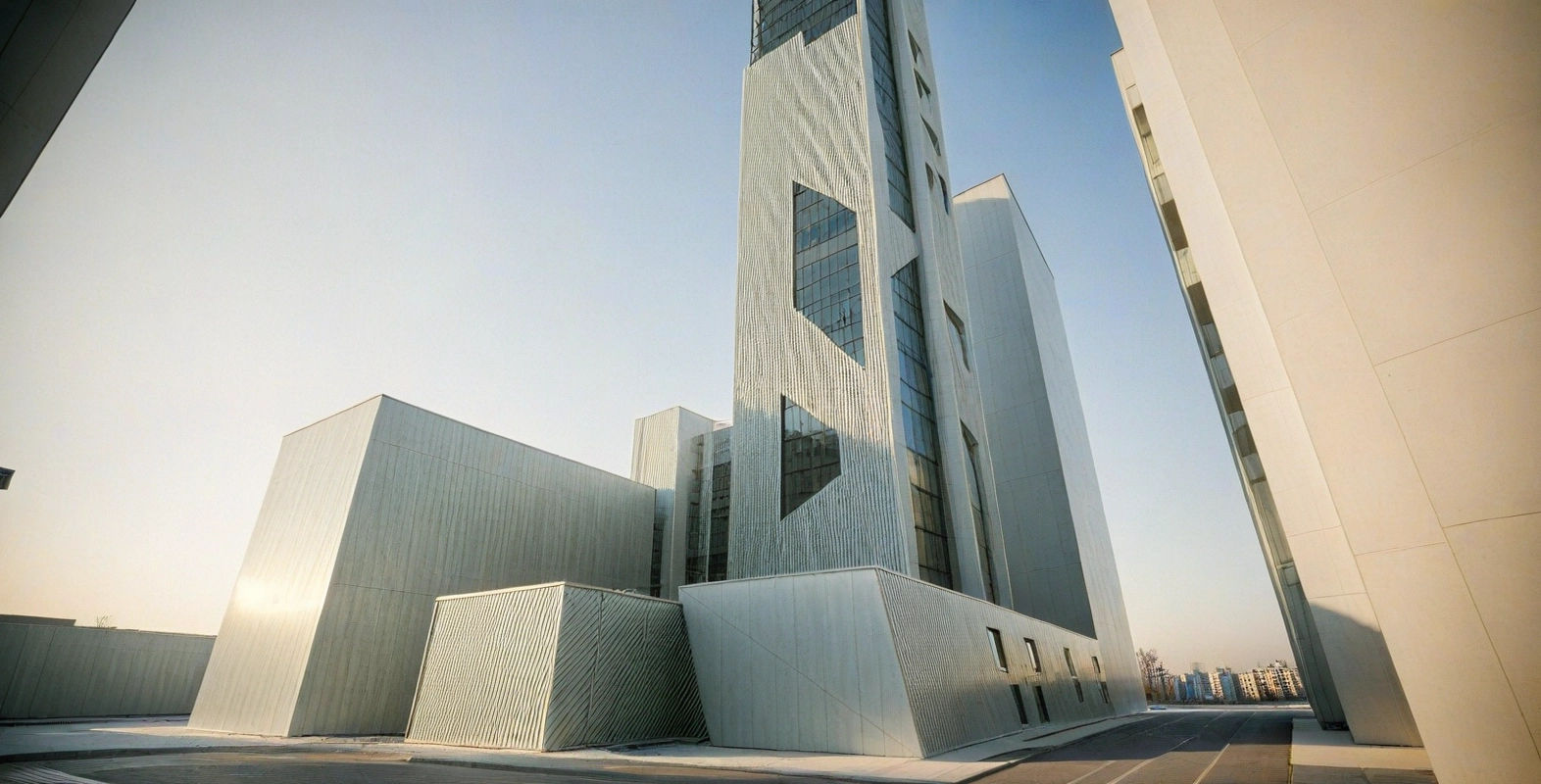
The architectural character of the project emerges from the relationship between structural organisation and environmental subdivision. The cluster reads as a series of interconnected towers whose differing heights and forms reflect their role within the overall composition.
Structure remains legible through the organisation of cores, floor plates, service zones, and façade elements. Environmental requirements produce variation in balcony depth, façade articulation, and enclosure rather than arbitrary formal differences. Expression therefore arises from the coordination of load-bearing structure, environmental performance, and habitation.
The project demonstrates how a high-density residential building can achieve the efficiencies of a tower while preserving the environmental qualities more commonly associated with smaller-scale housing. Through the subdivision of mass, the integration of services, and the alignment of structure with environmental performance, the building establishes a coherent relationship between density, adaptability, and residential quality.