
Retail Centre — Environmental Moderation Through Structure
Structural Reasoning
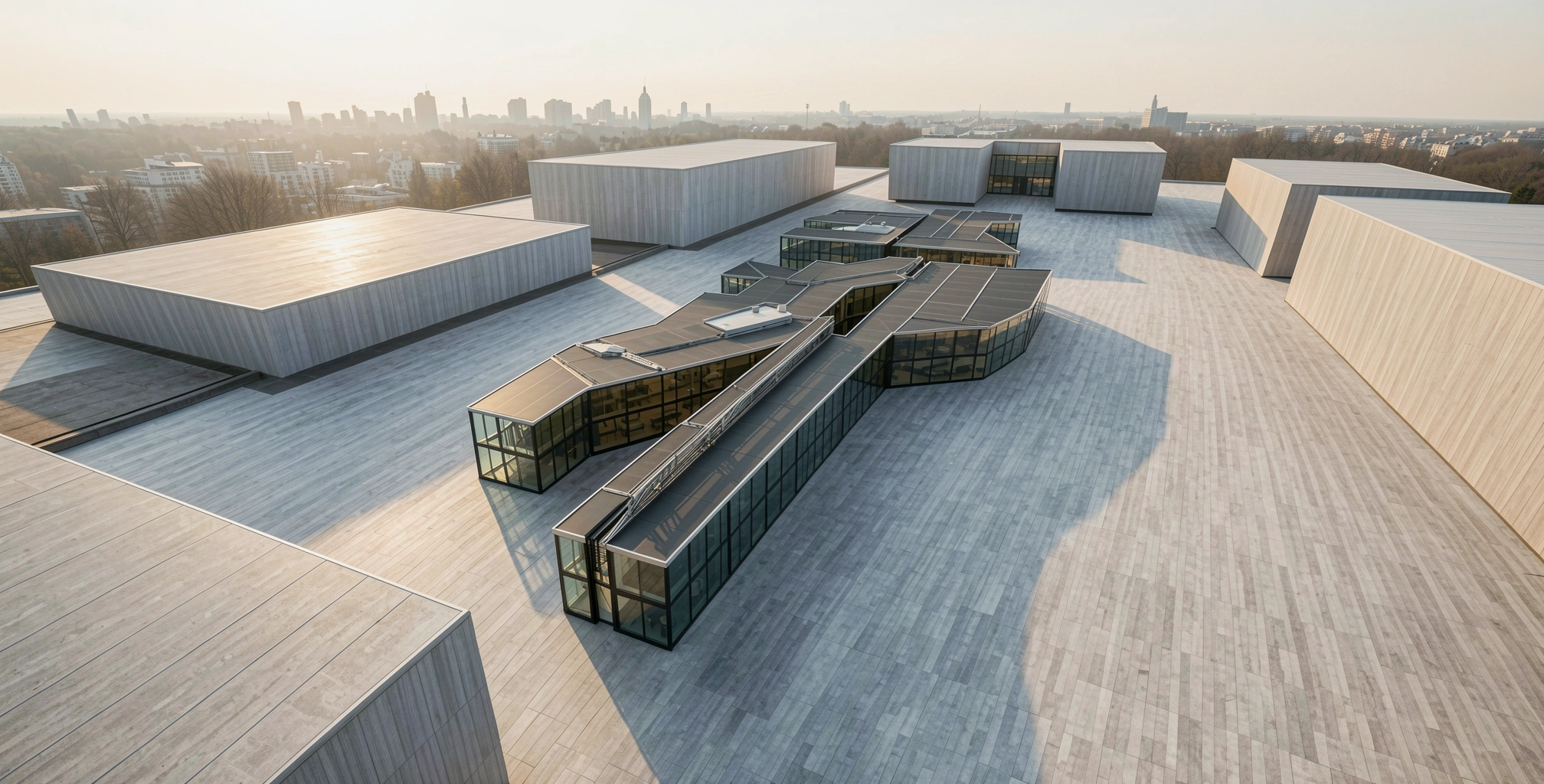
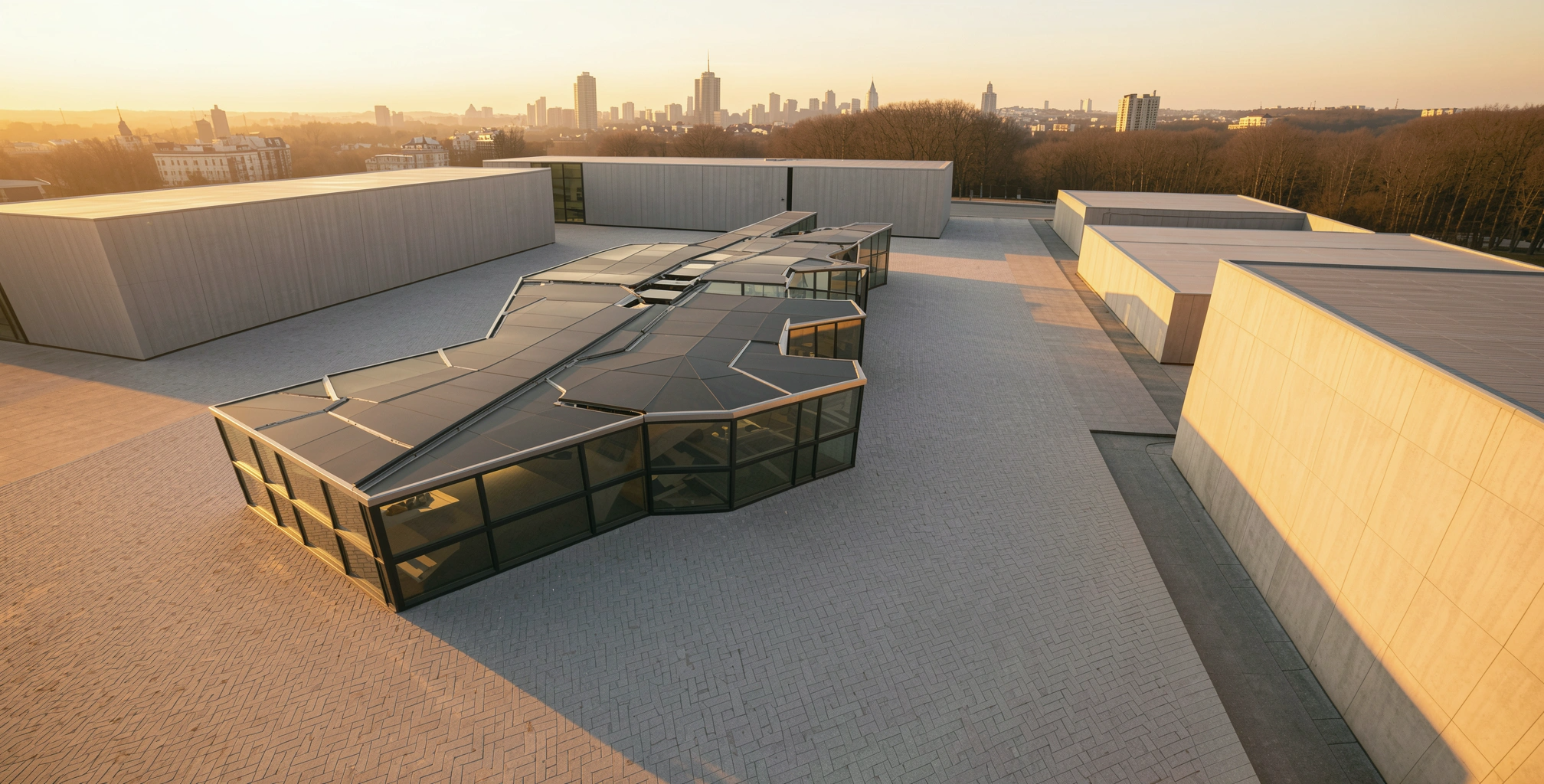
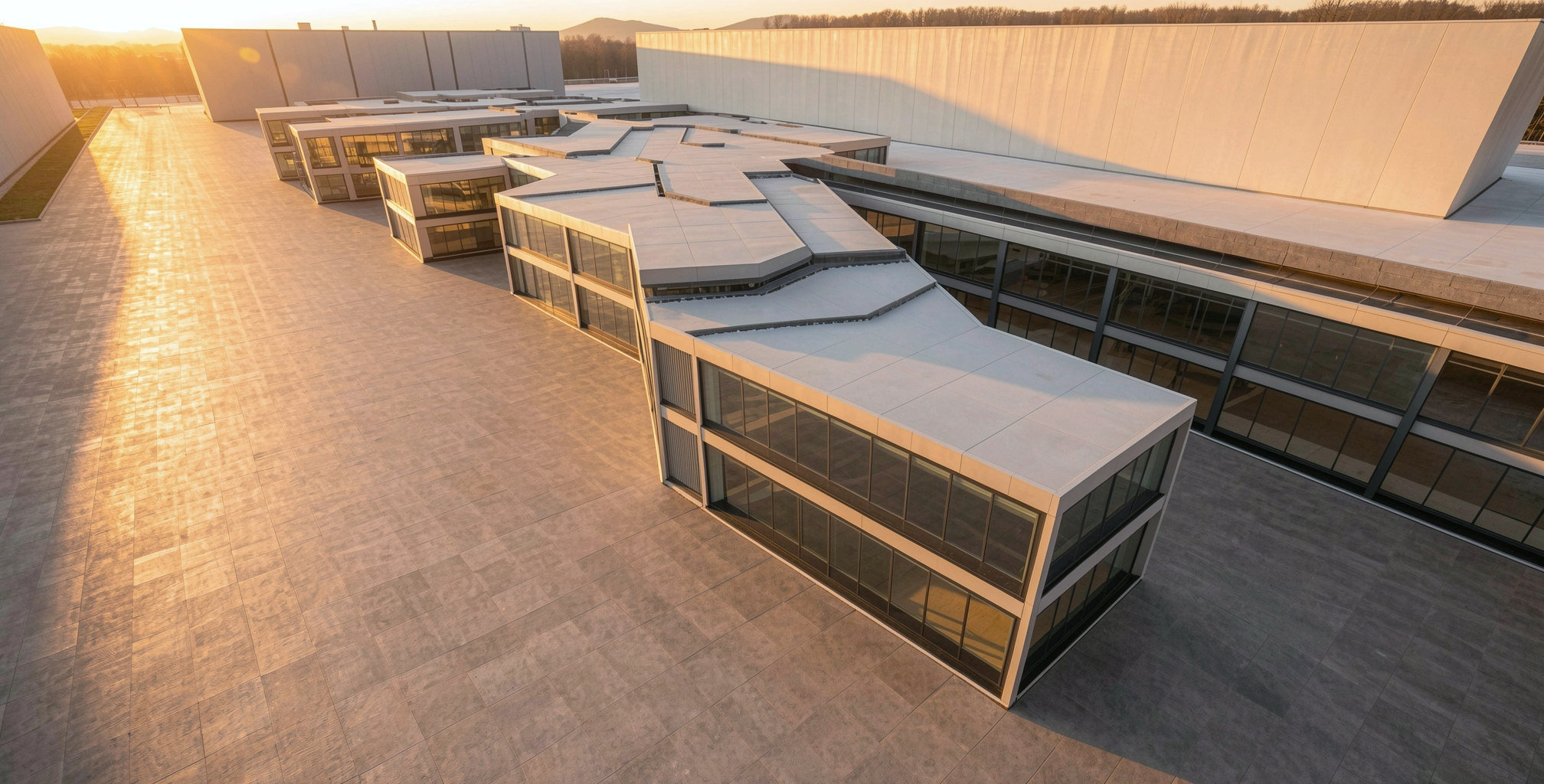
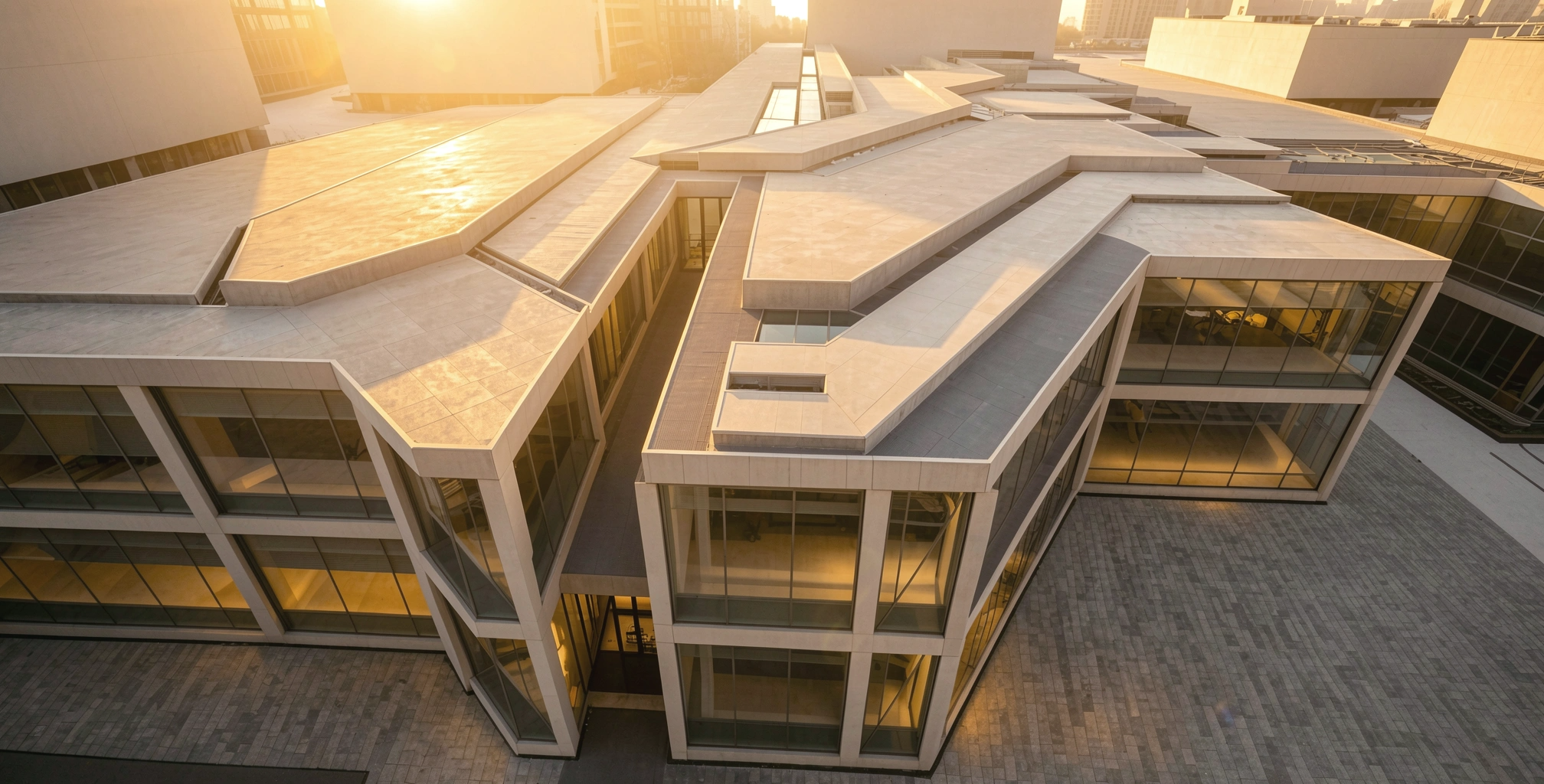
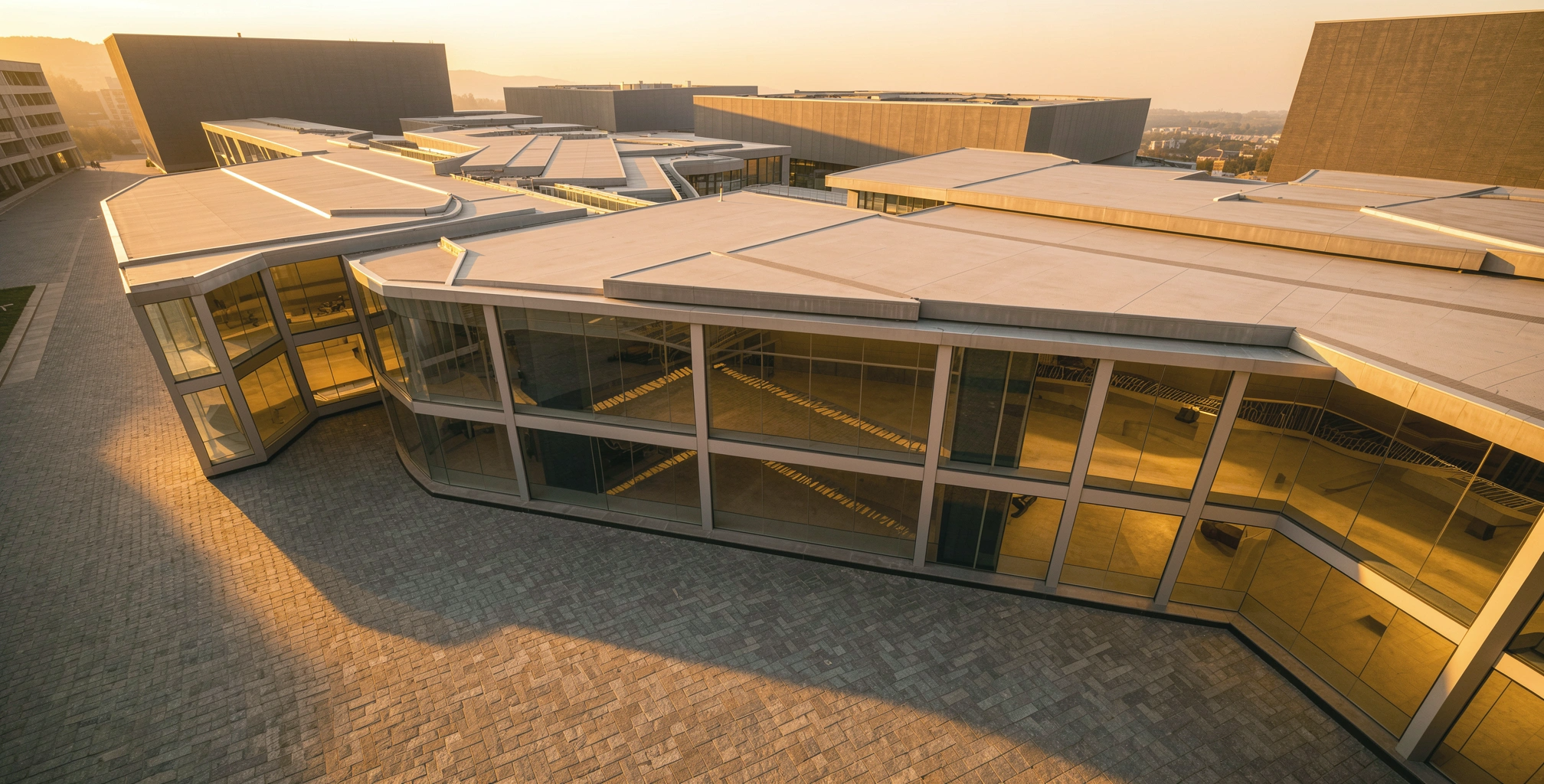
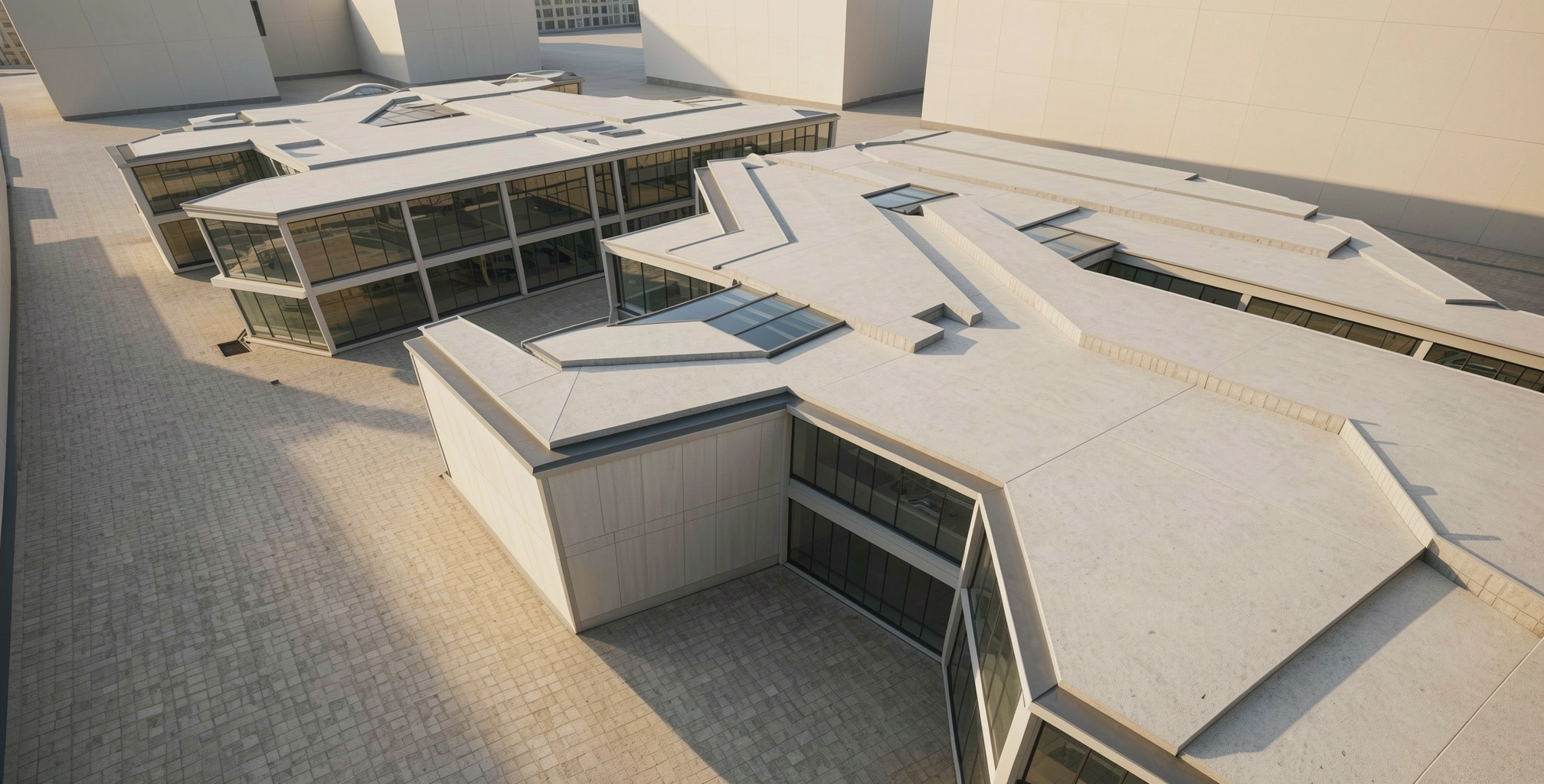
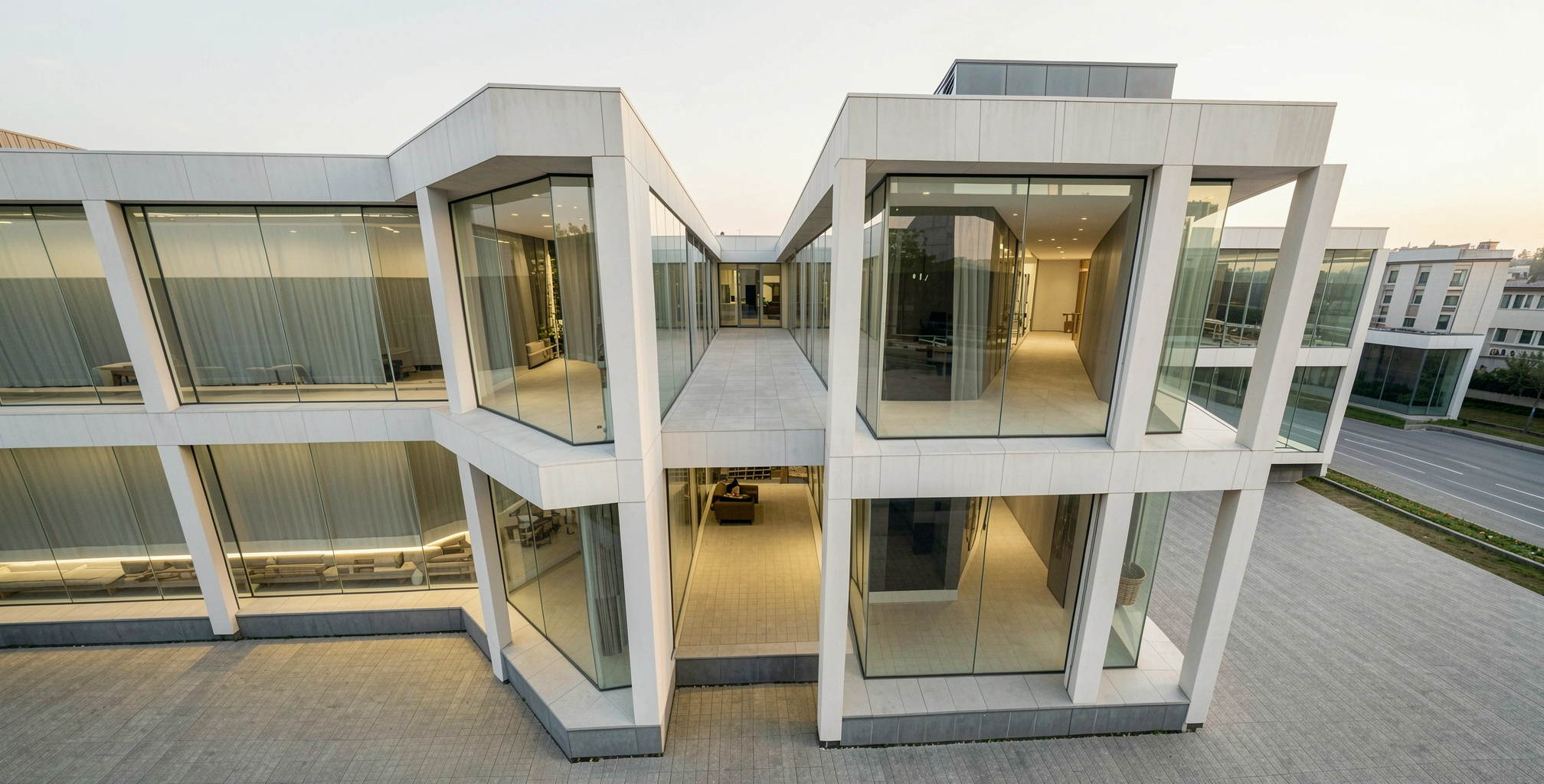
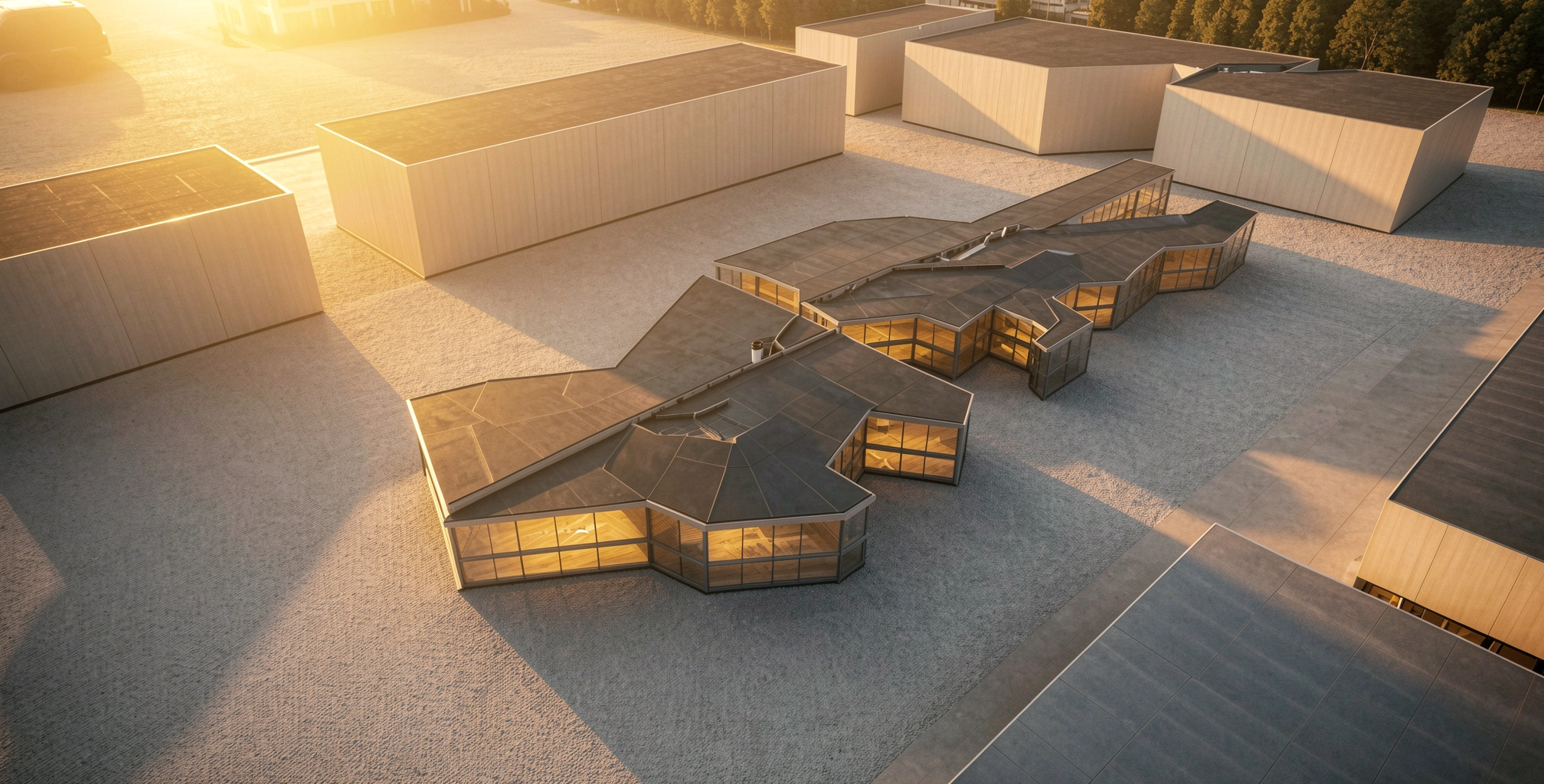
The Retail Centre is organised around a series of large-span roof structures that establish the primary spatial order of the development. These structures define circulation routes, retail frontages, communal gathering spaces, and environmental zones within a continuous framework. Rather than treating enclosure as the primary architectural condition, the project uses structure to create a sequence of protected external and semi-enclosed spaces that mediate between climate and occupation.
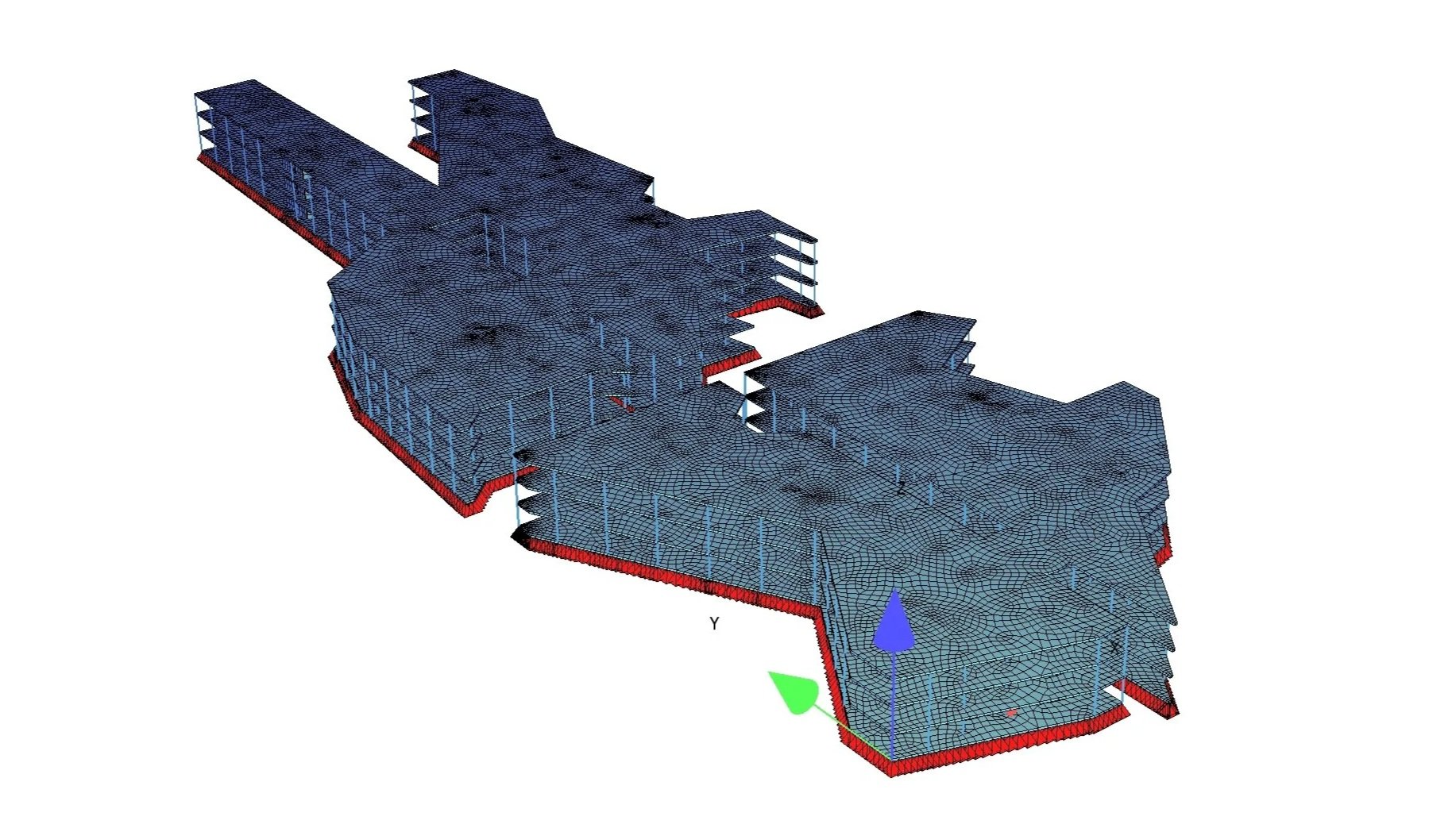
Roof loads are transferred through long-span structural systems to perimeter supports, allowing extensive areas to remain free of internal columns. The resulting flexibility accommodates changing tenant requirements while establishing clear circulation routes and environmental organisation across the site.
The structural system therefore performs simultaneously as support, shelter, and spatial infrastructure.
Material Behaviour
The roof structures are dimensioned to span large distances while maintaining stability under environmental loading and long-term use. Member depth and spacing are coordinated with environmental systems, lighting infrastructure, servicing routes, and maintenance access, allowing multiple functions to be integrated within a single constructive framework.
Roof-level servicing is distributed through the structural system rather than concealed within isolated technical zones. Mechanical ventilation, electrical infrastructure, and environmental services are coordinated with the structural layout, reducing service distribution distances and allowing future adaptation as retail requirements evolve.
The structural framework therefore establishes a durable long-term order capable of accommodating changing patterns of occupation, tenancy, and environmental performance.
Environmental Response
Environmental performance emerges from the organisation of space, structure, and servicing rather than from complete climatic enclosure. The project is organised into a series of environmental zones that respond differently to occupation, solar exposure, and seasonal conditions.
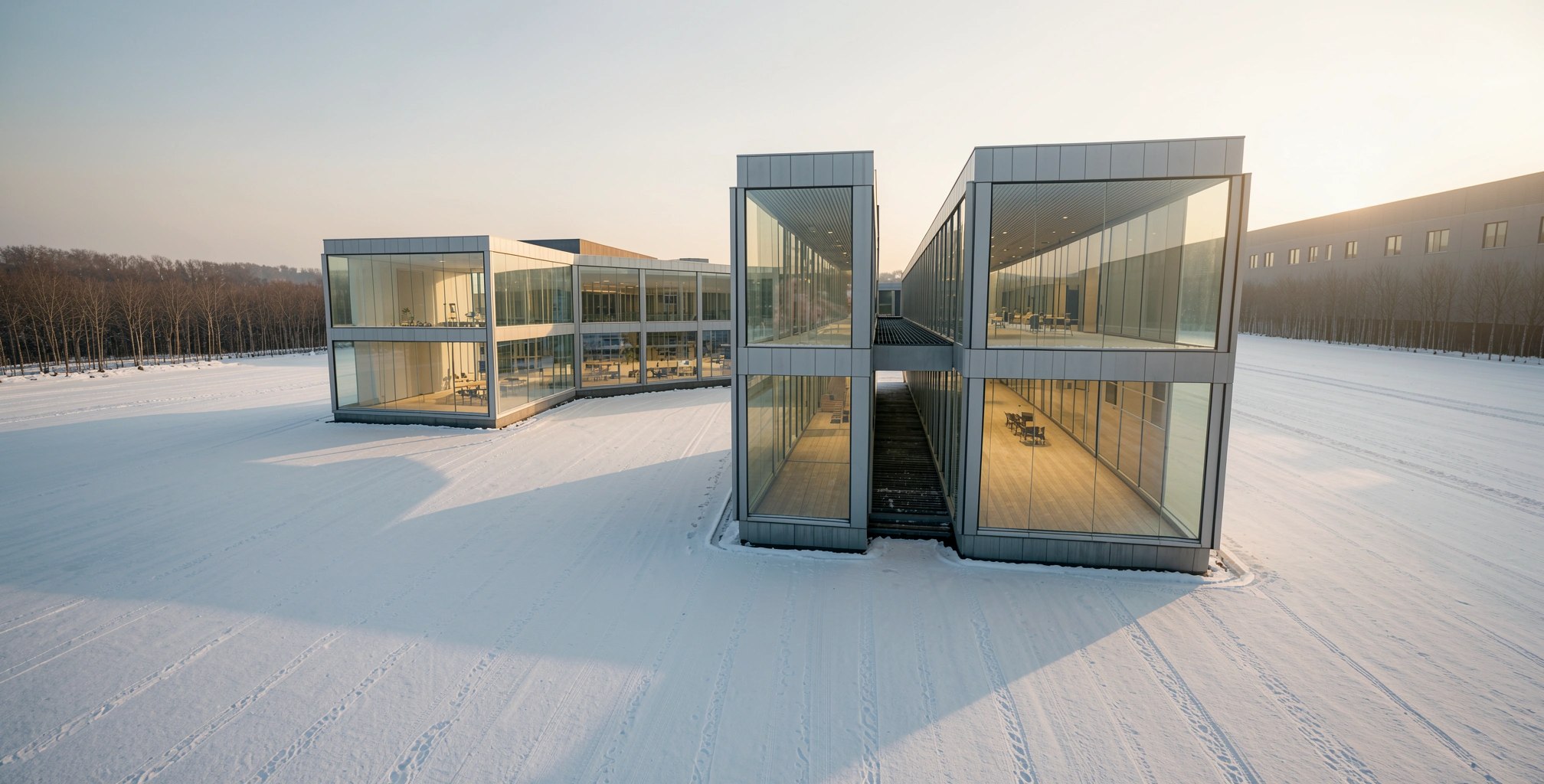
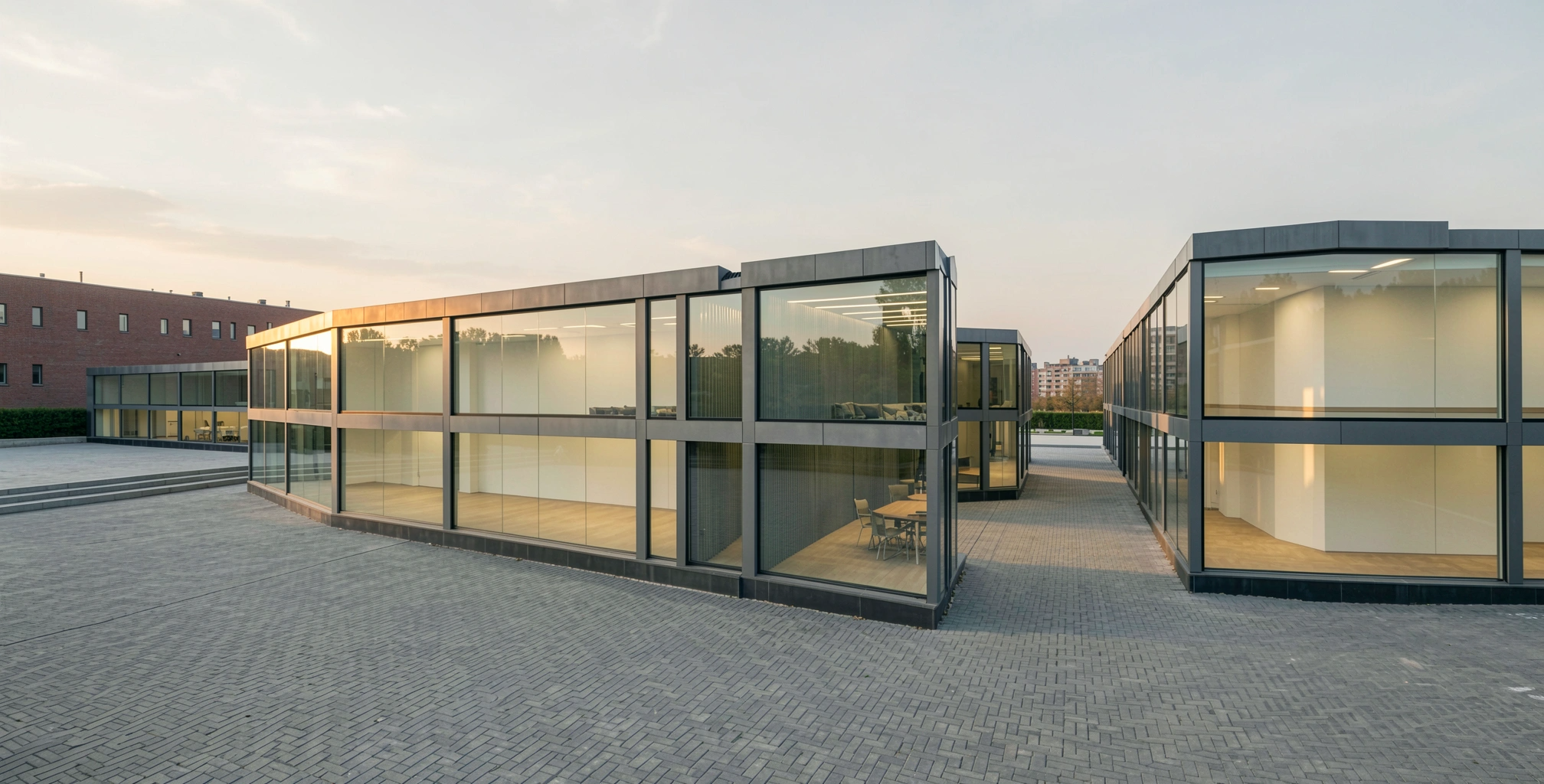
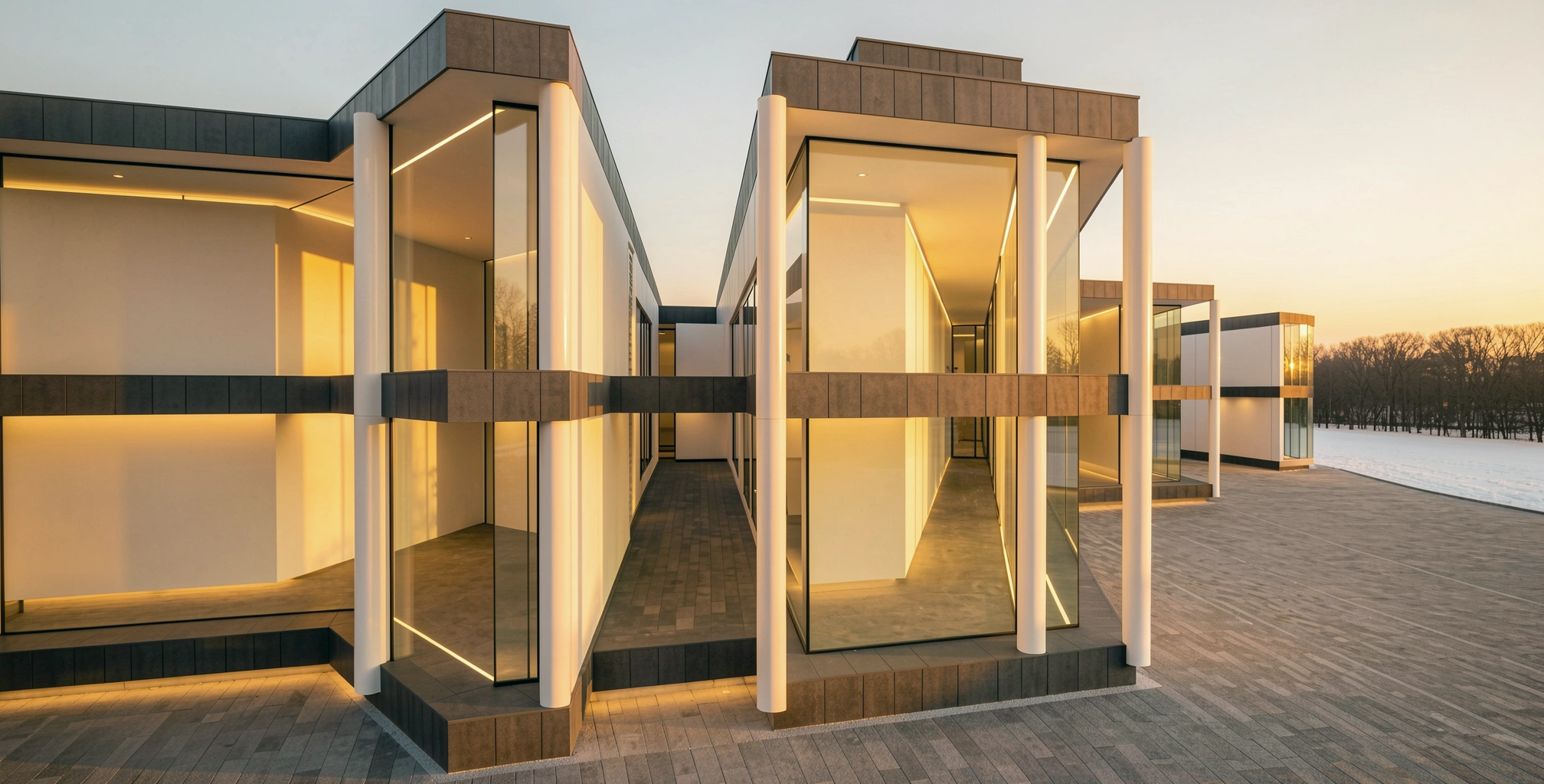
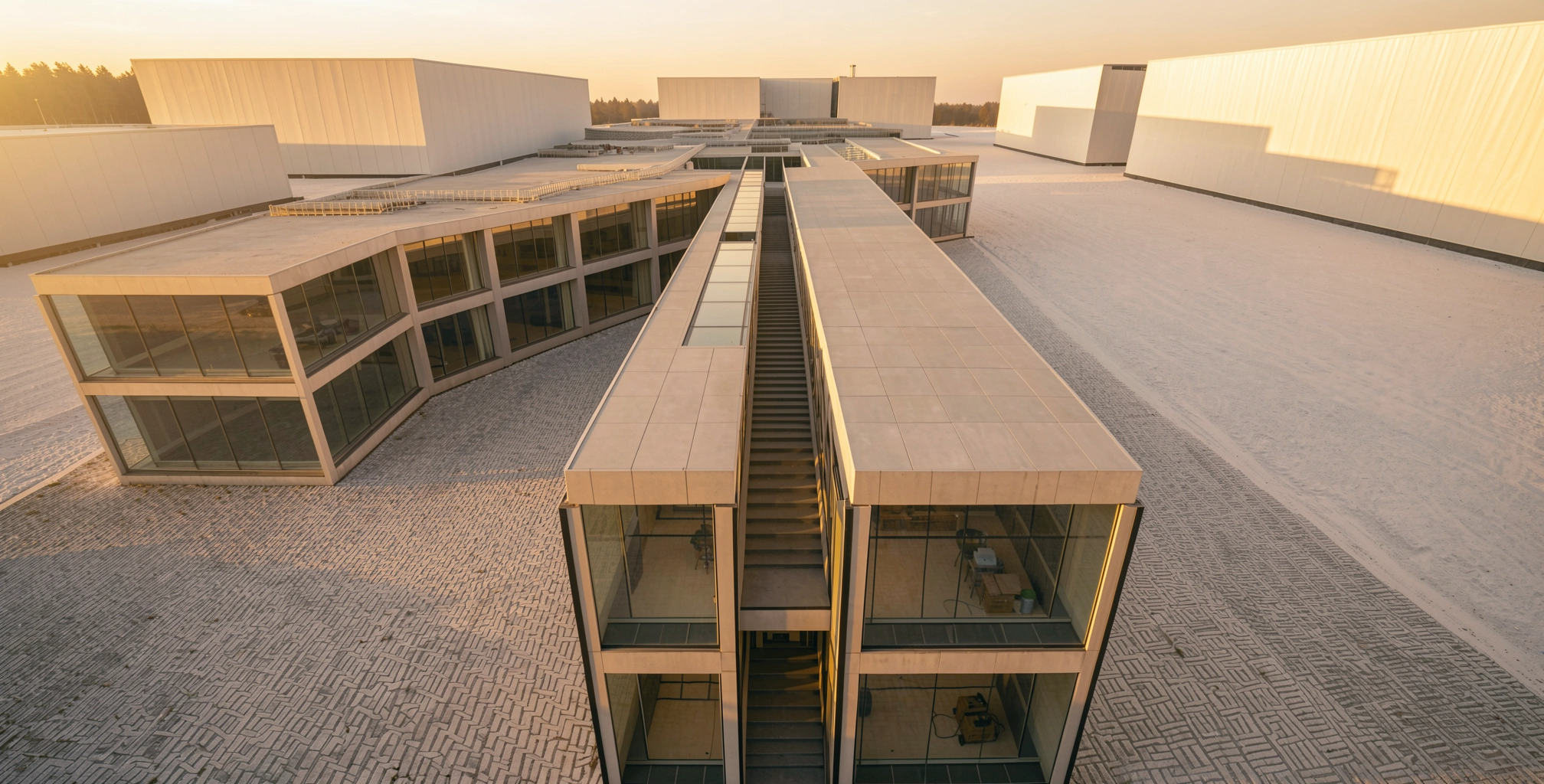
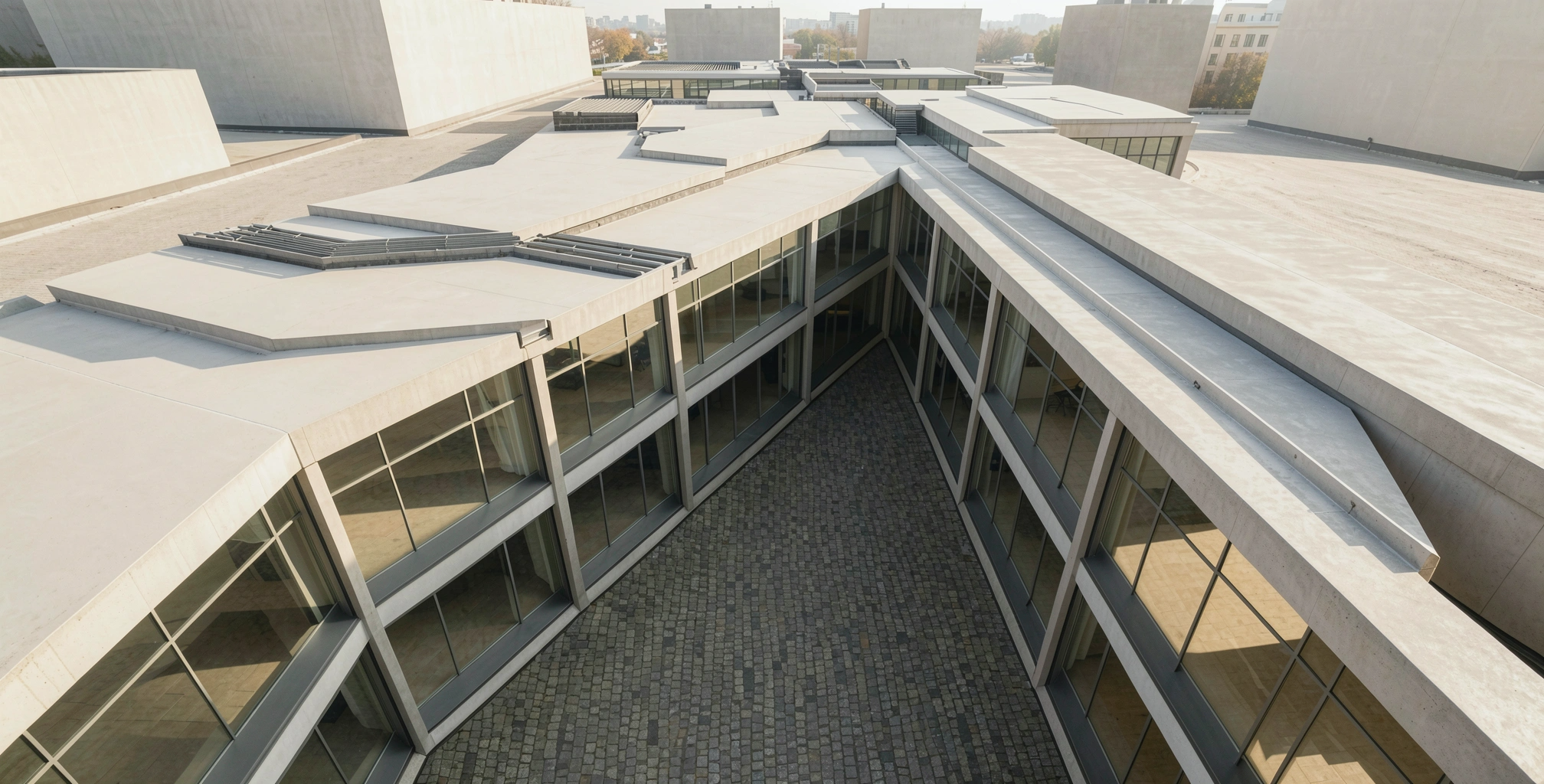
Circulation canyons operate as environmental buffer spaces positioned between retail units and the external climate. These zones moderate temperature differences, provide sheltered movement, and create opportunities for natural ventilation and social occupation. Rather than maintaining a uniform environmental condition throughout the development, the project establishes a gradient of environmental control ranging from open external spaces to fully conditioned retail accommodation.
The depth and spacing of the roof structures provide shading to occupied areas below, reducing direct solar gain while maintaining generous daylight access. Open-sided circulation zones encourage air movement and allow environmental conditions to respond naturally to seasonal variation.
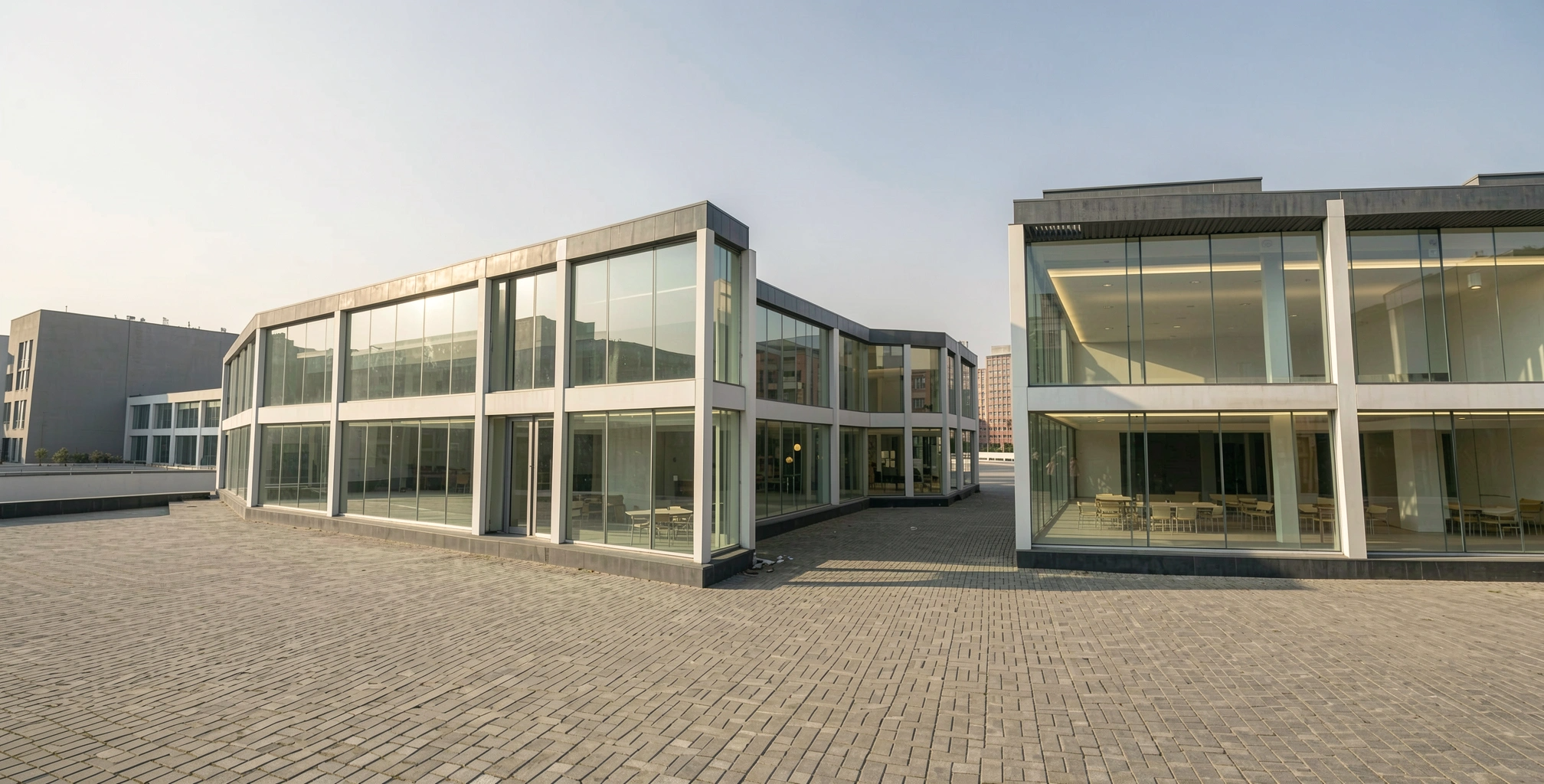
Retail units operate as independent environmental zones connected to a shared environmental infrastructure. This arrangement allows individual tenants to adjust environmental conditions according to operational requirements while maintaining overall efficiency across the development. The combination of roof-level service distribution, environmental buffering, and mixed-mode ventilation reduces energy demand while improving operational flexibility.
The project also adopts a more adaptive understanding of environmental comfort. Rather than maintaining narrowly controlled temperatures throughout the year, environmental conditions are allowed to vary within acceptable limits according to season and occupancy. This reduces energy consumption while creating environments more closely aligned with external climatic conditions.
Constructive Expression
The architectural character of the Retail Centre emerges from the relationship between structure, climate, and occupation. The repetition of roof structures establishes a clear rhythm across the development, while variations in span, enclosure, and environmental condition respond to differing patterns of use.
The depth of the roof structures, the openness of the circulation canyons, and the organisation of environmental zones are directly visible within the architecture. Structure is therefore understood not simply as a means of support but as environmental infrastructure that organises movement, moderates climate, and defines spatial character.
The project demonstrates how retail architecture can operate as a field of environmentally moderated spaces rather than as a fully enclosed mechanical environment. Through the integration of structure, servicing, and environmental zoning, the building establishes a coherent relationship between climate, occupation, and long-term adaptability.