
Research & Development Building — Structure as Framework for Adaptation
Structural Reasoning
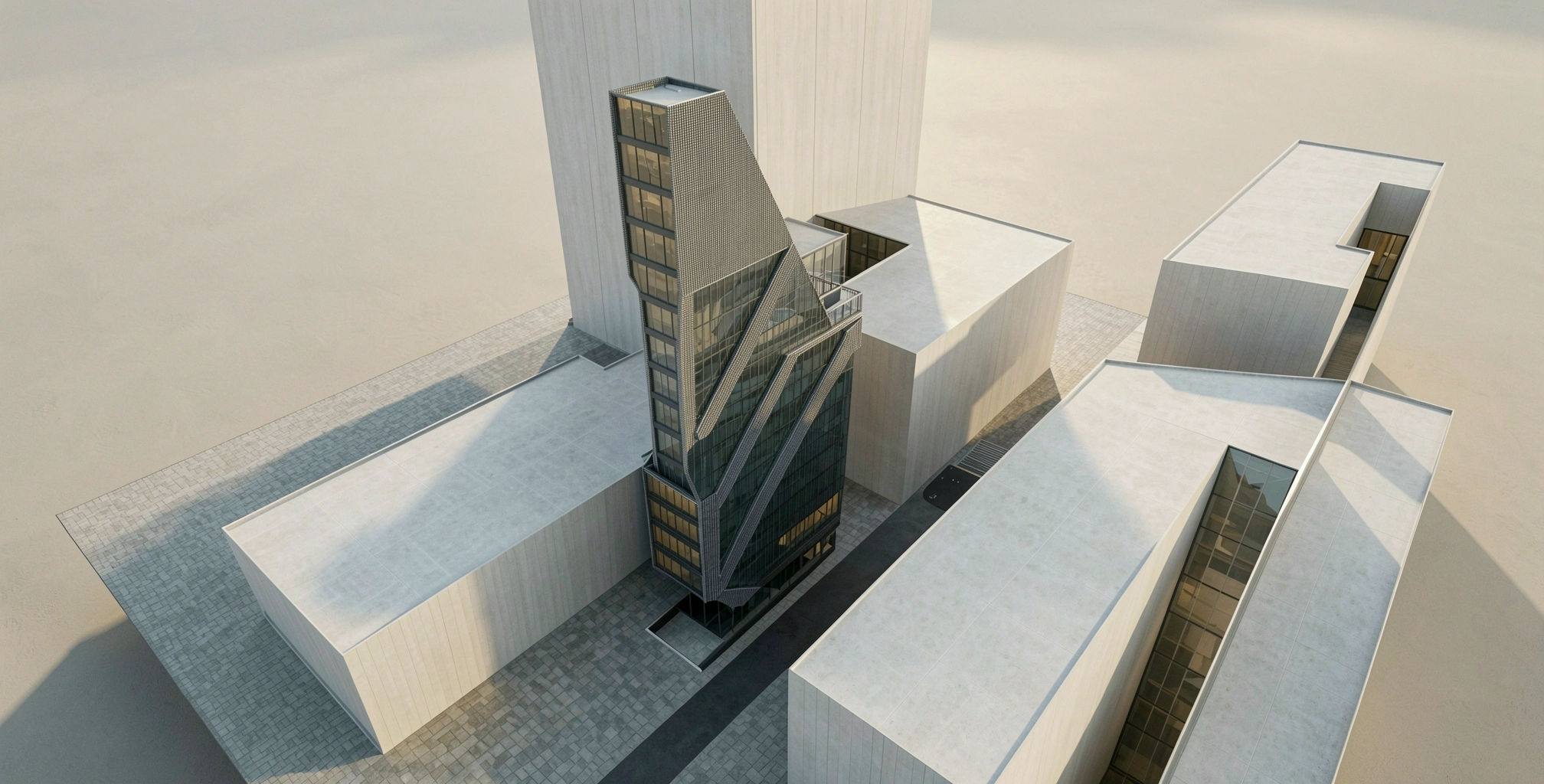
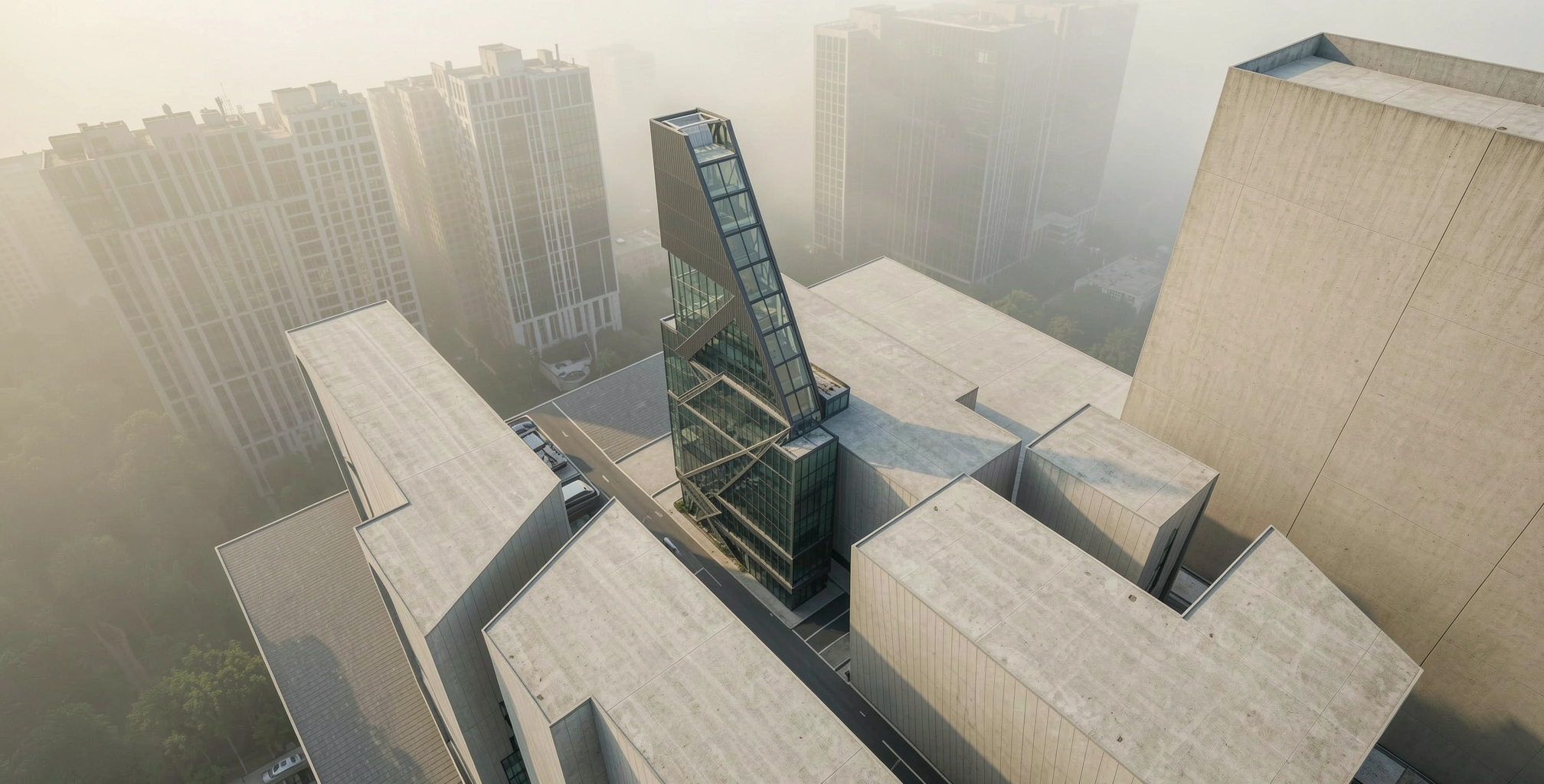
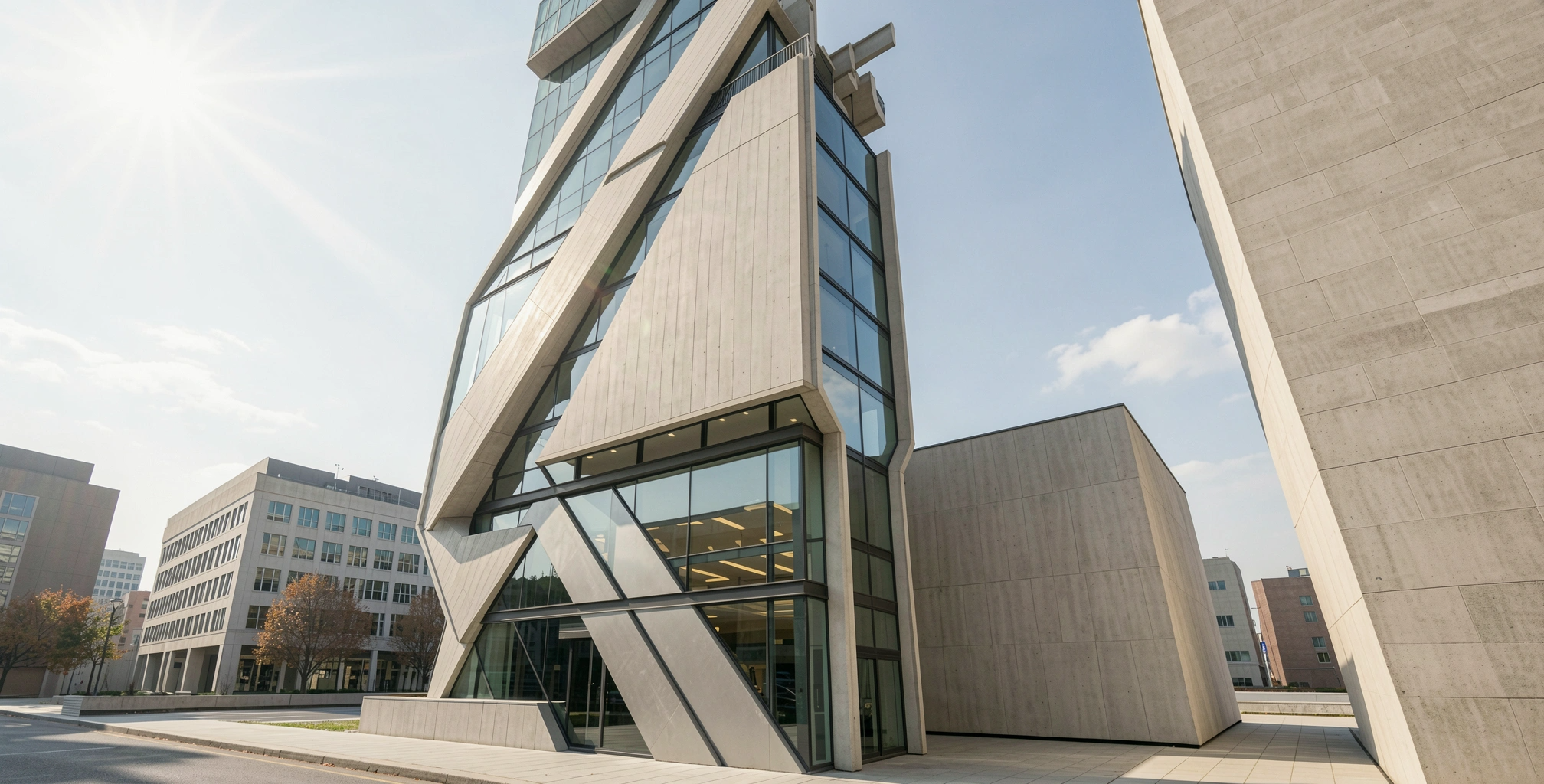
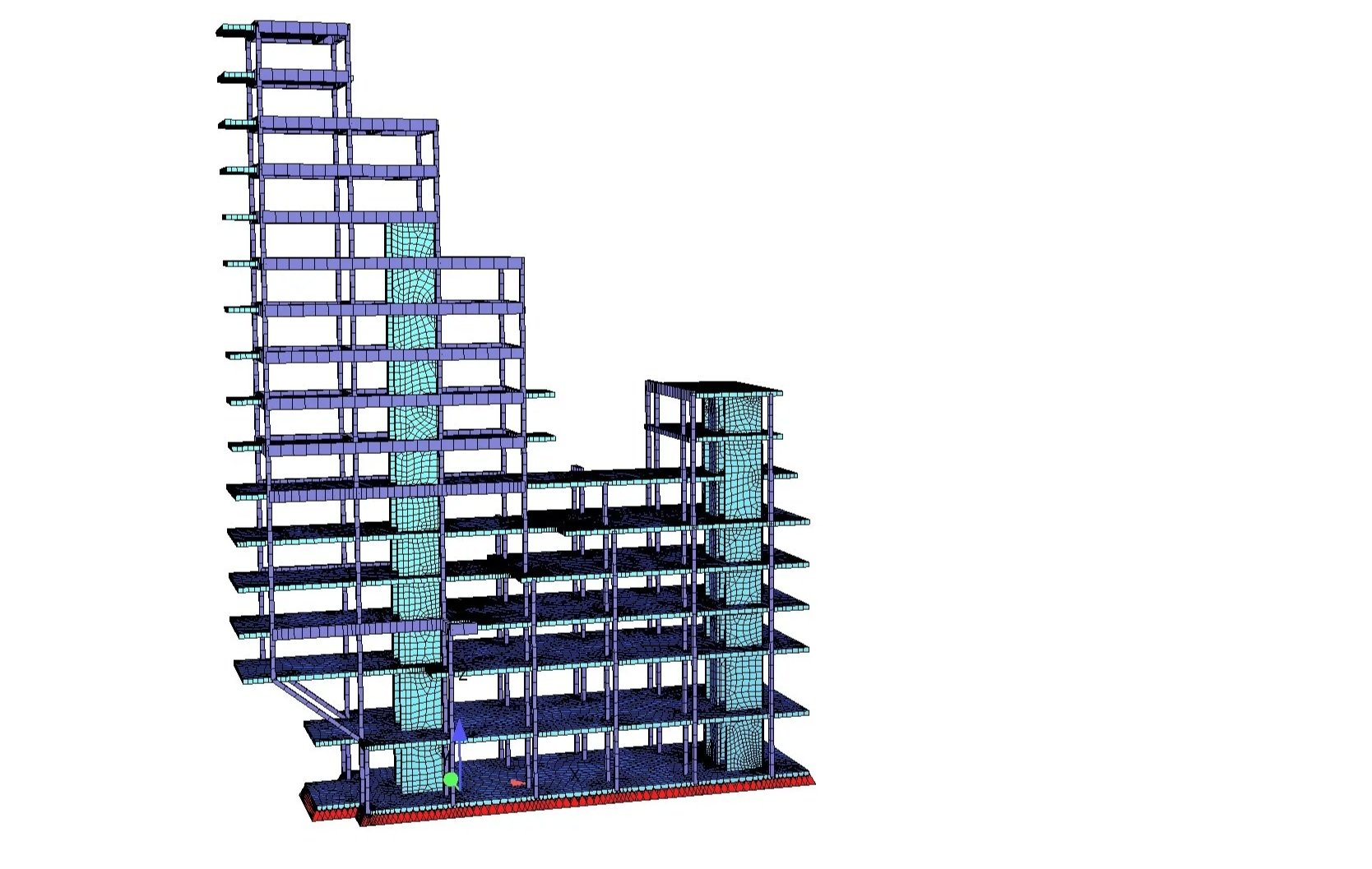
The Research & Development Building is organised around a primary structural framework designed to accommodate continual change in scientific, technical, and organisational requirements. Rather than optimising the building for a single operational arrangement, the structural system establishes a durable framework within which laboratories, offices, services, and support spaces can evolve over time.
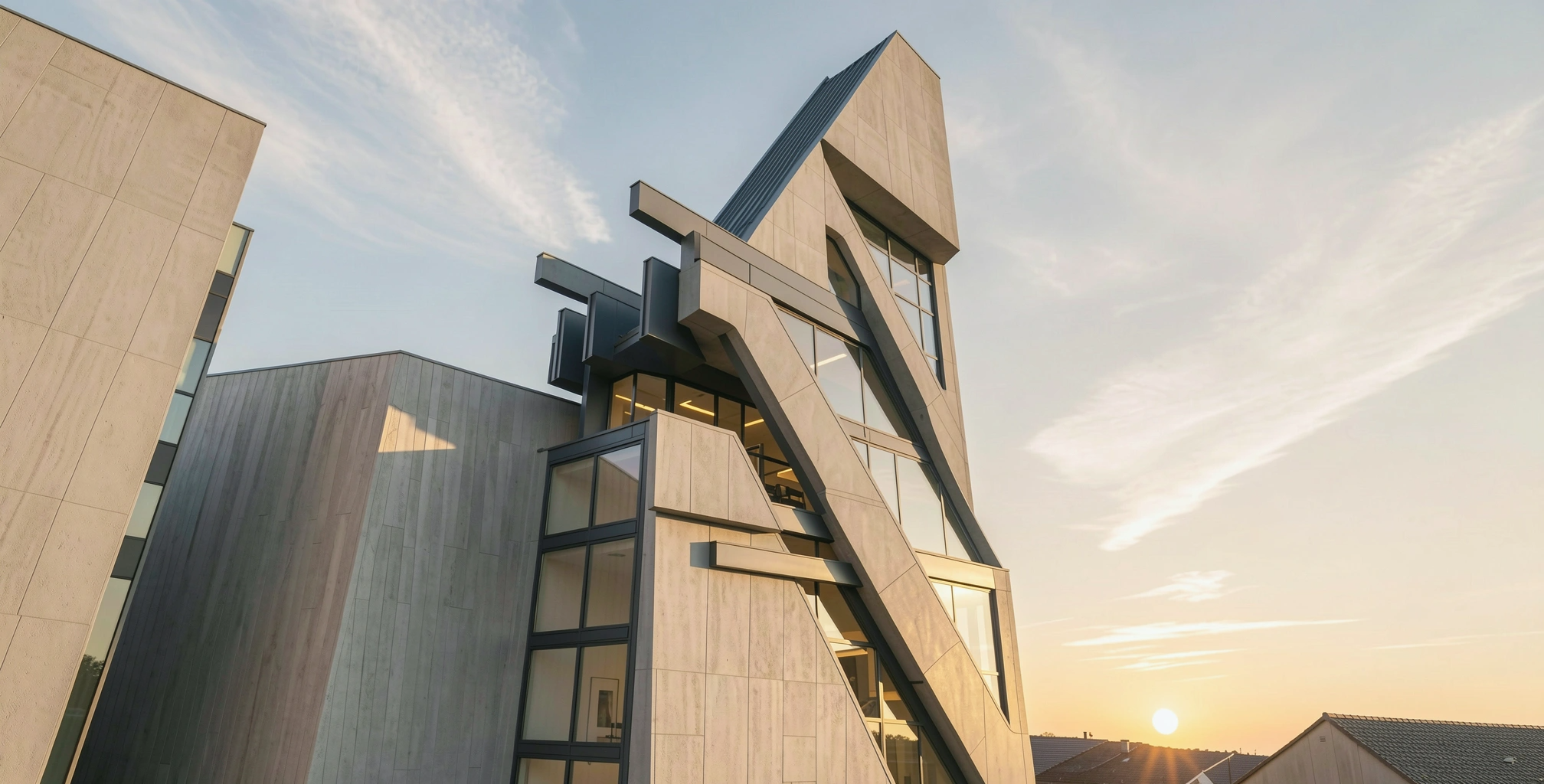
The primary structure comprises a regular system of columns, beams, and floor plates arranged to provide clear load paths and consistent structural spans. Loads are transferred directly through the frame to the foundations, while structural depth is coordinated with service distribution zones. This separation between primary structure and internal fit-out allows changes to occupancy, equipment, and servicing infrastructure to occur without modification to the principal load-bearing system.
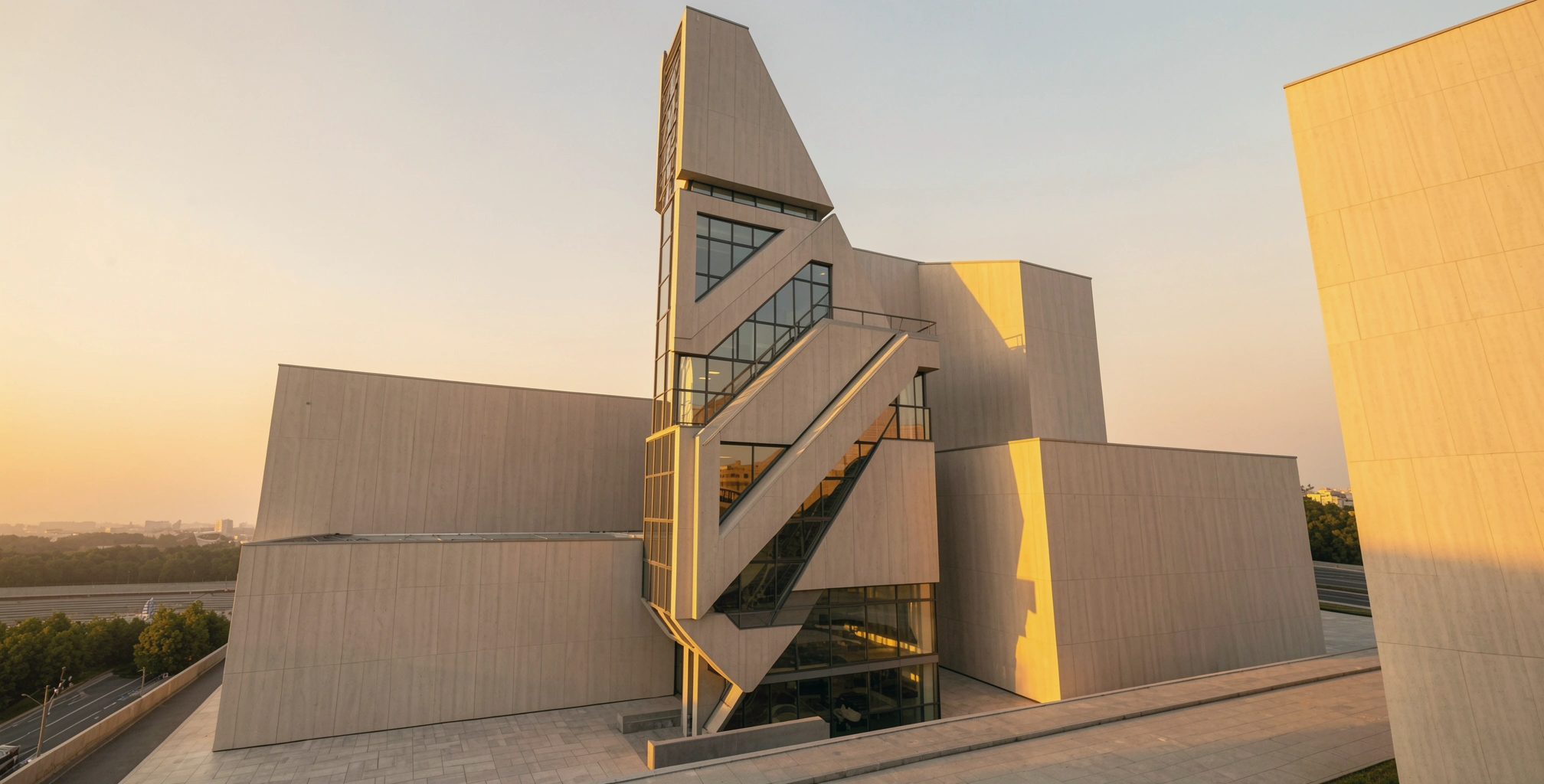
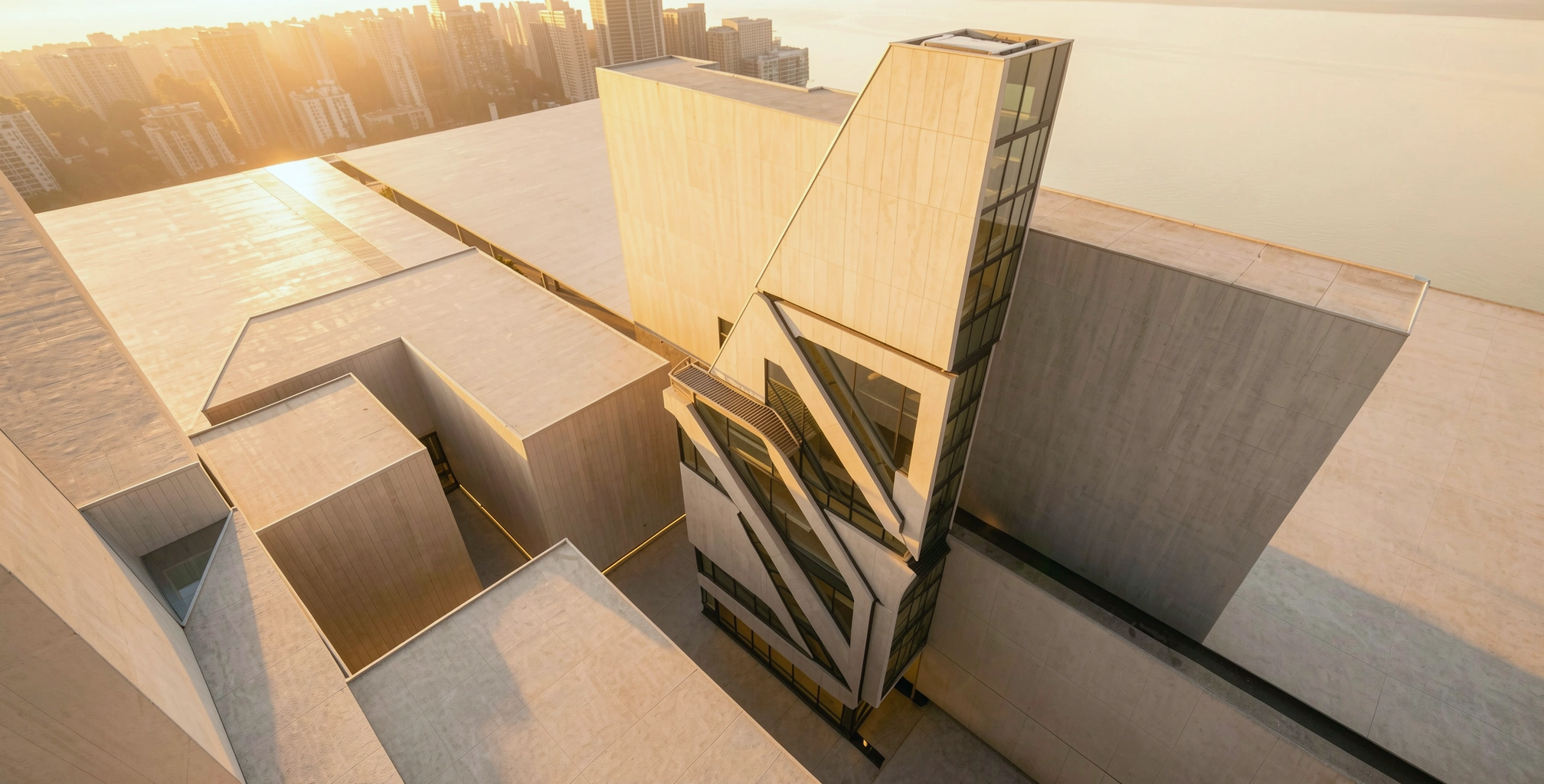
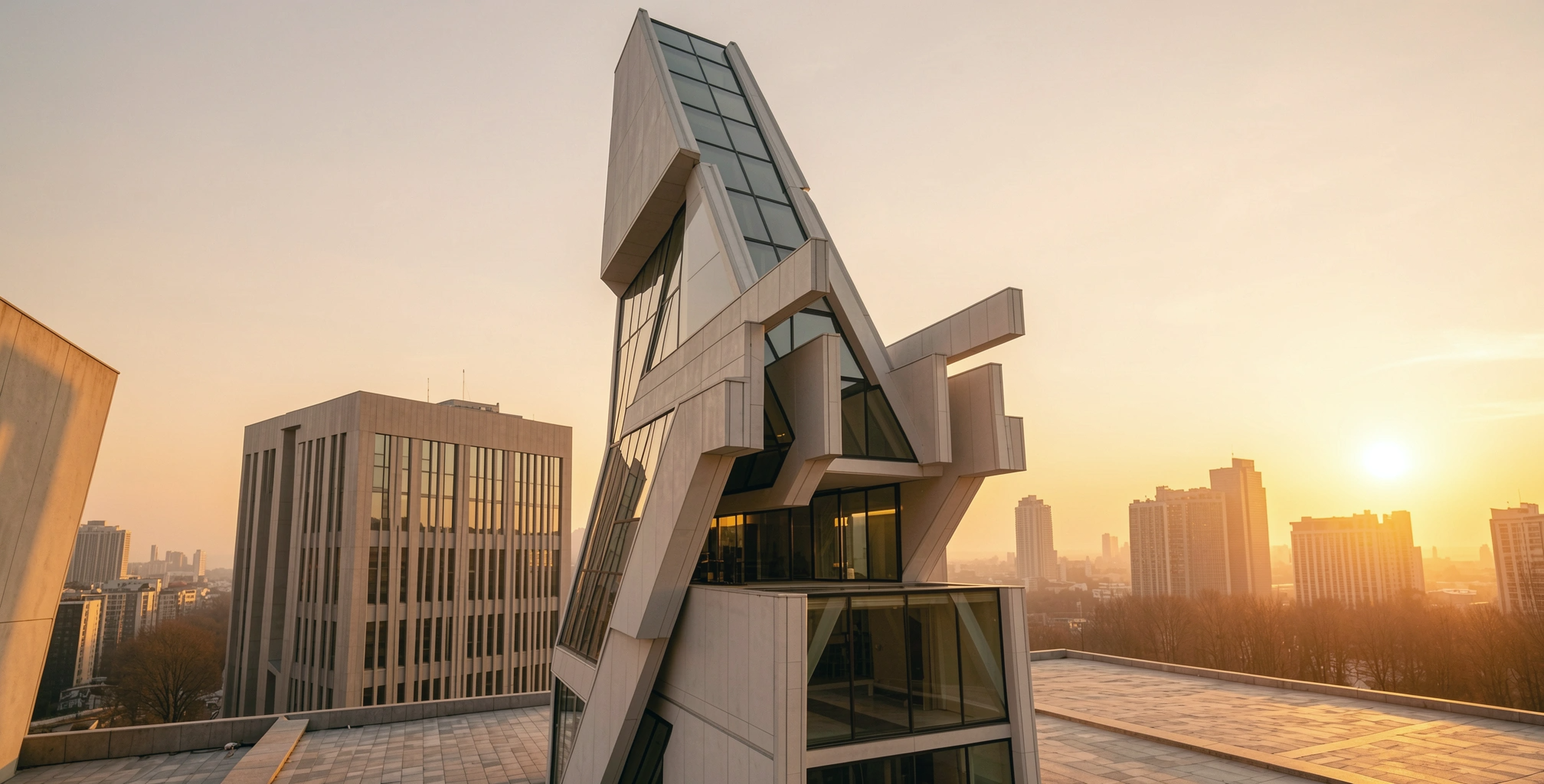
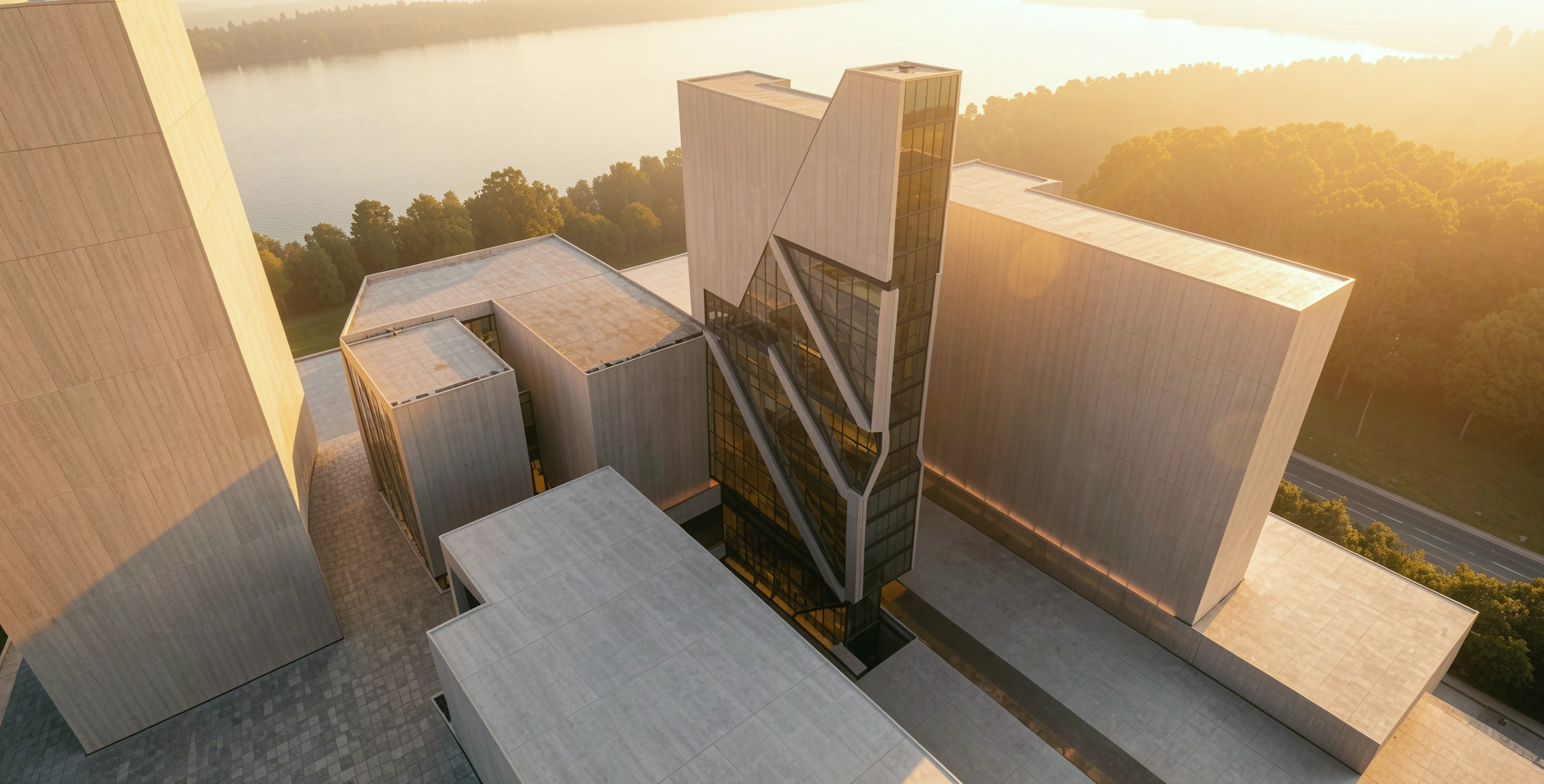
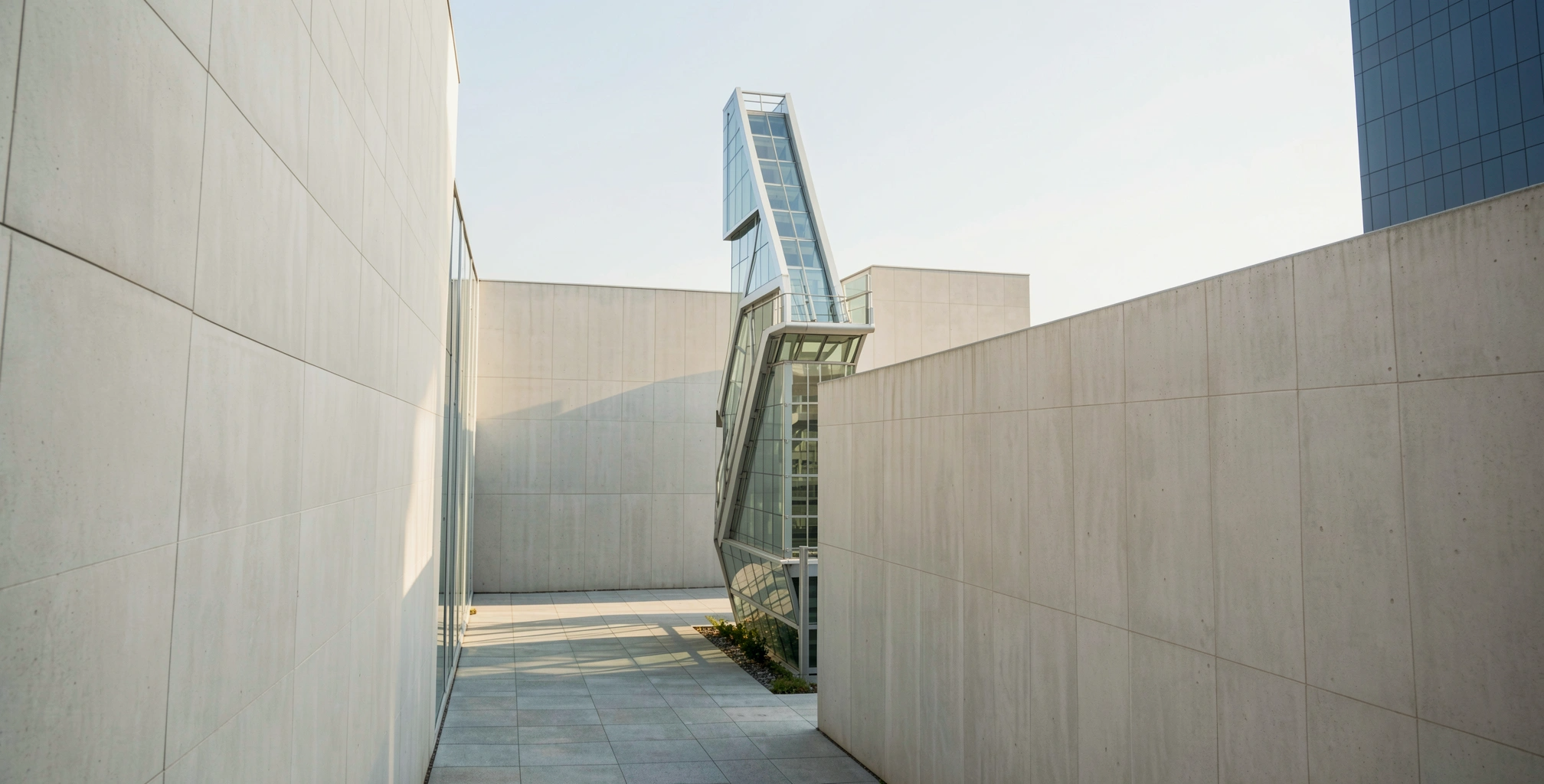
A central service spine operates as both a structural and organisational anchor. Vertical circulation, environmental systems, risers, and technical infrastructure are concentrated within this zone, allowing laboratory and workplace areas on either side to remain adaptable. The primary structure therefore provides long-term stability while supporting continual adjustment within the spaces it serves.
Material Behaviour
The structural system is conceived as a hierarchy of permanent and replaceable elements. Primary structural components are dimensioned to maintain stiffness, limit deflection, and preserve alignment of services and partitions throughout the building's operational life. Materials are selected for durability and long-term performance under conditions of continual adaptation and technical upgrade.
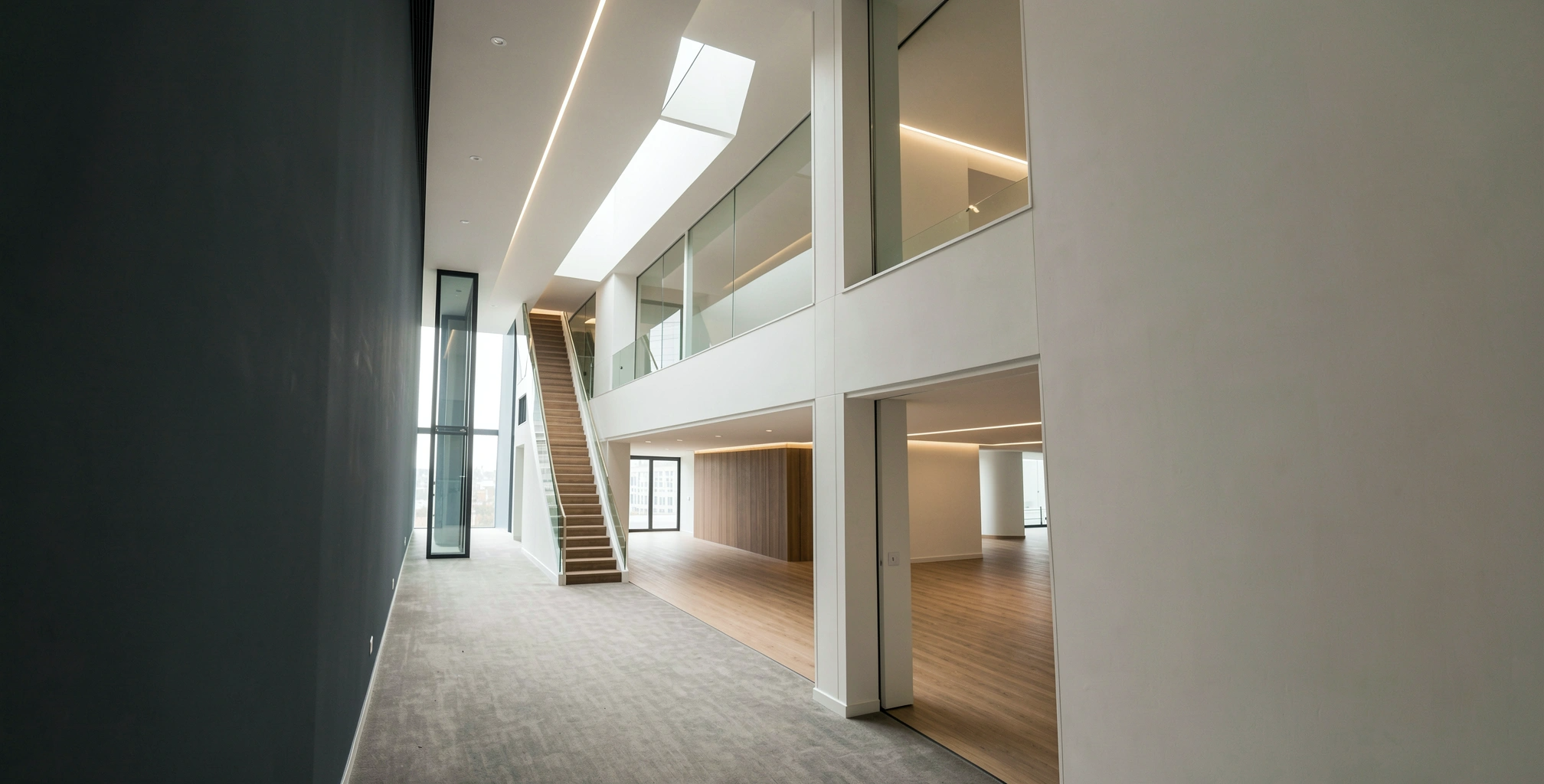
Prefabricated laboratory and office modules are inserted within the structural framework as secondary elements. These components provide a high degree of construction precision while allowing internal spaces to be modified, replaced, or reconfigured without affecting the primary structure. The use of modular assemblies shifts complexity away from the primary frame and towards interfaces, connections, and service integration, allowing change to occur with minimal disruption.
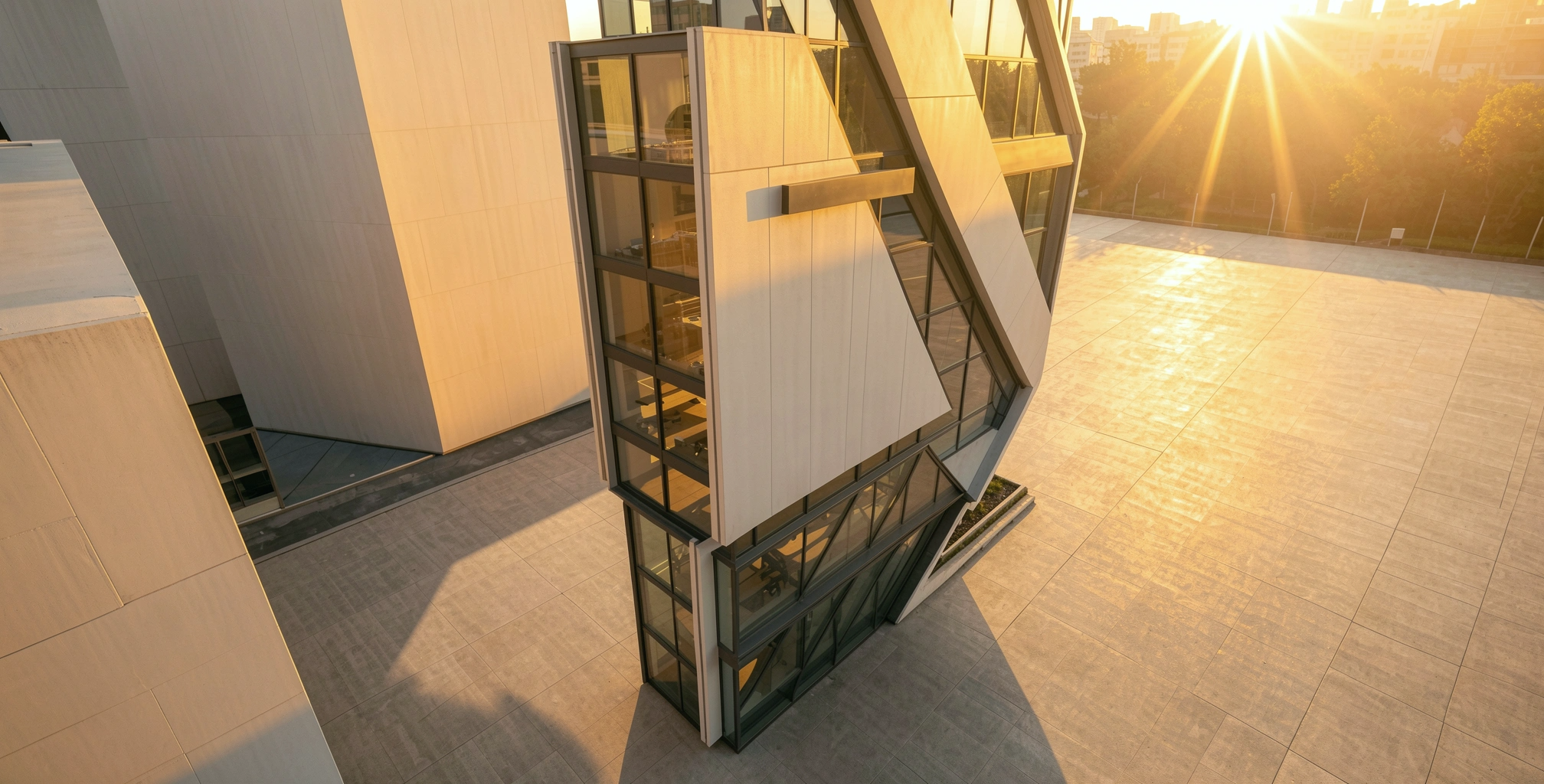
Connections between structural elements, service systems, and enclosure components are designed to allow access, maintenance, and replacement. The envelope is similarly conceived as an independent assembly attached to the primary frame through adjustable connections that accommodate movement while allowing future upgrading of environmental systems and façade components.
The building therefore distinguishes clearly between long-life structural systems and shorter-life operational systems, enabling adaptation without compromising structural continuity.
Environmental Response
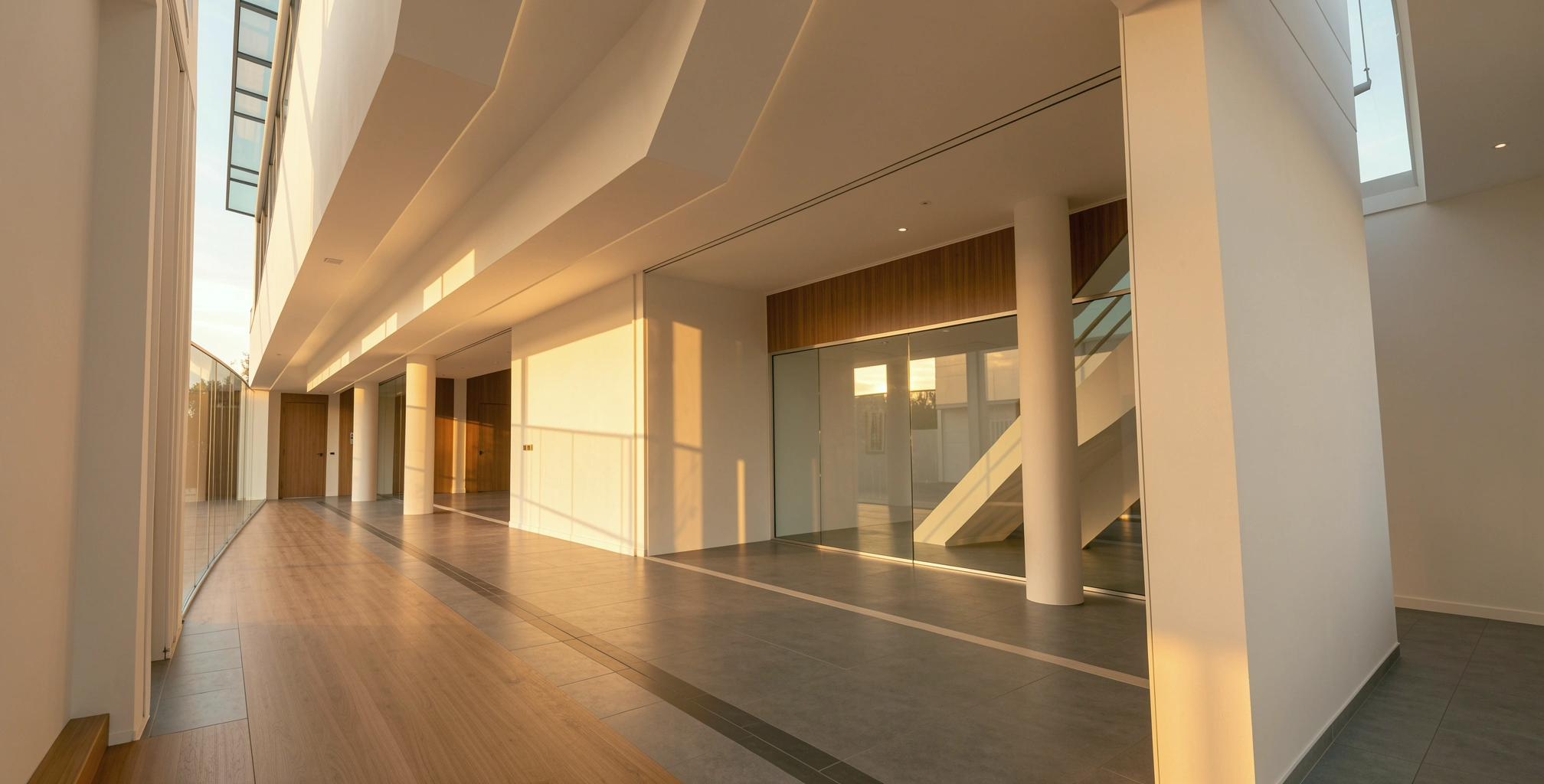
Environmental performance is integrated directly within the structural organisation of the building. Mechanical systems are distributed through accessible service zones aligned with the structural framework, allowing ventilation, heating, cooling, and specialist laboratory services to evolve alongside changing research requirements.
Daylight is introduced through façade openings coordinated with the structural grid, ensuring consistent environmental performance regardless of internal reconfiguration. The separation between primary structure, environmental systems, and internal planning allows laboratories and workplaces to change while maintaining environmental stability and operational effectiveness.
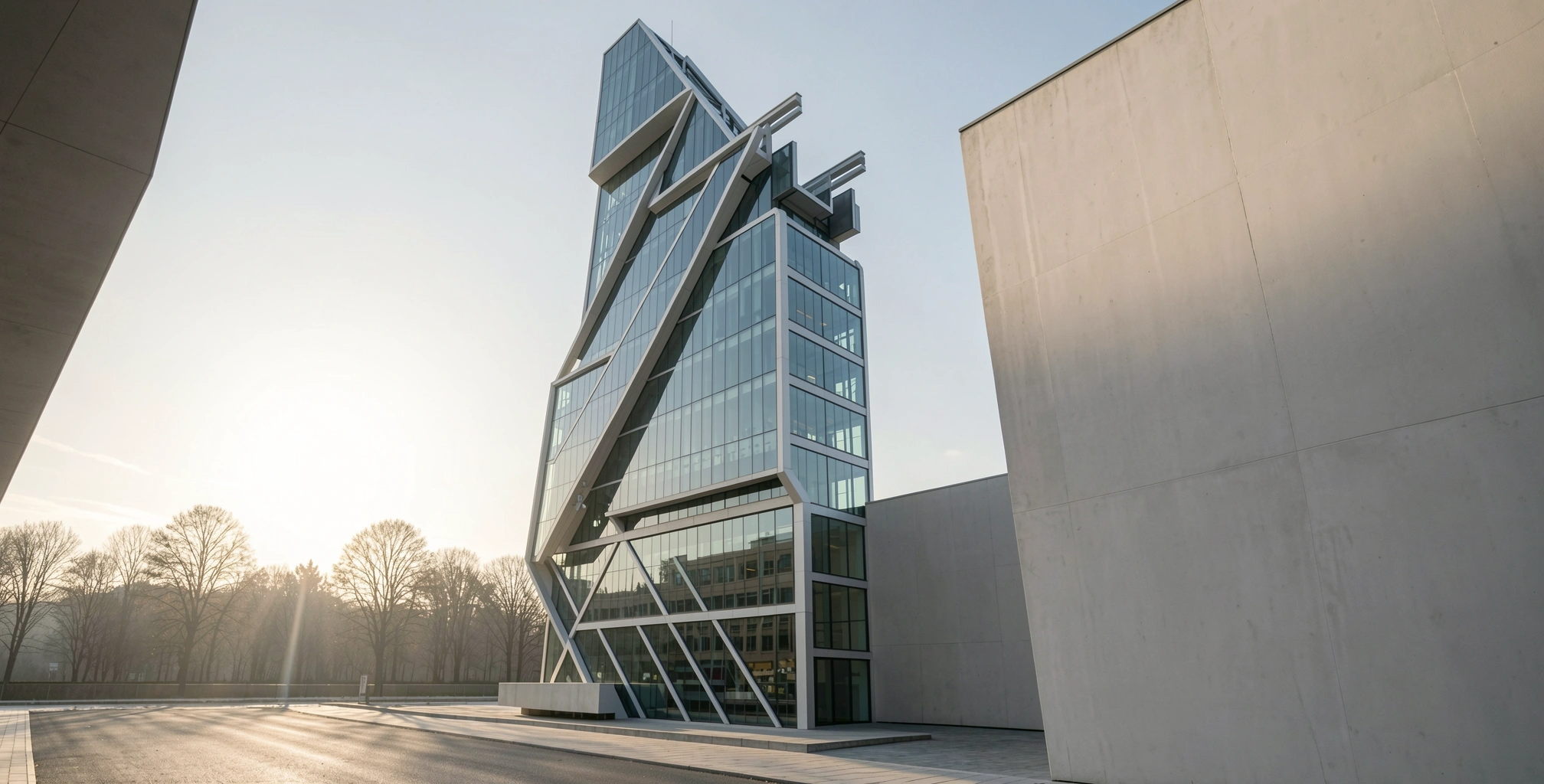
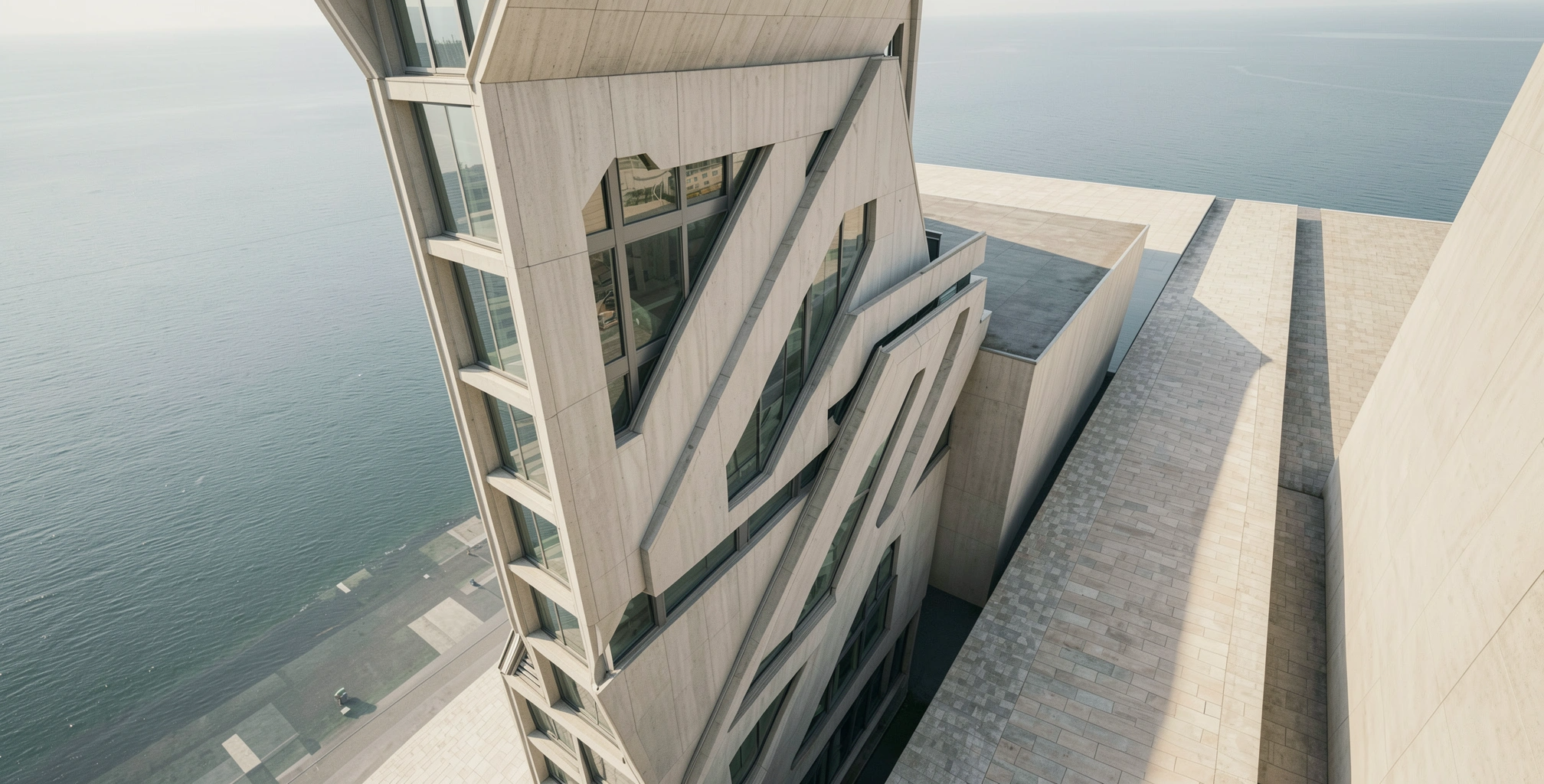
The external structural framework also contributes to environmental performance by supporting shading devices, service distribution systems, and façade assemblies independently of the internal layout. This separation allows environmental systems to be upgraded or recalibrated without altering either the primary structure or the organisation of internal spaces.
Environmental performance is therefore sustained through coordination rather than through fixed spatial arrangements.
Constructive Expression
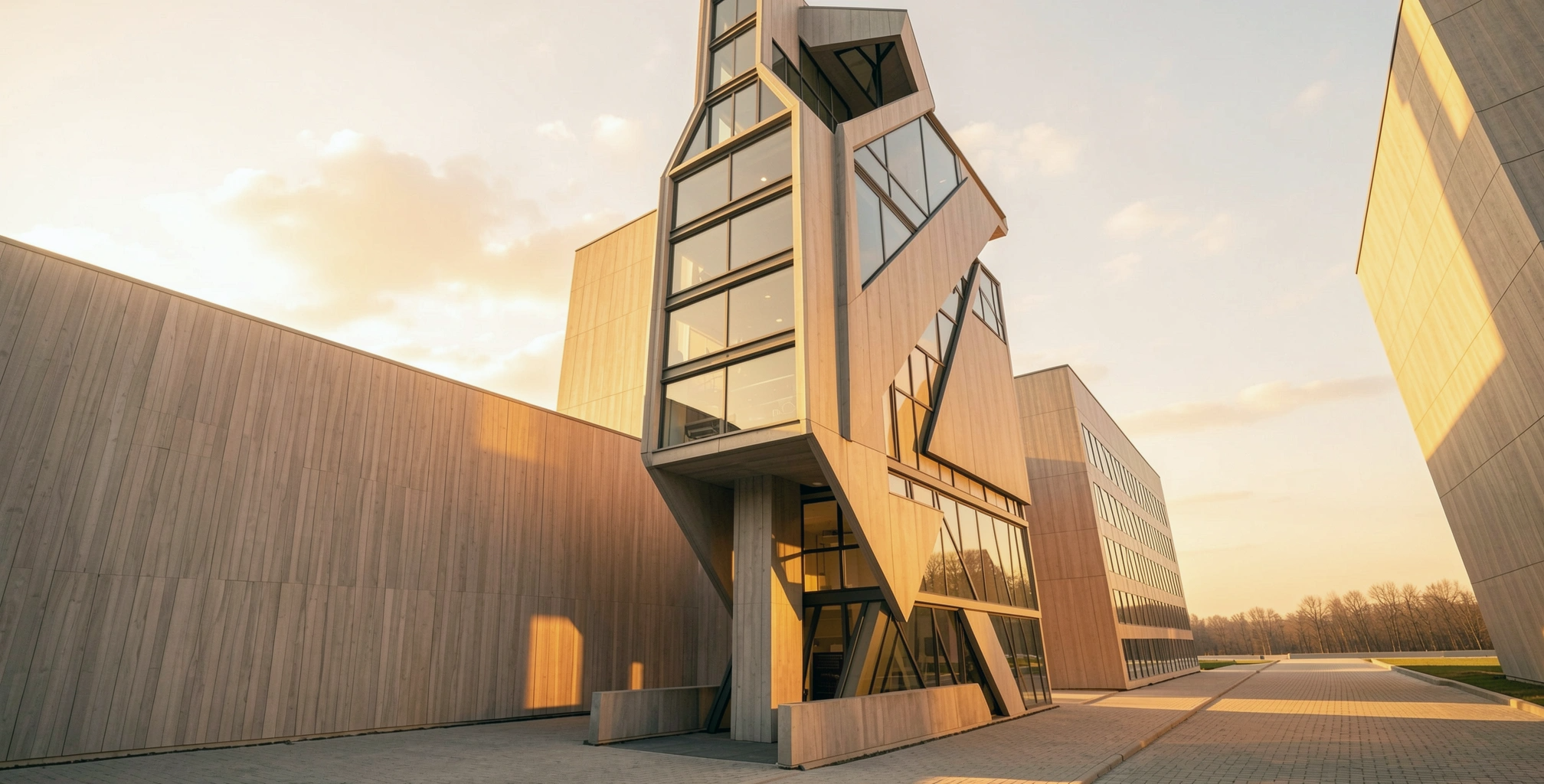
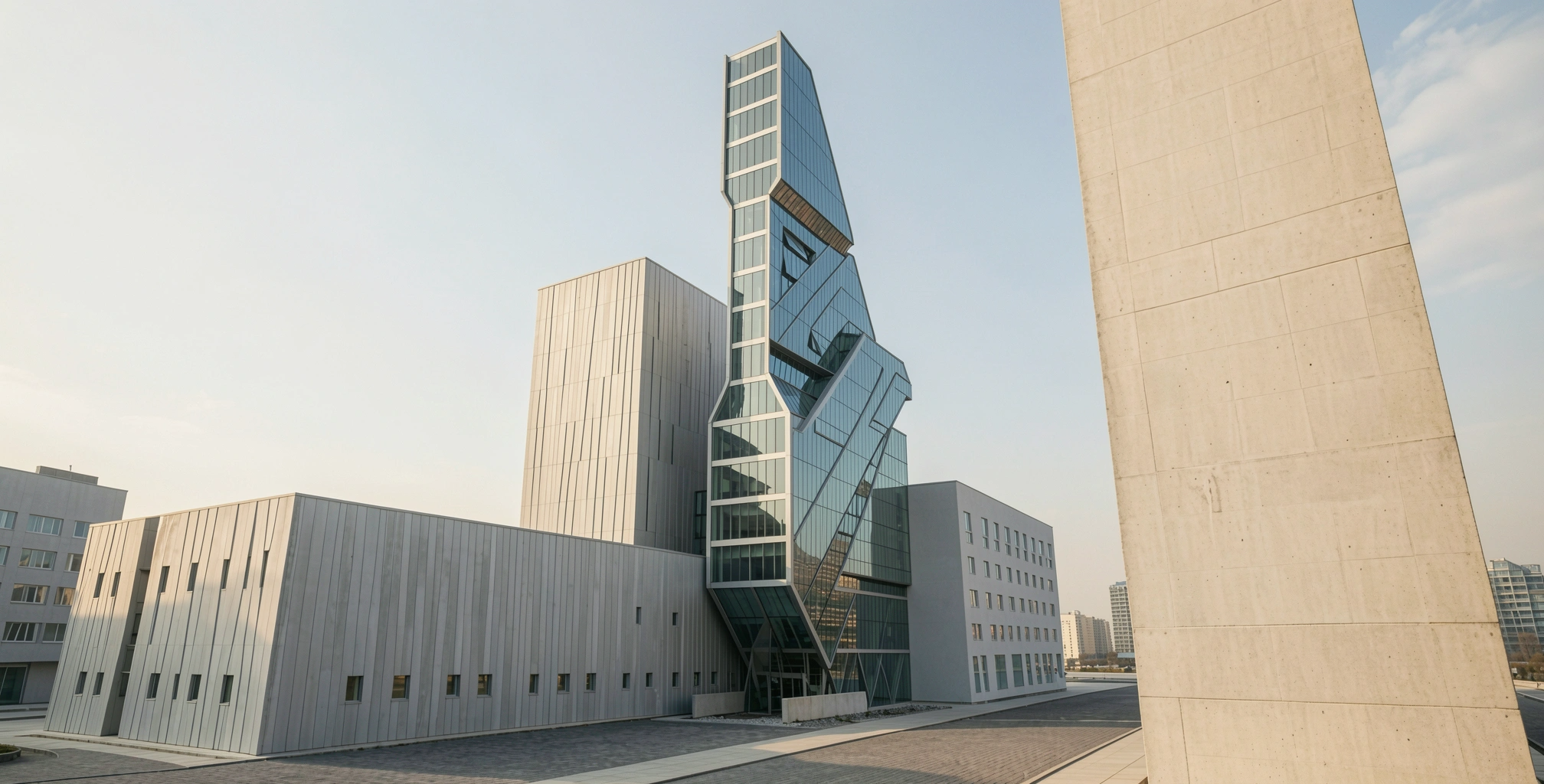
The architectural character of the building emerges from the clarity of its organisational logic. The structural frame, service spine, and modular internal systems remain legible as interconnected components of a coherent constructive framework.
The regular structural grid establishes a stable order across the building, while visible service zones and independent enclosure systems express the building's capacity for adaptation. As laboratories, offices, and technical spaces evolve, the primary framework remains consistent, providing continuity through change.
Expression therefore arises not from formal complexity but from the visible relationship between permanence and transformation. The building demonstrates how structure can operate simultaneously as support, infrastructure, and organisational framework, creating an architecture capable of accommodating continual scientific and technological evolution while maintaining constructive coherence over time.