
Manufacturing Building — Panelisation as Organising System
Structural Reasoning
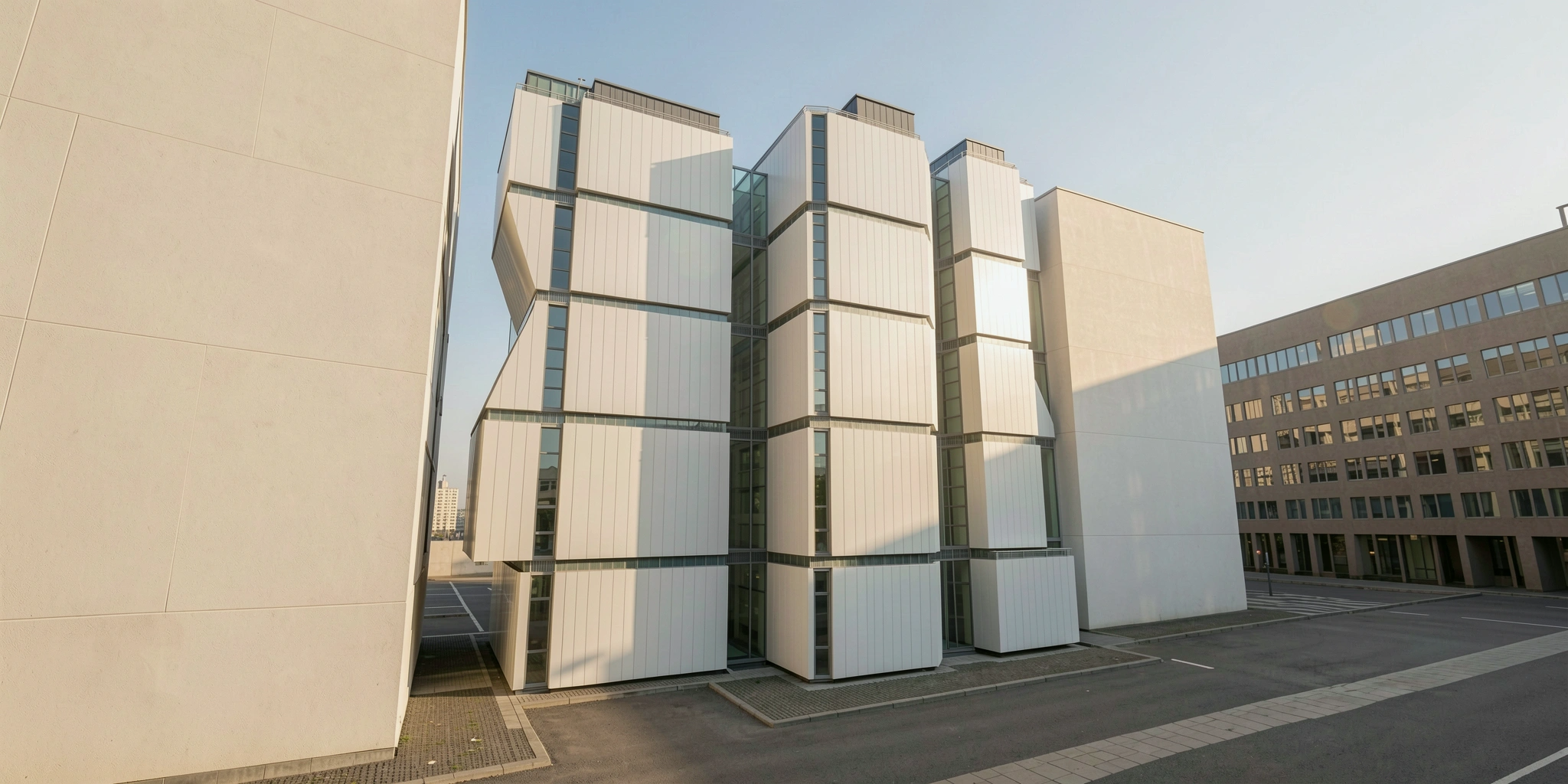
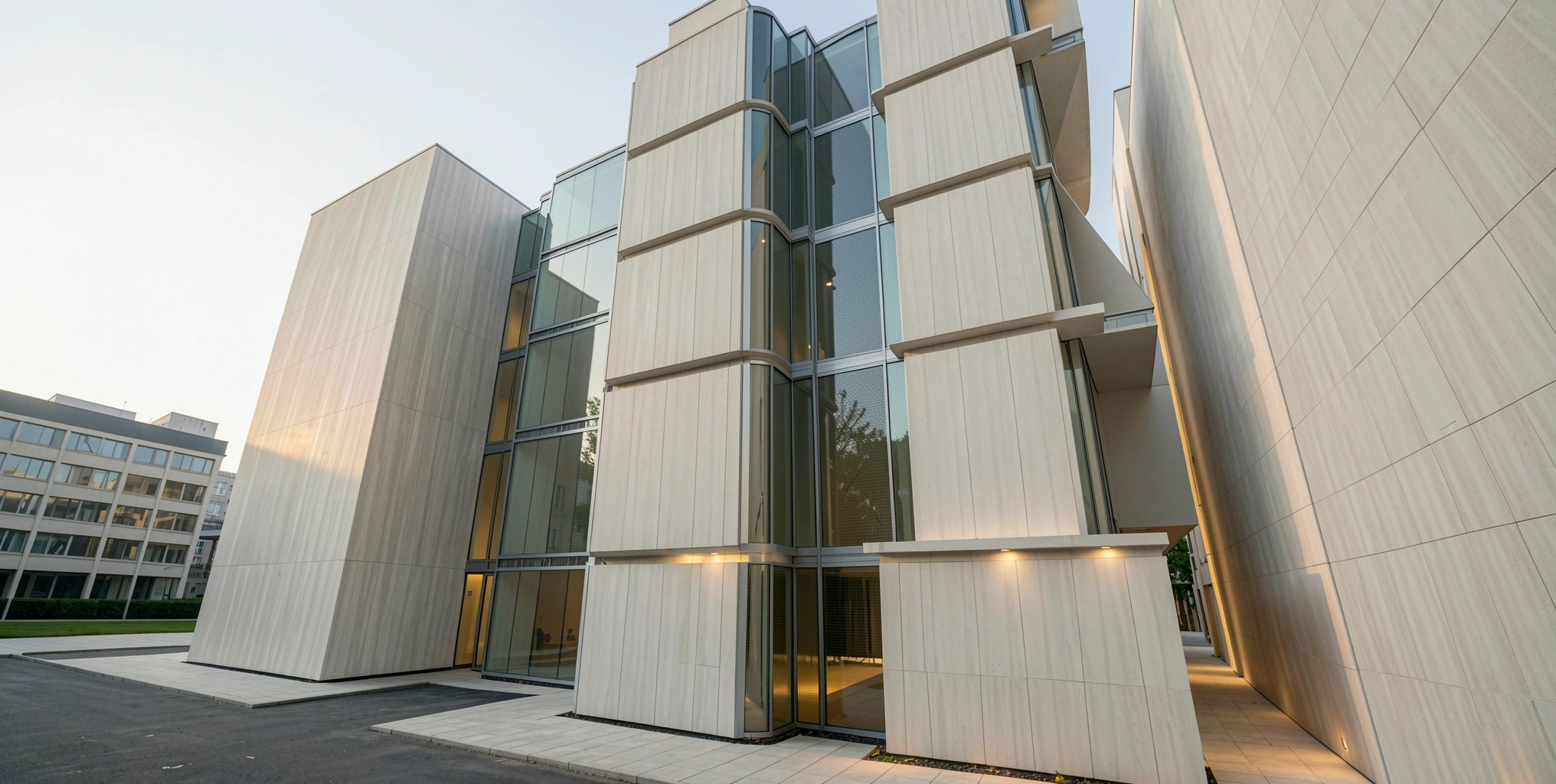
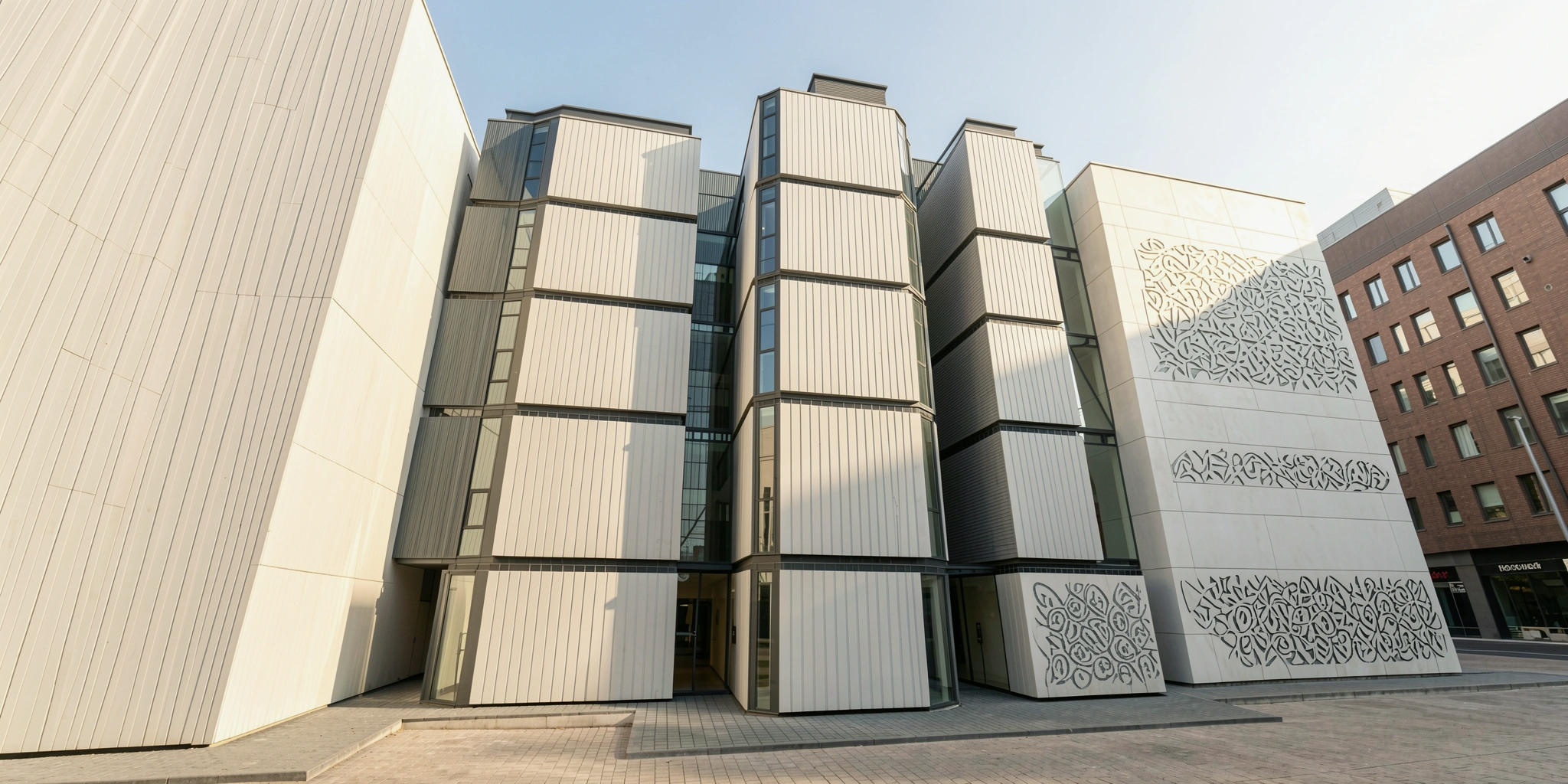
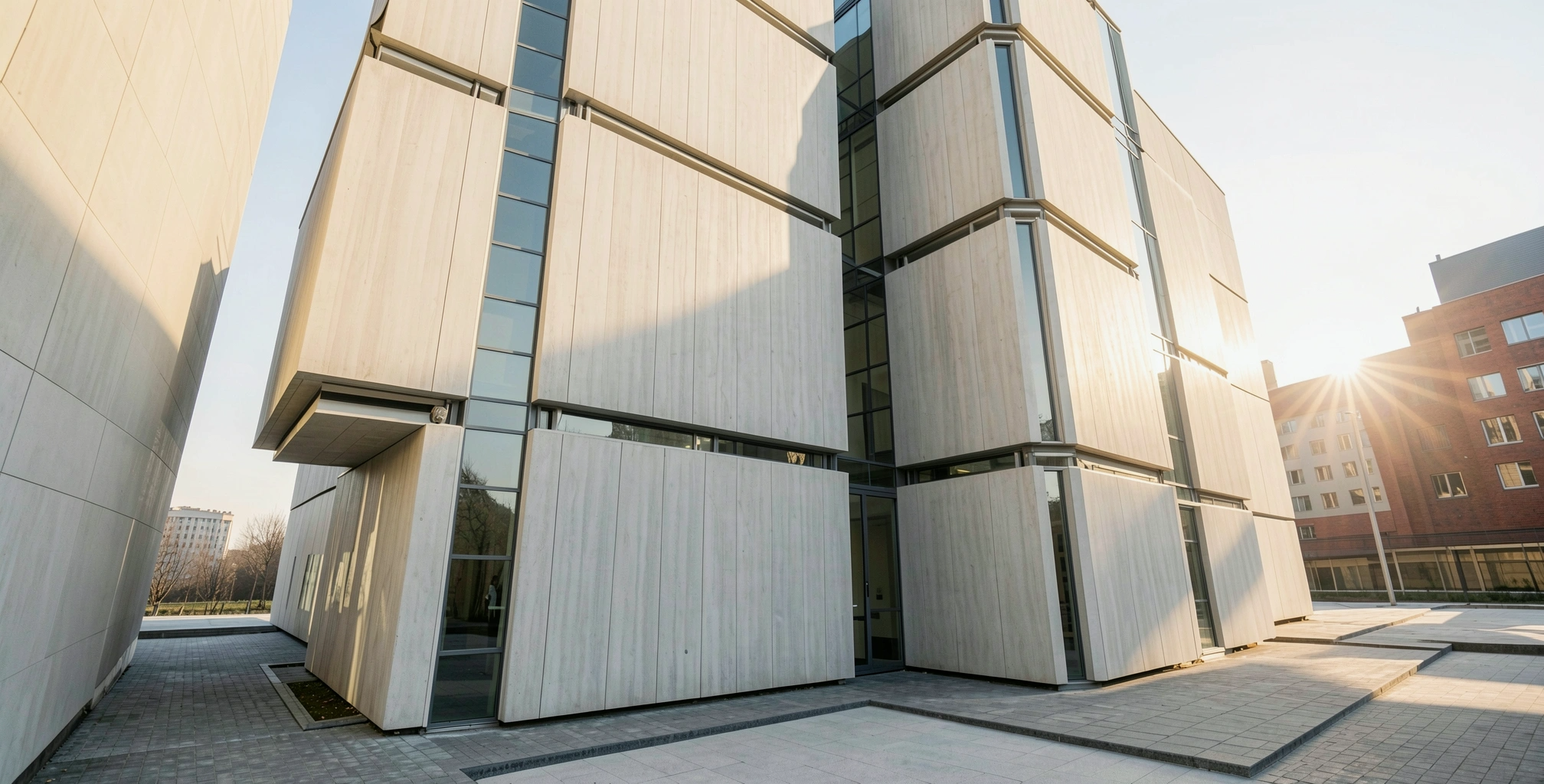
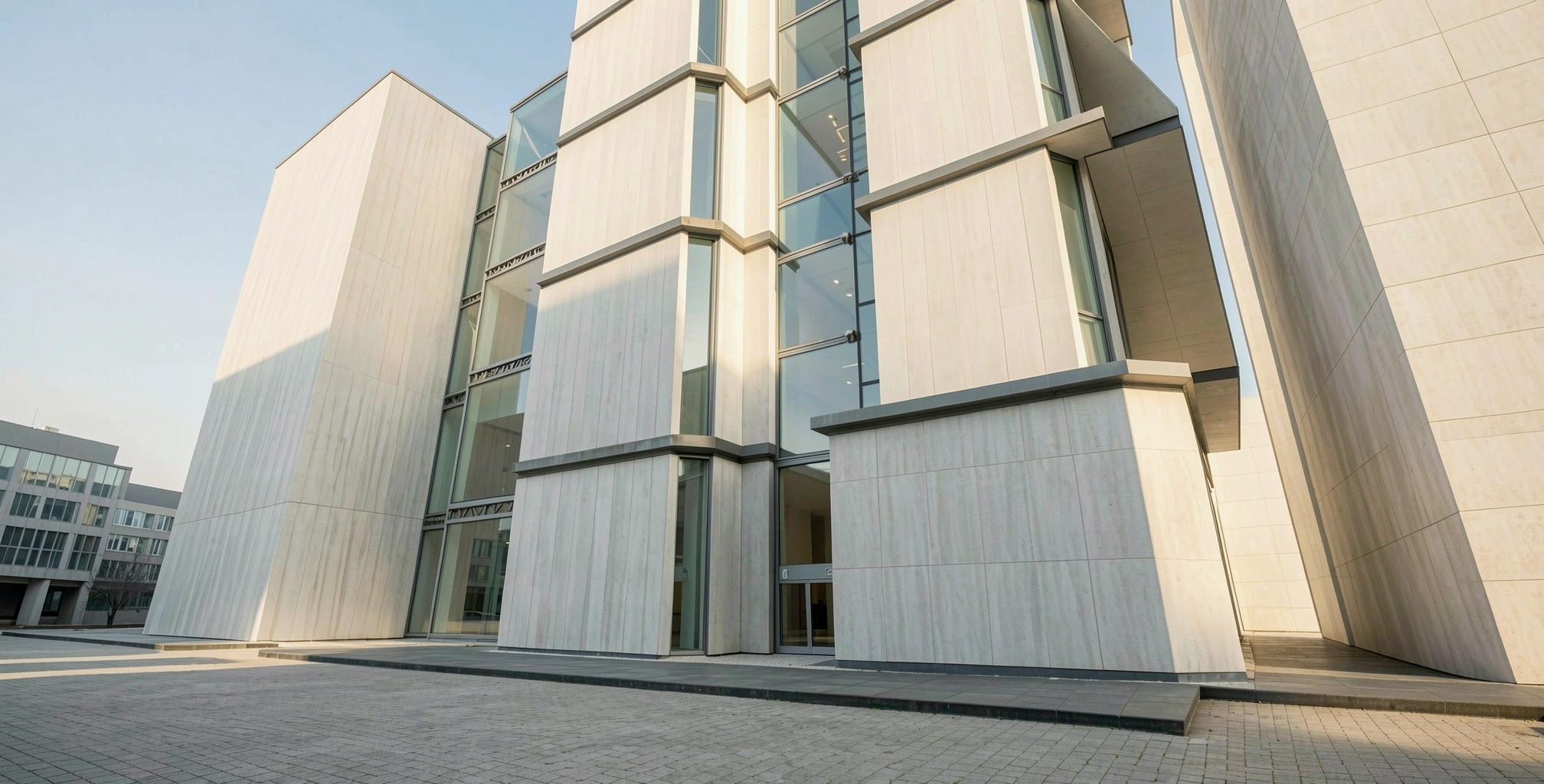
The Manufacturing Building is organised through a coordinated system of prefabricated structural, enclosure, and service components. Rather than treating structure, environmental systems, and envelope construction as separate layers, the project establishes a common dimensional framework through which these systems are developed simultaneously.
The primary structural frame is arranged in direct relation to the panel module. Column spacing, beam spans, service zones, and enclosure dimensions are coordinated through a repeatable system that aligns fabrication, transport, assembly, and long-term operation. Loads are transferred through a clear hierarchy of primary and secondary elements, with structural members supporting both enclosure systems and environmental infrastructure within a unified framework.
This approach establishes a building that can accommodate changing manufacturing processes without requiring fundamental modification to the primary structure. Adaptation occurs through replacement, adjustment, and reconfiguration of components rather than through reconstruction of the building itself.
Material Behaviour
The dimensional characteristics of the panel system establish the constructive logic of the project. Panel sizes are determined by fabrication, transport, handling, and installation constraints, ensuring that components can be manufactured efficiently and assembled with predictable tolerances.
Structural and environmental components are designed as coordinated assemblies. Connections accommodate thermal movement, fabrication tolerances, and future replacement while maintaining alignment between structure, enclosure, and services. Materials are selected to provide durability under industrial operating conditions while supporting repeated modification throughout the building's life.
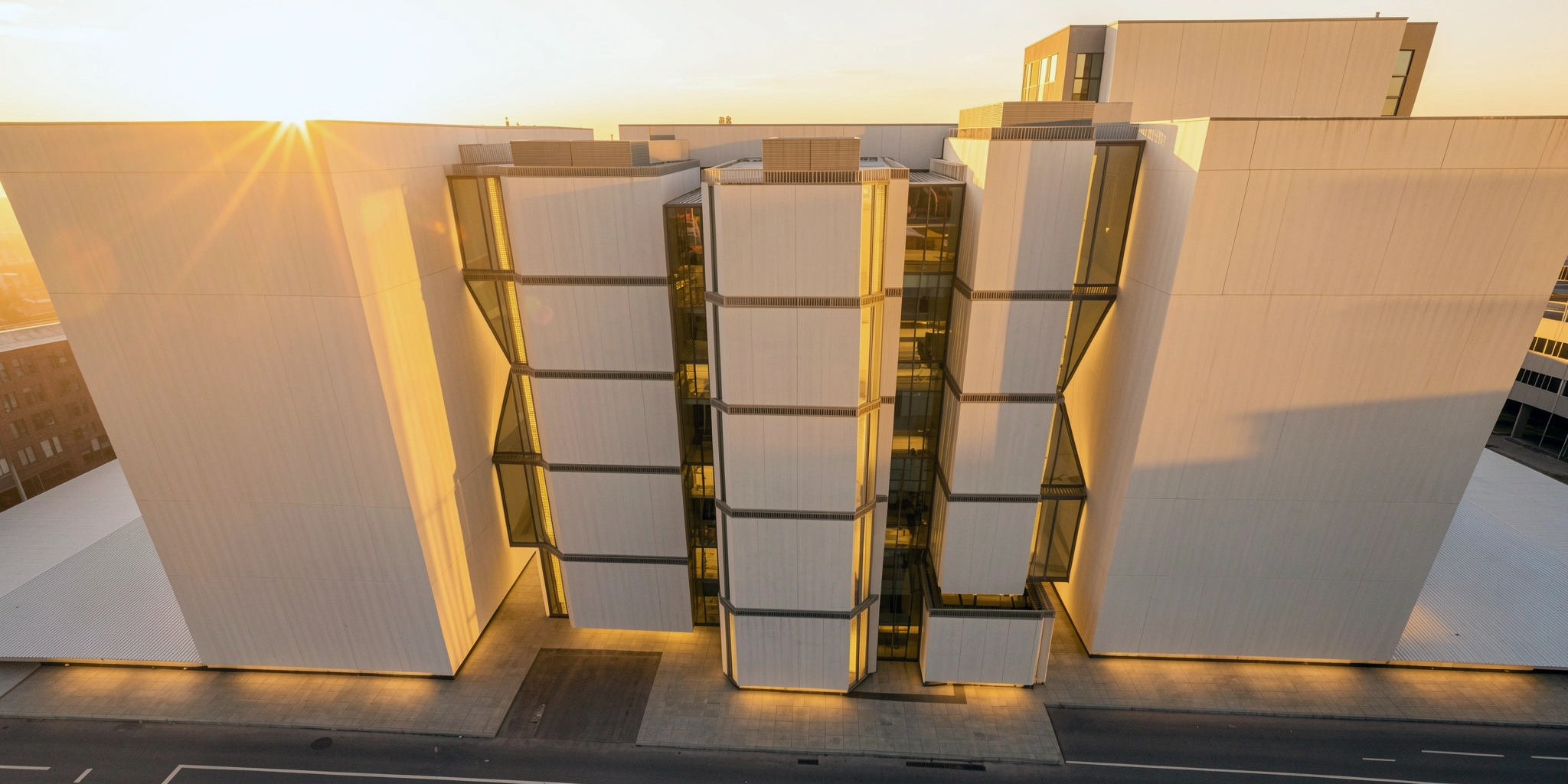
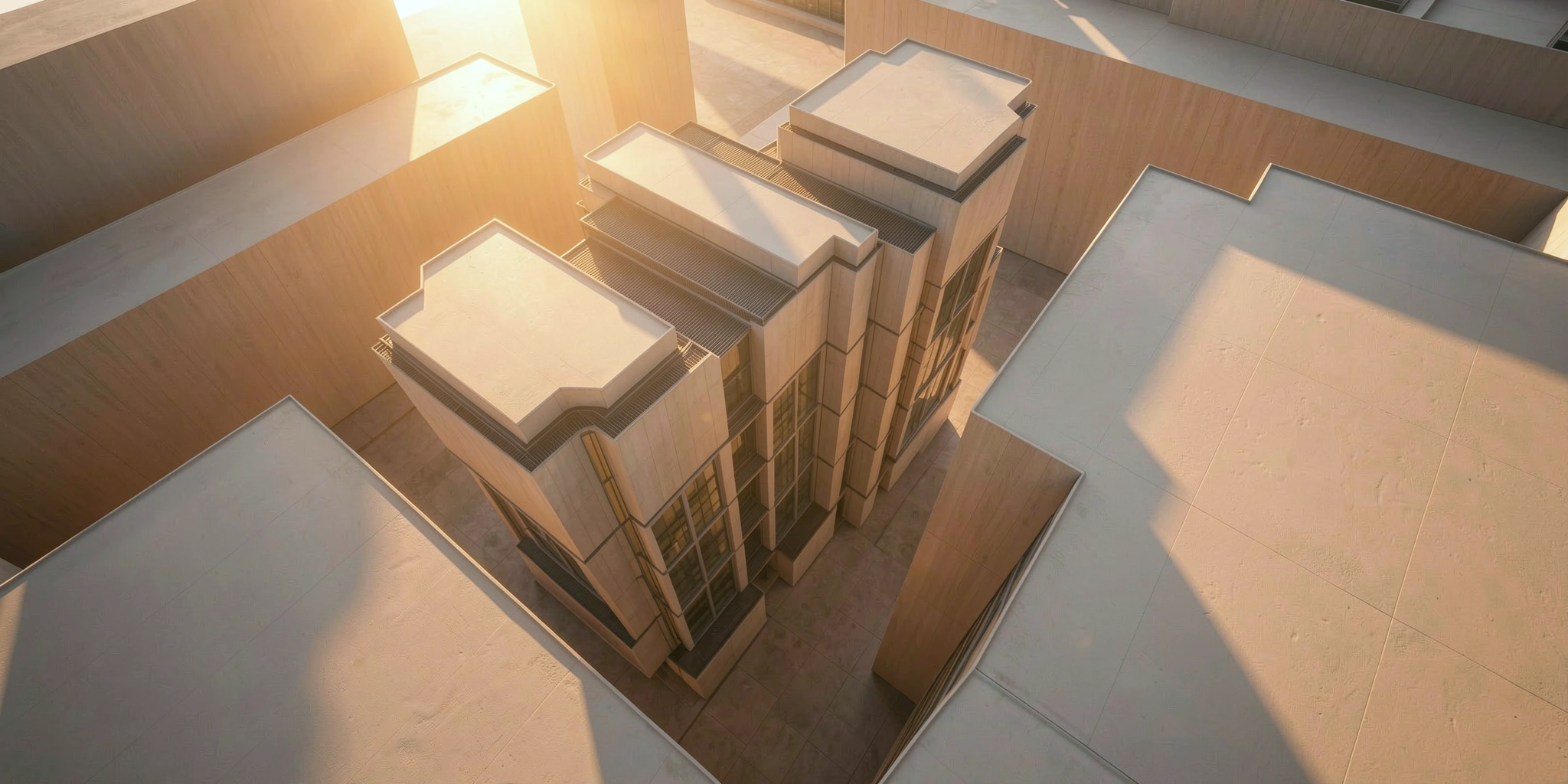
Mechanical and electrical systems are similarly conceived as modular components. Service modules, ductwork assemblies, and environmental equipment are mounted externally or at roof level, allowing replacement and upgrading without disruption to manufacturing activities. This distinction between permanent structural elements and adaptable operational systems allows the building to evolve alongside changing technological requirements.
Environmental Response
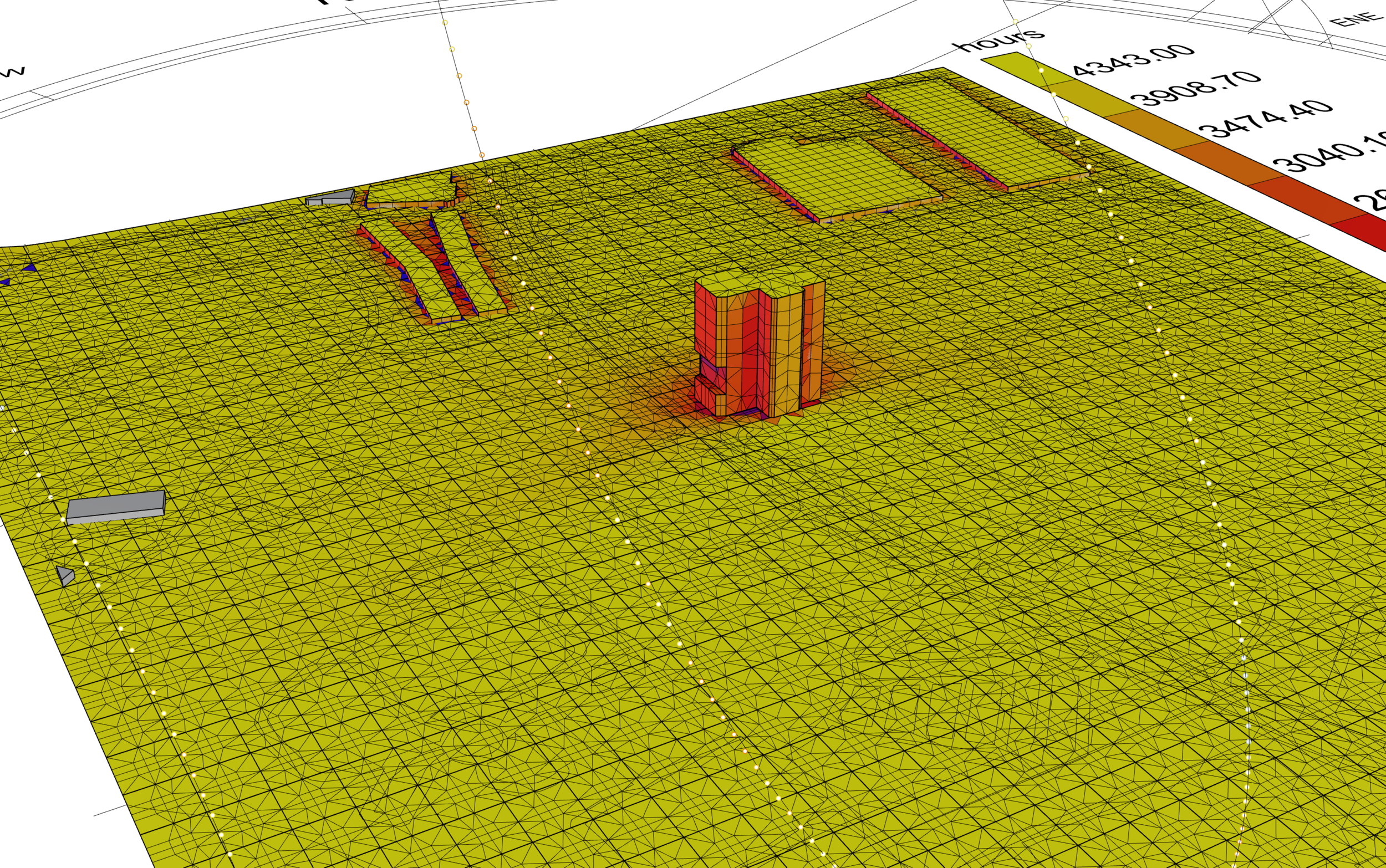
Environmental performance is integrated directly within the panelised system. The enclosure operates as a continuous environmental layer controlling daylight, ventilation, solar gain, and thermal performance through the coordinated arrangement of panels, openings, and service modules.
The building is organised into multiple environmental zones that can be independently adjusted according to occupancy, production requirements, and seasonal conditions. Mechanical systems are distributed through modular environmental units attached to the building perimeter and roof, allowing environmental control strategies to evolve without altering the primary structure.
Natural ventilation opportunities are incorporated where climatic conditions permit, reducing dependence on mechanical conditioning during transitional seasons. Daylight is introduced through rooflights and strategically positioned openings coordinated with the structural grid, ensuring that environmental performance and constructive order remain aligned.
The environmental strategy therefore emerges through the integration of enclosure, servicing, and structure rather than through the application of independent technical systems.
Constructive Expression
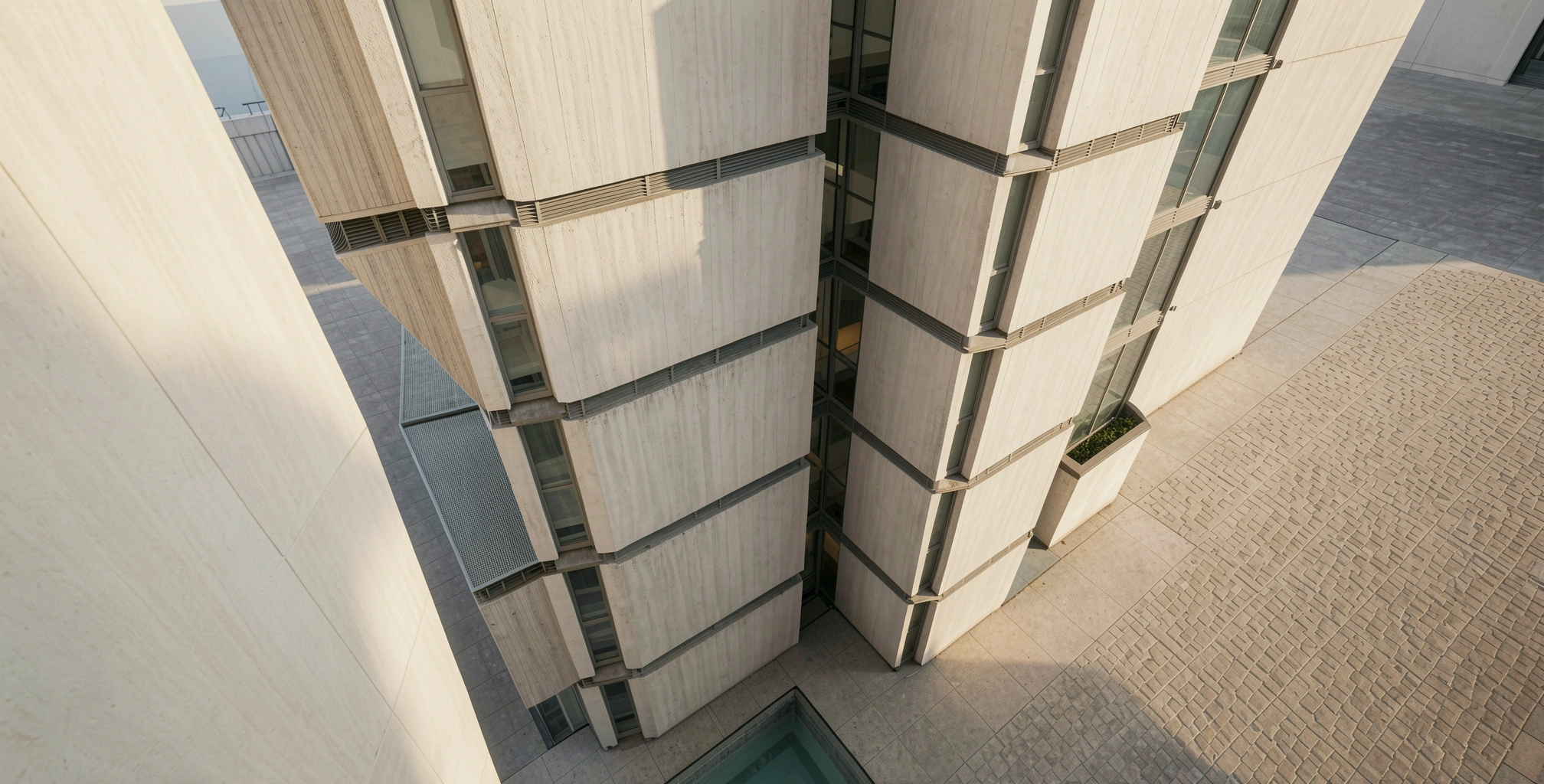
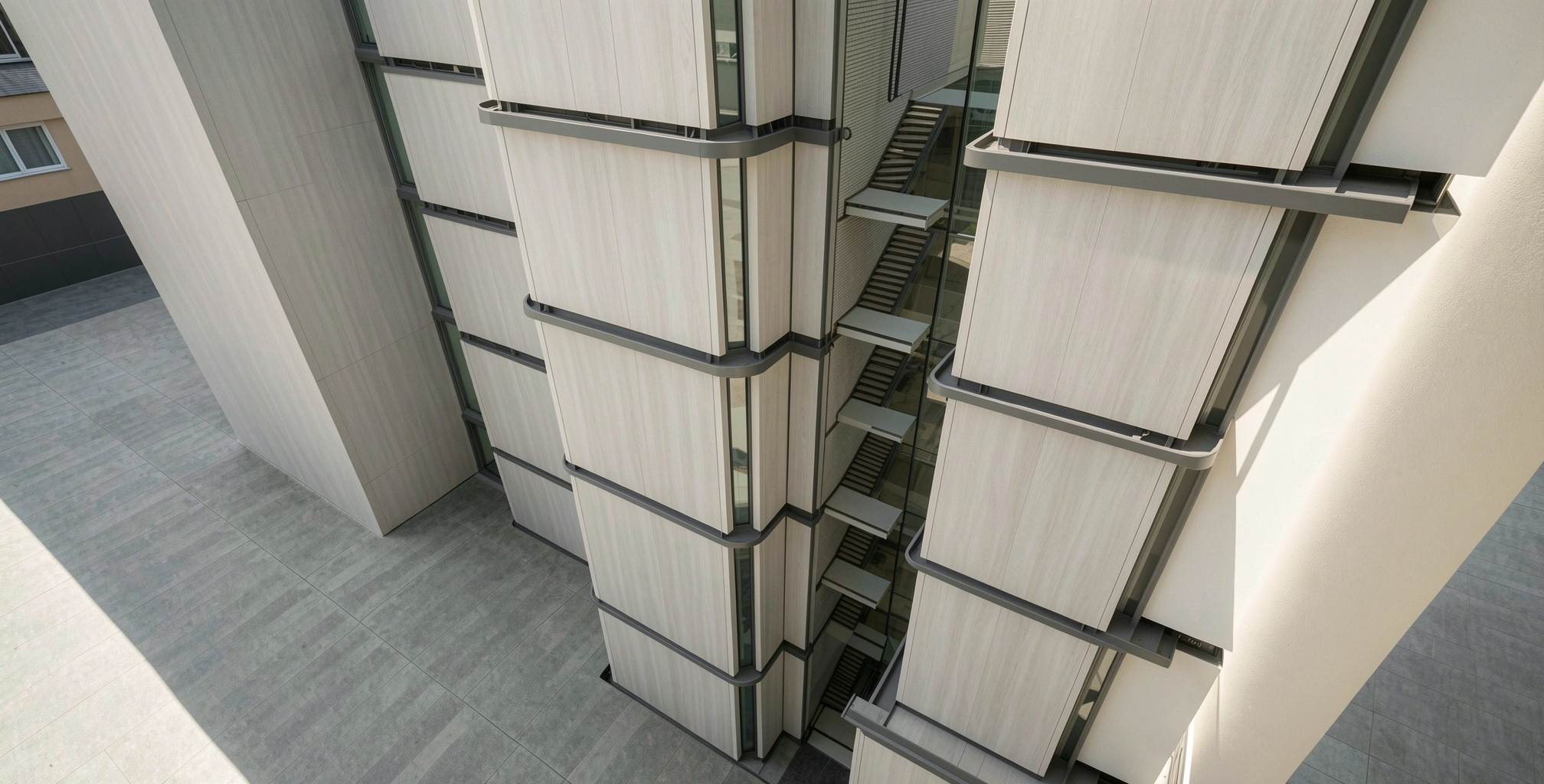
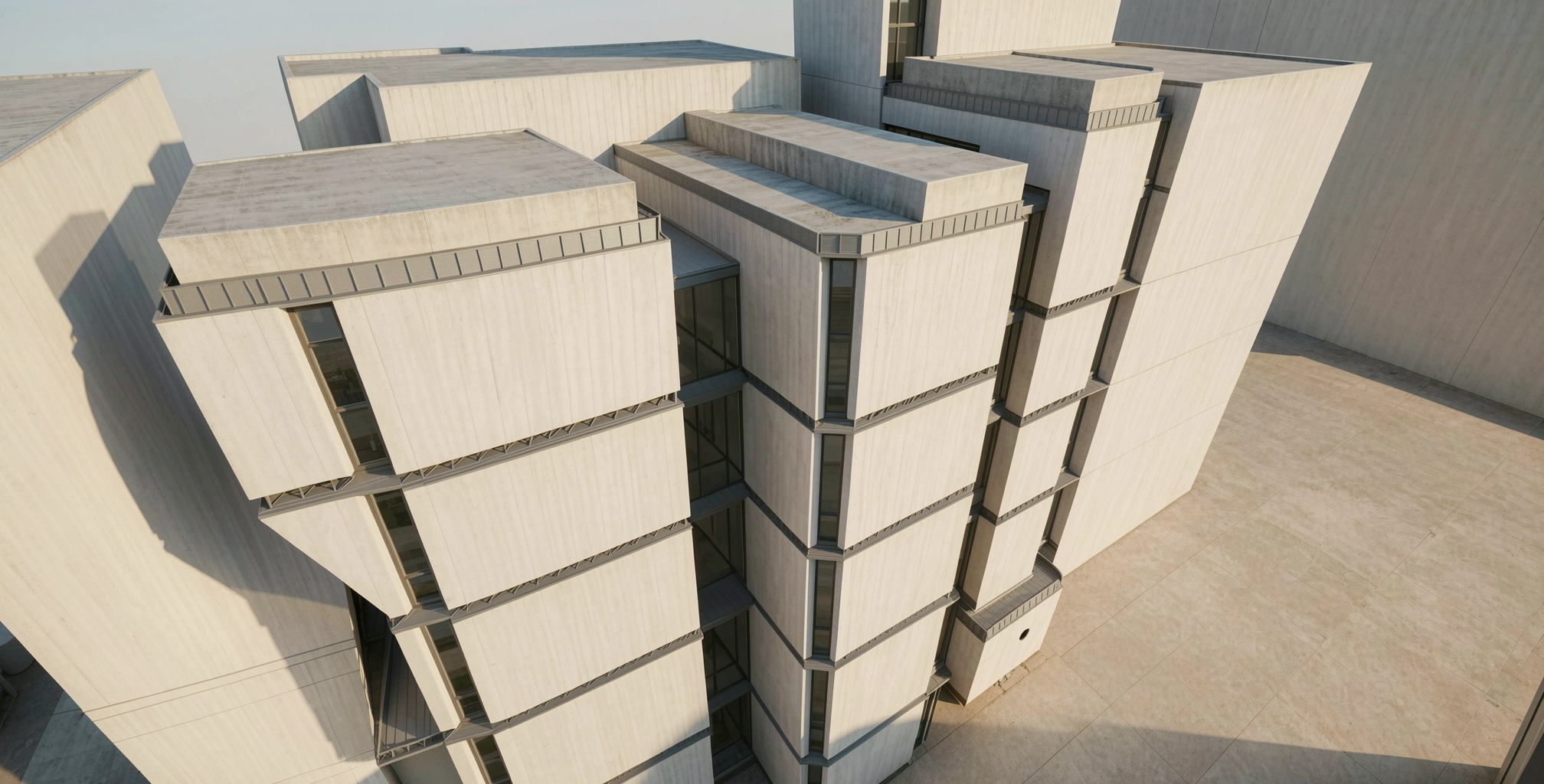
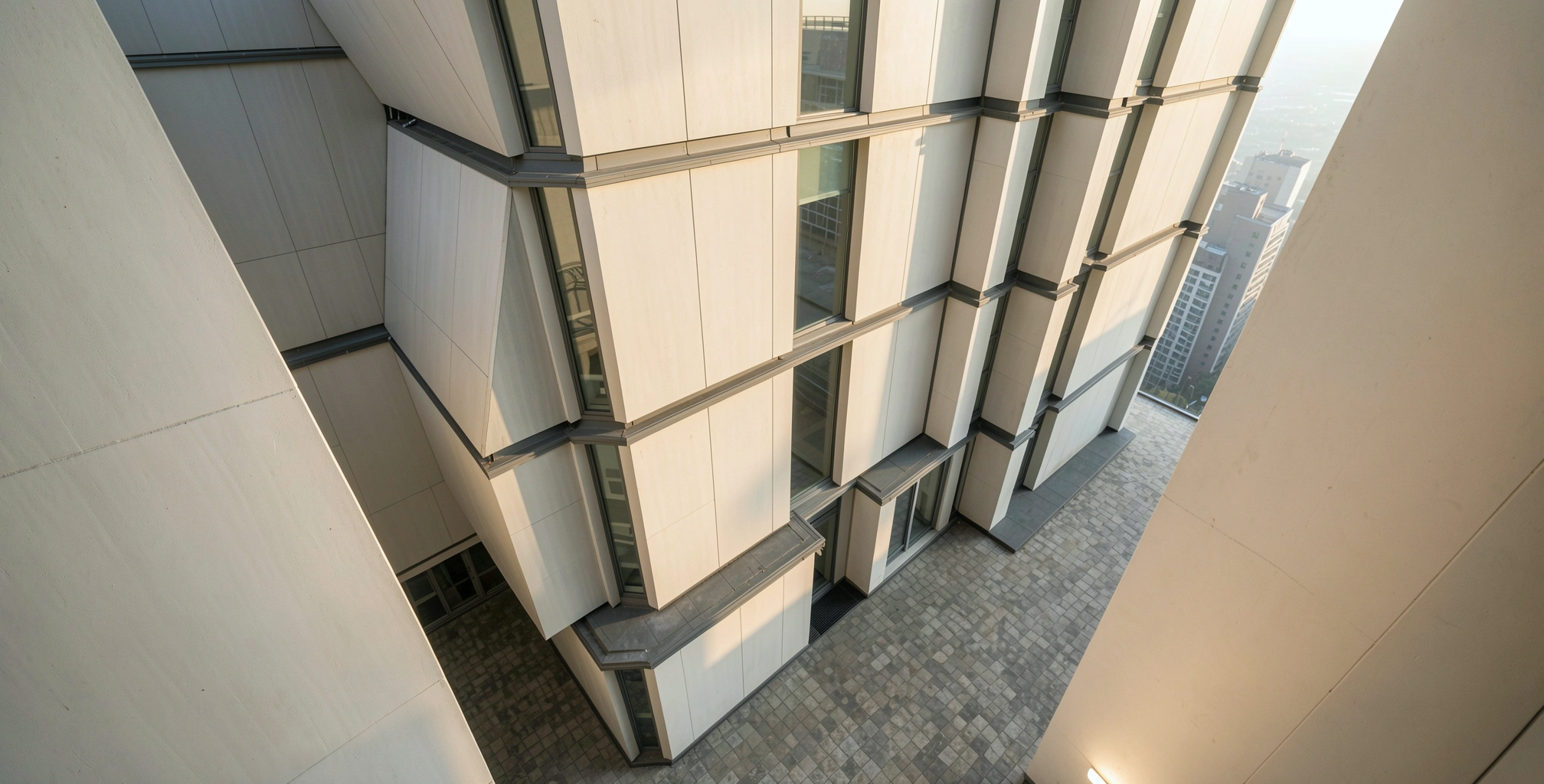
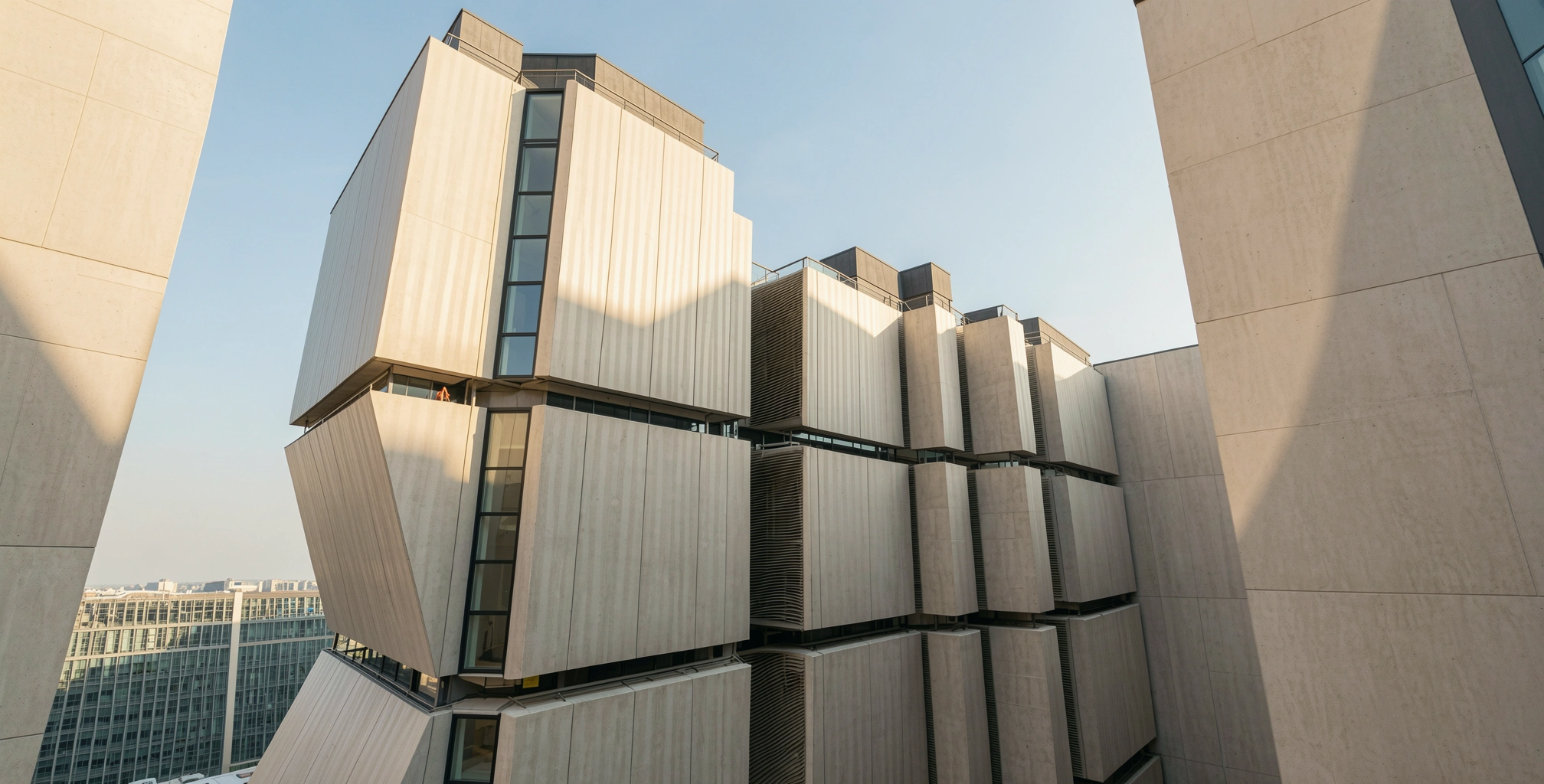
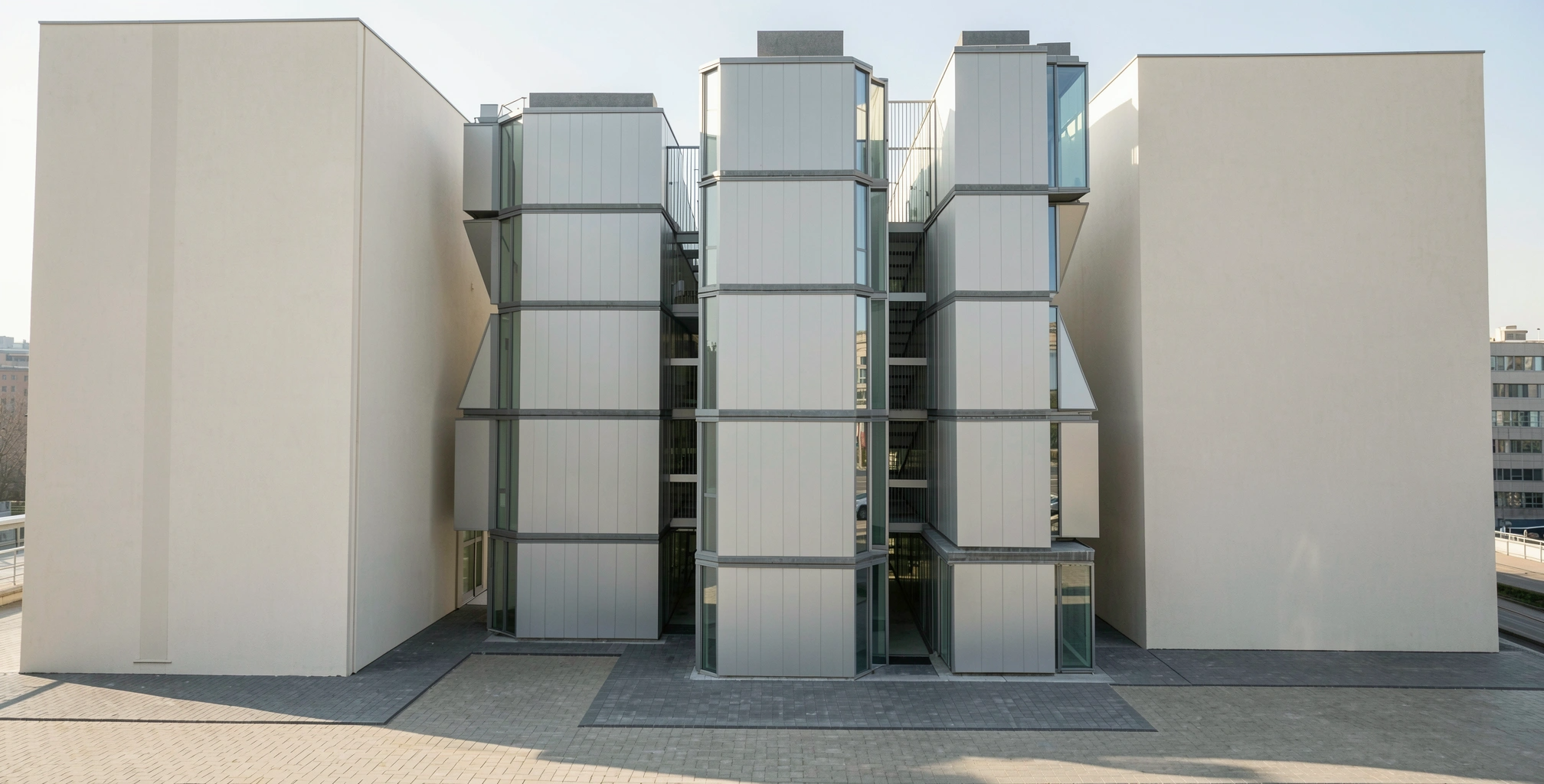
The architectural character of the building arises from the repetition and coordination of its components. Structural rhythm, panel organisation, service infrastructure, and environmental systems operate within the same dimensional framework, making the process of assembly legible.
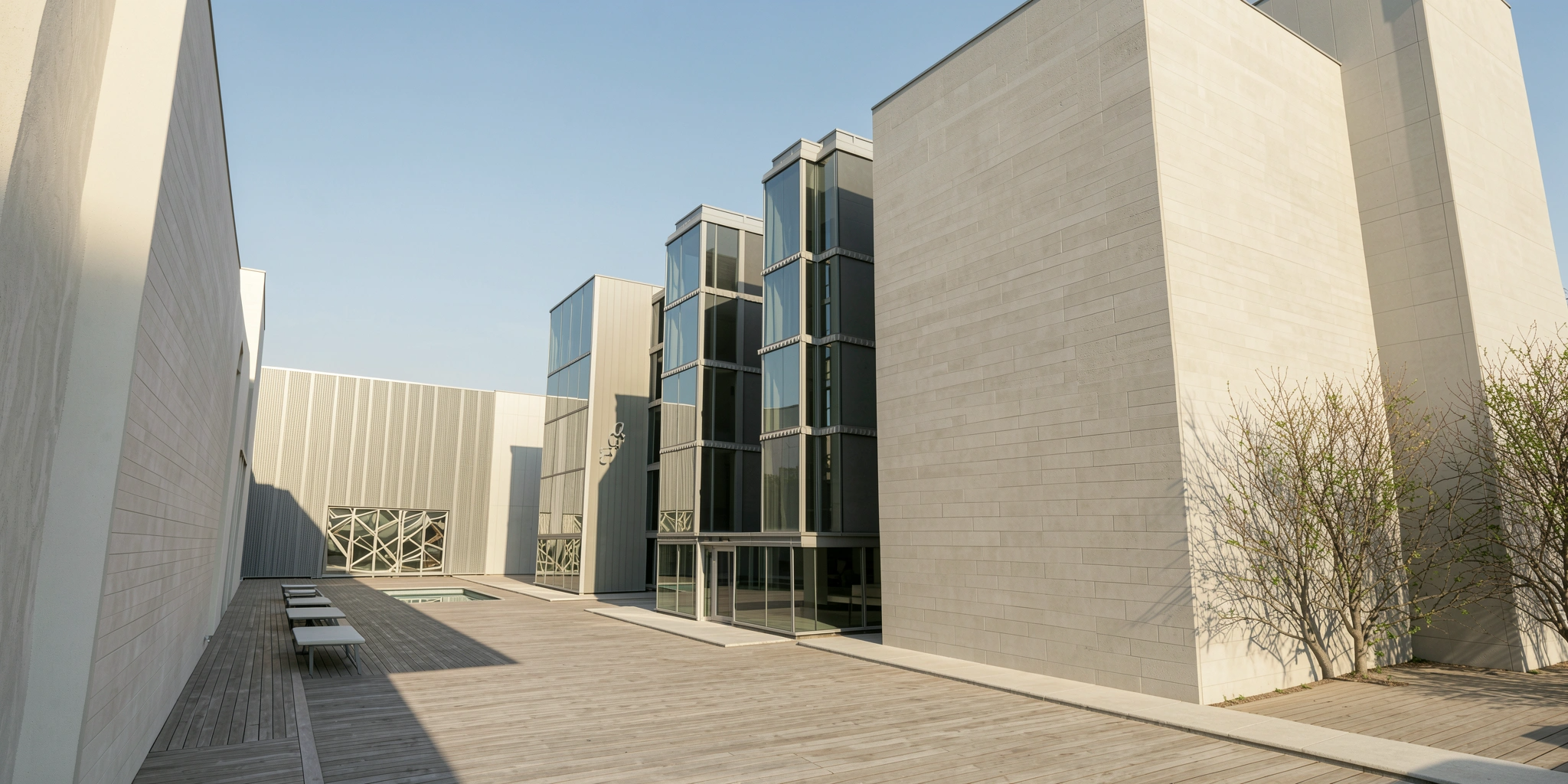
Panel joints, service modules, fixing systems, and structural spacing establish a clear visual order derived directly from fabrication and construction requirements. Variation occurs only where environmental conditions, orientation, or operational requirements necessitate adjustment.
Expression therefore emerges from the logic of assembly itself. The building demonstrates how prefabrication, environmental performance, servicing infrastructure, and manufacturing processes can be integrated within a coherent constructive system. Architecture is understood not as an applied form but as the organised relationship between component, structure, enclosure, and operation over time.