
School Building — Structure, Enclosure and Learning Environment
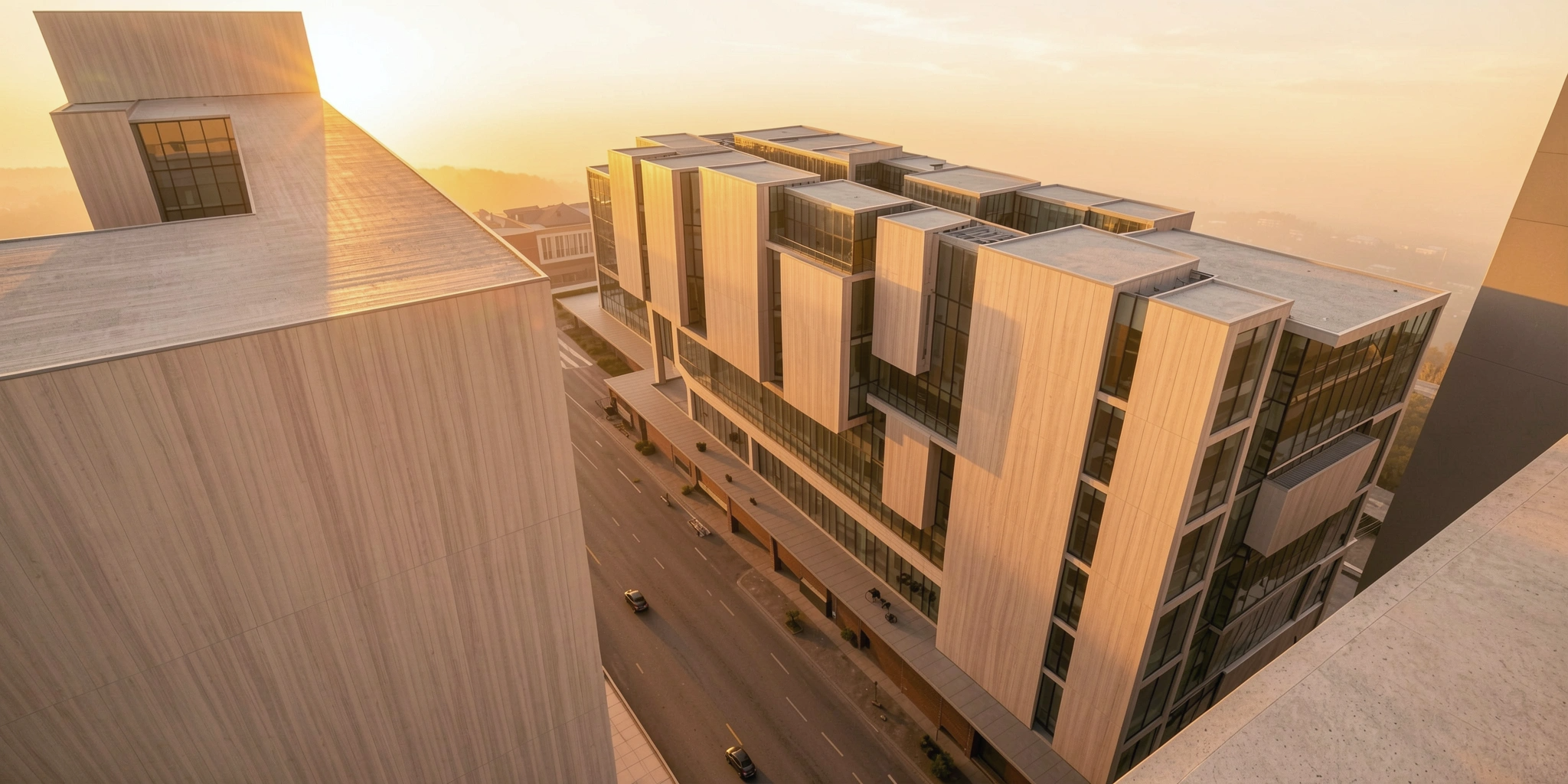
Structural Reasoning
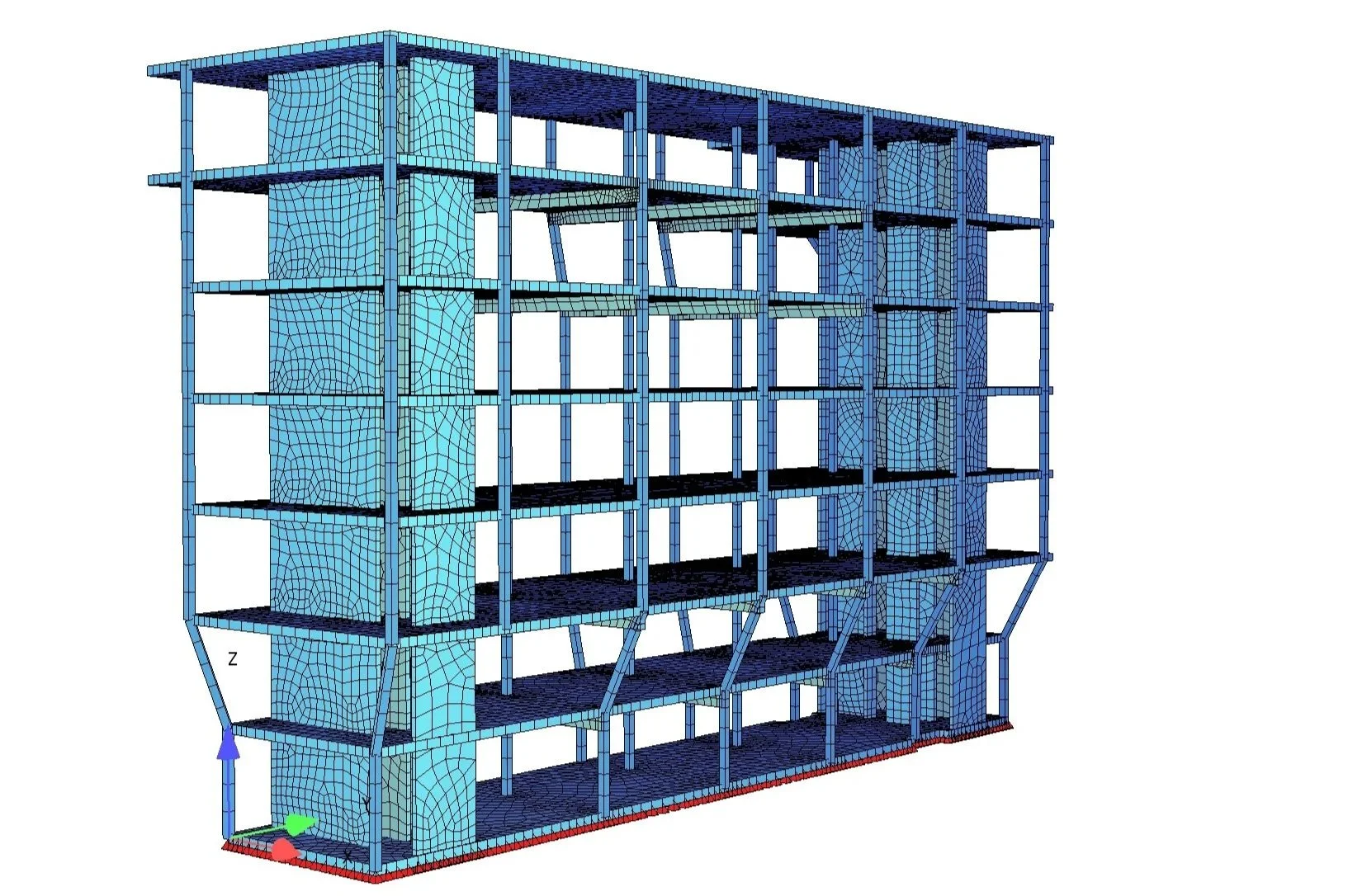
The School Building is organised through a structural framework that simultaneously supports enclosure, circulation, and environmental performance. Rather than treating structure and façade as separate systems, the project aligns columns, beams, floor plates, and environmental elements within a single organisational framework. This integration establishes clear load paths while allowing the architectural form to respond directly to the requirements of teaching, movement, daylight, and flexibility.
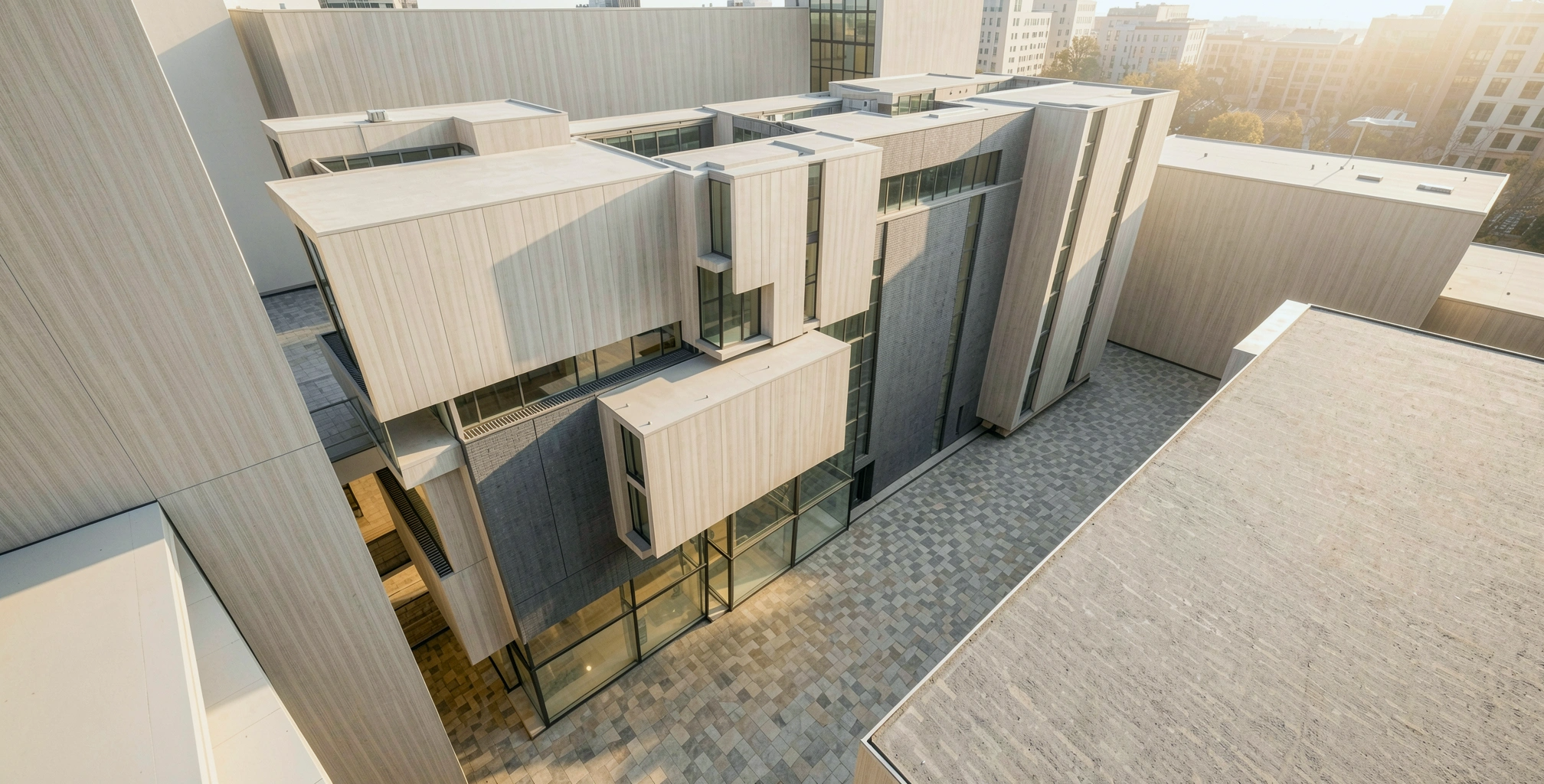
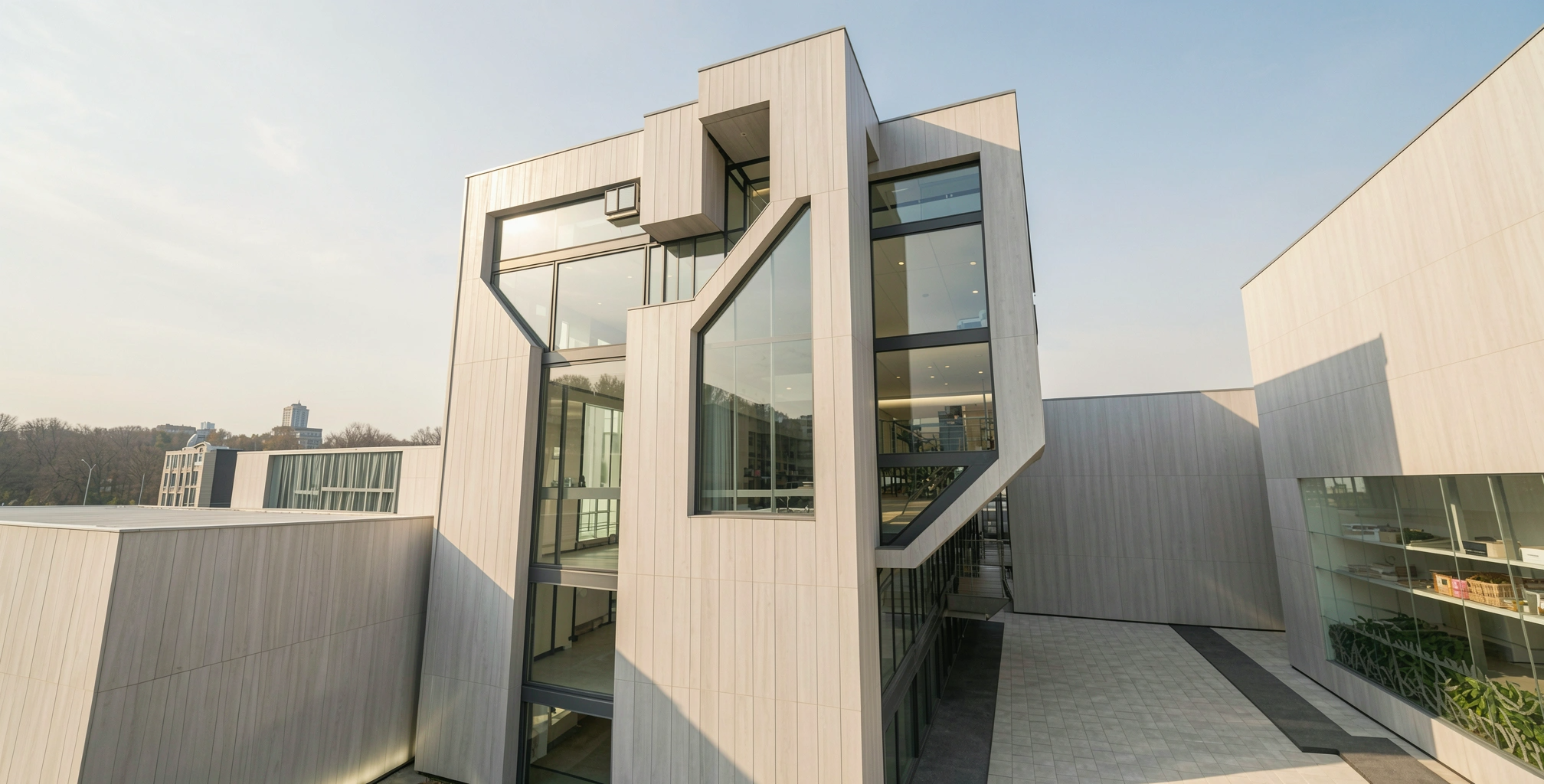
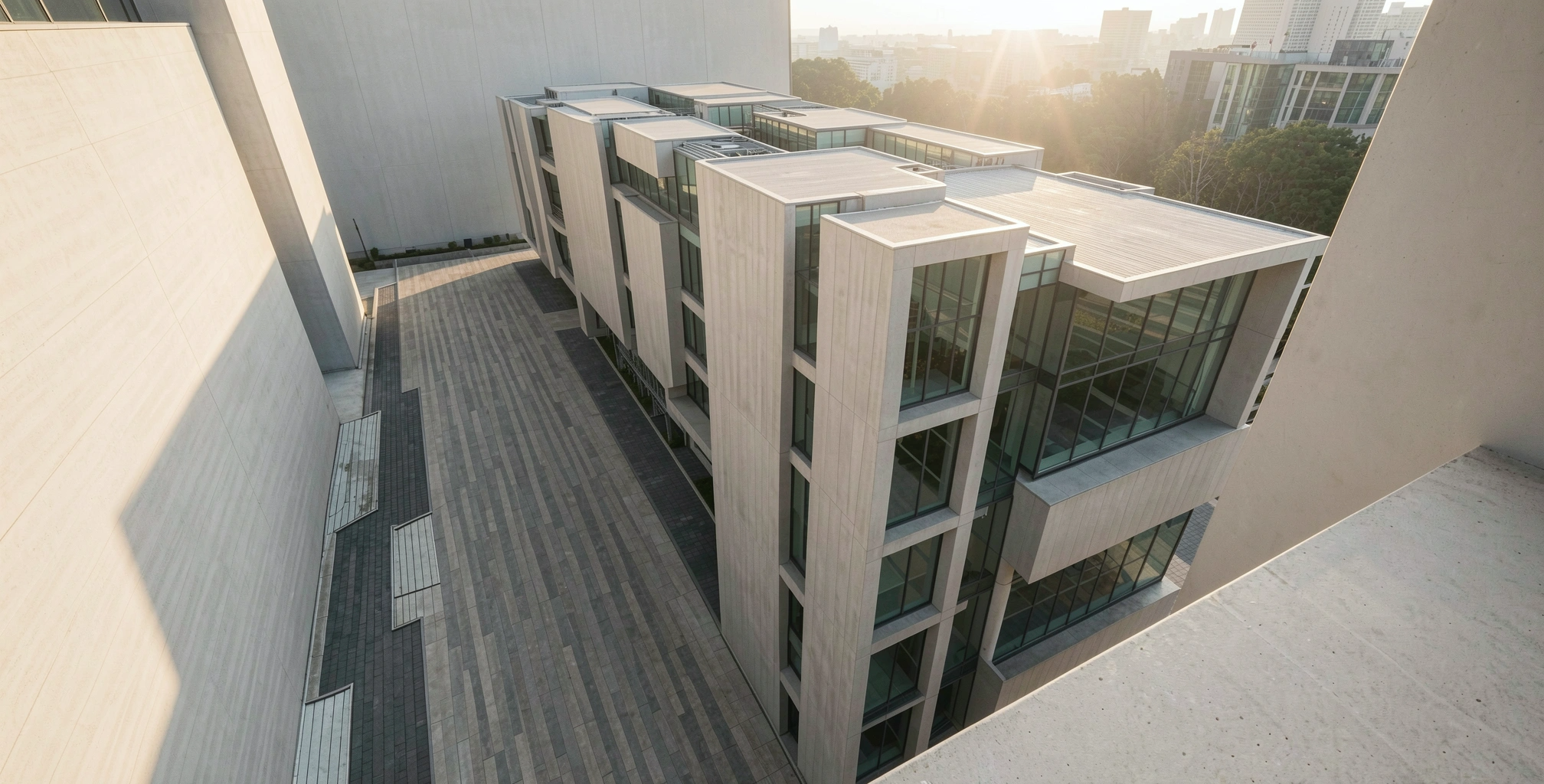
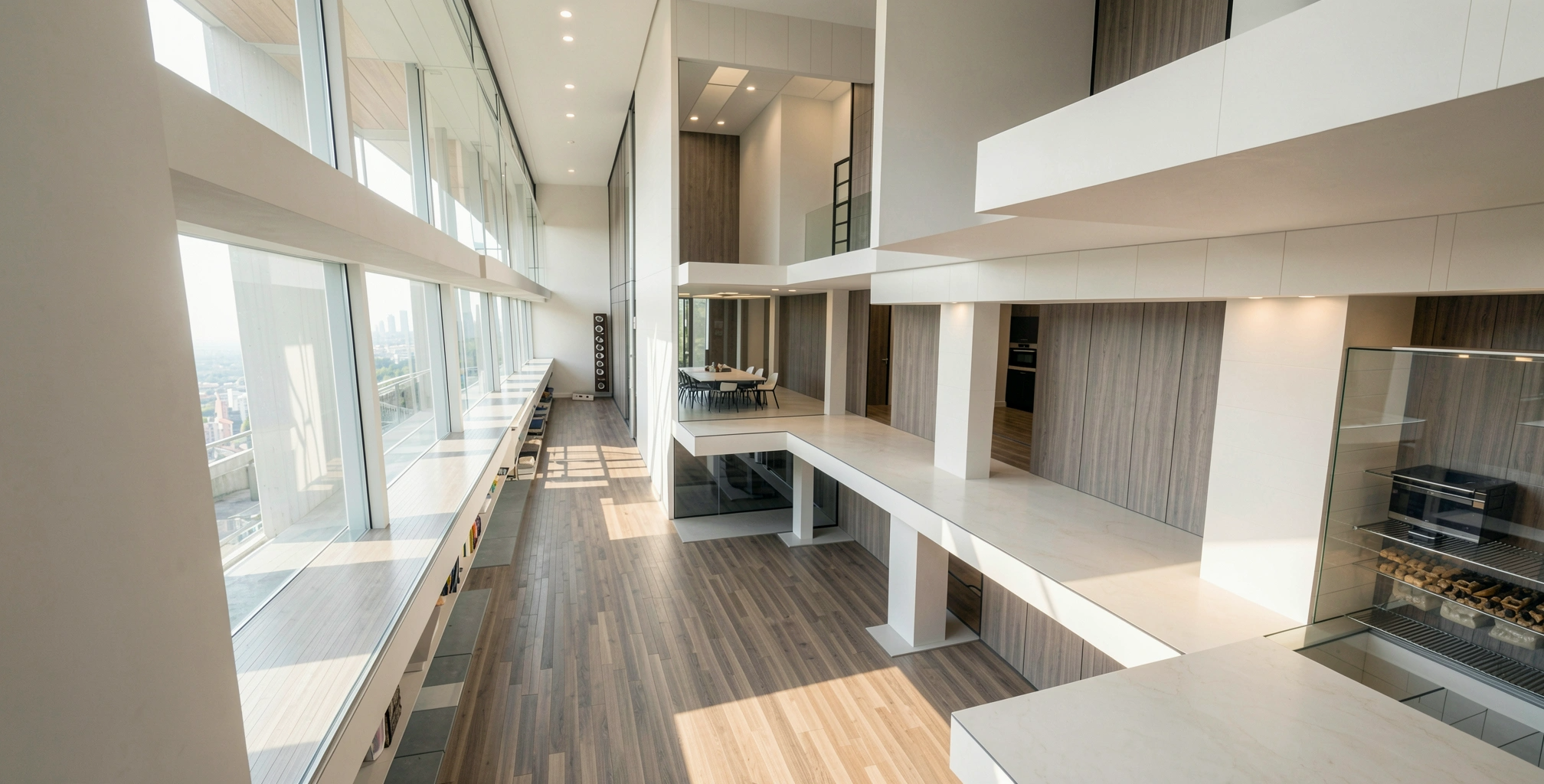
A central circulation spine forms the principal organisational element of the building. Structural spans, stair openings, bridges, and rooflights are coordinated around this space, allowing circulation, environmental distribution, and structural stability to operate together. The spine provides both physical connection and organisational continuity across the building, linking the teaching blocks while accommodating vertical movement and service distribution within a coherent structural order.
The structural grid extends throughout the building, establishing a repeatable framework capable of supporting different classroom sizes and teaching arrangements without disrupting the continuity of load transfer.
Material Behaviour
The project combines reinforced concrete and steel construction in response to differing spatial and operational requirements. Concrete elements provide robustness, acoustic separation, and thermal stability in areas of intensive occupation, while steel elements allow longer spans, lighter construction, and greater flexibility where larger teaching spaces or cantilevered volumes are required.
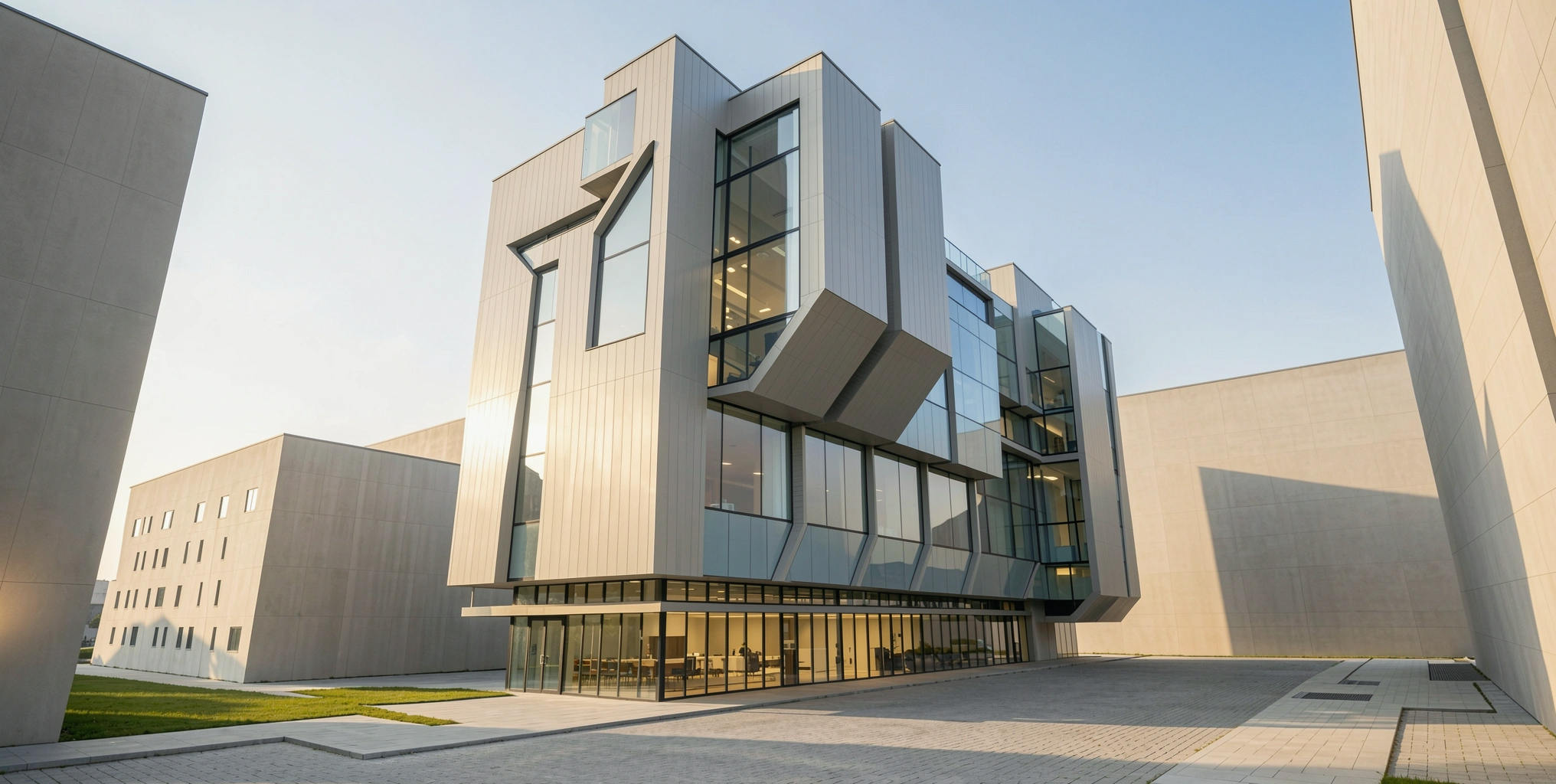
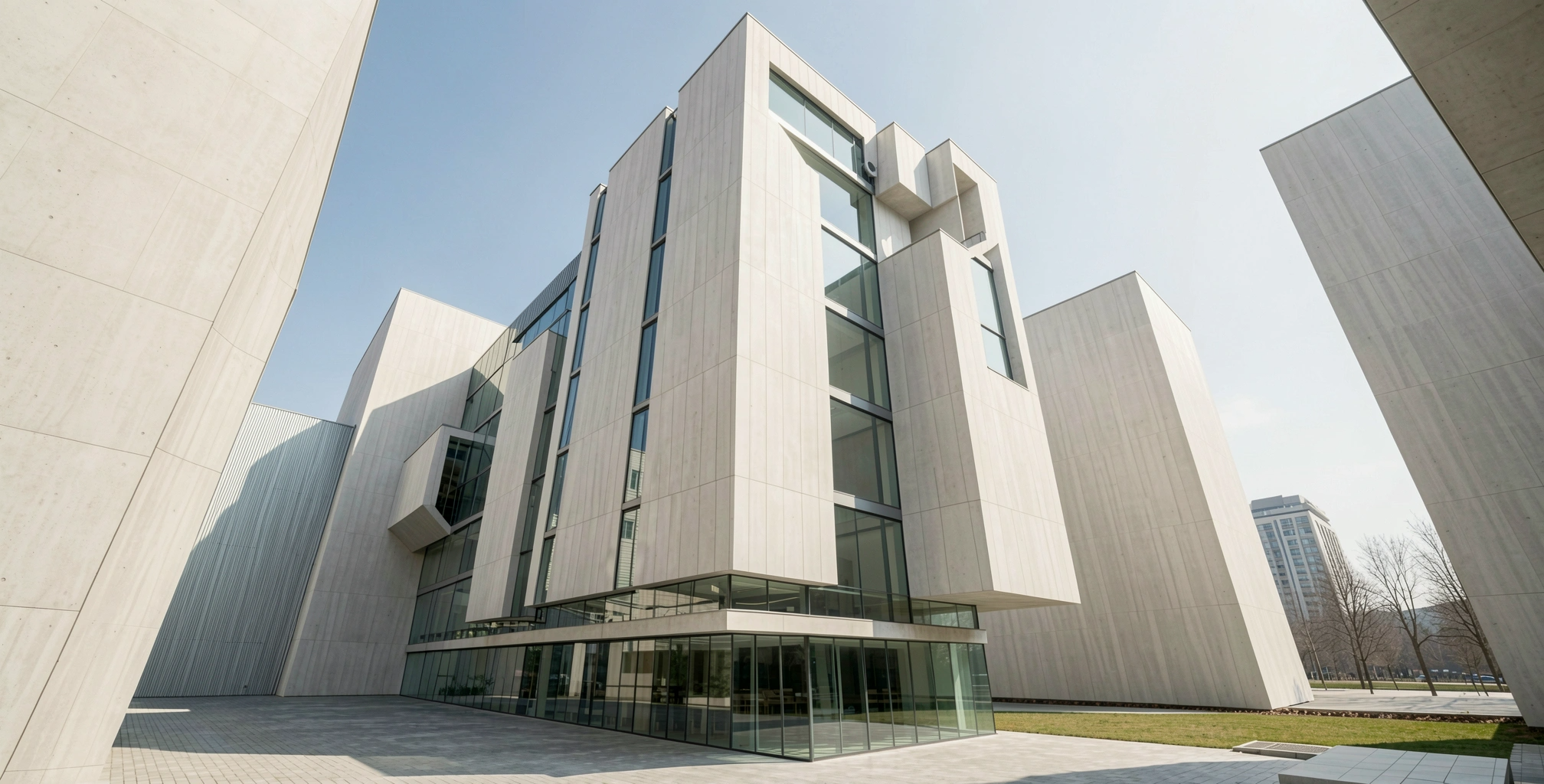
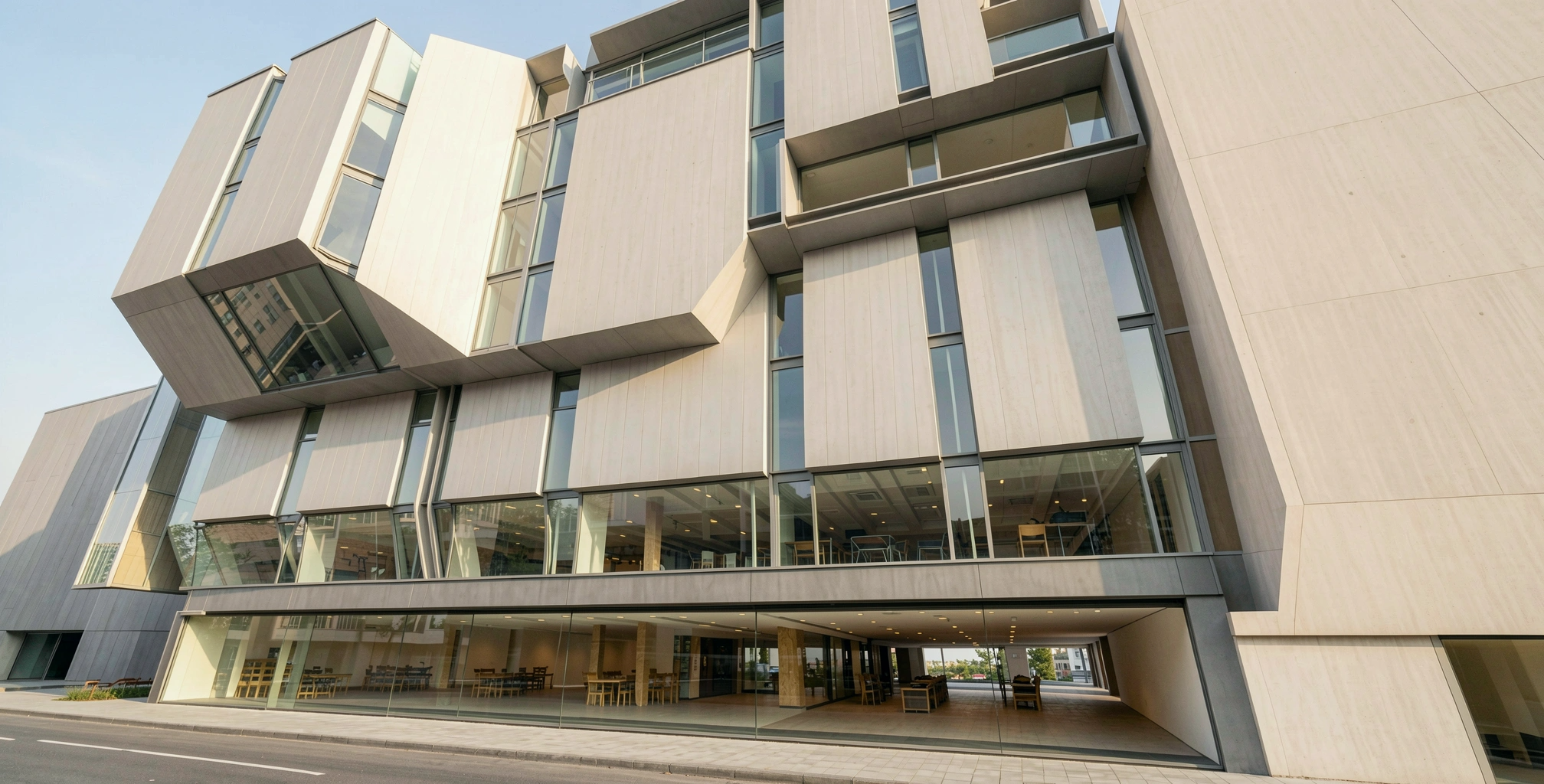
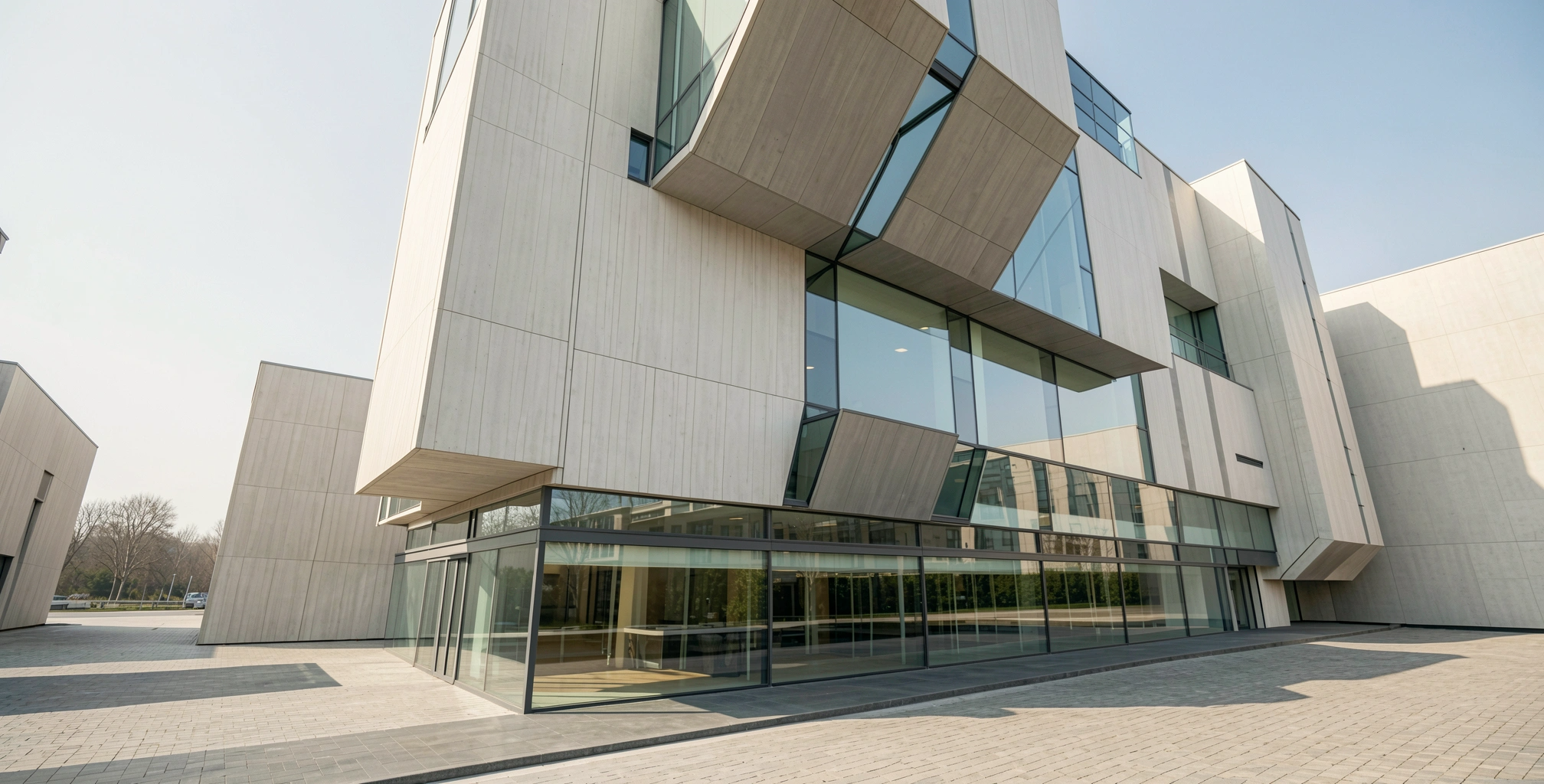
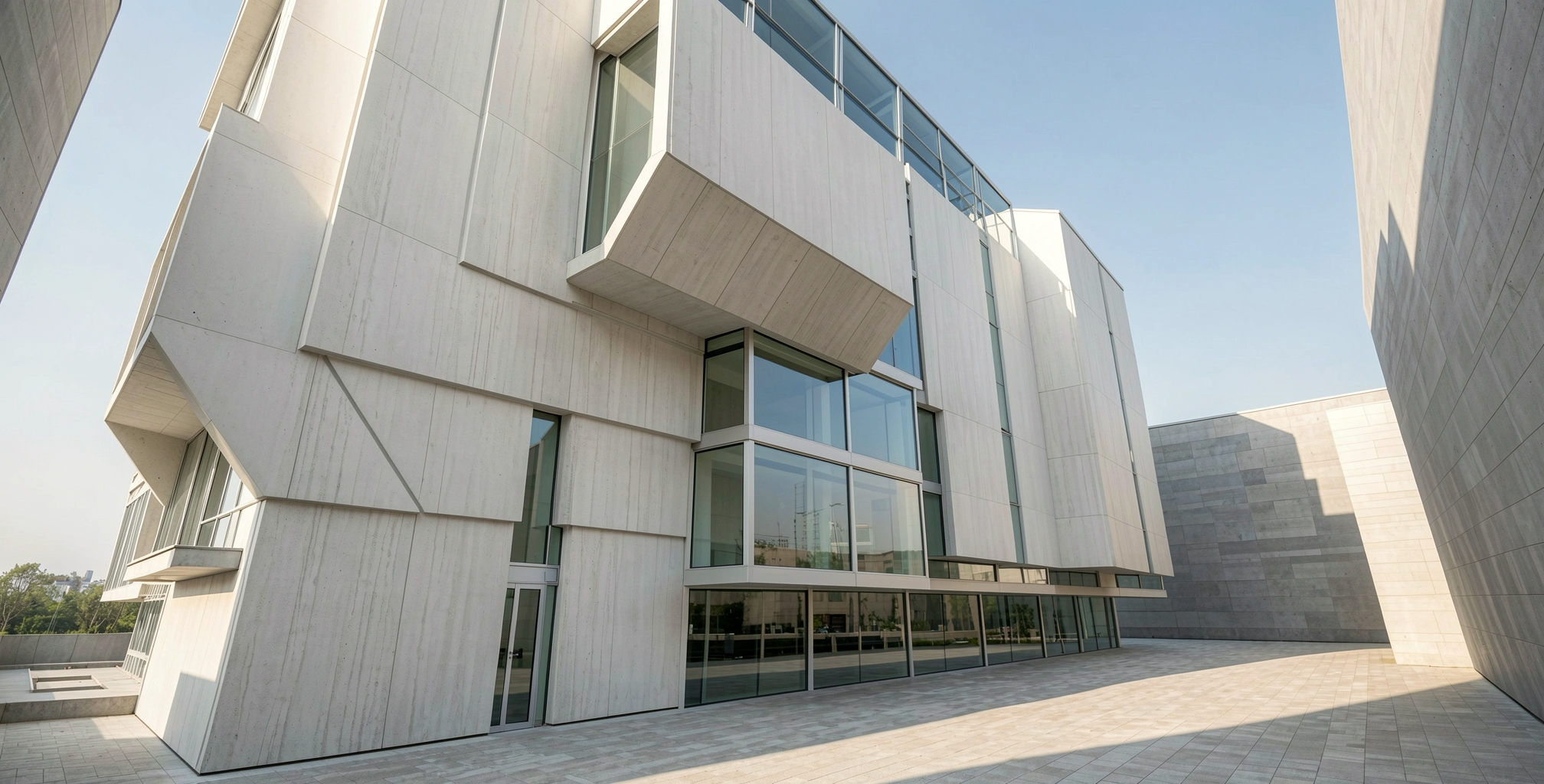
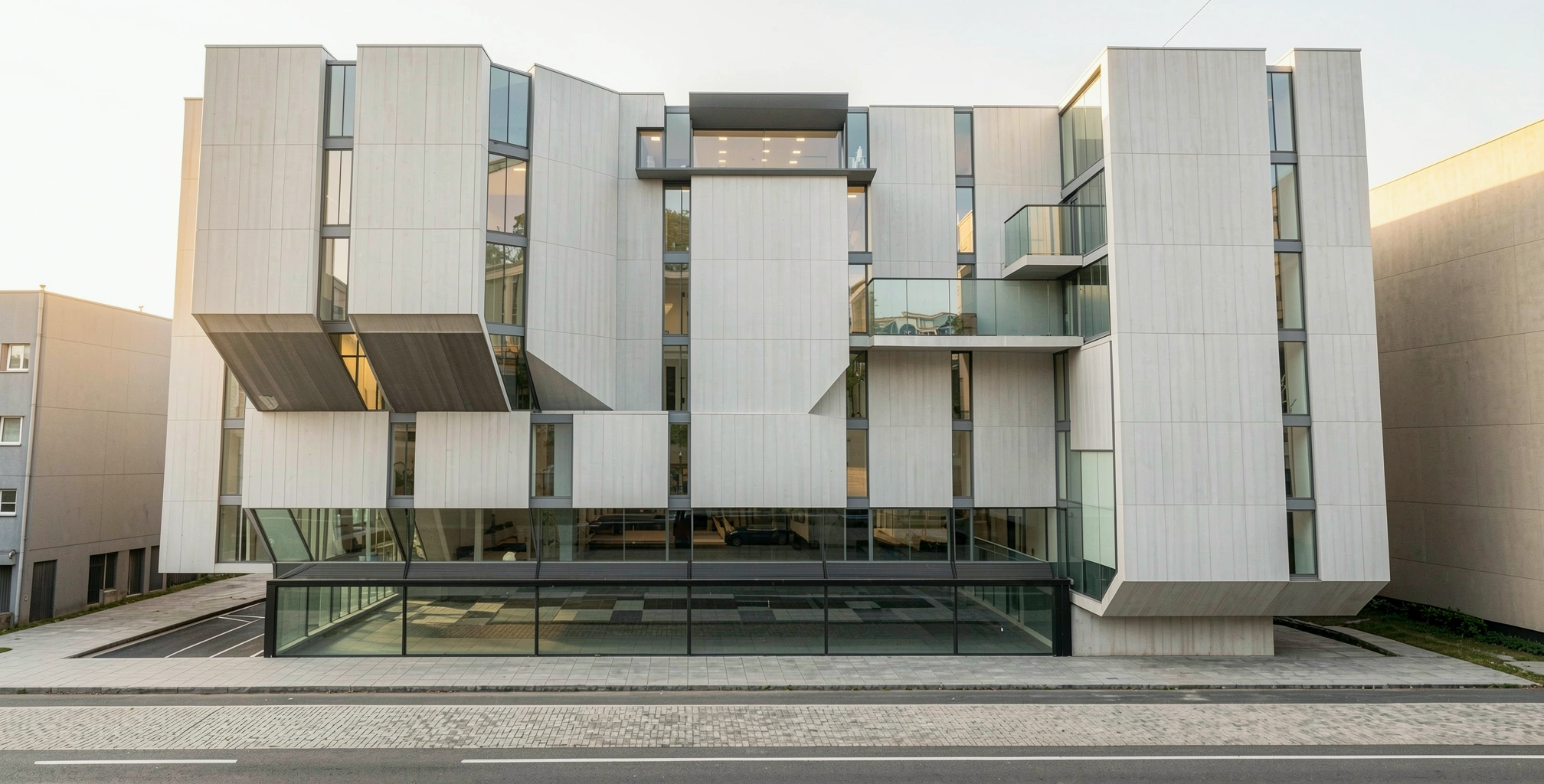
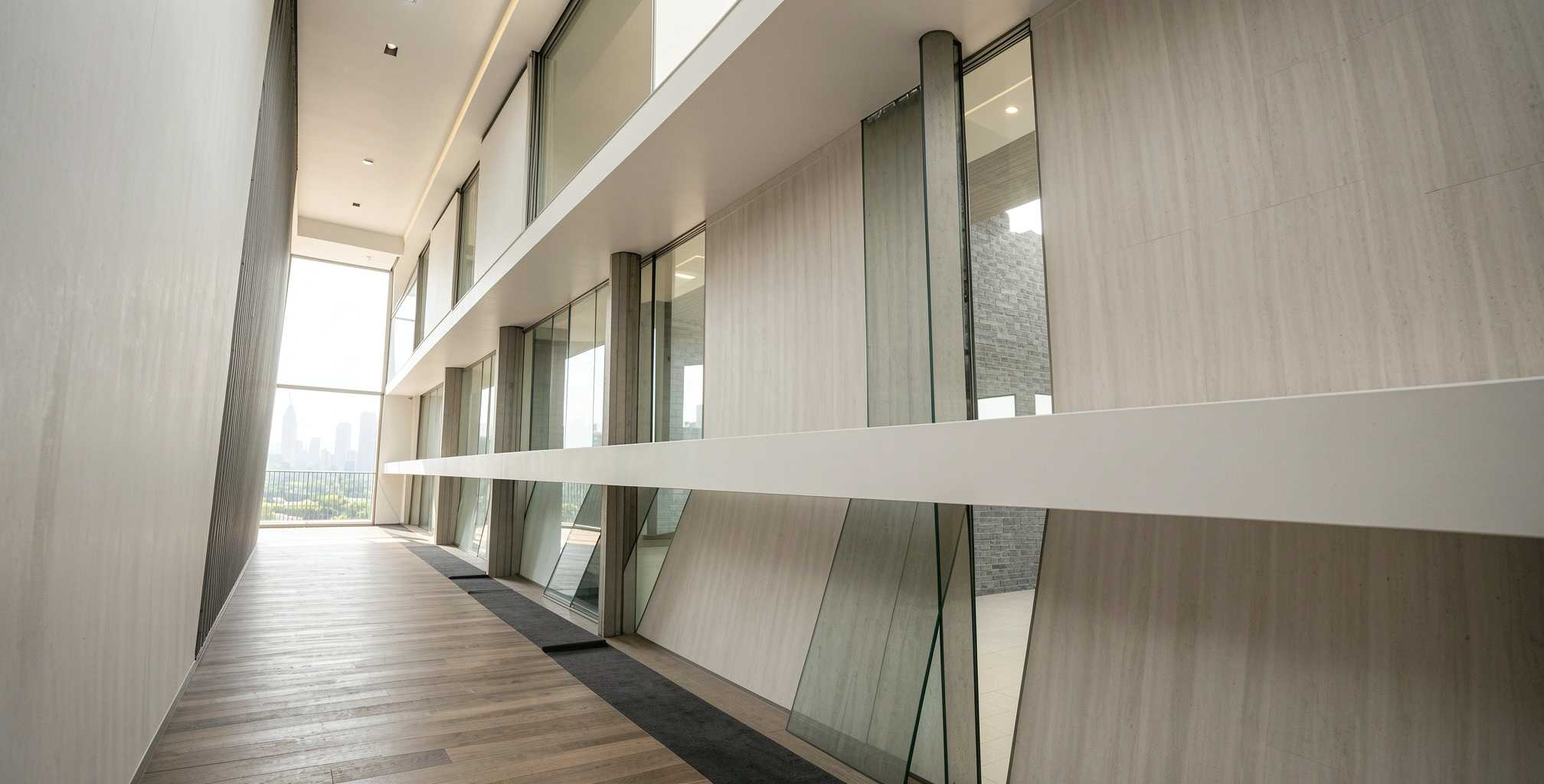
Structural members are dimensioned in relation to span, load, and environmental performance. Beams surrounding circulation voids support stair openings and bridges without introducing additional supports into occupied spaces. Inclined columns supporting projecting classroom volumes redirect loads back into the primary structural framework while maintaining visual openness at ground level.
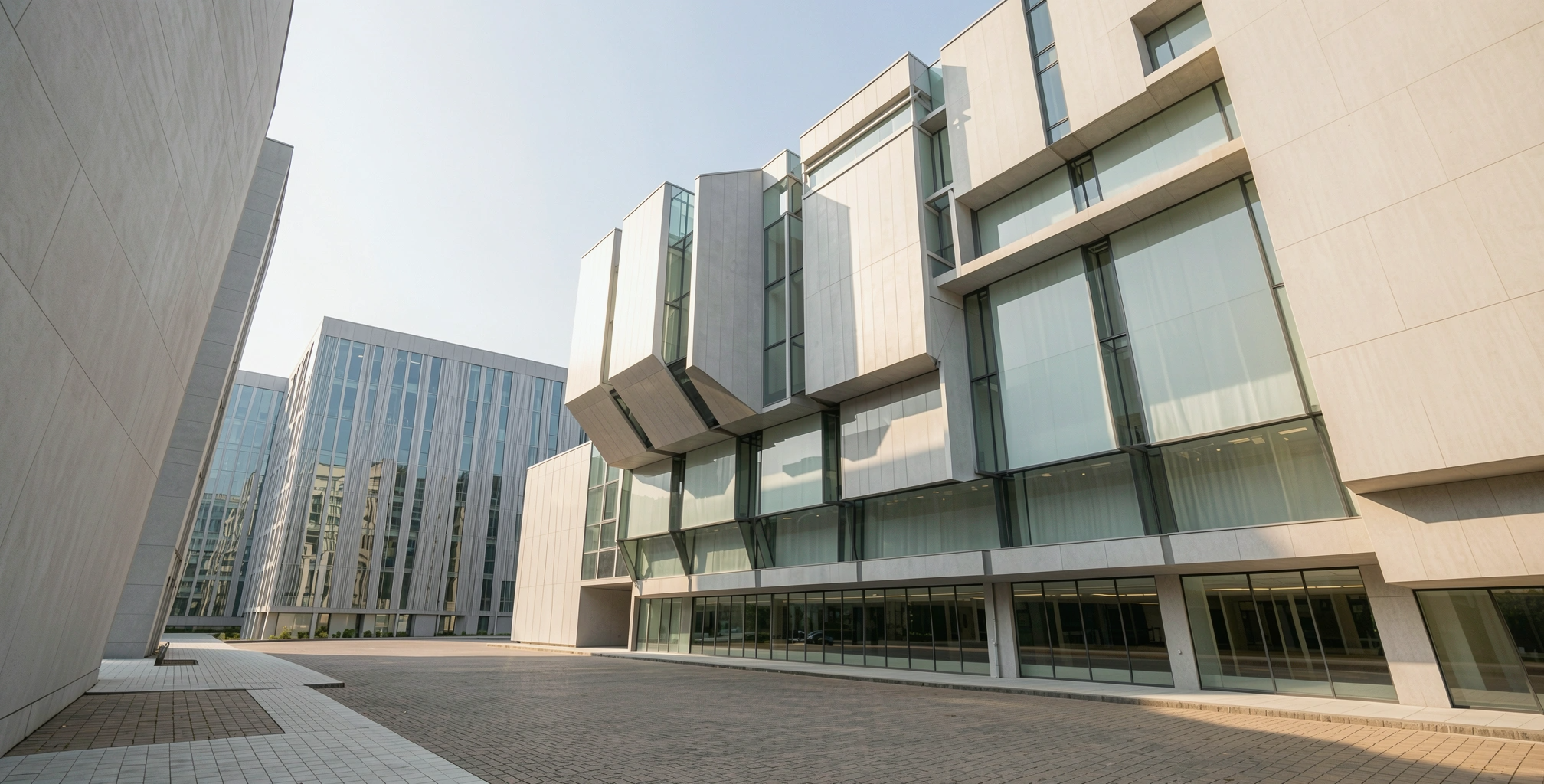
Connections between structural and enclosure systems accommodate movement, fabrication tolerances, and long-term maintenance requirements. Façade components align directly with the structural grid, allowing efficient fabrication, replacement, and adaptation throughout the building's life.
Material behaviour is therefore expressed not only through structural performance but through its contribution to environmental control, spatial organisation, and long-term flexibility.
Environmental Response
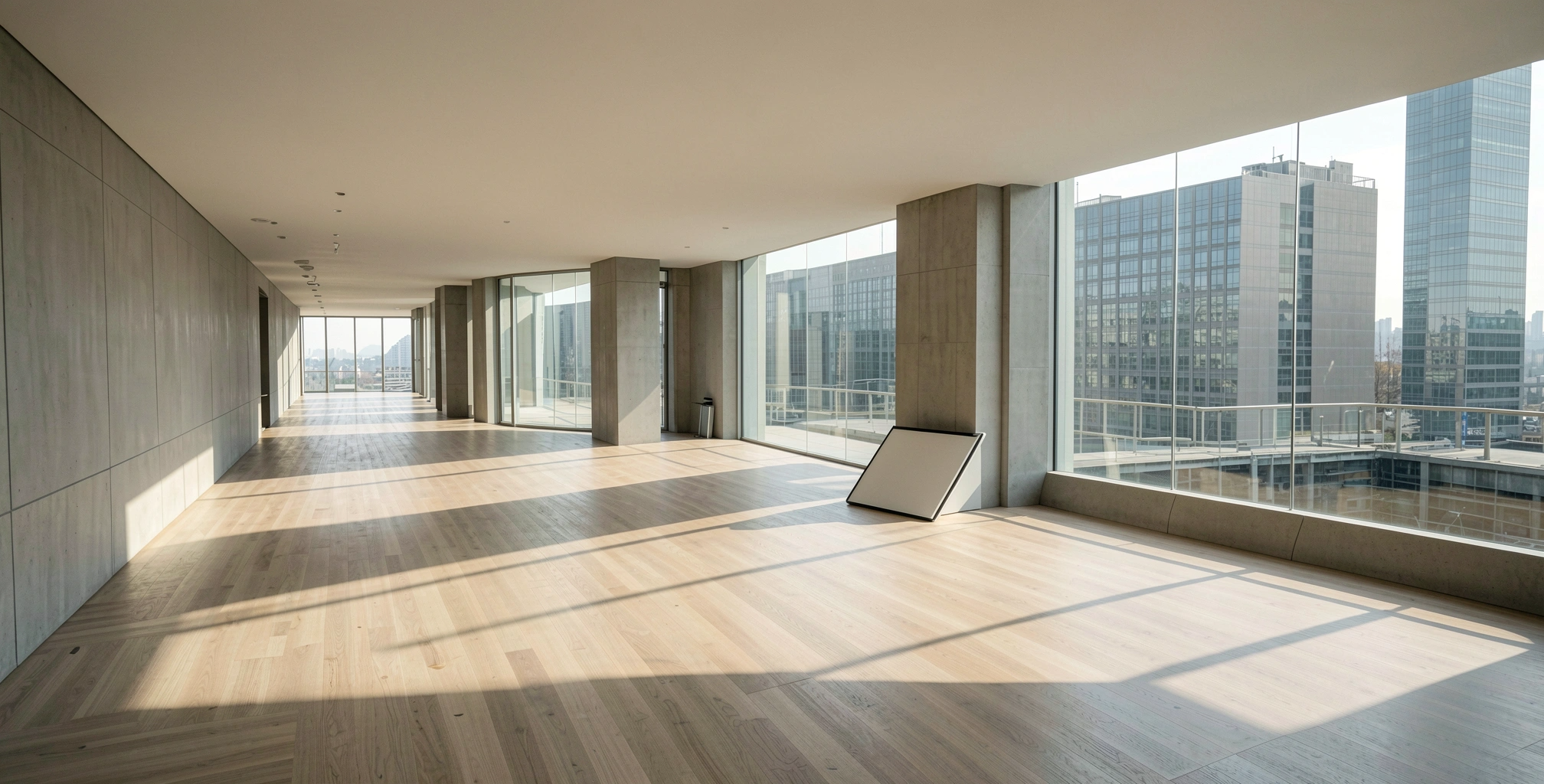
Environmental performance is integrated directly within the structural organisation of the building. The depth of the structural frame provides opportunities for shading, daylight control, and façade articulation, while openings positioned within structural bays allow daylight and ventilation to penetrate deep into teaching spaces.
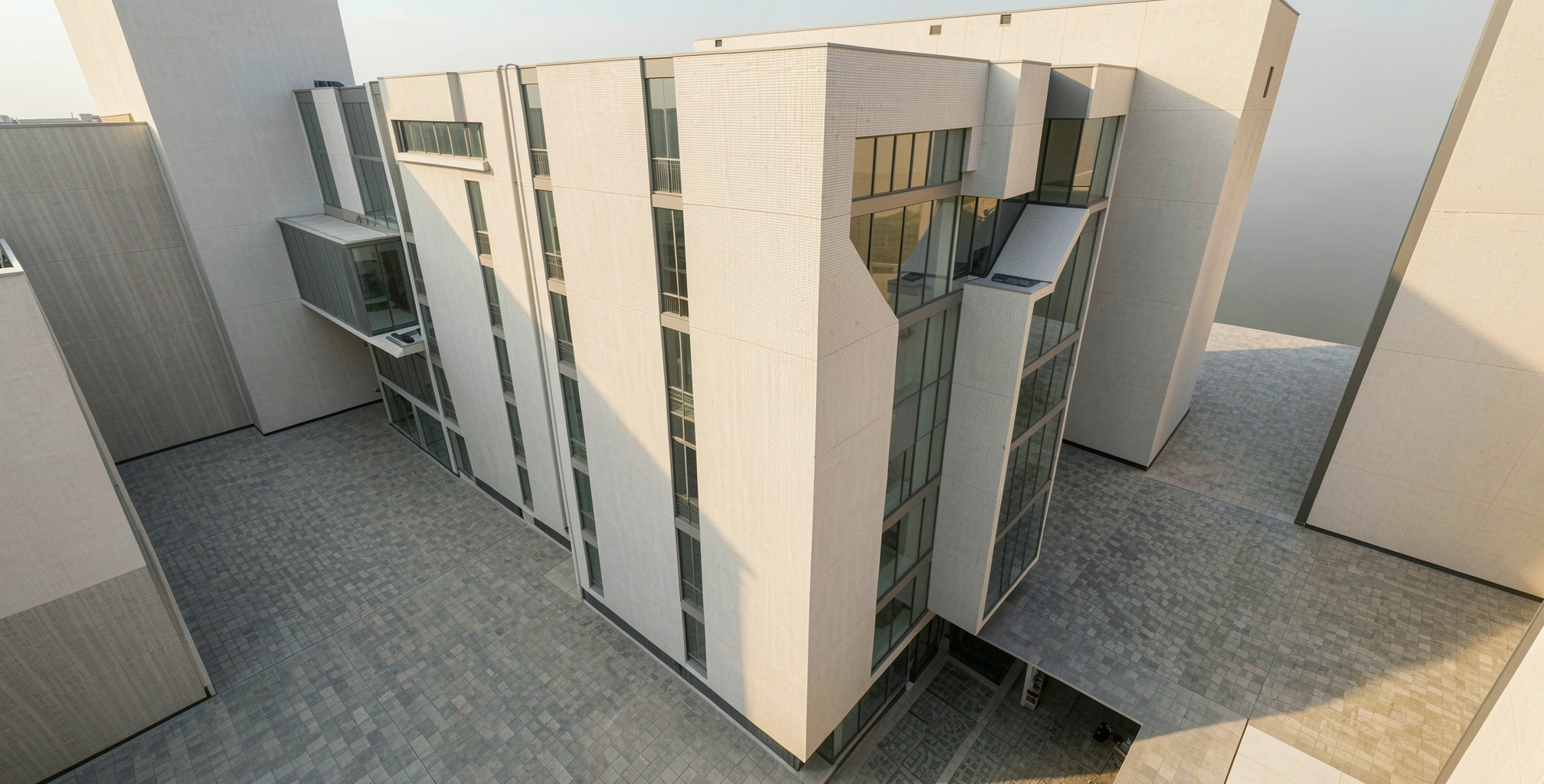
The asymmetrical arrangement of classrooms generates variations in façade depth and orientation, allowing environmental conditions to be calibrated according to use and exposure. Indented elevations create opportunities for increased daylight penetration while maintaining a consistent structural rhythm across the building.
The central circulation spine functions as an environmental moderator, distributing daylight through rooflights and glazed bridges while supporting visual connectivity throughout the school. Environmental performance therefore emerges from the relationship between structure, enclosure, and spatial organisation rather than from the application of independent technical systems.
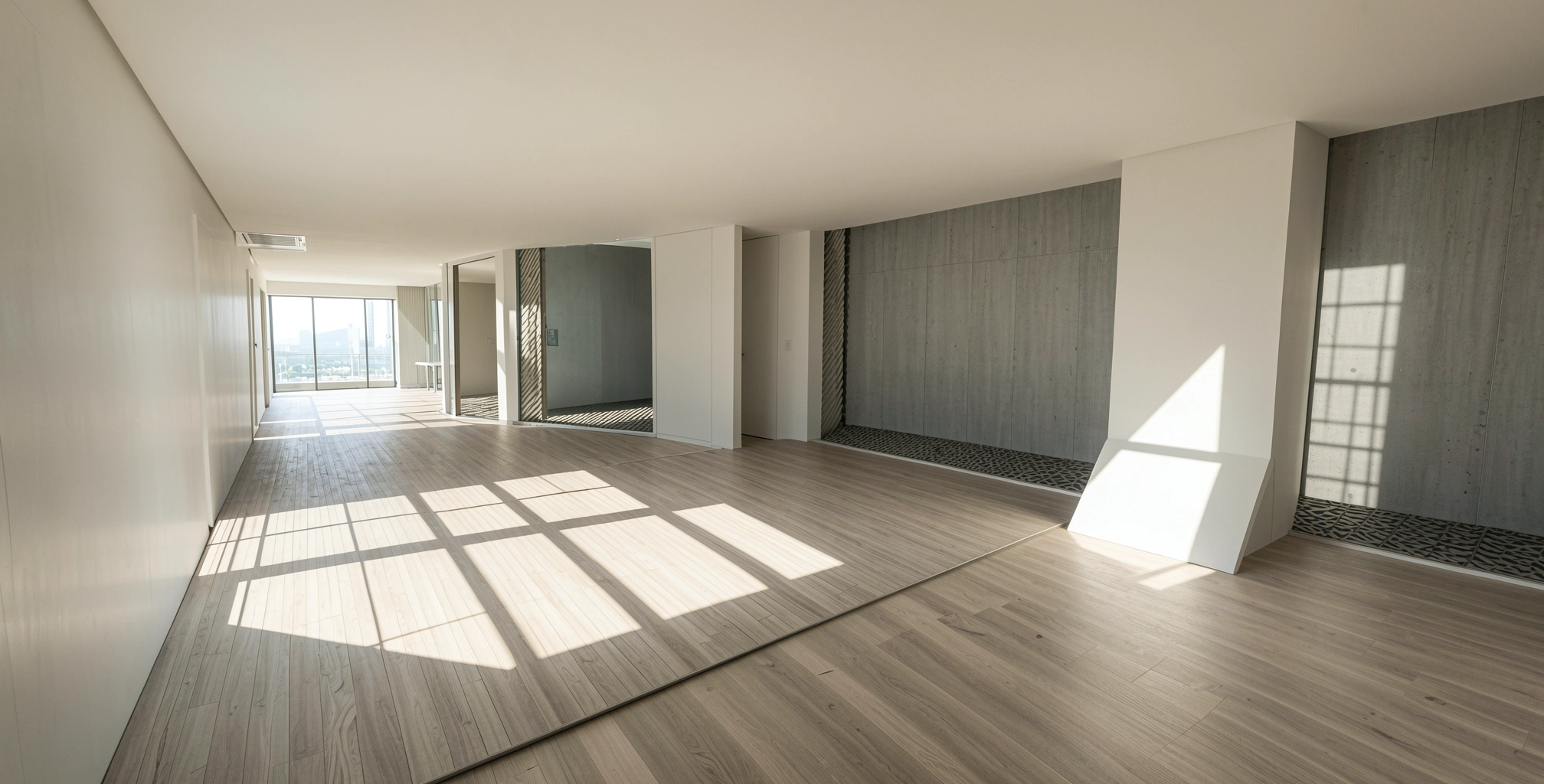
The use of non-structural internal partitions further supports environmental and educational flexibility by allowing spaces to be reconfigured without altering the primary structural framework.
Constructive Expression
The architectural character of the building arises from the alignment of structure, enclosure, and environmental performance. Structural rhythm, façade organisation, shading elements, and openings are coordinated through the same dimensional framework, making the organisation of the building legible.
Projecting classroom volumes, inclined columns, bridges, and rooflights introduce variation within a consistent structural order. Differences in enclosure respond directly to programme, orientation, and environmental requirements while remaining tied to the underlying structural logic.
Expression therefore emerges from the integration of structural support, environmental moderation, and educational organisation. The building demonstrates how architecture can be generated through the coordination of structure and enclosure, creating learning environments that remain adaptable, environmentally responsive, and constructively coherent over time.