
Exhibition Pavilion — Fabrication as Generator of Form
Structural Reasoning
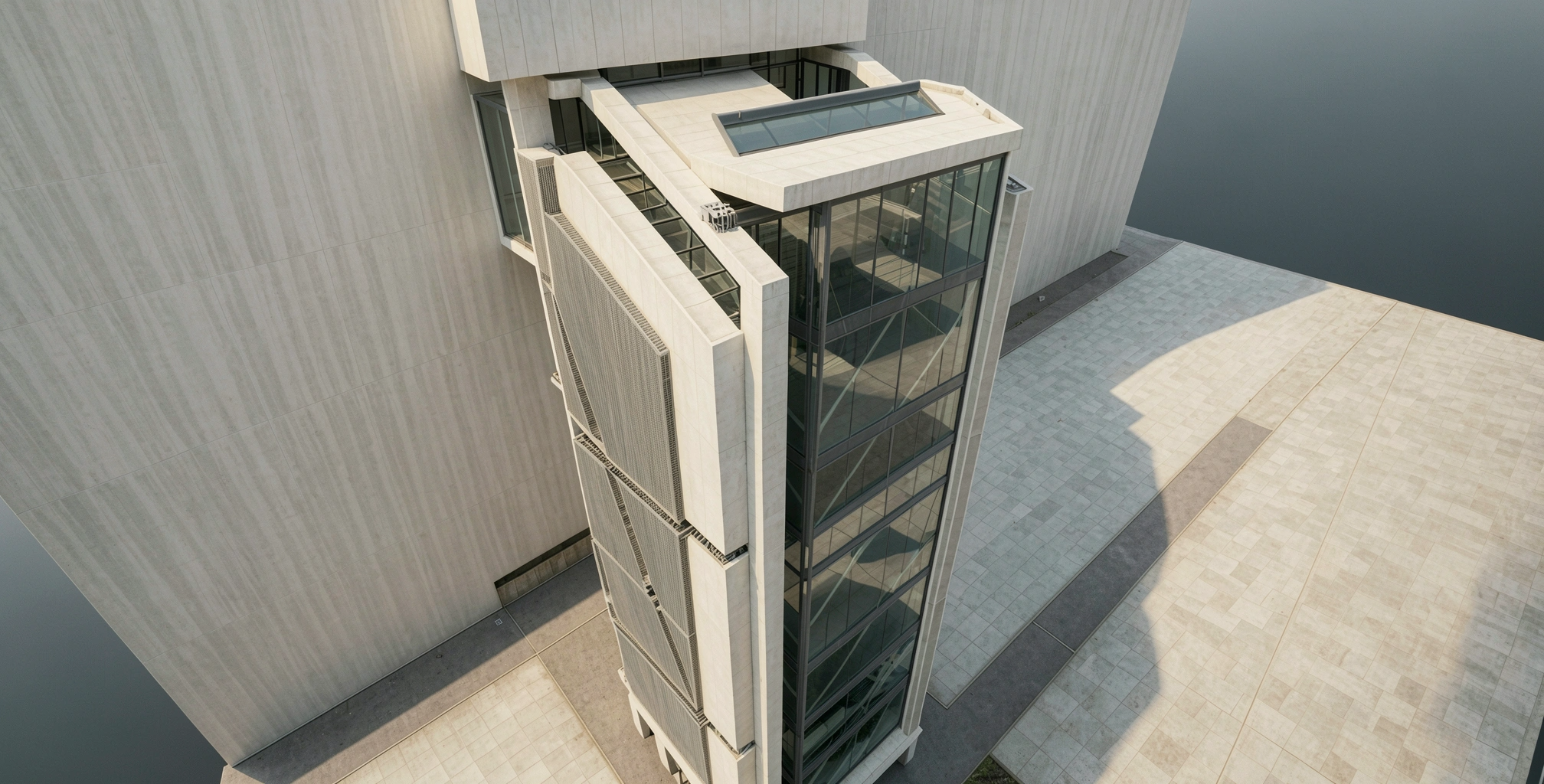
The Exhibition Pavilion is organised through a modular structural system developed around fabrication, transport, assembly, and disassembly. Rather than beginning with a fixed architectural form subsequently rationalised for construction, the project is generated through the dimensional constraints and opportunities of prefabricated components. Structure therefore operates as both the means of support and the organisational framework through which the pavilion is conceived.
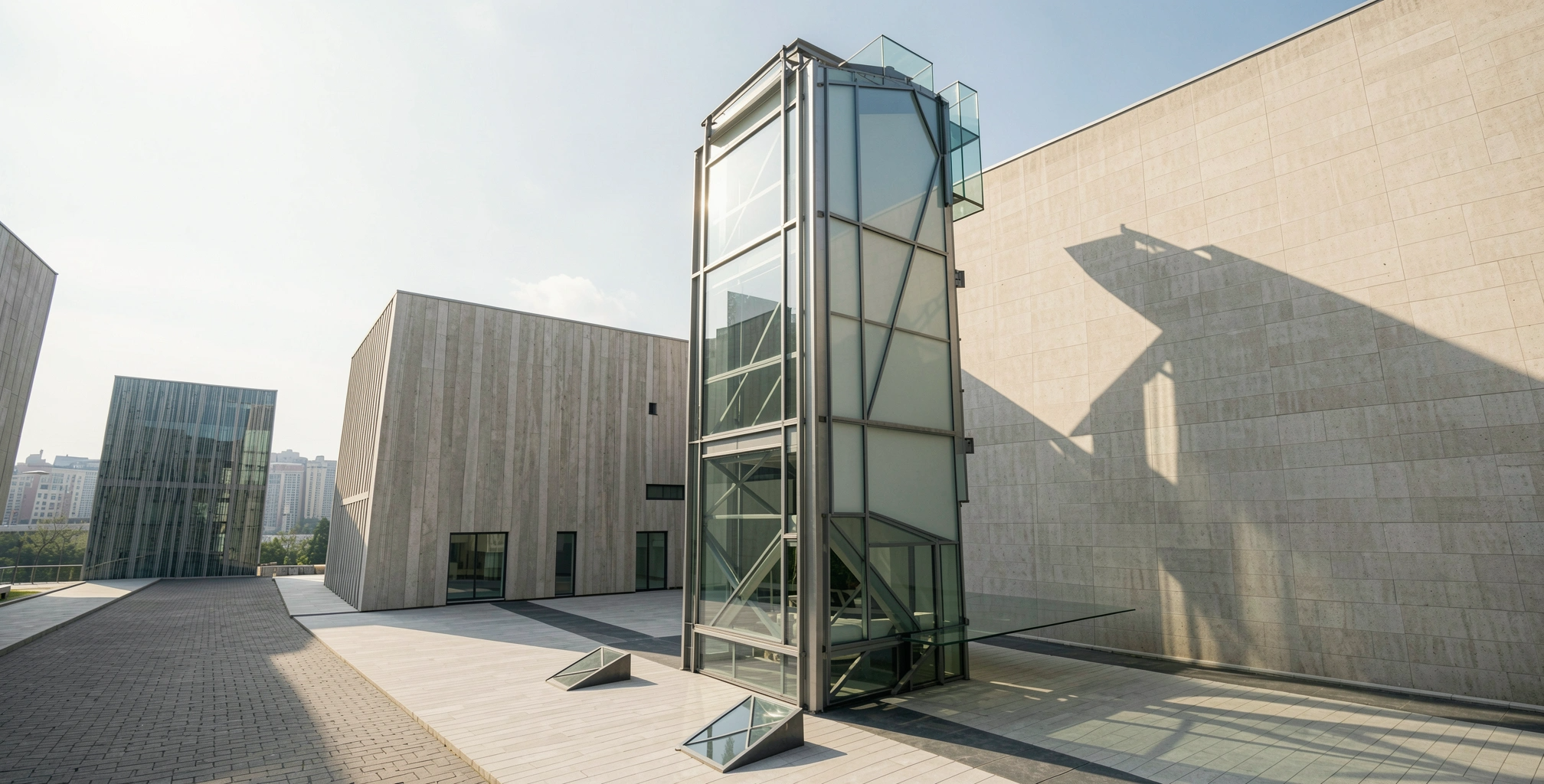
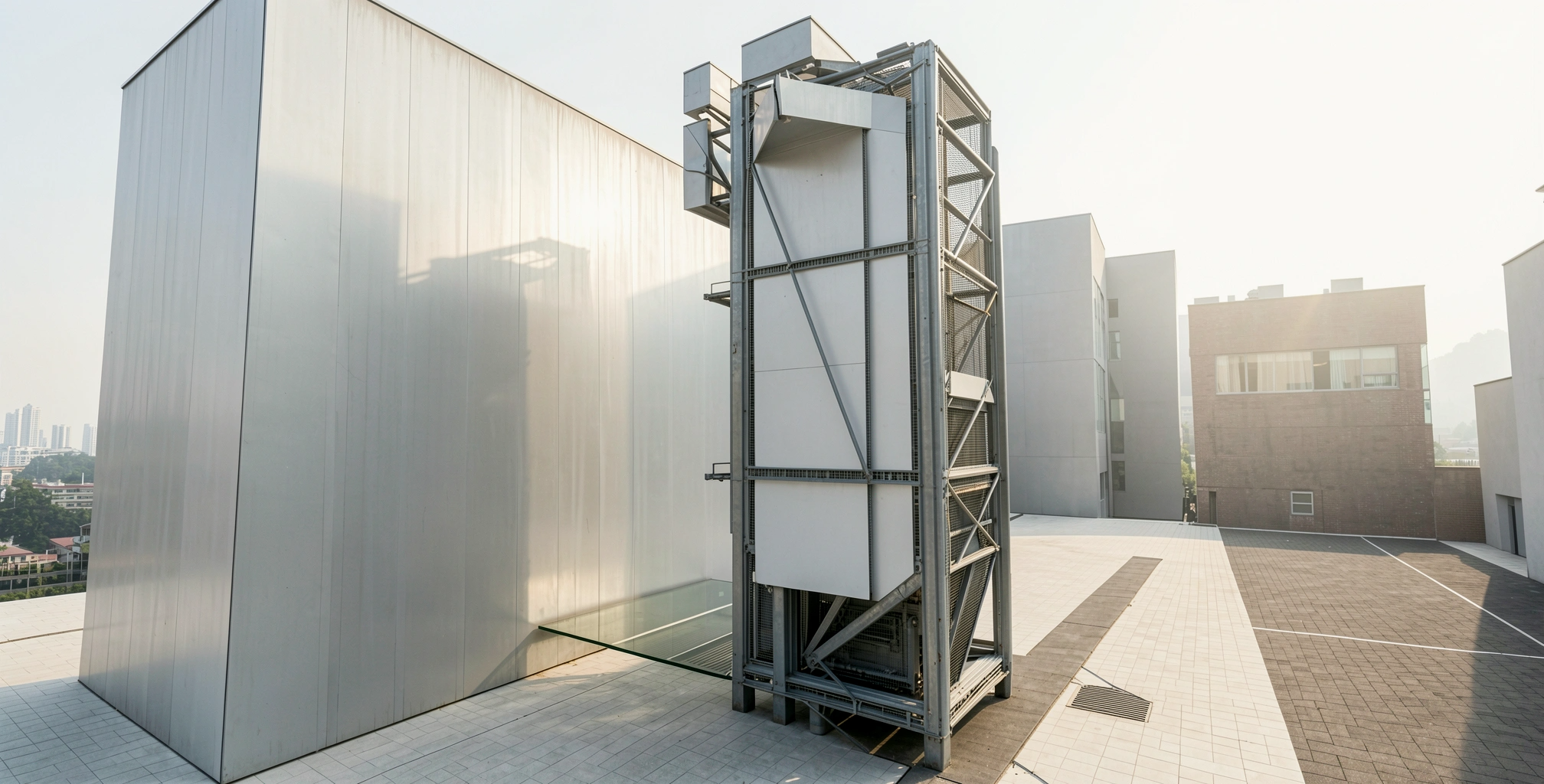
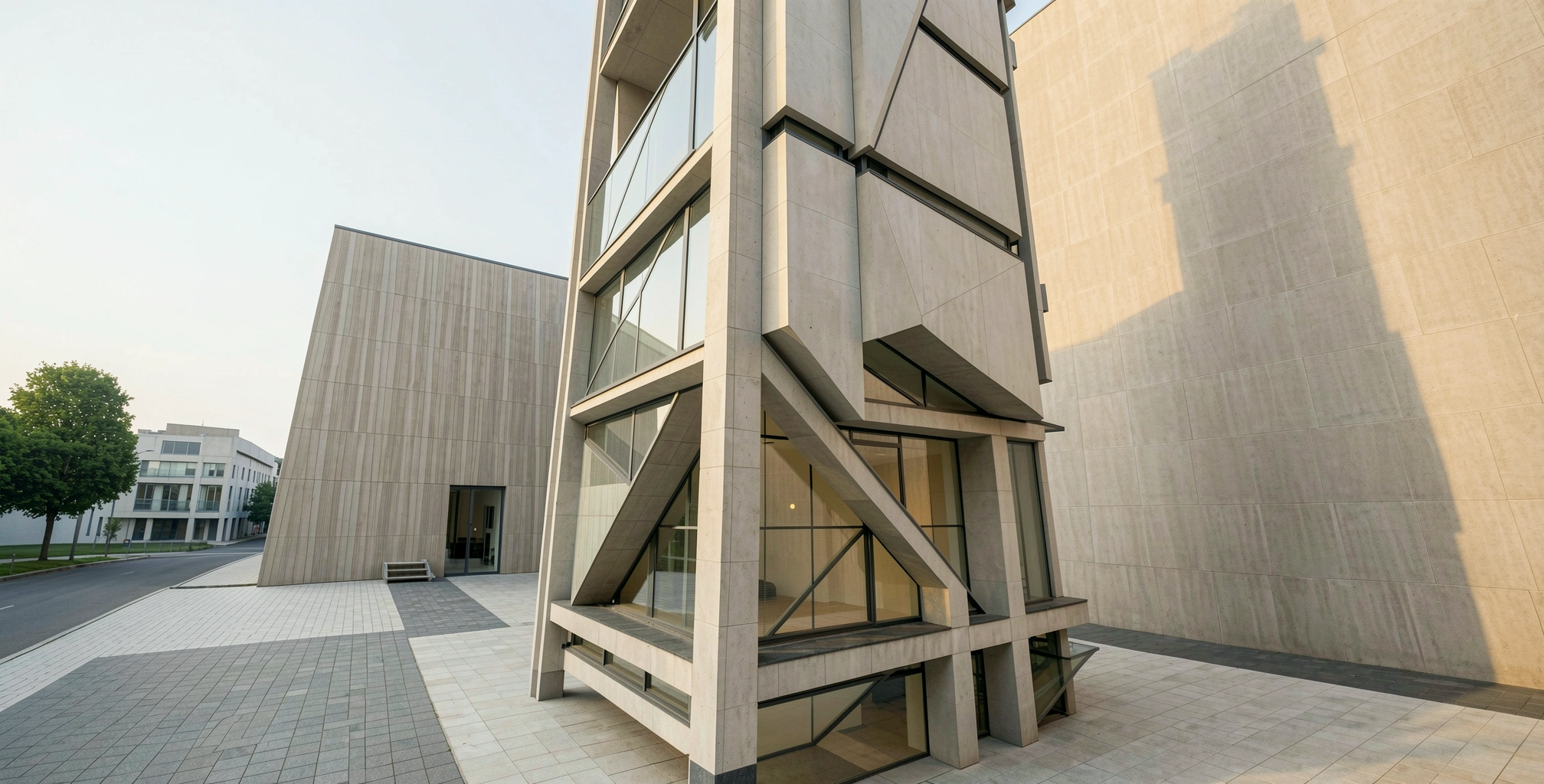
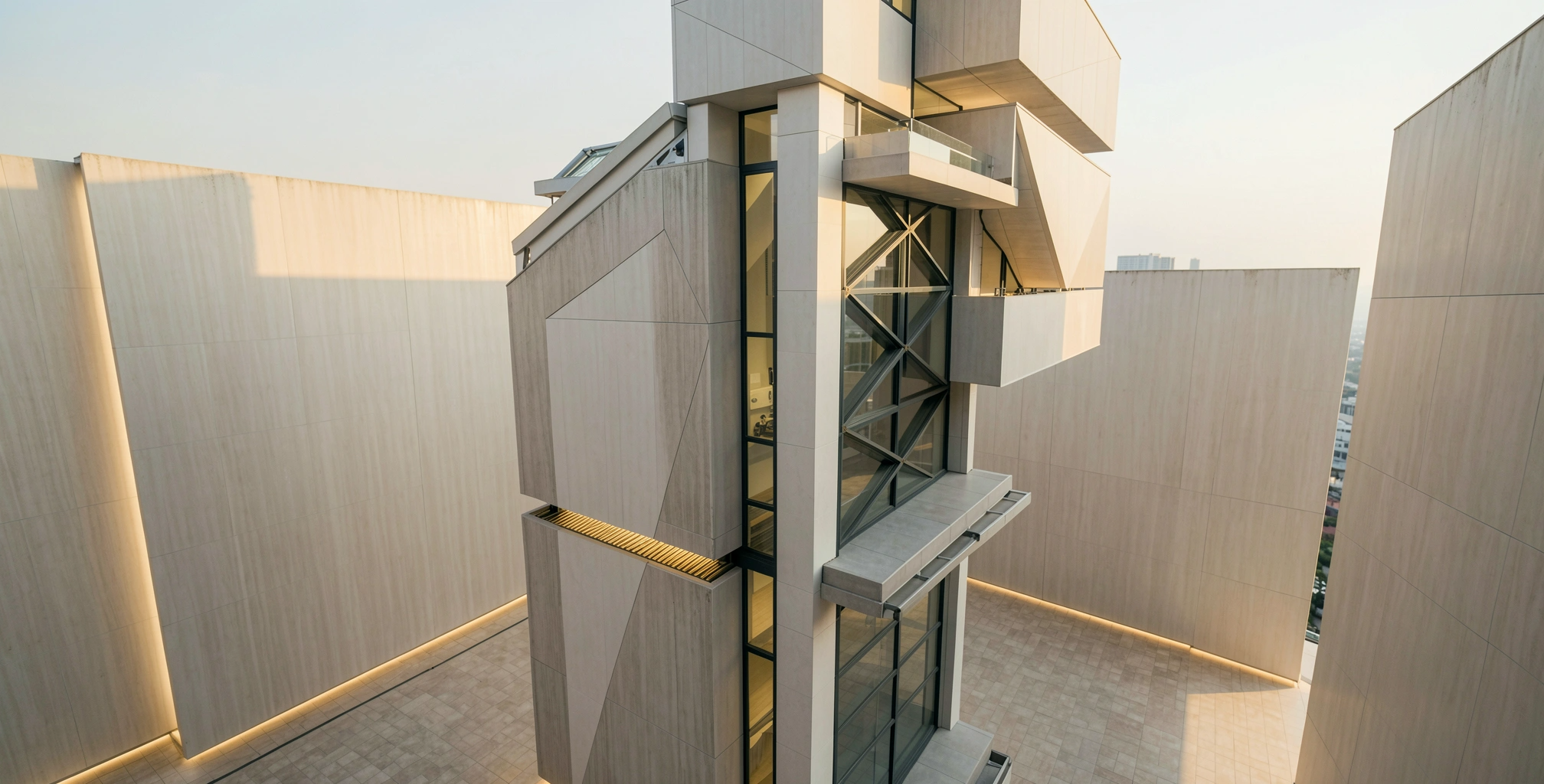
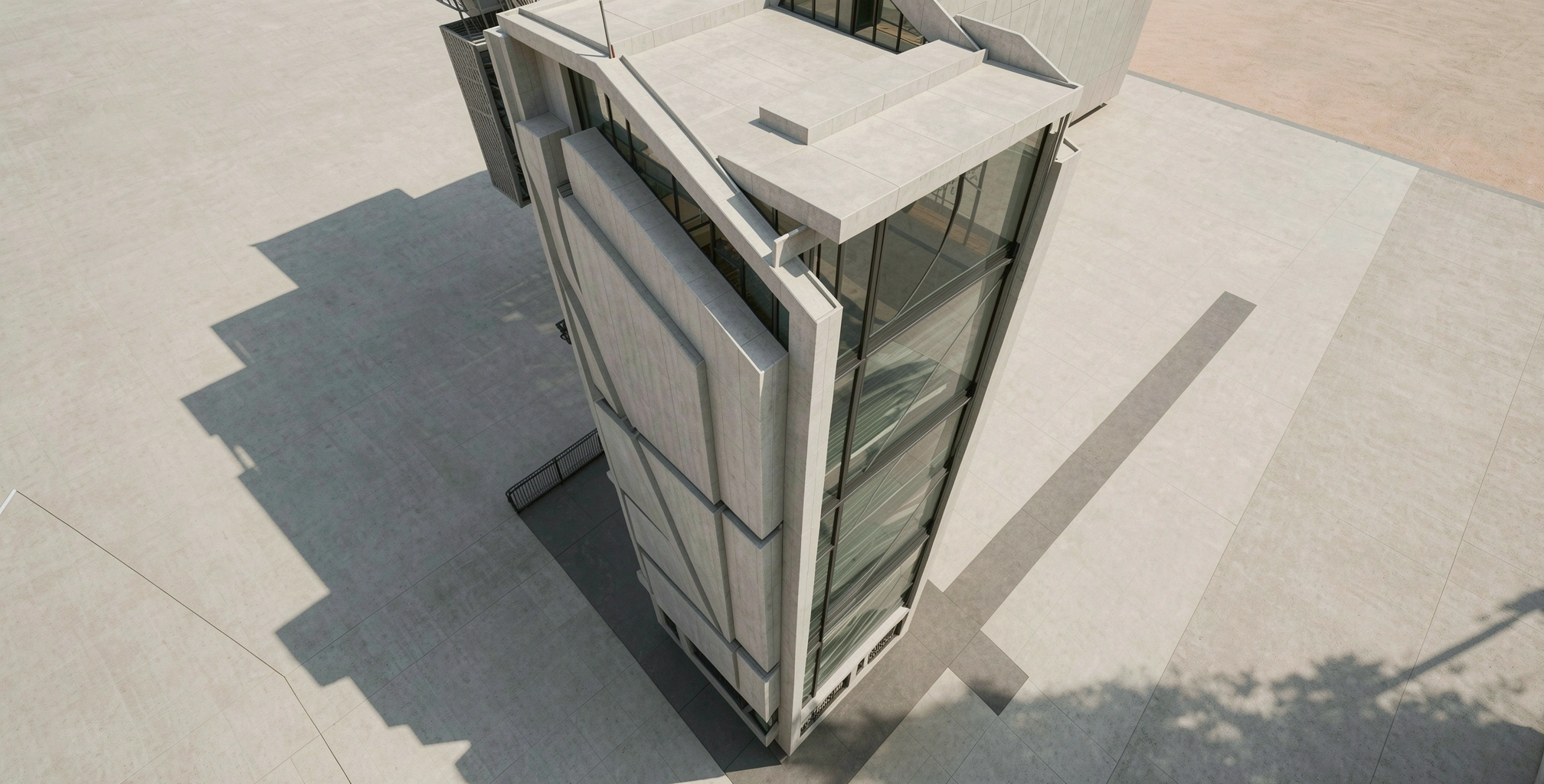
The primary system consists of lightweight steel-framed modules supported within an external structural frame. Loads are transferred through repeated structural elements, floor diaphragms, and perimeter supports to temporary foundations or pad footings. Structural stability is achieved through the interaction of individual modules, diaphragm action, concealed bracing, and the external steel frame. This creates multiple load paths while maintaining a lightweight and transportable construction.
The organisation of the pavilion reflects the requirements of temporary occupation. Structural members, module dimensions, and assembly sequences are coordinated to minimise lifting requirements, reduce site operations, and allow deployment across a variety of urban locations.
Material Behaviour
Materials are selected in relation to fabrication efficiency, transportation constraints, durability, and repeated assembly cycles. Lightweight steel sections provide high strength relative to weight while allowing precise fabrication and dimensional control.
Components are dimensioned to suit handling and transport limitations, ensuring that individual elements can be manufactured, transported, assembled, dismantled, and reused without damage. Connections are designed as mechanical fixings rather than permanent joints, allowing repeated assembly and disassembly while maintaining structural performance. Bolted connections accommodate fabrication tolerances and ensure accurate alignment during erection.
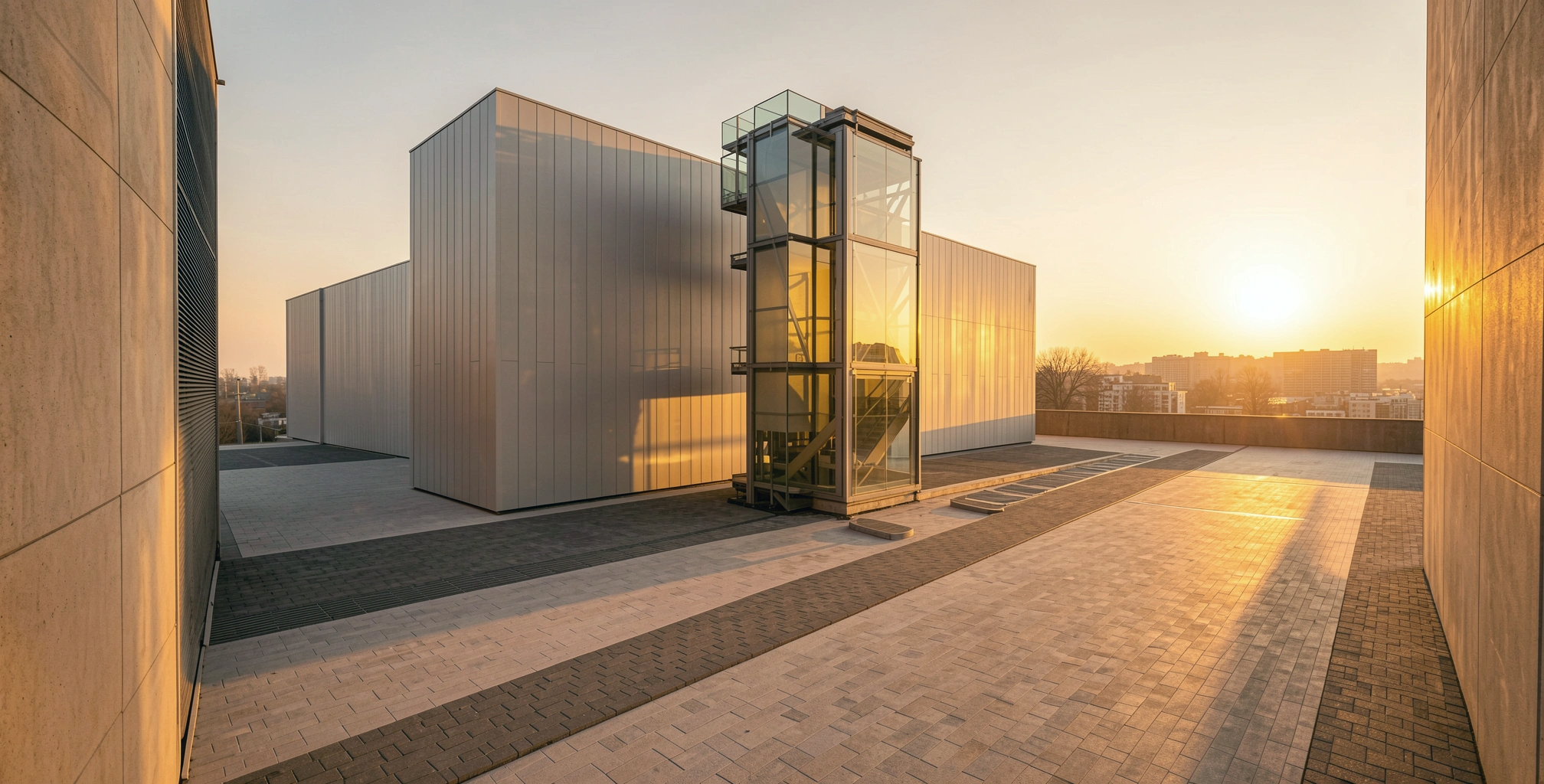
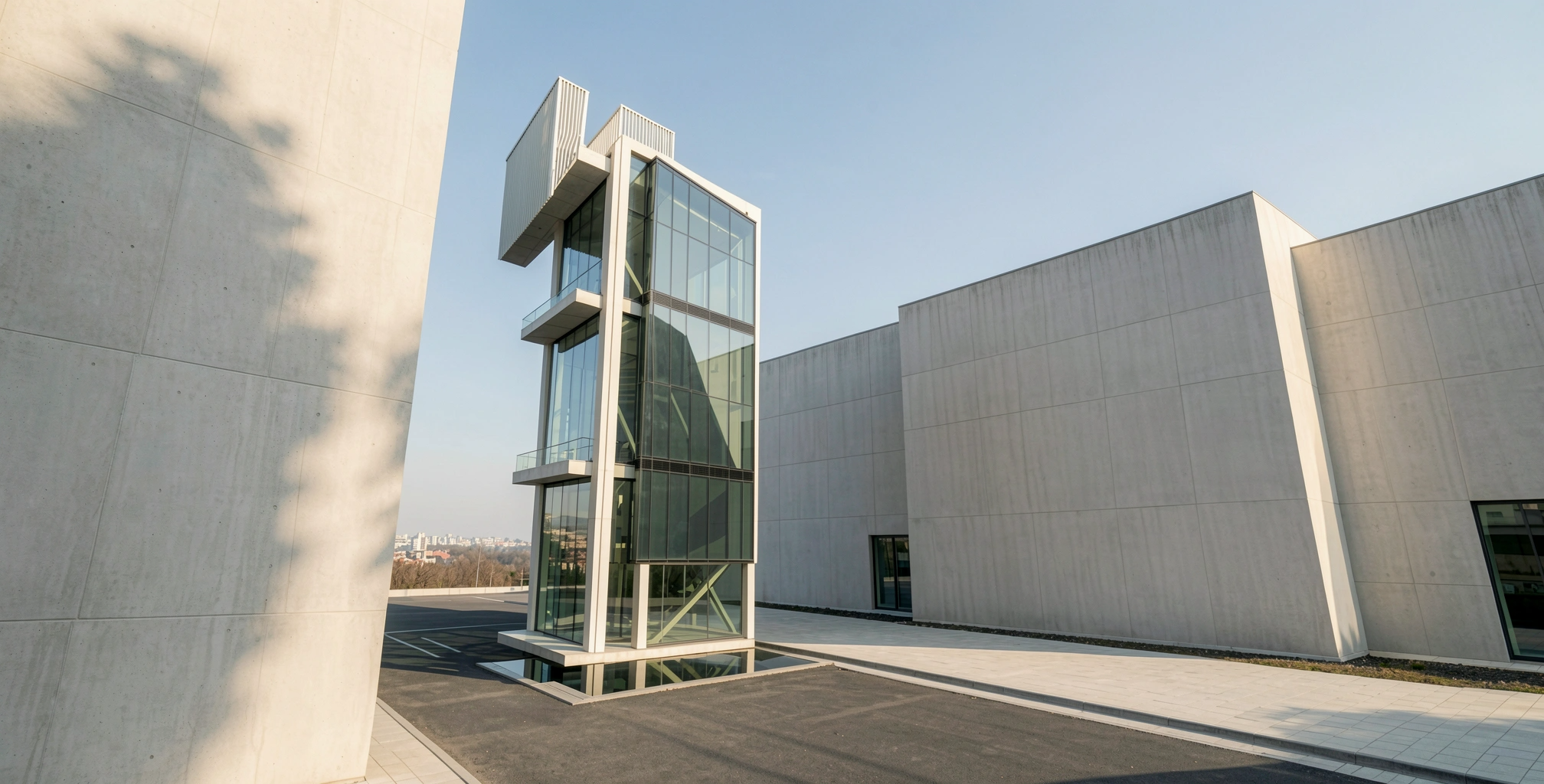
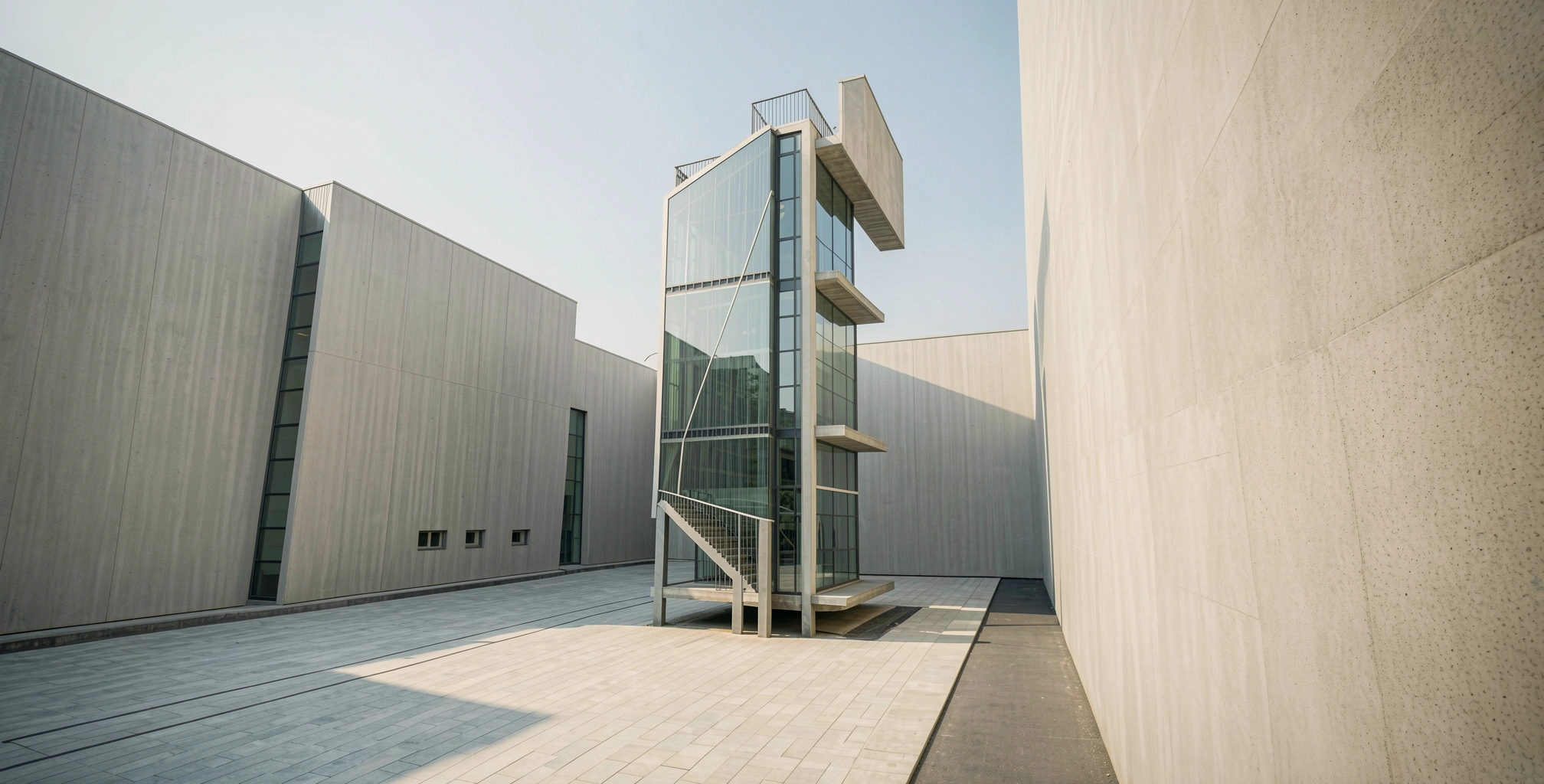
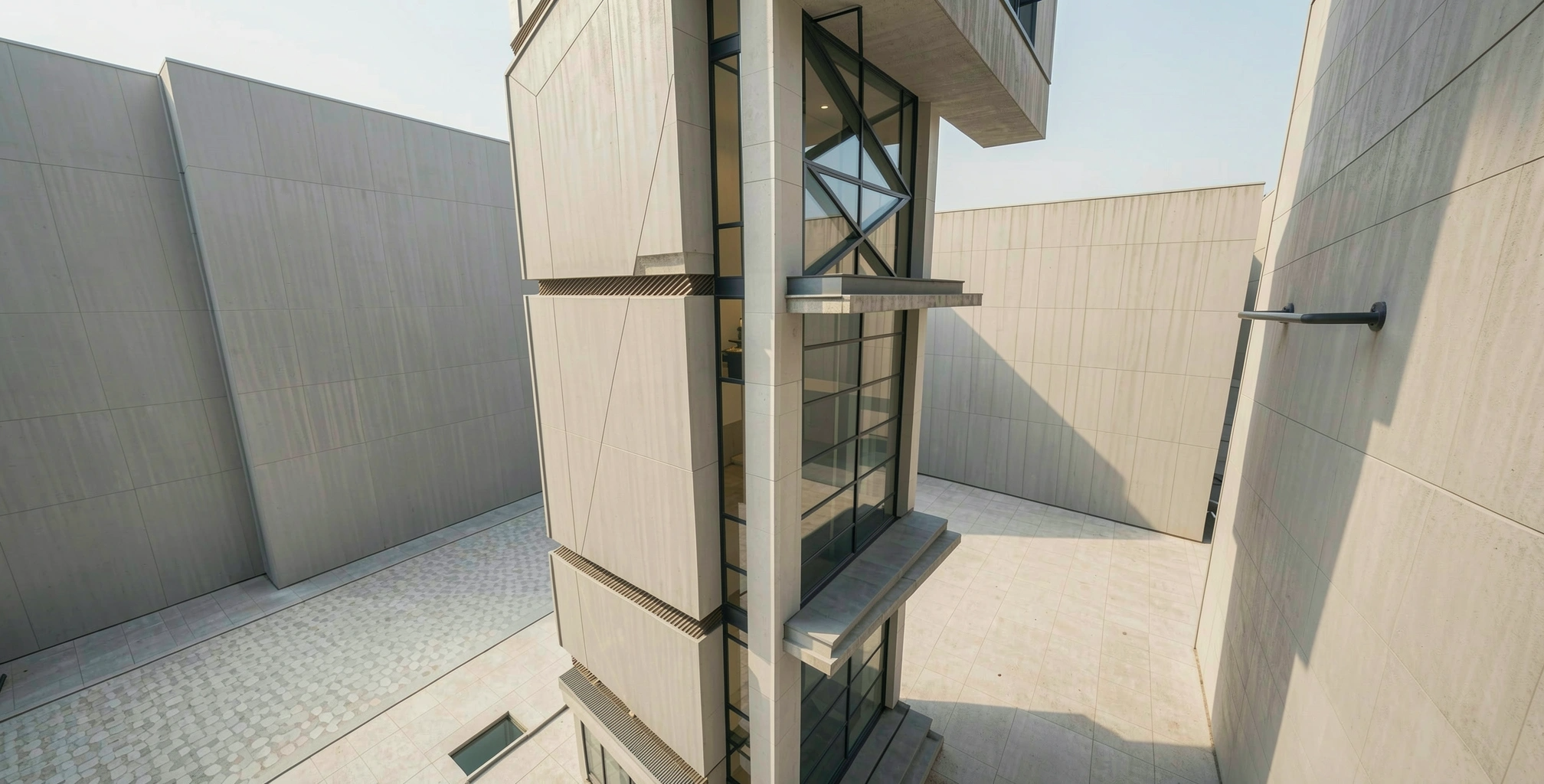
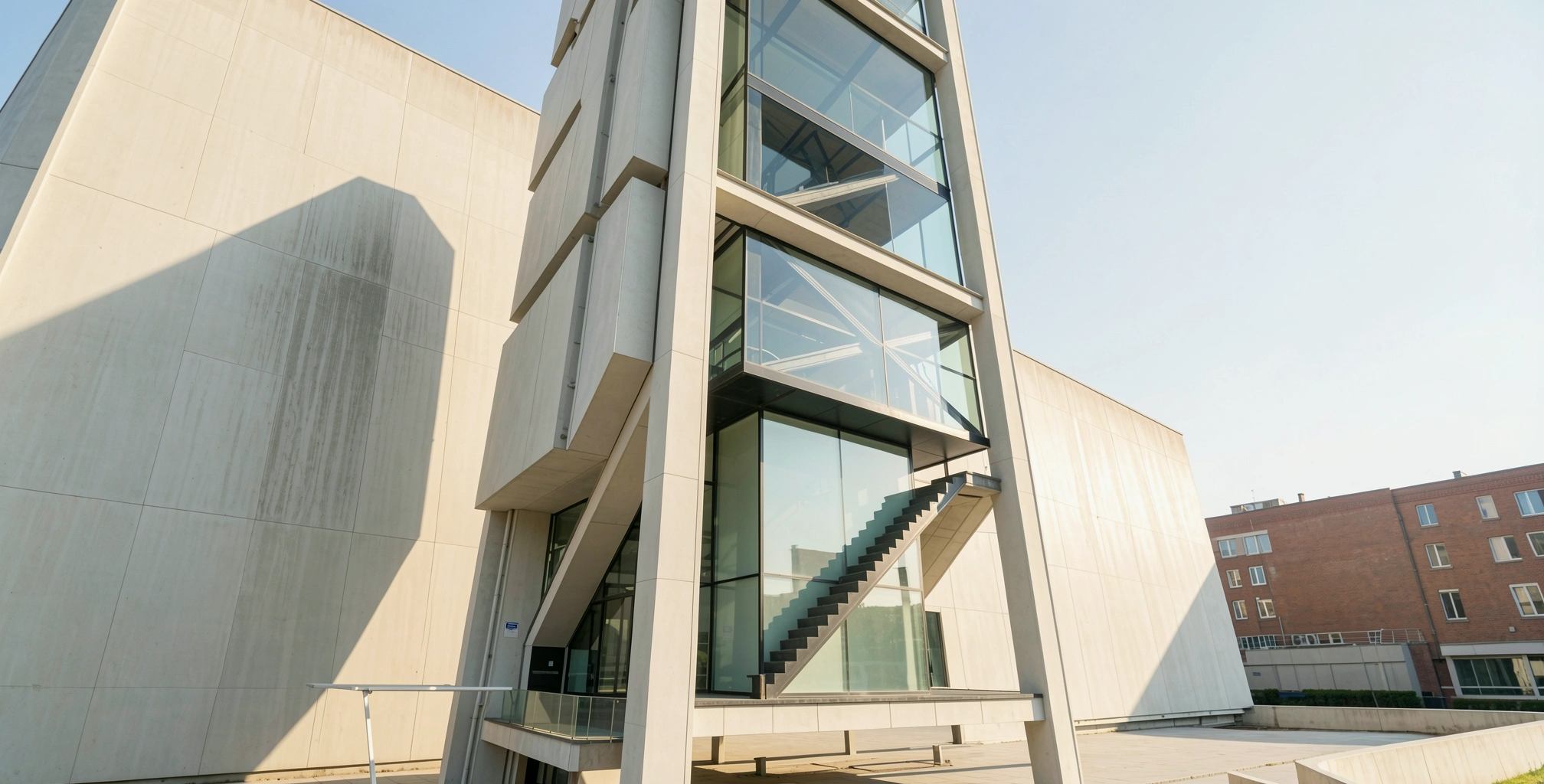
The external steel frame performs multiple roles simultaneously. It provides structural stability, supports circulation and service modules, and accommodates variations in pavilion configuration. In the more developed structural options, external stair and service modules contribute to overall stability while remaining independently fabricated and maintained components.
Material behaviour is therefore understood not only in terms of strength and stiffness but also in terms of transportability, reusability, and lifecycle adaptability.
Environmental Response
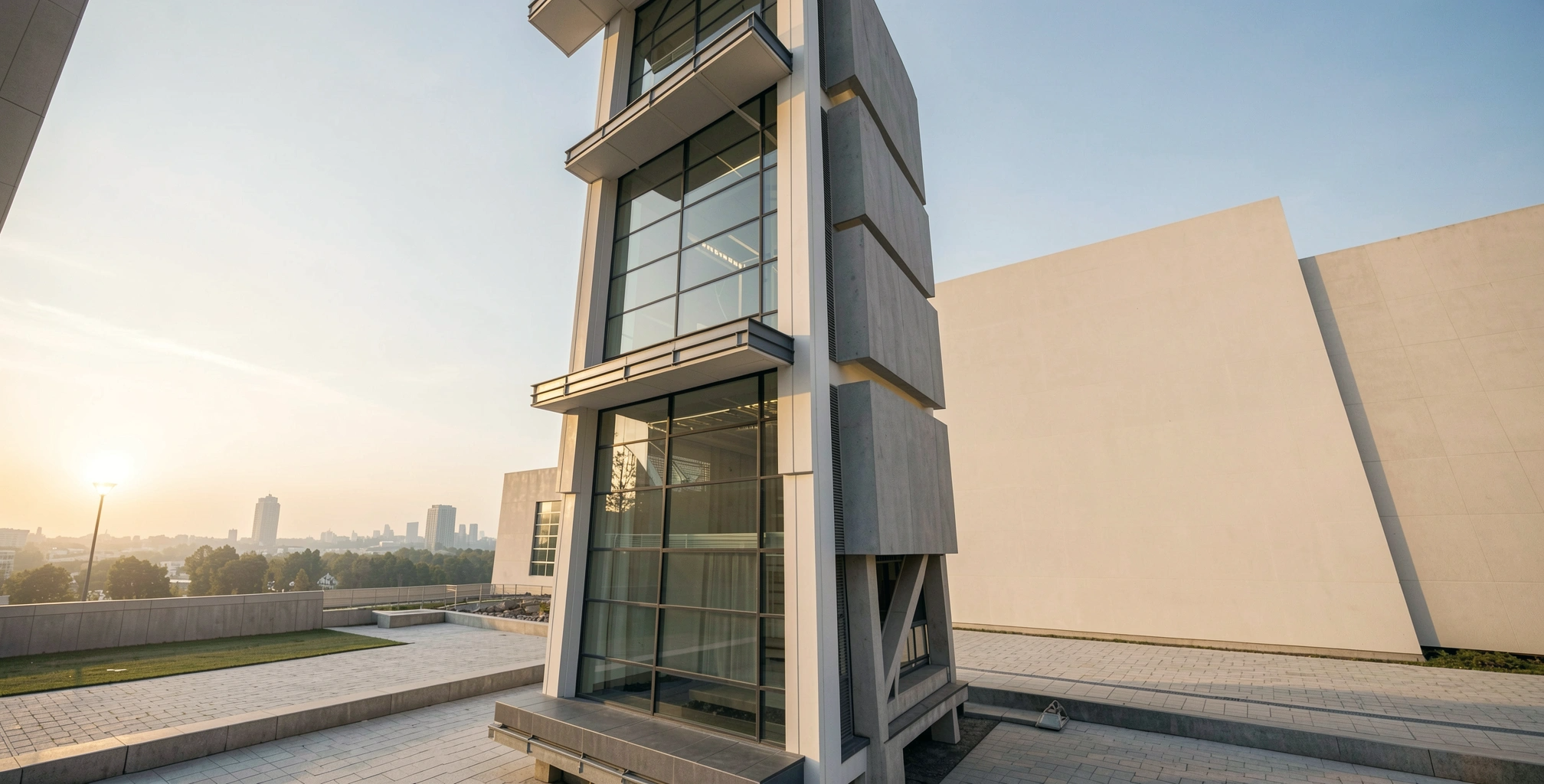
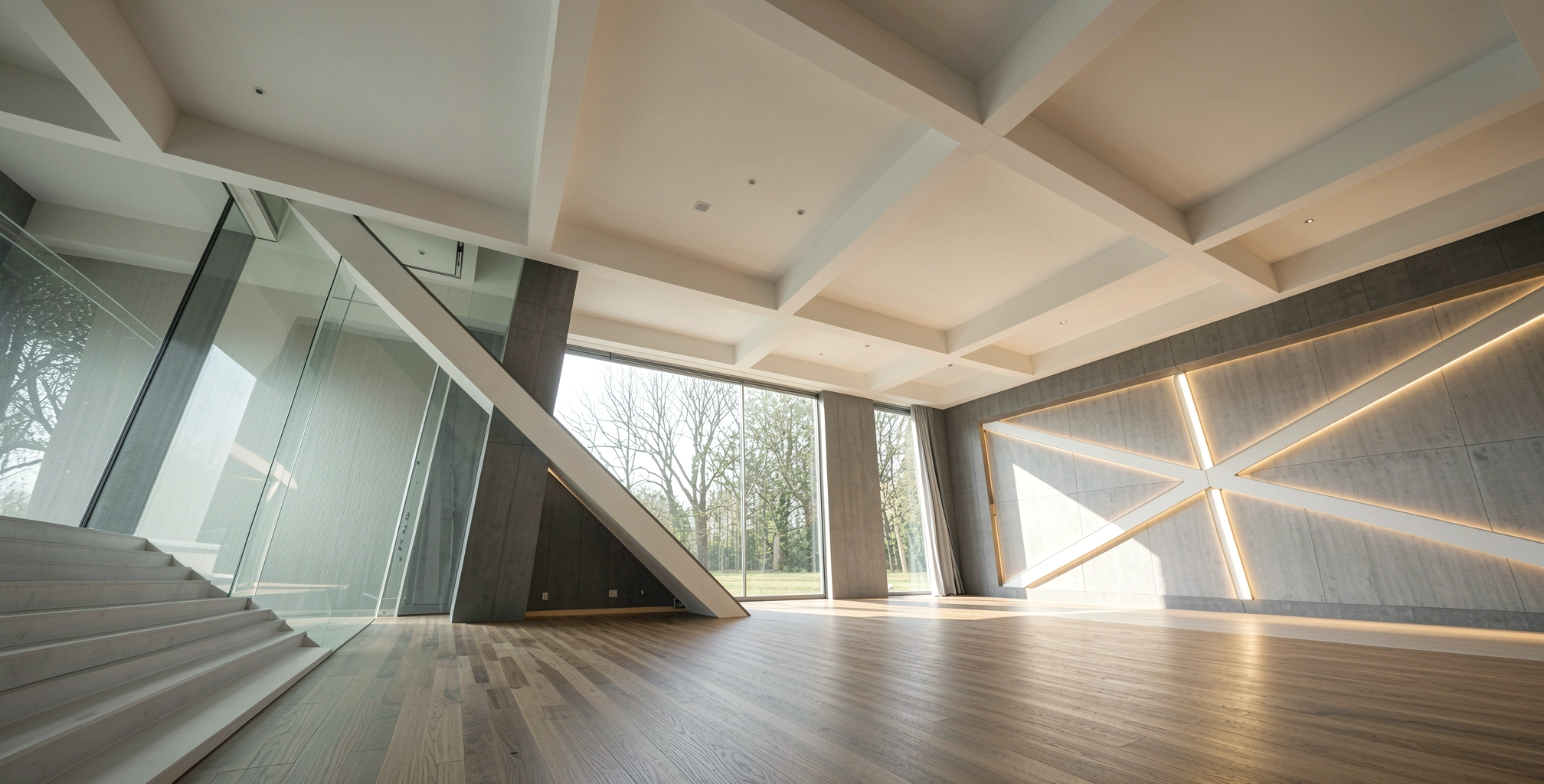
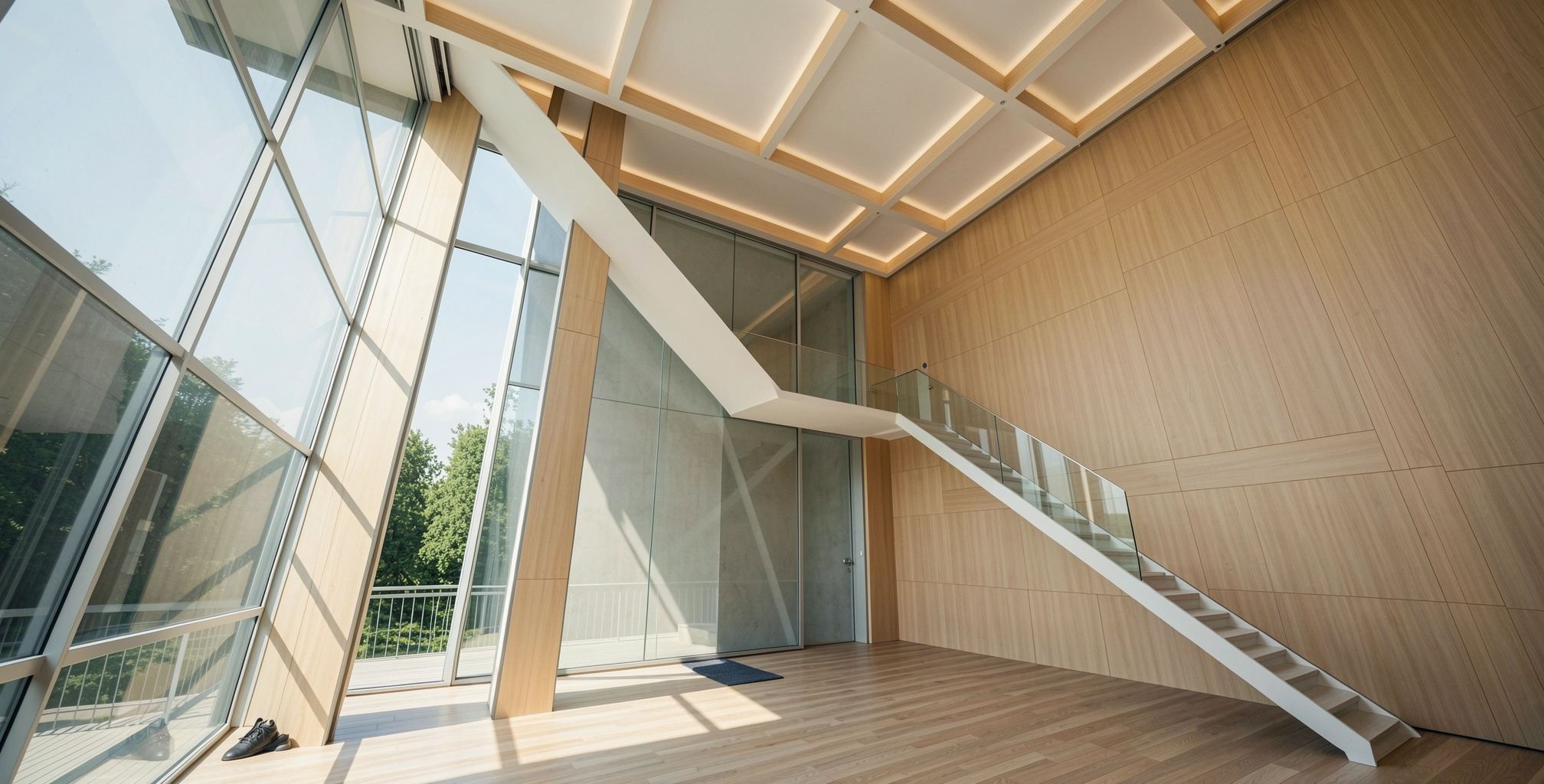
Environmental performance emerges through the arrangement of structural modules and enclosure elements. Openings positioned between modules provide daylight, natural ventilation, and visual permeability while maintaining the integrity of the structural system.
The modular arrangement allows environmental conditions to vary according to programme. Exhibition spaces requiring greater enclosure can be accommodated within more protected volumes, while circulation and viewing areas remain naturally ventilated and visually open. Lightweight enclosure systems minimise material use while providing shading, weather protection, and environmental moderation appropriate to temporary occupation.
The external structural frame also supports environmental elements including shading devices, fabric screens, and service installations. These systems can be adapted or replaced independently of the primary structure, extending the operational flexibility of the pavilion across different sites and climatic conditions.
Environmental performance therefore develops directly from the constructive logic of the modular system rather than through the addition of separate environmental infrastructure.
Constructive Expression
The architectural character of the pavilion emerges directly from fabrication and assembly. Structural modules, connections, bracing systems, circulation elements, and service components remain legible as parts of a coordinated construction system.
The repetition of modular units establishes proportion and rhythm, while the visibility of joints and connections reveals the logic of assembly. External circulation and service modules contribute both structurally and architecturally, reinforcing the relationship between performance and expression.
Form is generated through the arrangement of fabricated components rather than through applied composition. The pavilion demonstrates how architecture can emerge from the direct coordination of manufacture, transport, assembly, occupation, and reuse. Expression is therefore inseparable from the constructive processes through which the building is made, used, dismantled, and reassembled.