
Manufacturing Start-Up Facility — Reconfiguration as Environmental Strategy
Organising for Change
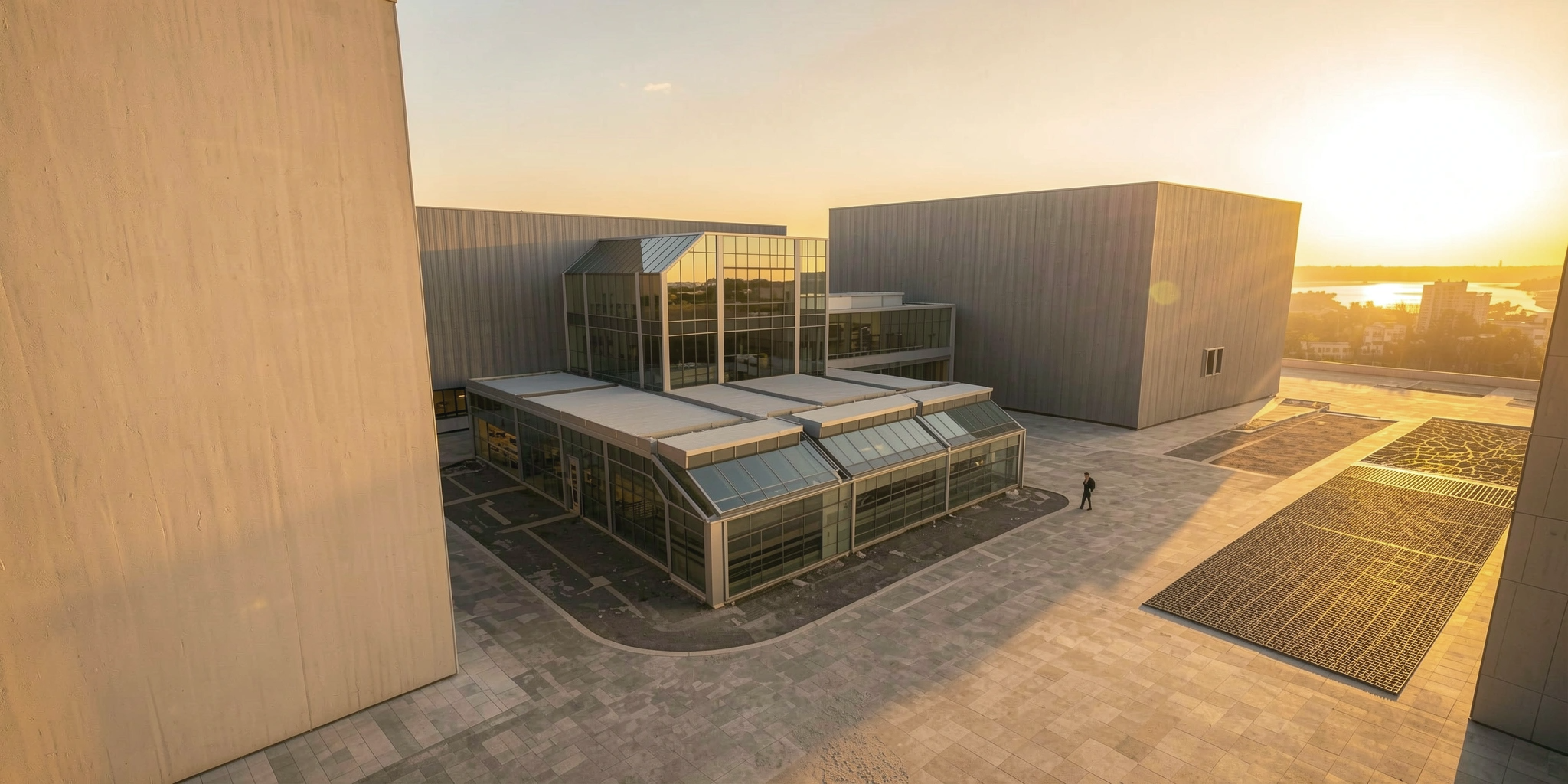
The Manufacturing Start-Up Facility is conceived as an adaptable framework capable of accommodating continual operational change. Unlike conventional manufacturing buildings designed around fixed production processes, the project anticipates evolving equipment, changing workflows, fluctuating occupancy, and future expansion. Environmental performance is therefore developed in parallel with adaptability, allowing the building to respond to changing requirements without requiring fundamental alteration of its primary structure.
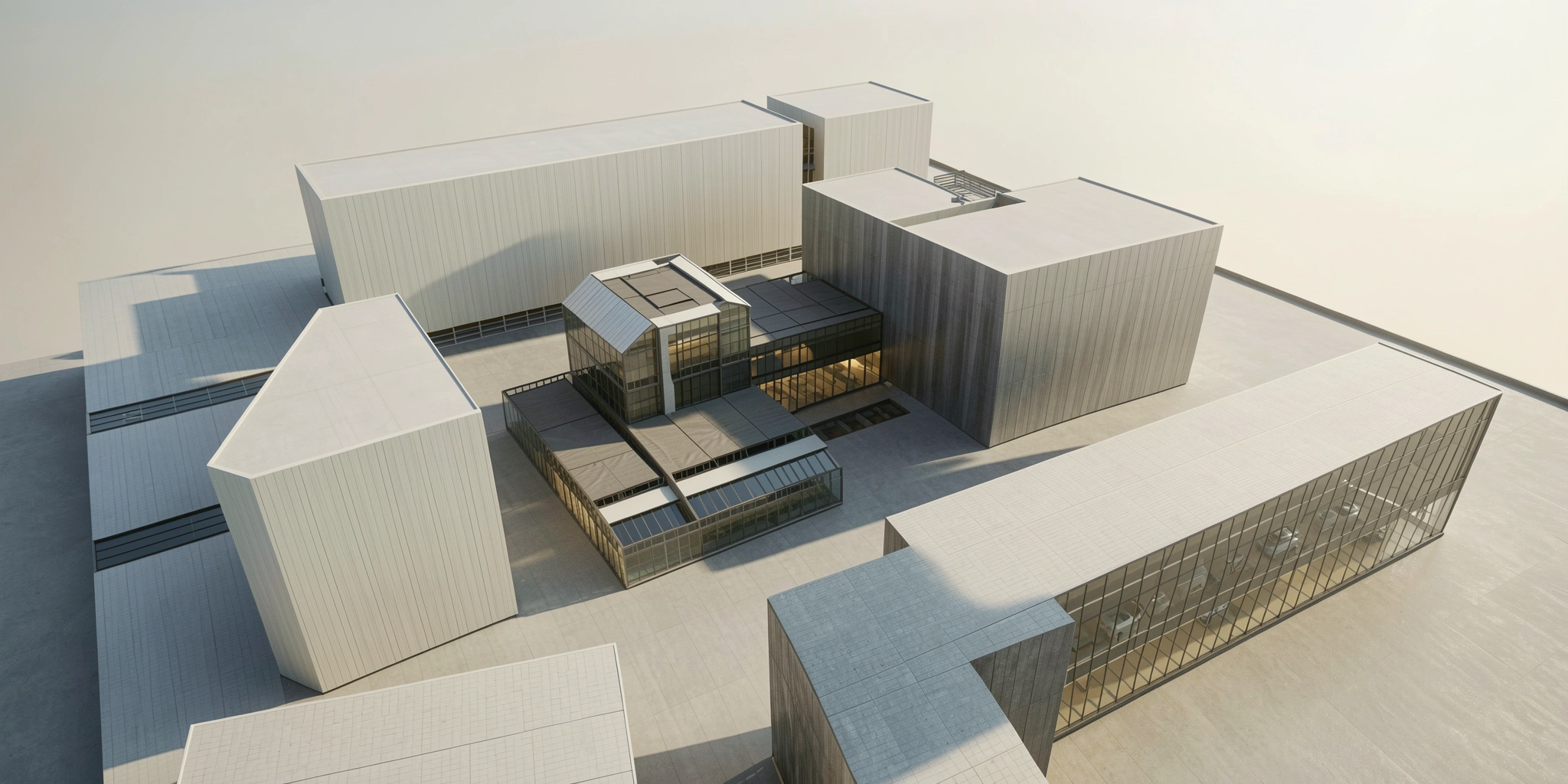
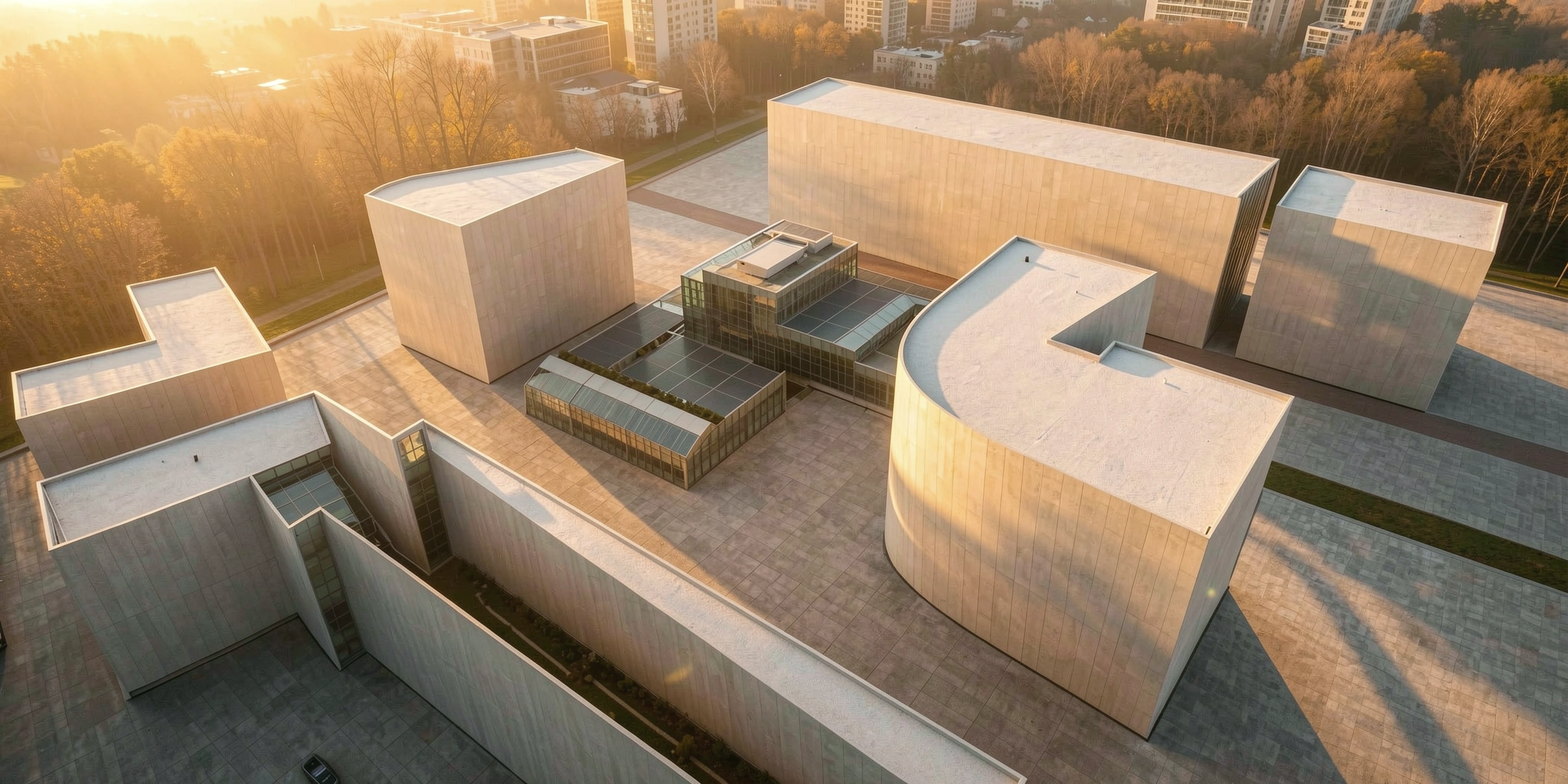
The building is organised through a modular structural grid that establishes a stable and repeatable framework for occupation. Columns and beams define regular bays capable of accommodating a wide range of manufacturing, storage, office, and support functions. Loads are transferred through a consistent structural hierarchy, allowing internal arrangements to evolve while maintaining structural continuity.
The project consequently treats change not as an exception but as a permanent design condition.
Assembly and Environmental Infrastructure
Environmental systems are integrated within the organisational logic of the building rather than applied as independent technical installations. Structure, enclosure, daylighting, ventilation, and servicing are coordinated through a common modular framework that allows individual elements to be modified, replaced, or upgraded as operational requirements change.
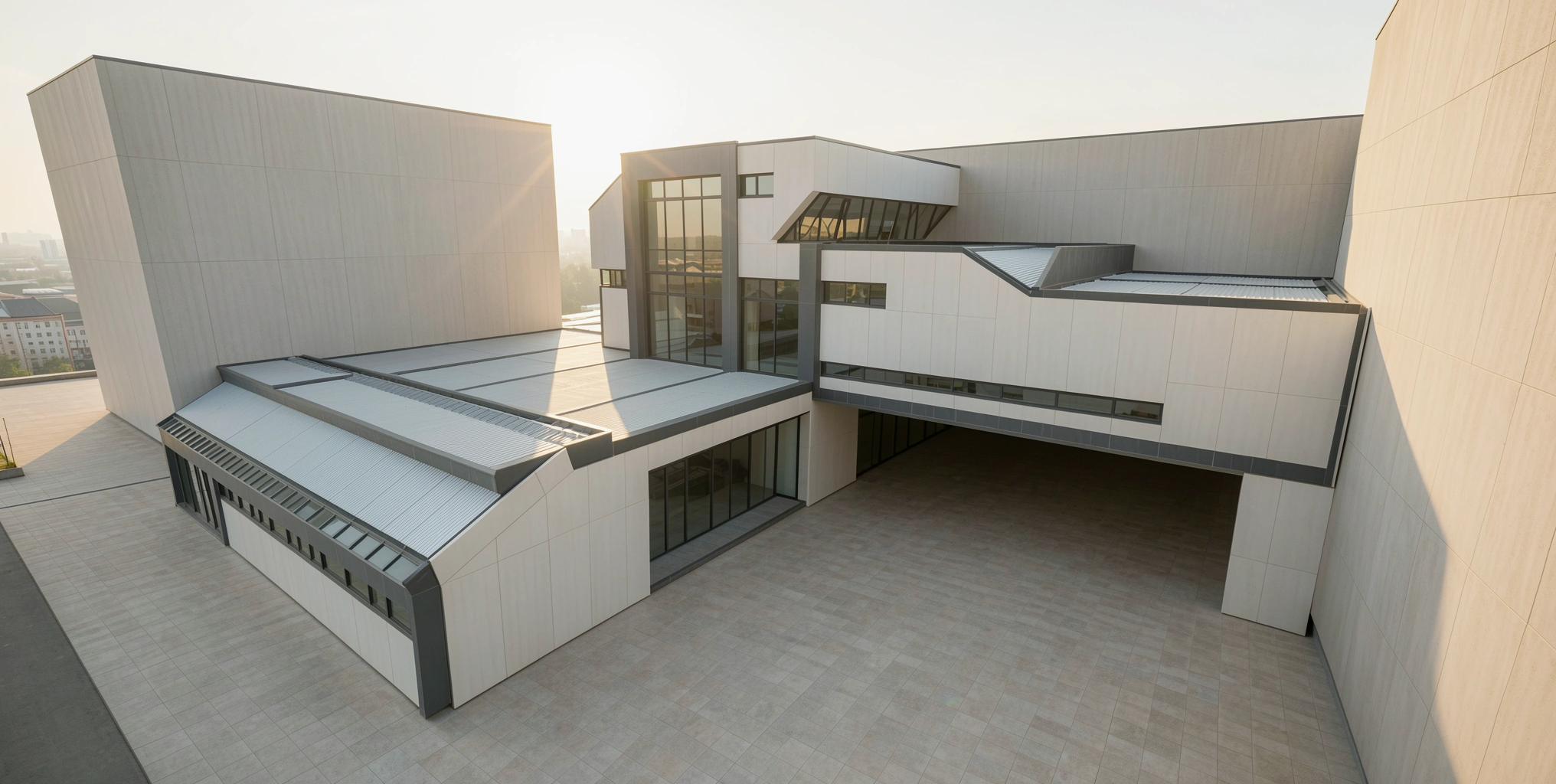
The environmental strategy is therefore inseparable from the construction system itself. Rooflights, ventilation routes, façade panels, and service zones align with the structural grid, ensuring that environmental performance can be maintained regardless of internal reconfiguration. This relationship allows the building to evolve without compromising daylight distribution, ventilation effectiveness, or thermal performance.
The facility functions as a coordinated system of interchangeable components rather than a fixed architectural object.
Panelisation and Environmental Performance
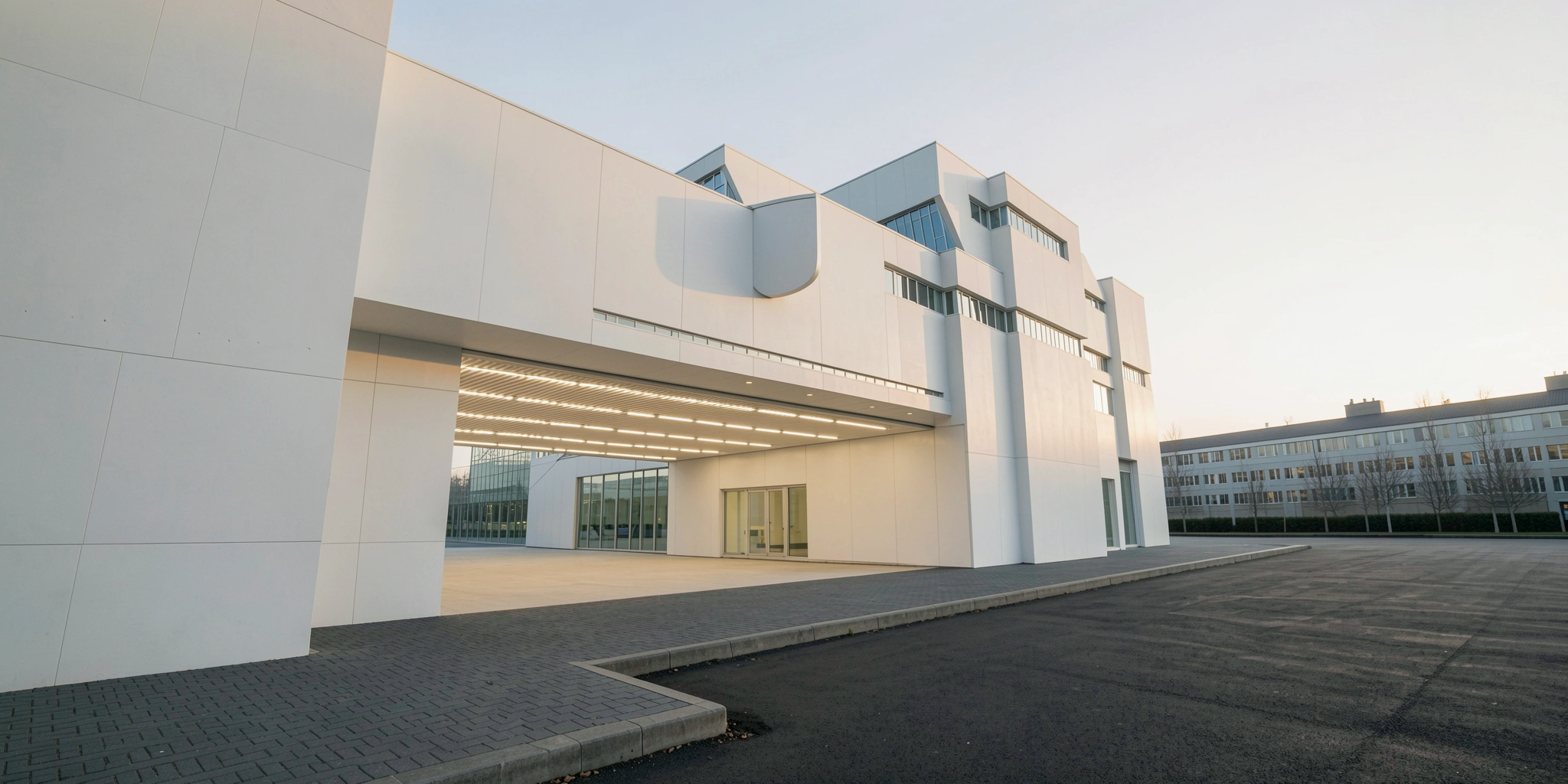
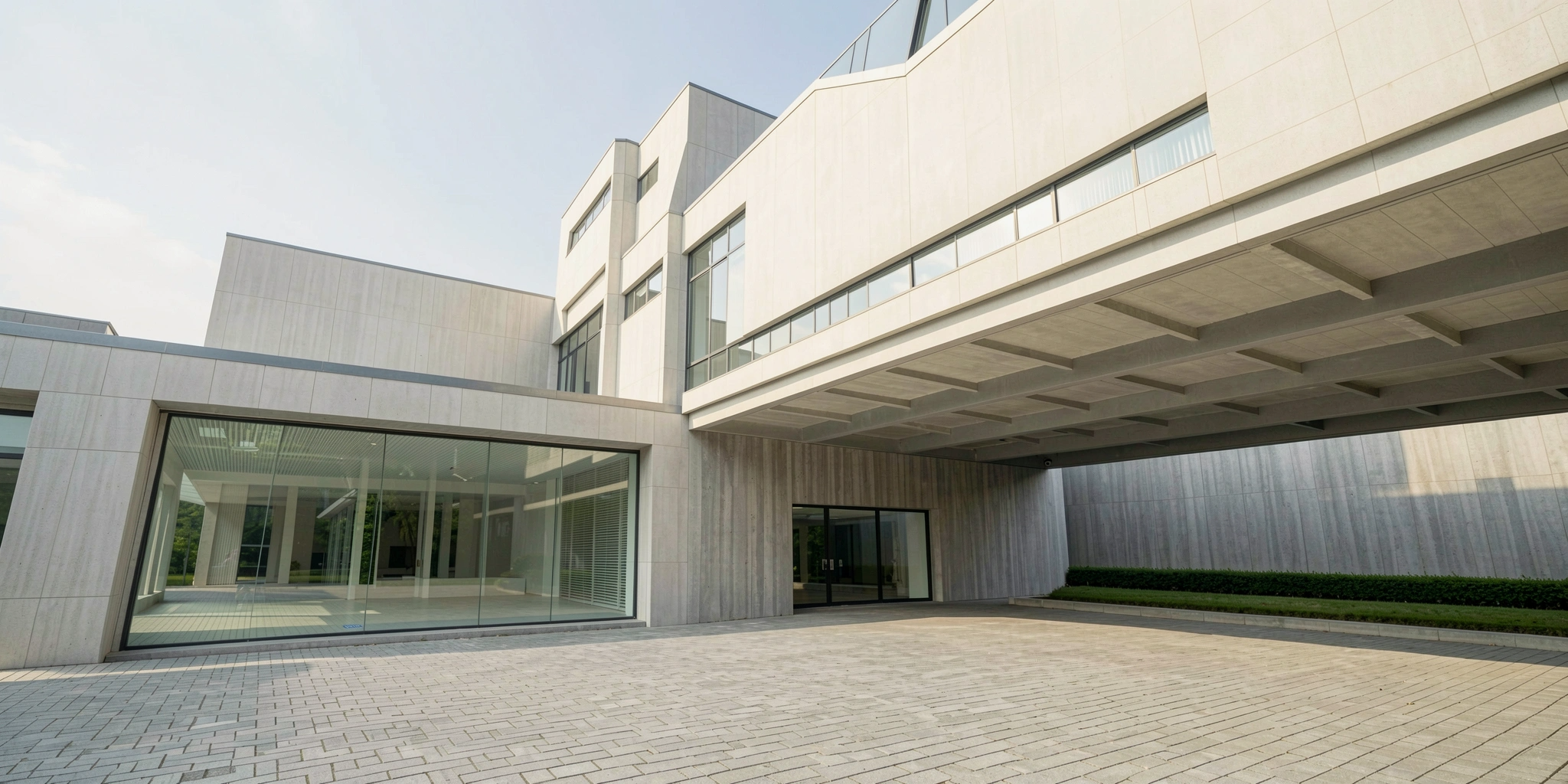
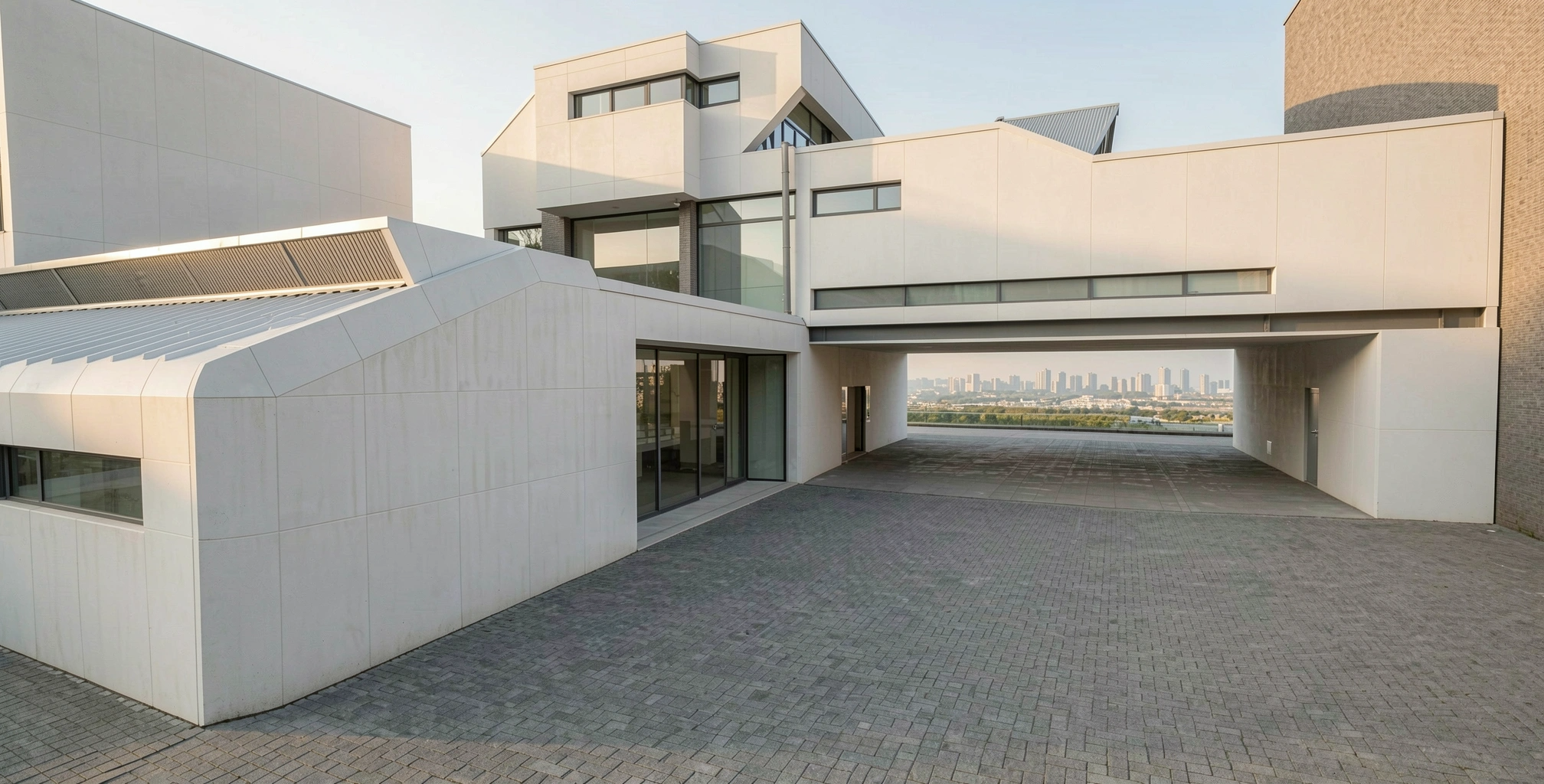
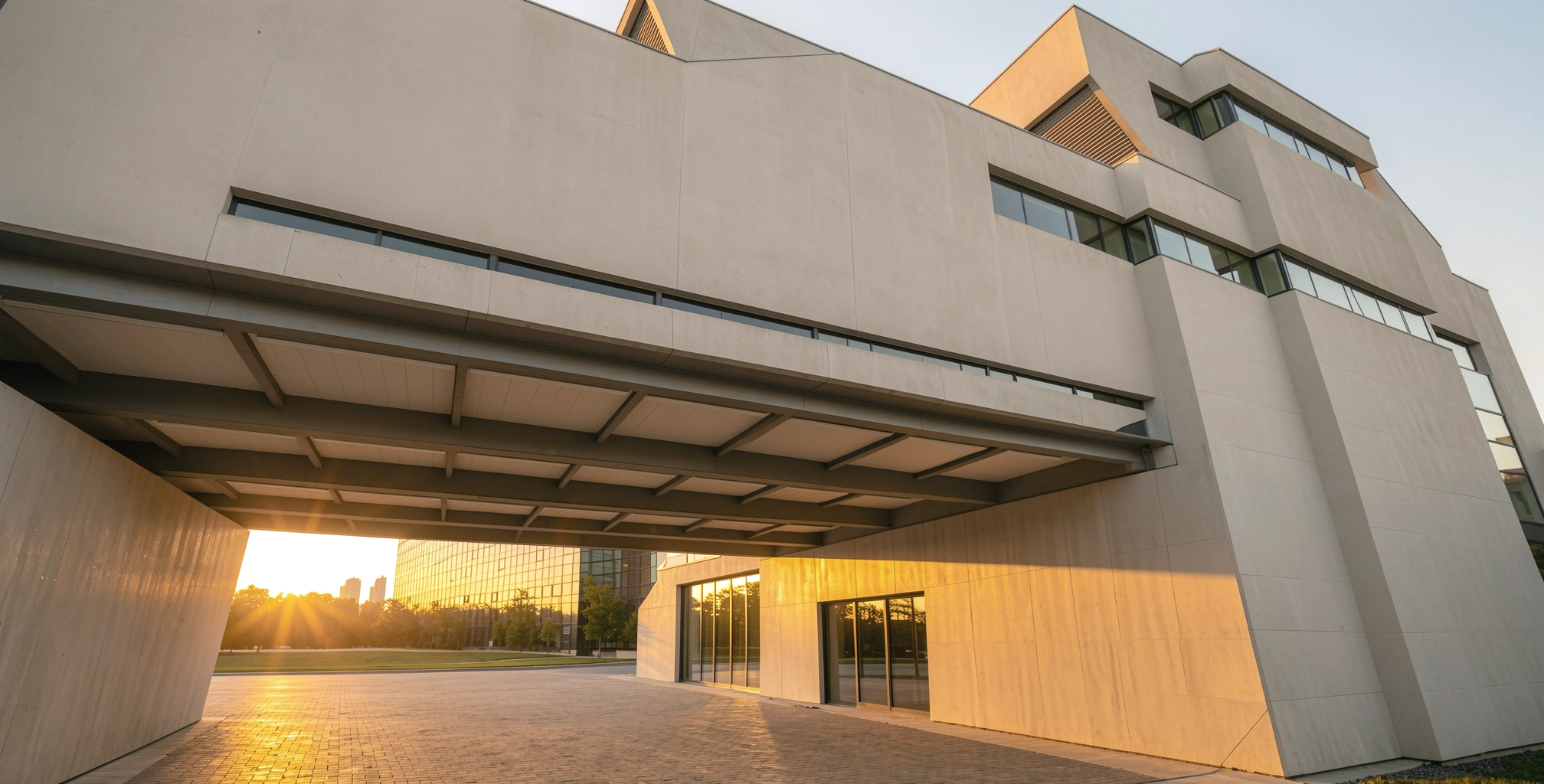
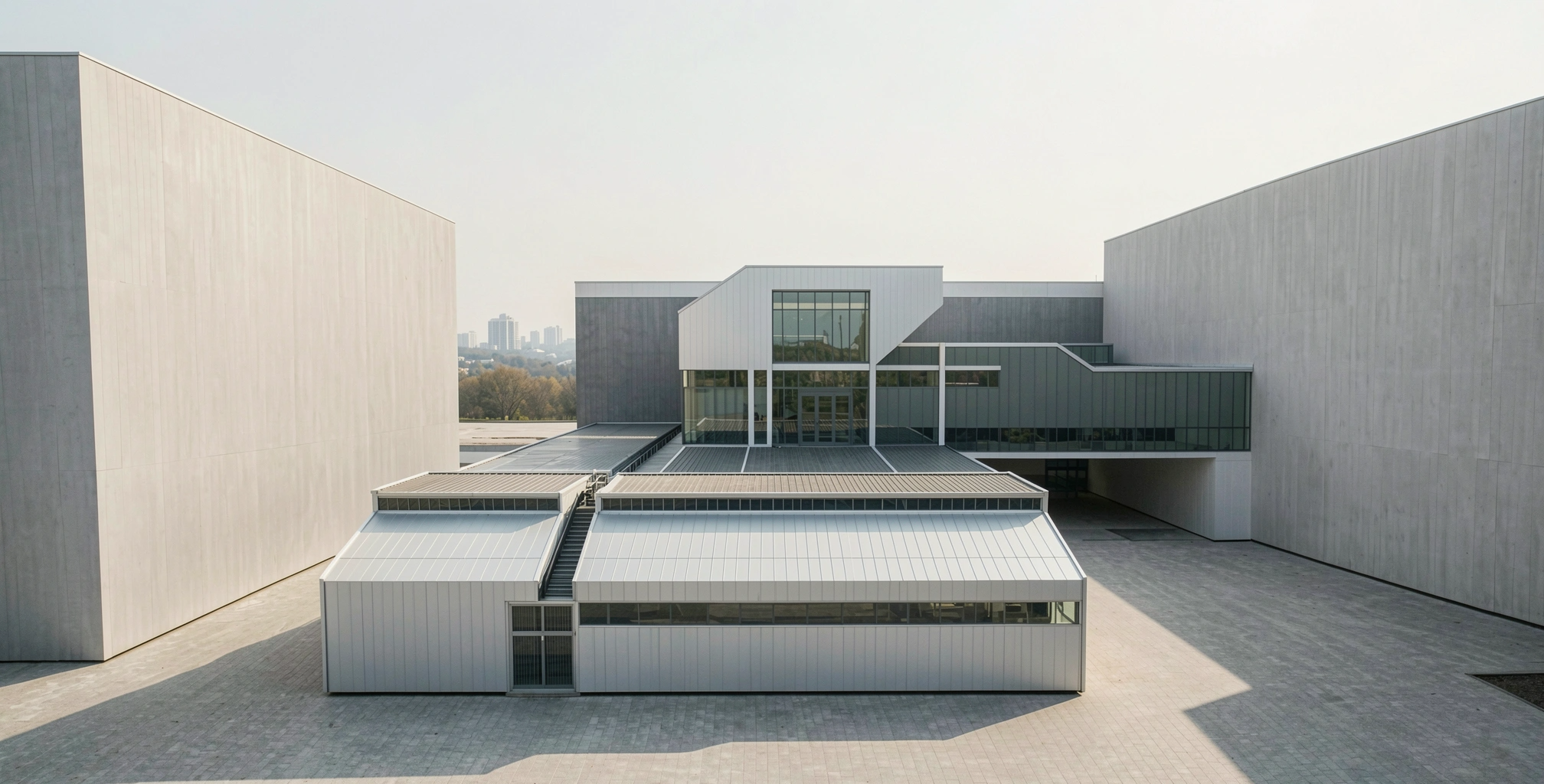
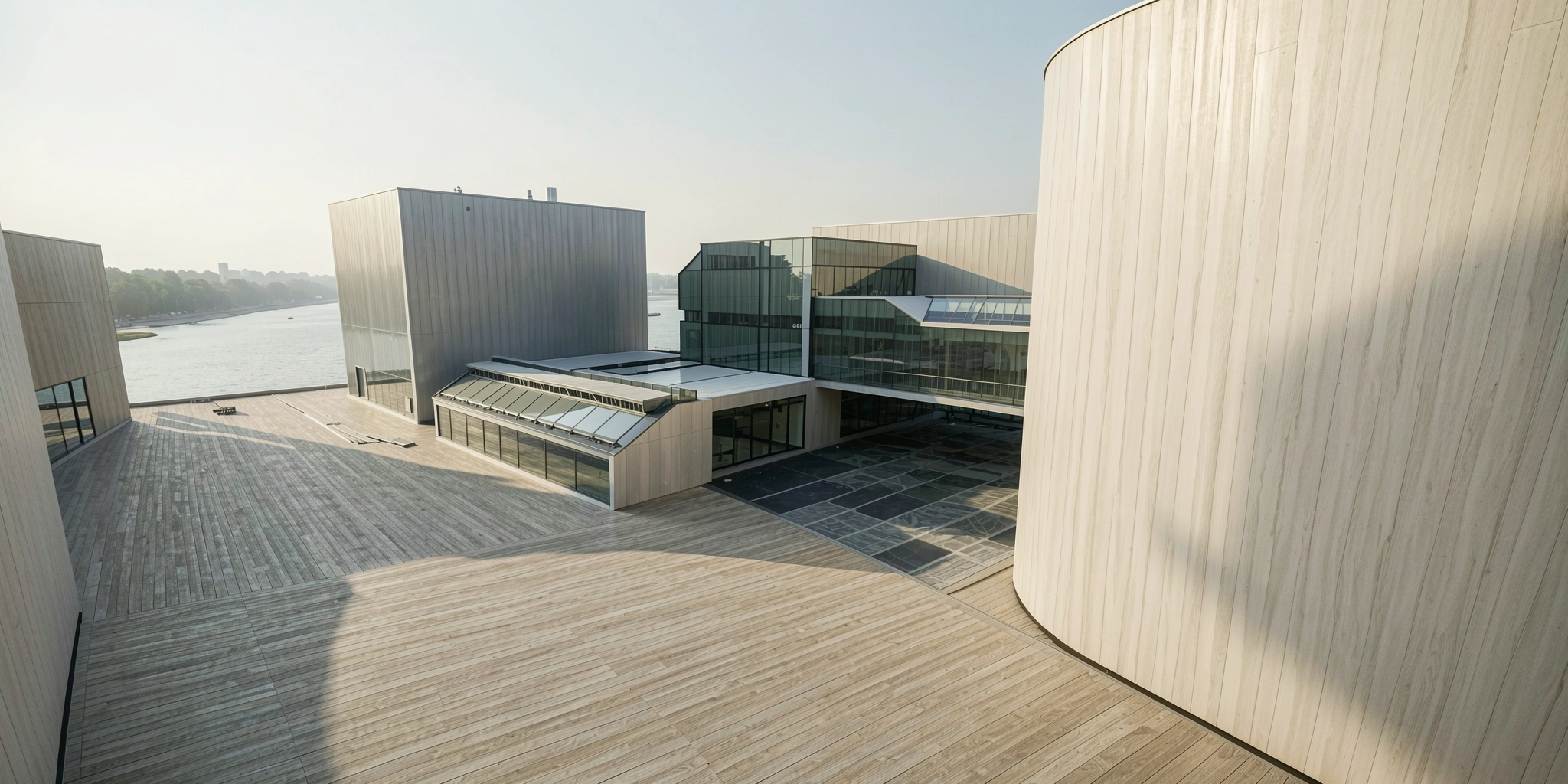
The insulated panel system forms the primary environmental enclosure. Panels provide weather protection, thermal insulation, air-tightness, and environmental continuity while remaining compatible with future adaptation.
Panel dimensions are coordinated with the structural grid, allowing openings, rooflights, doors, and environmental equipment to be introduced without disrupting the overall organisation of the building. Continuous insulation and carefully controlled joints minimise thermal bridging while maintaining the capacity for modification and replacement.
Environmental performance is therefore achieved through the disciplined coordination of repeated components rather than through increasingly complex technical systems.
Daylight and Ventilation
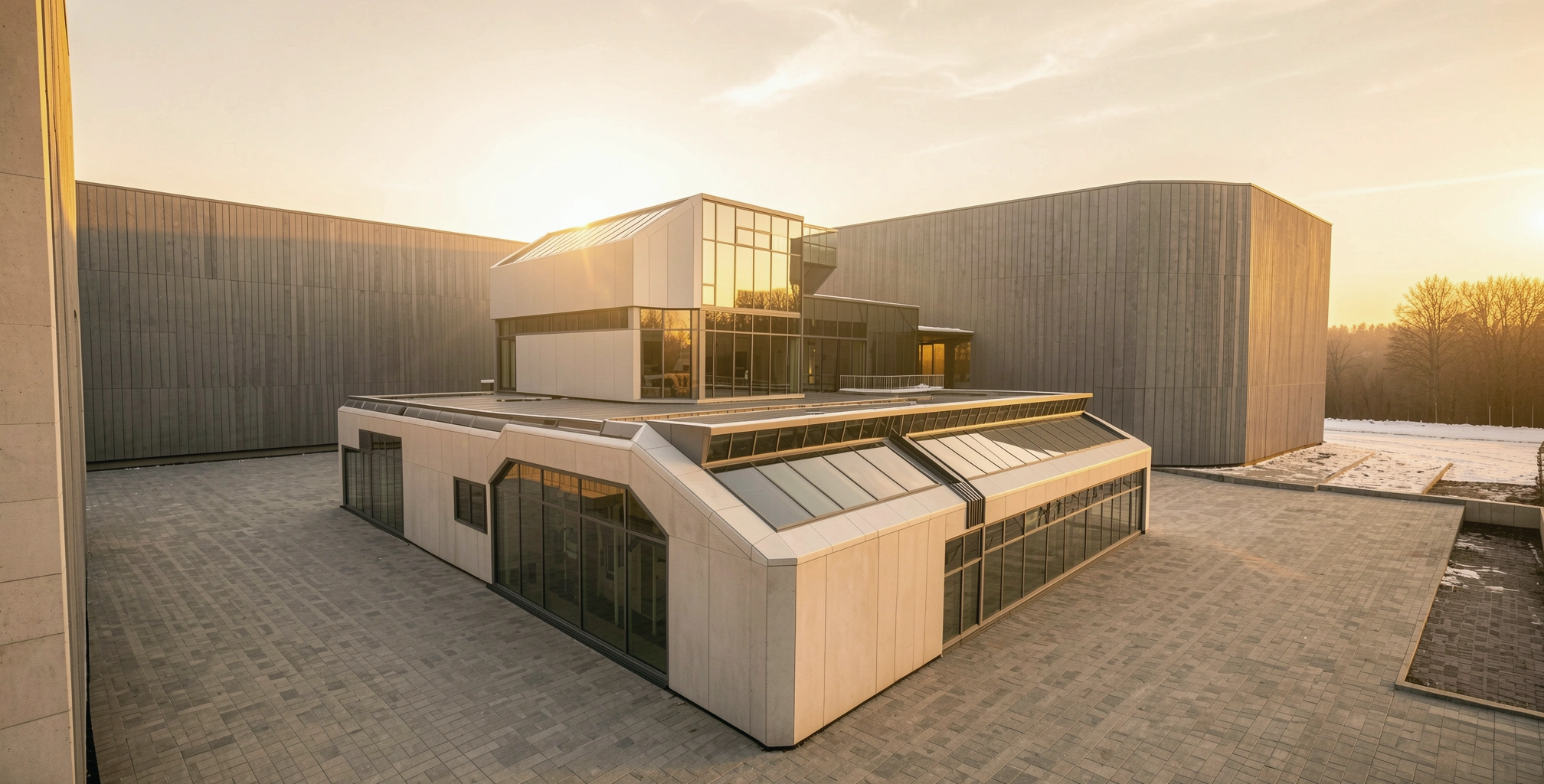
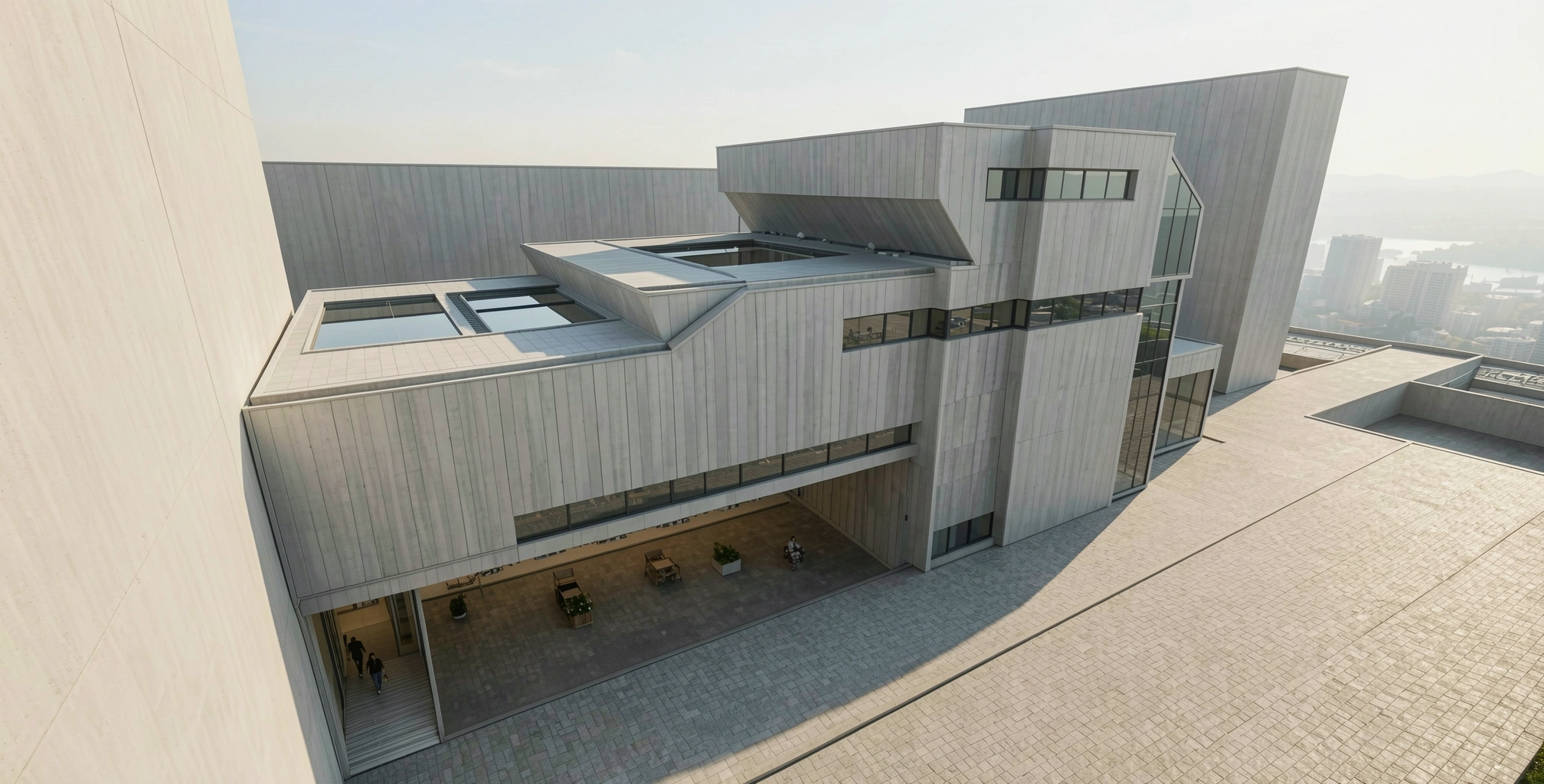
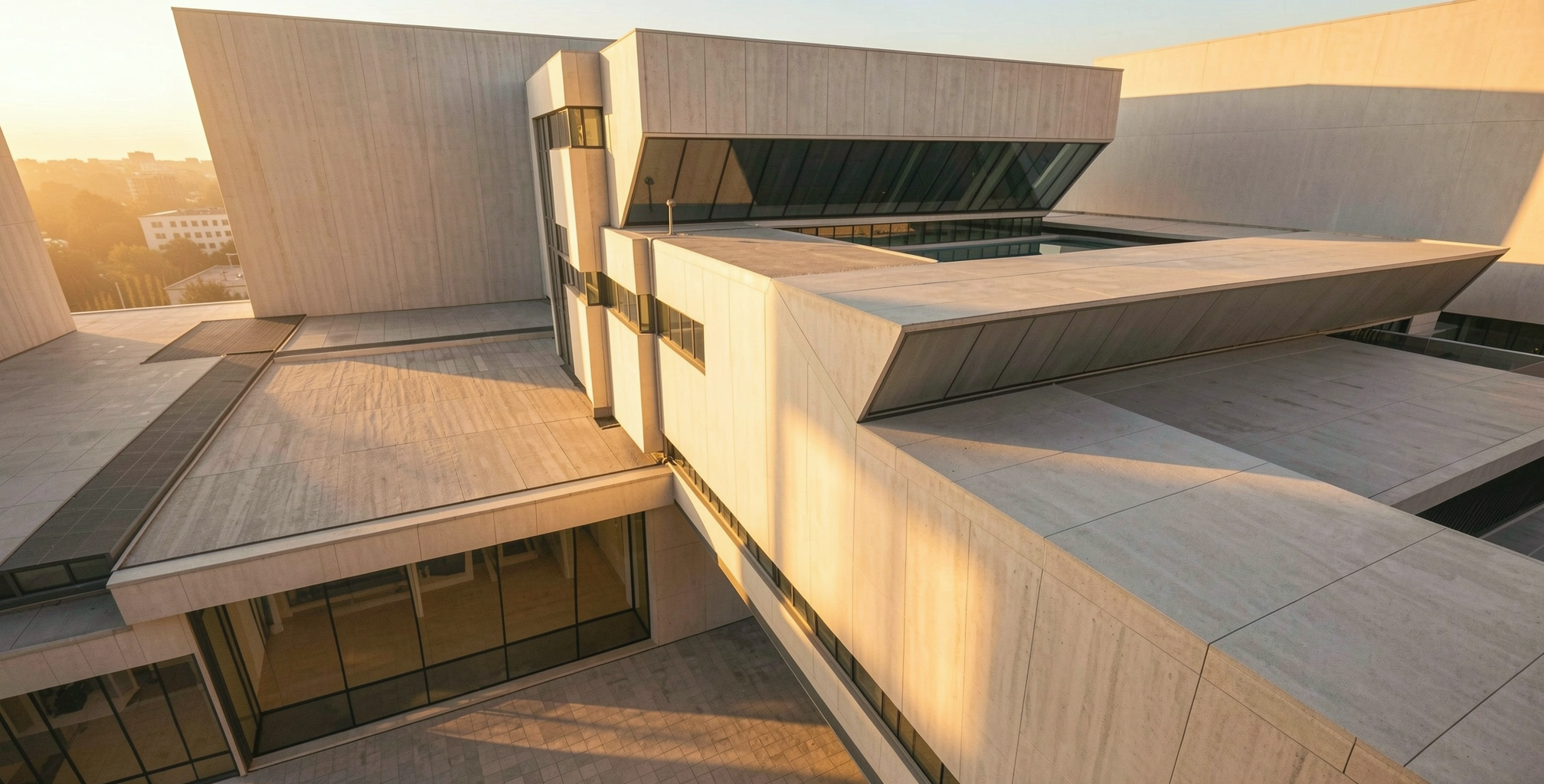
Natural daylight is introduced through carefully positioned rooflights integrated within the structural and panelised system. Their geometry admits diffuse daylight deep into the manufacturing spaces while limiting direct solar gain and glare. This reduces reliance on artificial lighting and improves the quality of the working environment.
Ventilation follows a similarly integrated approach. Mechanical systems provide reliable environmental control when required, while natural ventilation supplements mechanical operation during favourable seasonal conditions. Air movement and daylight are organised through separate but coordinated spatial systems, allowing each to operate effectively without compromising the other.
The resulting environmental strategy combines consistency, efficiency, and adaptability within a single organisational framework.
Adaptation Through Reconfiguration
The defining characteristic of the project is its capacity for reconfiguration. Environmental systems, service routes, façade components, and internal arrangements can be modified independently of the primary structure. This allows the facility to respond to changing manufacturing processes without major reconstruction.
As equipment changes, environmental requirements can be recalibrated. As occupancy increases or decreases, environmental zones can be adjusted. As technologies evolve, components can be upgraded without affecting the stability of the overall system.
Adaptability therefore becomes a form of environmental performance in its own right. The capacity to extend the useful life of the building while accommodating change reduces material consumption, limits waste, and improves long-term sustainability.
Constructive Expression
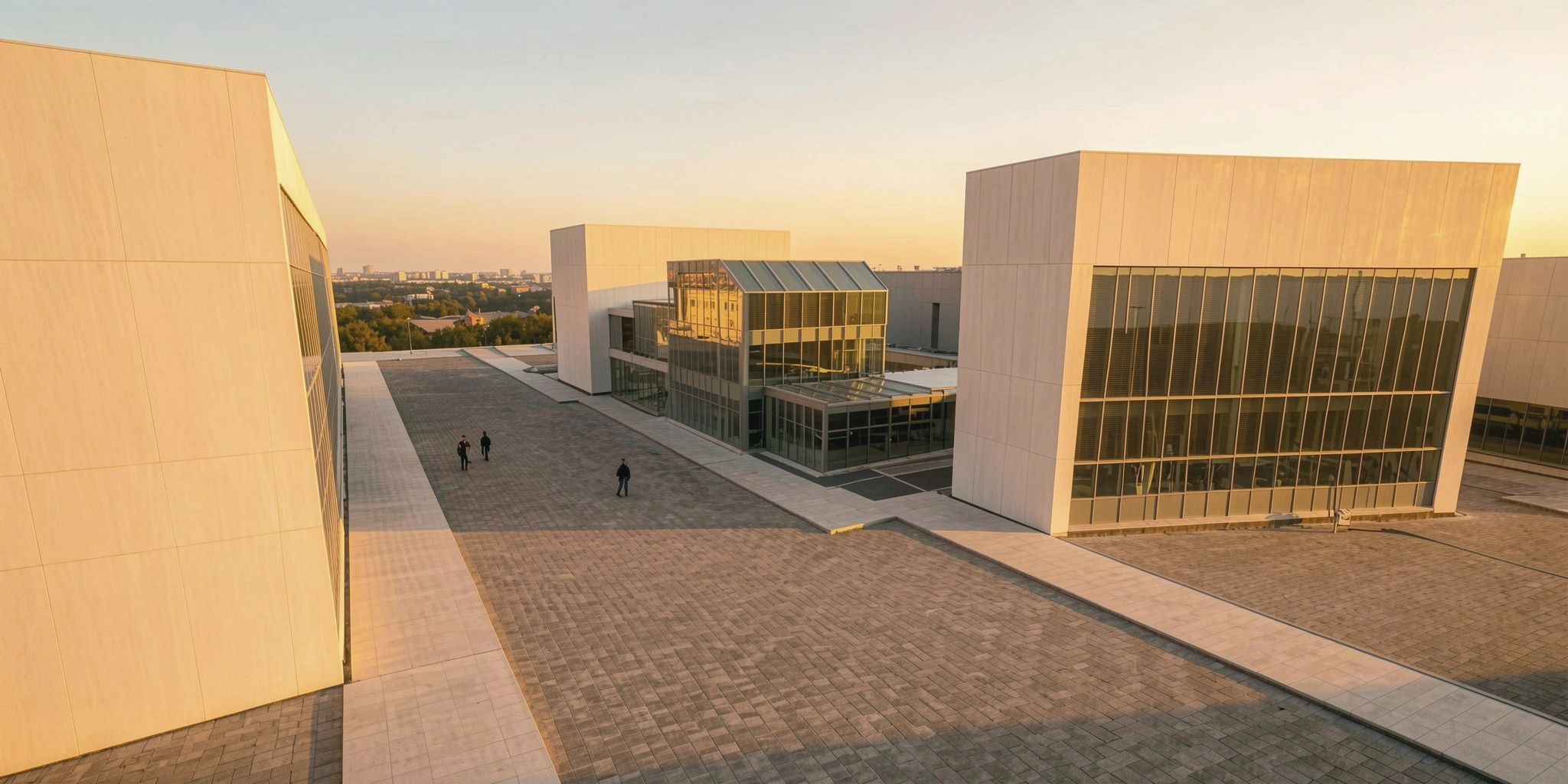
The architectural character of the building emerges directly from the organisation of its systems. The structural grid, panelised enclosure, rooflights, service zones, and environmental components remain visible and legible as parts of a coordinated whole.
Expression arises from the clarity of assembly and the visibility of adaptation. The building reads as a framework capable of change rather than as a fixed object. Structure, enclosure, and environmental performance operate together within a common order, demonstrating how manufacturing architecture can achieve coherence through organisation, flexibility, and constructive intelligence.
The project therefore defines environmental performance not as the optimisation of a static condition, but as the sustained capacity of the building to accommodate change over time.