
University Teaching Building — Environmental Gradients in Collective Space
Environmental Organisation
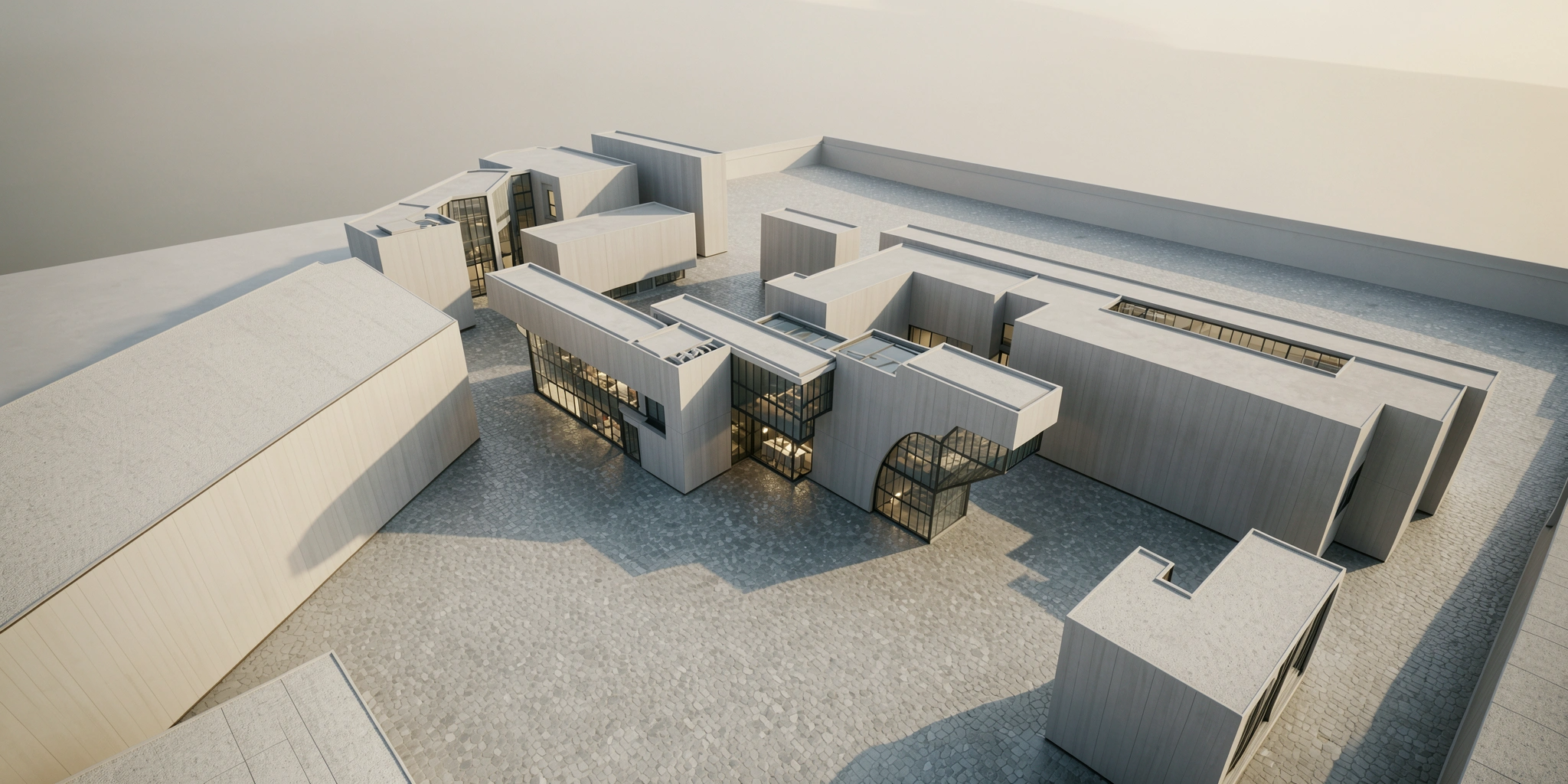
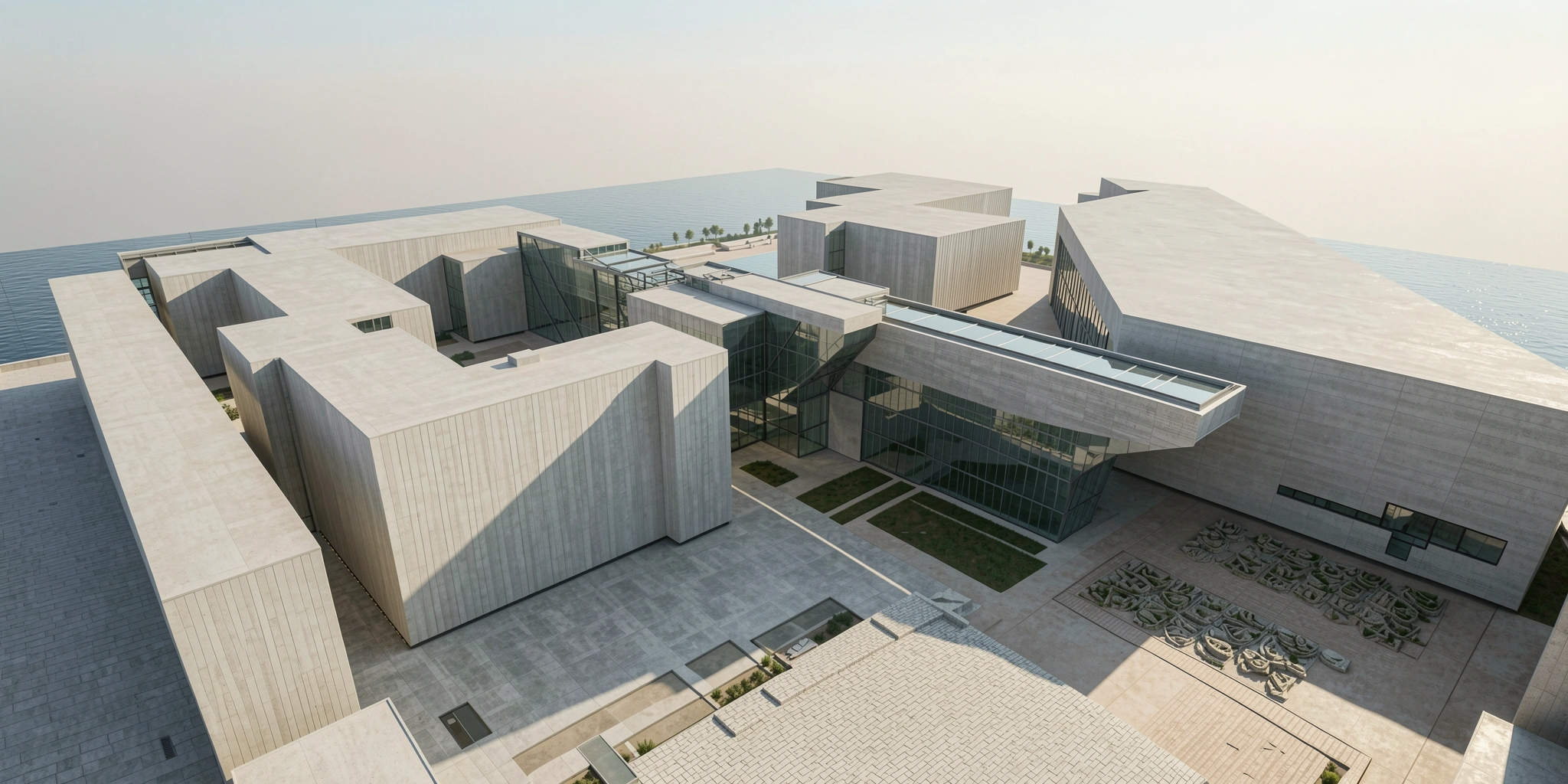
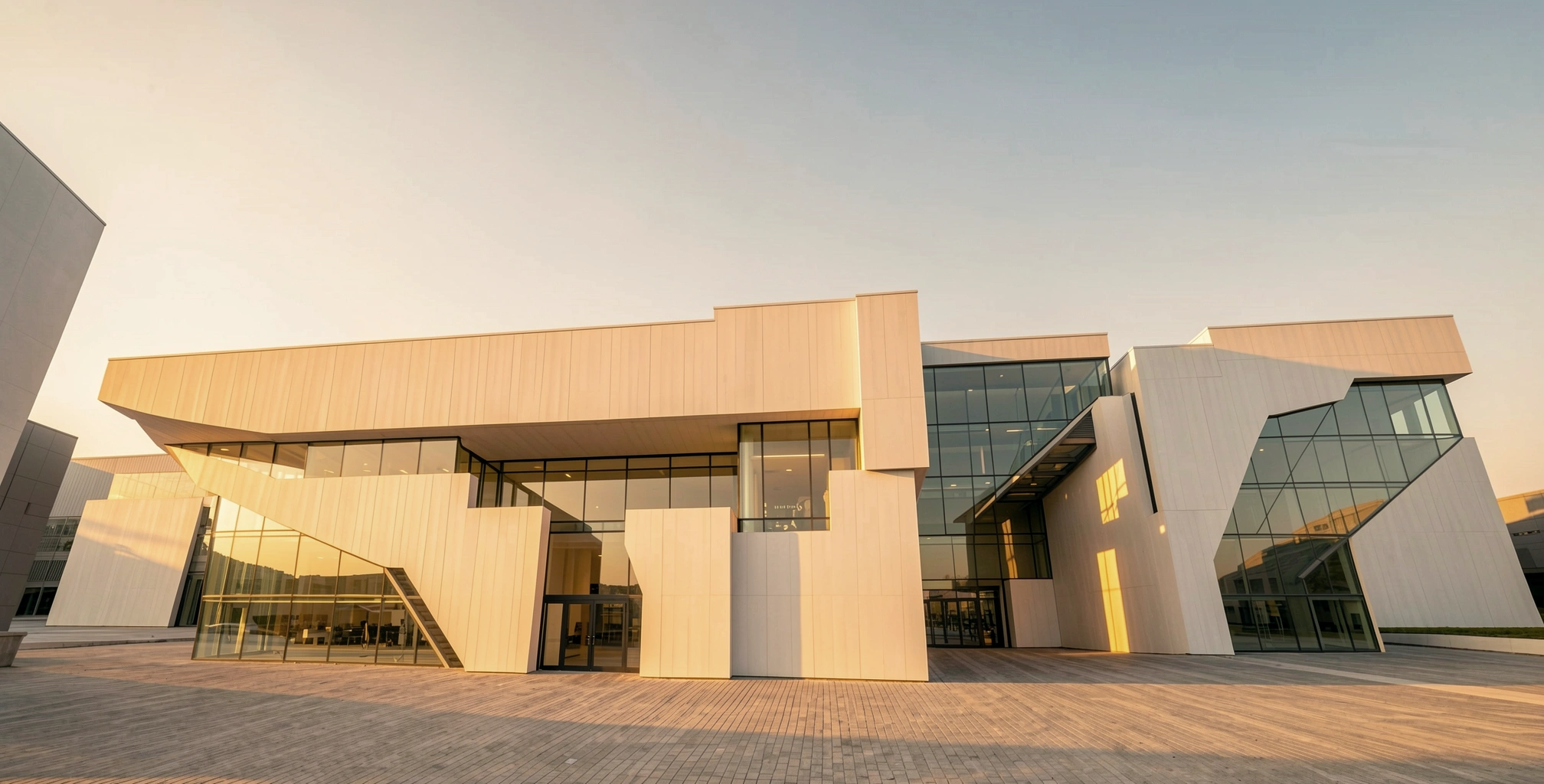
The University Teaching Building is organised as a series of interconnected environmental zones that respond to differing patterns of occupation, environmental demand, and spatial use. Lecture theatres, research areas, workspaces, circulation zones, and collective gathering spaces each operate under distinct environmental conditions while remaining connected within a coordinated environmental framework.
Rather than treating the building as a uniformly conditioned volume, environmental control is distributed according to use. Spaces with intermittent occupation, such as lecture theatres, operate independently from continuously occupied research and teaching areas. This allows environmental resources to be directed where required while reducing unnecessary energy consumption and improving overall operational efficiency.
The organisation of environmental zones therefore becomes a primary generator of both spatial and environmental performance.
Environmental Gradients and Collective Space
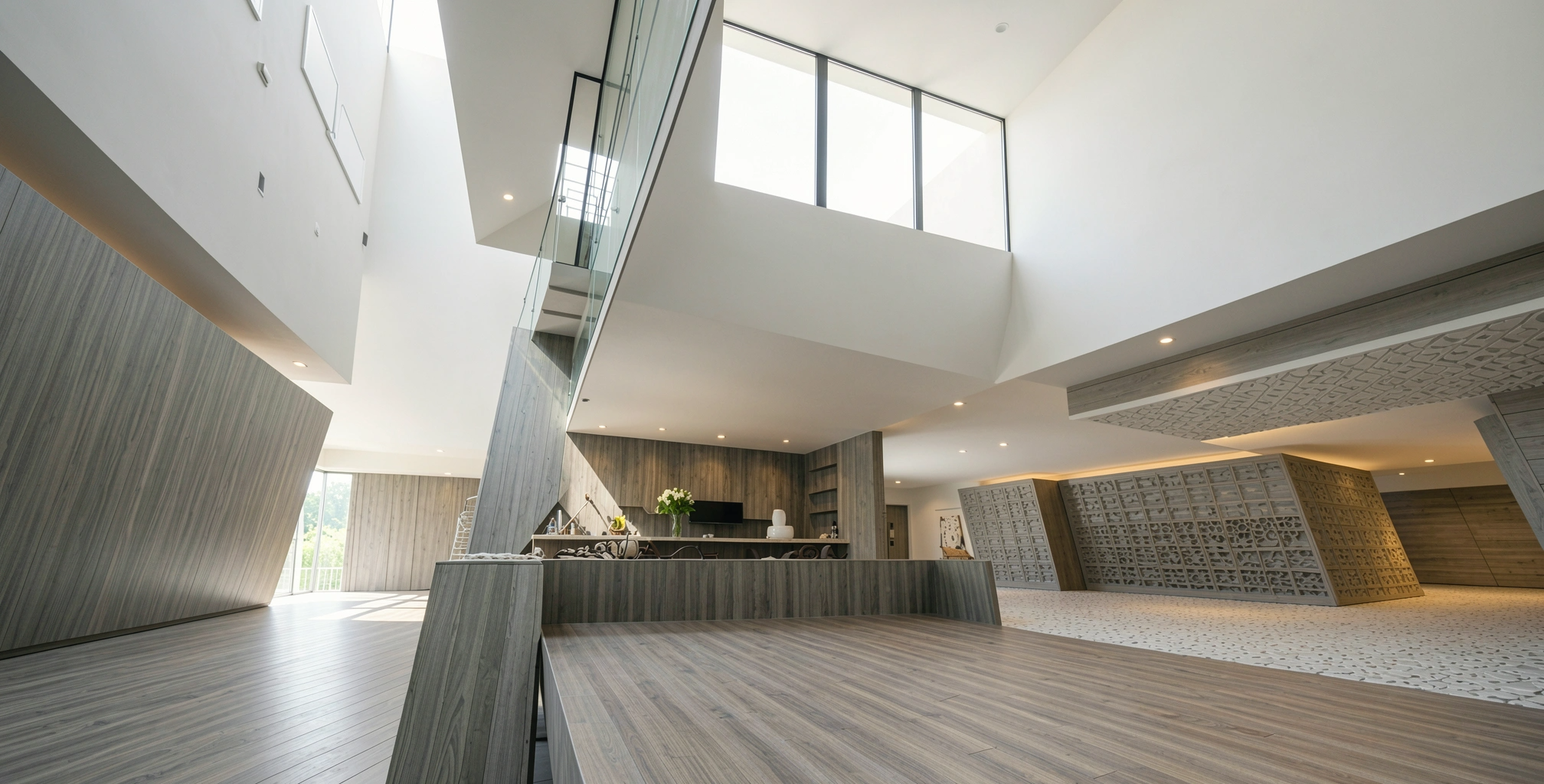
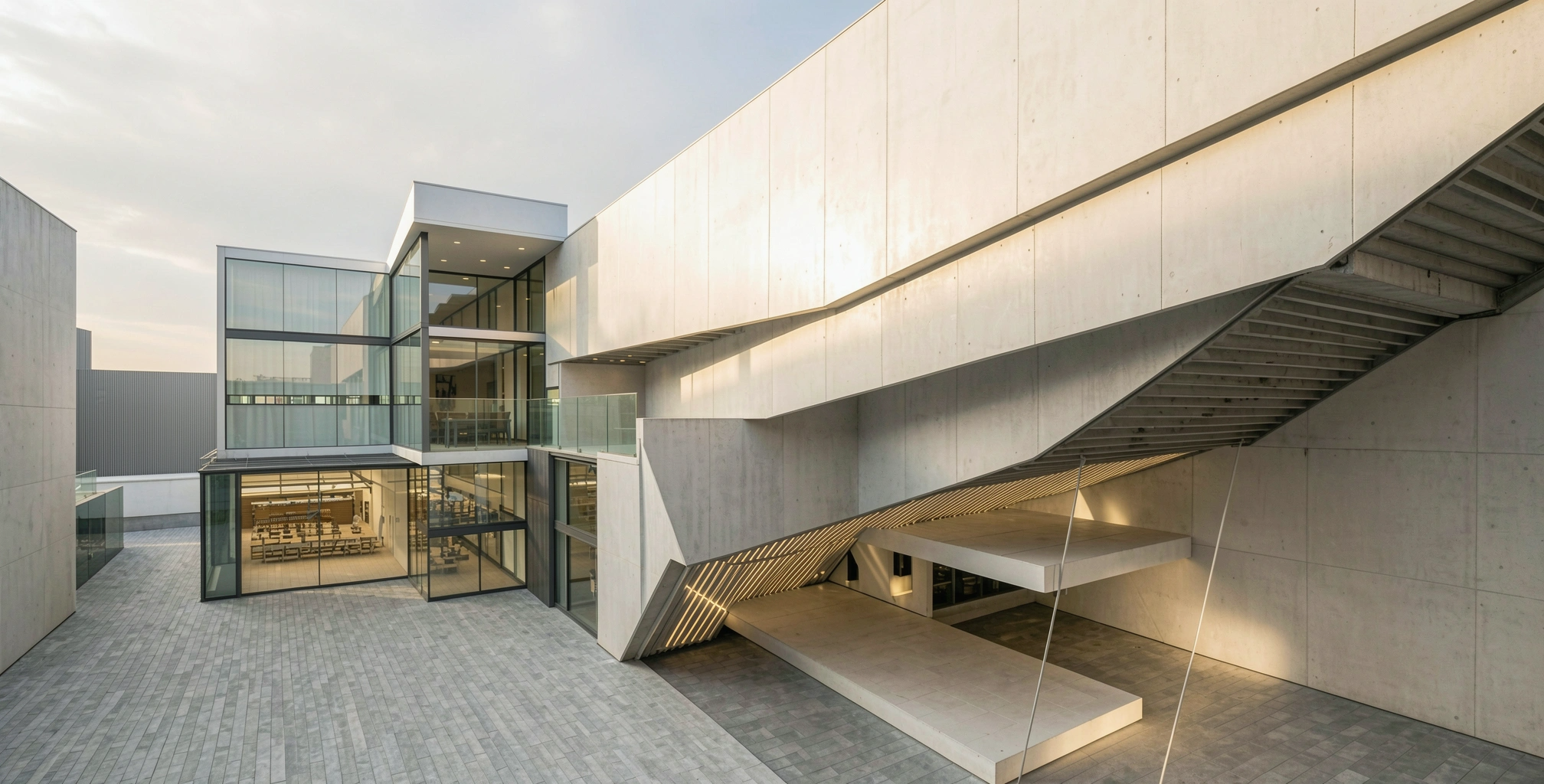
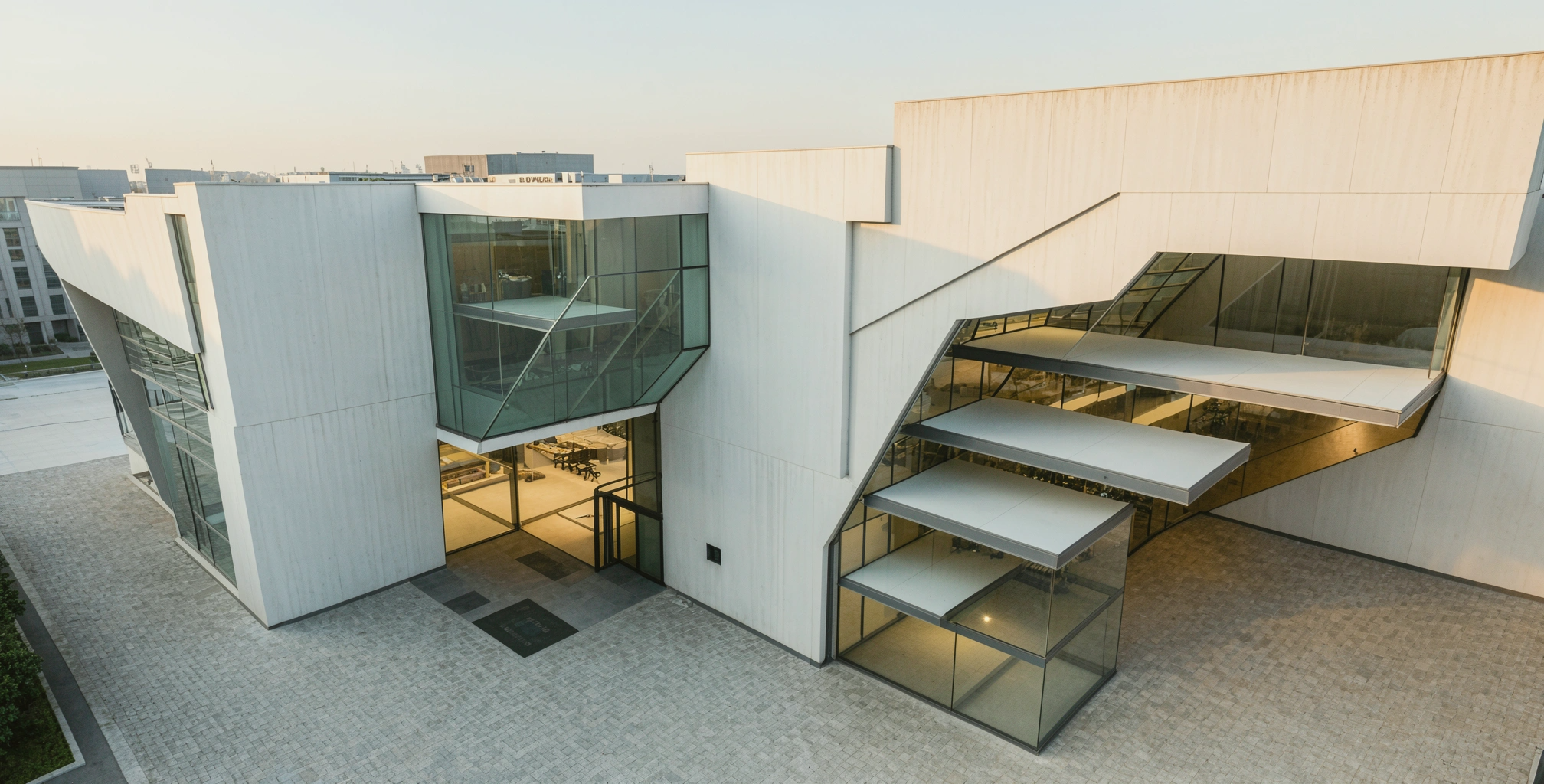
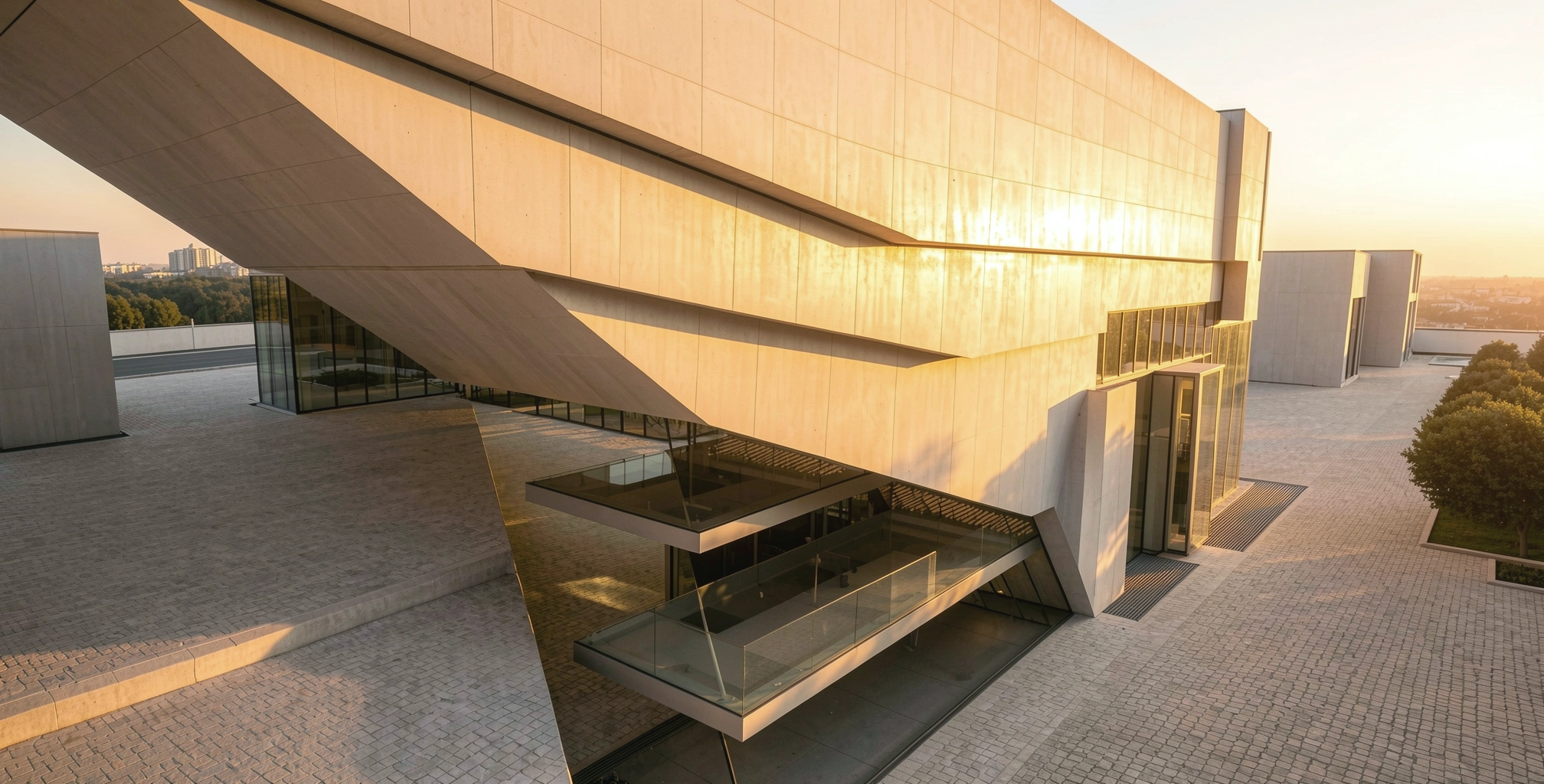
The building establishes a sequence of environmental gradients between fully conditioned interior spaces and the external environment. Atria, circulation zones, sculpture courts, and semi-external gathering spaces act as intermediate environments that moderate transitions between inside and outside.
These collective spaces function as environmental buffers, reducing abrupt changes in temperature, light, and air movement while supporting social interaction and informal occupation. Rather than separating conditioned space from the external environment through a single boundary, the building introduces a layered environmental framework in which climatic conditions change progressively across space.
Environmental performance is therefore achieved not only through technical systems but through the organisation of collective spatial experience.
Daylight and Sectional Organisation
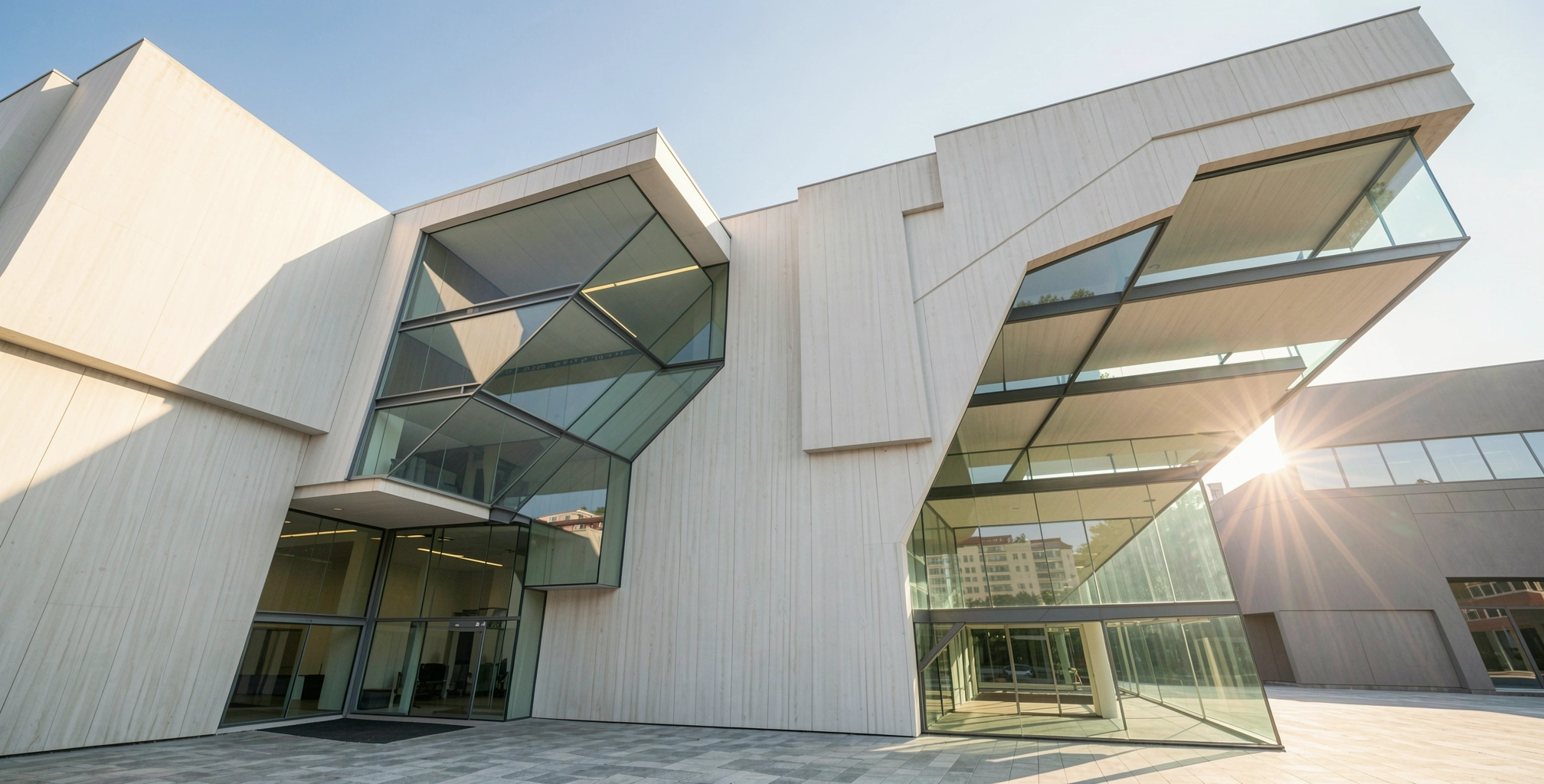
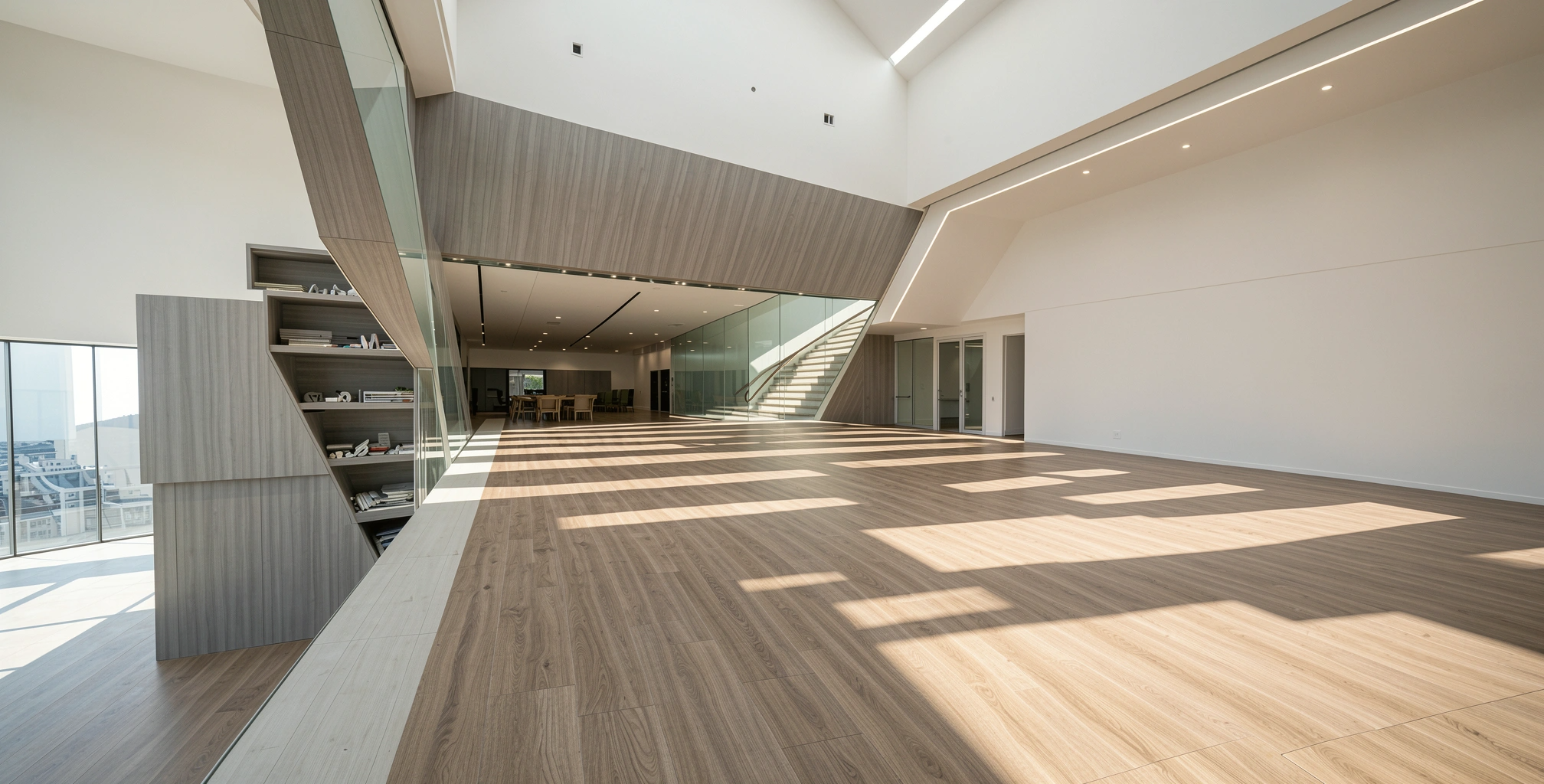
Natural daylight is introduced through a coordinated system of façade openings, atria, rooflights, and environmental voids. Research and teaching spaces benefit from carefully controlled daylight, reducing dependence on artificial lighting while improving visual comfort and occupant wellbeing.
The environmental strategy operates primarily through section. Vertical voids and atria allow daylight to penetrate deep into the building while simultaneously supporting environmental circulation. Light shelves, shading devices, and carefully controlled glazing balance daylight admission with solar protection, ensuring that environmental performance and spatial quality operate together.
The distribution of light consequently contributes to the legibility of the building, establishing variation in spatial character while supporting environmental efficiency.
Natural Ventilation and Air Movement
Natural ventilation is integrated wherever climatic conditions permit. Openings positioned at lower and upper levels support the movement of air through atria and circulation spaces, allowing warm air to rise and exhaust naturally through the building section.
Mechanical systems supplement this strategy when environmental conditions require greater control. Rather than functioning independently, natural and mechanical systems operate as components of a mixed-mode environmental framework. Electrically controlled openings, heat recovery systems, and mechanical ventilation support environmental stability while maintaining access to fresh air and occupant control.
Air movement therefore becomes a spatial phenomenon as well as a technical process, linking environmental performance directly to the organisation of the building.
Thermal Moderation and Environmental Control
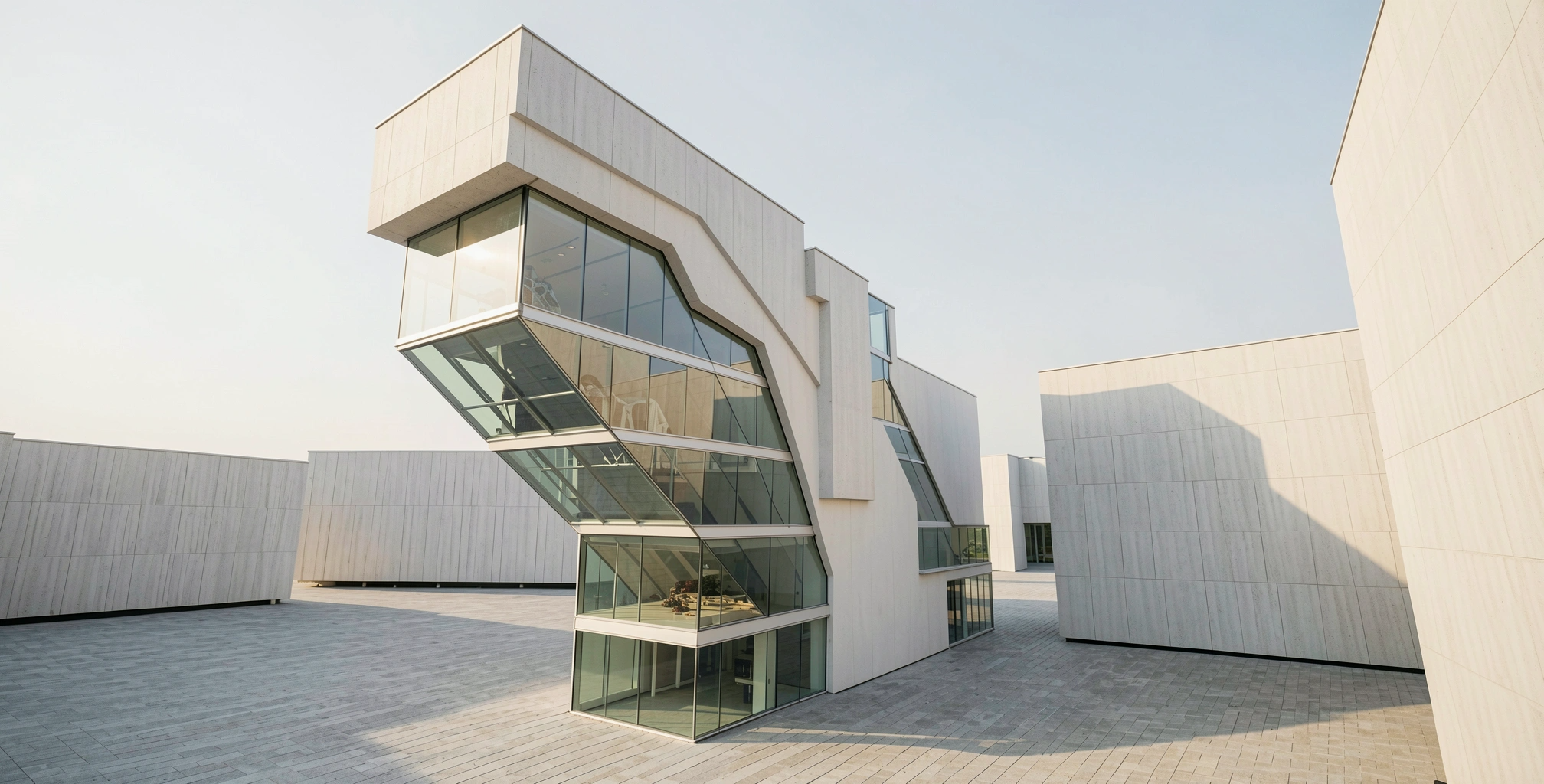
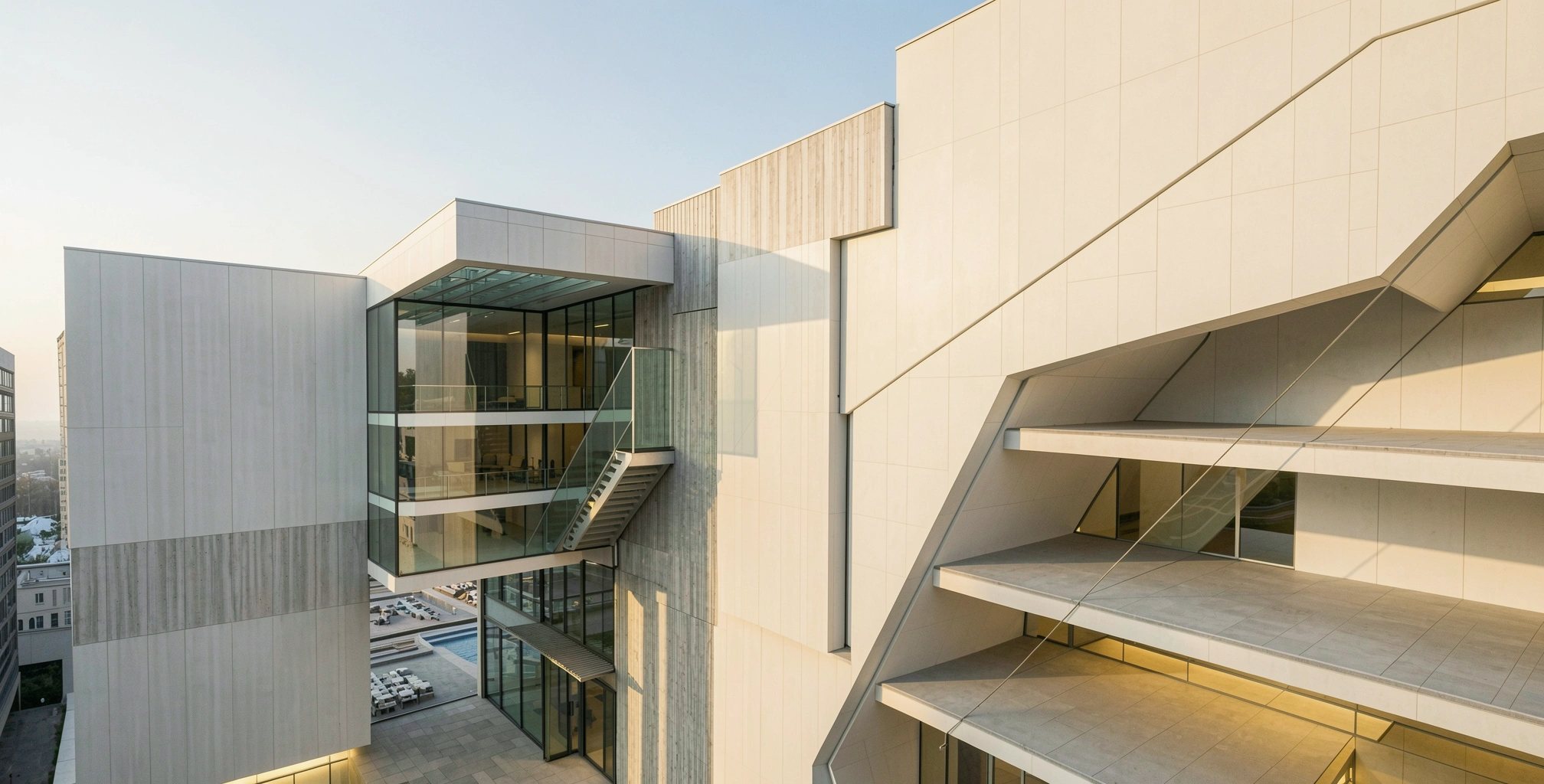
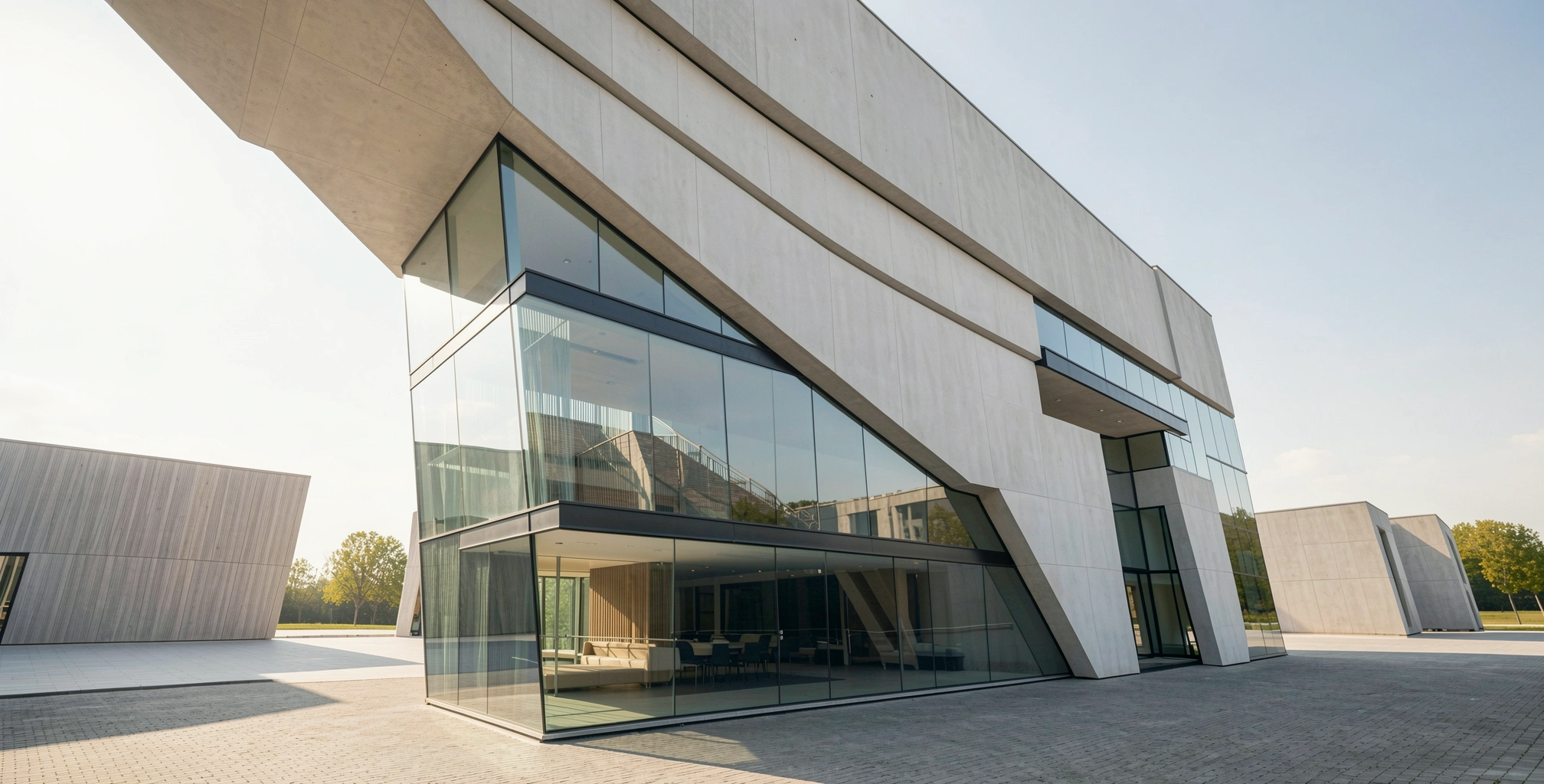
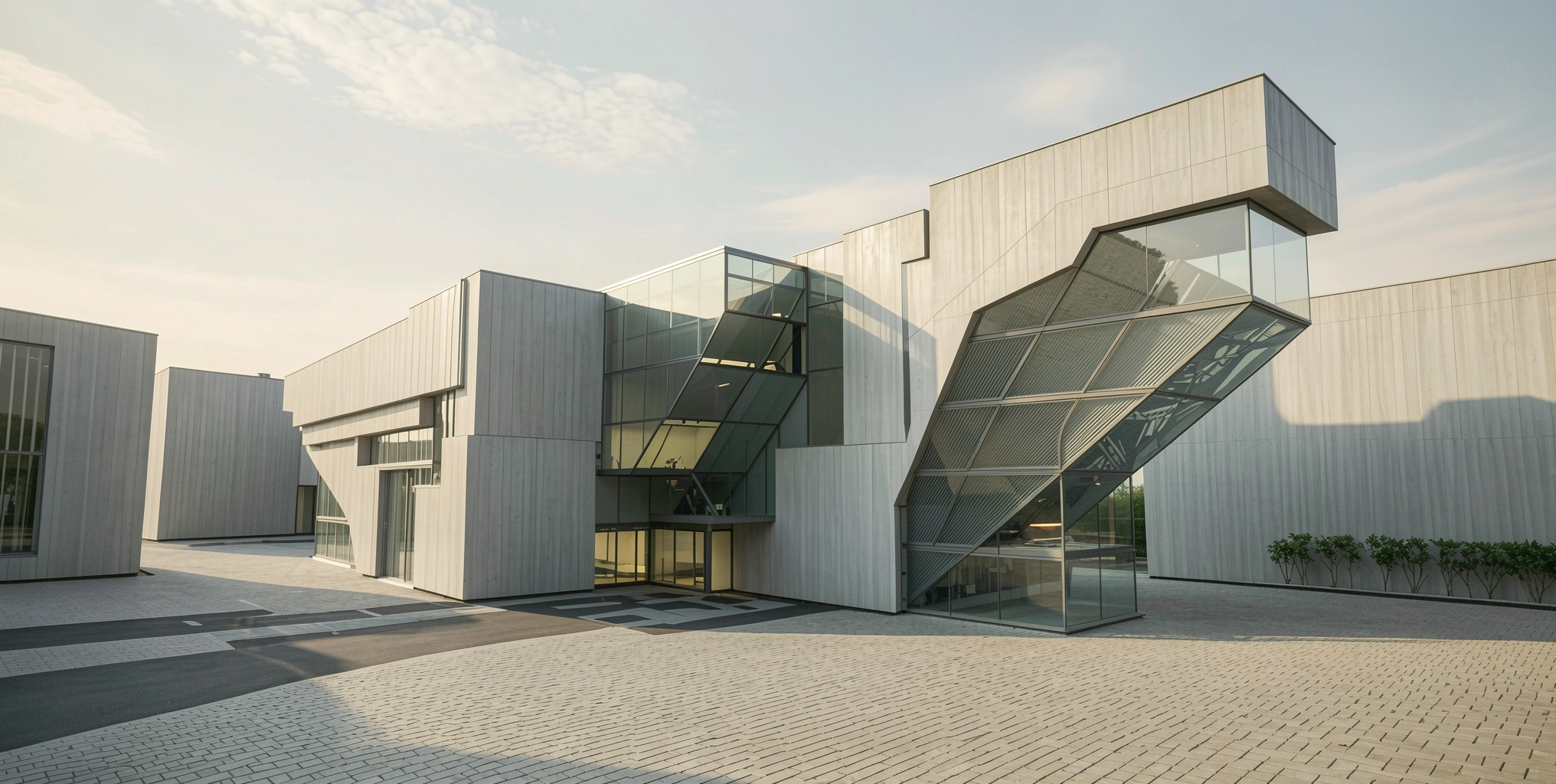
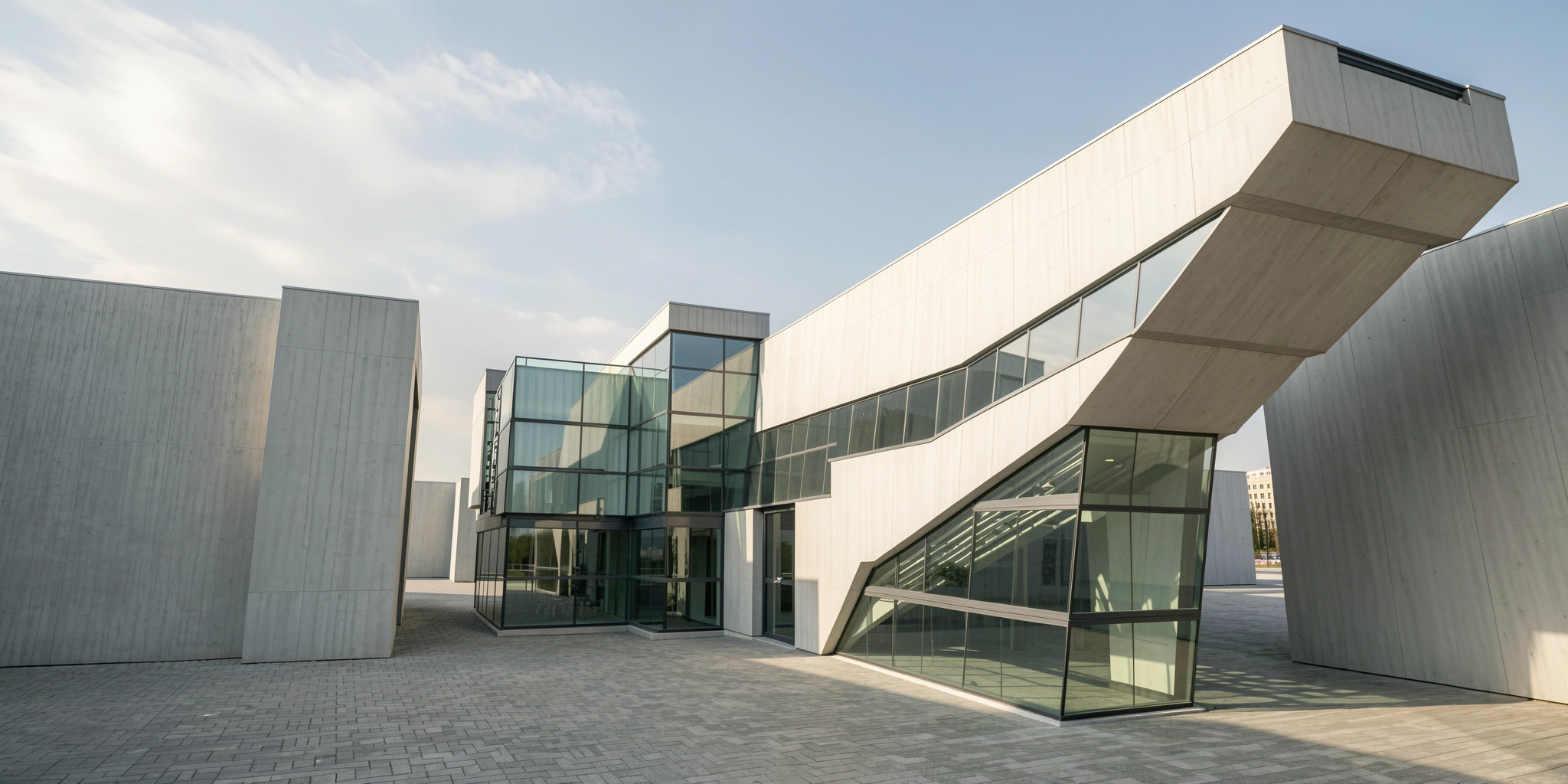
The balance between opaque enclosure and controlled glazing forms a central component of the environmental strategy. Highly insulated opaque elements provide thermal stability, particularly within lecture theatres and specialised teaching spaces, while carefully positioned glazing supports daylight access in research and office environments.
Heat recovery systems further reduce operational energy demand by transferring thermal energy between occupied and adjacent spaces. Environmental resources can therefore be shared across different zones, allowing conditioned air and recovered heat to support areas with varying occupancy patterns.
This coordinated approach allows environmental performance to respond dynamically to the changing rhythms of academic life.
Constructive Expression
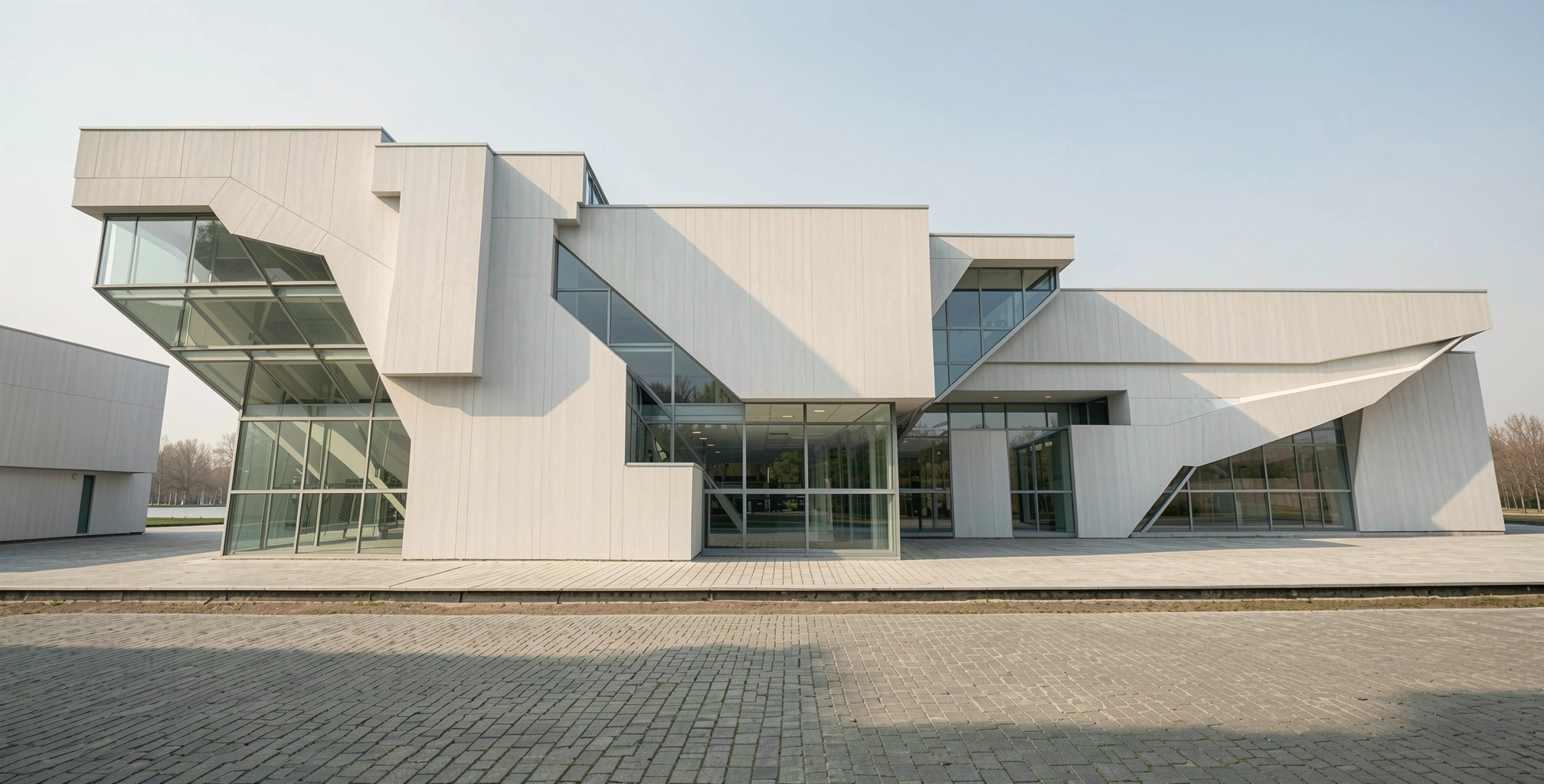
The architectural character of the building emerges through the organisation of structure, void, light, and environmental space. Atria, circulation routes, environmental courts, and roof openings reveal the movement of light and air through the building, making environmental performance visible within the architectural experience.
Structure provides the framework within which these environmental conditions are organised. Long-span spaces, environmental voids, and collective gathering areas operate together as components of a coherent spatial and environmental system.
Expression arises from the relationship between support and environment, with spatial character defined by the distribution of light, air, occupation, and environmental variation. The building demonstrates how environmental performance can become an organising principle for collective academic space, integrating climate, learning, and social interaction within a single architectural framework.