
Art Gallery — Structure as Spatial Generator
Structural Organisation
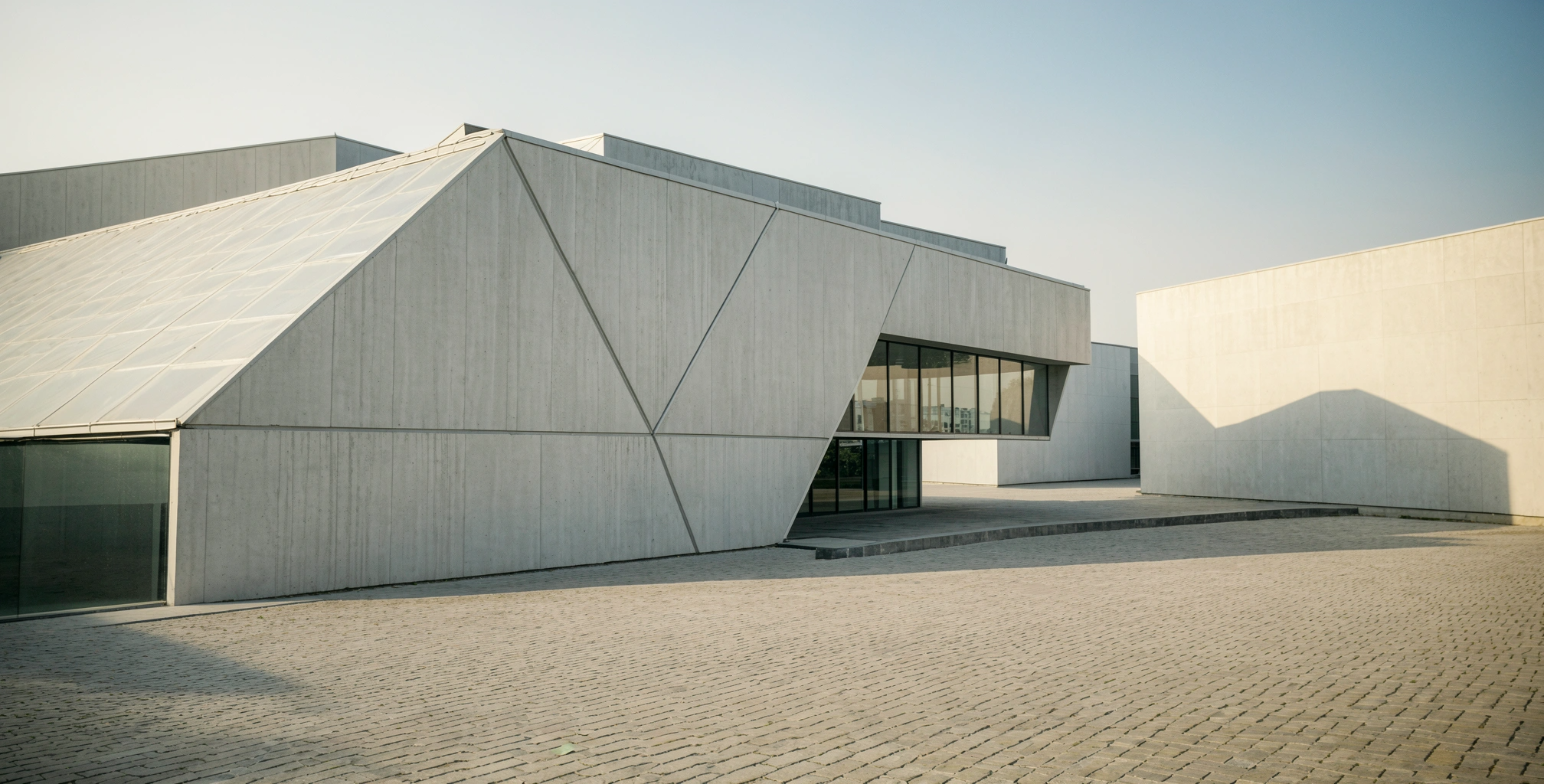
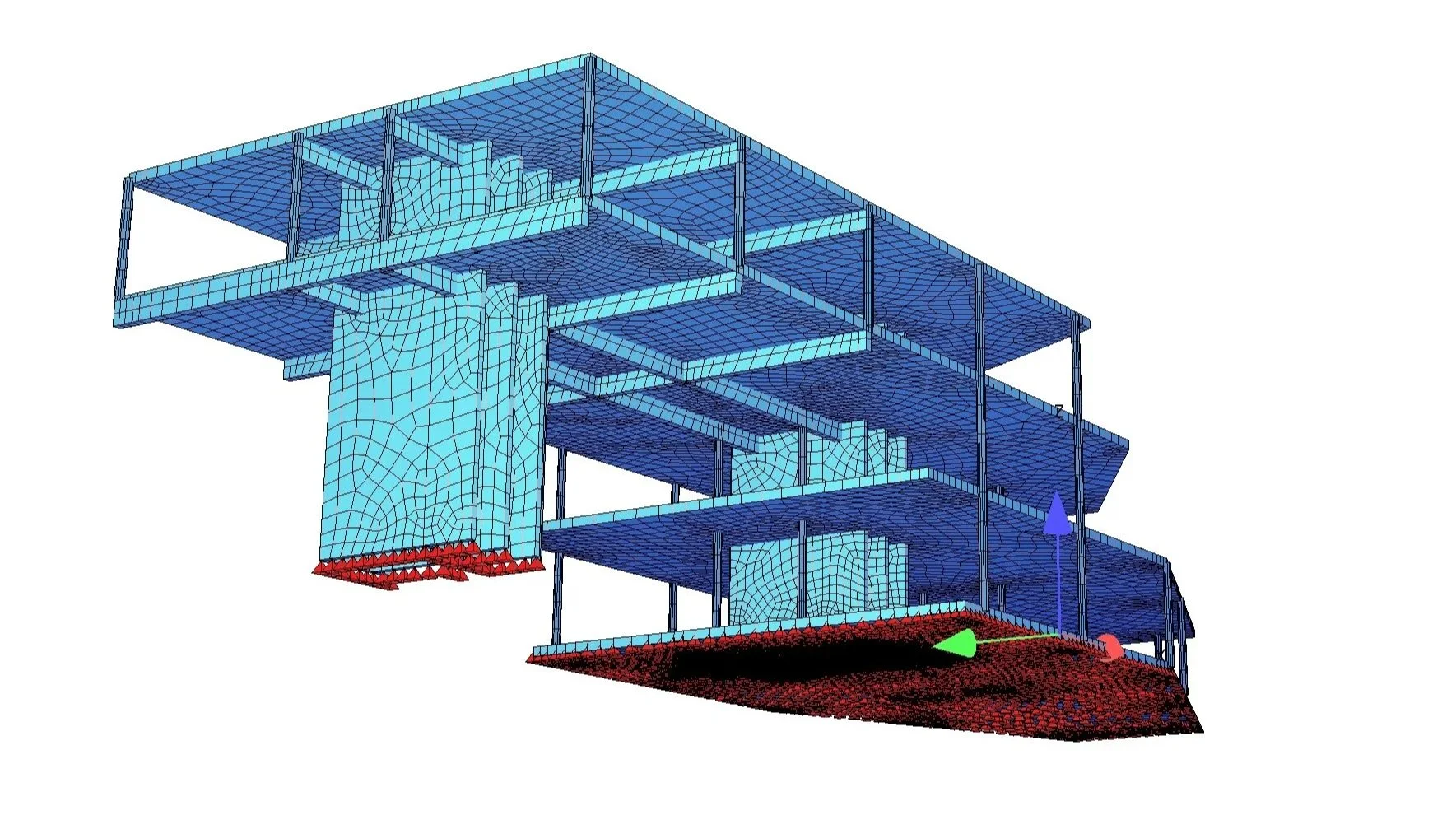
The Art Gallery is organised through a hybrid structural system in which steel and reinforced concrete perform distinct but complementary roles. Rather than separating enclosure, structure, and space into independent systems, the project uses structure to generate the architectural organisation of the building itself.
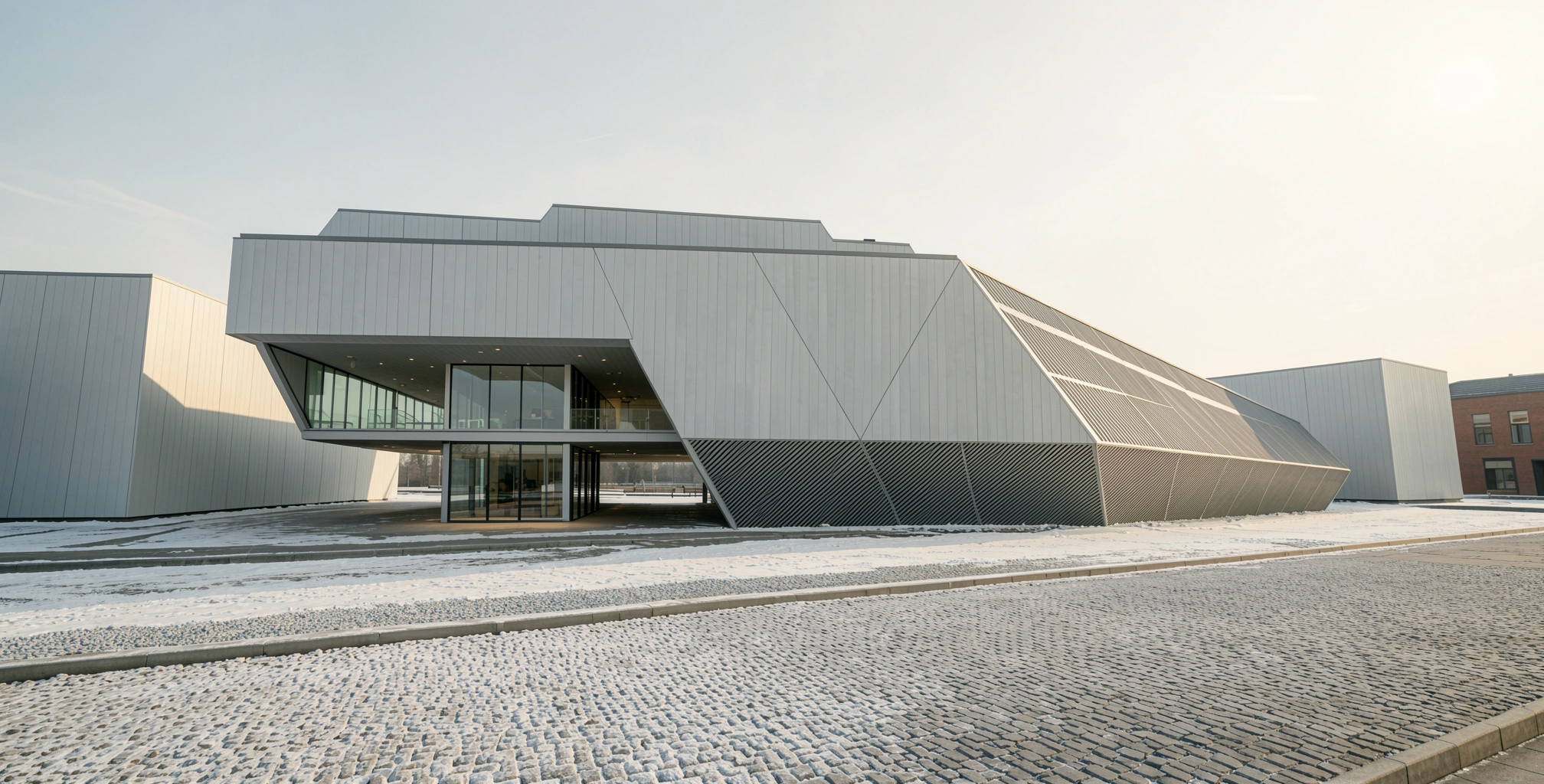
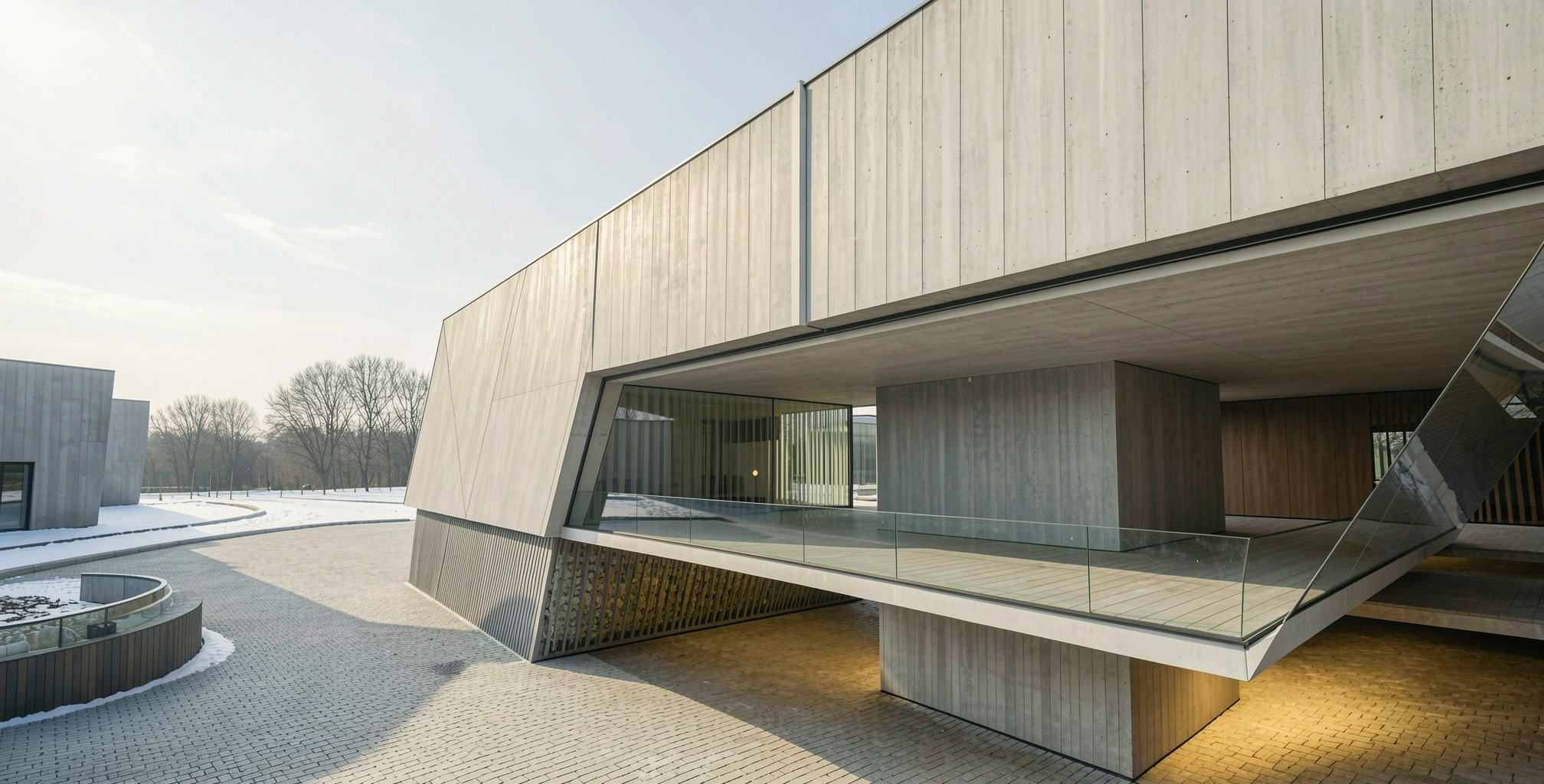
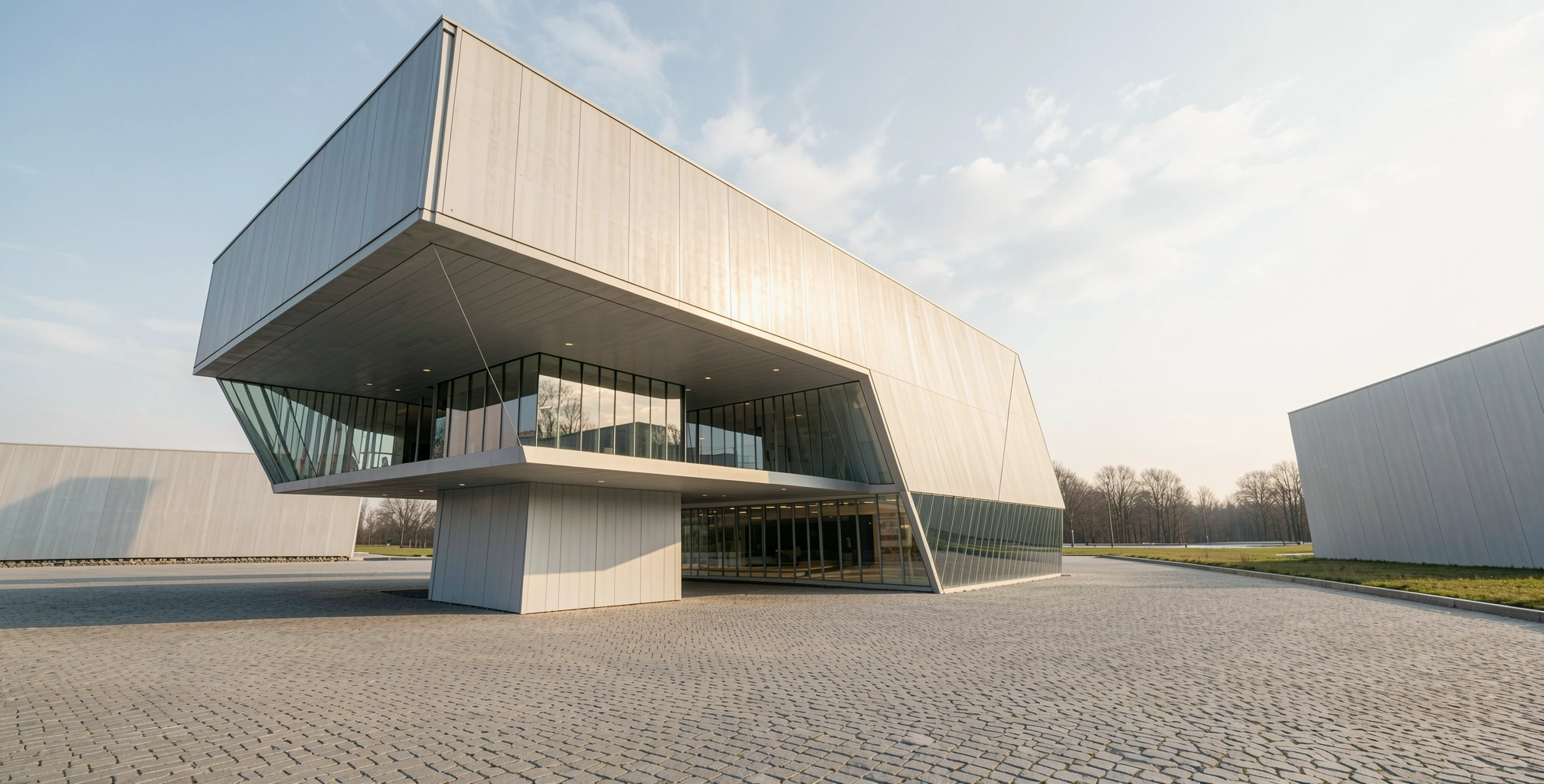
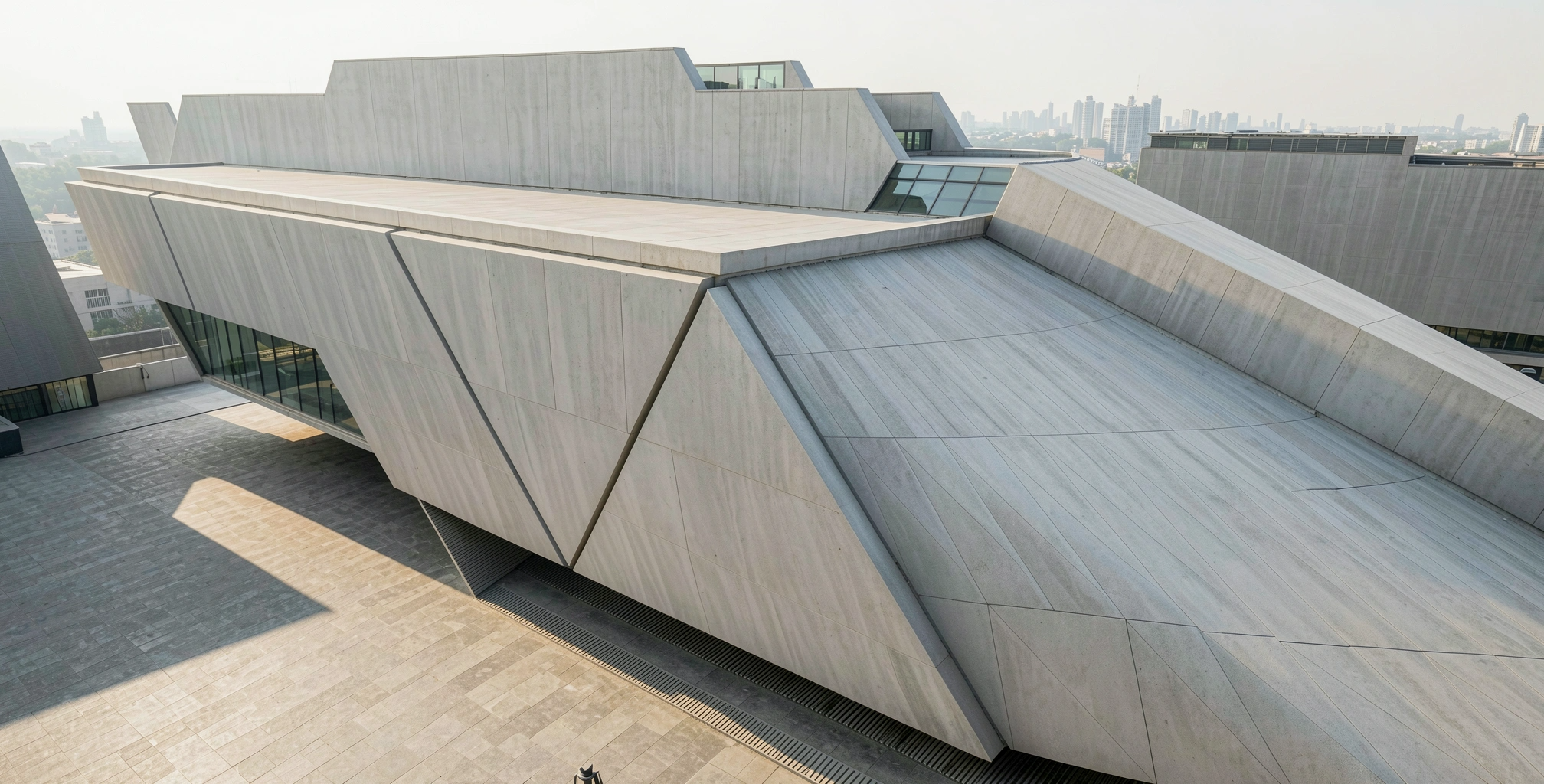
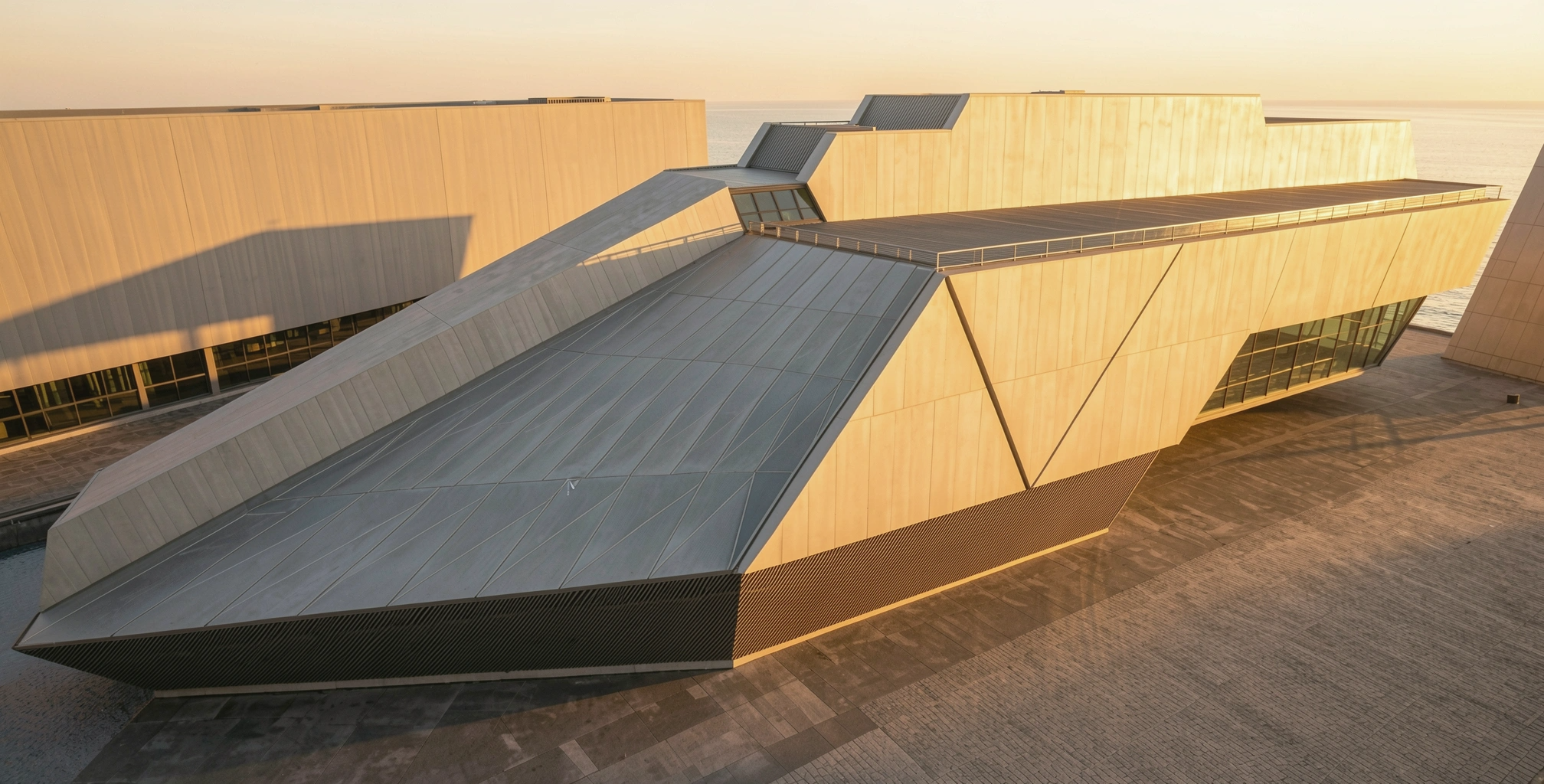
A primary steel lattice frame establishes the overall geometry of the gallery, defining inclined walls, tapered volumes, and the conical entrance sequence. Reinforced concrete slabs, cores, and cantilevered elements provide stability, stiffness, and the capacity to support changing exhibition loads. Together these systems create a structural framework capable of accommodating large, uninterrupted gallery spaces while maintaining a clear and legible load-bearing order.
Structure therefore operates simultaneously as support, enclosure, and spatial organiser.
Structure and Spatial Experience
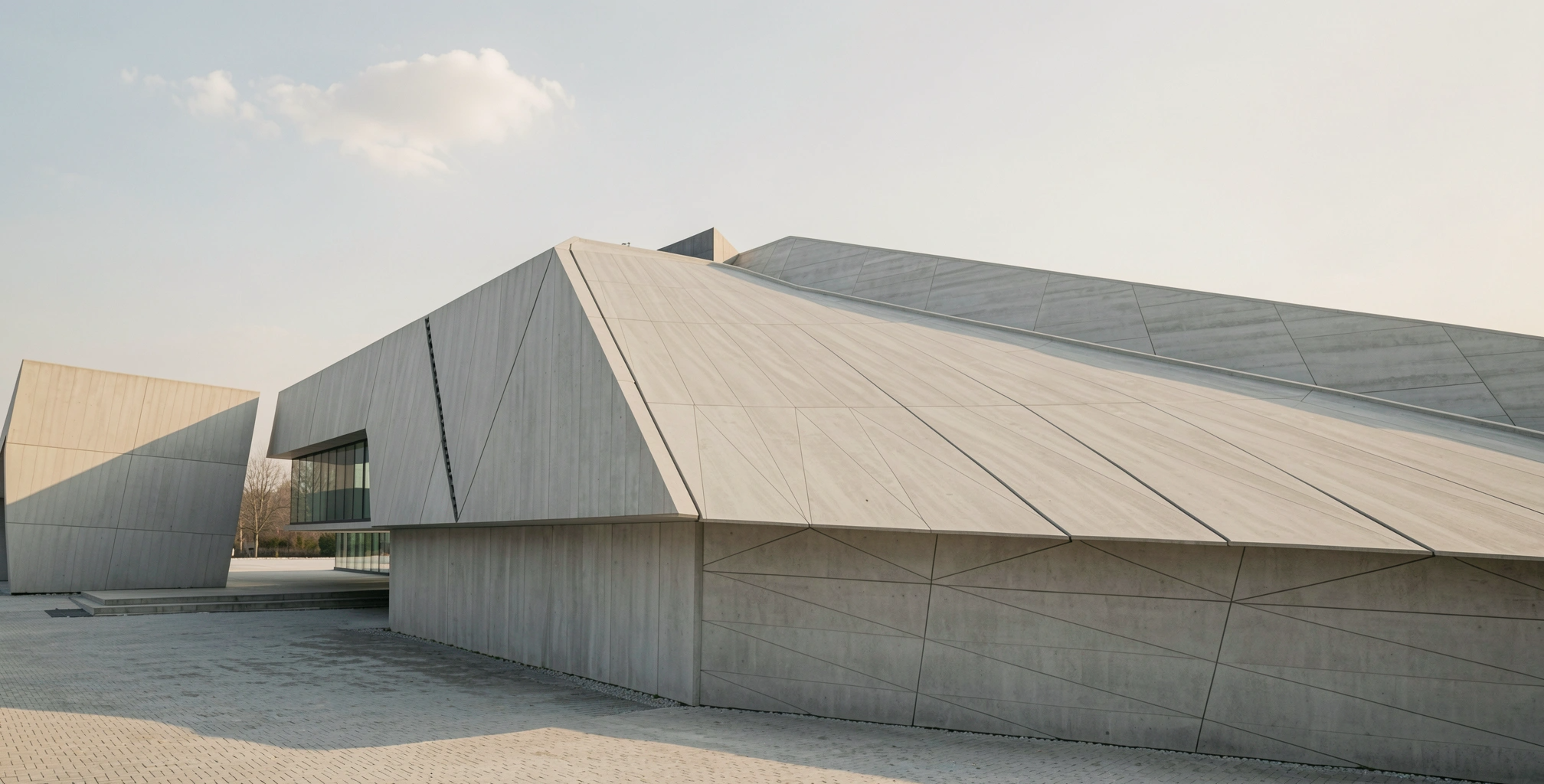
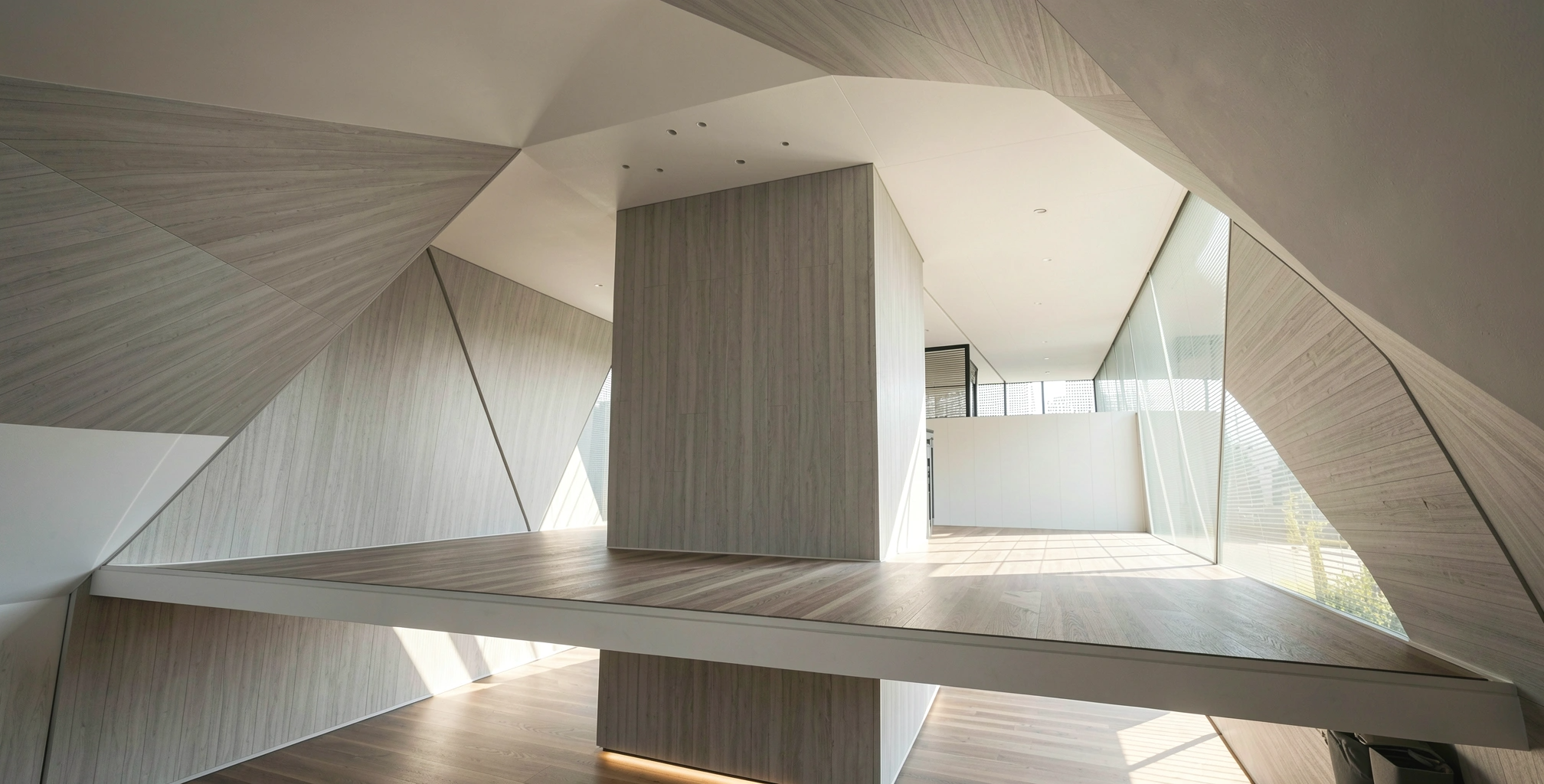
The architectural character of the gallery emerges directly from its structural organisation. Inclined walls, expanding volumes, and non-orthogonal spaces are not applied formal gestures but consequences of the structural system itself.
The steel lattice frame allows complex geometries to be generated from straight members, avoiding the need for expensive curved fabrication while maintaining a rational construction process. Structural members define the boundaries of space, shaping movement through the building and creating a sequence of galleries with differing proportions, orientations, and spatial character.
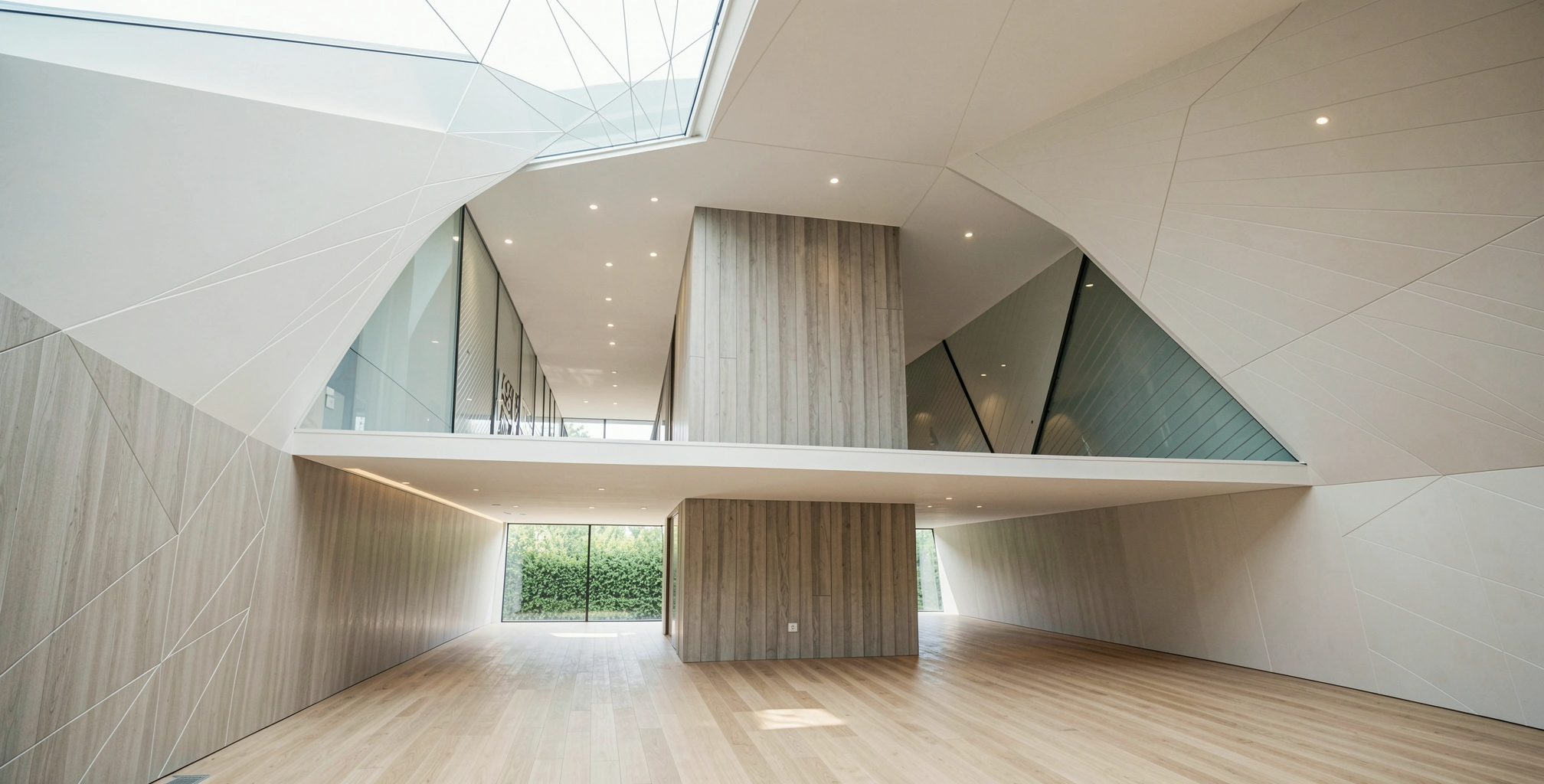
Rather than occupying a neutral container, visitors experience a series of spaces whose form is directly generated through structural action.
Material Behaviour and Structural Hierarchy
The project exploits the complementary characteristics of steel and reinforced concrete. Steel provides long spans, geometric flexibility, and lightweight enclosure, while concrete provides mass, stiffness, and resistance to concentrated loads associated with large installations and sculptures.
Structural members are dimensioned according to span and loading requirements. Larger gallery spaces require deeper structural sections and longer spans, while circulation and support spaces operate with lighter structural elements. Concrete cores and cantilever supports provide stability to the overall system, resisting the forces generated by projecting volumes and irregular geometries.
This hierarchy allows the structure to remain efficient while accommodating significant variation in spatial conditions throughout the building.
Gallery Flexibility
Exhibition spaces must accommodate continual change. The structural system is therefore organised to minimise internal obstructions and maximise flexibility.
Large spans reduce the need for internal supports, allowing exhibitions to be arranged independently of the structural framework. Screens, partitions, and display systems are attached directly to the primary structure, enabling changing exhibition layouts without structural modification.
The separation between permanent structural order and temporary exhibition infrastructure allows the building to adapt to different curatorial requirements while maintaining spatial coherence.
Environmental Integration
Environmental performance is integrated within the structural framework. Openings are positioned within structural bays to admit controlled daylight, while roof structures and external louvres provide solar protection where required.
The spacing and depth of structural elements contribute to the distribution of light throughout the galleries, helping to avoid concentrated glare while supporting stable exhibition conditions. Glazed and opaque façade elements are coordinated with the structural frame so that environmental control remains aligned with the building's constructive order.
Environmental performance therefore emerges through the relationship between structure, enclosure, and space rather than through independent technical systems.
Constructive Expression
The gallery derives its architectural expression from the visibility of its structural organisation. The steel lattice frame, concrete supports, cantilevered volumes, and structural hierarchy remain legible throughout the building.
Expression does not arise through applied form or decoration. It emerges from the way forces are carried, spans are achieved, and space is organised. The structural system establishes proportion, rhythm, and enclosure simultaneously, making the relationship between construction and experience directly visible.
The project demonstrates how structure can operate as a generator of architectural form, spatial experience, and environmental performance. Rather than simply supporting the gallery, the structural system becomes the primary medium through which the architecture is conceived, organised, and expressed.