
Conference Center, Miami, USA
Further information and case study for this project can be found at the De Gruyter Birkhäuser Modern Construction Online database
The following architectural case study is not available at Modern Construction Online
Conference Centre — Landscape, Structure and Civic Gathering
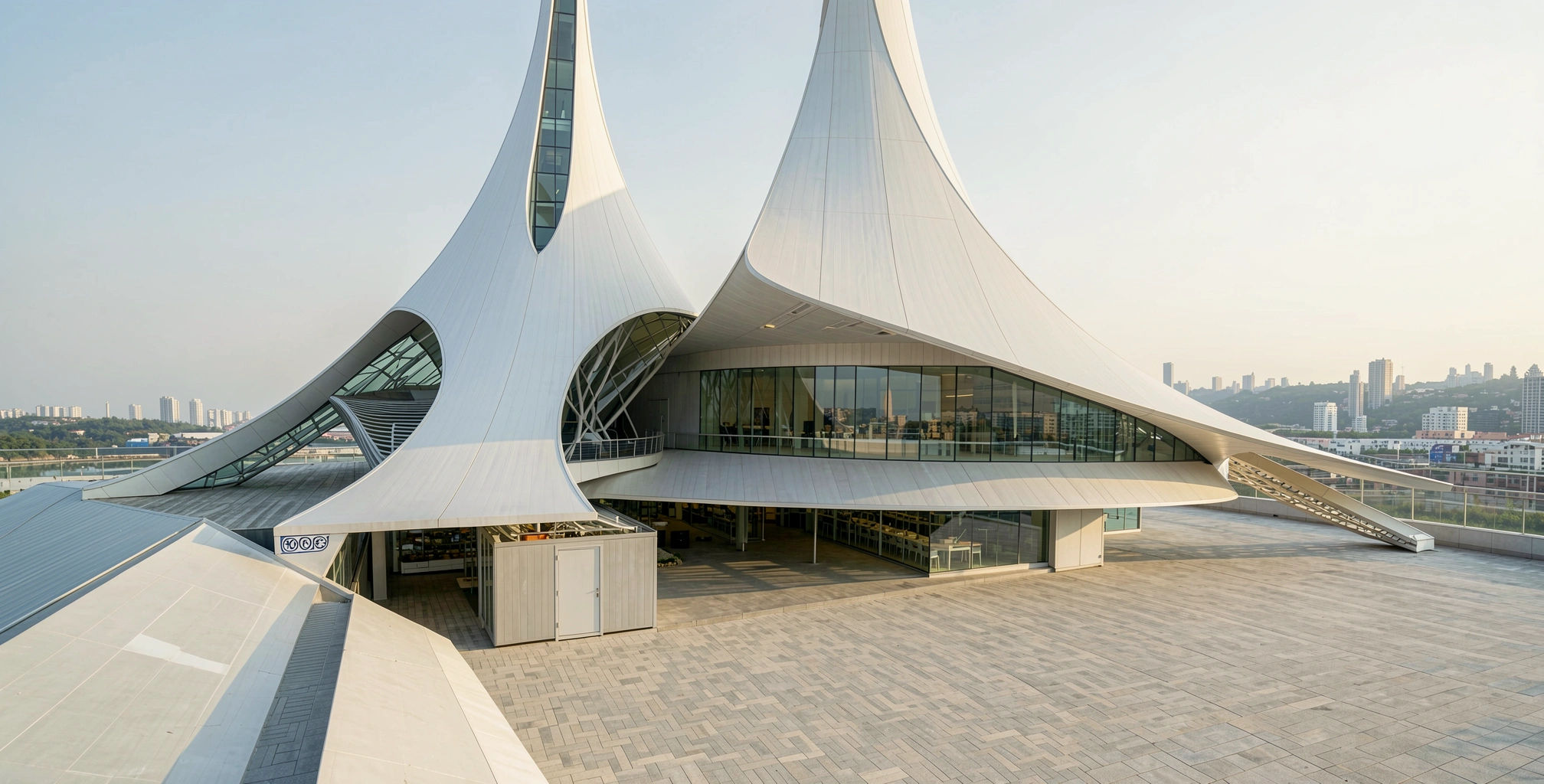
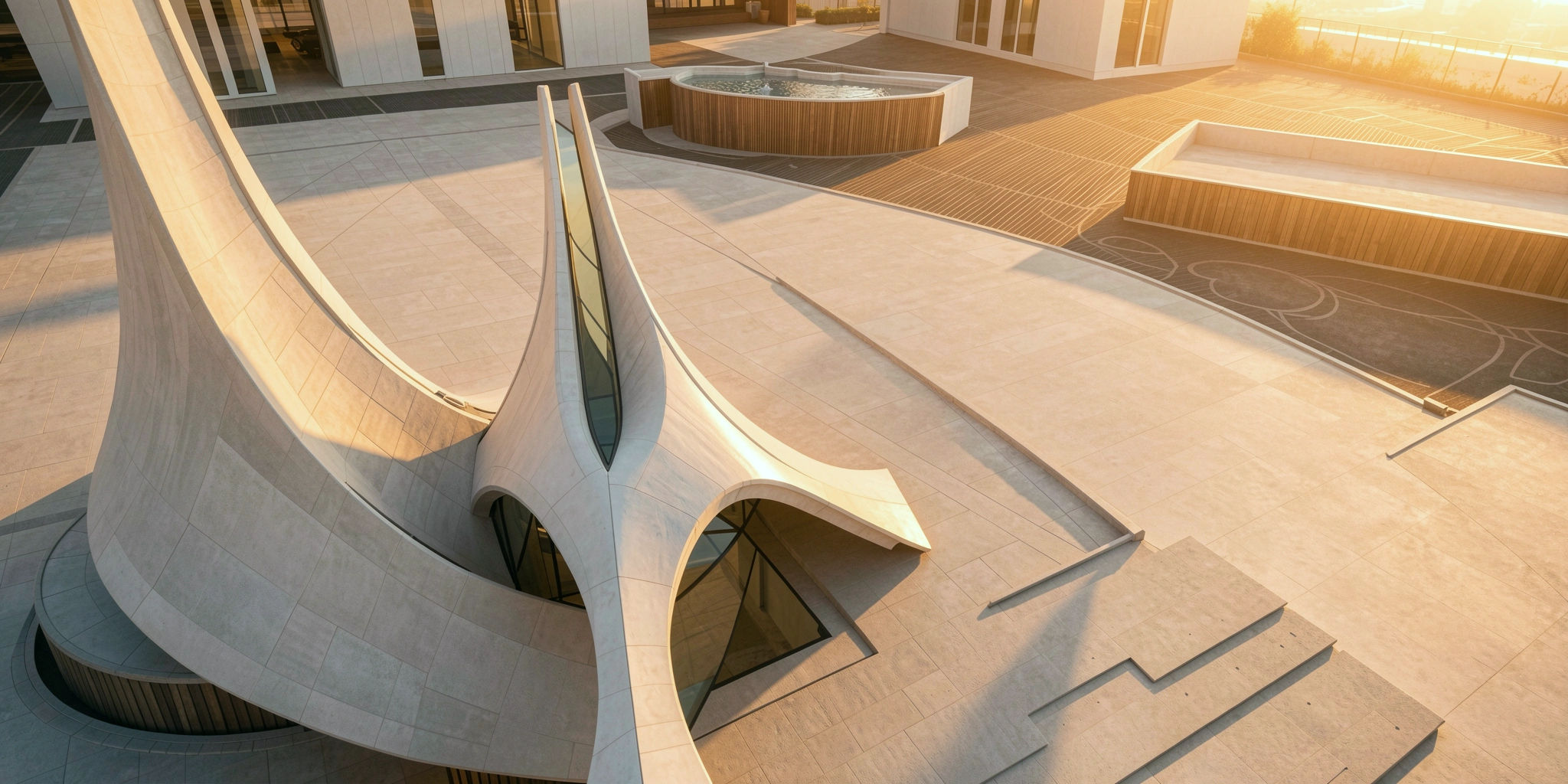
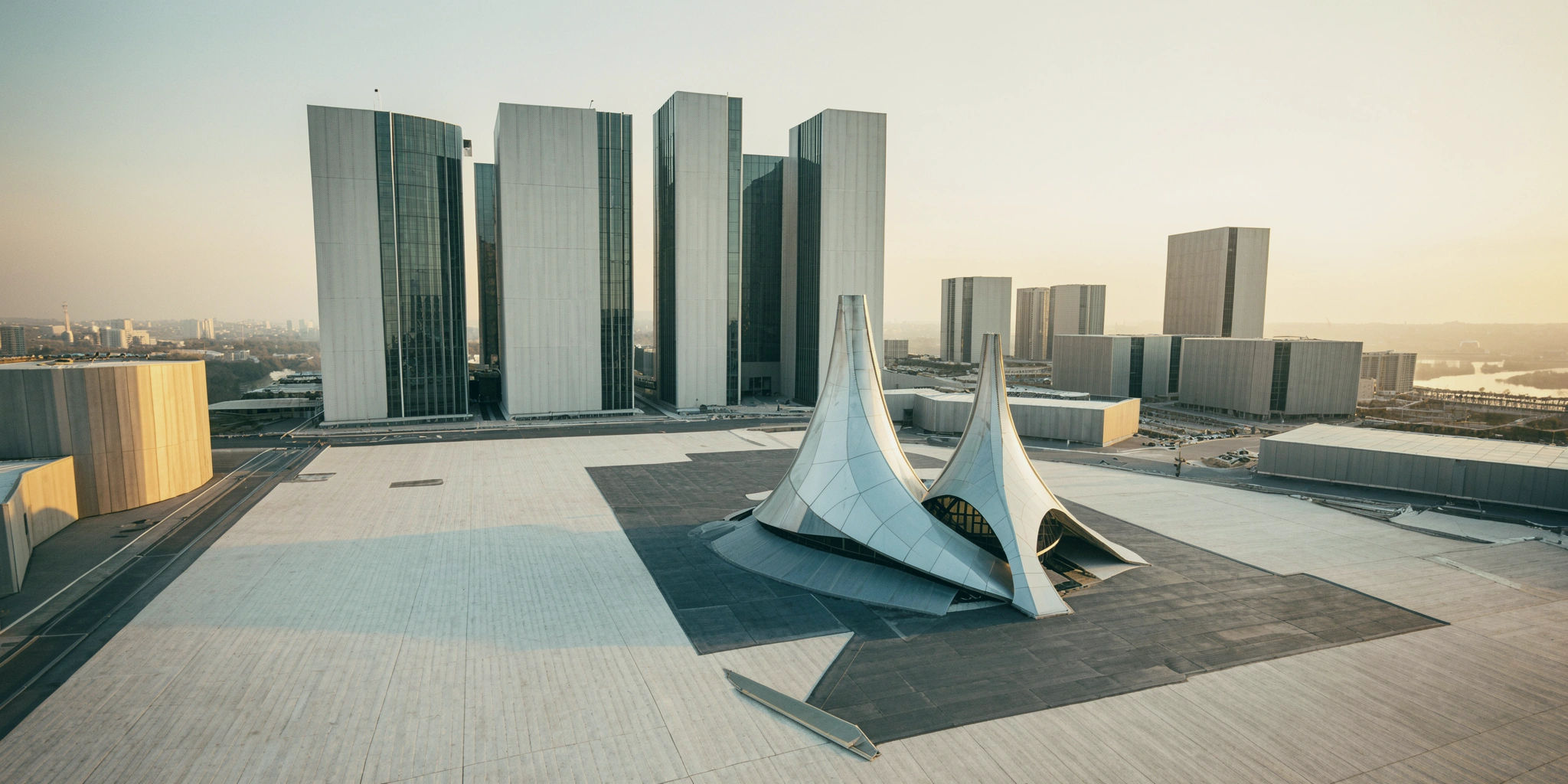
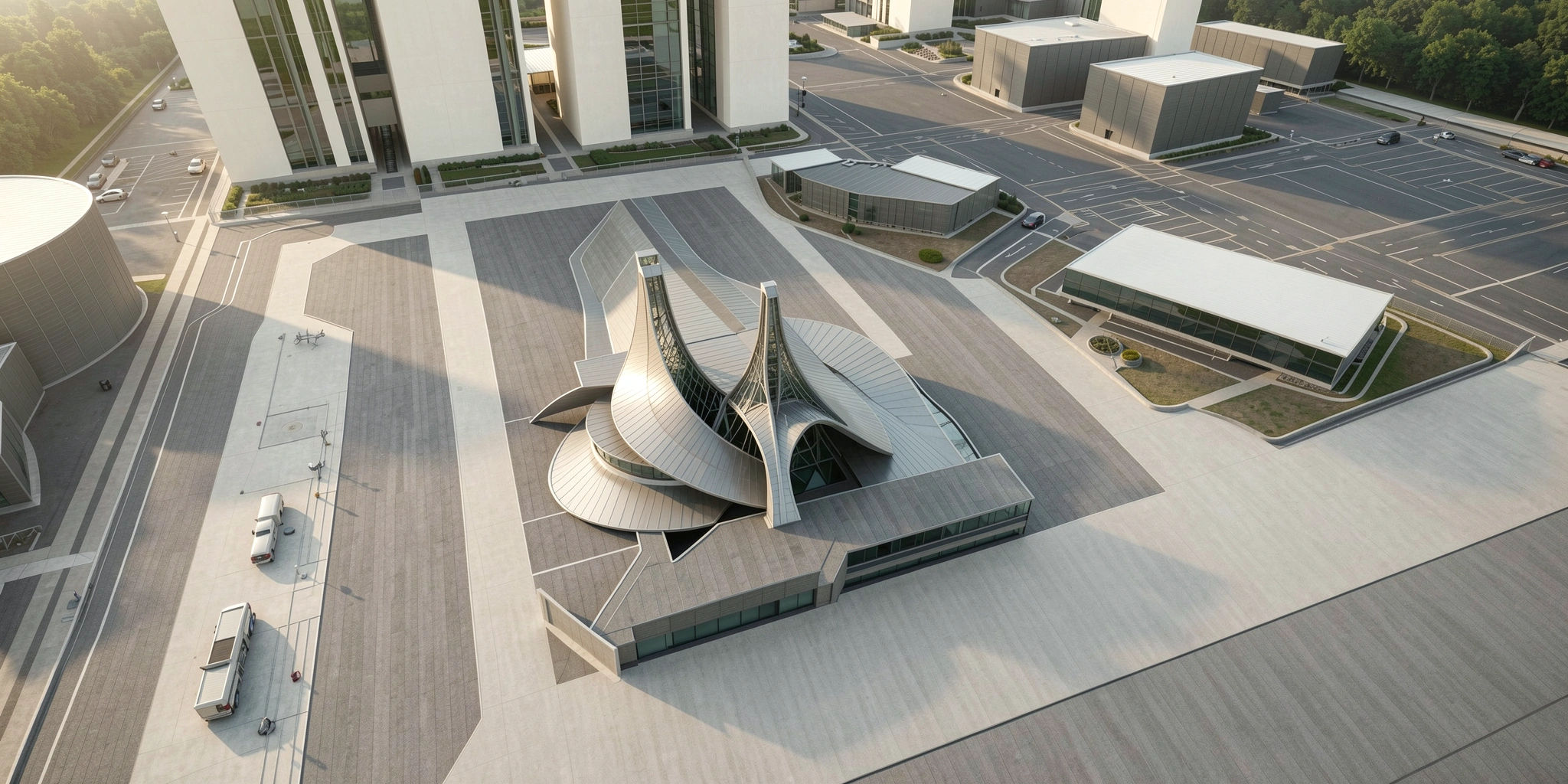
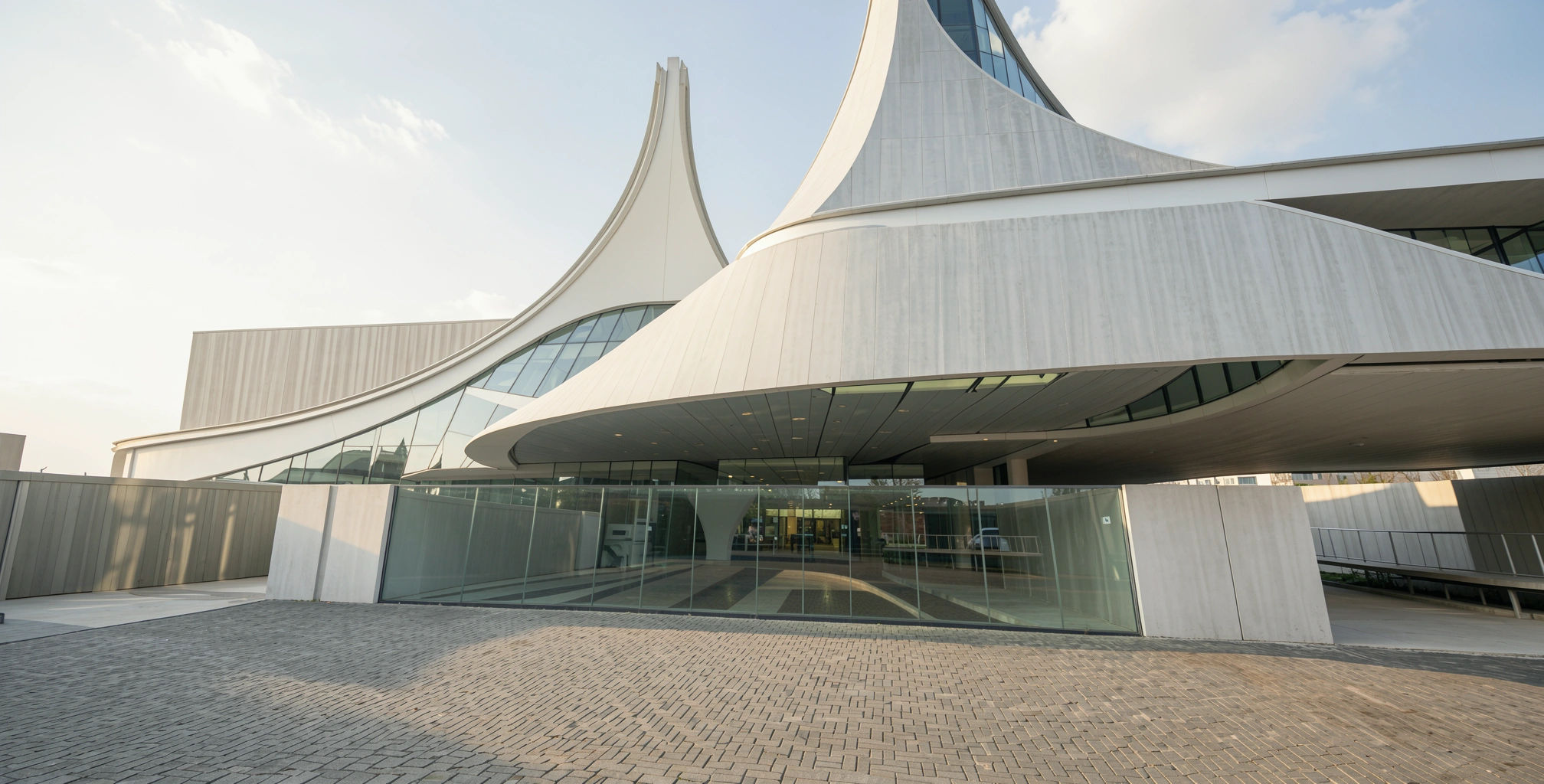
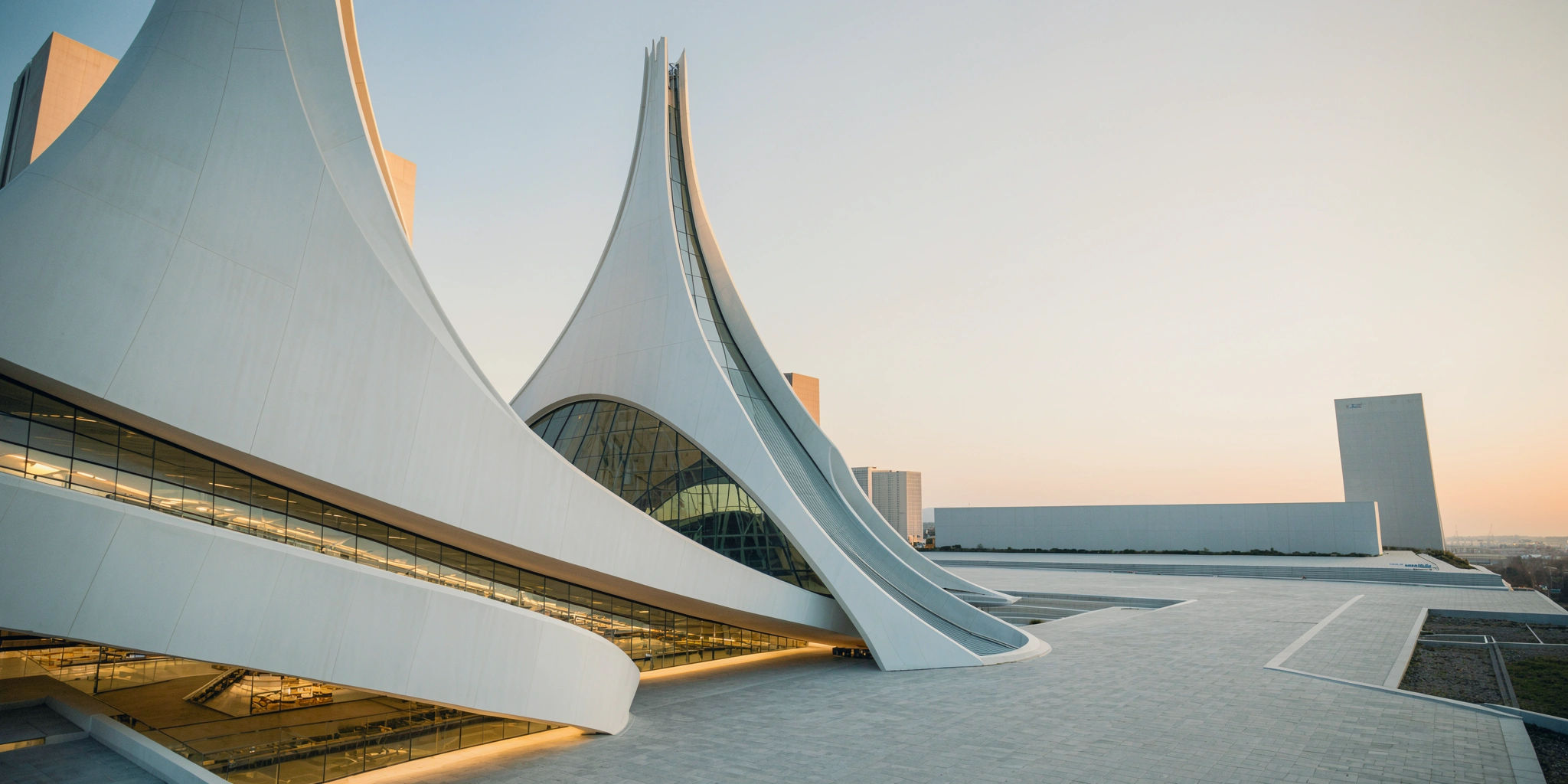
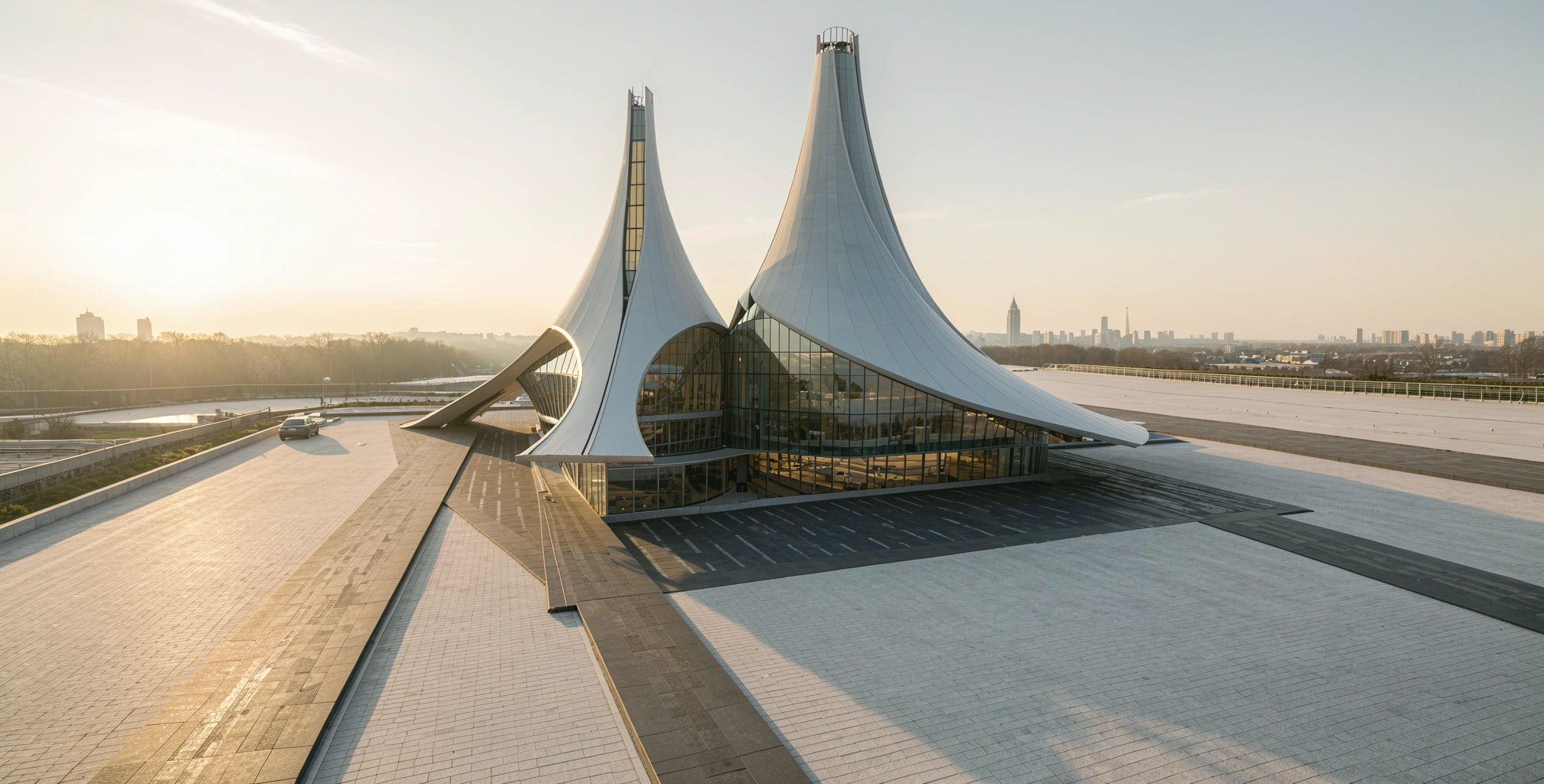
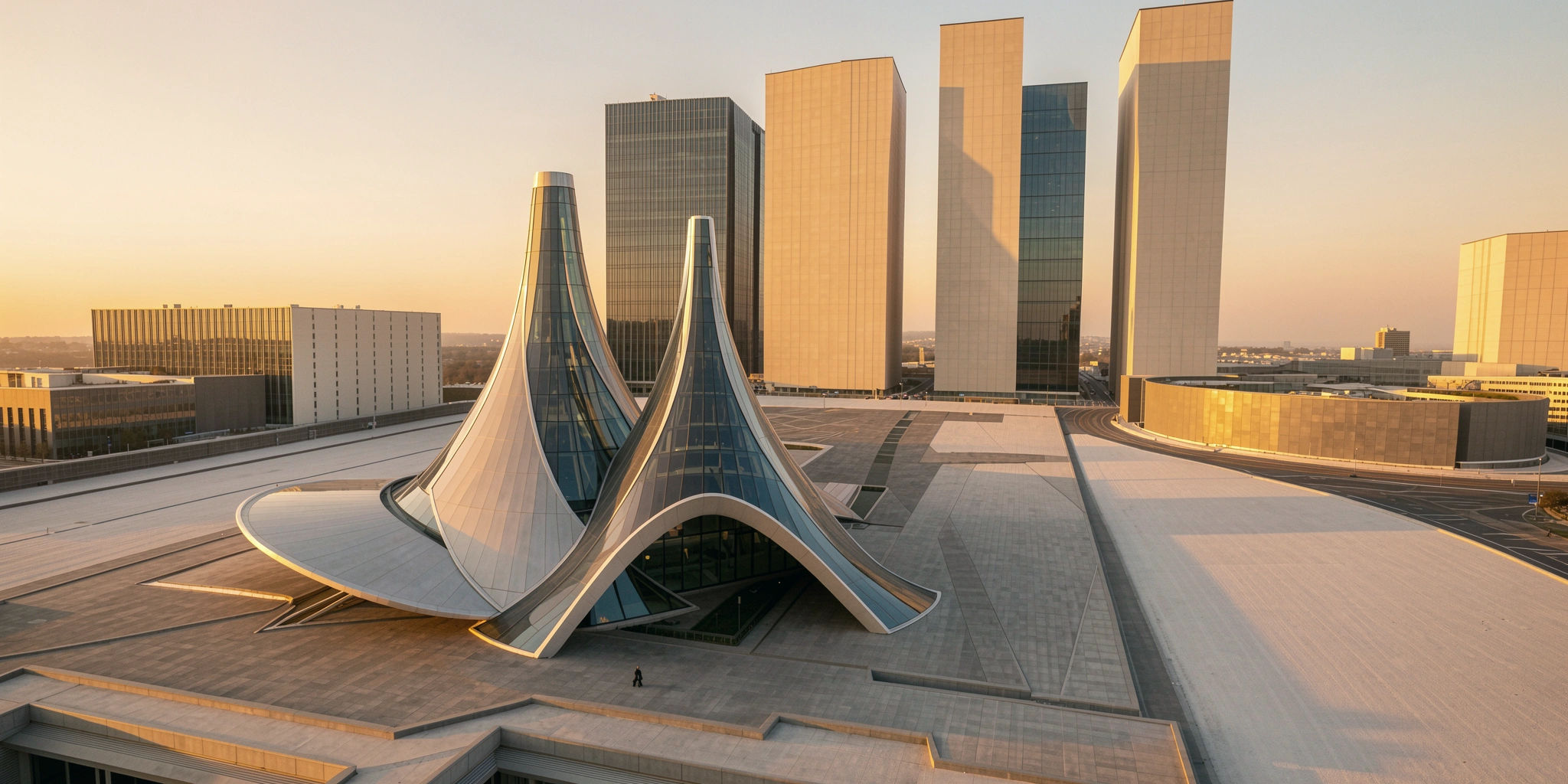
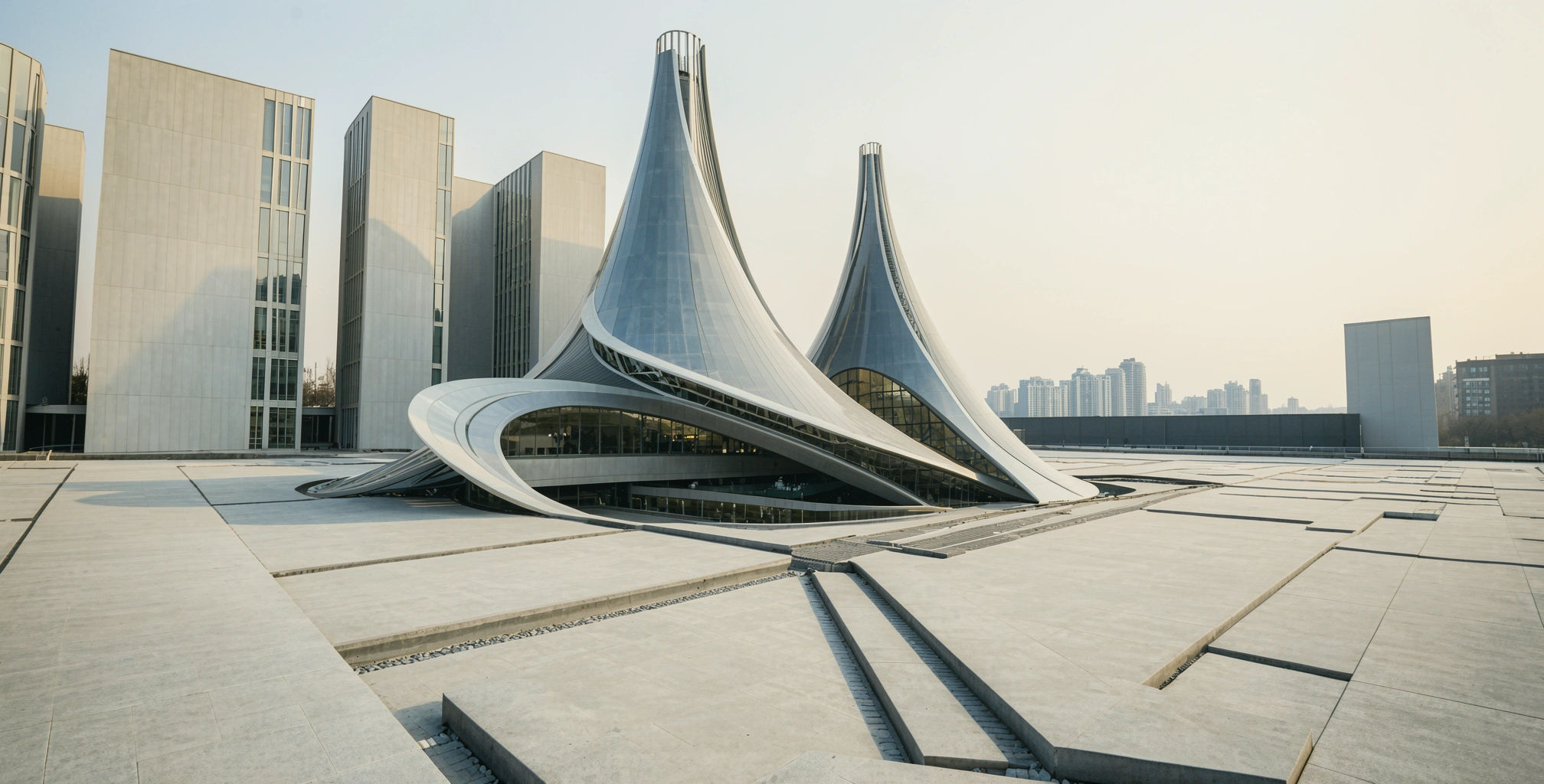
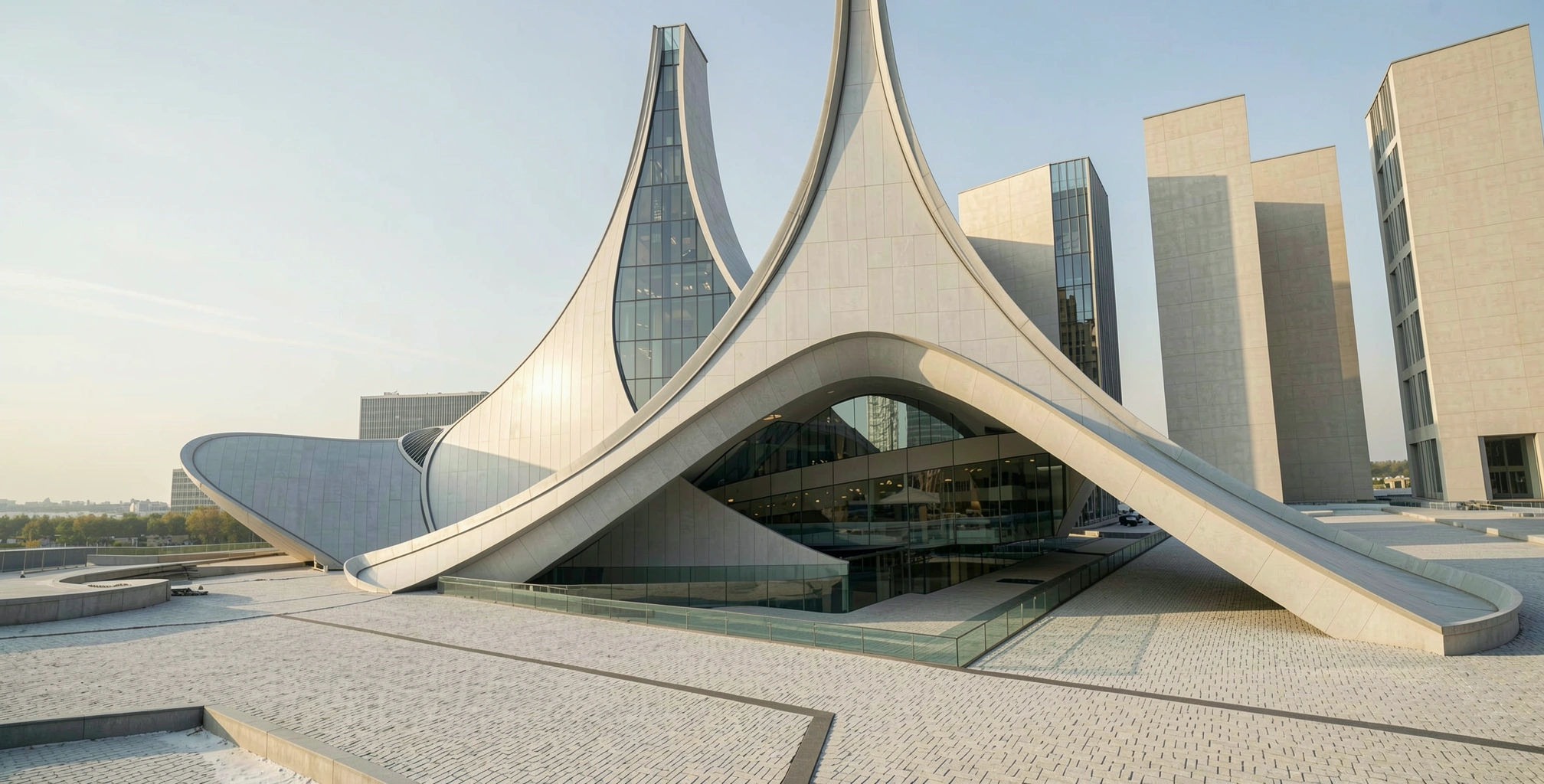
This project reimagines the conference centre as a landscape intervention rather than an isolated architectural object. Located within a public park in Miami, the building is conceived as a largely subterranean environment whose principal spaces are embedded beneath the landscape. Only two sculptural roof structures emerge above ground, creating a distinctive civic presence while preserving the openness and continuity of the surrounding site.
The project explores how architecture, landscape and public space can operate as a unified system. Rather than occupying the site as a freestanding object, the building becomes part of the terrain itself. The park flows around and over the accommodation below, allowing the landscape to remain the dominant experience while the architecture provides spaces for gathering, learning and cultural exchange.
By placing the majority of the building beneath ground level, the design benefits from the environmental advantages of the surrounding earth. The thermal mass of the landscape contributes to the moderation of internal conditions, reducing environmental loads while creating stable and comfortable spaces for occupation. Environmental performance is therefore integrated into the architectural concept from the outset rather than applied as a separate technical layer.
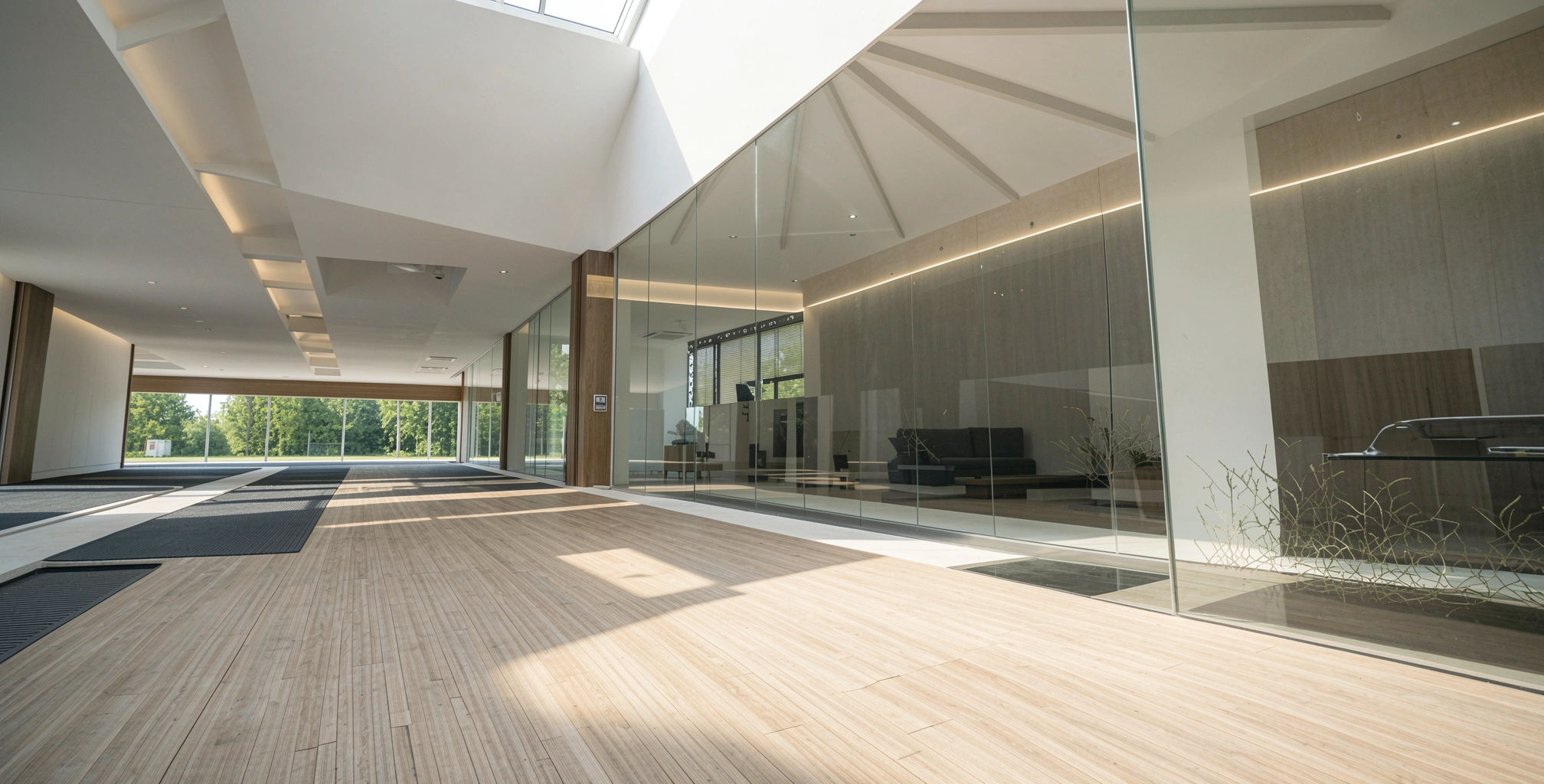
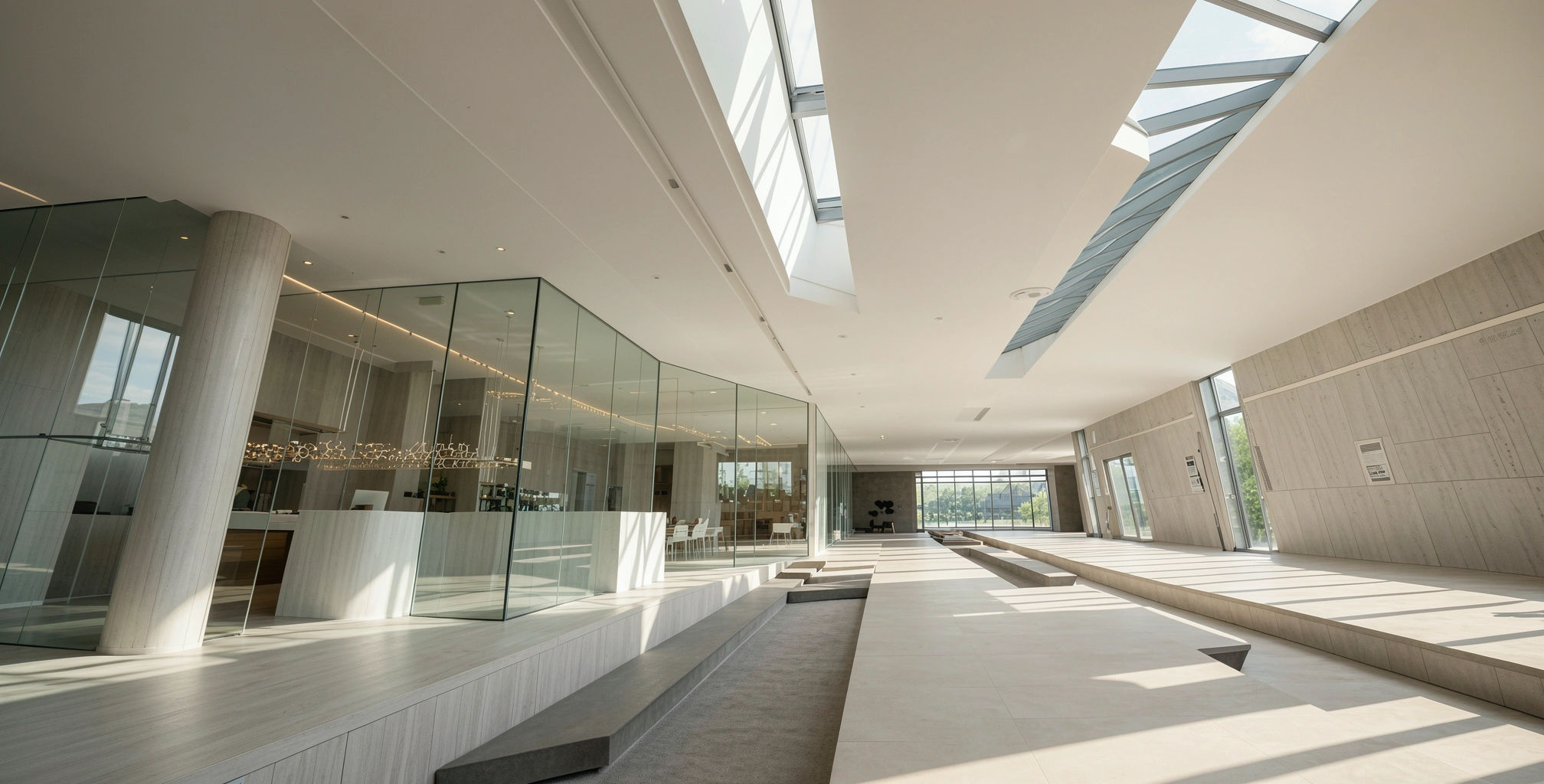
At the heart of the project are two large column-free halls capable of accommodating a wide range of activities. Long-span roof structures create flexible interiors free from structural obstruction, allowing spaces to be configured for conferences, exhibitions, performances, public gatherings and cultural events. This adaptability was a fundamental objective of the design, enabling the building to respond to changing patterns of use over time.
Unlike conventional conference venues, which are often organised around fixed seating arrangements and predetermined relationships between speaker and audience, the project promotes participation and flexibility. Level floor plates support multiple modes of occupation, encouraging collaborative formats, informal gatherings and evolving forms of public engagement. The architecture provides a framework for use rather than prescribing how activities should occur.
Natural light plays an important role in the experience of the building. Carefully positioned openings within the roof structures introduce daylight deep into the interiors, creating changing patterns of illumination throughout the day. Light, shadow and structure work together to establish a strong connection between the spaces below ground and the environmental conditions above.
The roof structures serve both architectural and structural functions. Their sweeping geometries create large uninterrupted spans while maintaining a sense of lightness and elegance. Geometry, structure, fabrication and construction are developed as an integrated system, allowing the roofs to achieve both technical efficiency and a clear architectural identity. Emerging above the landscape, they provide orientation and civic presence while remaining closely connected to the spaces beneath.
The project is equally concerned with the experience of the landscape above. The roof forms frame views of the sky, create sheltered outdoor spaces and establish a network of public routes across the site. Visitors encounter the building gradually, moving between landscape and architecture rather than crossing a conventional threshold. This sequence reinforces the project's ambition to dissolve the distinction between building and site.
The conference centre challenges conventional expectations of civic architecture. Rather than creating a singular monument or a purely functional venue, it proposes an environment that combines flexibility, environmental responsiveness and spatial richness. The building operates simultaneously as public infrastructure and public landscape, supporting a wide range of cultural, educational and civic activities.
Through the integration of landscape, structure and public space, the project demonstrates how architecture can achieve a strong civic presence while remaining deeply connected to its setting. The result is a building that is simultaneously memorable and restrained, creating spaces for gathering and exchange while allowing the landscape itself to remain the defining experience.