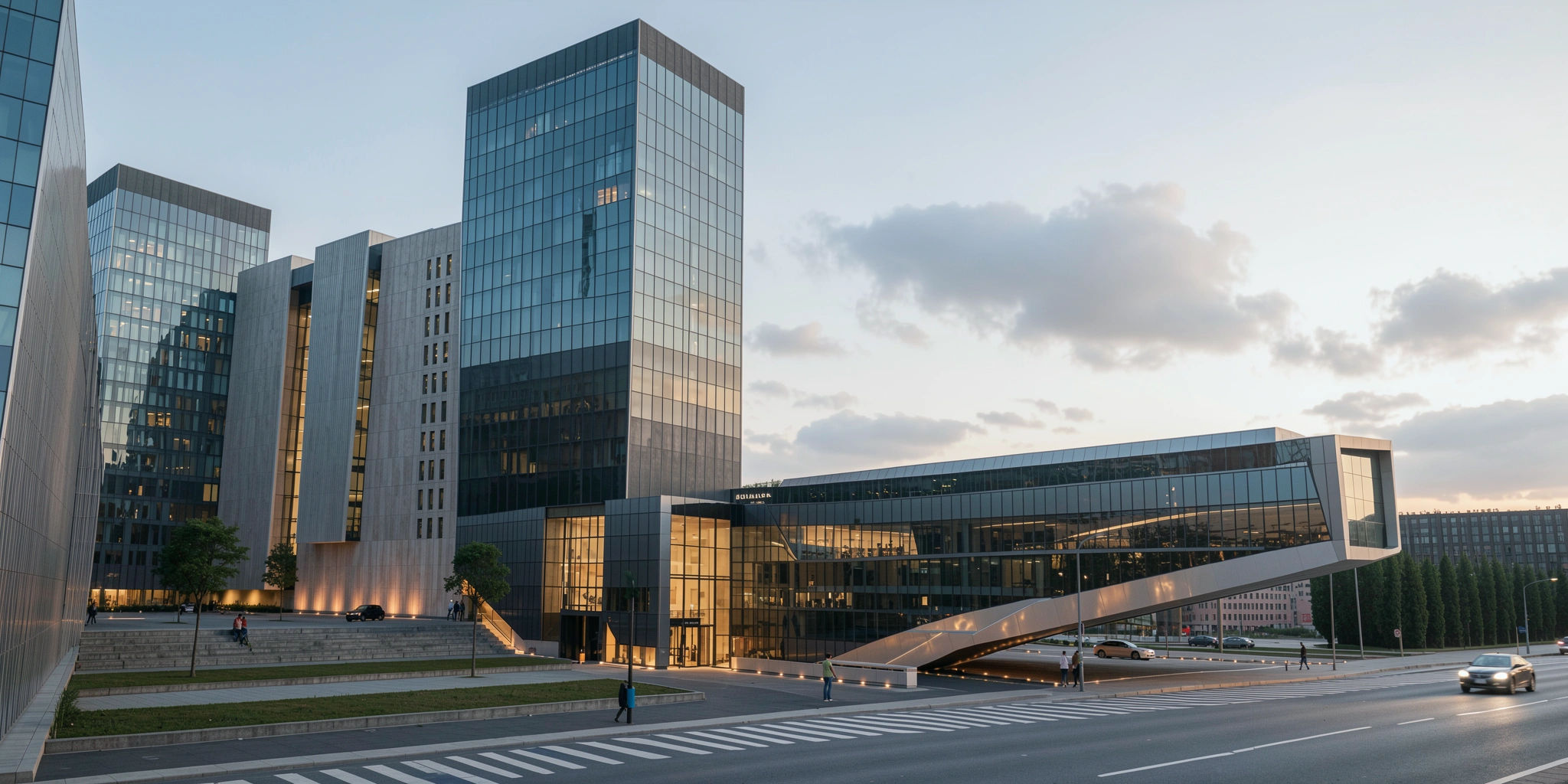
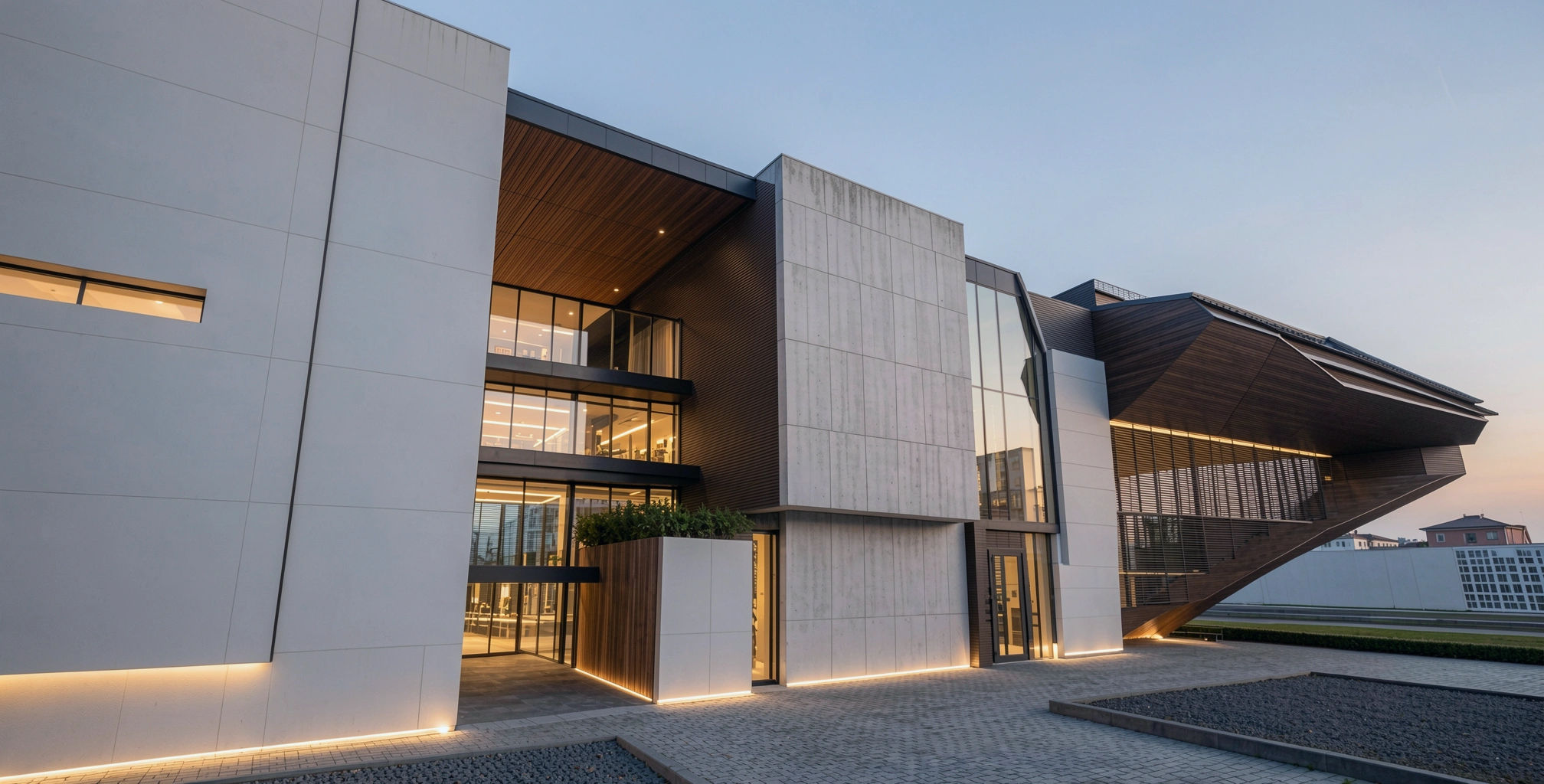
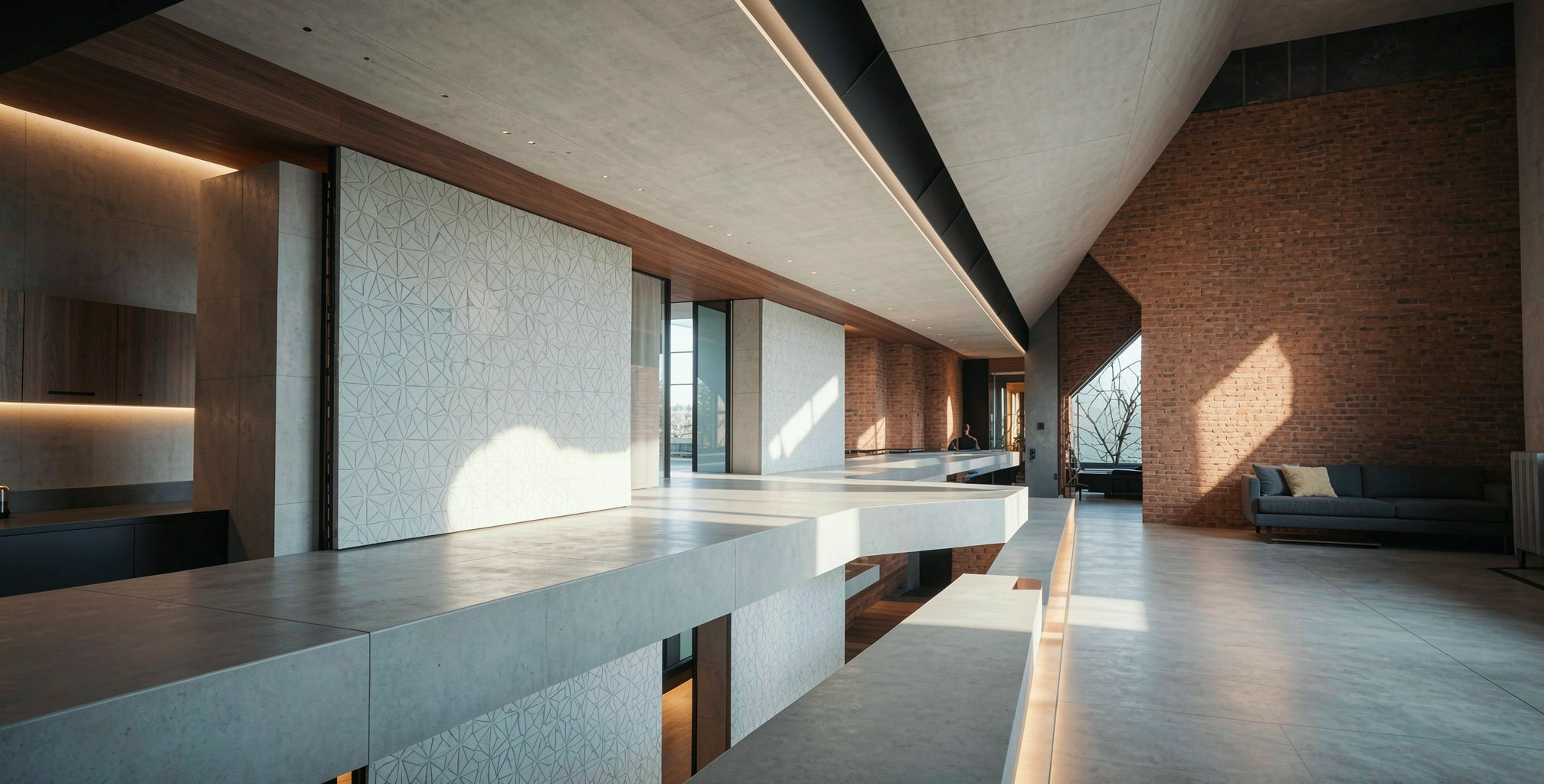
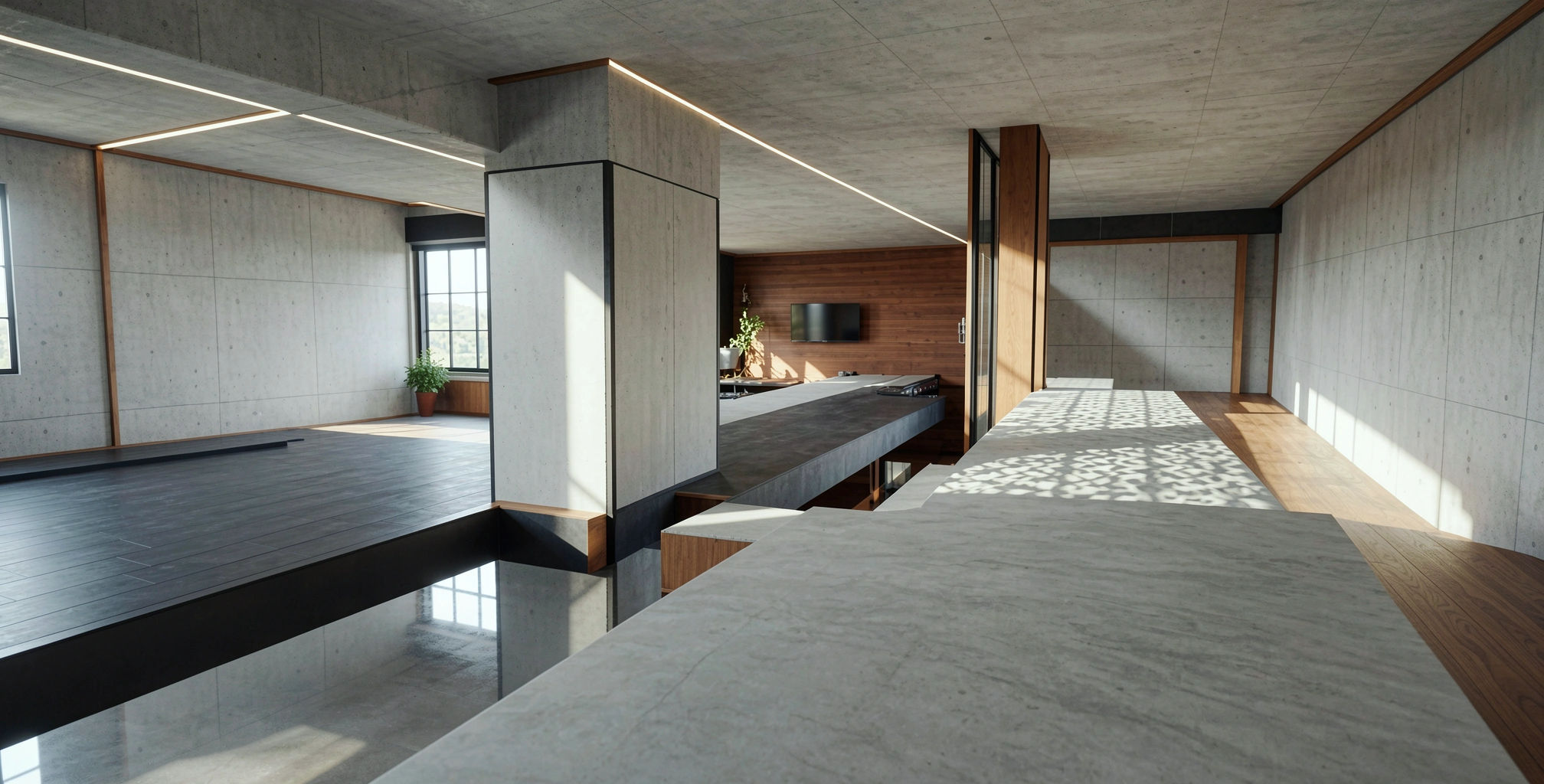
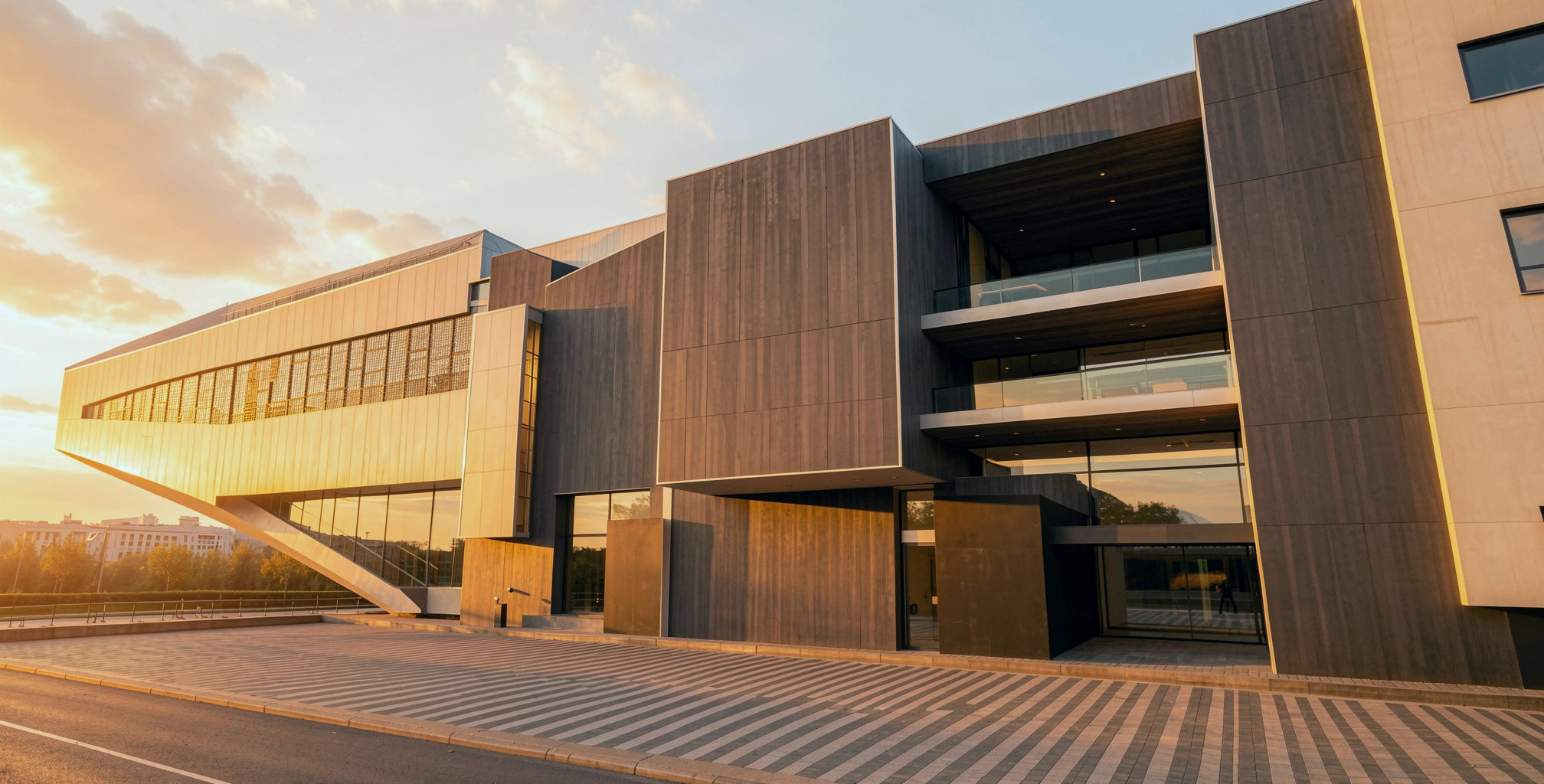
Entertainment Complex, Los Angeles, CA, USA
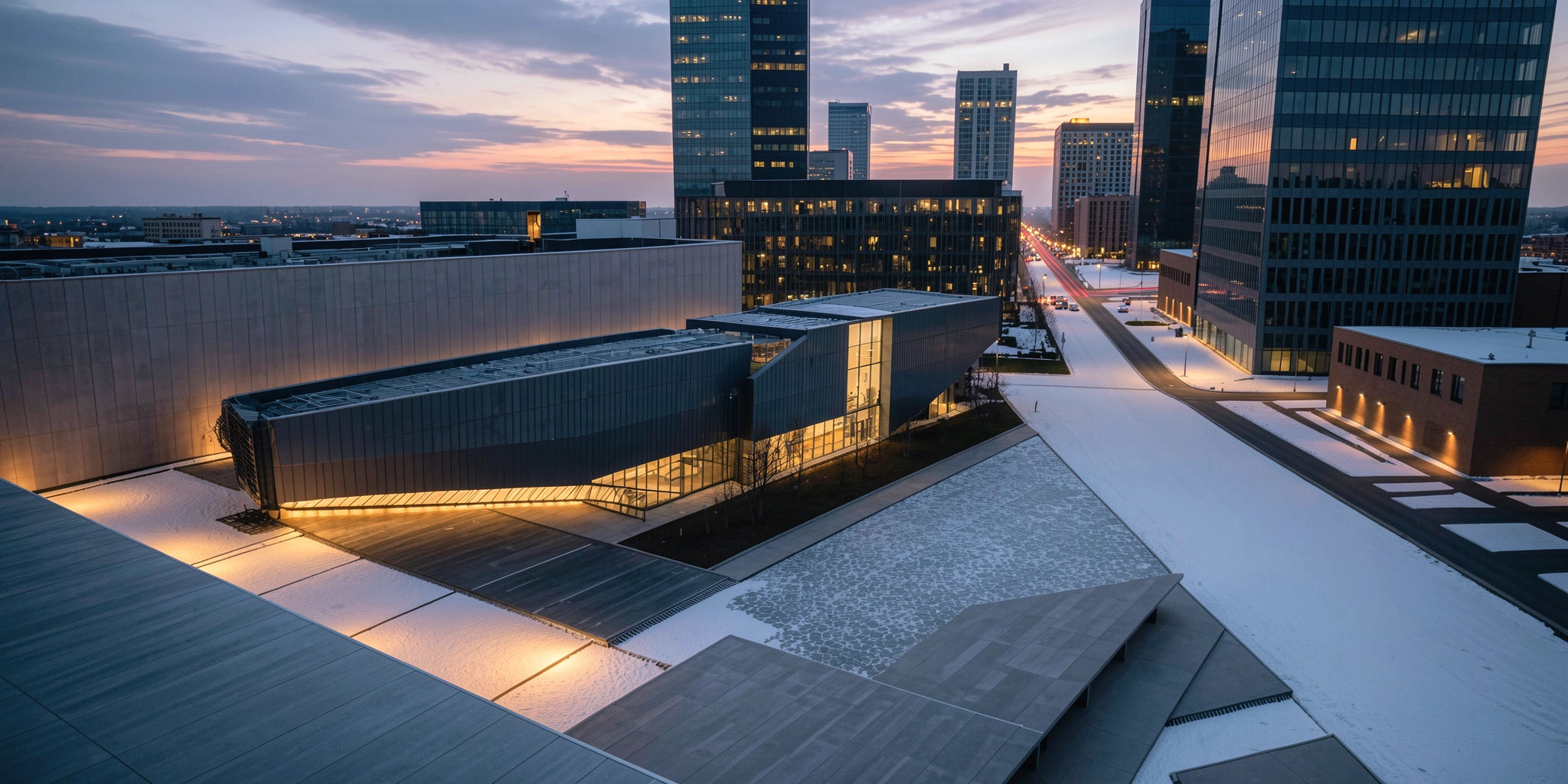
Further information and case study for this project can be found at the De Gruyter Birkhäuser Modern Construction Online database
The following architectural theory-based case study is not available at Modern Construction Online
Entertainment Complex, Los Angeles - Hybridisation of Spectacle and Participation in Contemporary Architecture
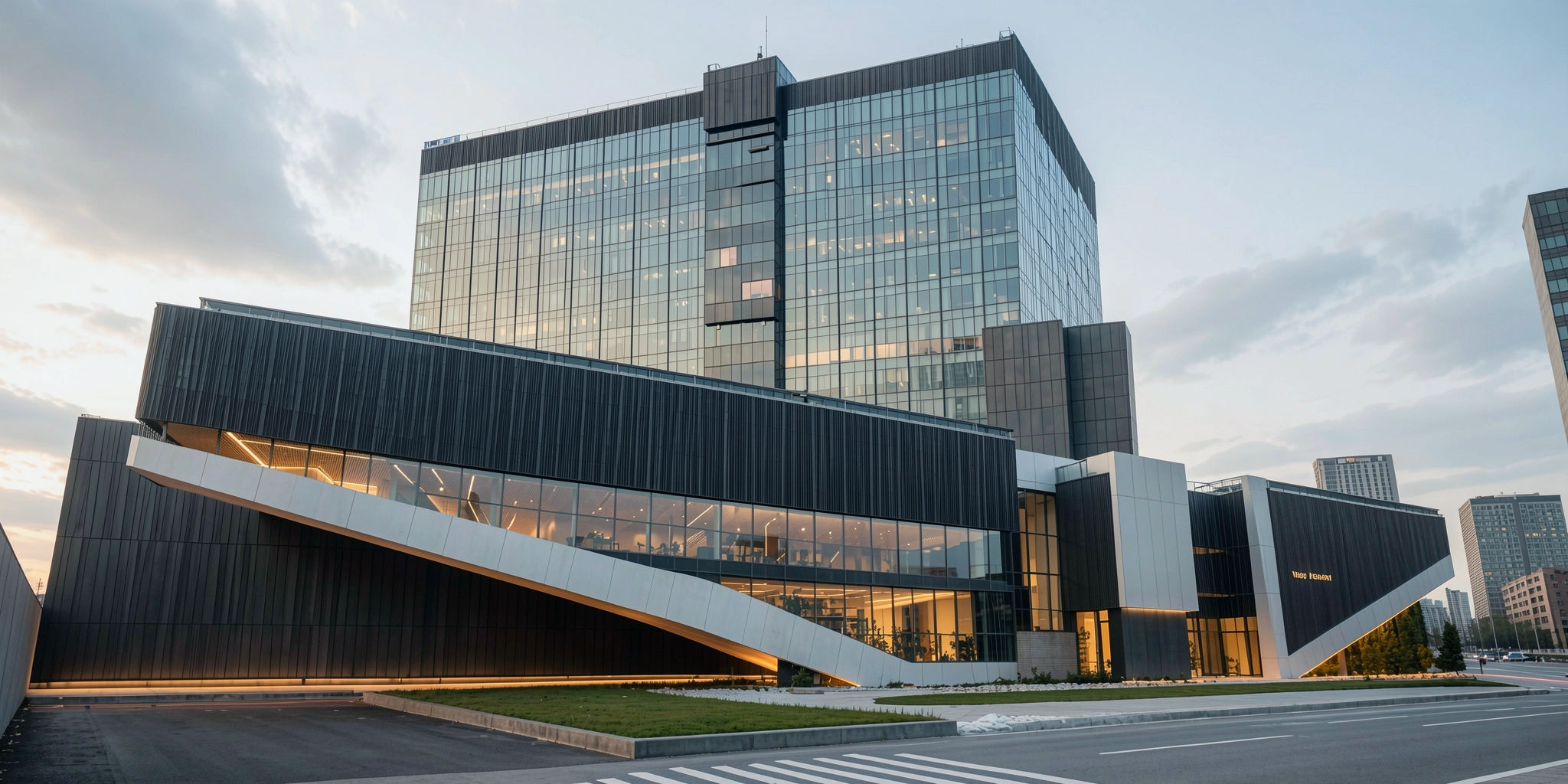
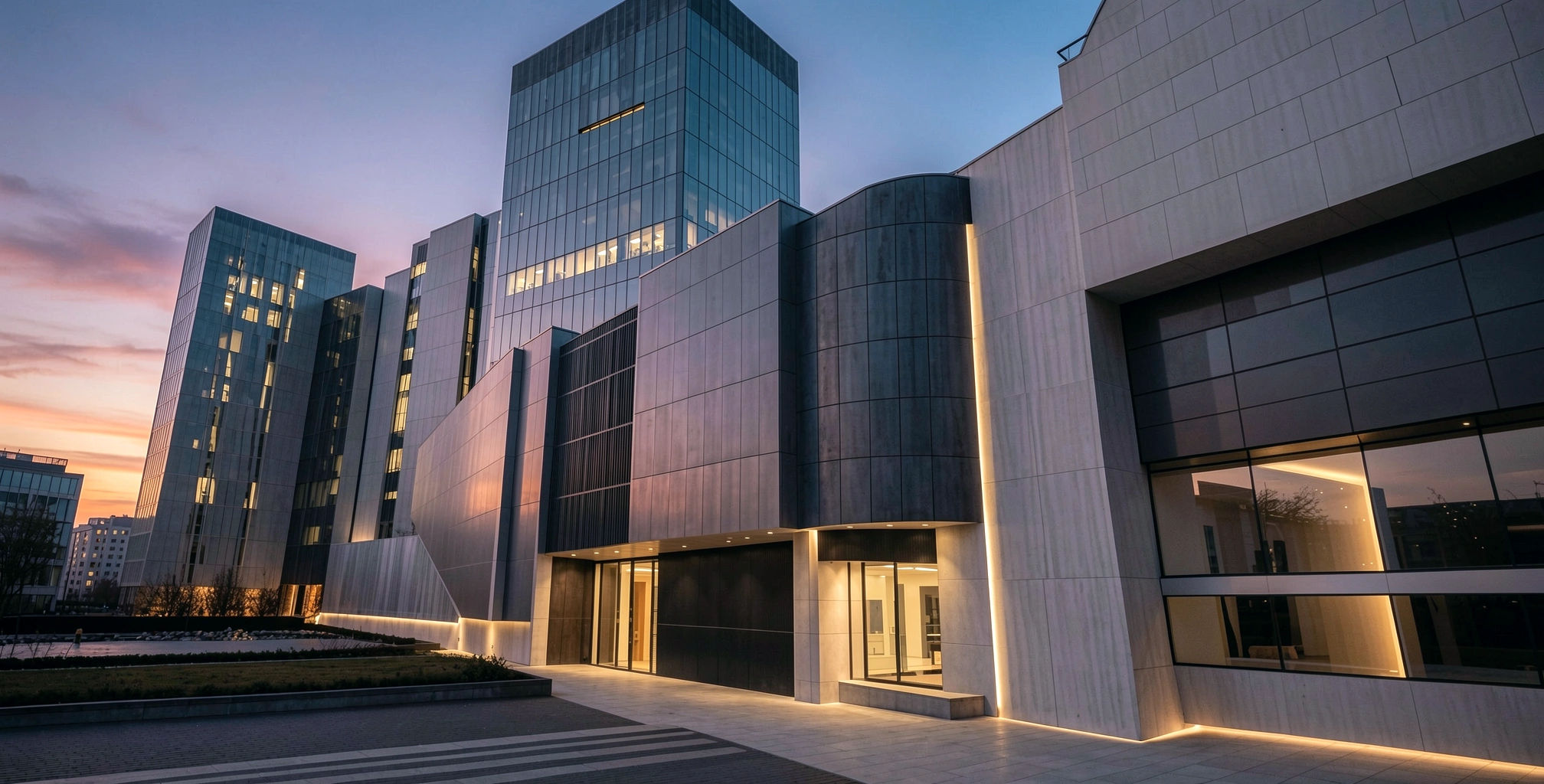
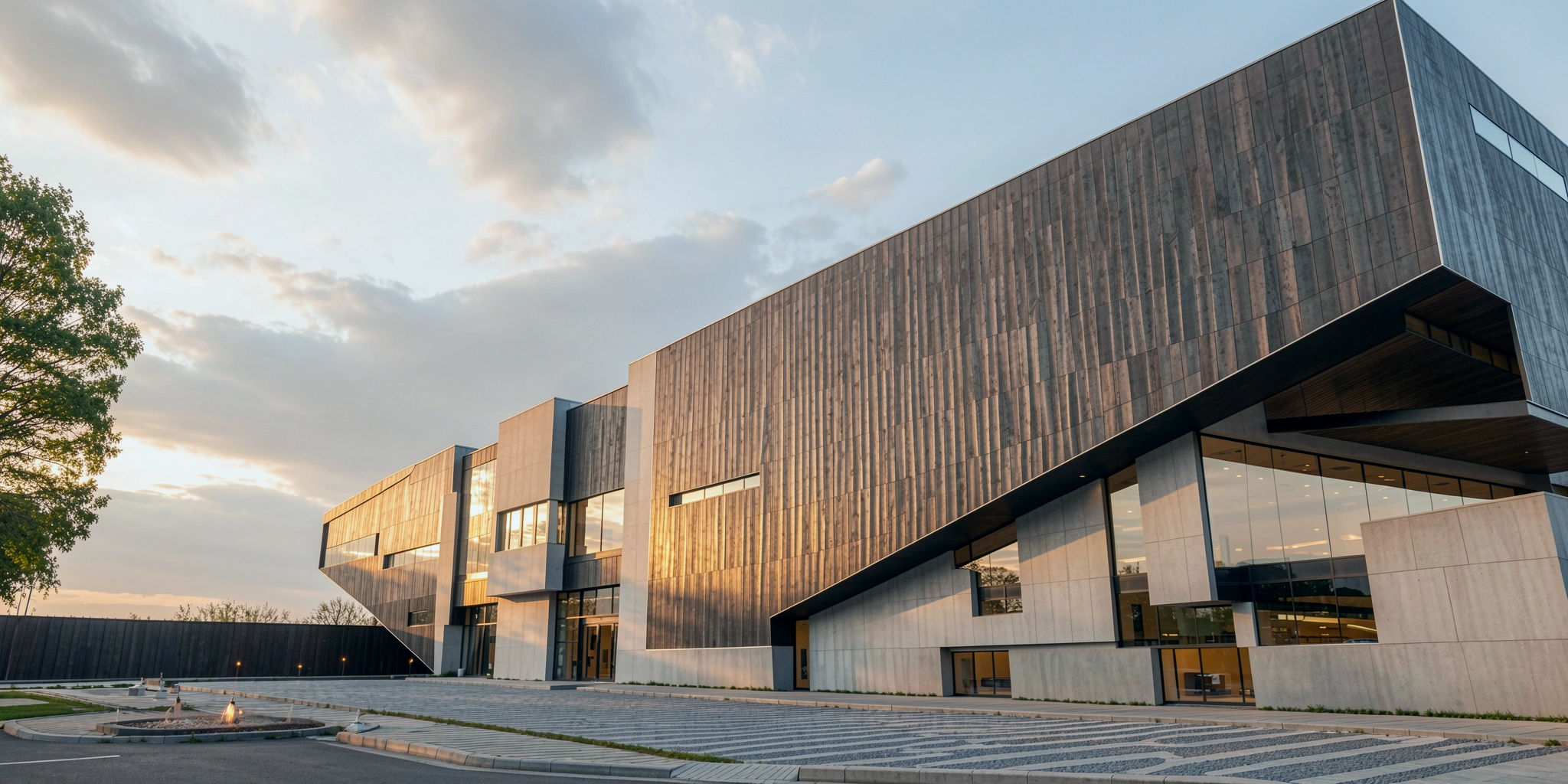
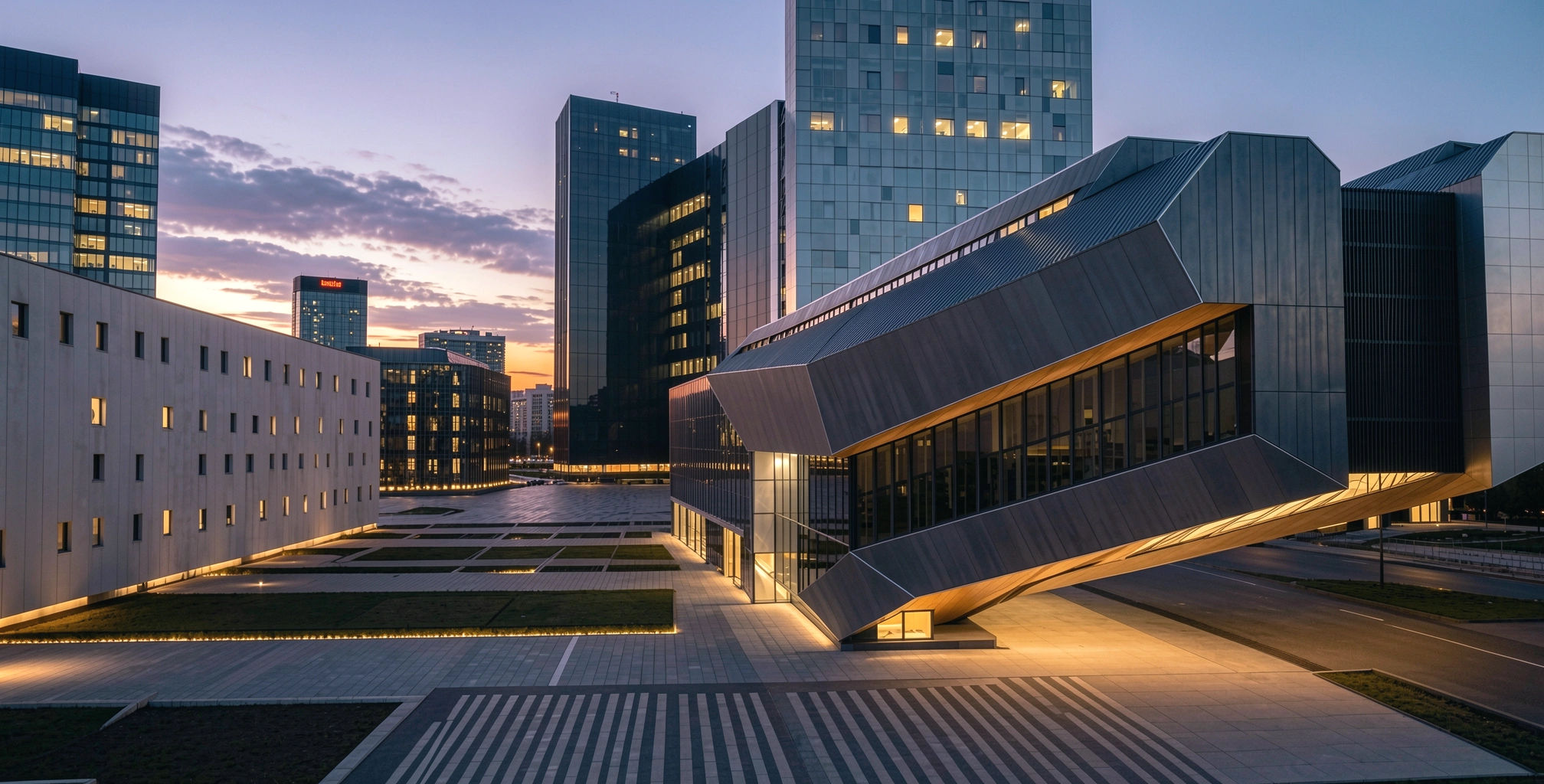
The Entertainment Complex in Los Angeles exemplifies a contemporary evolution of performance architecture—merging spectacle, interactivity, and digital technology into a unified programmable environment. Designed and engineered by Newtecnic, the project integrates amphitheatre, cinema, and media façade systems within a hybridised spatial framework. While technologically advanced, its conceptual lineage traces back to classical arenas and High Modernist megastructures.
Influential precedents include Le Corbusier’s Palais des Congrès (1964, Strasbourg) with its sculptural clarity and volumetric articulation; Eero Saarinen’s TWA Flight Center (1962, New York), a choreographed spatial experience; and Yoshinobu Ashihara’s Komazawa Olympic Gymnasium (1964, Tokyo), where spectacle and tectonic precision coalesce. Like these works, the Entertainment Complex treats the building envelope not merely as an environmental skin, but as a performative, immersive interface—supporting projection, interactivity, and thermal regulation.
This case study explores digitally enabled fabrication strategies, adaptive envelope systems, and parametric coordination. It builds upon themes outlined in Modern Construction Handbook, Modern Construction Envelopes, Modern Construction Case Studies, Modern Structural Design, and Modern Environmental Design (Watts, 2016, 2019a, 2019b, 2022a, 2022b, 2023), with particular focus on façade performance, modular fixing, and lifecycle adaptability as drivers of architectural identity and function.
Precedent-Informed Environmental Zoning Strategy
The design of Project 07 extends the environmental zoning strategy featured in Project 06 of Modern Environmental Design. The layout is spatially organised into functional zones aligned to occupancy patterns and climatic exposure, enhancing energy efficiency and environmental responsiveness. Orientation and programme are synchronised to maximise passive and active systems—including natural ventilation, mechanical cooling, and solar control.
Circulation paths and semi-external terraces function as environmental buffers. Integrated shading devices and layered façade systems regulate solar gain and daylight, while ensuring occupant comfort and adaptive flexibility. The zoned strategy also enables efficient mechanical distribution and reduced energy consumption by tailoring system performance to localised demands.
Facade Innovation Informed by Meixihu IC&A Centre
The Entertainment Complex’s façade technology is notably influenced by the Meixihu International Culture & Arts Centre in Changsha, as featured in Modern Construction Case Studies (Watts, 2016). The Meixihu envelope pioneered hybrid systems that combine media surfaces with high-performance environmental controls. This approach directly informs the Entertainment Complex’s dynamic media façade and adaptive skin.
Both projects utilise digitally coordinated fabrication and modular fixing systems that accommodate thermal movement and allow rapid panel replacement. The Meixihu Centre’s integration of curved aluminium subframes and bracketry for ETFE cushions and perforated panels parallels the Entertainment Complex’s use of torsion spring brackets and DMX-actuated retractable panels. This technological lineage reflects a tectonic language where digital workflows, environmental adaptability, and media integration converge—positioning the envelope as a programmable, interactive architectural skin.
Hybrid Programme: Architecture of Participation
The building accommodates a multifaceted programme—including e-sports arenas, immersive cinemas, media zones, and food courts—organised via parametric zoning. Each zone is differentiated by material systems and simulations of user movement, acoustic performance, and ventilation dynamics.
This fusion of typologies echoes the hybrid ambitions of Saarinen’s TWA Flight Center, blending infrastructure, spectacle, and flow into an experiential continuum. The Entertainment Complex similarly deploys modular, reconfigurable components. Acoustic shells can be repositioned via clamp-fixed steel subframes. Quick-release brackets and adjustable anchors enable real-time spatial transformations—demonstrating adaptive detailing strategies described in Modern Construction Case Studies (Watts, 2016, 2019a).
Circulation and Embedded Infrastructure
Interstitial volumes double as circulation and infrastructure corridors. Digitally modelled trusses and skybridges incorporate lighting, ventilation, and cable systems, all coordinated using BIM-based clash detection.
Prefabricated mechanical fixings—telescopic sleeves, flanged joints, CNC-fabricated components—ensure geometric precision. Lighting systems and cable trays are cast into aluminium nosing plates fixed to post-tensioned decks, aligning with integrated infrastructure strategies in Modern Construction Envelopes (Watts, 2019b).
Form and Structure: Parametric Diagrid and Responsive Enclosure
Architecturally, the complex is characterised by cantilevered forms and tapering geometries derived from simulations of stress paths and crowd movement. A diagrid steel frame forms the structural backbone, composed of prefabricated elements joined with torque-controlled gusset connections engineered for seismic resilience.
Echoing Le Corbusier’s Palais des Congrès, the project integrates structural rhythm with spatial flexibility. Dual-layer steel purlins support the thermally responsive envelope, ensuring continuity in insulation and structural separation—exemplifying best practices in envelope design (Watts, 2019b, 2022b).
Responsive HVAC and Lifecycle Detailing
HVAC systems are zoned based on environmental simulation workflows. Displacement ventilation is embedded beneath raked seating, while interstitial spaces within circulation routes are conditioned through concealed ducting. Equipment is mounted on vibration-isolated brackets with quick-release flanges for efficient maintenance.
Retractable grilles and concealed access panels employ push-lock systems for seamless integration and system legibility, reflecting lifecycle-oriented service strategies discussed in Modern Environmental Design and Modern Construction Handbook (Watts, 2022a, 2023).
Media Facade as Performative Envelope
The façade operates as both enclosure and media interface, consisting of a dual-layer system: ETFE cushions and perforated aluminium panels overlaid on programmable LED mesh. These are mounted on curved aluminium subframes via torsion spring brackets to manage thermal expansion and rapid replacement.
A key innovation lies in retractable projection panels that slide along DMX-actuated linear tracks, enabling transitions between passive enclosure and active media display. Each cassette integrates insulation, access hatches, and MEP routing, clipped onto vertical rails with concealed hook brackets—realising modular principles outlined in Modern Construction Case Studies and Modern Construction Envelopes (Watts, 2019a, 2019b).
File-to-Factory Fabrication Workflow
The project utilises a fully digital file-to-factory workflow. Every element—from structural nodes to façade components—is tagged with unique identifiers and performance metadata. Structural nodes are cast using 3D-printed sand-resin moulds, while façade panels are robotically folded in response to acoustic and lighting simulations.
Factory-assembled fixing systems—blind rivets, torque-limited bolts, and locking clips—minimise site work and ensure precision. This approach reflects the principle of non-standard seriality embedded within the digitally-driven construction strategies documented by Watts (2016, 2019a, 2023).
Conclusion
The Entertainment Complex redefines performance architecture by merging structural expressivity, digital interactivity, and responsive envelope design. As a programmable architectural platform, it facilitates not only spectacle but also environmental and infrastructural adaptability.
Through Newtecnic’s parametric design, modular detailing, and lifecycle-focused systems integration, the project exemplifies a forward-looking model for hybrid architecture in the digital age. In dialogue with High Modernist works by Le Corbusier, Saarinen, and Ashihara, it continues a tradition of integrating spatial drama with systemic clarity—affirming the envelope’s role as both expressive and functional cornerstone of architectural identity.
References
Addington, M. and Schodek, D., 2005. Smart Materials and Technologies in Architecture. Oxford: Architectural Press.
Ashihara, Y., 1964. Komazawa Olympic Gymnasium [built work]. Tokyo.
Breuer, M., 1966. Whitney Museum of American Art [built work]. New York.
Le Corbusier, 1964. Palais des Congrès [unbuilt project]. Strasbourg.
Forty, A., 2000. Words and Buildings: A Vocabulary of Modern Architecture. London: Thames & Hudson.
Kolarevic, B., 2003. Architecture in the Digital Age: Design and Manufacturing. New York: Taylor & Francis.
Saarinen, E., 1962. TWA Flight Center [built work]. New York.
Tschumi, B., 1996. Event-Cities. Cambridge, MA: MIT Press.
Watts, A., 2016. Modern Construction Case Studies. 1st ed. Basel: Birkhäuser.
Watts, A., 2019a. Modern Construction Case Studies. 2nd ed. Basel: Birkhäuser.
Watts, A., 2019b. Modern Construction Envelopes. 3rd ed. Basel: Birkhäuser.
Watts, A., 2022a. Modern Environmental Design. Basel: Birkhäuser.
Watts, A., 2022b. Modern Structural Design. Basel: Birkhäuser.
Watts, A., 2023. Modern Construction Handbook. 6th ed. Basel: Birkhäuser.