Evolution Tower, Moscow, Russia
Further information and case study for this project can be found at the De Gruyter Birkhäuser Modern Construction Online database
The following text is not available at Modern Construction Online
Complexity Through Repetition
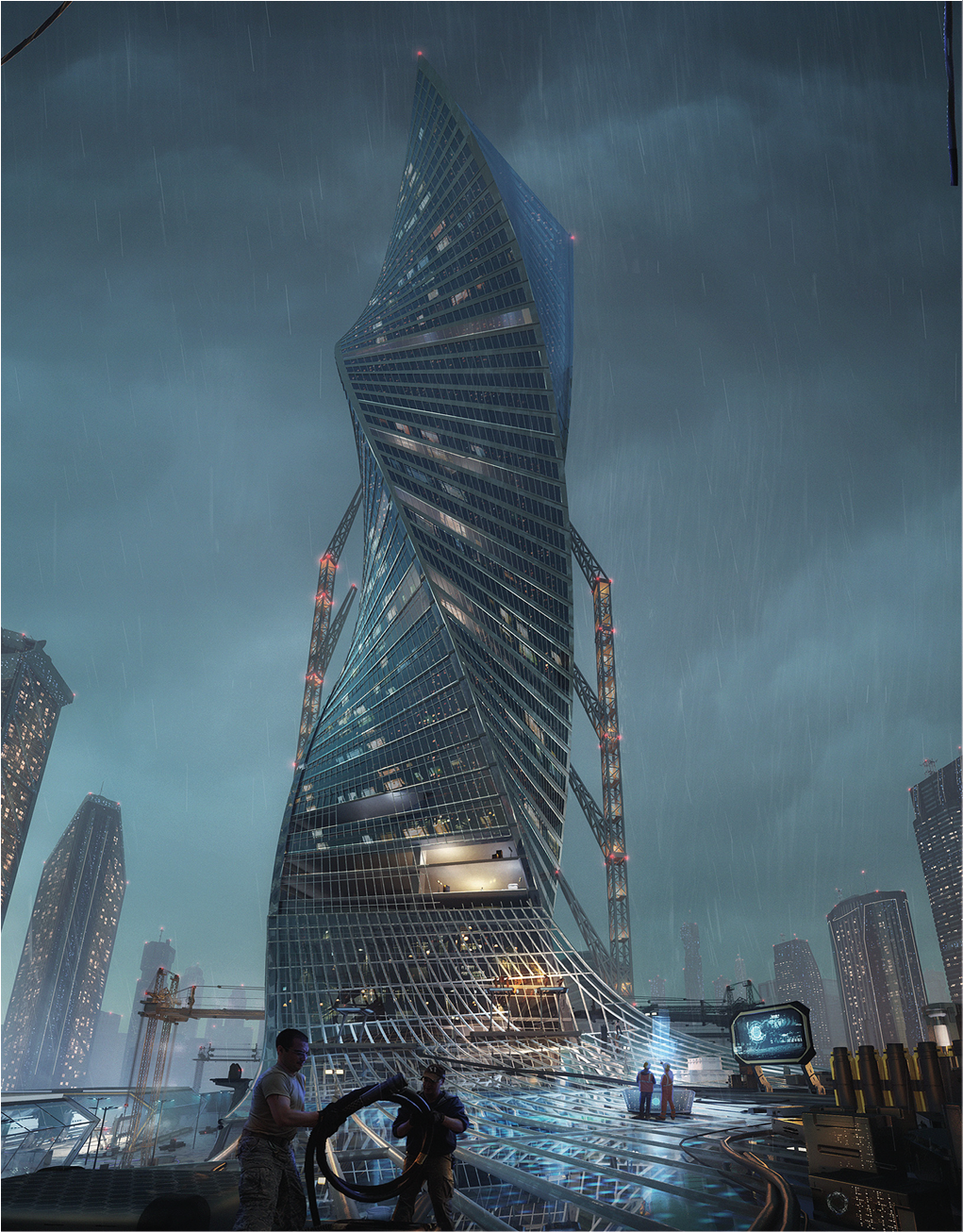
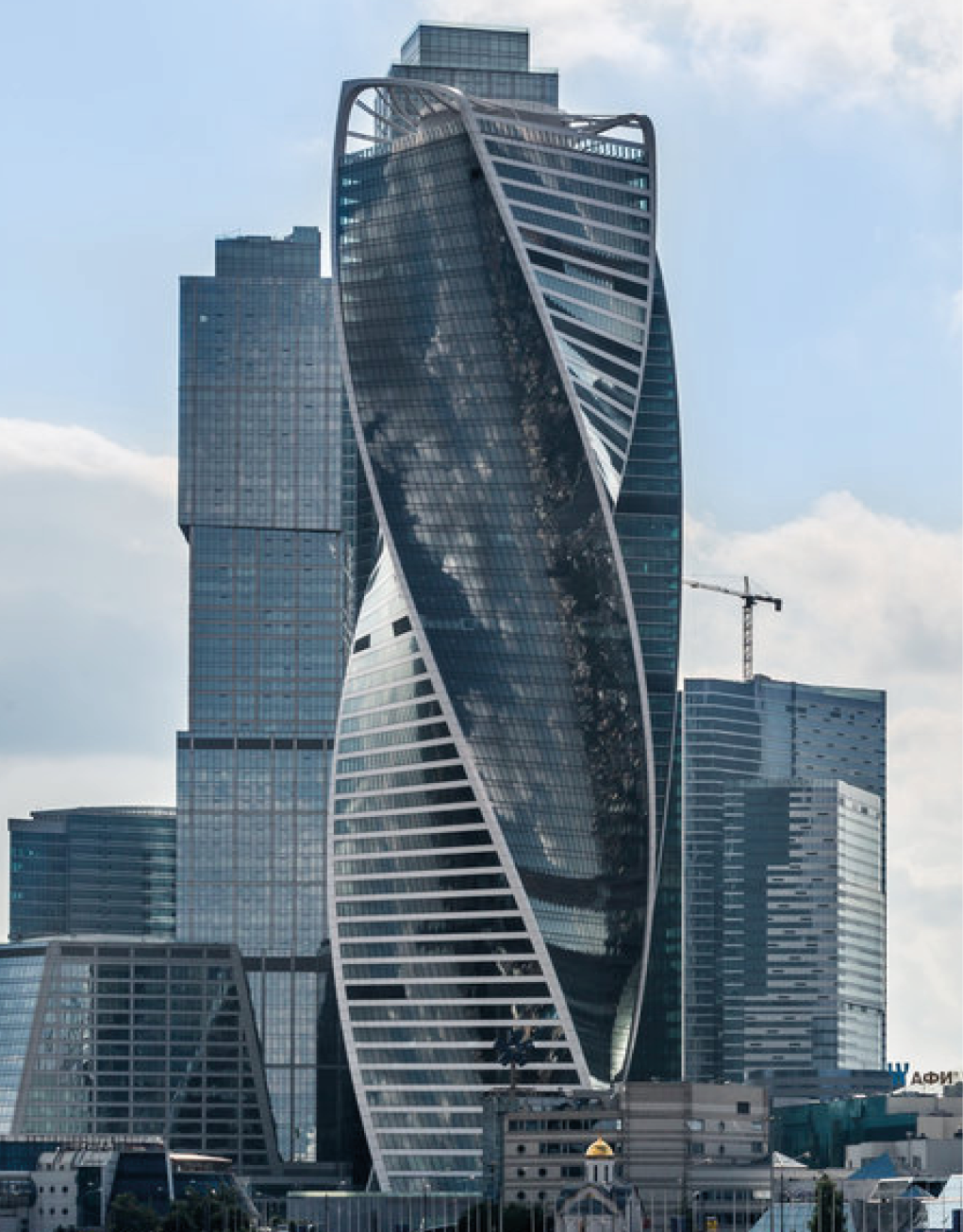
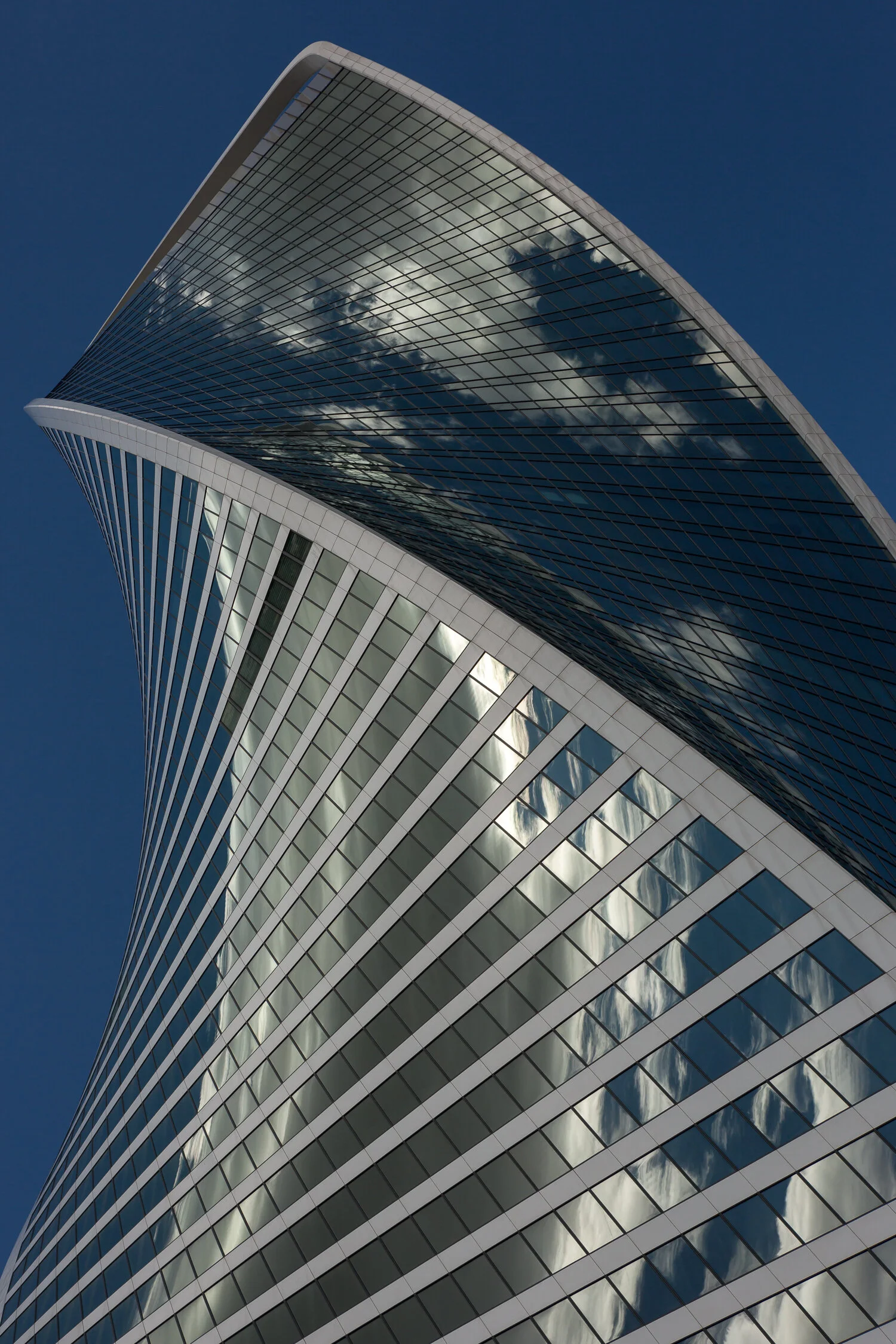
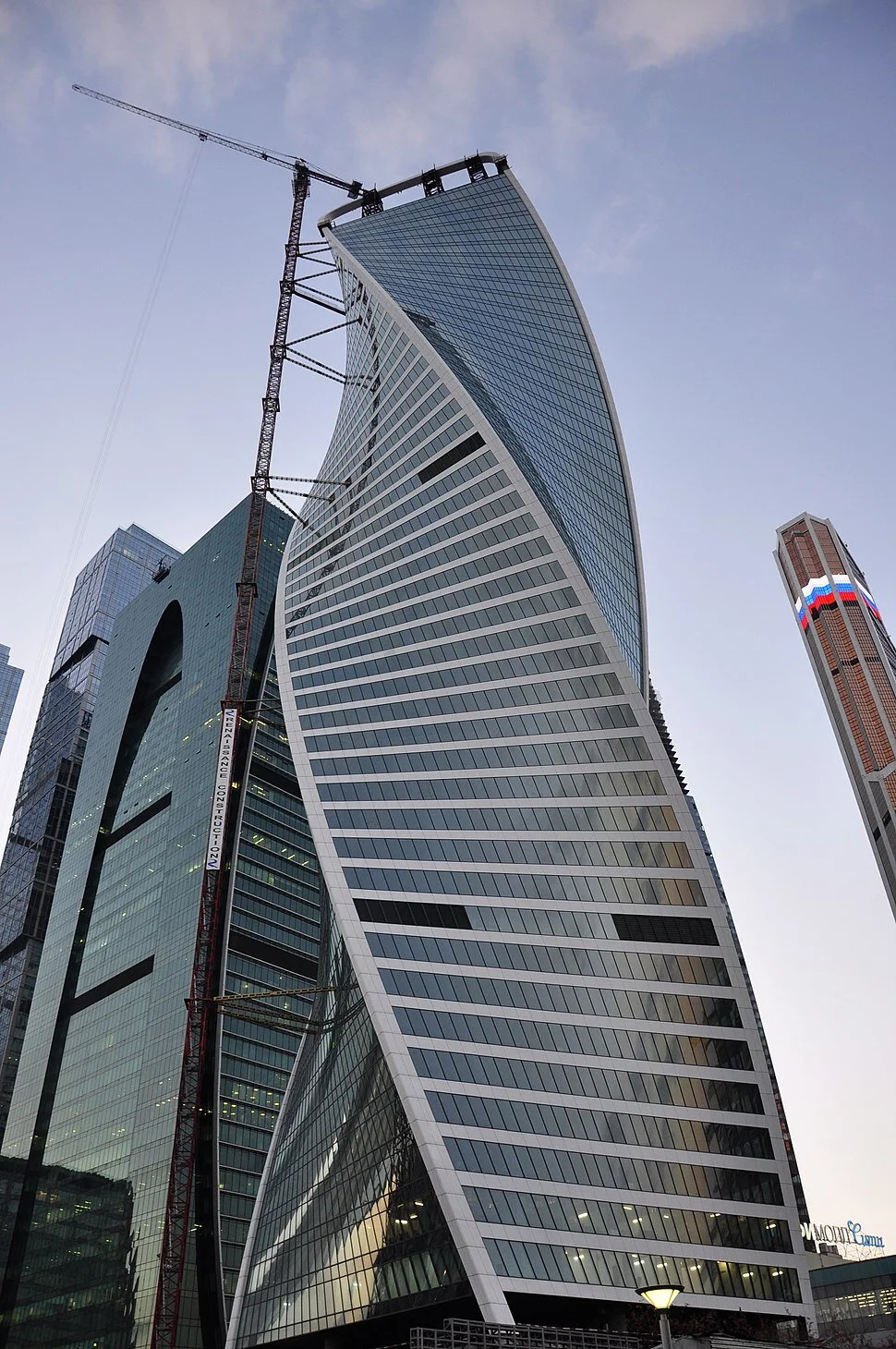
Evolution Tower occupies a prominent position within the Moscow International Business Centre. Designed by RMJM in collaboration with Gorproject, the building is defined by a continuous helical form that rotates approximately ninety degrees from base to top. The tower has become one of the most recognisable elements of the Moscow skyline, demonstrating how contemporary high-rise architecture can combine geometric expression with constructional discipline.
Newtecnic provided early façade consultancy for the project, contributing to the development of an envelope strategy capable of translating the architectural geometry into a practical and buildable construction system.
The significance of the project extends beyond its visual appearance. Evolution Tower demonstrates an important architectural principle: complexity can emerge through the careful organisation of simple and repeatable systems. Rather than relying upon highly bespoke construction, the building achieves its distinctive identity through the disciplined coordination of standardised elements.
The Myth of Complexity
Architectural discussions often associate expressive forms with technical complexity.
Twisting towers, curved surfaces and sculptural geometries are frequently understood as requiring unique components, specialised fabrication processes and highly customised construction systems.
In practice, such approaches are often difficult to manufacture, expensive to construct and challenging to maintain.
The Evolution Tower explores a different possibility.
Instead of increasing complexity within individual components, complexity is generated through the organisation of relationships between components. The building achieves its characteristic form through the controlled rotation of floor plates and façade modules rather than through extensive use of bespoke elements.
This distinction is important.
Complex architecture does not necessarily require complex construction.
Geometry as Organisation
The tower's defining characteristic is its gradual rotation as it rises above the city.
At first glance the building appears to be formed from continuously curved surfaces. Closer examination reveals a more disciplined strategy.
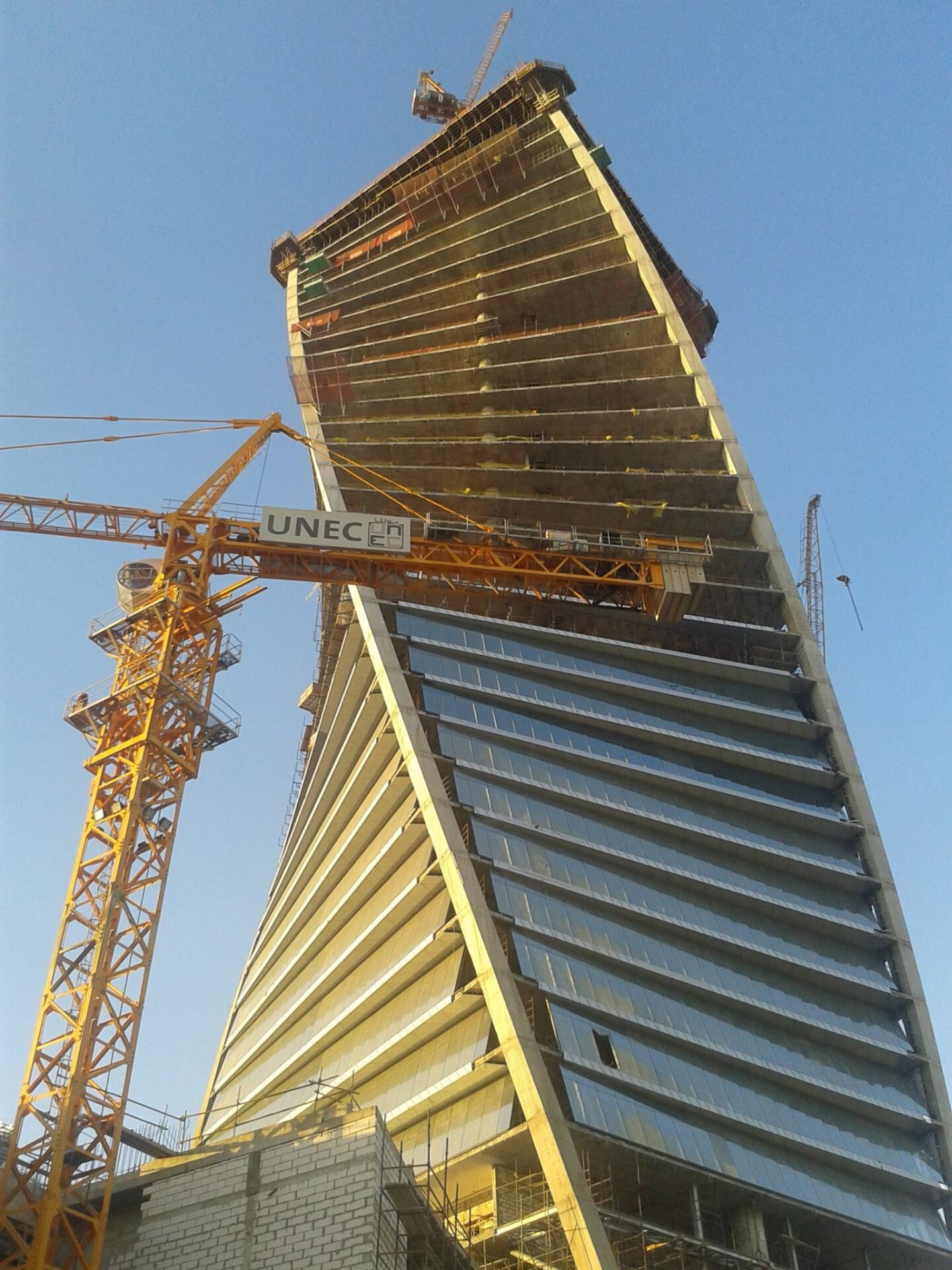
The overall geometry emerges through a series of incremental adjustments repeated throughout the height of the tower. Each floor rotates slightly relative to the floor below. The cumulative effect of these small changes produces the larger helical form.
The architecture therefore depends upon organisation rather than singular gestures.
Complexity is generated through sequence.
This principle appears repeatedly throughout architectural history. Many of the most sophisticated buildings derive their character from the accumulation of small and carefully controlled variations rather than from isolated acts of formal invention.
Rational Geometry
One of the principal challenges facing the design team was translating the twisting form into a construction system that could be fabricated and assembled efficiently.
The obvious solution might have been to employ curved glazing and highly customised façade components. Such an approach would have significantly increased manufacturing complexity, cost and programme risk.
Instead, the façade strategy was based upon rationalisation.
The design sought to maximise the use of standardised components while preserving the visual continuity of the architectural form.
The resulting solution demonstrates an important lesson in architectural engineering: geometry should be understood not only as form but also as a process of organisation.
The success of a geometric concept depends upon its ability to become construction.
The Unitised Façade
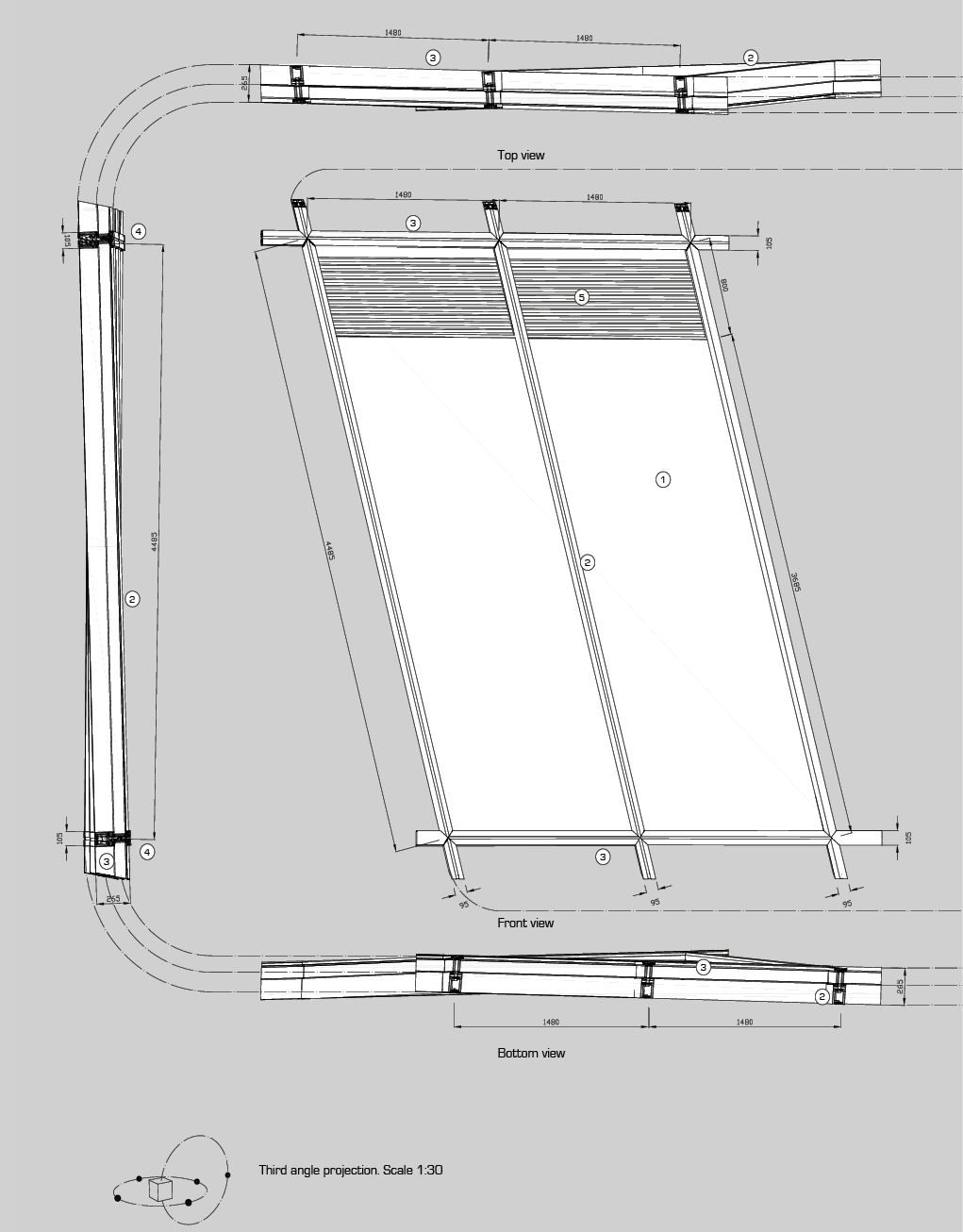
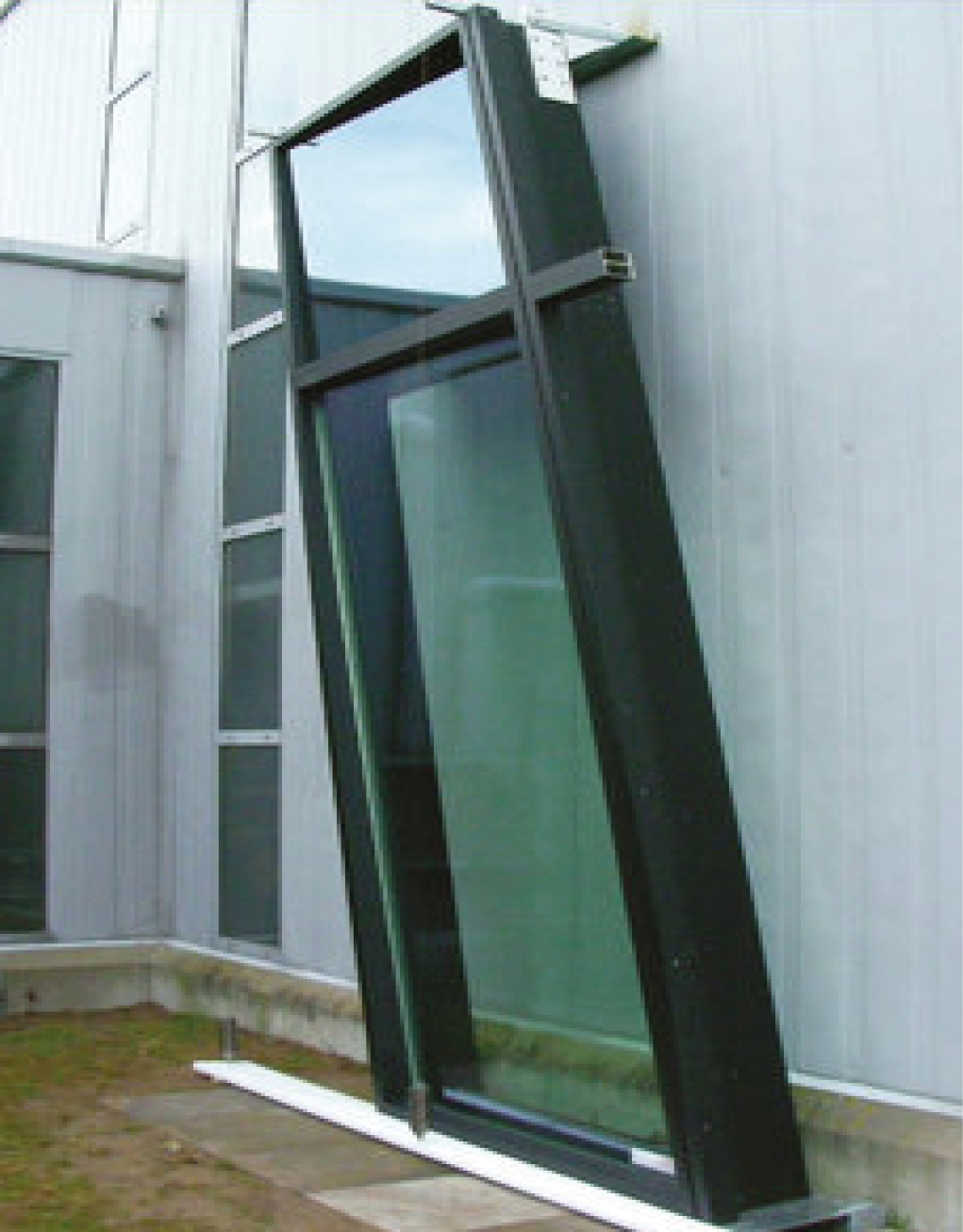
The envelope is based upon a unitised curtain wall system comprising insulated glazing units within aluminium framing.
Unitised construction offers several advantages within high-rise buildings. Components can be fabricated under factory conditions, improving quality control and reducing installation time. Environmental performance can be verified before delivery to site. Installation becomes a process of assembly rather than fabrication.
Within Evolution Tower the unitised system performs an additional role.
It becomes the mechanism through which geometric complexity is managed.
The façade modules remain largely standardised while their relationship to the structure changes incrementally throughout the height of the building.
This allows architectural expression and construction efficiency to operate together rather than in opposition.
Repetition and Variation
The relationship between repetition and variation lies at the centre of the project.
Pure repetition often produces efficiency but can result in monotony. Unlimited variation can generate visual richness but frequently introduces construction difficulties.
Evolution Tower operates between these extremes.
The façade employs repeatable component families while allowing controlled variation in their positioning and orientation. Individual elements remain relatively simple. The complexity emerges through their coordinated arrangement.
This approach reflects a broader architectural principle.
Buildings are rarely composed entirely of identical elements or entirely unique elements. Most successful construction systems depend upon an appropriate balance between repetition and variation.
The challenge lies in determining where variation adds value and where standardisation improves performance.
Coordination Between Structure and Façade
The tower's geometry could not be resolved through façade design alone.
The envelope and structure were developed as interconnected systems.
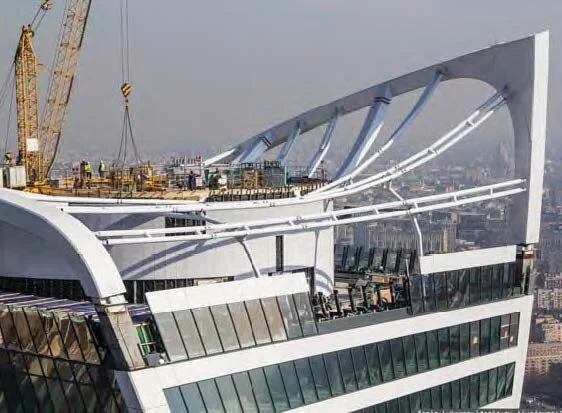
As floor plates rotate, façade support locations, connection details and movement requirements change continuously. These conditions required close coordination between structural engineers and façade designers throughout the development process.
The façade therefore acts as an interface between geometry and construction.
Its role is not simply to enclose the building but to translate structural organisation into architectural form.
This relationship illustrates an important aspect of contemporary design practice. Increasingly, architecture emerges through the integration of multiple systems rather than through the independent development of isolated disciplines.
Digital Coordination
The realisation of the project depended heavily upon digital modelling.
The relationship between structure, floor geometry and façade modules required continuous coordination across the entire height of the tower. Small discrepancies in one area could accumulate into significant deviations elsewhere.
Digital models provided a shared framework through which these relationships could be understood and managed.
Importantly, the technology was not used to generate complexity for its own sake.
Its value lay in providing control.
Digital tools enabled the design team to organise, verify and communicate geometric information with a level of precision that would have been difficult to achieve through conventional methods.
The project demonstrates that computers are most effective when they support disciplined decision-making rather than replace it.
Tolerance and Adjustment
All construction contains variation.
Materials move. Structures deflect. Fabrication introduces small differences. Site conditions rarely correspond exactly to design assumptions.
Successful façade systems therefore incorporate mechanisms for adjustment.
Within Evolution Tower, adjustable support brackets and carefully coordinated connection details allow the curtain wall to respond to structural movement and construction tolerances while maintaining visual continuity.
These seemingly modest technical elements are essential to the success of the architecture.
Without adjustment, geometric precision remains theoretical.
The building demonstrates that architecture depends not only upon form but also upon the capacity of systems to accommodate reality.
Efficiency and Expression
One of the most valuable lessons offered by the project is the compatibility of efficiency and architectural ambition.
Architectural culture sometimes presents these conditions as opposites. Efficiency is associated with repetition and economy. Expression is associated with variation and invention.
Evolution Tower demonstrates that the relationship is more complex.
The expressive character of the building is achieved precisely because the construction system remains disciplined and rational. Standardisation provides the stability necessary for controlled variation.
The project therefore challenges the assumption that architectural innovation requires increasing technical complexity.
Often the opposite is true.
Innovation emerges through clearer organisation.
Architecture as System
The tower illustrates a broader shift within contemporary architecture.
Buildings are increasingly understood as systems of relationships rather than collections of isolated elements. Structure, enclosure, fabrication and construction operate together within coordinated frameworks.
The façade plays a crucial role within this process because it sits at the intersection of geometry, environment, manufacture and assembly.
Its success depends upon the alignment of these different requirements.
The architectural quality of the building emerges from this coordination rather than from any single component.
Project Significance
Evolution Tower demonstrates how complex architectural geometry can be realised through disciplined engineering and construction logic. Rather than increasing complexity within the façade itself, the project uses standardised components, digital coordination and precise detailing to achieve a distinctive architectural identity.
More broadly, the building illustrates an important lesson for contemporary architectural practice. Complexity is not necessarily the result of increasingly complicated components. Often it emerges through the careful organisation of simple and repeatable systems.
The project therefore shows how architectural ambition and construction efficiency can reinforce one another rather than compete. Through the integration of geometry, structure, fabrication and assembly, Evolution Tower transforms a highly expressive architectural idea into a practical and buildable reality.
In doing so, it demonstrates how contemporary architecture can achieve innovation not through excess, but through coordination, discipline and constructive intelligence.