
Grand Théatre de Rabat, Morocco
Further information and case study for this project can be found at the De Gruyter Birkhäuser Modern Construction Online database
The following text is not available at Modern Construction Online
Material Innovation and Architectural Continuity
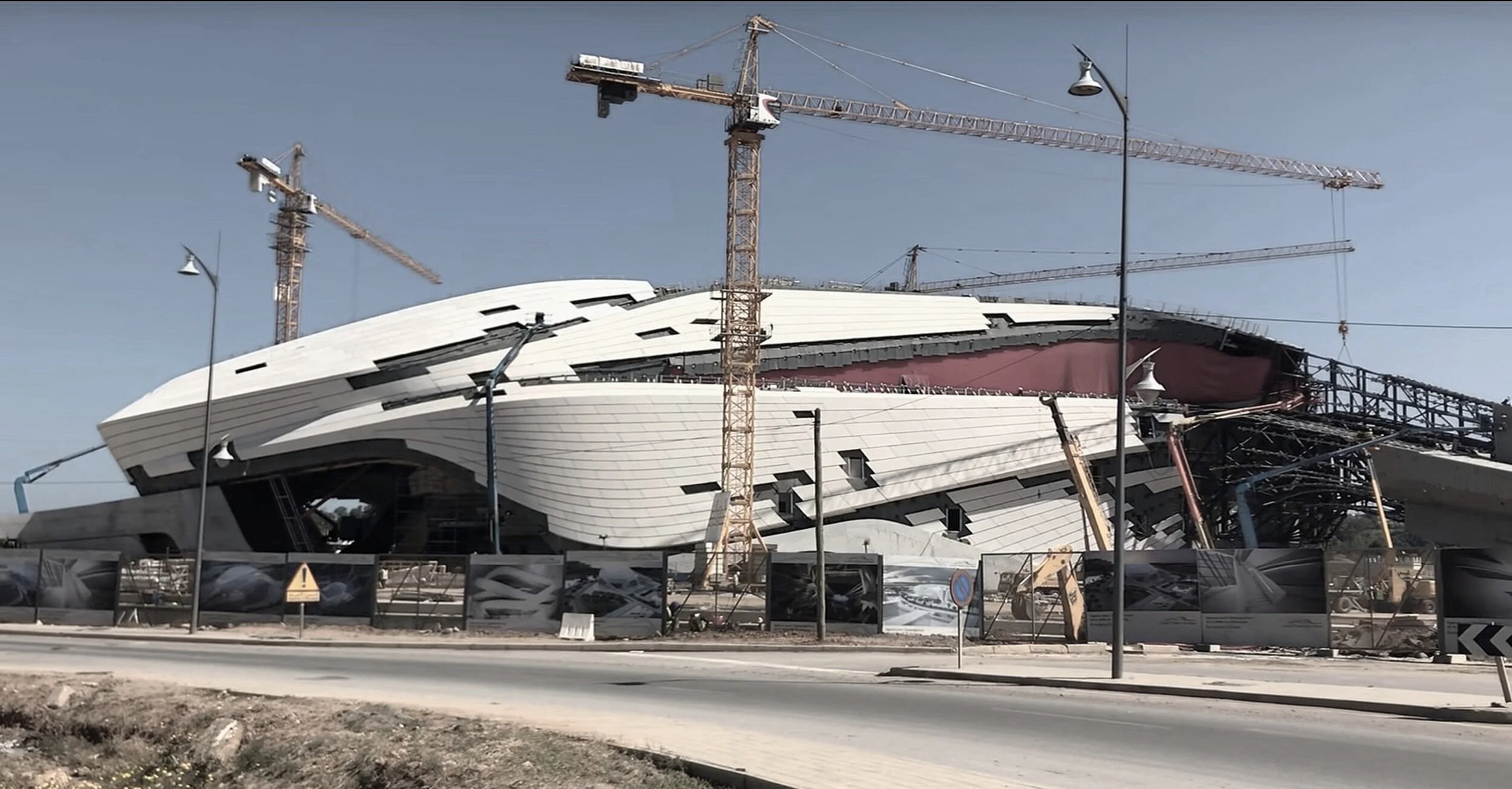
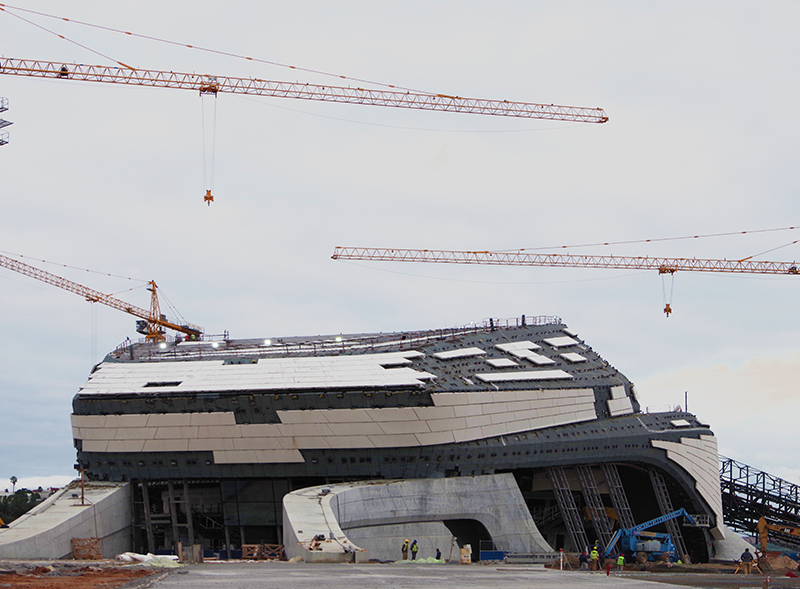
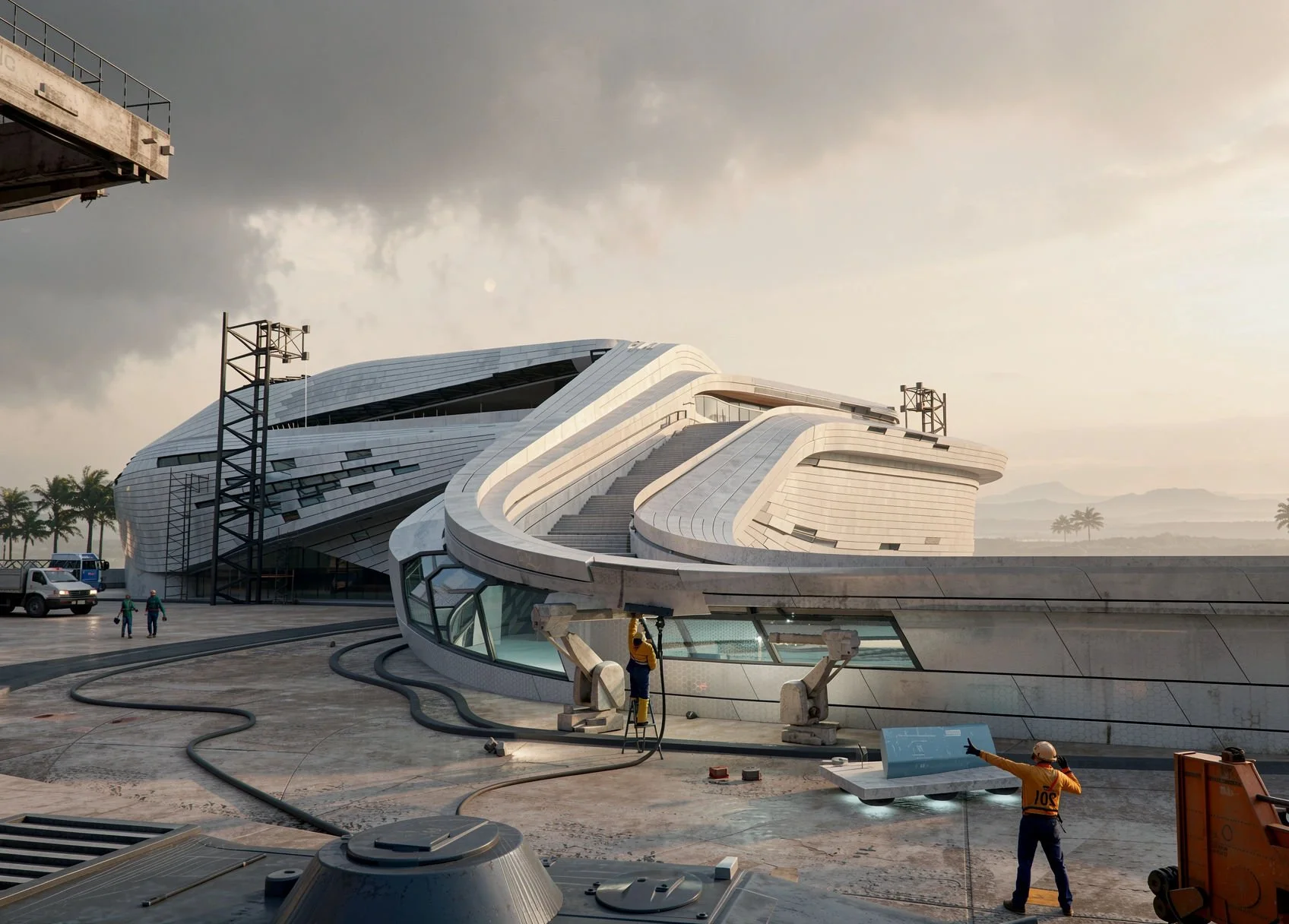
The Grand Théâtre de Rabat forms part of the cultural masterplan developed along the Bouregreg River in Morocco. Designed by Zaha Hadid Architects, the building is characterised by its flowing architectural form, where roof, wall and enclosure operate as a continuous sculptural surface rather than as separate architectural elements.
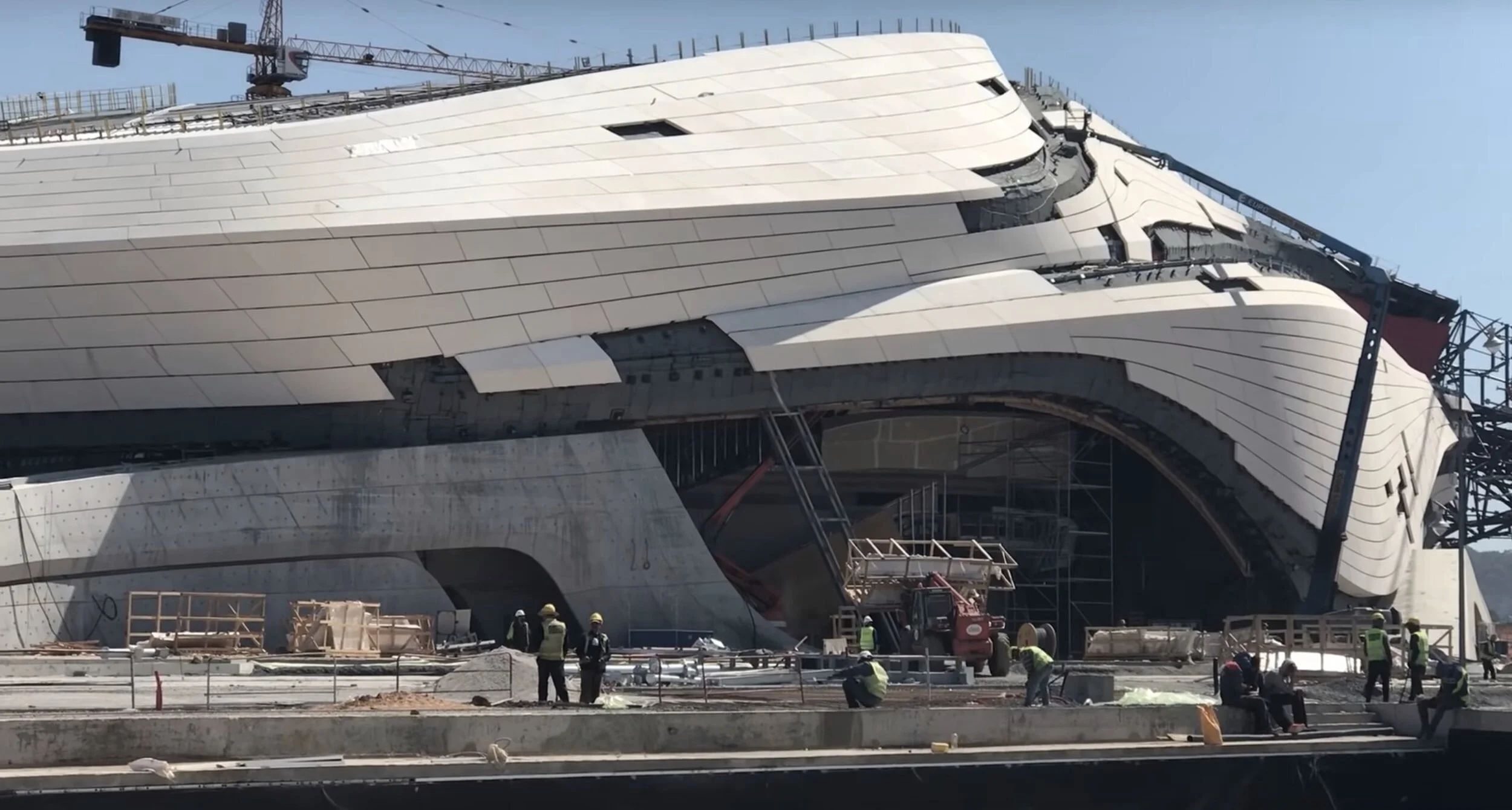
Newtecnic provided façade engineering for the project, developing an advanced glass fibre reinforced concrete (GRC) envelope capable of transforming this complex geometry into a practical, durable and manufacturable construction system. The project demonstrates how contemporary façade engineering can reconcile architectural expression, material performance and industrial production within a single integrated strategy.
Architectural Strategy
The architectural concept is organised around the idea of continuity. Rather than presenting the building as an assembly of discrete components, the design seeks to establish the appearance of a single flowing form that wraps around auditoria, circulation spaces and public areas.
Achieving this ambition required the façade to perform more than a conventional cladding role. The envelope had to maintain the visual coherence of a monolithic architectural surface while accommodating the practical realities of manufacture, transportation, installation and long-term maintenance.
The challenge therefore was not simply one of geometry, but of translating a sculptural architectural vision into a rational construction methodology capable of delivering precision at a building scale.
Rethinking GRC Construction
A defining innovation of the project was the development of a monolithic GRC panel system that eliminated the embedded steel subframes commonly used in large architectural cladding panels.
Historically, embedded steel frames have provided stiffness and support but have also introduced long-term risks associated with corrosion, differential thermal movement and maintenance. Over time these issues can compromise both durability and appearance.
For the Grand Théâtre, Newtecnic developed a system in which structural ribs were cast integrally into the GRC panels themselves. This approach transformed the panels from simple cladding elements into self-supporting structural components while preserving the visual continuity of the façade.
The result was a lighter, more durable and more robust system capable of maintaining architectural quality throughout the building's design life.
Geometry, Rationalisation and Digital Coordination
The building's complex geometry required an extensive programme of digital coordination and geometric rationalisation.
Three-dimensional modelling was used to analyse curvature, panel dimensions, fixing locations and structural interfaces across the entire envelope. Rather than treating every panel as a unique element, the design process sought to establish families of related geometries that could be manufactured efficiently while preserving the architectural intent.
This approach transformed what appeared visually as a seamless sculptural surface into a manageable system of coordinated components. Digital workflows allowed design, engineering and fabrication requirements to be developed simultaneously, reducing risk and improving production efficiency.
Fixing Systems and Assembly Logic
The success of the façade depended as much upon its fixing strategy as upon the panels themselves.
Newtecnic developed a universal stainless steel bracket system capable of accommodating varying panel dimensions, curvatures and support conditions through a consistent assembly methodology. This reduced the number of bespoke connection types while simplifying fabrication, installation and quality control.
The use of a common fixing language across the project allowed highly varied geometries to be assembled using predictable construction processes. Architectural complexity was therefore achieved through systematic coordination rather than through increasing construction complexity.
Validation Through Testing
Because the envelope departed significantly from conventional GRC construction, extensive testing and validation formed a critical part of the design process.
Material testing established structural behaviour and long-term durability. Structural analysis evaluated panel performance under gravity, wind and thermal loading. Full-scale mock-ups were constructed to verify manufacturing tolerances, fixing strategies and installation procedures.
These studies allowed the envelope to be refined before production commenced, ensuring that architectural ambition was supported by demonstrable technical performance.
Project Significance
The Grand Théâtre de Rabat demonstrates how contemporary architecture can achieve formal freedom without abandoning constructional discipline. The project transforms a highly complex architectural geometry into a rational system of manufacture and assembly through the integration of material innovation, digital coordination and prefabricated construction.
More importantly, it advances the development of GRC technology itself. By eliminating embedded steel subframes and treating the panel as an integrated structural and architectural element, the project establishes a new model for monolithic prefabricated construction. The resulting façade achieves a rare combination of sculptural continuity, manufacturing efficiency and long-term durability, illustrating how material intelligence can become a primary driver of architectural expression.