
Heydar Aliyev Center, Baku, Azerbaijan
Further information and case study for this project can be found at the De Gruyter Birkhäuser Modern Construction Online database
The following text is not available at Modern Construction Online
Constructing Continuity
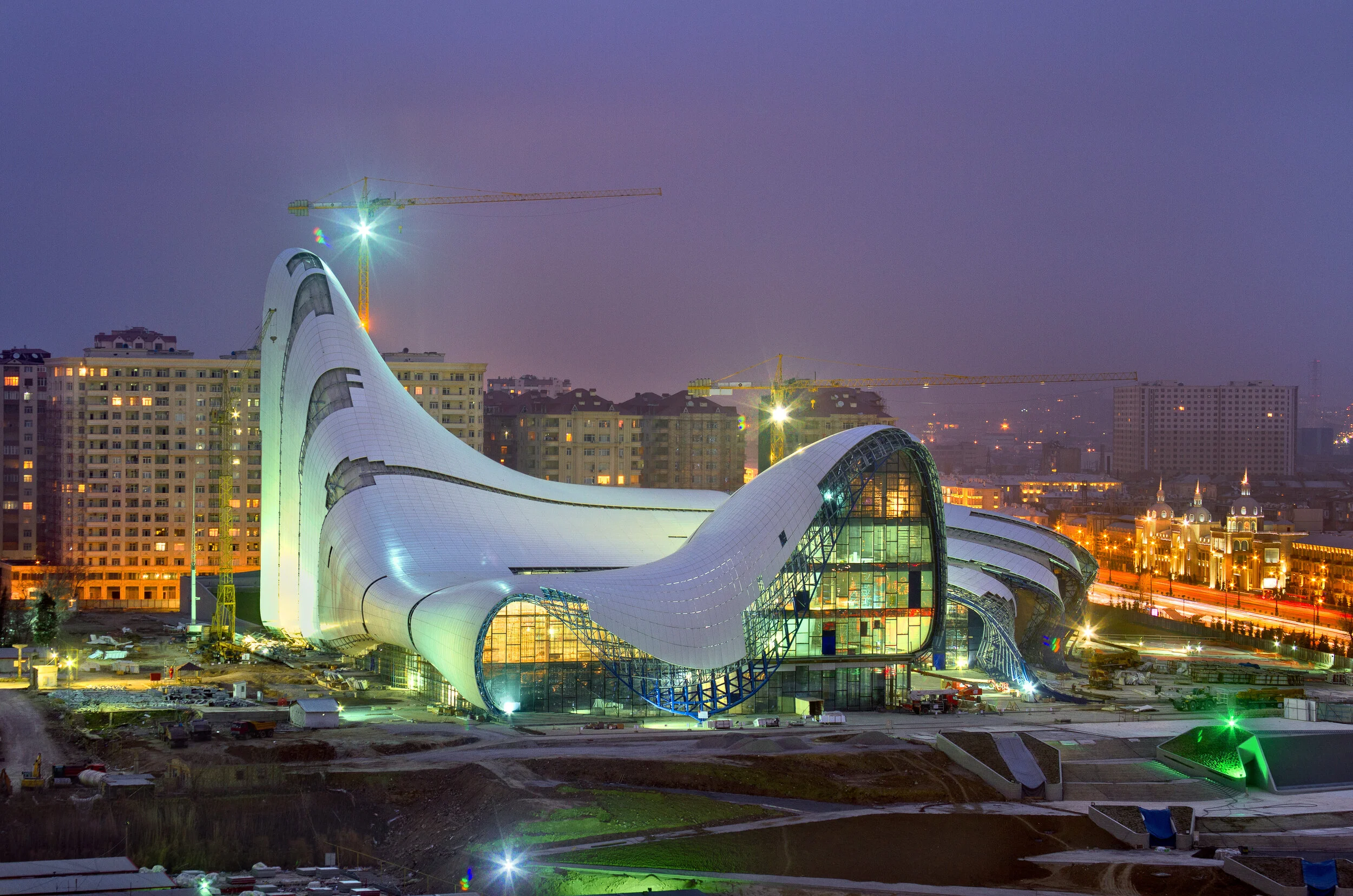
The Heydar Aliyev Cultural Centre is one of the most recognisable cultural buildings of the twenty-first century. Designed by Zaha Hadid Architects, the building accommodates exhibition, performance and public functions within a continuous architectural form that appears to rise from the landscape before folding seamlessly into walls, roofs and enclosed spaces.
Newtecnic provided contractor-side façade engineering for the project, developing the envelope systems required to transform the architectural geometry into a buildable and durable construction solution.
The significance of the project extends beyond its distinctive form. It demonstrates how continuity in architecture is not simply a question of appearance but the result of a highly coordinated relationship between geometry, structure, materials, fabrication and construction. The building appears effortless, yet its real achievement lies in the precision with which numerous technical systems are brought together to create a unified architectural experience.
The Idea of Continuity
Architecture has often been understood as an assembly of separate elements.
Walls define enclosure. Roofs provide shelter. Structure supports loads. Facades protect the interior environment.
Historically these systems have frequently been expressed as distinct components with clearly visible boundaries between them.
The Heydar Aliyev Centre proposes a different approach.
The project is organised around the idea that landscape, structure, enclosure and space can be experienced as parts of a continuous architectural field. Instead of presenting architecture as an assembly of separate objects, the building creates the impression of a single surface unfolding across multiple scales and functions.
This ambition immediately transforms continuity from a formal aspiration into a technical challenge.
The question becomes not how to draw continuity, but how to construct it.
Beyond Sculptural Form
The building is often discussed primarily in terms of its visual appearance. Its flowing geometry has become one of the defining images of contemporary architecture.
Yet geometry alone cannot produce continuity.
A smooth digital model may appear seamless on a computer screen, but buildings are assembled from materials, components and construction processes. Every material has dimensions, joints, tolerances and limitations. Every construction process introduces variation.
The challenge is therefore not creating a continuous form digitally. The challenge is maintaining continuity while accommodating the realities of construction.
The Heydar Aliyev Centre demonstrates that architectural continuity emerges through coordination rather than through geometry alone.
Separating Structure and Surface
A critical decision within the project was the separation of the primary structure from the architectural skin.
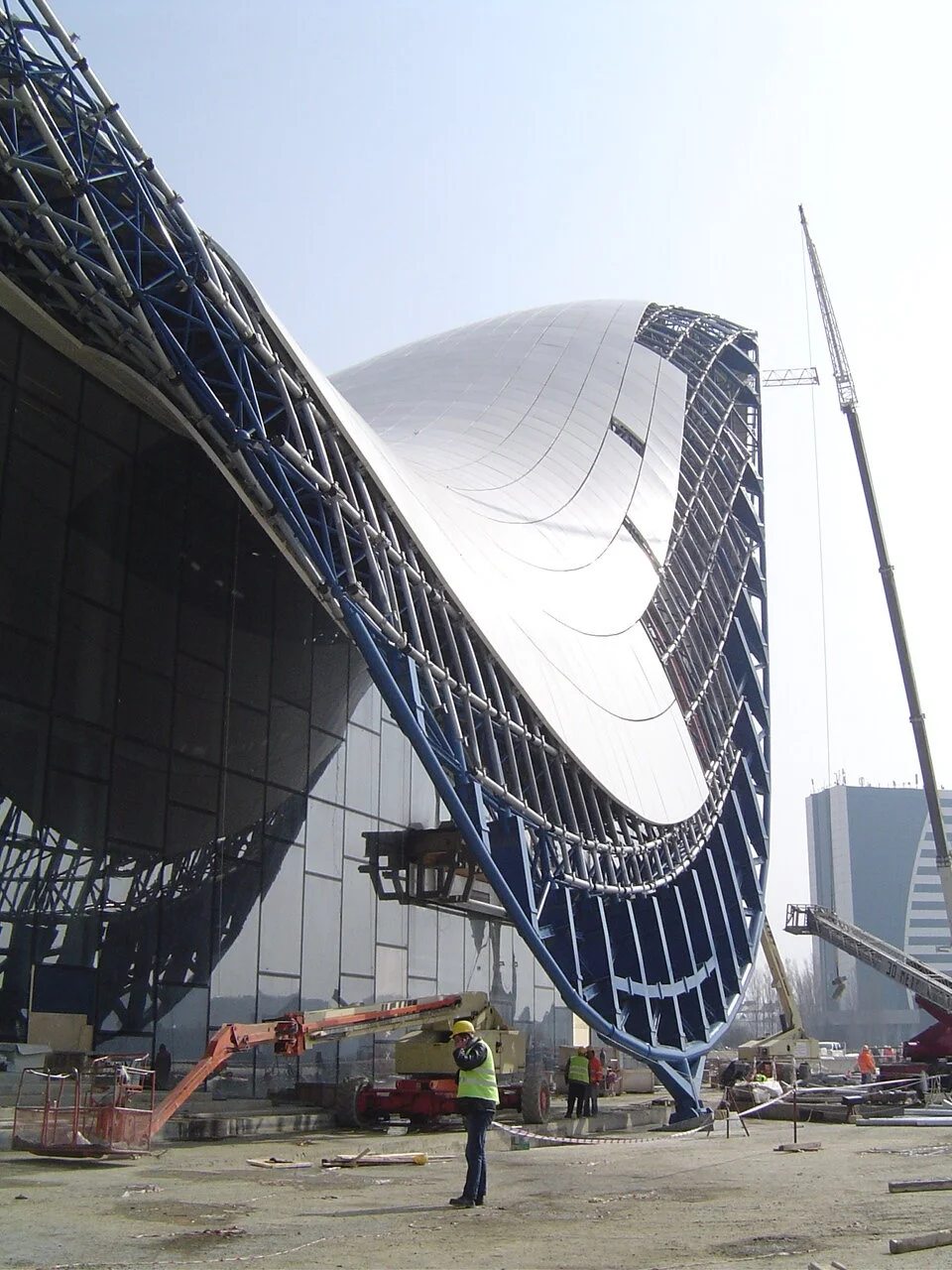
The building is supported by a reinforced concrete structural framework that provides stability and carries the principal loads. Rather than forcing this structure to define the external geometry directly, a secondary steel framework was introduced to support the façade.
This distinction created an important degree of freedom.
The primary structure could be optimised according to structural requirements, while the secondary framework could be adjusted to achieve the precise geometric control required by the architectural form.
The result is a layered system in which structure and enclosure work together while maintaining distinct responsibilities.
This approach illustrates an important principle of contemporary construction: architectural freedom is often achieved through greater technical organisation rather than through less.
Geometry as Information
One of the most significant aspects of the project was the use of digital modelling as a tool for coordination.
The geometry of the building was not simply a representation of form. It became a source of information used to organise structure, subframes, panel fabrication, support locations and installation sequences.
Every component was derived from a common geometric framework.
This allowed thousands of individual elements to be coordinated with a level of precision that would have been extremely difficult using conventional drawing methods alone.
The project therefore demonstrates how digital models can operate as organisational systems linking design, engineering and fabrication rather than merely as tools of visual representation.
Panelisation and Rationalisation
Despite its appearance, the building is not formed from a single continuous surface.
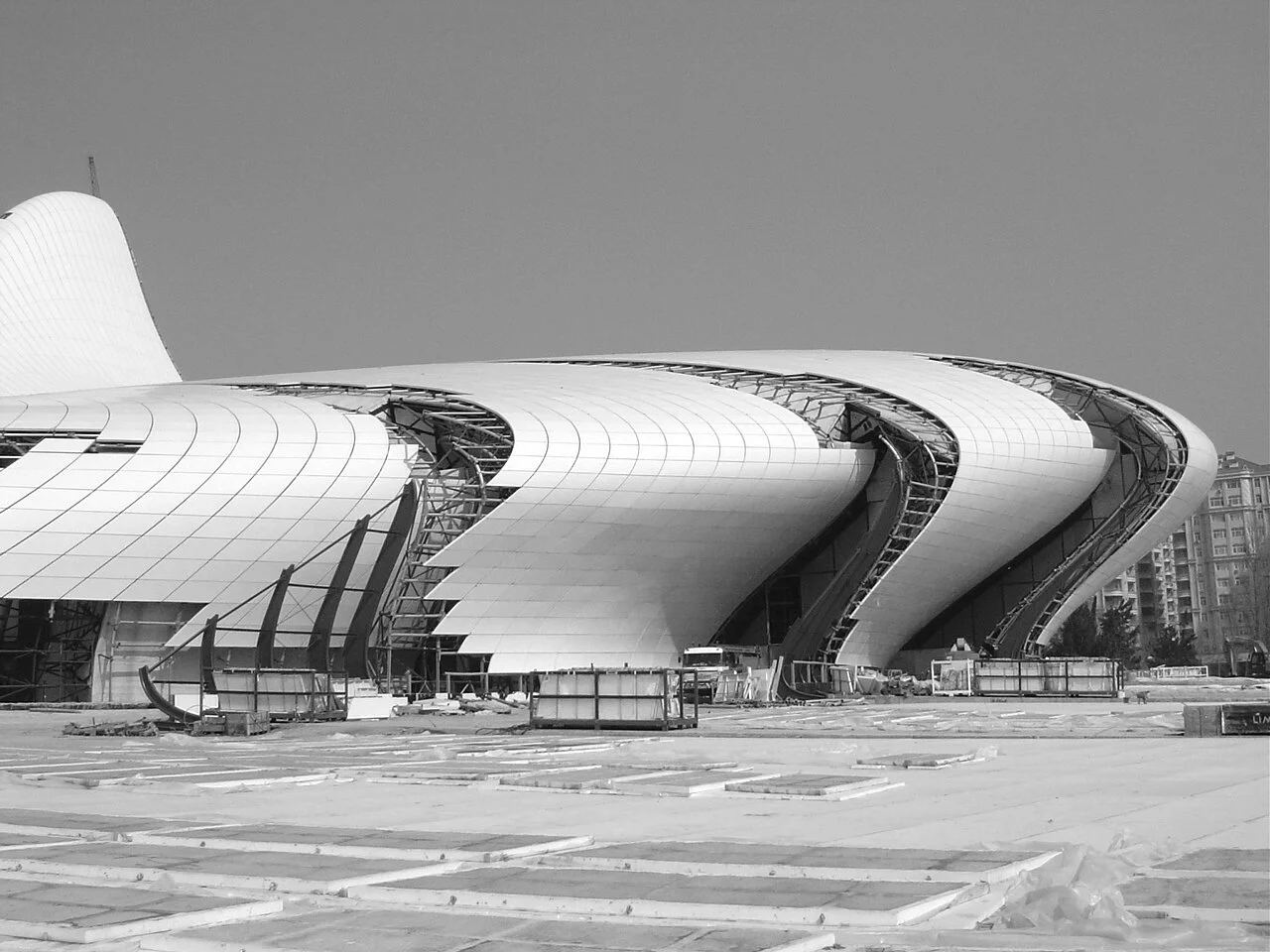
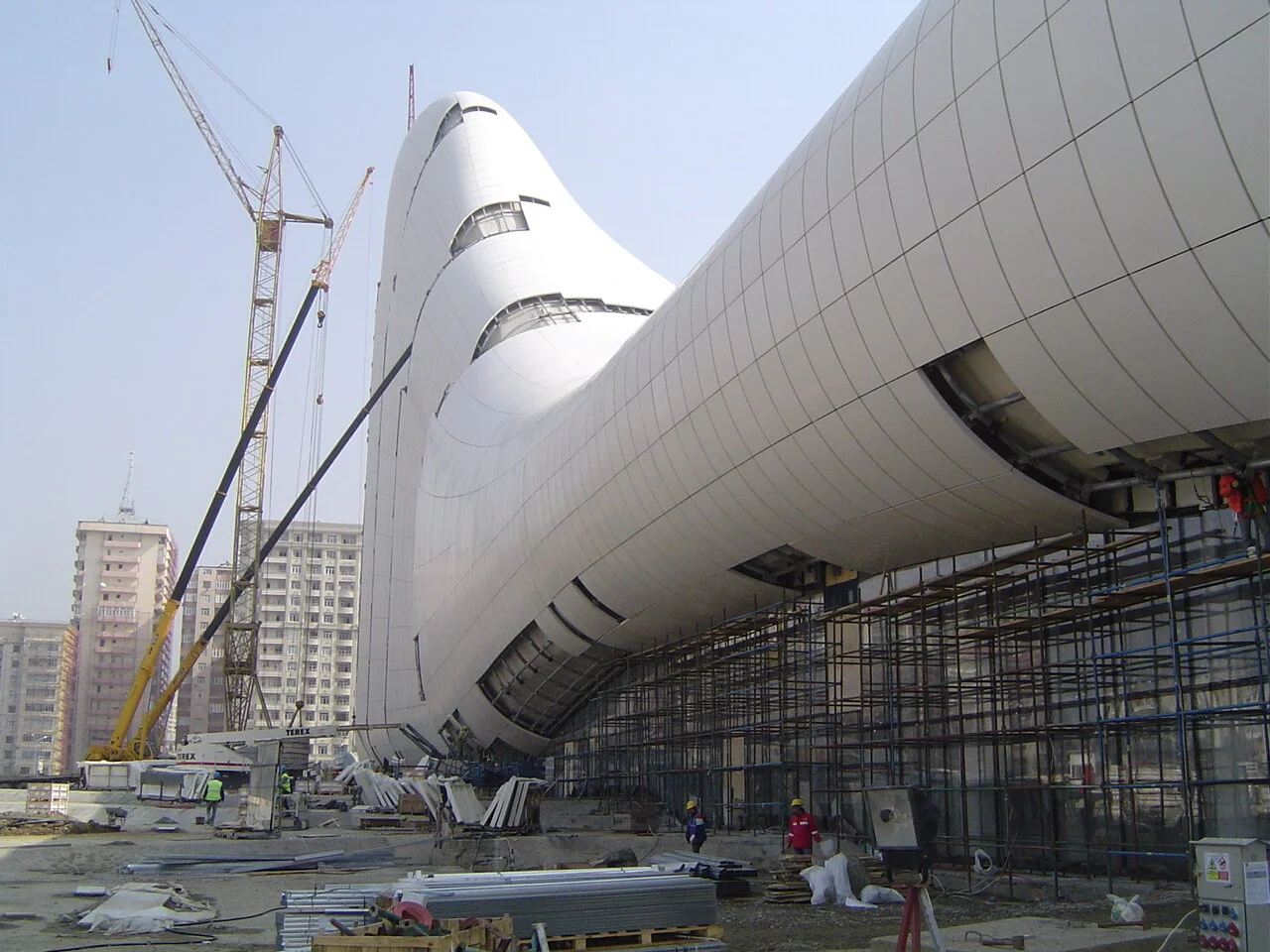
The envelope is composed of thousands of individual glass fibre reinforced concrete panels supported on a complex steel substructure.
Each panel required careful consideration of size, weight, curvature, fabrication constraints, transportation requirements and installation methodology.
The process of dividing a continuous form into buildable components is often referred to as rationalisation.
Within the Heydar Aliyev Centre, rationalisation did not diminish the architecture. Instead, it made the architecture possible.
The project demonstrates that expressive forms are not achieved by avoiding construction logic but by engaging with it directly.
Continuity therefore emerges from the successful organisation of many discrete parts.
The Role of Tolerance
All construction involves variation.
Materials expand and contract. Fabricated components differ slightly from their nominal dimensions. Structures deflect under load. Installation introduces small inaccuracies.
For conventional buildings these variations are often absorbed within straightforward junctions and details. For a project based upon continuous geometry, however, tolerance management becomes critical.
The façade system was therefore developed with adjustable support mechanisms and carefully coordinated fixing systems that allowed minor variations to be absorbed without disrupting the visual continuity of the surface.
The building demonstrates that precision in architecture is not achieved by eliminating variation but by designing systems capable of accommodating it.
Environmental Continuity
Continuity is often discussed visually, yet environmental performance also depends upon continuity.
Behind the visible GRC panels lies a coordinated system of insulation, waterproofing, ventilation and environmental control layers. These components must remain continuous across changes in geometry, surface orientation and construction sequence.
Waterproofing systems must operate equally effectively on walls, roofs and transitional zones. Thermal insulation must maintain performance despite changes in curvature and support conditions. Movement joints must accommodate structural behaviour without compromising environmental integrity.
The project therefore illustrates how architectural continuity depends upon the successful integration of hidden systems as much as visible surfaces.
Interior and Exterior
One of the most remarkable aspects of the project is the consistency between exterior form and interior space.
The principles used to coordinate the external envelope continue within the building itself. Curved internal surfaces, ceilings and circulation spaces maintain the architectural language established outside.
This continuity required the same levels of geometric control, fabrication precision and construction coordination applied to the external façade.
The project therefore extends the concept of continuity beyond enclosure alone. The building becomes a unified spatial environment in which exterior and interior are understood as parts of a larger architectural system.
Construction as Design
Projects such as the Heydar Aliyev Centre challenge the traditional distinction between design and construction.
The final architectural form cannot be understood independently of fabrication processes, support systems, panel geometries or installation methodologies. Construction decisions influence architectural outcomes from the earliest stages of development.
The project therefore demonstrates that design and construction are not separate activities. They operate together as interconnected aspects of a single process.
Architecture emerges through the coordination of both.
Project Significance
The Heydar Aliyev Cultural Centre demonstrates how architectural continuity can be achieved through the integration of geometry, structure, materials, fabrication and construction. The project shows that continuity is not simply a visual quality but the result of carefully organised relationships between numerous technical systems.
Through the use of digital coordination, secondary support structures, rationalised panel systems and precise construction methodologies, the building transforms an apparently impossible geometry into a practical and durable reality.
More broadly, the project provides an important lesson for contemporary architectural practice. The most ambitious forms are rarely the result of formal invention alone. They emerge when architectural vision and construction intelligence are developed together as parts of a single coordinated process. The Heydar Aliyev Centre therefore stands not only as an example of expressive architecture, but as a demonstration of how continuity itself can be constructed.