
HQ Building, SF Bay Area, CA, USA
Further information and case study for this project can be found at the De Gruyter Birkhäuser Modern Construction Online database
The following architectural case study is not available at Modern Construction Online
Architectural Design of the Headquarters Building - Reframing the Residual
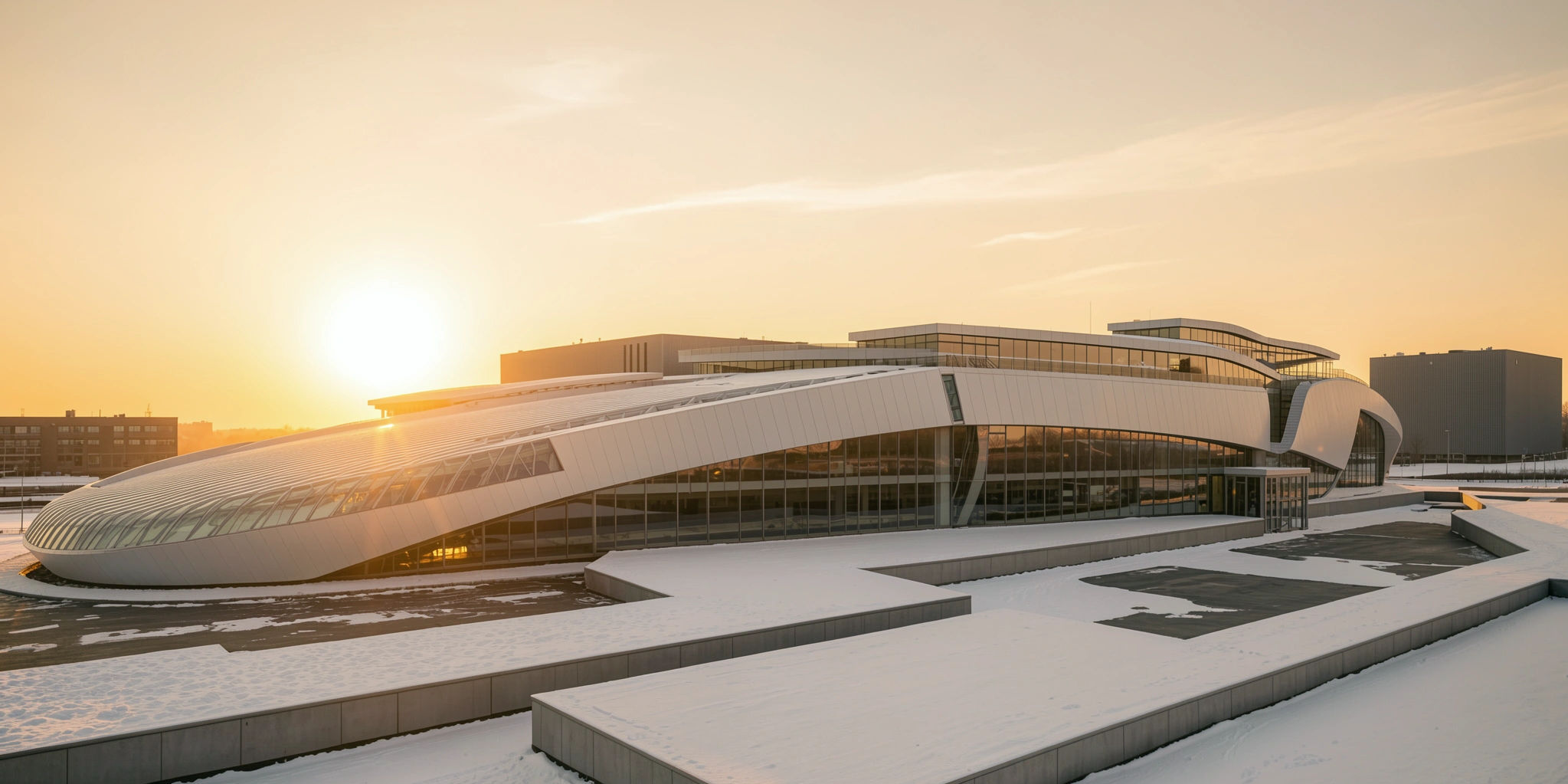
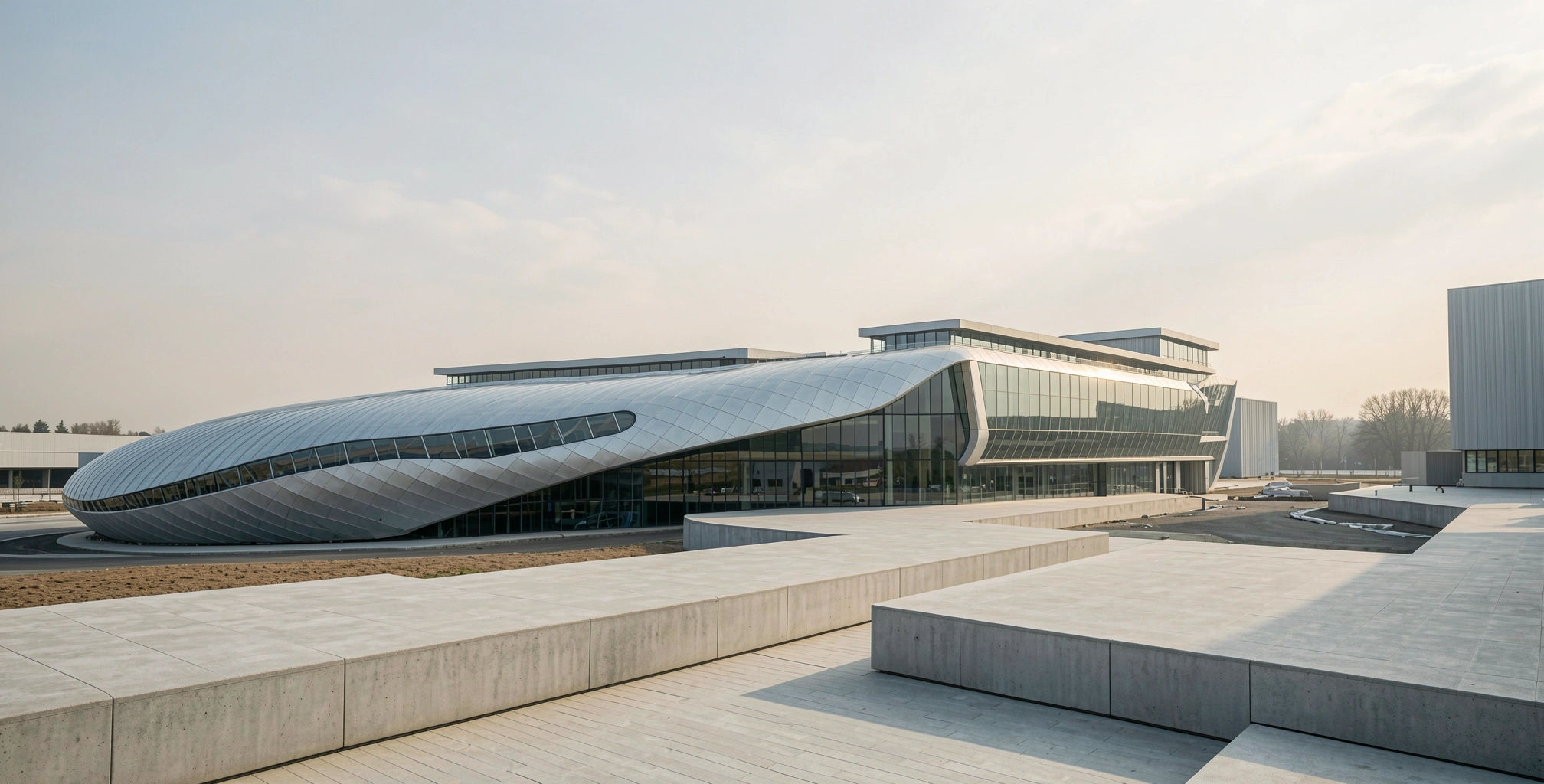
This project explores the relationship between architectural form, spatial organisation and enclosure through the design of a contemporary corporate headquarters. The proposal is organised around the deliberate interaction of independent architectural systems, creating a building in which occupied space, structure, environmental performance and enclosure are developed as related but distinct layers.
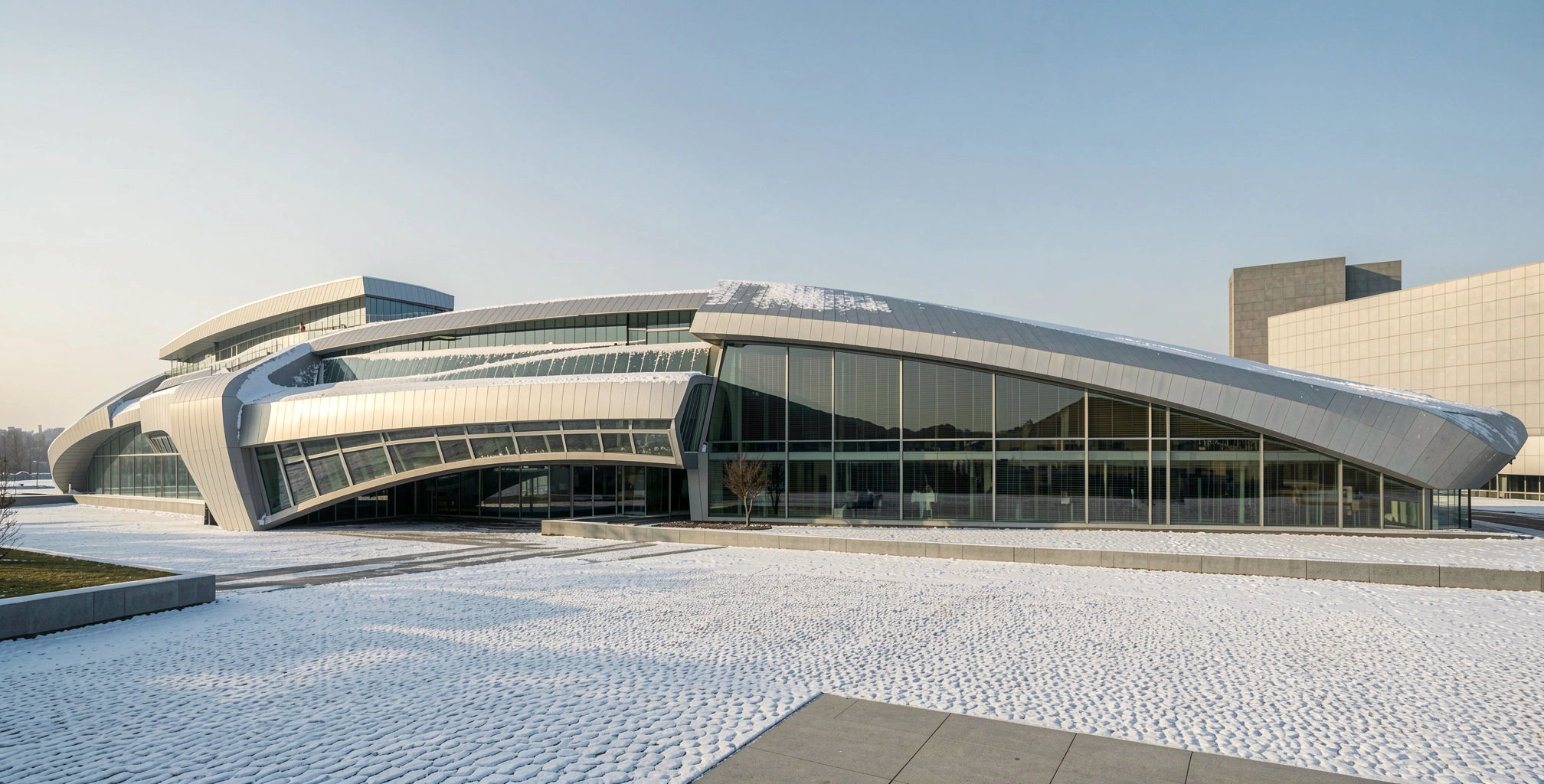
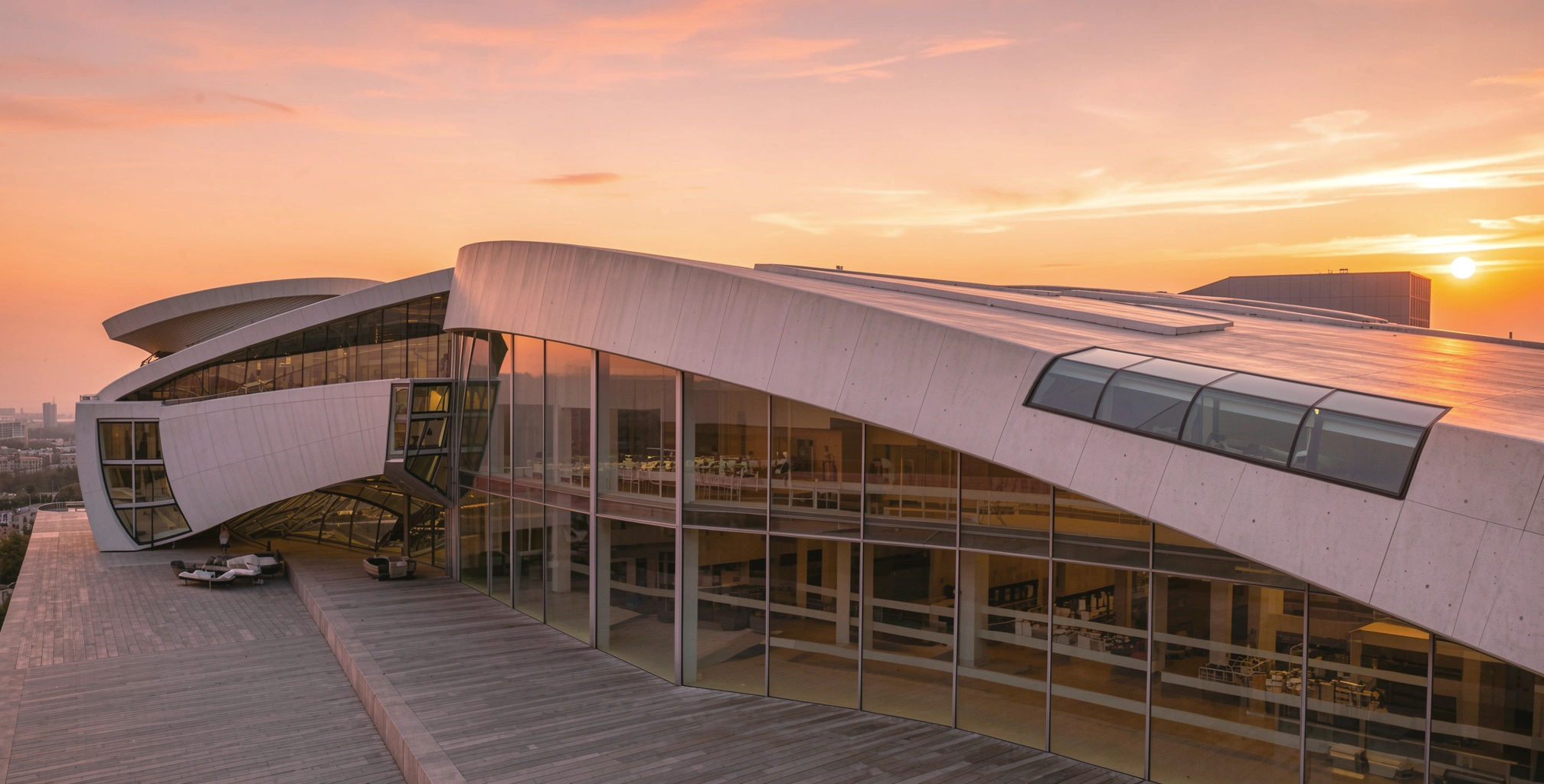
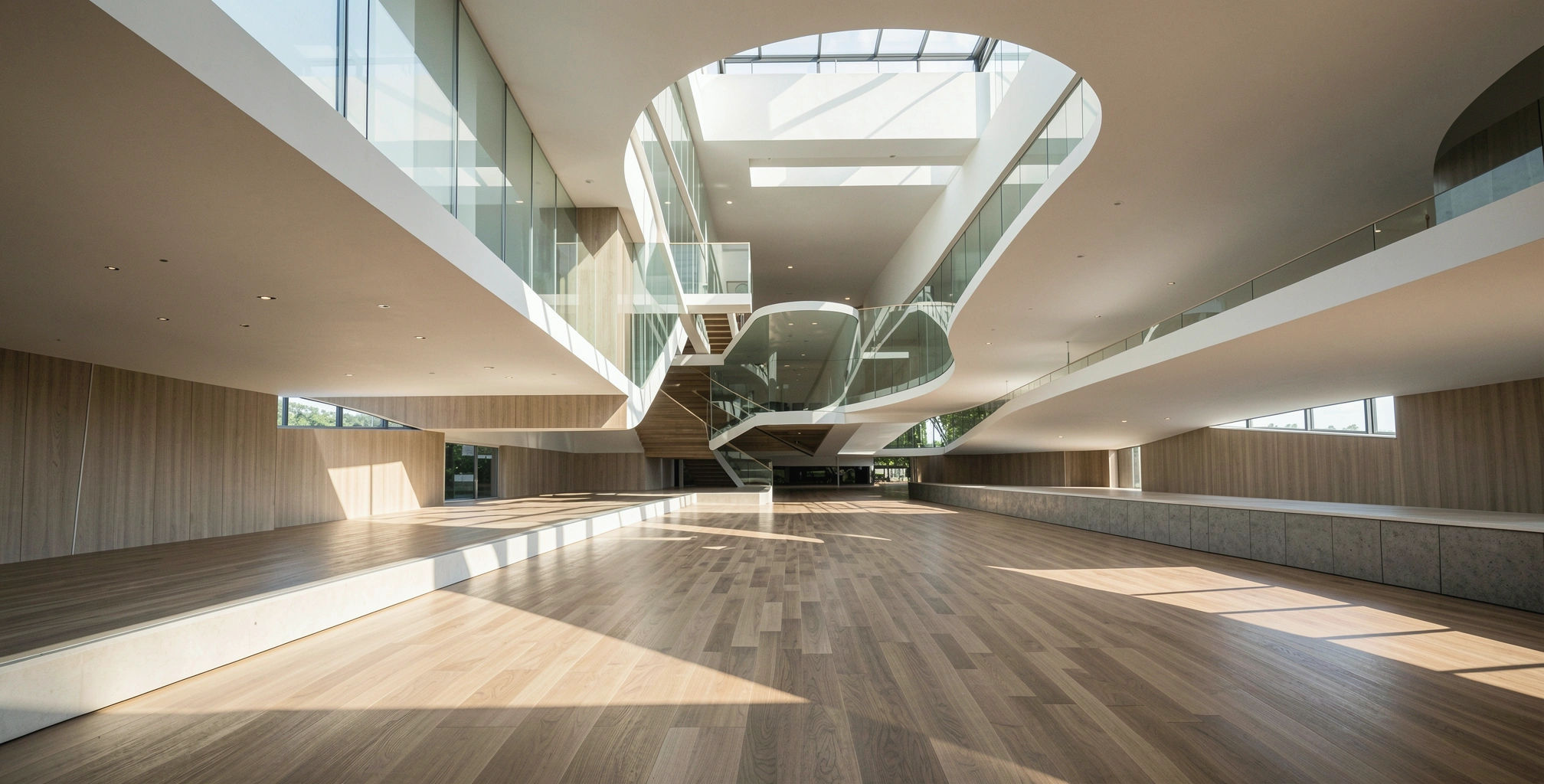
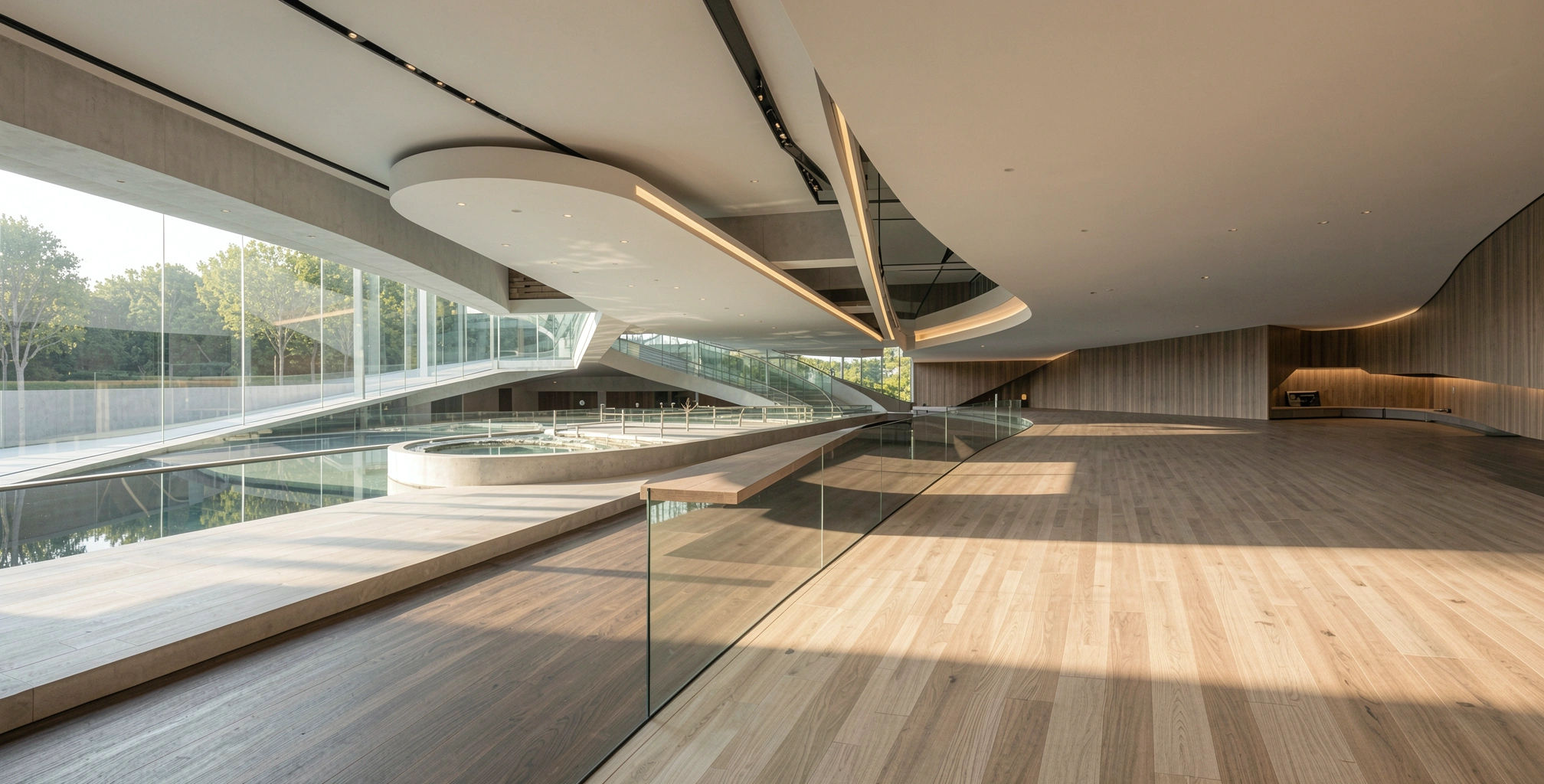
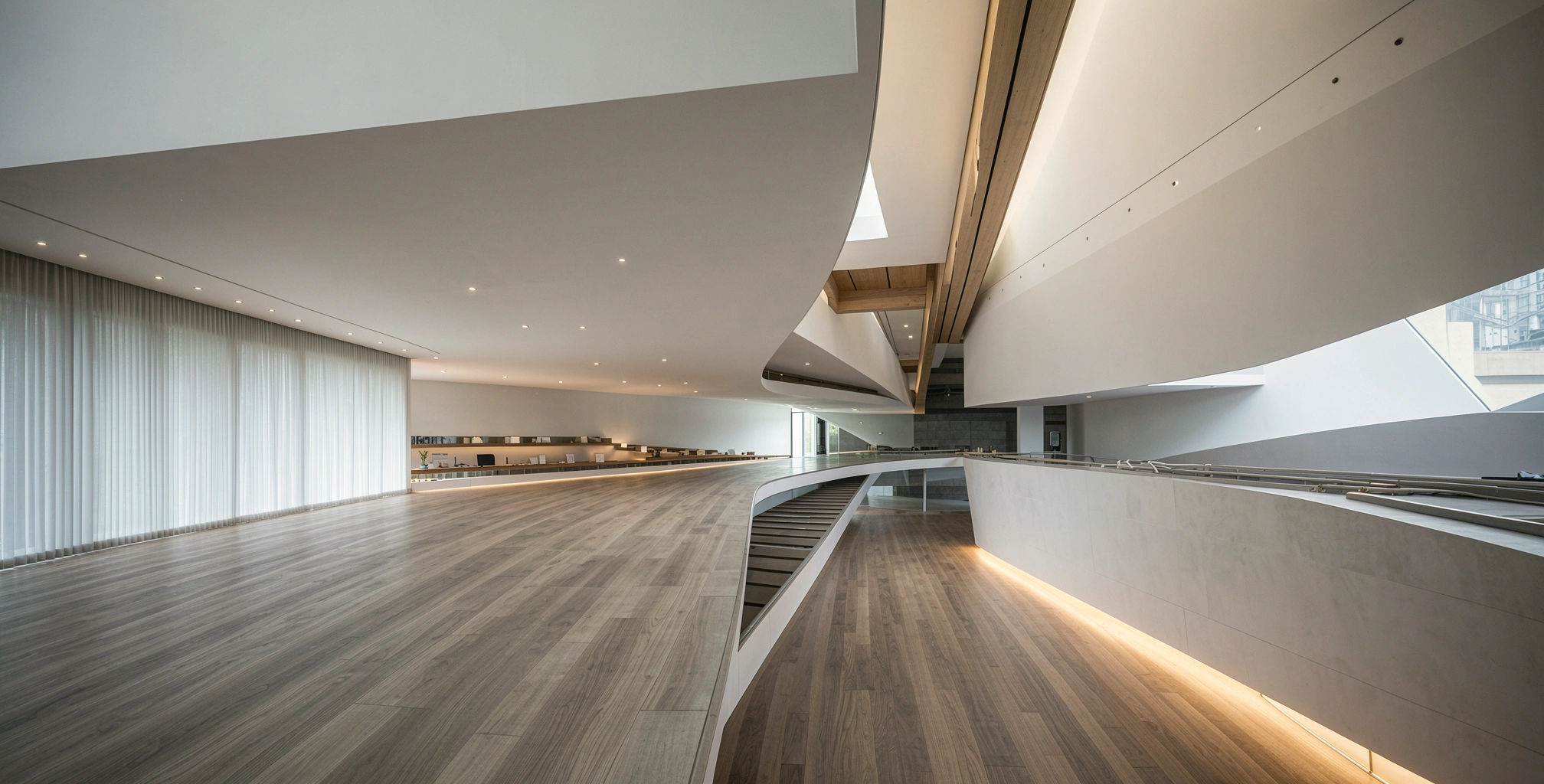
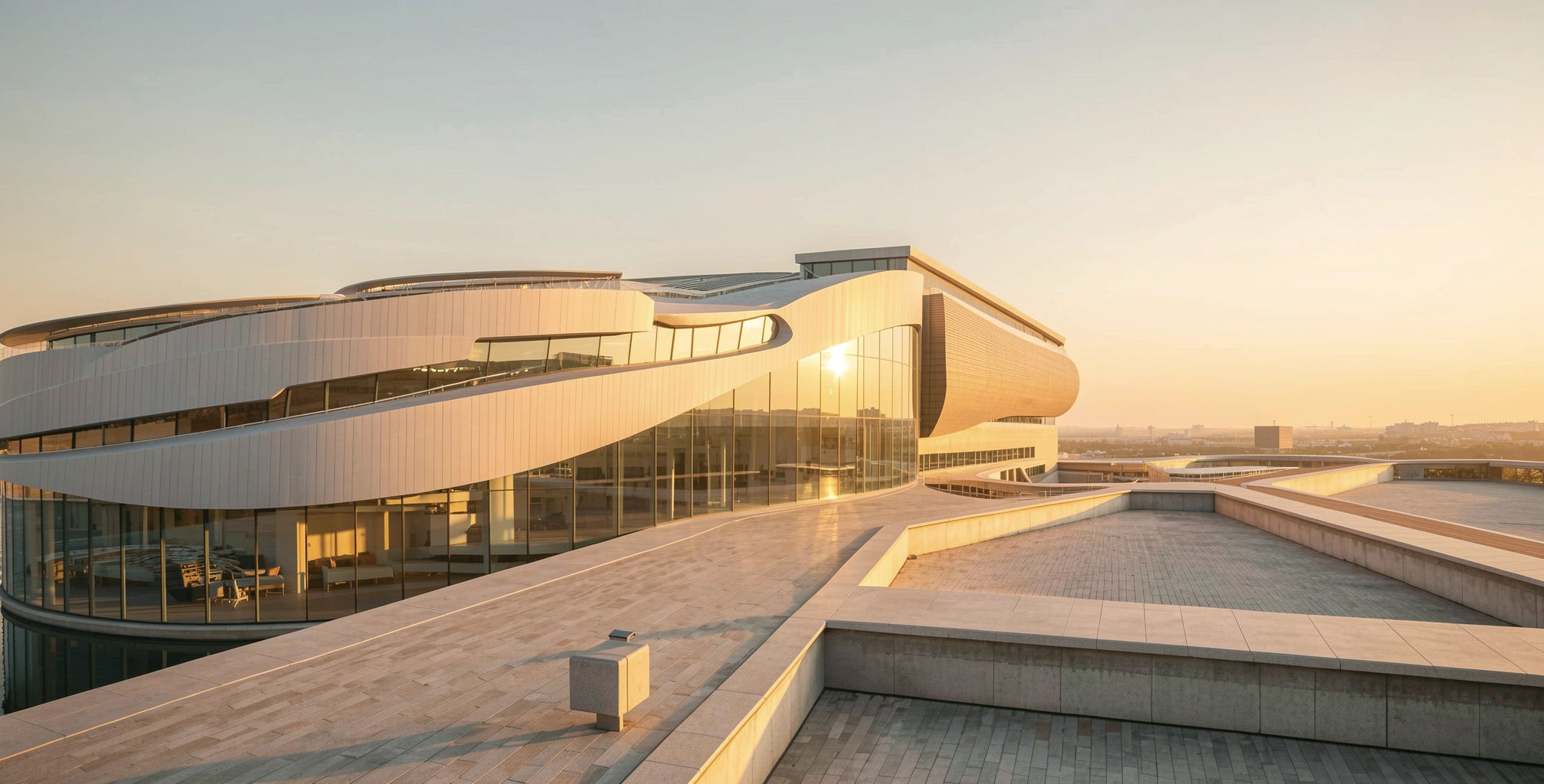
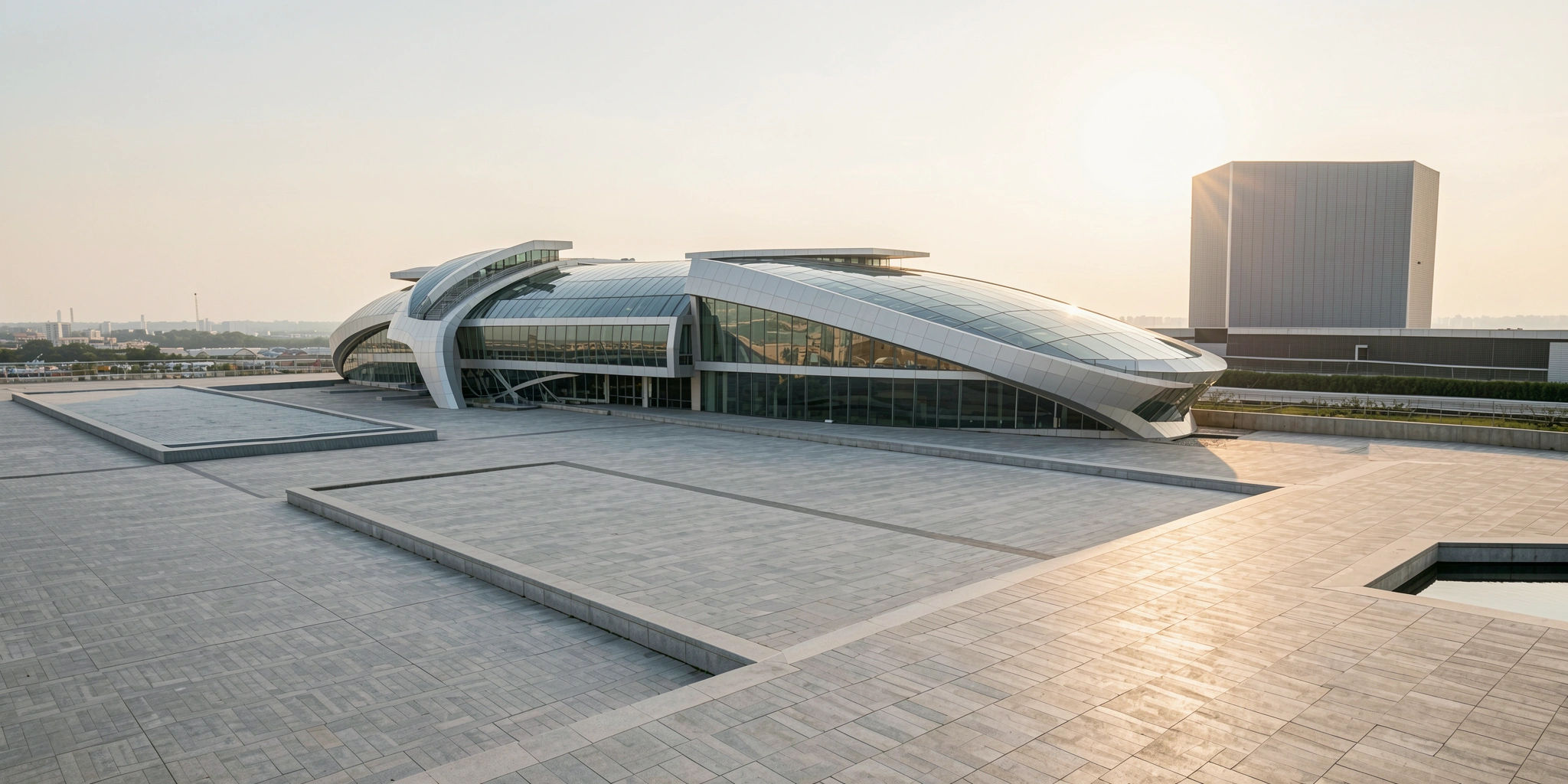
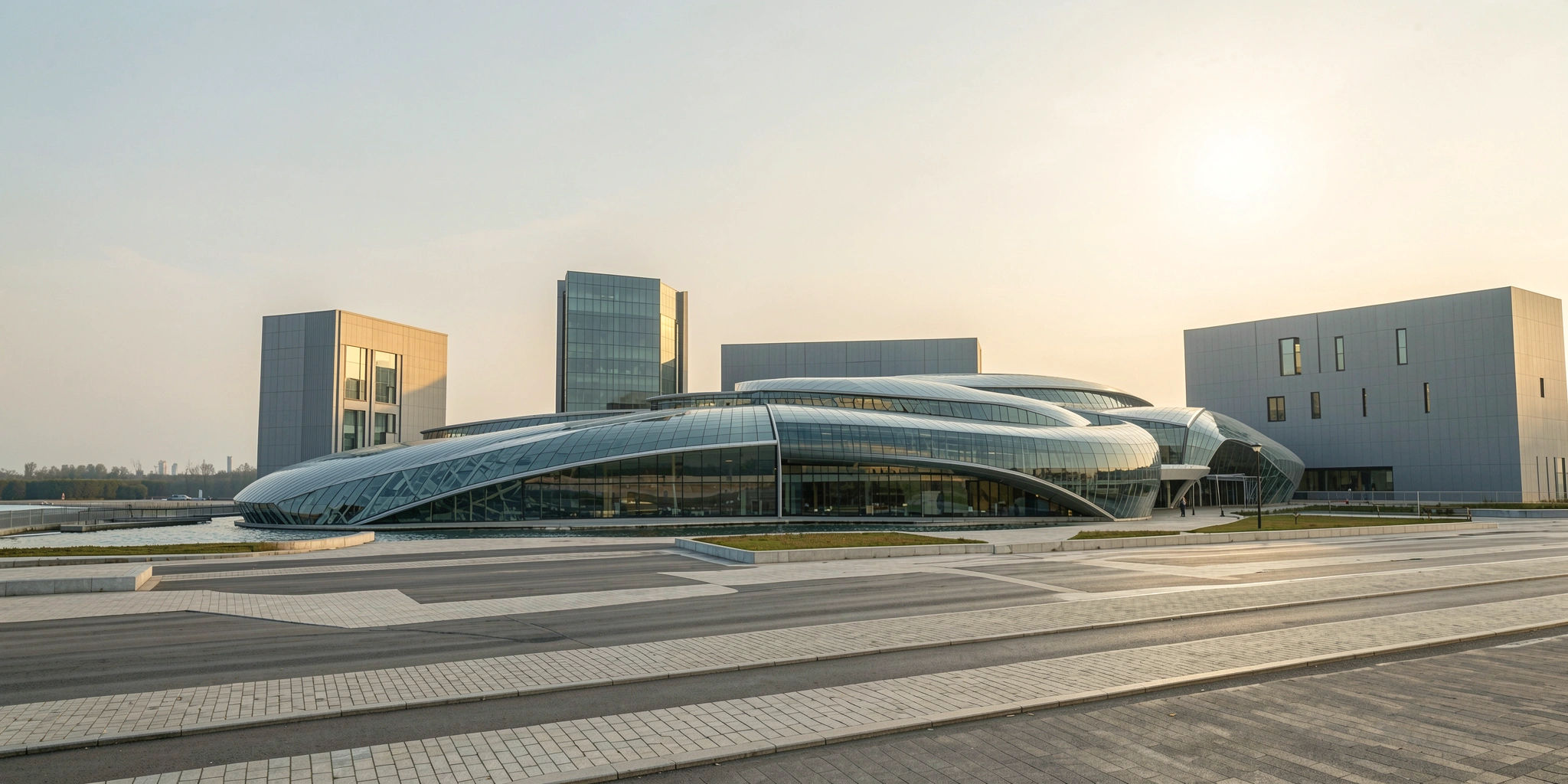
The design is generated through an obliquely angled internal geometry that operates independently from the external envelope. Rather than allowing the façade to simply mirror the arrangement of internal spaces, the project establishes a productive separation between interior organisation and enclosure. This relationship creates a series of inhabitable interstitial zones between the occupied workplace and the outer building skin, introducing spatial depth and organisational flexibility into the architecture.
These interstitial spaces are not conceived as residual or leftover areas. Instead, they form active territories within the building that support circulation, informal meeting, environmental moderation and visual connection. Daylight, views, movement and social interaction are accommodated within these zones, allowing them to contribute directly to both the performance and experience of the workplace.
The project explores how architecture can benefit from the coexistence of multiple systems operating at different scales and according to different requirements. Interior organisation responds to patterns of occupation and programme, while the external envelope addresses environmental performance, structural logic and urban presence. The building therefore acquires character through the interaction of these systems rather than through the dominance of any single formal gesture.
This layered approach also provides adaptability. The separation between occupied space and enclosure allows the workplace to accommodate changing organisational requirements over time while maintaining a coherent architectural identity. Flexibility is achieved not through generic space but through the careful organisation of relationships between programme, structure, circulation and environmental systems.
Advanced construction technologies support the realisation of this strategy. The façade, structure and environmental systems are developed as coordinated yet distinct components, allowing technical performance and architectural expression to emerge simultaneously. Construction therefore contributes directly to the architectural concept, enabling the precise integration of multiple systems within a coherent whole.
The project positions the corporate headquarters as a place of architectural investigation rather than simply a container for workplace activity. Through the organisation of layered systems and inhabitable interstitial spaces, it demonstrates how spatial complexity, organisational flexibility and technical performance can be brought together within a coherent architectural framework. Architecture emerges not through the resolution of difference, but through the productive interaction of independent yet interconnected systems.