
Laboratory Tower, Saudi Arabia
Further information and case study for this project can be found at the De Gruyter Birkhäuser Modern Construction Online database
The following architectural case study is not available at Modern Construction Online
Laboratory and Research Tower — The Vertical Research Community
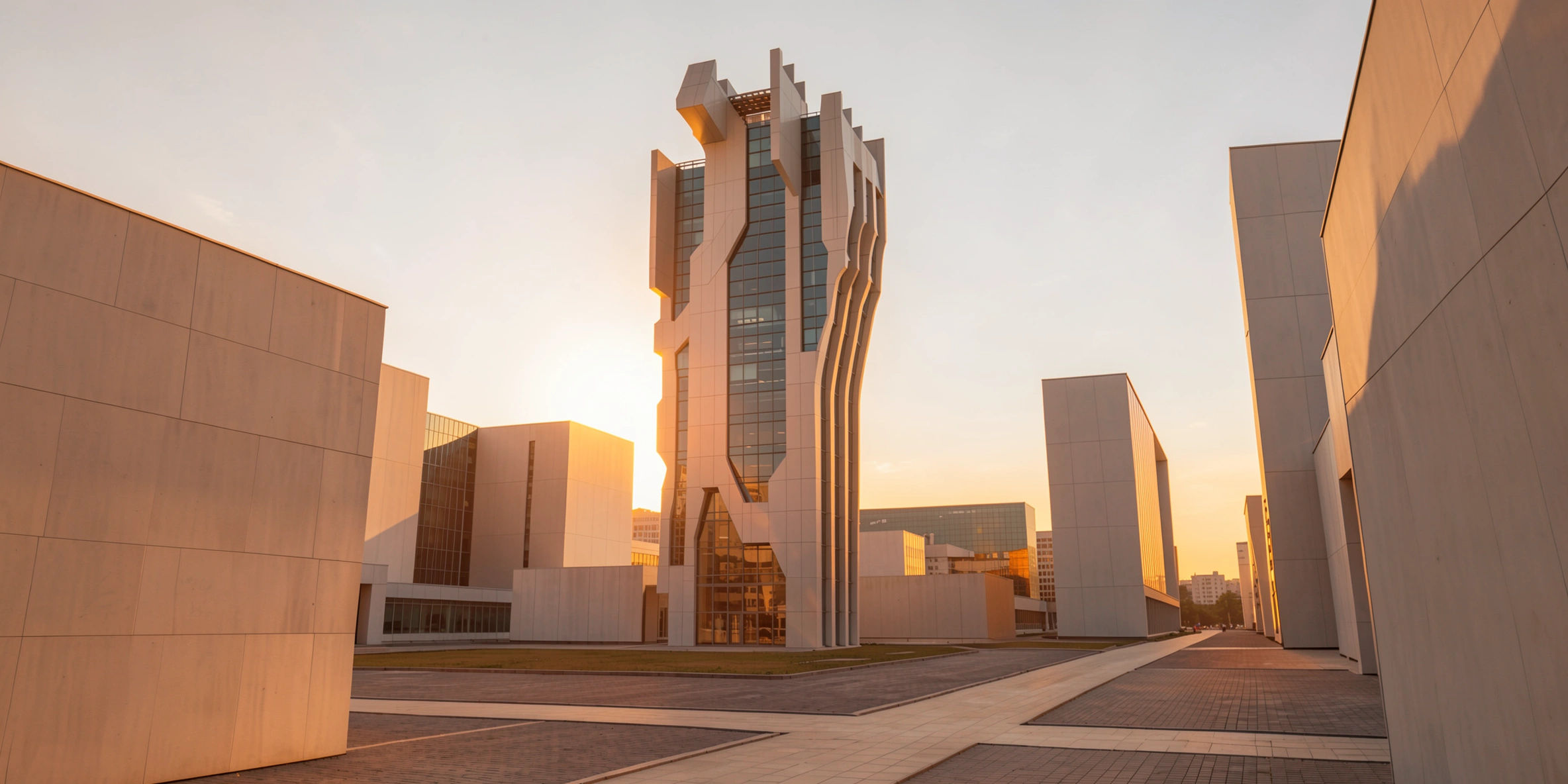
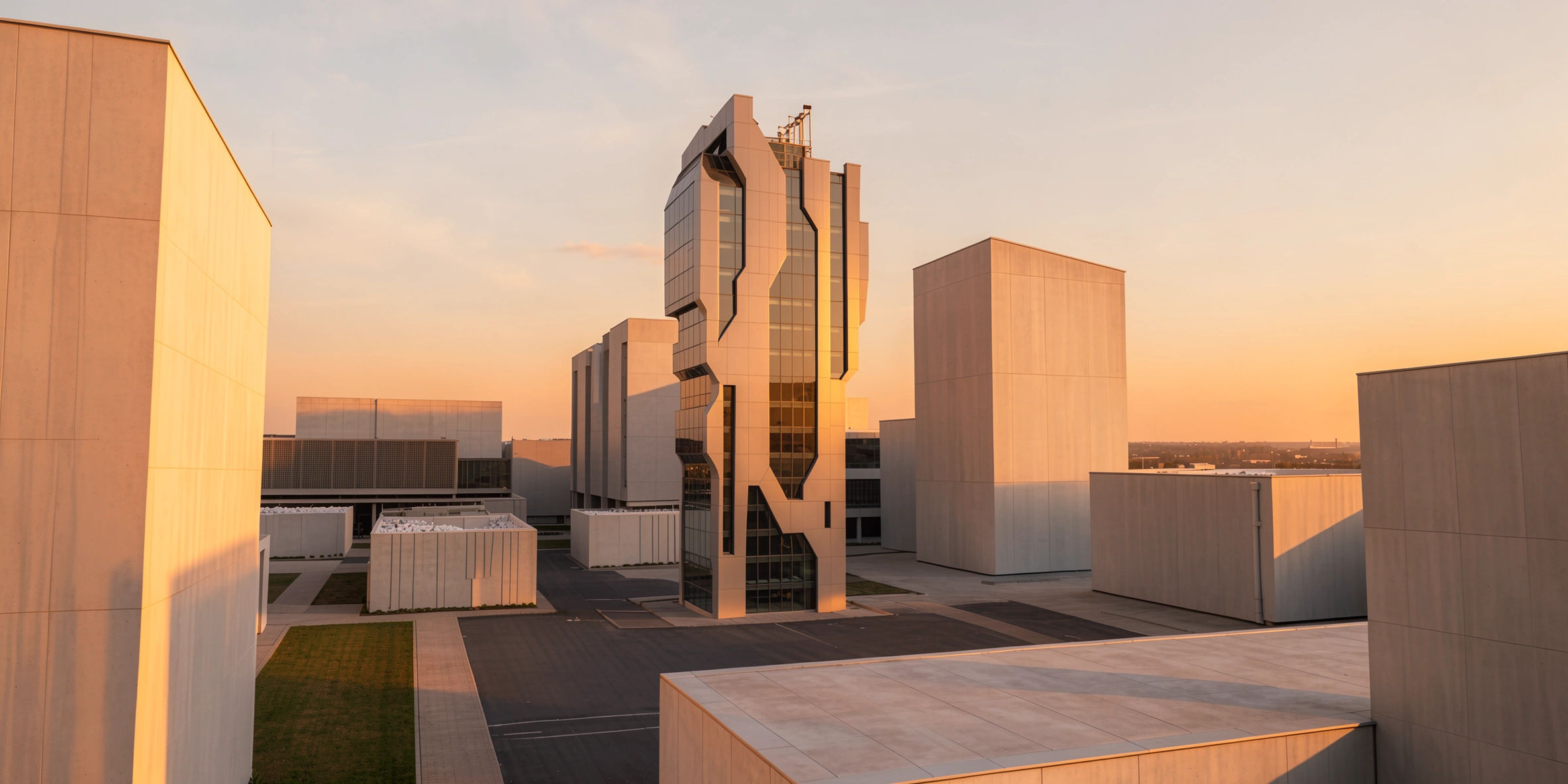
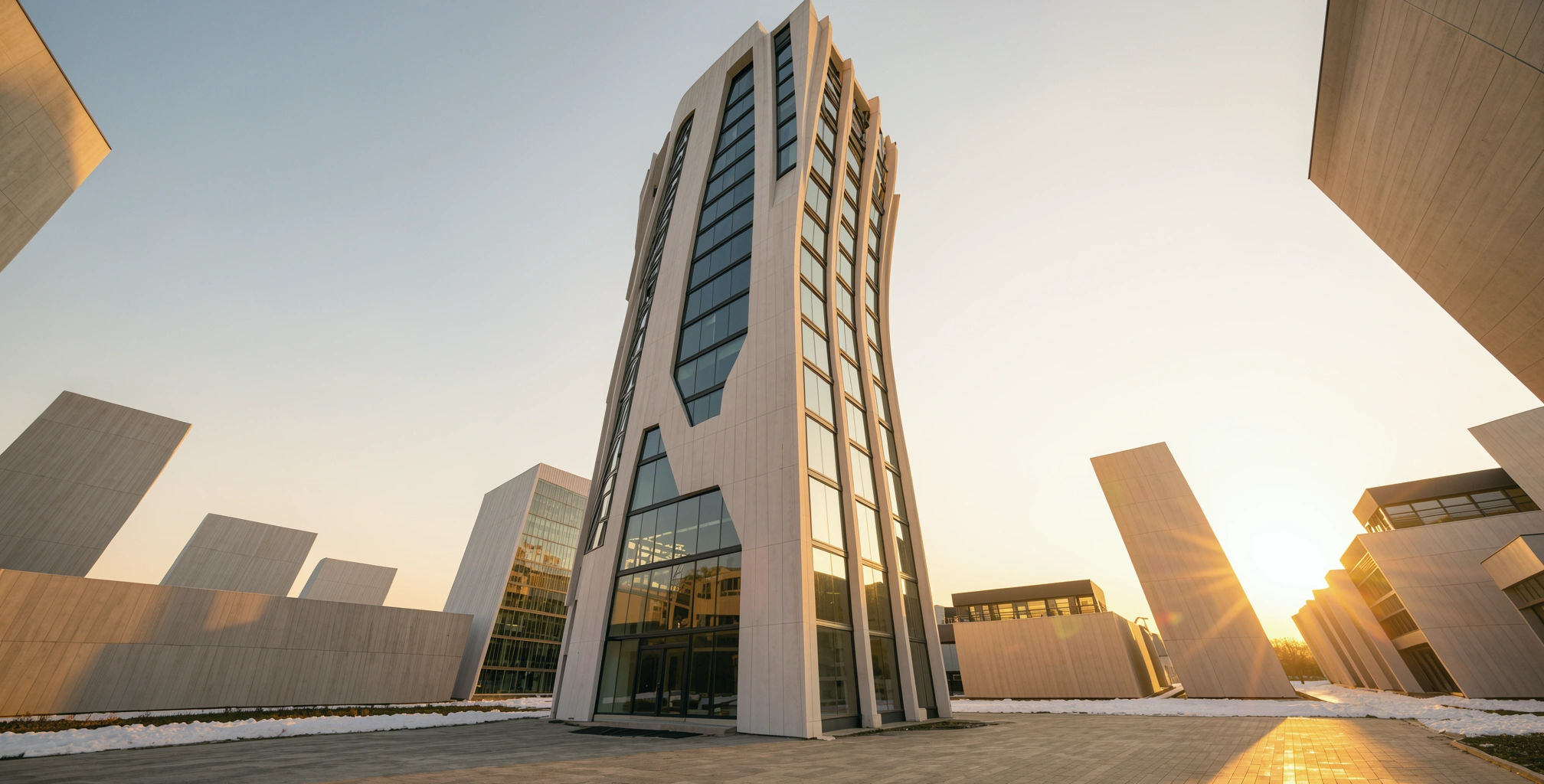
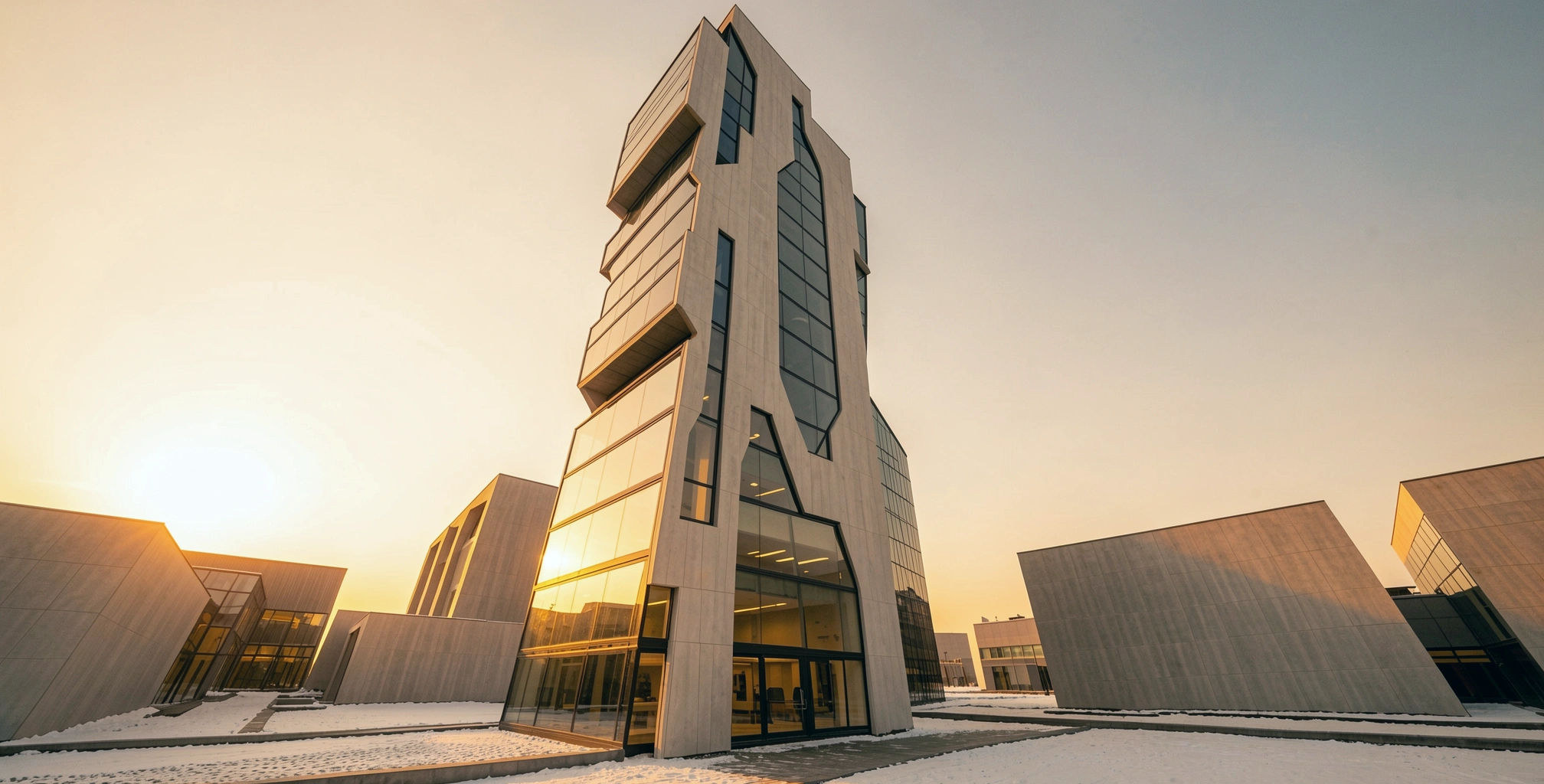
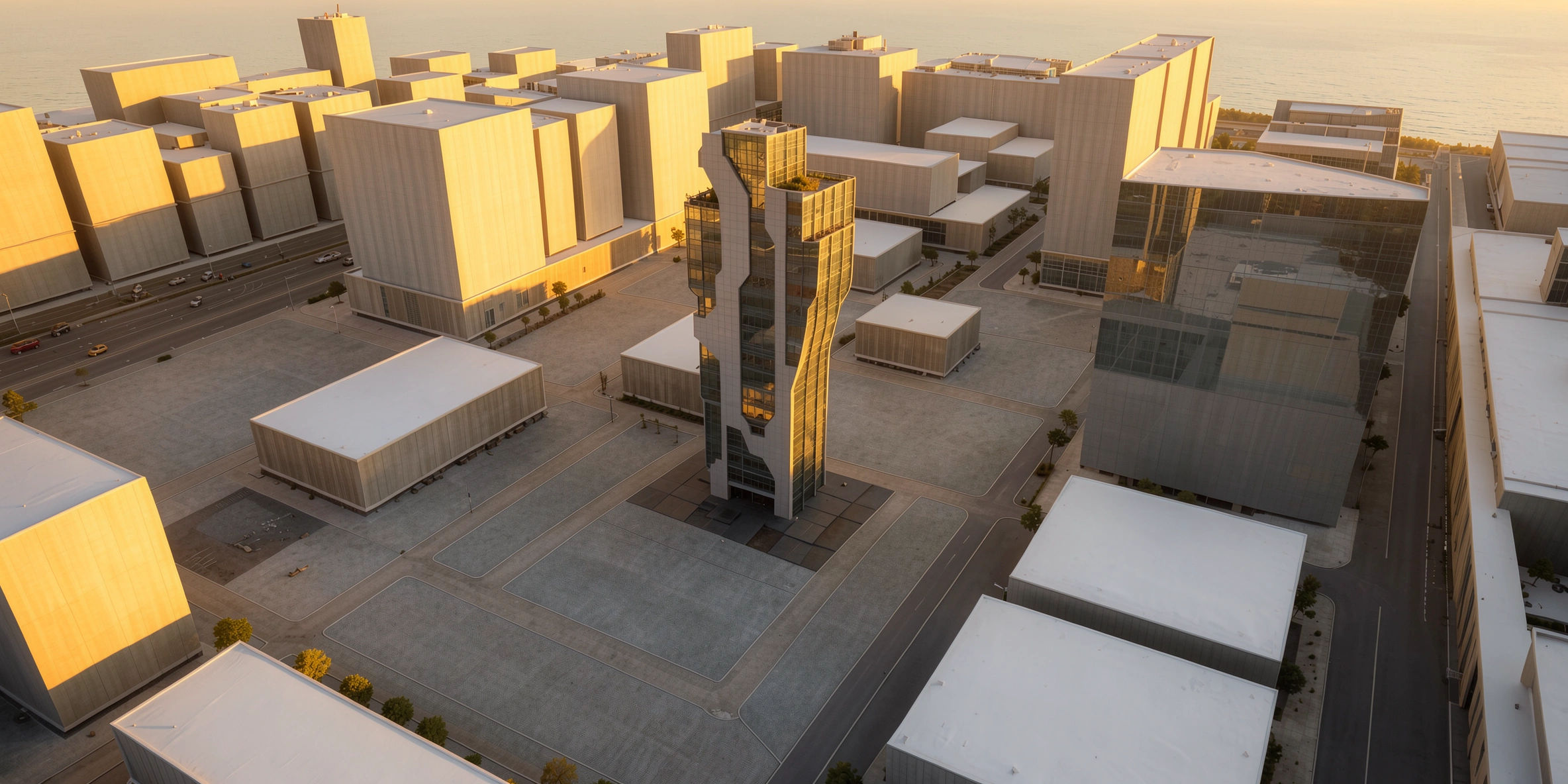
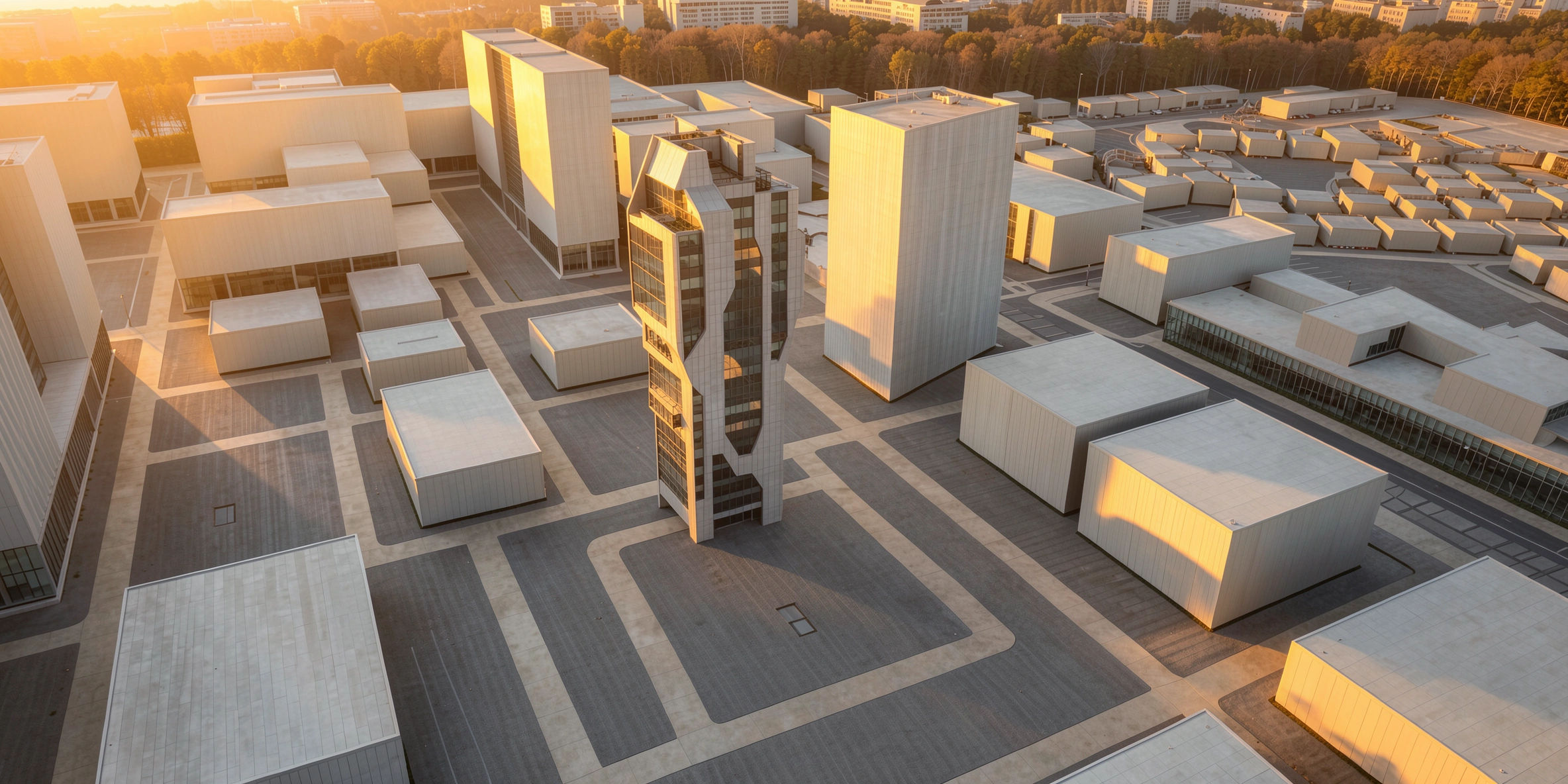
This project is a laboratory and research tower located in Riyadh, designed to bring together scientific research, collaboration and innovation within a highly integrated vertical environment. Rather than treating the tower as a stack of isolated floors, the project explores how high-rise buildings can function as interconnected communities, creating opportunities for interaction, knowledge exchange and shared discovery.
The tower is conceived as a vertical research community in which laboratories, meeting spaces, circulation routes, shared facilities and environmental systems are organised as interconnected components of a larger scientific ecosystem. Research is increasingly collaborative and interdisciplinary, requiring environments that support both focused investigation and informal exchange. The building therefore seeks to balance technical performance with social connectivity, creating a setting in which knowledge can develop through both planned and unplanned interactions.
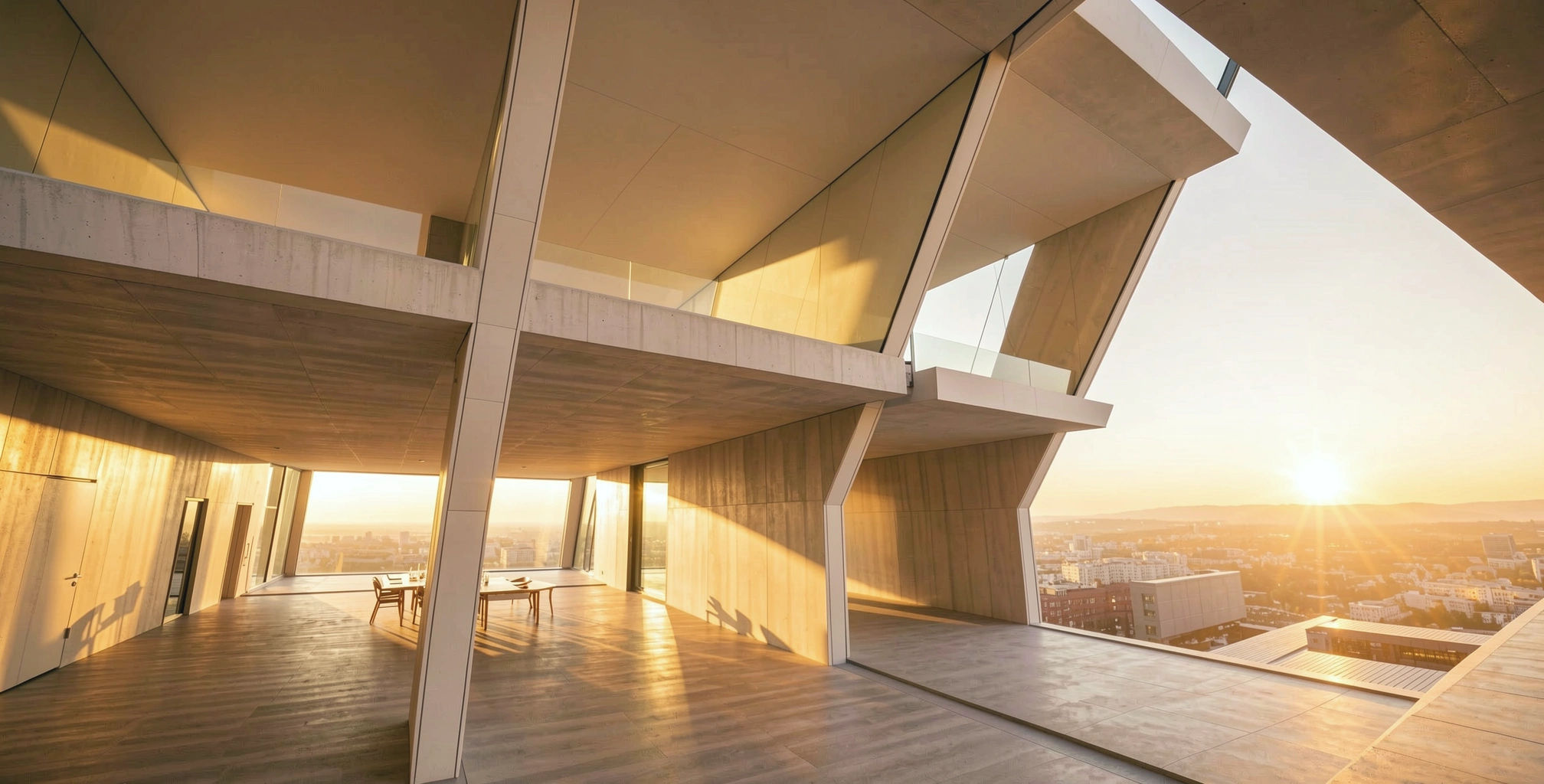
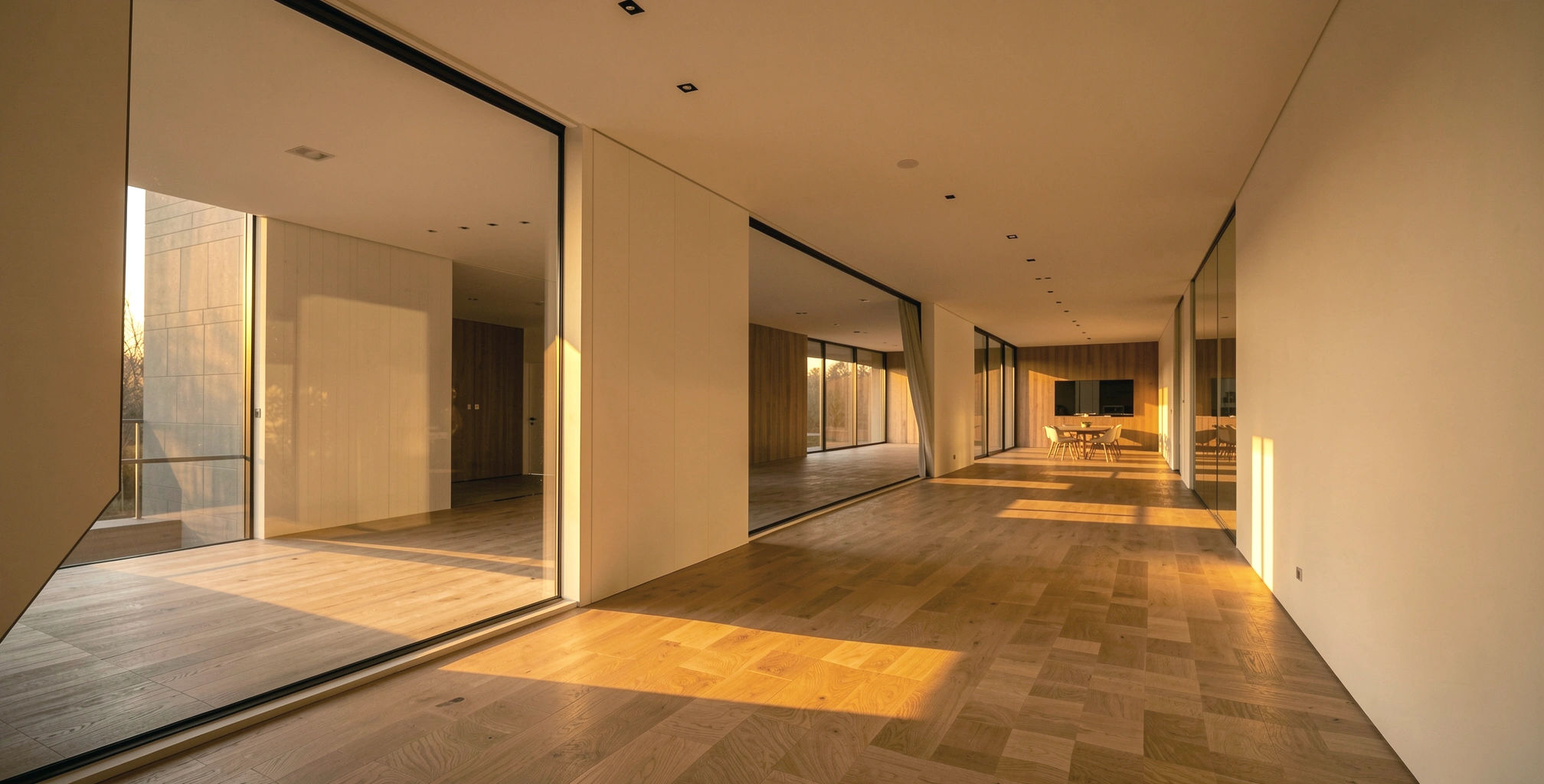
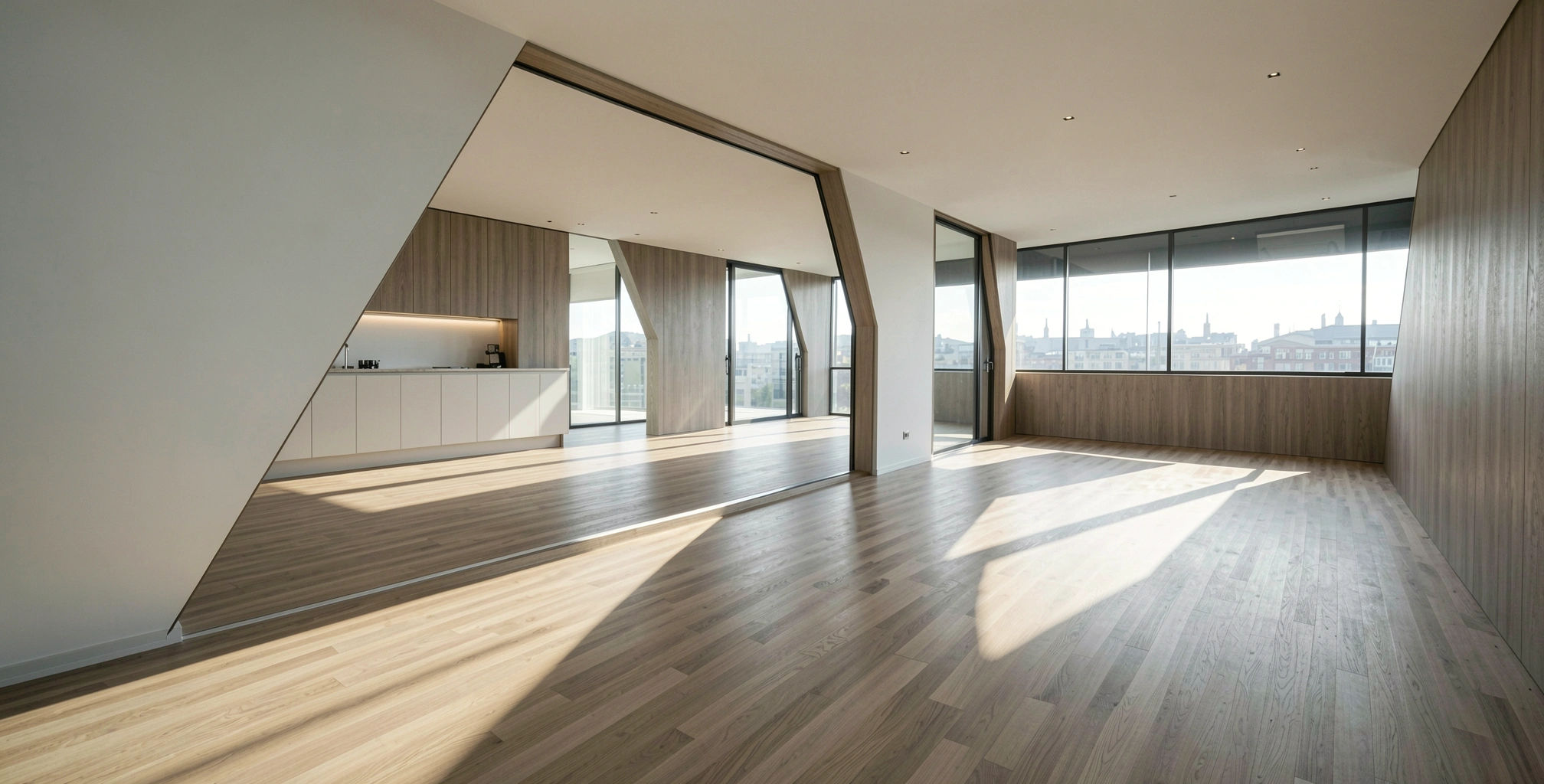
At the heart of the proposal is a reconsideration of the relationship between primary research spaces and the systems that support them. Instead of separating laboratories, services, circulation and environmental systems into distinct architectural elements, the project integrates these functions within a layered organisational framework. Laboratories are arranged around a series of glazed interstitial zones that accommodate circulation, collaboration spaces, environmental systems and shared facilities.
These intermediate spaces perform several roles simultaneously. They provide access to natural light, support environmental performance, create opportunities for informal interaction and make visible the complex systems that allow research environments to function. Infrastructure is therefore not concealed within the building but becomes an active contributor to its spatial character and organisational logic.
This approach is particularly significant within the context of Riyadh, where buildings often operate as autonomous objects within a dispersed urban landscape. Rather than relying solely on external urban relationships, the project generates its own internal urbanism. The tower becomes a miniature vertical city organised around a sequence of interconnected spaces that support both individual research and collective engagement.
Natural light is introduced deep into the building through carved façades and vertical light courts. These elements improve environmental performance while establishing visual connections across multiple levels. Researchers remain aware of activities taking place throughout the building, reinforcing a sense of participation within a larger scientific community and reducing the isolation often associated with specialised research environments.
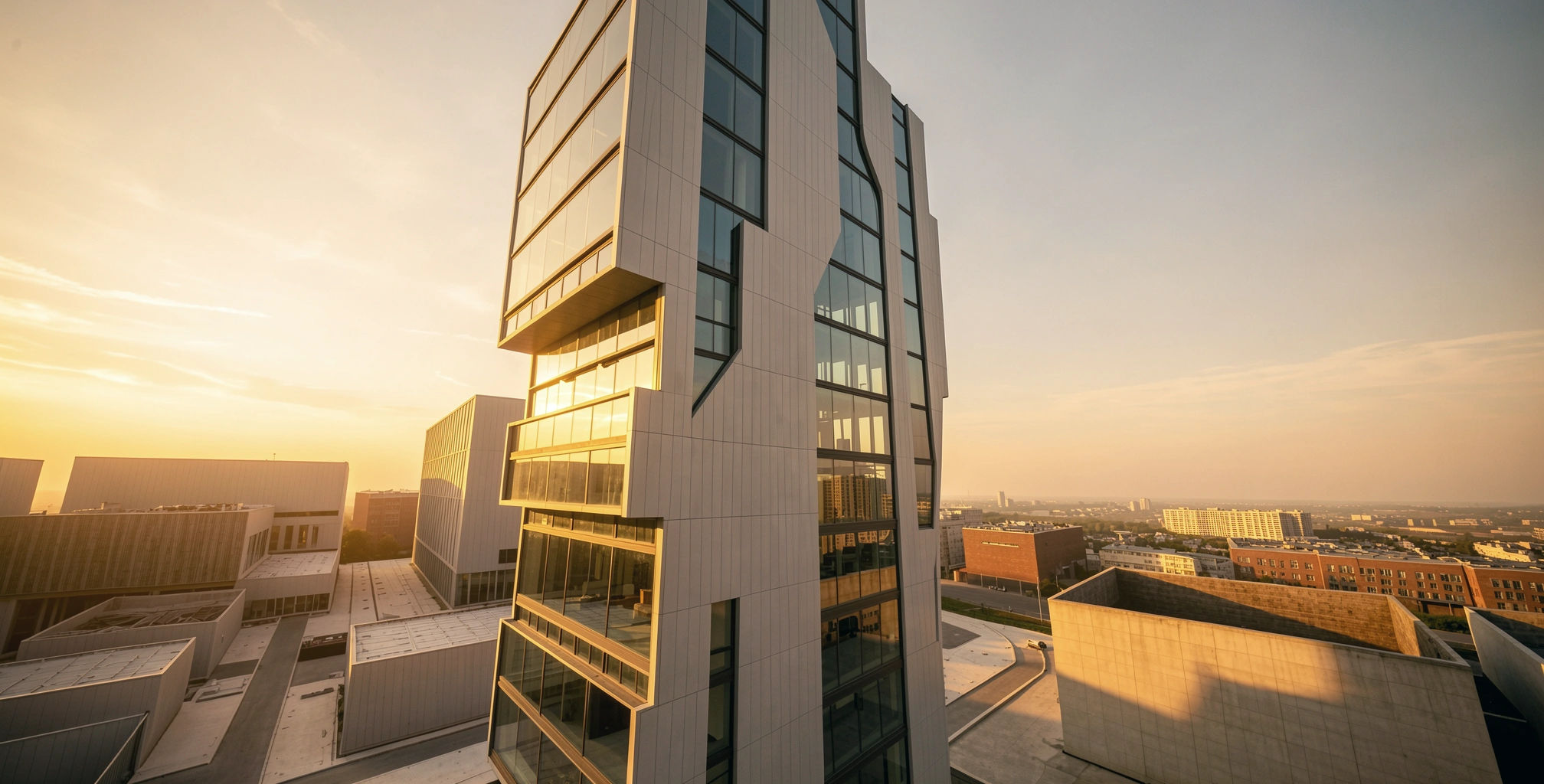
The façade reflects this layered organisational strategy. Rather than functioning as a simple enclosure, it acts as an environmental filter that moderates light, heat and views while expressing the complexity of the spaces within. The building's external appearance emerges directly from its internal organisation and environmental requirements, creating a close relationship between performance and architectural identity.
Flexibility is central to the design. Research technologies, laboratory requirements and patterns of collaboration continue to evolve, and the building is designed to accommodate change over time. Modular planning, adaptable servicing strategies and generous circulation spaces allow laboratories and support facilities to be reconfigured as needs develop, extending the useful life of the building and supporting future modes of research.
The project also challenges conventional assumptions about high-rise architecture. Many towers prioritise efficiency through repetition and standardisation. This proposal instead embraces variation, layering and interaction, recognising that innovation often emerges through unexpected encounters and exchanges between people and disciplines. The organisation of the building therefore supports not only research activities themselves but also the relationships that enable research to advance.
By integrating laboratories, infrastructure, environmental systems and collaborative spaces within a unified architectural framework, the project proposes an alternative model for the contemporary research tower. The building functions not as a collection of isolated floors but as a connected vertical community in which scientific work, social interaction and knowledge exchange are brought together within a shared environment.
The result is a research building that supports both technical performance and human collaboration. Innovation is understood not only as the outcome of specialised research but also as a product of the relationships, encounters and exchanges that occur between people working together. Architecture therefore becomes an active participant in the production of knowledge rather than simply a container for it.