
Lakhta Center, Saint Petersburg, Russia
Further information and case study for this project can be found at the De Gruyter Birkhäuser Modern Construction Online database
The following text is not available at Modern Construction Online
Environmental Performance at Supertall Scale
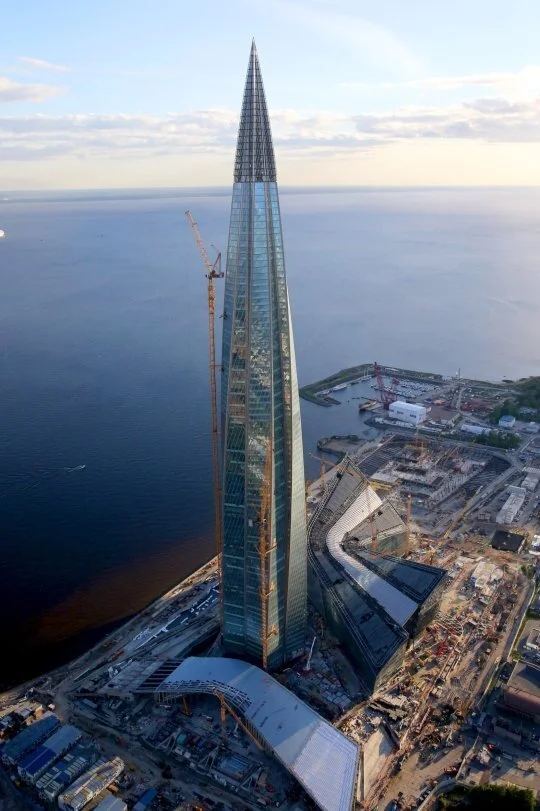
Standing 462 metres above the Gulf of Finland, the Lakhta Centre is the tallest building in Europe and one of the most technologically advanced high-rise developments constructed in a cold-climate environment. Designed as the headquarters of Gazprom, the tower combines complex geometry, advanced structural engineering and high-performance façade technology within a single integrated architectural system.
Newtecnic provided contractor-side technical support for the façade design, contributing to the development and implementation of the tower's closed-cavity façade system. The project demonstrates how contemporary façade engineering can transform the building envelope from a passive enclosure into an active environmental moderator capable of responding to extreme climatic conditions while supporting ambitious architectural form.
Architectural Strategy
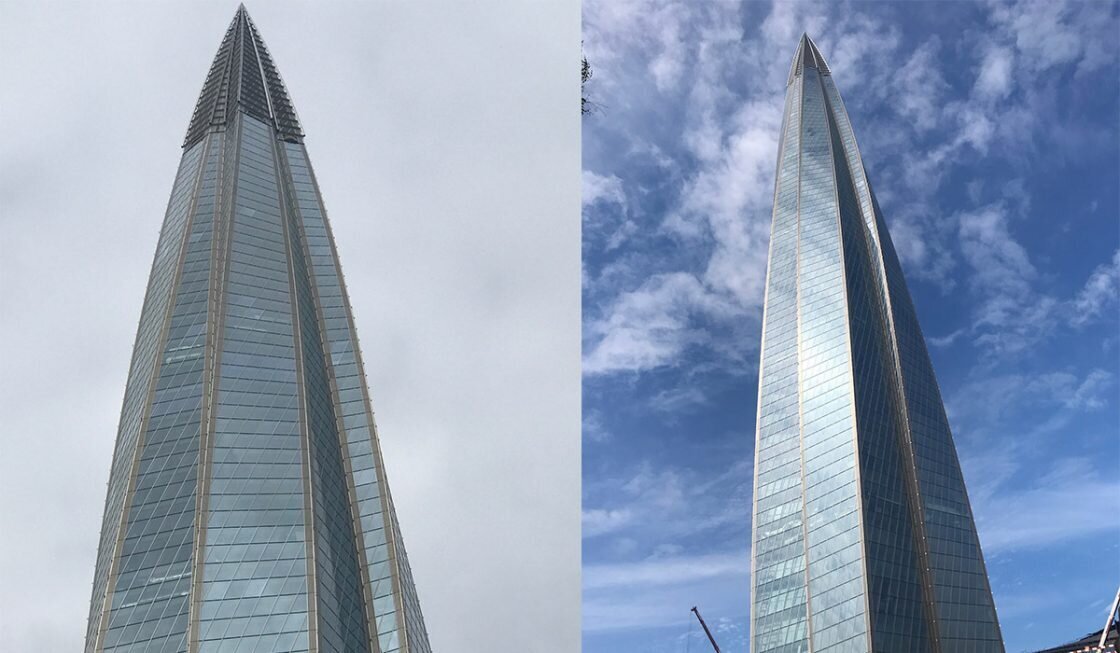
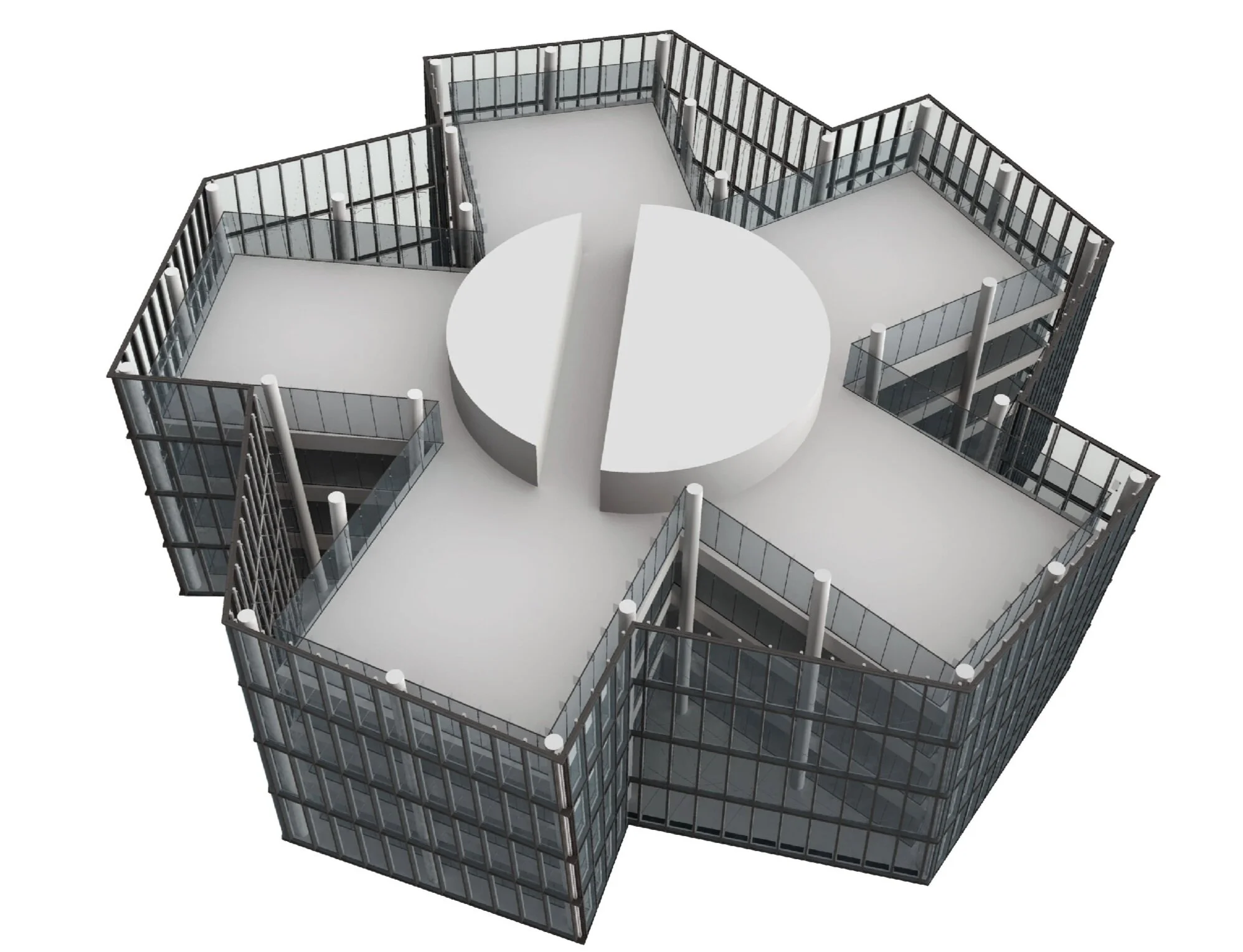
The tower is organised around a five-sided plan that gradually rotates through ninety degrees over its height. This spiralling geometry establishes the tower's distinctive architectural identity while simultaneously contributing to its aerodynamic performance.
Rather than treating form and performance as separate concerns, the twisting geometry performs multiple functions. The gradual rotation reduces wind pressures acting on the structure, minimises vortex shedding effects and improves overall structural efficiency. The façade therefore emerges not as an applied surface but as part of a broader architectural strategy in which geometry, structure and environmental performance operate together.
This approach places the project within a lineage of high-rise buildings in which environmental performance becomes a generator of form rather than a technical response applied after architectural decisions have been made.
The Façade as Environmental Infrastructure
The defining innovation of the Lakhta Centre is its closed-cavity façade system.
The envelope comprises an external layer of laminated glass, an inner insulated glazing unit and a sealed cavity positioned between the two layers. Within this protected cavity, automated solar-control blinds respond continuously to changing environmental conditions.
Unlike conventional external shading systems, the blinds operate within a controlled environment protected from wind, moisture, dust and temperature extremes. This significantly improves durability and operational reliability while allowing precise management of daylight, glare and solar gain.
The façade therefore functions as environmental infrastructure rather than simply enclosure. It regulates thermal performance, visual comfort and energy consumption while maintaining the transparency expected of a contemporary office tower.
Responding to an Extreme Climate
St Petersburg presents one of the most demanding environmental contexts for a glazed high-rise building.
Winter temperatures can remain well below freezing for extended periods, while summer conditions combine long daylight hours with significant solar exposure. The façade consequently must perform effectively under radically different environmental conditions throughout the year.
During winter, high-performance glazing, low-emissivity coatings and thermally broken framing systems minimise heat loss and maintain occupant comfort. During summer, the automated blind system reduces solar gain before it reaches the occupied spaces, limiting cooling demand while preserving daylight and outward views.
This dual environmental strategy allows the façade to operate as a dynamic system calibrated to seasonal change rather than as a static barrier separating inside from outside.
Geometry and Rationalisation
While the tower appears highly complex, its construction depended upon extensive geometric rationalisation.
The continuously rotating floor plates generate subtle but persistent changes in façade geometry throughout the height of the building. Every panel position is influenced by its location within the twisting form, creating thousands of unique conditions across the envelope.
Managing this complexity required a fully digital design process in which geometry, fabrication and installation were coordinated simultaneously. Parametric modelling tools allowed each façade element to be defined according to its exact position while maintaining overall consistency within the curtain wall system.
The project demonstrates how computational methods can transform geometric variation into a manageable construction process without sacrificing architectural continuity.
Cold Bending and Manufacturing Efficiency
A key aspect of the façade strategy was the use of cold-bending technology.
Rather than relying on large quantities of expensive curved glass, standard flat glazing units were carefully bent during installation to achieve the required geometry. This approach significantly reduced manufacturing complexity while maintaining the smooth visual continuity demanded by the architecture.
The use of cold bending illustrates a broader principle evident throughout the project: architectural complexity is achieved through intelligent coordination rather than through the unnecessary multiplication of bespoke components.
By combining geometric precision with manufacturing efficiency, the façade reconciles architectural ambition with practical construction realities.
Movement, Tolerance and Structural Behaviour
At supertall scale, structural movement becomes a primary design consideration.
The façade must accommodate wind-induced sway, thermal expansion, differential shortening of structural elements and long-term building movement without compromising weather resistance or visual continuity.
Adaptive fixing systems and carefully designed movement joints were therefore integrated throughout the envelope. These components allow the façade to move independently of the primary structure while maintaining airtightness, watertightness and operational performance.
The project demonstrates that successful high-rise façades depend as much upon managing movement and tolerance as upon managing geometry.
Construction and Assembly
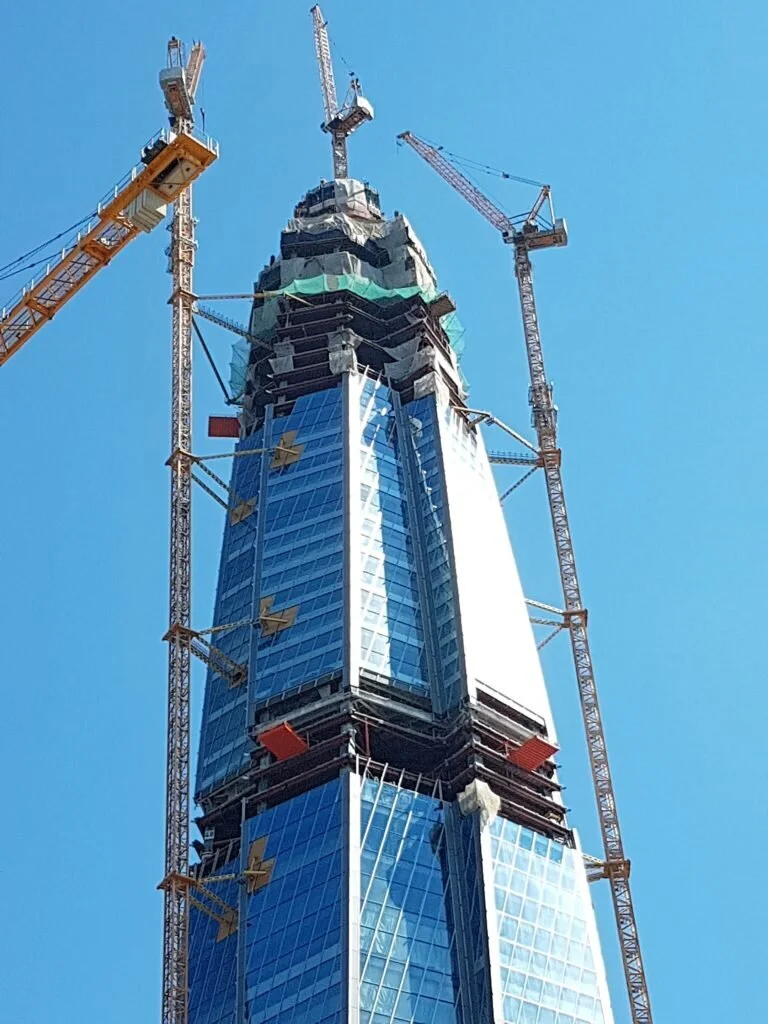
The façade was manufactured as a unitised curtain wall system using off-site fabrication techniques.
Unitisation improved quality control, reduced site labour requirements and accelerated installation under challenging climatic conditions. Completed façade units arrived on site with glazing, framing and environmental components already integrated, allowing rapid assembly regardless of seasonal weather constraints.
This industrialised approach transformed a highly complex architectural surface into a predictable and repeatable construction process, reinforcing the project's broader commitment to precision and performance.
Project Significance
The Lakhta Centre represents a significant development in the evolution of the contemporary curtain wall. Rather than acting simply as a weather barrier, the façade operates as a sophisticated environmental system that integrates climate control, structural movement, daylight management and architectural expression within a single coordinated assembly.
The project demonstrates how advanced environmental technologies can support ambitious architectural form without compromising constructability or operational performance. Through the integration of digital design, unitised fabrication and closed-cavity façade technology, the tower establishes a model for environmentally responsive high-rise architecture in extreme climates.
More broadly, the project illustrates the continuing evolution of the building envelope from static enclosure to intelligent environmental infrastructure, where performance, geometry and construction are inseparable components of a unified architectural system.