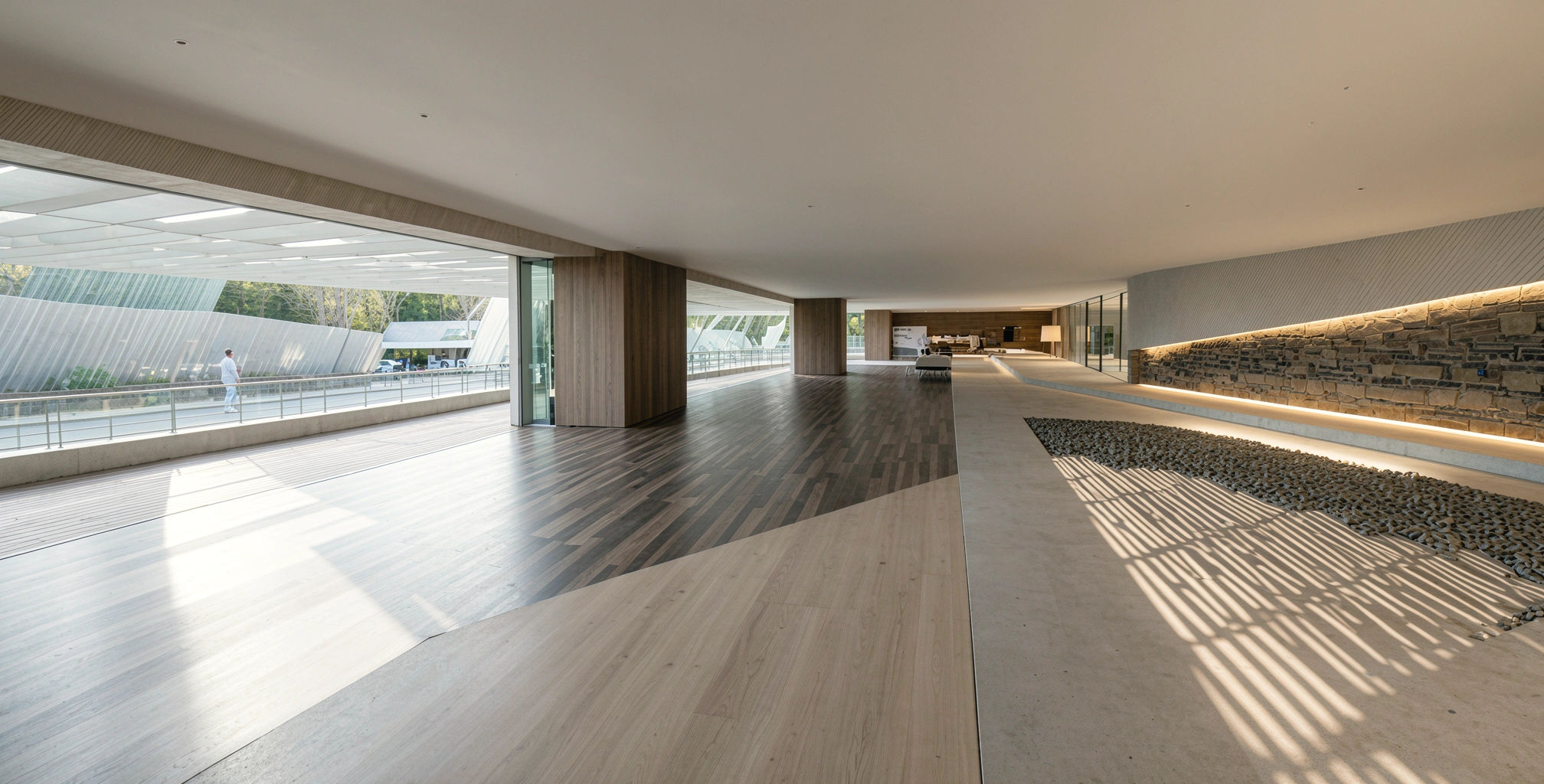
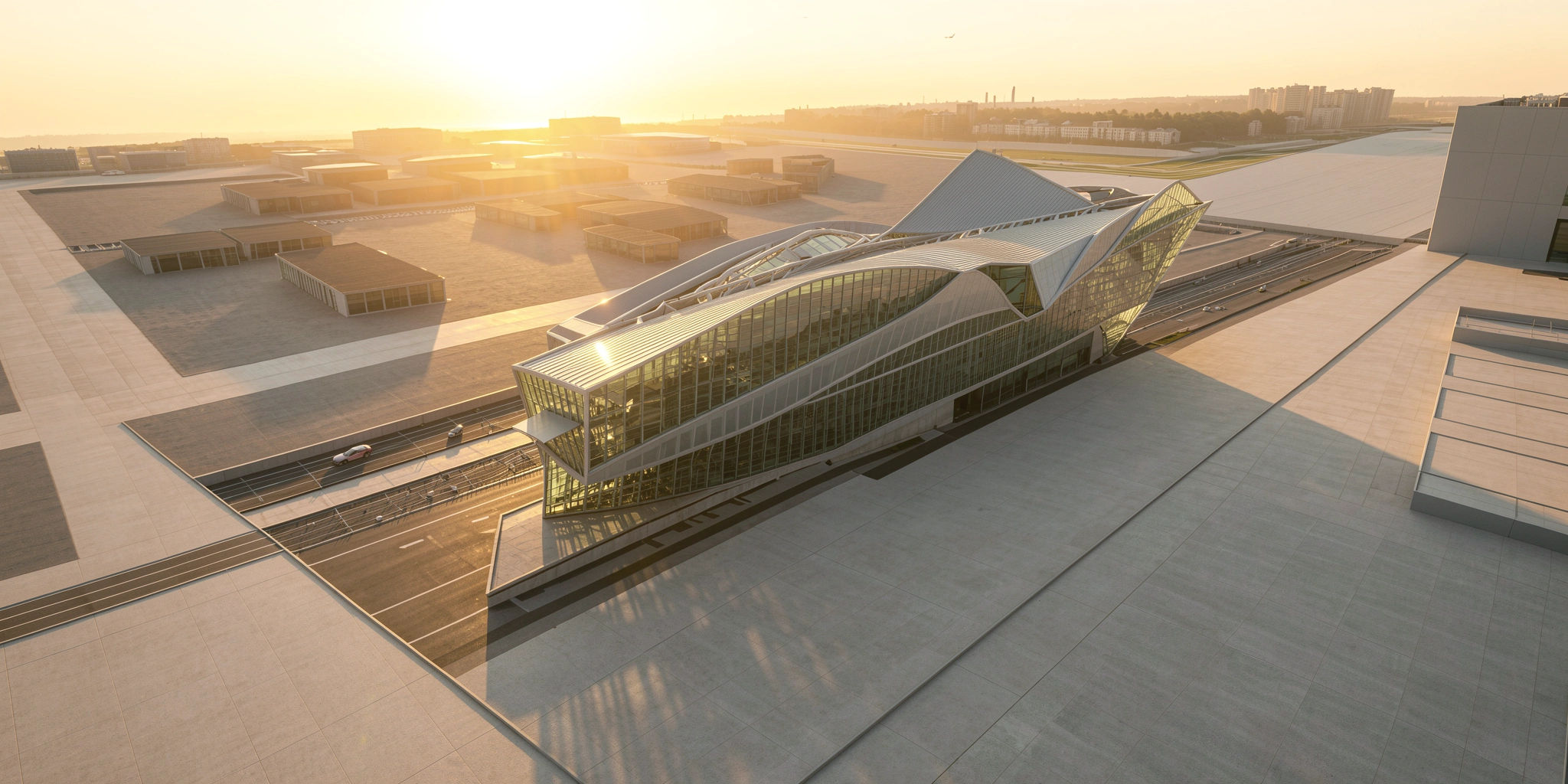
Transport Hub, Jeddah, Saudi Arabia
Further information and case study for this project can be found at the De Gruyter Birkhäuser Modern Construction Online database
The following architectural theory-based case study is not available at Modern Construction Online
Architectural Design of the Jeddah Transport Hub — Infrastructure as Hybrid Program and Movement
Introduction
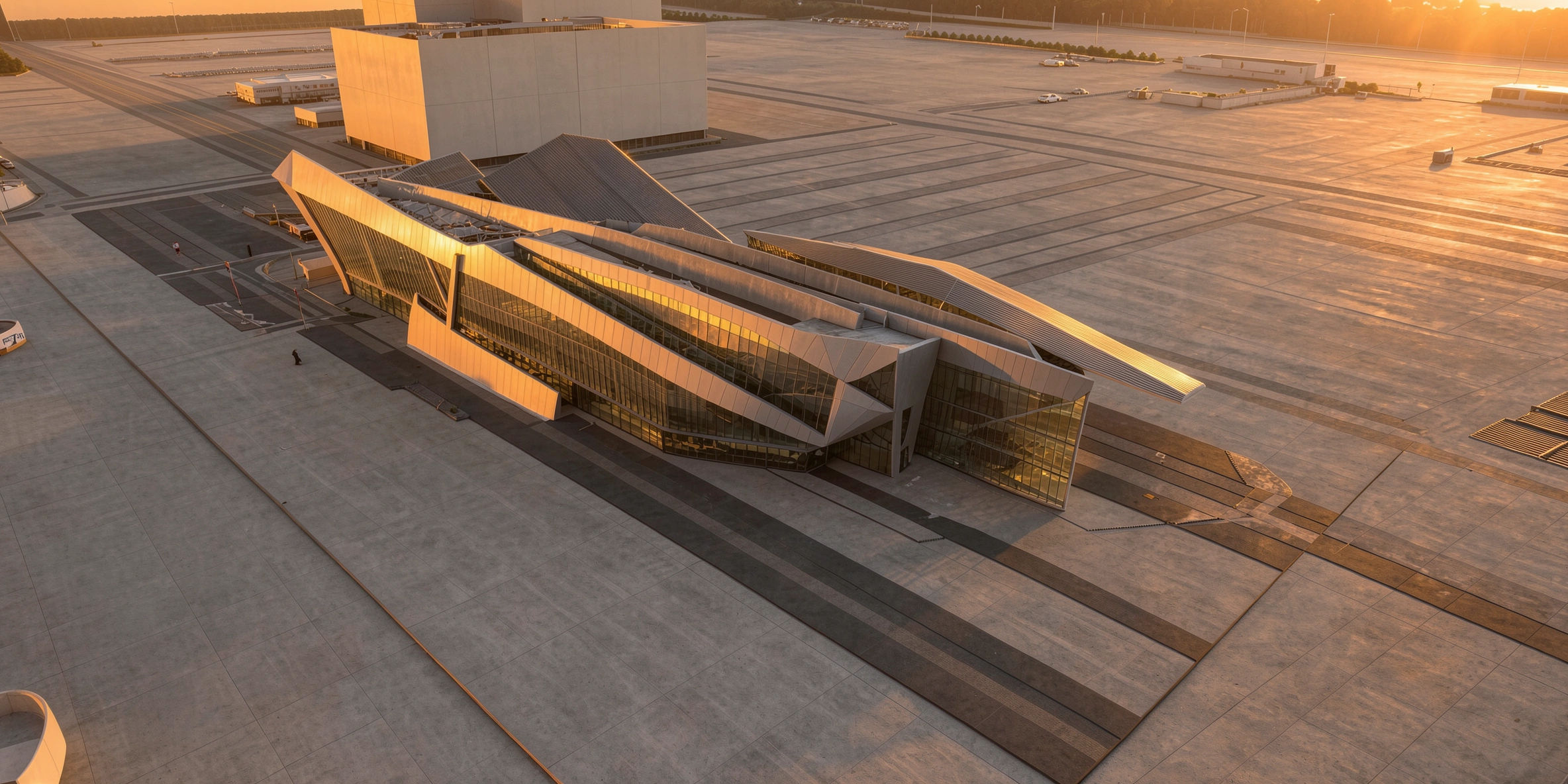
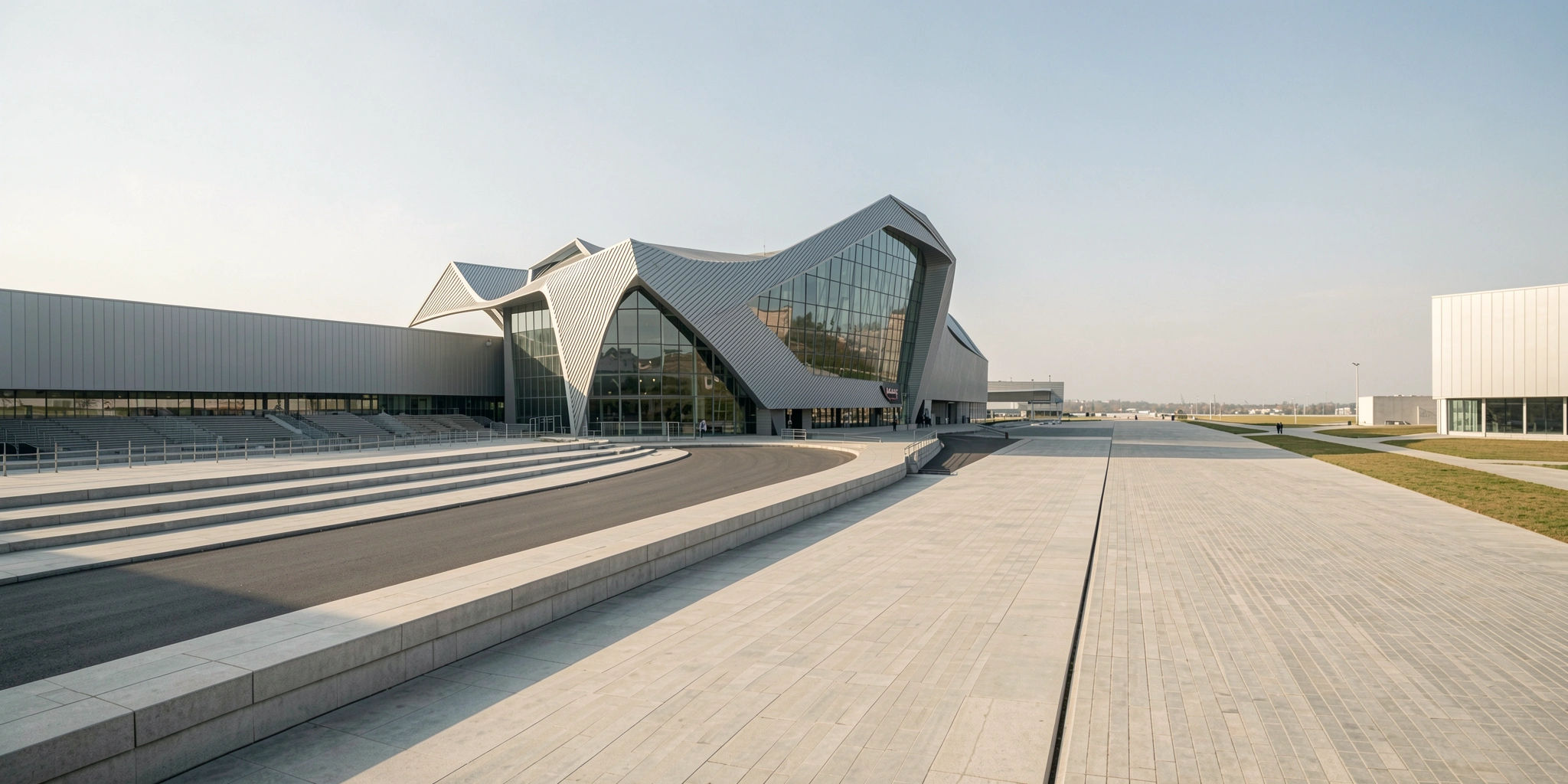
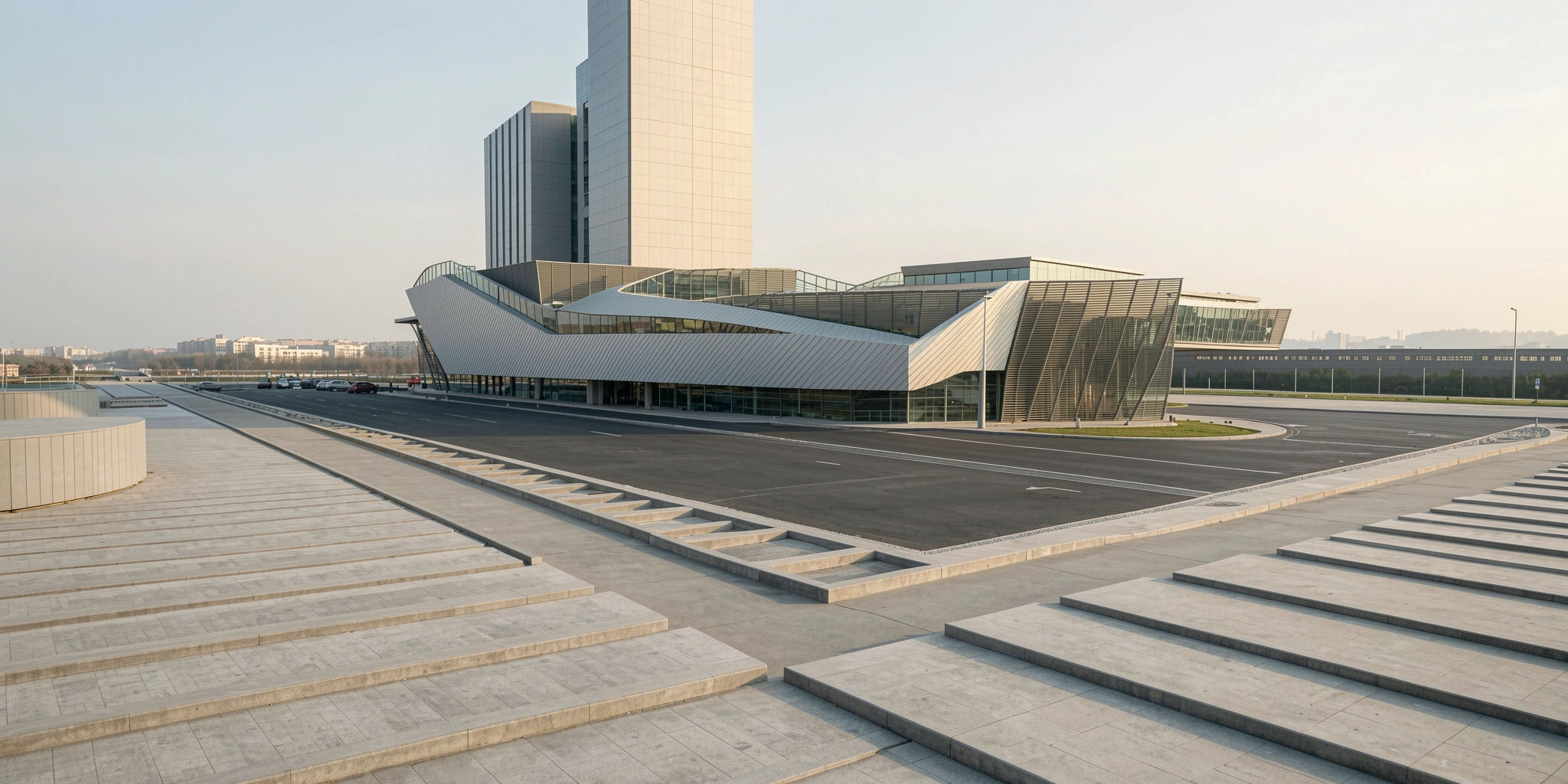
The Jeddah Transport Hub, designed by Newtecnic as both architect and interdisciplinary engineer, exemplifies an advanced integration of façade technology and infrastructure. Addressing the complexities of intermodal transit, the project reconceives infrastructure not merely as a conduit for movement but as a civic, environmental, and architectural system. Through distributed spatial organisation, a performance-driven envelope, and a morphogenetic structural approach, the building redefines the typology of the transport interchange.
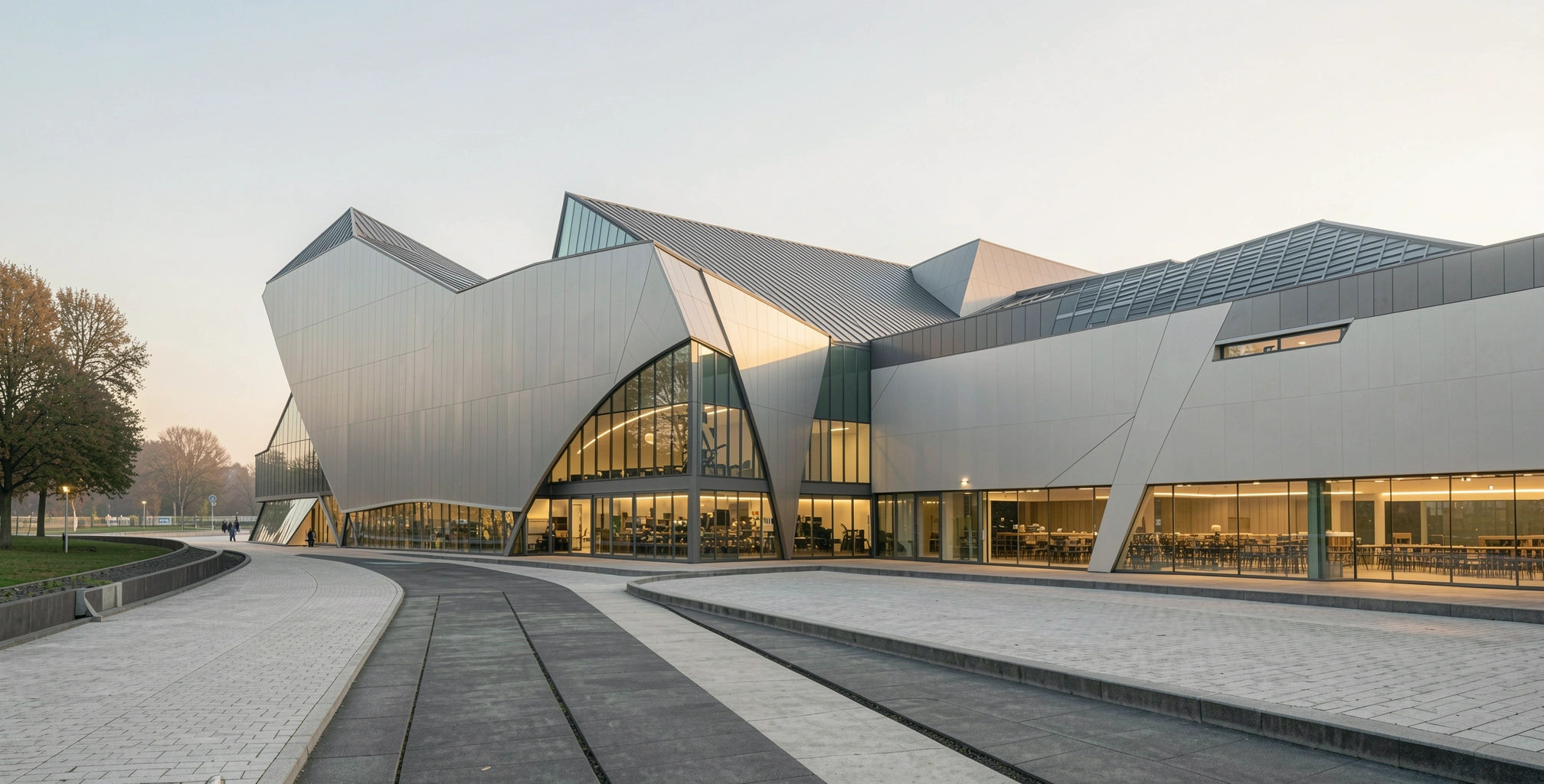
Departing from the conventional singular monumental hall, the design features six articulated volumes—each dedicated to specific programs such as shops, cafés, waiting areas, and platforms—interconnected by glazed interstitial voids. This nodal configuration evokes Cedric Price’s concepts of flexible, indeterminate architecture and functional zoning within infrastructure (Price, 1998). The glazed thresholds serve dual roles as wayfinding aids and spatial devices, creating depth and legibility. This layered transparency facilitates a multimodal experience reminiscent of Le Corbusier’s promenade architecturale (1923), reinterpreted here for the complex, high-density demands of 21st-century transit. The movement through articulated volumes also reflects phenomenological spatial theories, notably Norberg-Schulz’s (1980) work on the experience of place.
This conceptual framework aligns with key High Modernist precedents that challenge traditional infrastructure typologies by integrating programmatic hybridity, structural innovation, and spatial fluidity. The Jeddah Transport Hub draws both conceptual and formal parallels with several iconic projects. Le Corbusier’s Pavillon Le Corbusier (1967) in Zurich demonstrates a fluid interplay of volumes and transparency, articulating programmatic sequence and environmental engagement through a highly refined promenade architecturale. Similarly, Eero Saarinen’s TWA Terminal (1962) at JFK Airport revolutionised the transportation terminal typology by embodying a dynamic sculptural form that integrates movement and structure into a continuous spatial experience. Pier Luigi Nervi’s Palazzetto dello Sport (1957) in Rome exemplifies the innovative use of thin-shell concrete structures, merging expressive structural logic with a flexible internal spatial organisation—an approach that anticipates the Jeddah Hub’s triangulated shell-like volumes. Furthermore, Oscar Niemeyer’s Brasília National Congress (1960) in Brazil combines formal fluidity with monumental spatial articulation, integrating an infrastructural programme that symbolises civic identity.
Together, these precedents establish a lineage of infrastructural architecture as a hybrid programme that transcends utilitarian function to engage cultural and environmental dimensions.
Precedent-Informed Design Strategy from Modern Structural Design
The design approach for the Jeddah Transport Hub was directly informed by Project 06 from Modern Structural Design, especially its strategy to eliminate secondary support systems through tight integration of primary structure and building envelope. This guided material reduction and streamlined construction by aligning structural and enclosure systems early in the design process. Parametric modelling and panelisation techniques, also featured in Project 06, were employed to optimise structural member geometry, minimizing material waste and enhancing installation efficiency. Iterative evaluations of material weight, performance, and cost led to optimal material selection and structural configuration. Holistic analyses of global and local behaviour refined the structural system, resulting in a lightweight, efficient framework that supports the project’s environmental and economic goals without compromising design clarity.
Application of Façade Technology from the KAFD Metro Station
The advanced façade strategies pioneered at the King Abdullah Financial District (KAFD) Metro Station—detailed in the 1st edition of Modern Construction Case Studies—served as a crucial reference for Jeddah’s envelope design. Both projects conceive the façade as an active, performative system integrating structural support, environmental control, and architectural expression. The triangulated cladding panels, ventilated cavities, and load-sharing substructures developed for KAFD informed the material articulation and assembly techniques used in Jeddah’s shell-like volumes and glazed interstitial zones. The digitally fabricated GRC skins and adaptive bracket systems at KAFD directly influenced the CNC-milled envelope components at Jeddah, enabling precision assembly and climatic responsiveness under extreme desert conditions. This continuity reinforces a shared philosophy of infrastructure as a spatial and environmental interface, where the envelope mediates and generates civic experience rather than merely enclosing space.
Hybrid Programme and Spatial Articulation
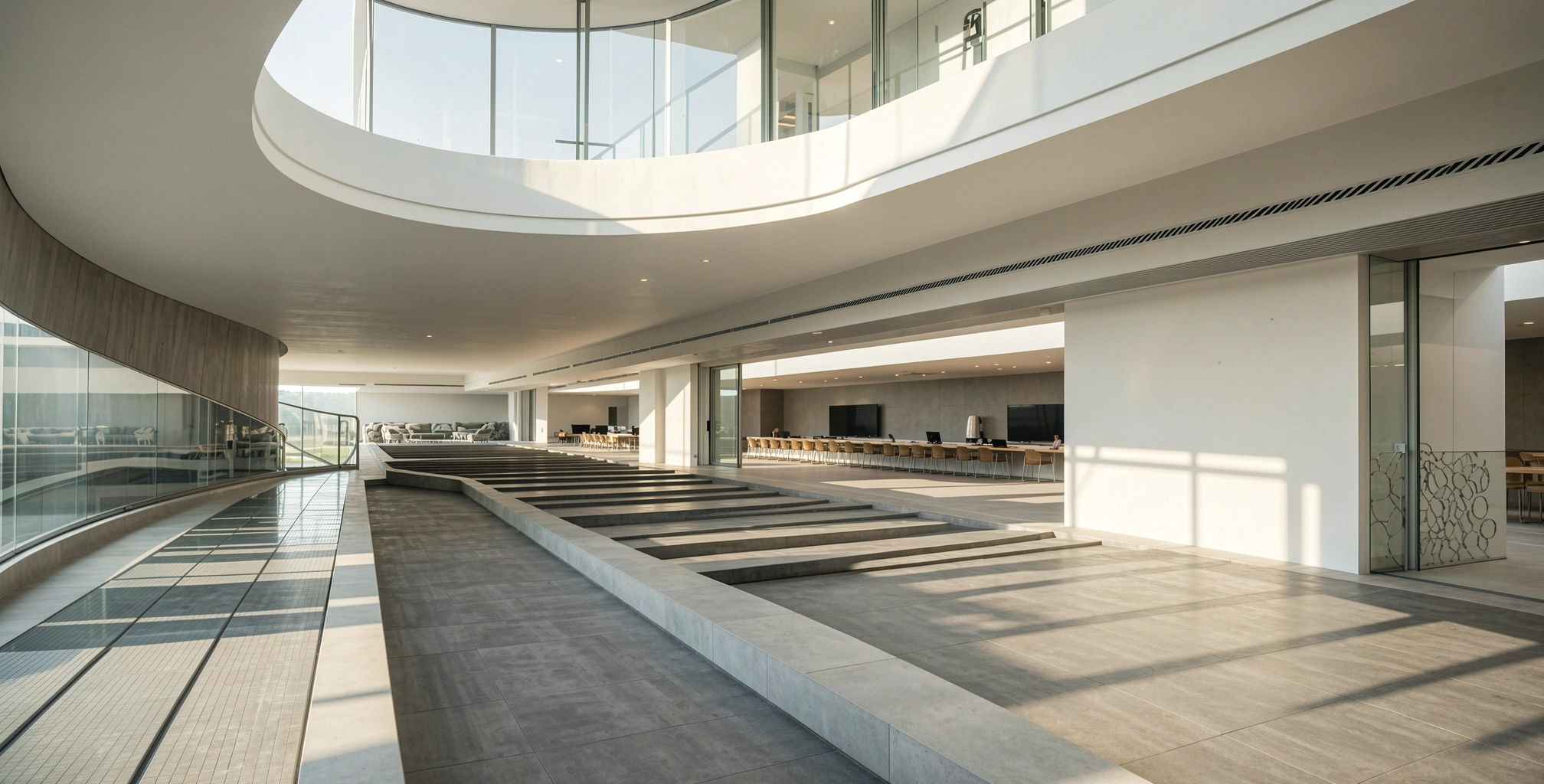
Jeddah’s spatial strategy employs a nodal system of linked volumes, each serving distinct yet interconnected functions, fostering continuity without reliance on monumental centralisation. This distributed logic aligns with the systemic thinking outlined in Modern Construction Case Studies, 2nd ed. (Watts, 2019), advocating for infrastructure that balances movement and orientation with human-scale engagement.
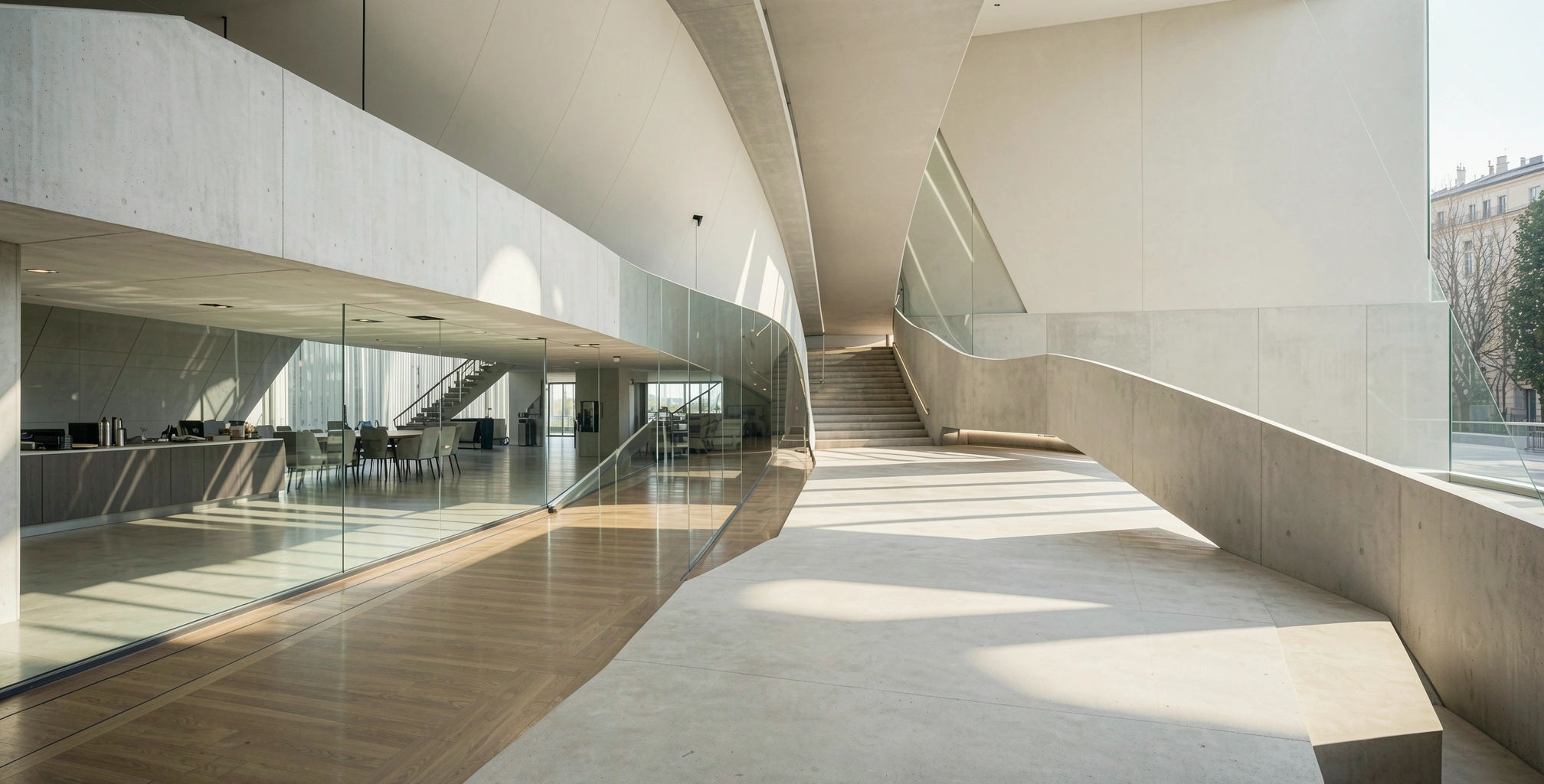
Transparency functions not as symbolic gesture but as an operational tool, enhancing wayfinding, thermal comfort, and spatial richness. The architecture transforms wayfinding into a tactile, visually complex experience.
Formal and Structural Strategy
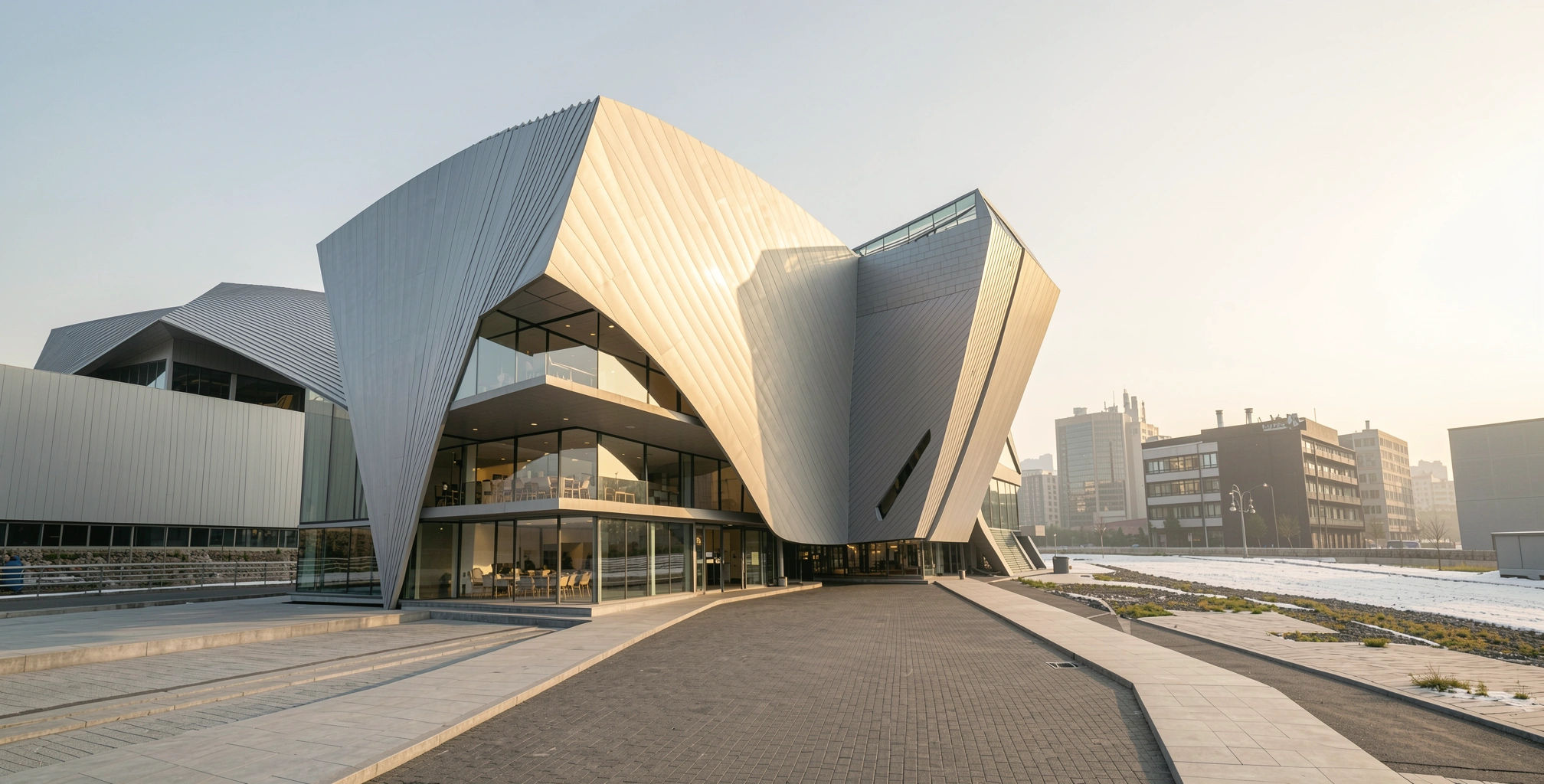
Rejecting rectilinear conventions, the design adopts fluid, shell-like volumes supported by triangulated structures that act as climatic filters, shielding interiors from solar gain and desert heat while expressing structural logic.
The triangulated supports reference post-war structural rationalism and mid-century explorations of expressive form, as discussed in Modern Construction Envelopes, 3rd ed. (Watts, 2019), where load-bearing geometries articulate both architectural identity and performance. A translucent tube housing the railway platforms visually unifies the complex, providing porosity while managing infrastructural flow.
Structural elements descend to ground level, enclosing escalators, stairs, and lifts within breathable enclosures that function as both skin and skeleton—a clear expression of performative tectonics in line with Kenneth Frampton’s (1995) advocacy for structural clarity and material expressiveness.
Structural Optimisation and Digital Design Logic
Structural optimisation was driven by real-time feedback via Karamba3D within a parametric environment. Modal, buckling, and deflection analyses ensured shell forms remained materially efficient and resilient under live, dead, and wind loads specific to Jeddah’s context (Preisinger, 2013). These included curvature variation, support calibration, and nodal stress resolution.
Additional verification using SOFiSTiK software examined substructure-foundation interactions under seismic and time-dependent loading (SOFiSTiK AG, 2022). This digitally integrated workflow reflects the approach described in Modern Structural Design (Watts, 2022), where generative structural systems evolve through simulation and fabrication readiness.
The design logic draws on Oxman, Oxman, and Frazer’s (2014) theories of digital morphogenesis, where material behaviour, structural performance, and form generation are co-dependent. The architecture emerges from performative criteria rather than representational form—a shift consistent with Modern Construction Handbook, 6th ed. (Watts, 2023).
Environmental Design and Thermal Zoning
Responding to Jeddah’s extreme climate, the environmental strategy differentiates across program types. Fully conditioned inner volumes rely on high-efficiency HVAC systems controlled by adaptive zoning algorithms responsive to occupancy (Zhang et al., 2017). Circulation zones incorporate passive and semi-passive strategies including thermal mass, evaporative cooling, and stack ventilation.
This thermally stratified zoning follows Ken Yeang’s (1996) layered environmental performance model and Olgyay’s (1963) bioclimatic planning principles, consistent with Modern Environmental Design (Watts, 2022), which advocates for climate-specific response at multiple scales.
Façade and Envelope Design
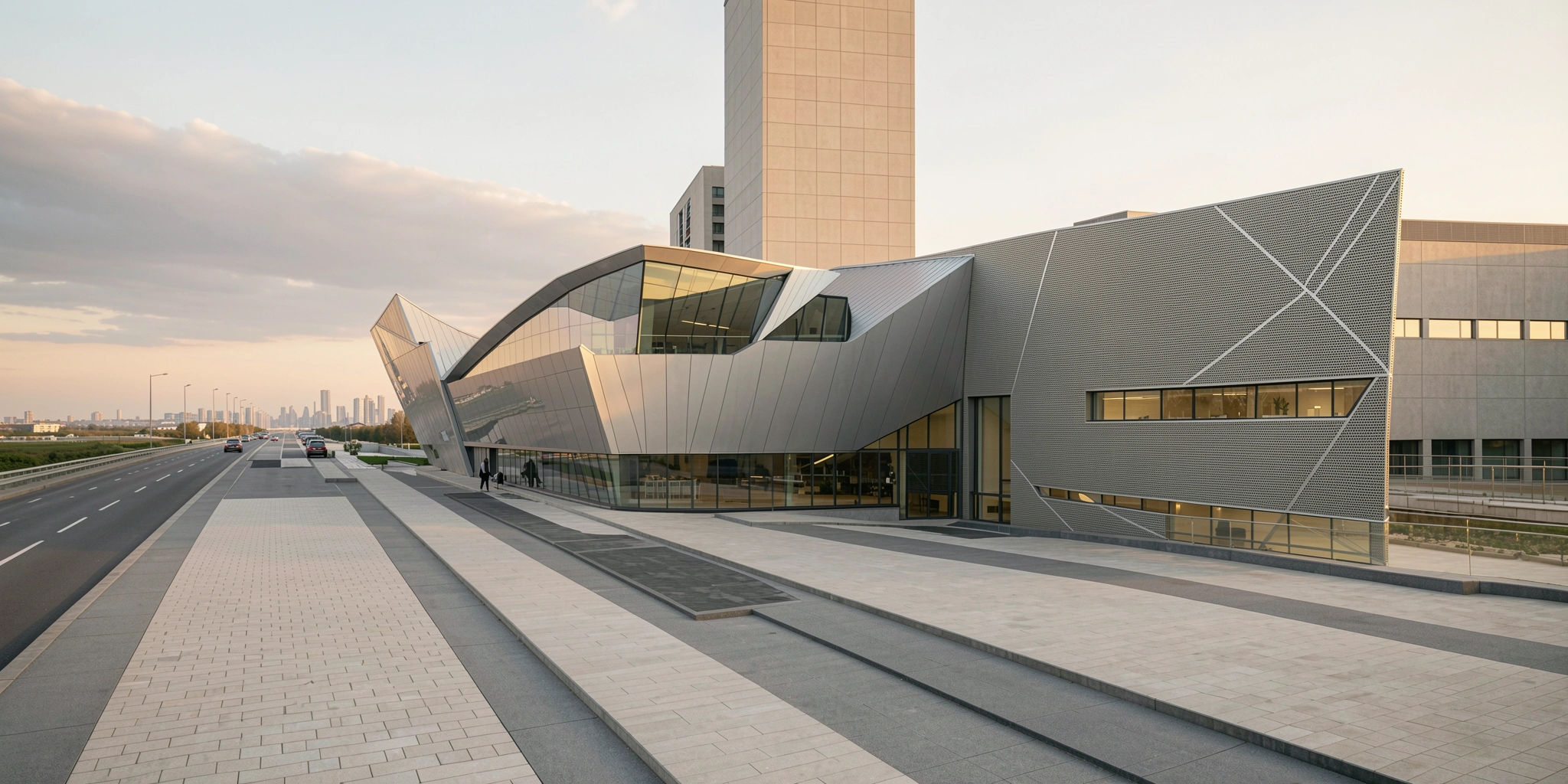
The outer shells serve as multi-layered performance skins, combining ventilation, shading, and load-bearing functions. CNC-milled GRC or perforated aluminium panels are fixed to triangulated backframes via adjustable brackets and cast-in anchors, detailed in Modern Construction Envelopes, 3rd ed. (Watts, 2019).
These components structure and condition space while mediating user experience through light, shadow, and tactile qualities. The façades act as integrated environmental systems providing solar protection, daylight modulation, and ventilation within a unified tectonic assembly. As Watts (2019) explains, such envelopes act as climatic interfaces and spatial filters, regulating environmental forces while reinforcing architectural legibility.
The use of computational fabrication and iterative prototyping reflects a trend toward envelopes as integrative systems, thoroughly explored in the Modern Construction series and supported by digital resources at Modern Construction Online. Here, the skin operates as both technical and spatial device, choreographing movement and perception to enhance the infrastructure program.
Conclusion
The Jeddah Transport Hub exemplifies how infrastructural architecture can transcend functionality to engage formal, environmental, and civic concerns. Through distributed spatial logic, performative envelopes, and digitally optimized structures, Newtecnic’s design transforms transit into a richly experiential environment.
The project embodies the integrated, performance-driven design methodology championed by Andrew Watts throughout Modern Construction Handbook (2023), Modern Construction Envelopes (2019), Modern Structural Design (2022), Modern Environmental Design (2022), and Modern Construction Case Studies (2019). It presents a forward-looking model for infrastructure where movement, climate, and architecture coalesce as a civic, spatial, and environmental system.
References
Banham, R. (1980) Theory and Design in the First Machine Age. Cambridge, MA: MIT Press.
Frampton, K. (1995) Studies in Tectonic Culture: The Poetics of Construction in Nineteenth and Twentieth Century Architecture. Cambridge, MA: MIT Press.
Kolarevic, B. and Malkawi, A. (2005) Performative Architecture: Beyond Instrumentality. New York: Spon Press.
Le Corbusier (1923) Vers une architecture. Paris: G. Crès et Cie.
Le Corbusier (1967) Pavillon Le Corbusier. Zurich: Fondation Le Corbusier.
Norberg-Schulz, C. (1980) Genius Loci: Towards a Phenomenology of Architecture. New York: Rizzoli.
Niemeyer, O. (1960) Brasília National Congress Building. Brasília, Brazil.
Olgyay, V. (1963) Design with Climate: Bioclimatic Approach to Architectural Regionalism. Princeton, NJ: Princeton University Press.
Oxman, R., Oxman, R. and Frazer, J. (2014) Theories of the Digital in Architecture. Abingdon: Routledge.
Preisinger, C. (2013) ‘Linking structure and parametric geometry’, Architectural Design, 83(2), pp. 110–113.
Price, C. (1998) The Square Book. London: Architectural Association Publications.
Saarinen, E. (1962) TWA Terminal. New York: John F. Kennedy International Airport.
SOFiSTiK AG (2022) SOFiSTiK Finite Element Analysis Manual. Oberschleißheim: SOFiSTiK AG.
Watts, A. (2019) Modern Construction Case Studies. 2nd ed. Basel: Birkhäuser.
Watts, A. (2019) Modern Construction Envelopes. 3rd ed. Basel: Birkhäuser.
Watts, A. (2022) Modern Structural Design. Basel: Birkhäuser.
Watts, A. (2022) Modern Environmental Design. Basel: Birkhäuser.
Watts, A. (2023) Modern Construction Handbook. 6th ed. Basel: Birkhäuser.
Yeang, K. (1996) The Green Skyscraper: The Basis for Designing Sustainable Intensive Buildings. London: Prestel.
Zhang, R., Wang, X. and Mahdavi, A. (2017) ‘Adaptive HVAC zoning based on occupancy patterns and energy simulation’, Energy and Buildings, 140, pp. 311–323.