
Burjuman Apartments, Dubai, UAE
Further information and case study for this project can be found at the De Gruyter Birkhäuser Modern Construction Online database
The following text is not available at Modern Construction Online
Dwelling in a Desert Climate
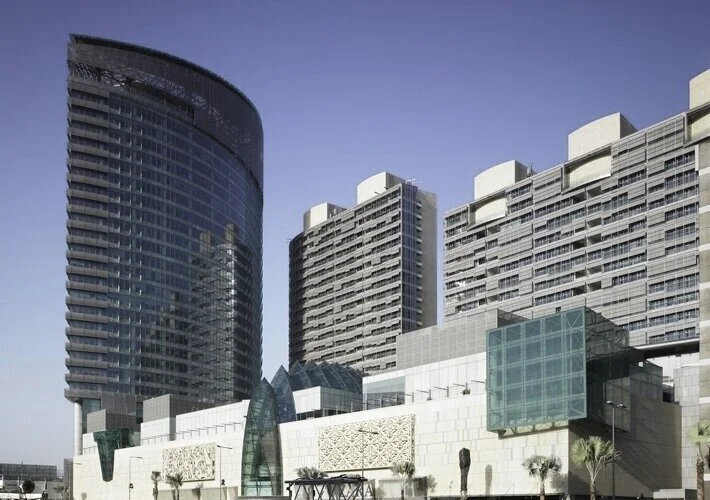
The BurJuman Residential Apartments form the residential component of the BurJuman Centre, a major mixed-use development within the historic district of Bur Dubai. The project combines residential accommodation with the wider commercial, retail and hospitality functions of the development while contributing to the evolving urban identity of the city.
Newtecnic provided façade engineering for the project in collaboration with Kohn Pedersen Fox Associates (KPF), developing an envelope system that responds simultaneously to climate, residential occupation and urban context. The project demonstrates how environmental performance and residential quality can be integrated within a single architectural strategy rather than treated as separate design considerations.
Architecture Between City and Home
Residential towers occupy a unique position within contemporary cities. They must engage with the scale and intensity of the urban environment while simultaneously providing privacy, comfort and a sense of domestic occupation.
The BurJuman Residential Apartments address this condition through a podium-and-tower arrangement that establishes a clear relationship between public and private realms. The podium contributes to the scale and continuity of the surrounding city, while the residential tower rises above the dense urban fabric to capture views, daylight and prevailing breezes.
The façade plays a critical role in negotiating this transition. Rather than operating solely as enclosure, it mediates between the collective life of the city and the individual experience of dwelling.
Environmental Performance and Residential Comfort
Dubai's climate presents particular challenges for residential architecture. High temperatures, intense solar exposure and airborne dust create environmental conditions that can easily compromise comfort if not addressed through the building envelope.
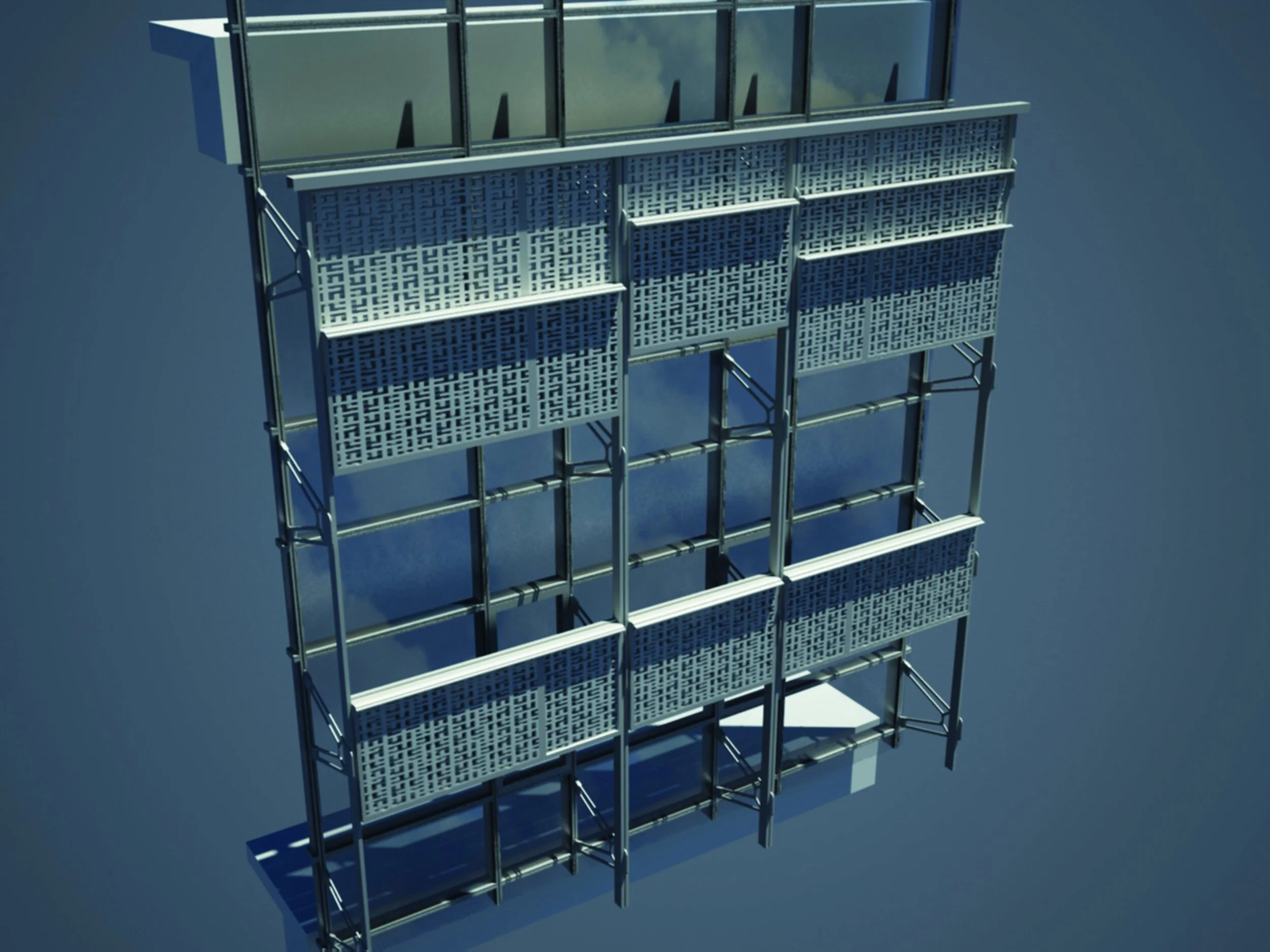
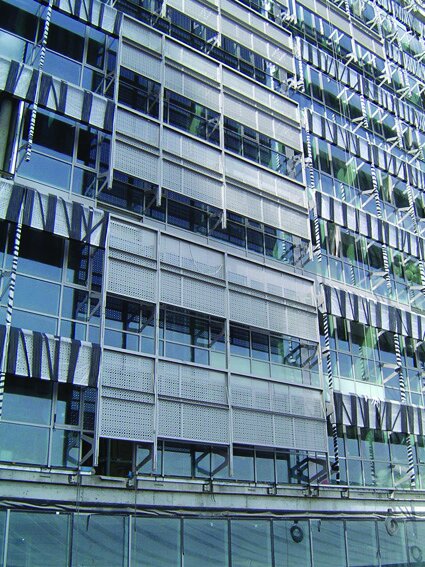
The façade therefore operates as a carefully calibrated environmental filter. Glazing, shading devices, insulated spandrel panels and balcony zones are coordinated as components of a single environmental system designed to moderate heat gain while preserving daylight and views.
This integrated approach reduces reliance on mechanical cooling while improving the quality of the interior environment. Rather than treating environmental performance as a technical layer applied to the building, climatic response becomes embedded within the architectural organisation of the façade itself.
The project demonstrates how residential comfort often depends upon the careful coordination of multiple environmental strategies rather than any single technological solution.
The Balcony as Environmental Infrastructure
One of the most significant features of the project is the role of the recessed balcony.
In many residential developments, balconies function primarily as amenities attached to otherwise sealed building envelopes. At BurJuman, they perform a far more fundamental architectural role.
The deep-set balconies create transitional spaces between interior and exterior environments. They provide shade, reduce direct solar exposure and establish a protective environmental buffer around the occupied spaces of the building. At the same time, they create usable outdoor rooms that extend residential life beyond the conditioned interior.
These spaces contribute simultaneously to environmental performance, privacy and quality of habitation. They demonstrate how architectural elements can support multiple forms of performance at once rather than serving isolated functions.
Privacy, Views and Environmental Control
Residential architecture must balance competing requirements that are often treated independently. Occupants require privacy, access to daylight, outward views and environmental comfort. Achieving one objective can sometimes compromise another.
The façade strategy addresses these conditions through depth rather than through separation. Recessed openings, balcony zones and shading elements create layers between public and private space. This layered condition allows residents to maintain visual connection with the city while reducing exposure to direct sunlight and overlooking.
Privacy therefore emerges from the spatial organisation of the façade rather than from the exclusion of light or views. Environmental control and residential amenity become mutually reinforcing conditions.
The project illustrates how successful residential envelopes often depend upon the design of thresholds rather than boundaries.
Construction and Prefabrication
The façade was developed as a prefabricated system to improve quality control, construction efficiency and long-term durability.
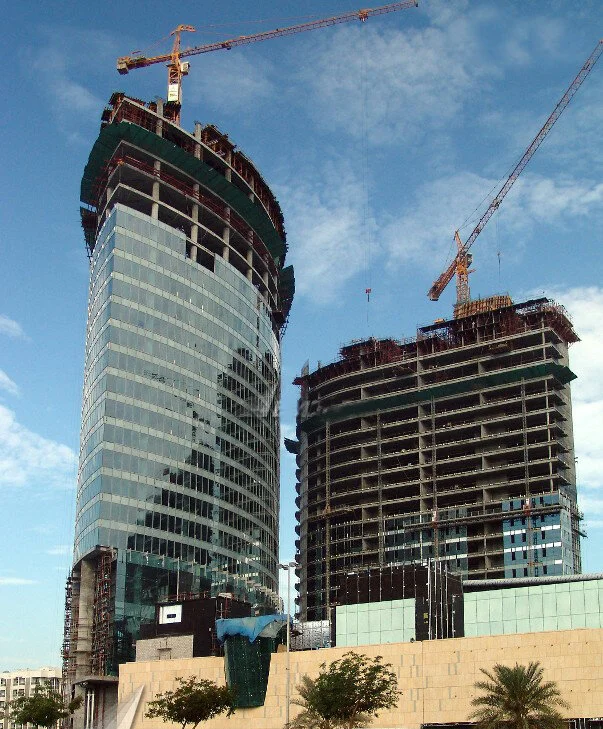
Unitised curtain wall panels were manufactured off-site under controlled conditions before being transported and assembled on site. This approach improved dimensional accuracy, accelerated installation and reduced construction risk within a dense urban environment.
The prefabricated strategy also allowed environmental performance requirements to be incorporated directly into the manufacturing process. Glazing systems, insulation, weather seals and framing components could be coordinated within complete façade assemblies before delivery to site.
The project demonstrates the increasing relationship between environmental performance and industrialised methods of construction.
Durability in the Gulf Environment
Long-term façade performance is particularly important within the Gulf region, where extreme temperatures, ultraviolet exposure and wind-blown sand place considerable demands upon materials and assemblies.
Material selection therefore focused on durability as well as appearance. Aluminium systems, insulated glazing and carefully detailed environmental seals were chosen for their ability to maintain performance under prolonged climatic exposure.
Movement joints and thermal breaks were integrated throughout the façade to accommodate expansion and contraction while preserving weather resistance and thermal performance.
These largely invisible components are critical to the long-term success of the building. The project demonstrates that durability is not simply a material property but the result of careful technical coordination across the entire façade system.
Residential Identity and Urban Presence
The visual character of the building emerges directly from its environmental and residential requirements.
Depth, shadow and articulation are generated by balconies, shading devices and recessed glazing rather than by applied architectural decoration. The façade therefore expresses the logic of occupation and climate through its physical organisation.
As sunlight changes throughout the day, the building acquires a constantly shifting pattern of light and shadow that reinforces its relationship to the desert environment. Architectural identity emerges from performance rather than image.
This approach establishes a direct connection between the way the building looks and the way it works.
Project Significance
The BurJuman Residential Apartments demonstrate how residential architecture can integrate environmental performance, privacy, habitation and urban identity within a single façade system.
Rather than separating environmental control from architectural expression, the project develops both through the coordinated design of balconies, glazing, shading and enclosure. The building illustrates how residential quality can emerge from the careful organisation of environmental relationships, allowing climate, comfort and architectural character to reinforce one another.
More broadly, the project demonstrates how contemporary residential façades can function as inhabited environmental systems, mediating between city and dwelling while supporting long-term comfort within demanding climatic conditions.