
Commercial District, Eastern Europe
Commercial District — A Connected Urban Landscape
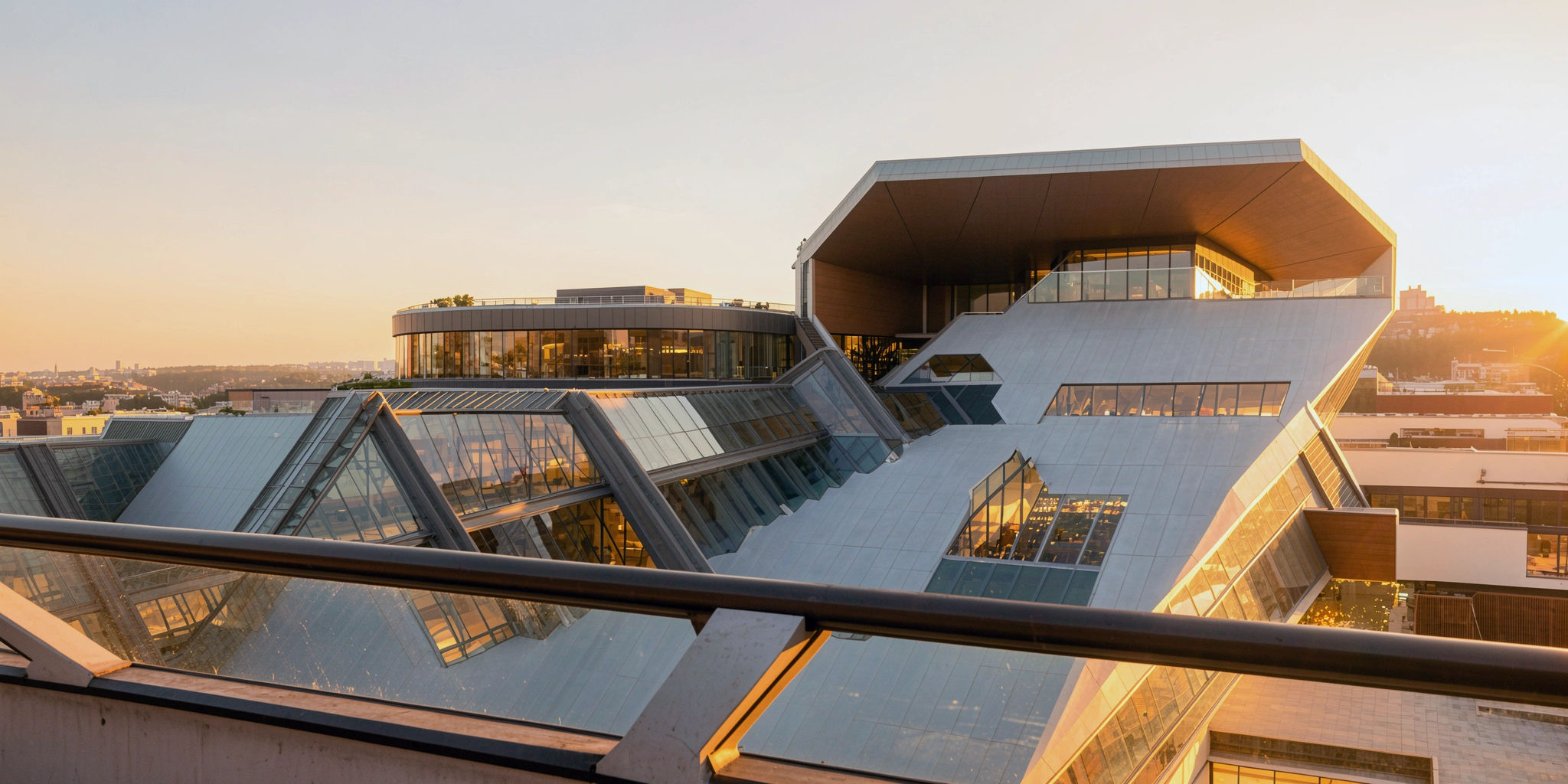
The Commercial District is conceived as a contemporary urban destination in Eastern Europe, bringing together commercial activity, public space and architectural identity within a connected development. The project establishes a distinctive presence through a series of angular building forms, expansive glazed elevations and landscaped terraces that create relationships between the surrounding city and the activities within.
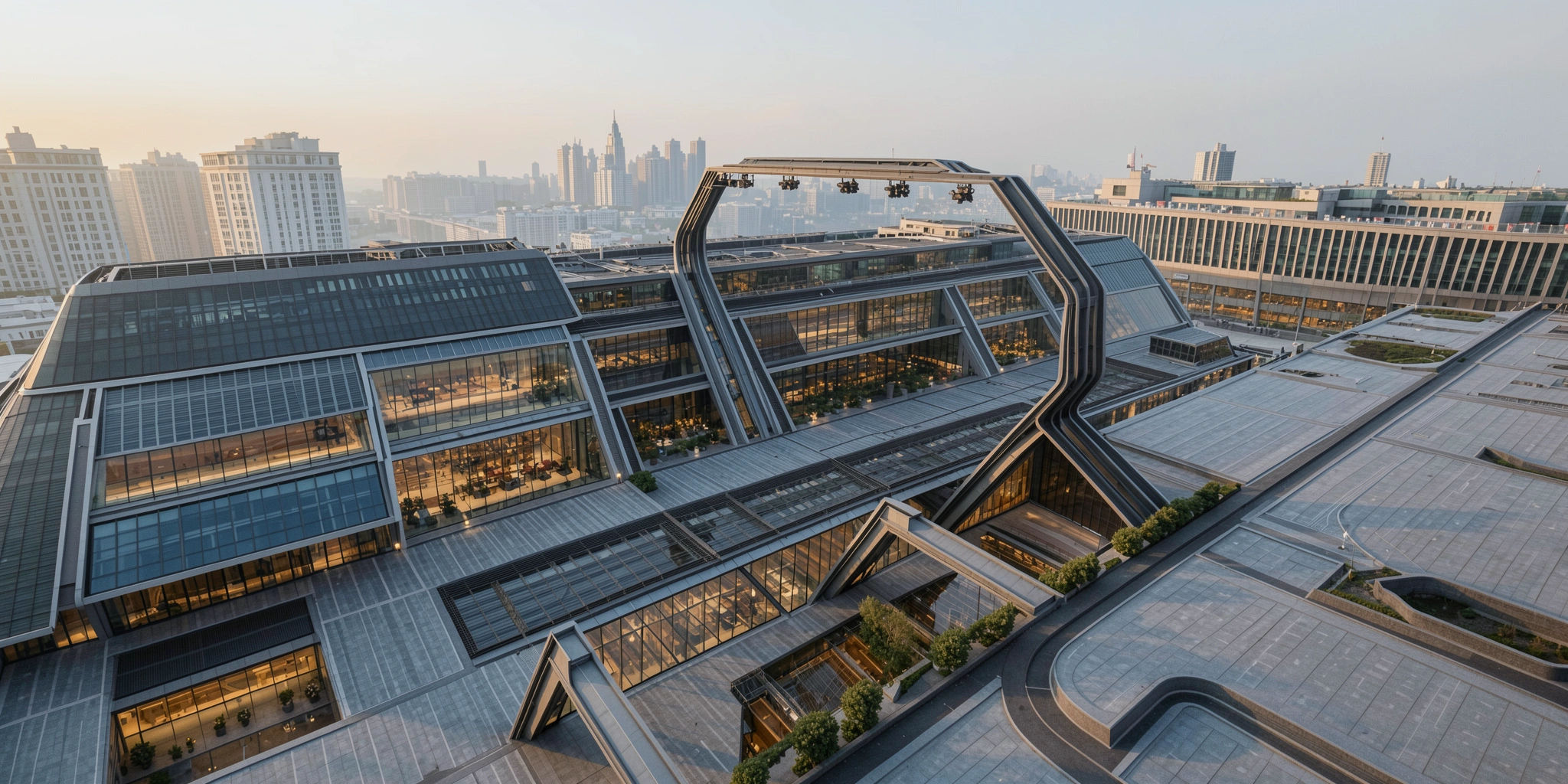
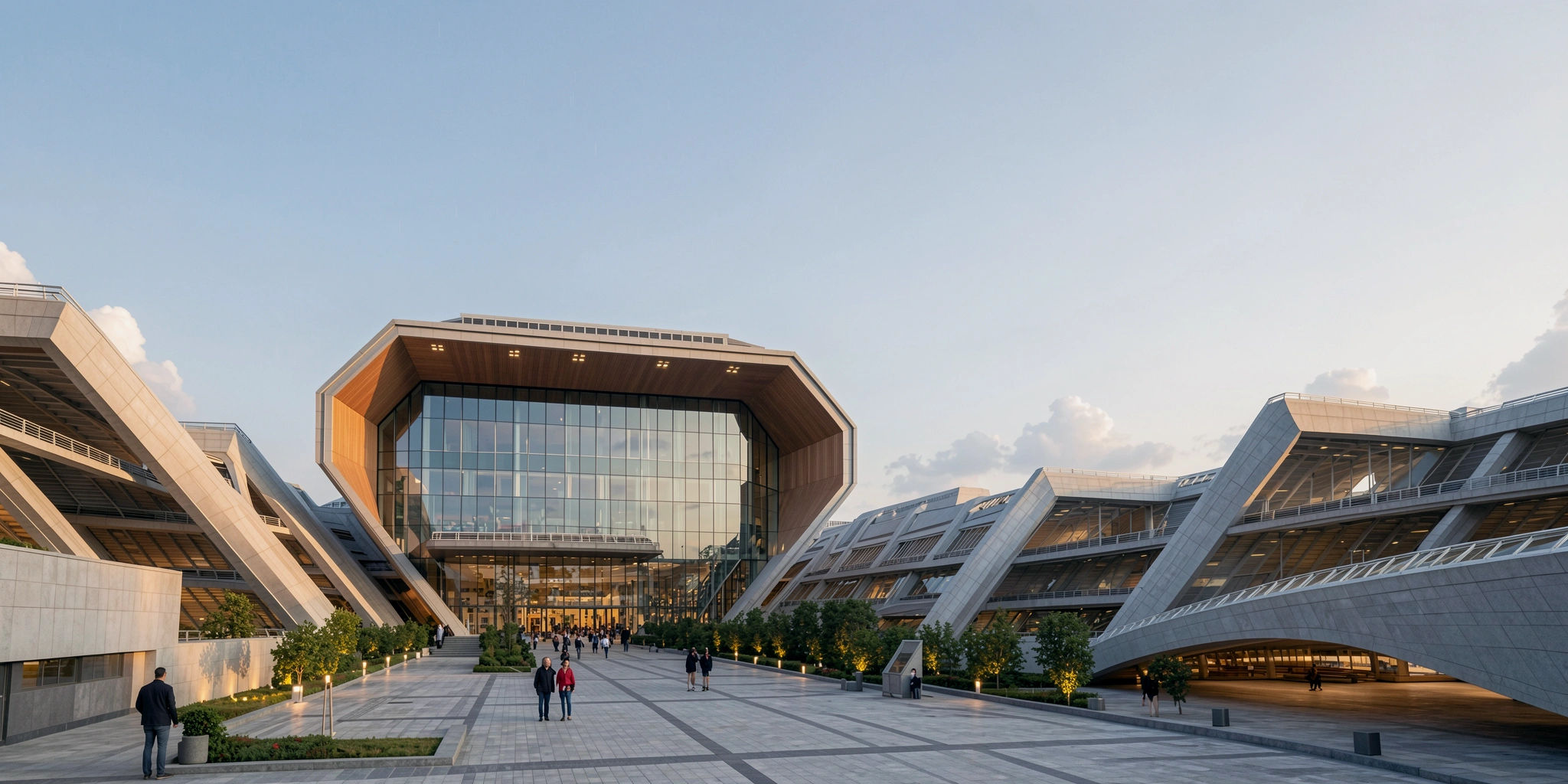
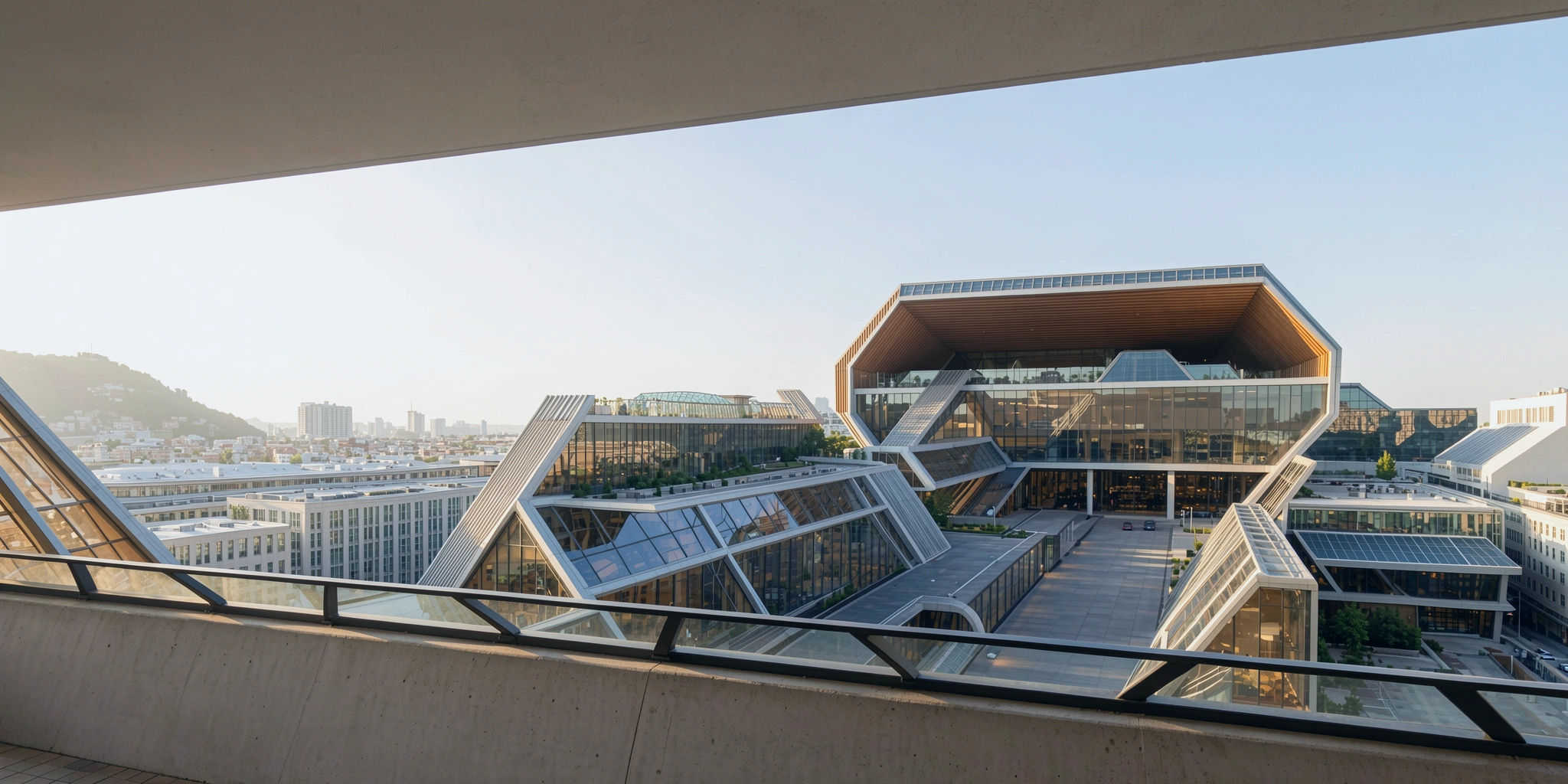
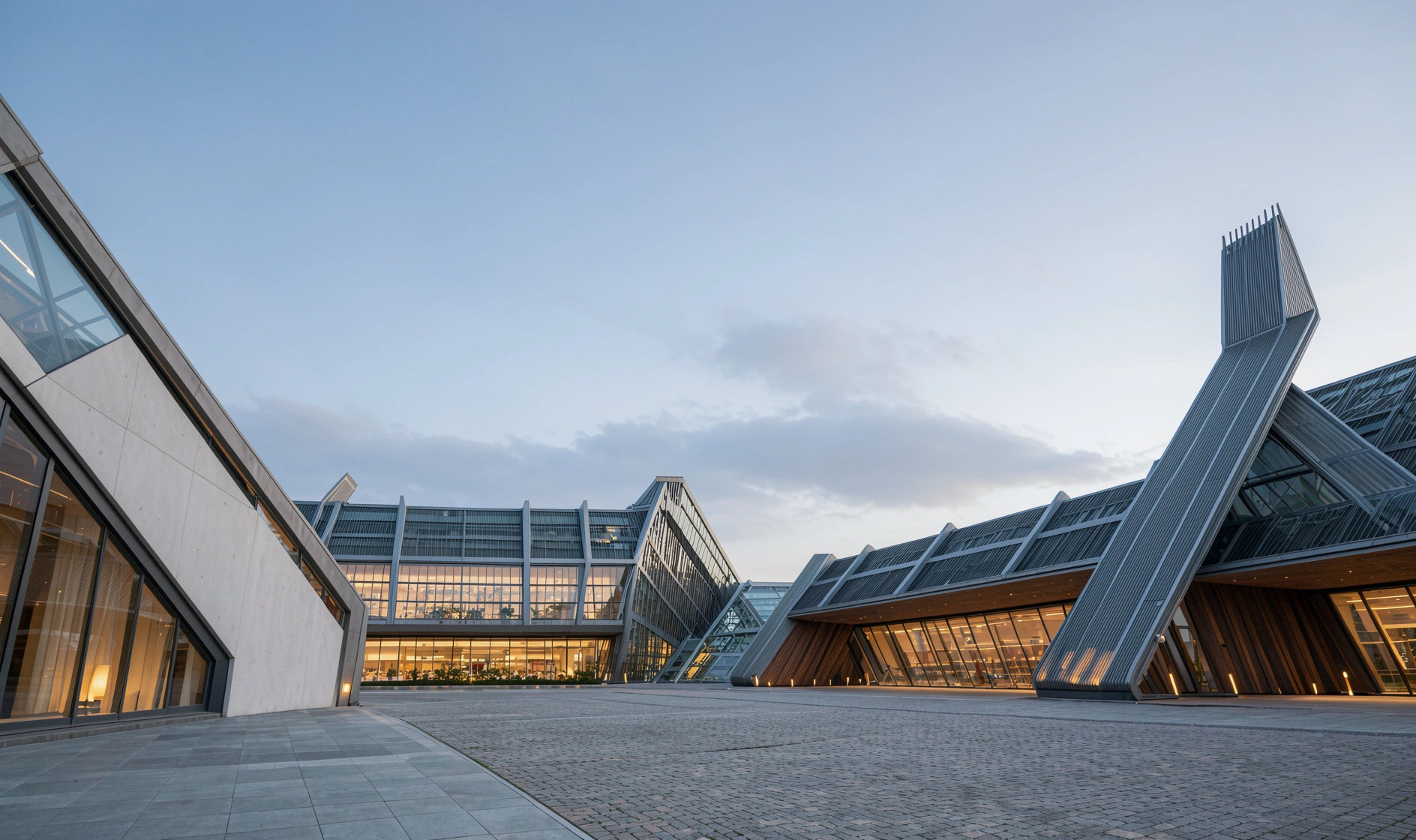
The architectural composition is organised around a sequence of interconnected volumes whose inclined façades and folded rooflines establish a recognisable identity. Rather than presenting a collection of independent buildings, the development brings its different elements into a continuous architectural framework. Large areas of glazing reveal the activities within, while metal-clad surfaces provide a consistent material language across the district.
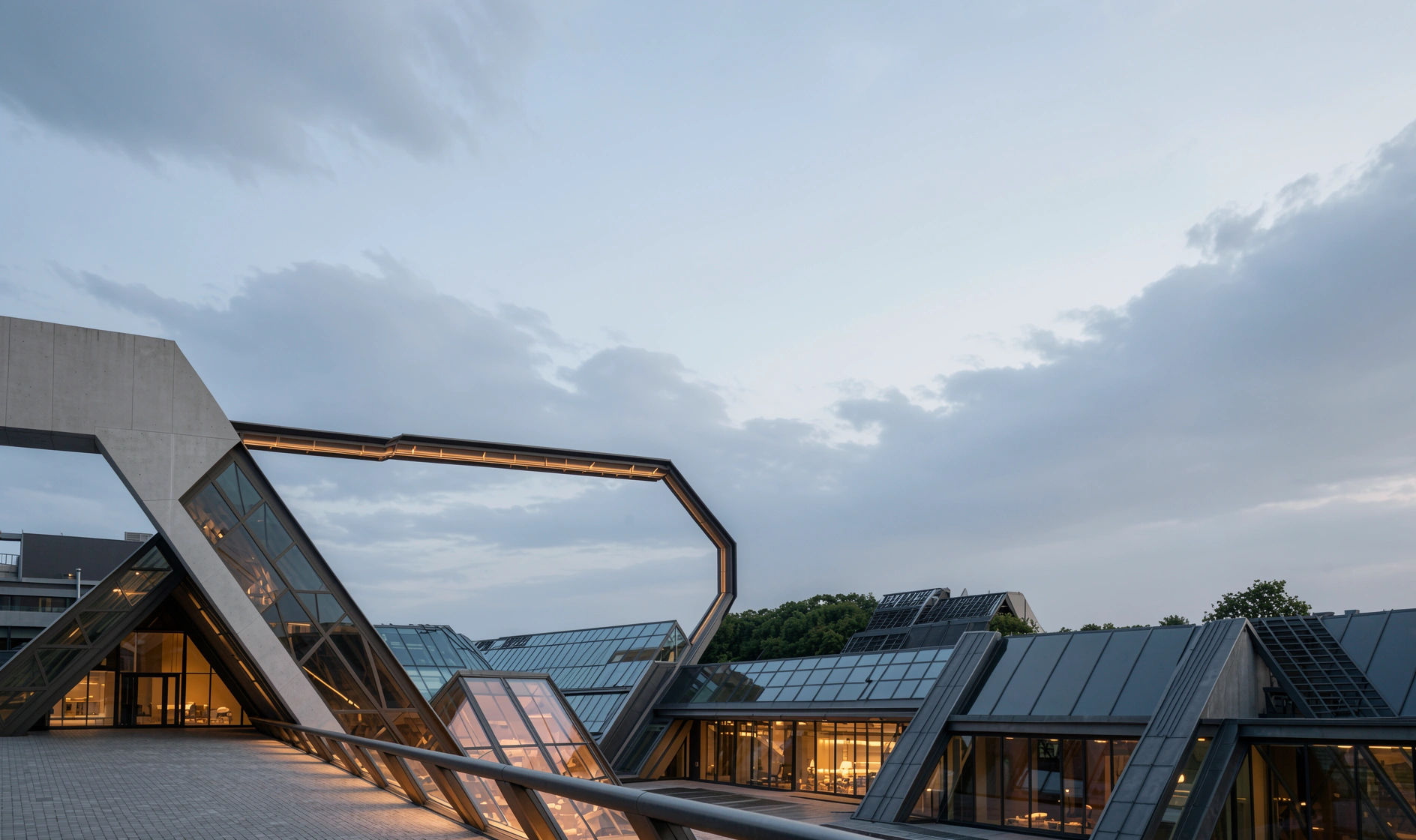
At the centre of the composition, a monumental angular opening rises above the surrounding buildings, establishing a distinctive architectural landmark. Its geometry frames the sky and creates a visual connection between the different parts of the development. This elevated form provides orientation within the wider district, bringing together the horizontal organisation of the commercial spaces and the more expressive geometry of the central structure.
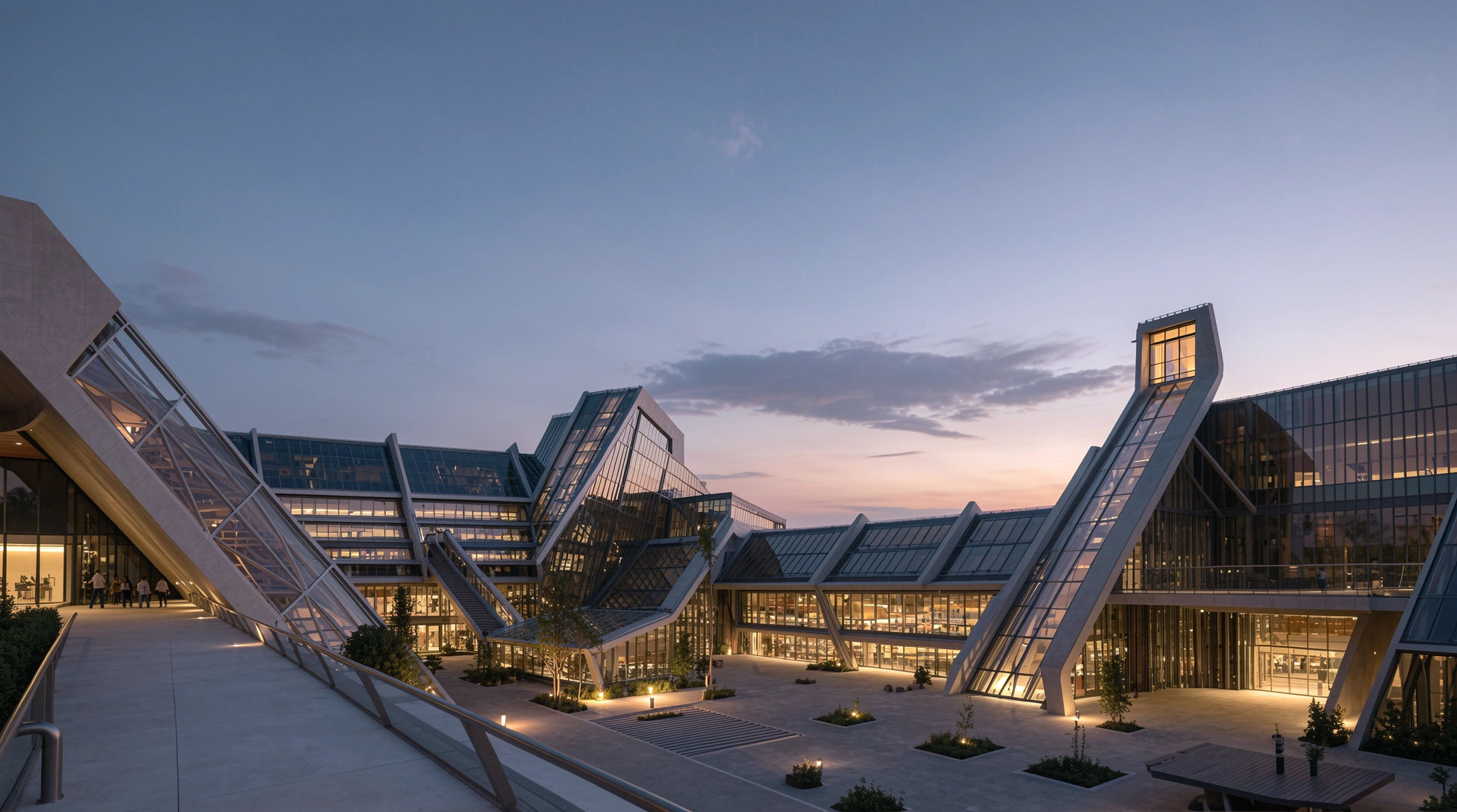
The development is arranged around a network of public spaces, internal streets and landscaped courtyards. These environments establish connections between commercial activities while providing opportunities for gathering, movement and informal occupation. Visitors can experience the district through different routes, moving between sheltered spaces, open terraces and glazed interiors that maintain visual relationships across the development.
The architecture encourages commercial and public life to operate together. Retail environments, workplaces, hospitality venues and shared amenities can occupy different parts of the development while remaining connected through a coherent spatial organisation. The arrangement supports a range of activities throughout the day, allowing the district to function as an active part of the surrounding city rather than an isolated commercial destination.
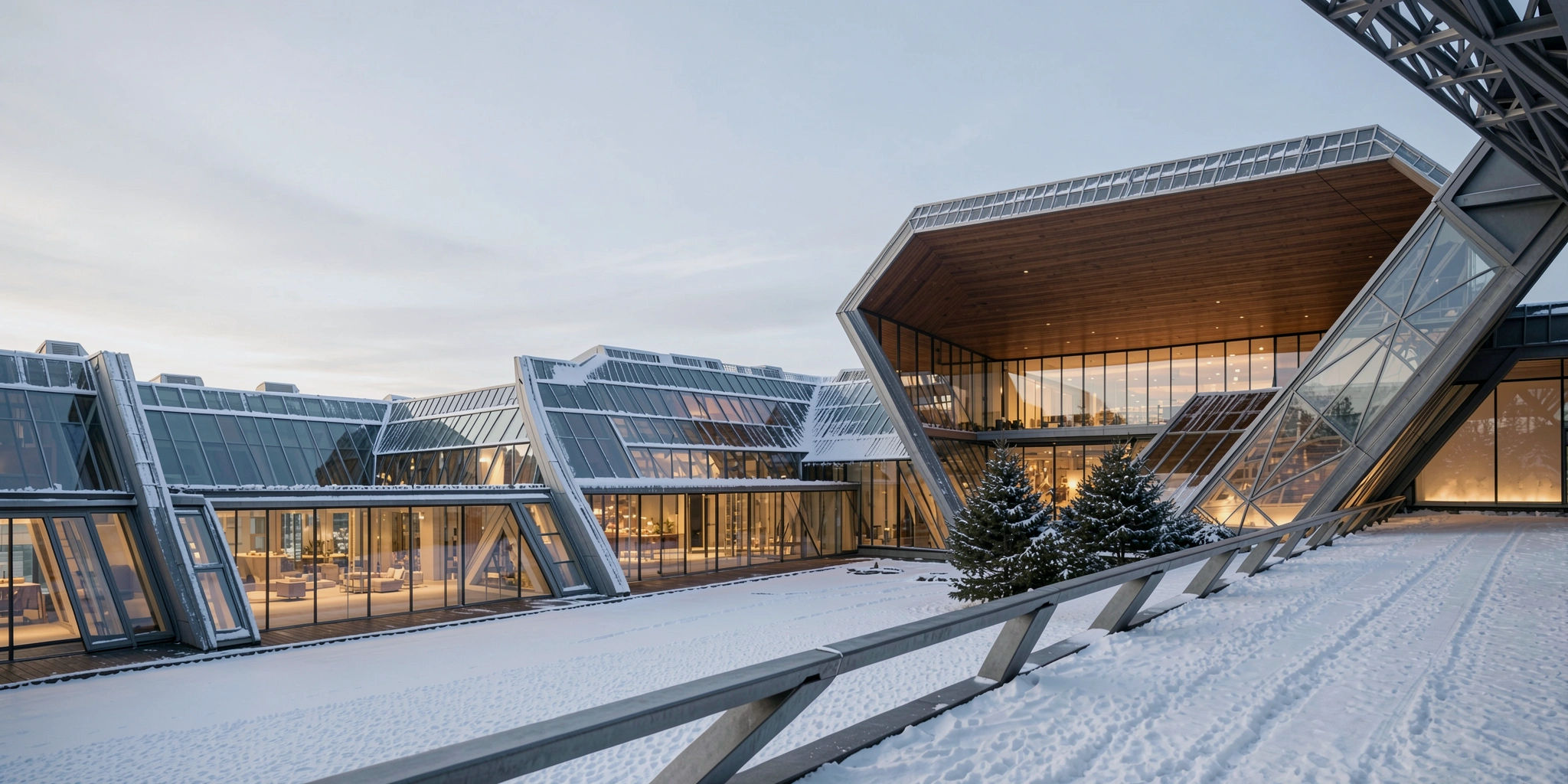
The building envelope is central to the architectural expression. Inclined glazed façades, deep structural frames and continuous roof surfaces establish changing relationships between transparency, enclosure and light. The geometry creates a varied sequence of internal environments, while the repetition of materials and components provides continuity across the different building volumes.
Environmental considerations contribute to the development of the architectural form. Glazed surfaces establish visual connections and opportunities for daylight, while inclined elevations and projecting roof elements offer possibilities for moderating solar exposure. Landscaped courtyards and terraces introduce vegetation into the urban setting, providing opportunities for sheltered occupation and seasonal variation.
The complex geometry requires architecture, structure, enclosure and construction to be developed as interconnected systems. Inclined surfaces, large openings and changes in roof geometry depend upon the coordinated organisation of structural frameworks, glazing and cladding components. Their relationships contribute directly to the spatial and visual character of the district.
The Commercial District demonstrates how a large commercial development can establish an identifiable urban character through the relationship between building form, public space and movement. Its interconnected architecture creates a coherent setting for different activities while offering a varied experience of the surrounding city.
The result is a contemporary commercial destination in which architecture and urban life develop together, creating a recognisable place through the integration of spatial organisation, landscape, material and architectural form.