
Further information and case study for this project can be found at the De Gruyter Birkhäuser Modern Construction Online database
The following architectural case study is not available at Modern Construction Online
Multi-use Design District — Urban Expansion and Waterfront Integration
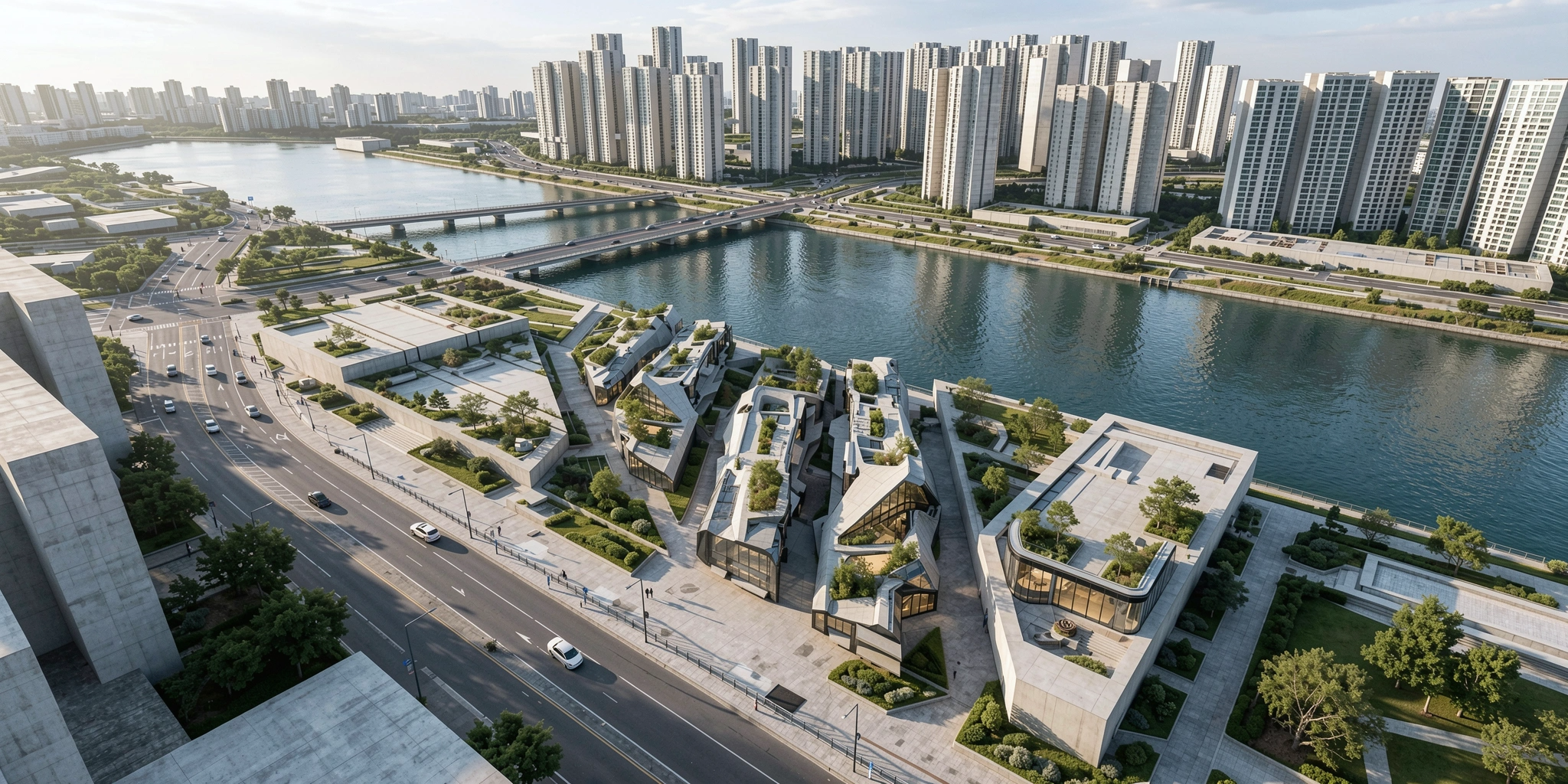
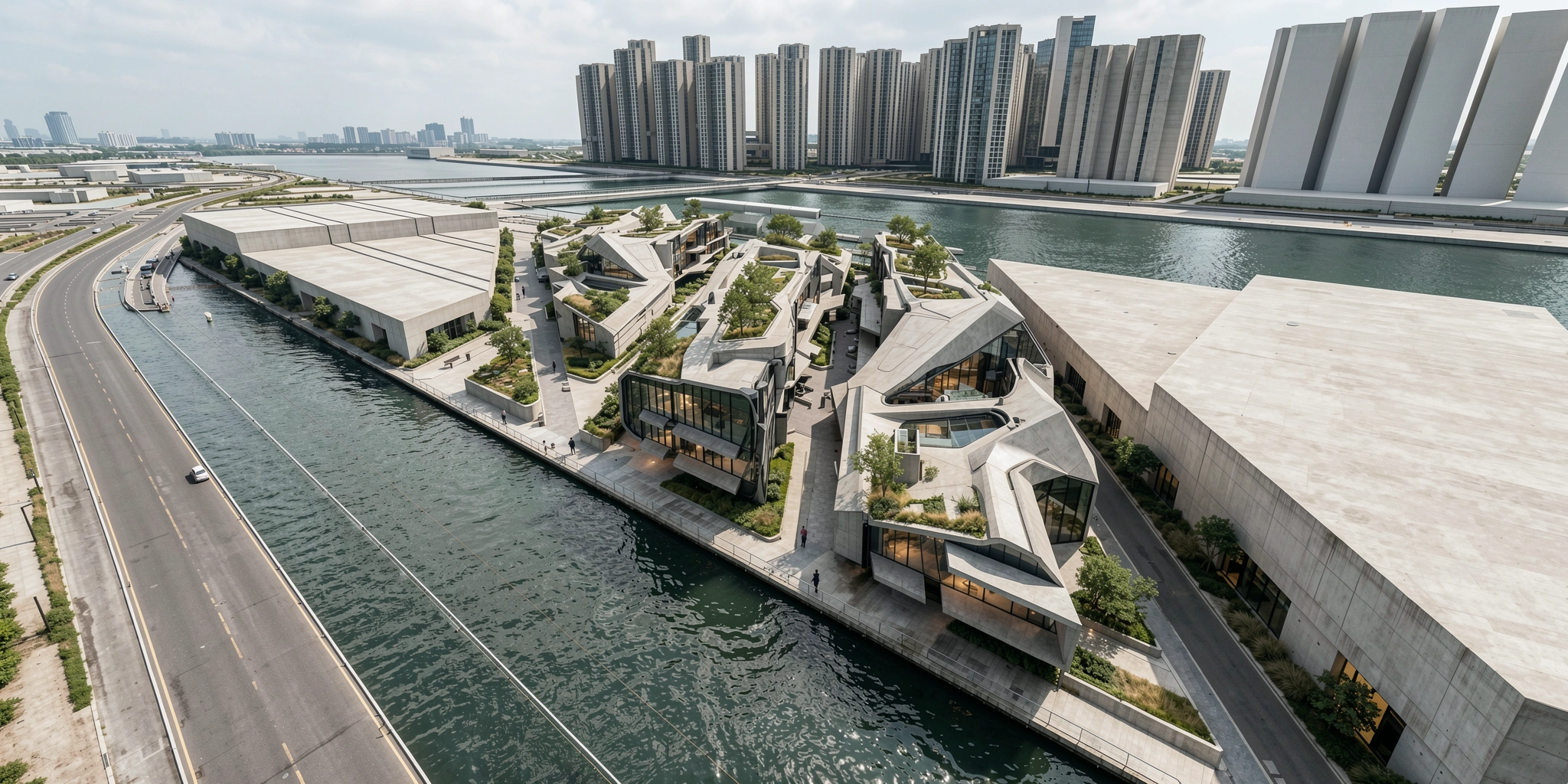
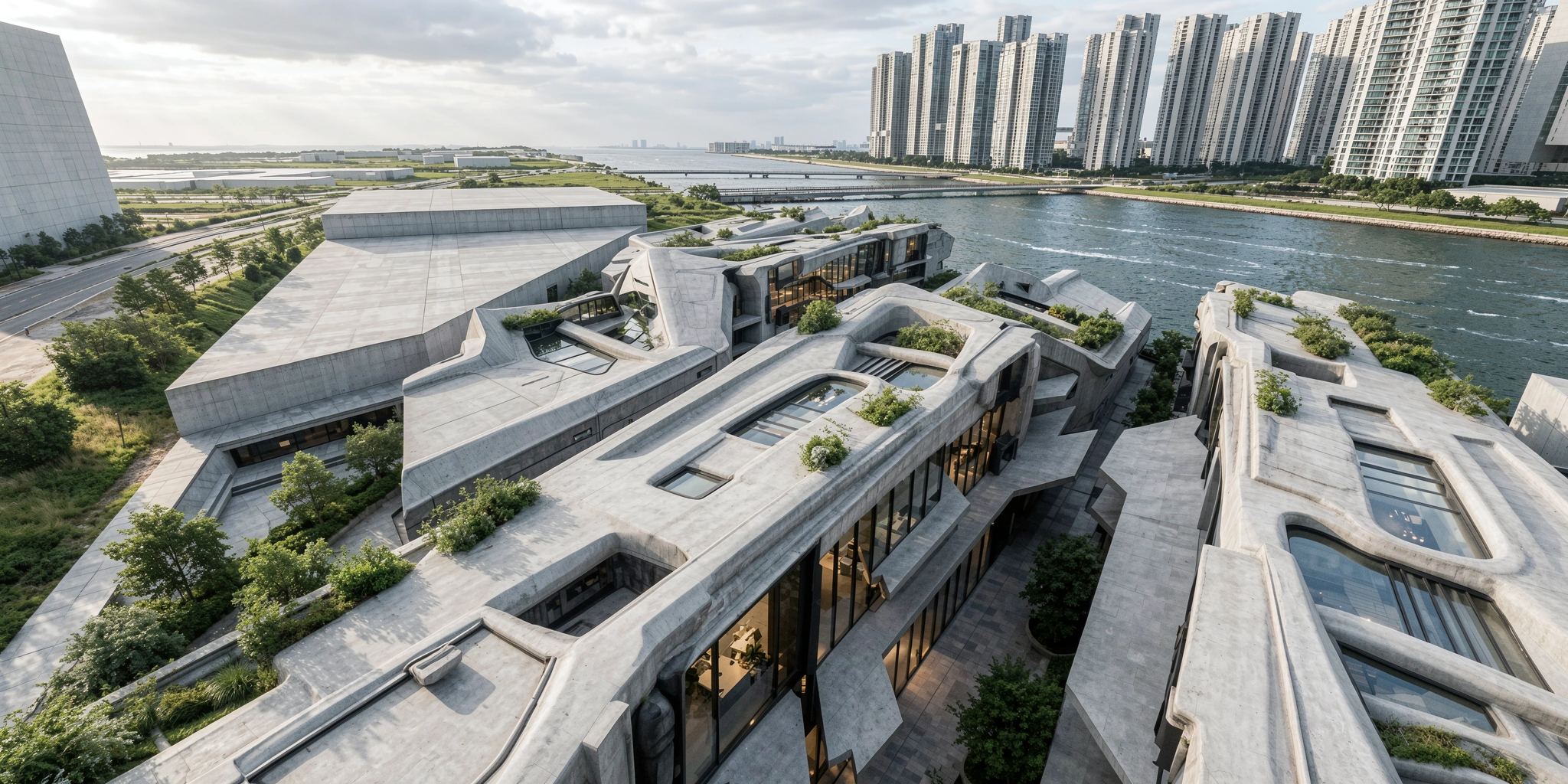
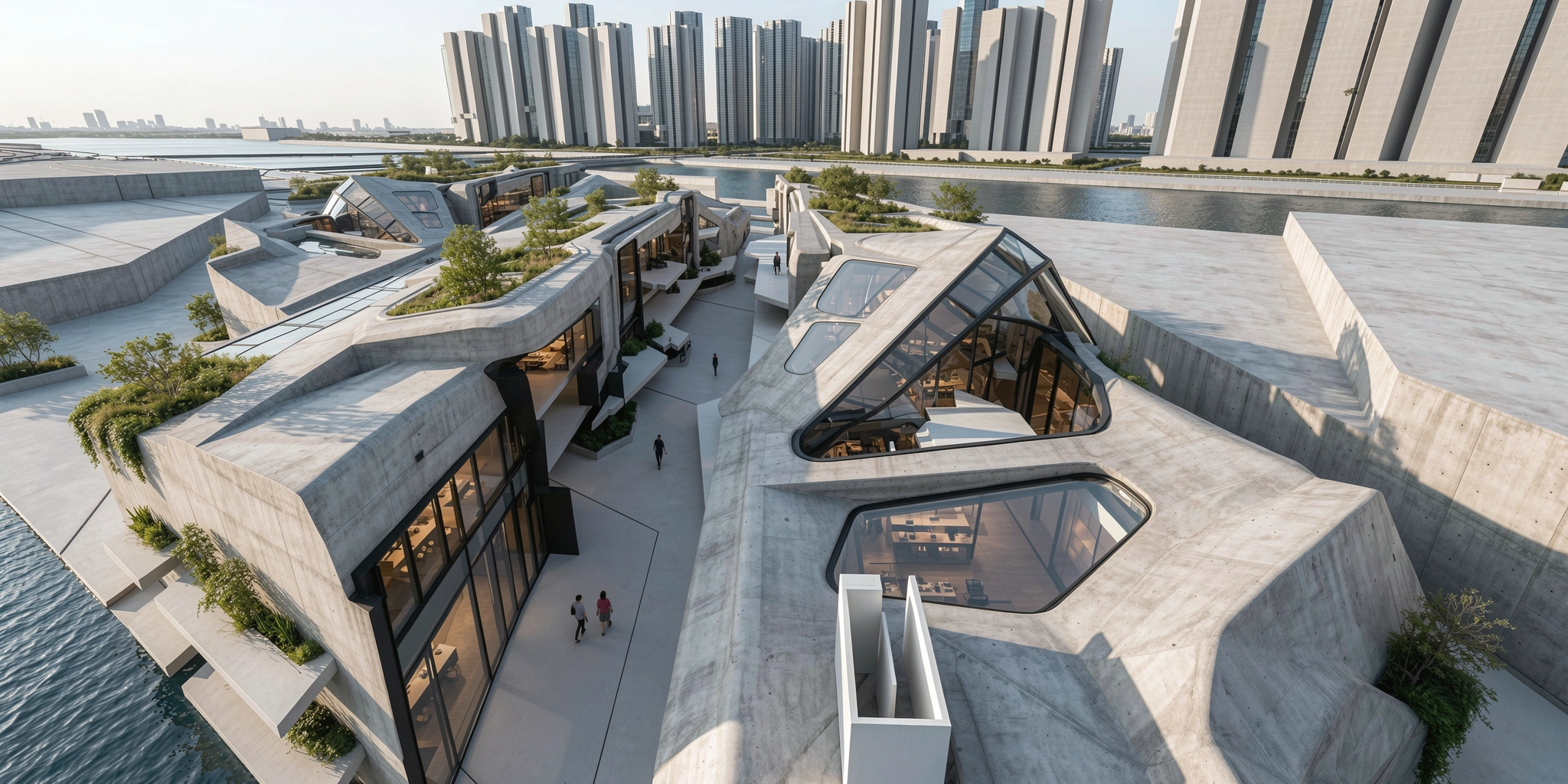
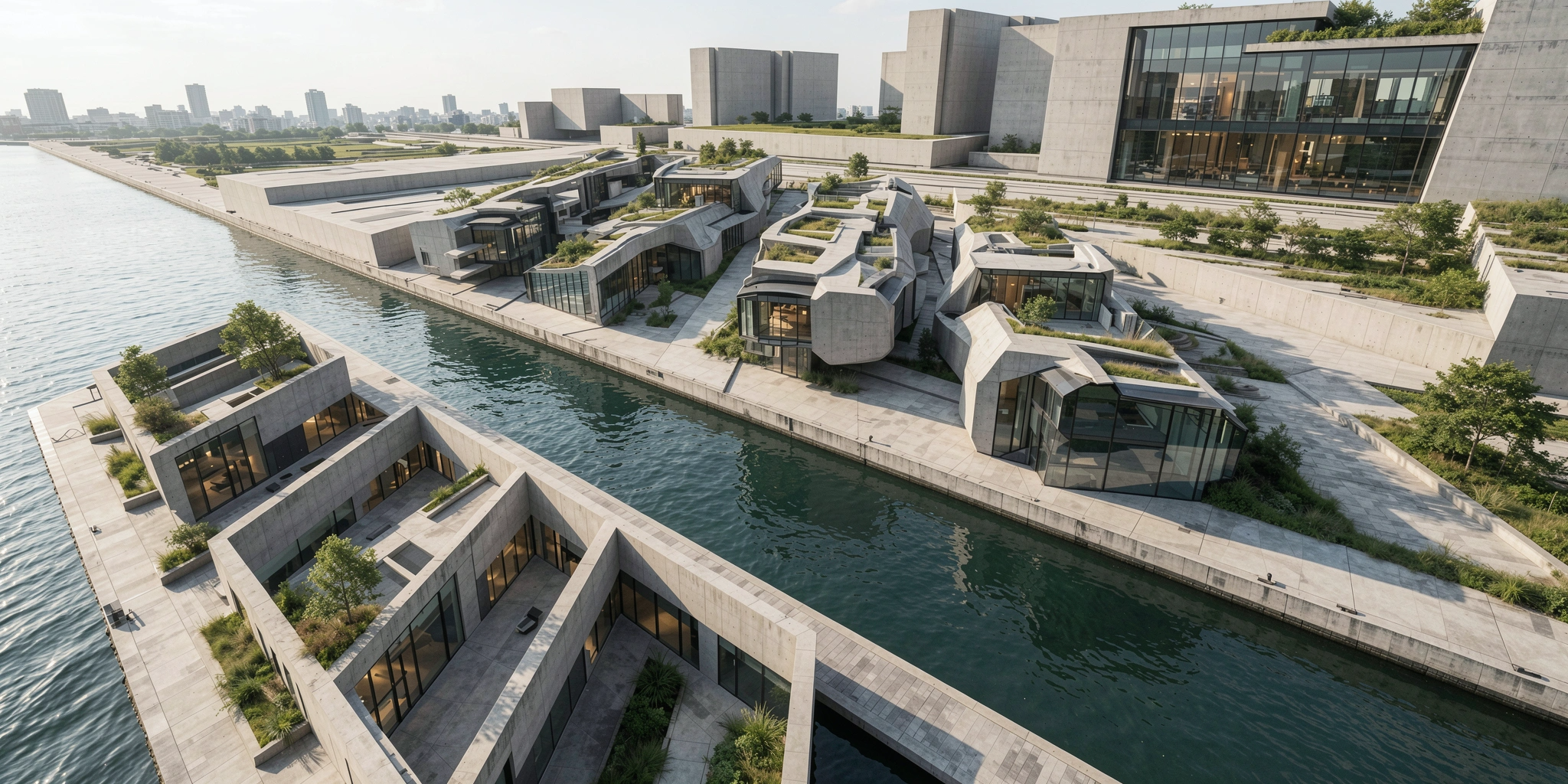
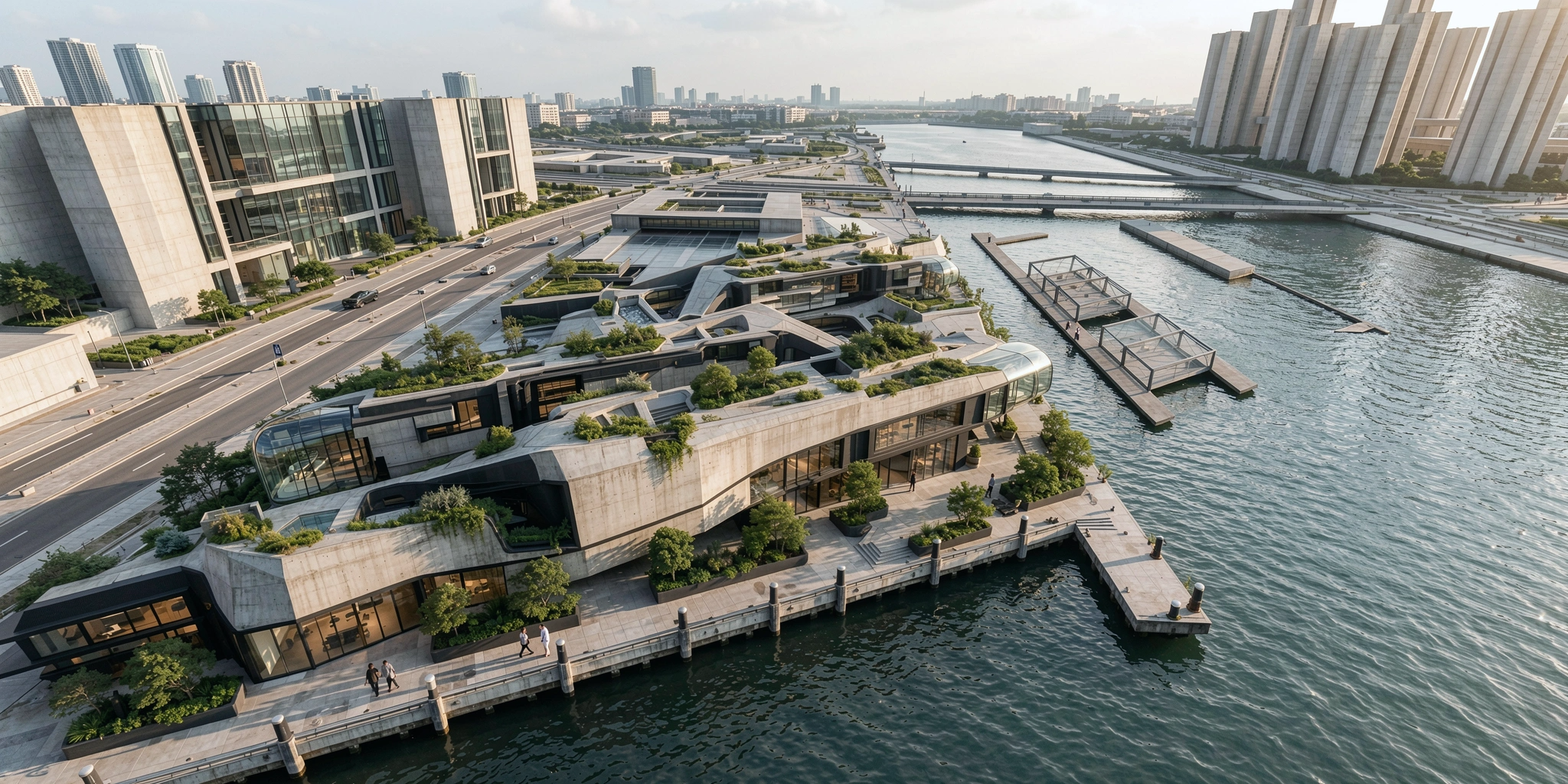
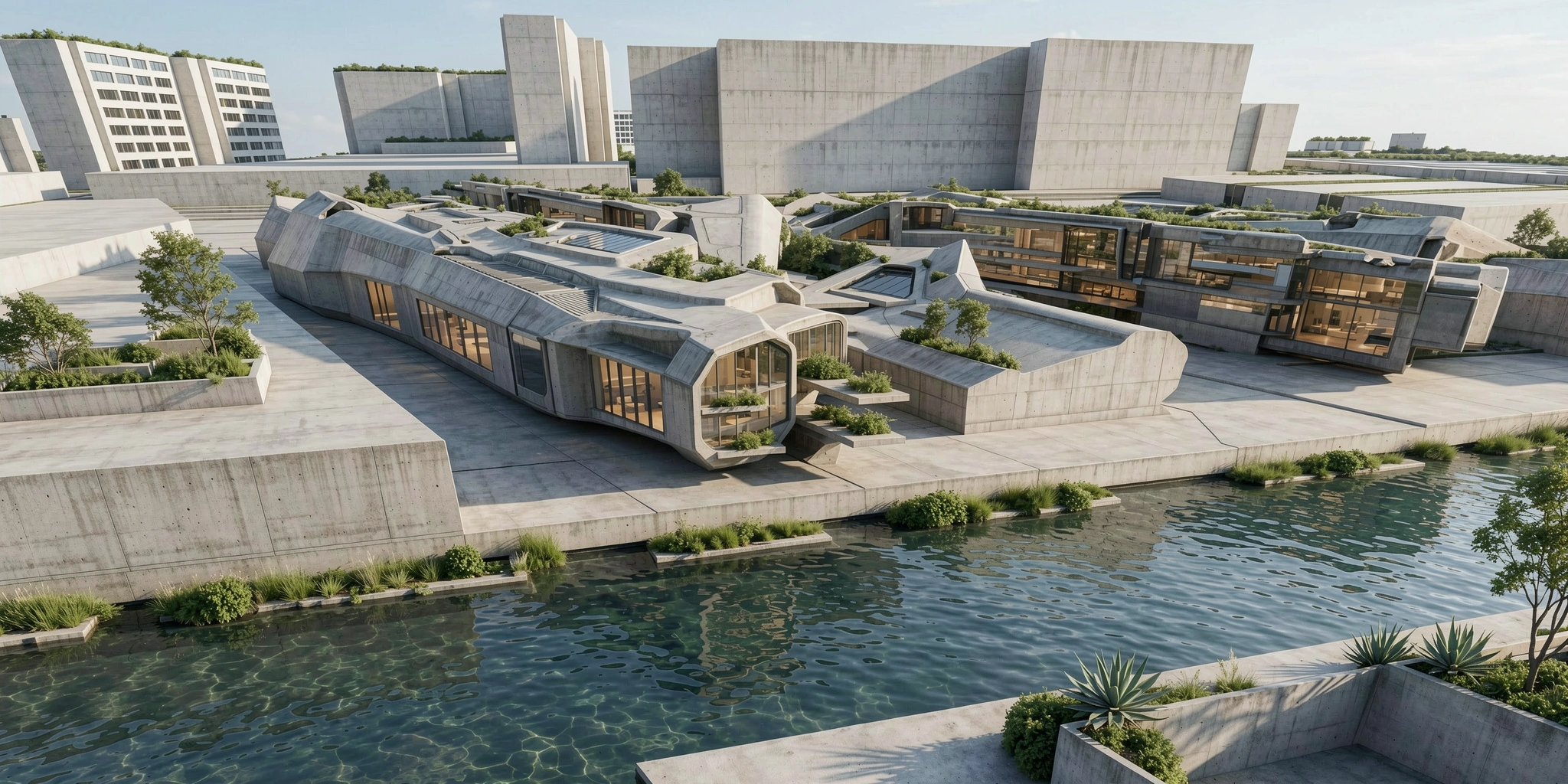
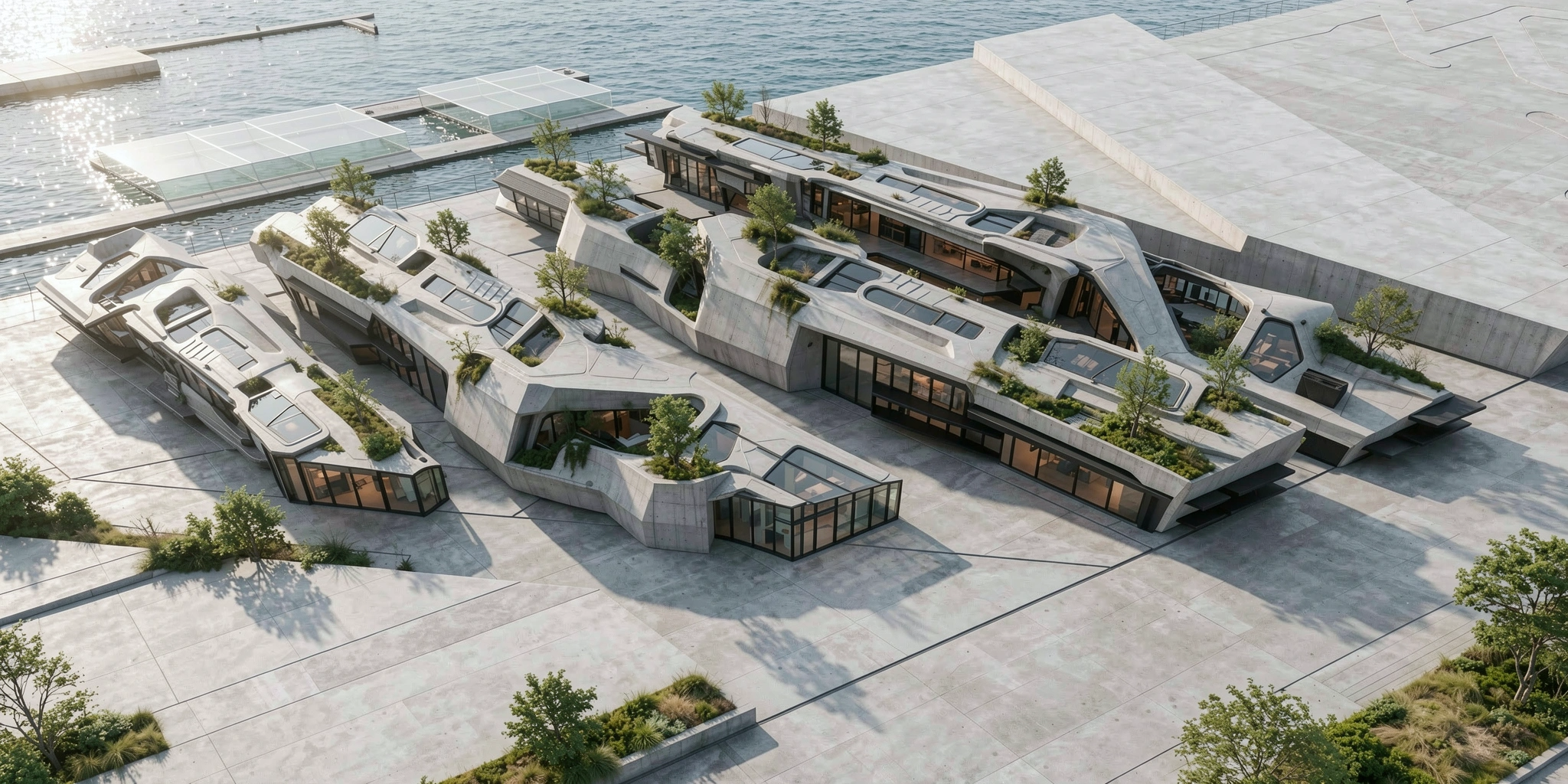
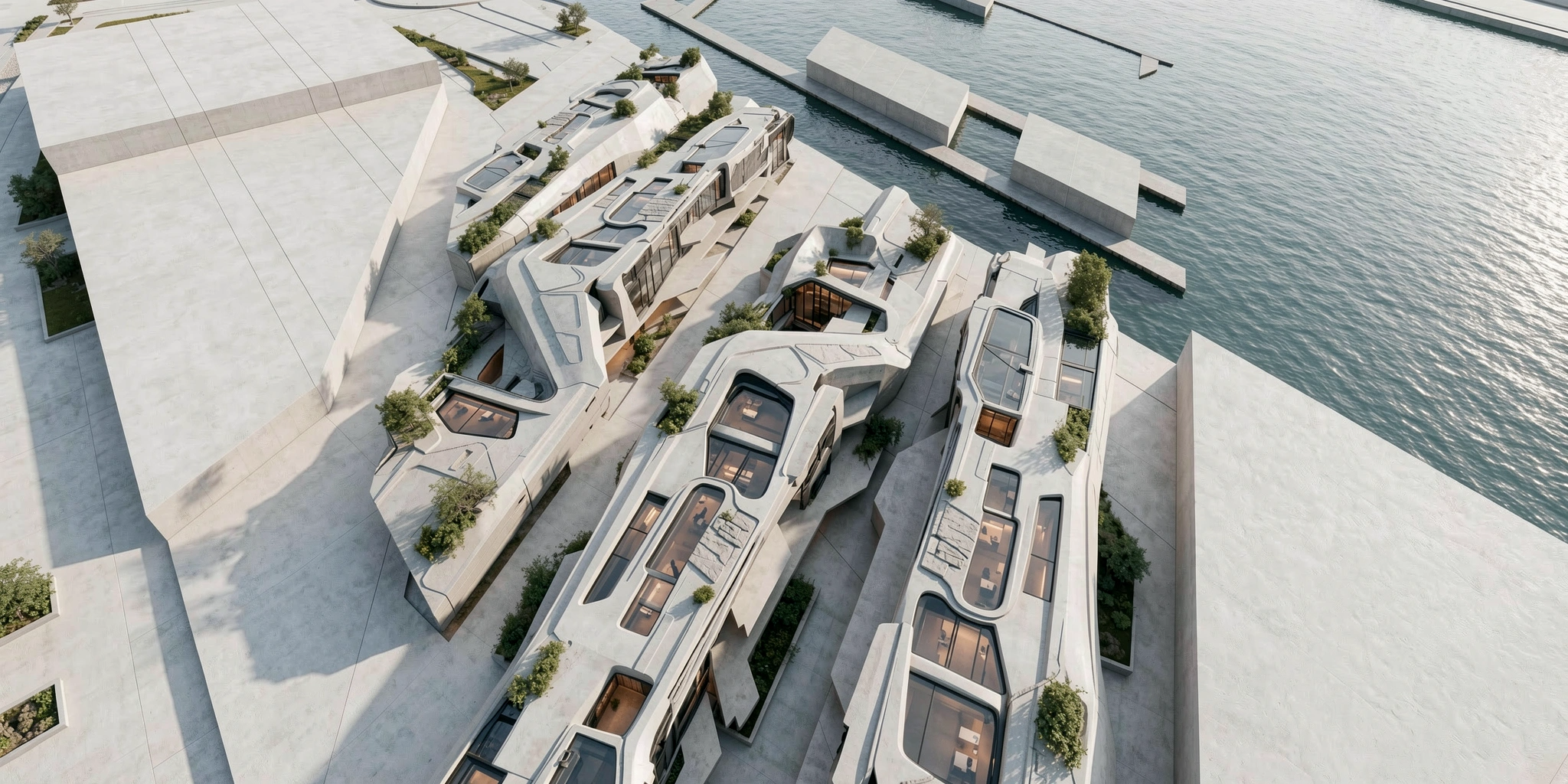
This project is a waterfront design district proposed for Hong Kong, located at the point where the city meets the river. Conceived as a new model of urban expansion, the project challenges conventional approaches to growth by extending development across land and water while integrating architecture, infrastructure, landscape and public space within a continuous urban framework.
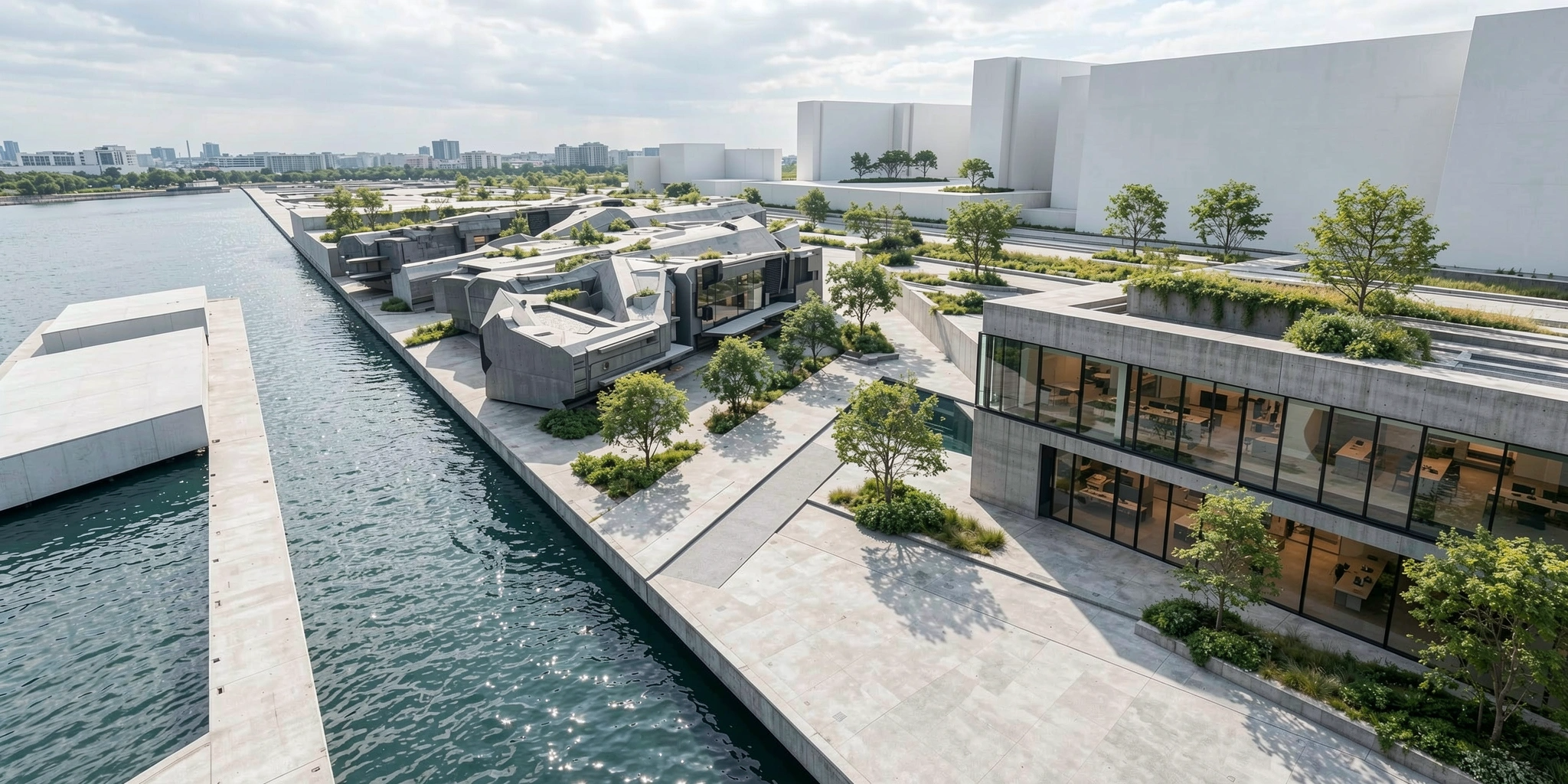
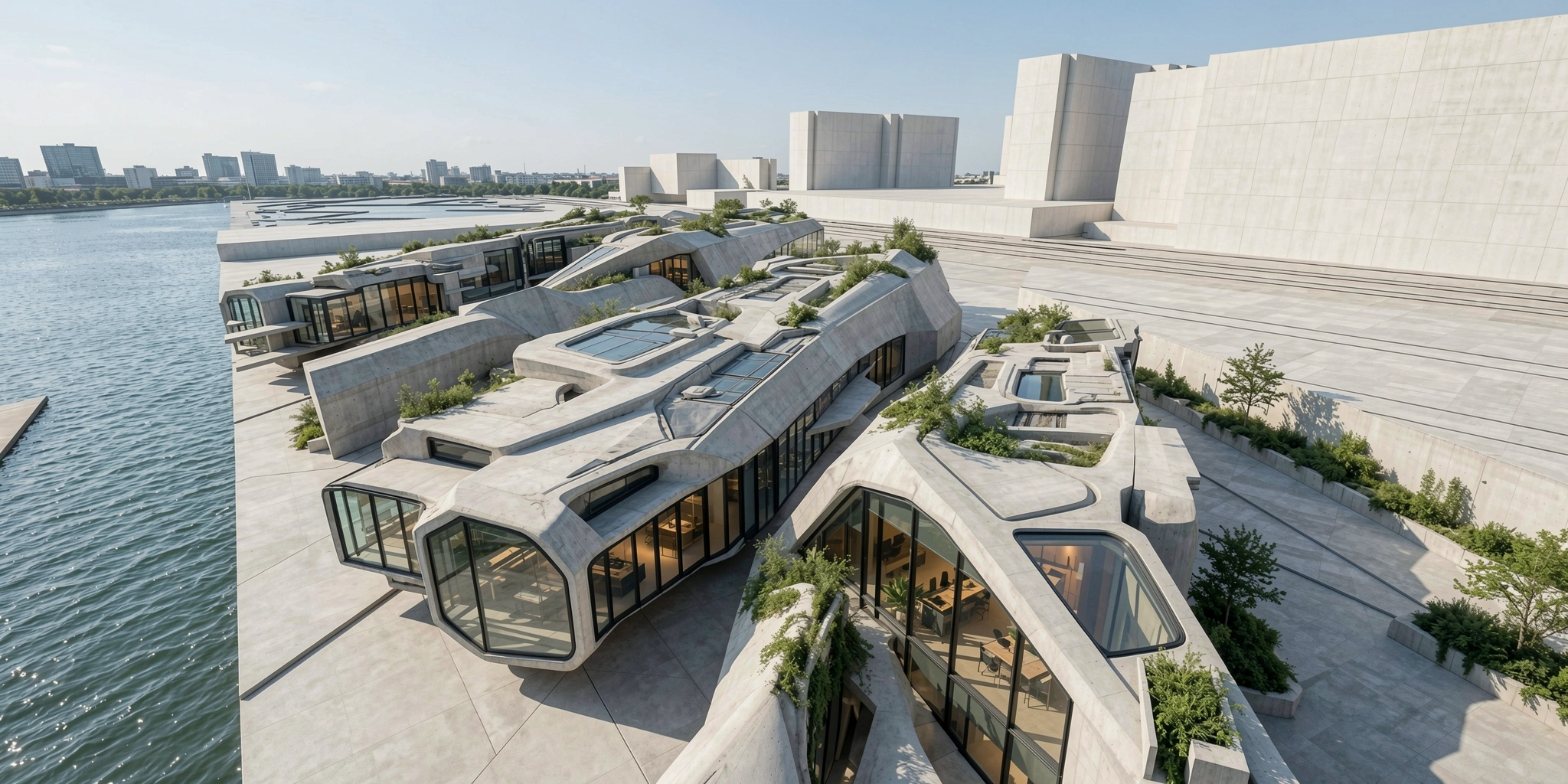
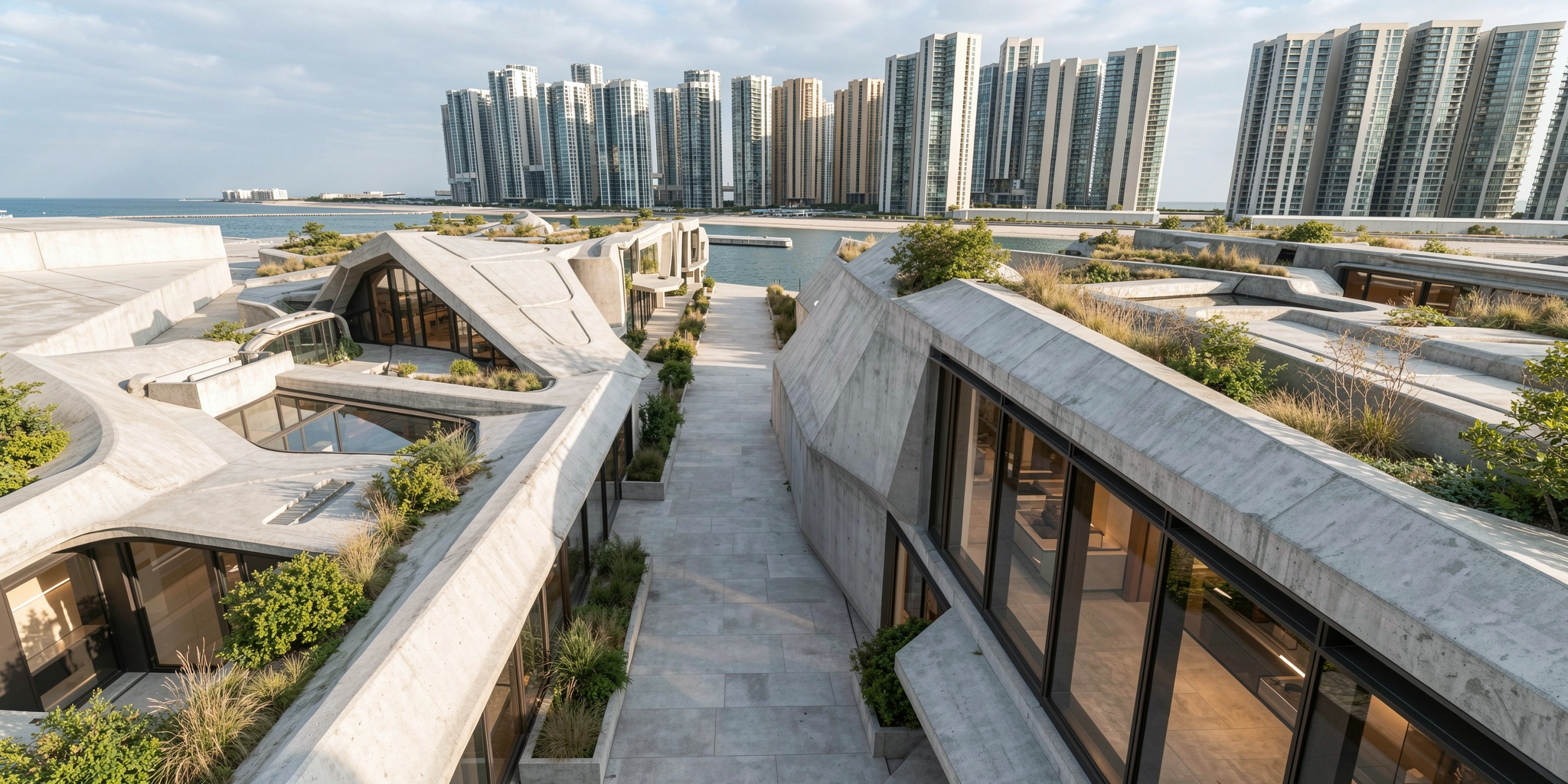
Hong Kong has traditionally responded to increasing development pressures through density and vertical growth. This project explores an alternative approach, creating a layered urban environment organised across interconnected levels that accommodate buildings, public spaces, circulation routes and landscape within a single coordinated system. Rather than adding isolated buildings to the city, the proposal creates an interconnected district whose identity emerges through relationships between its components.
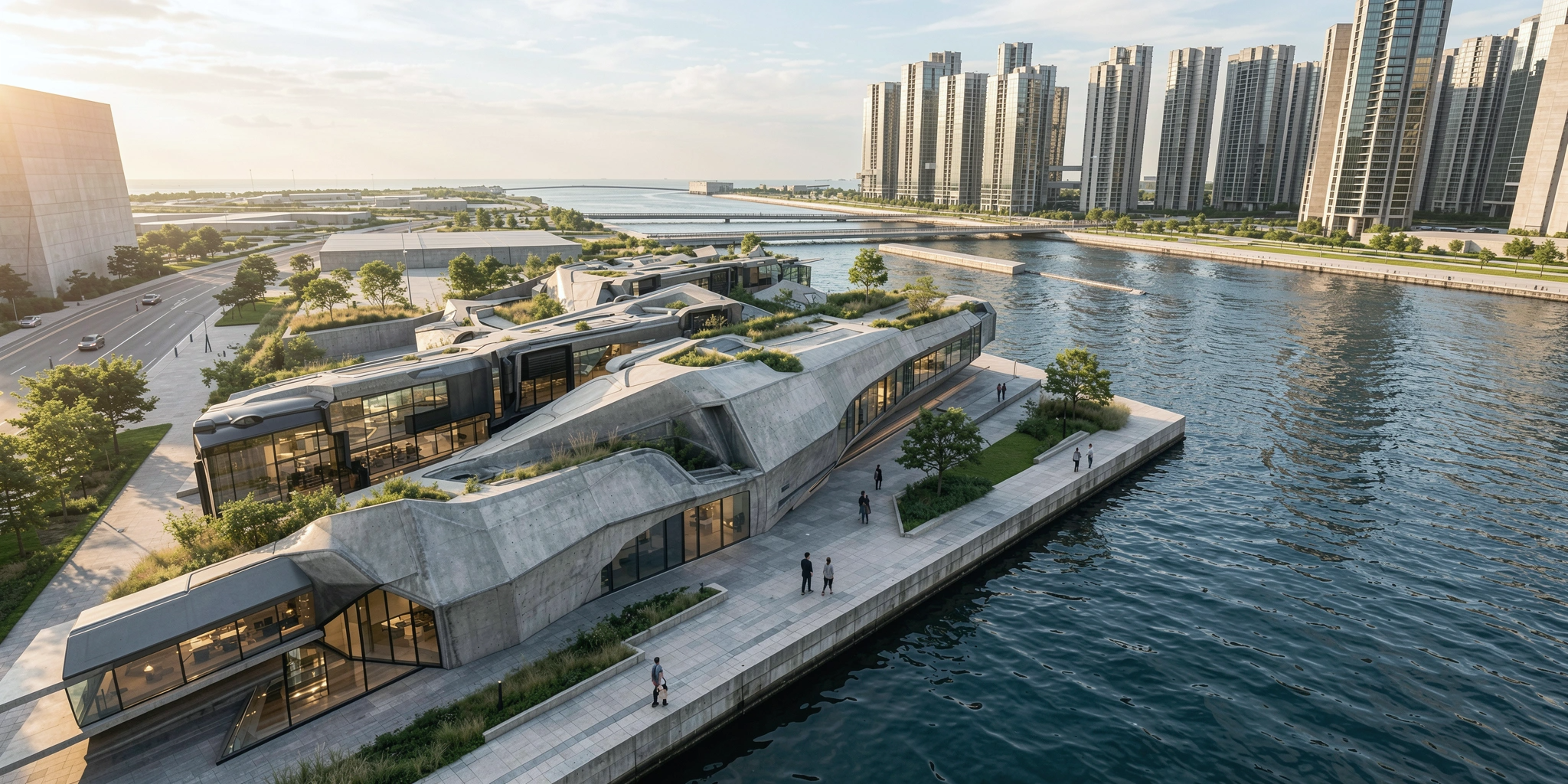
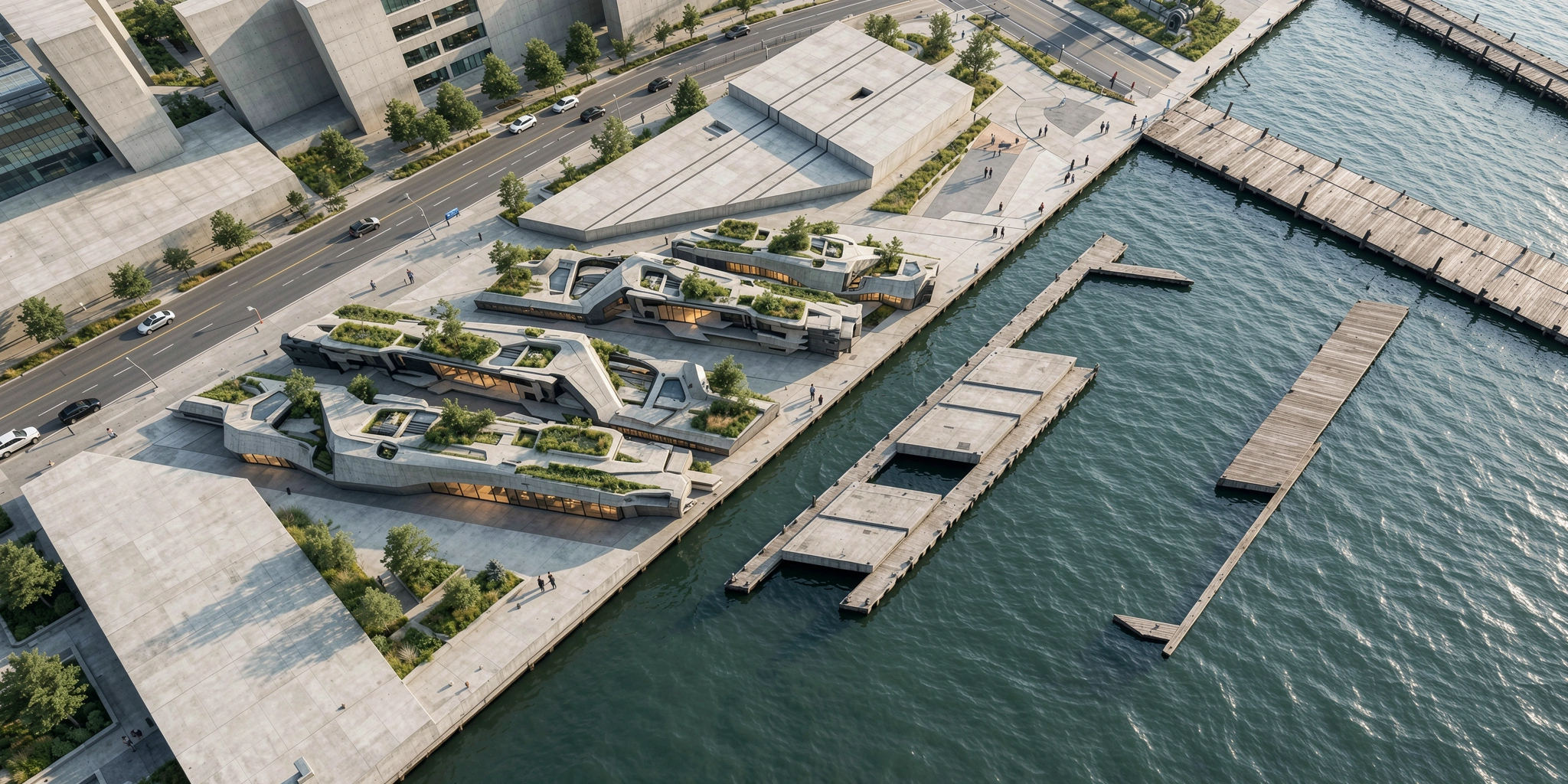
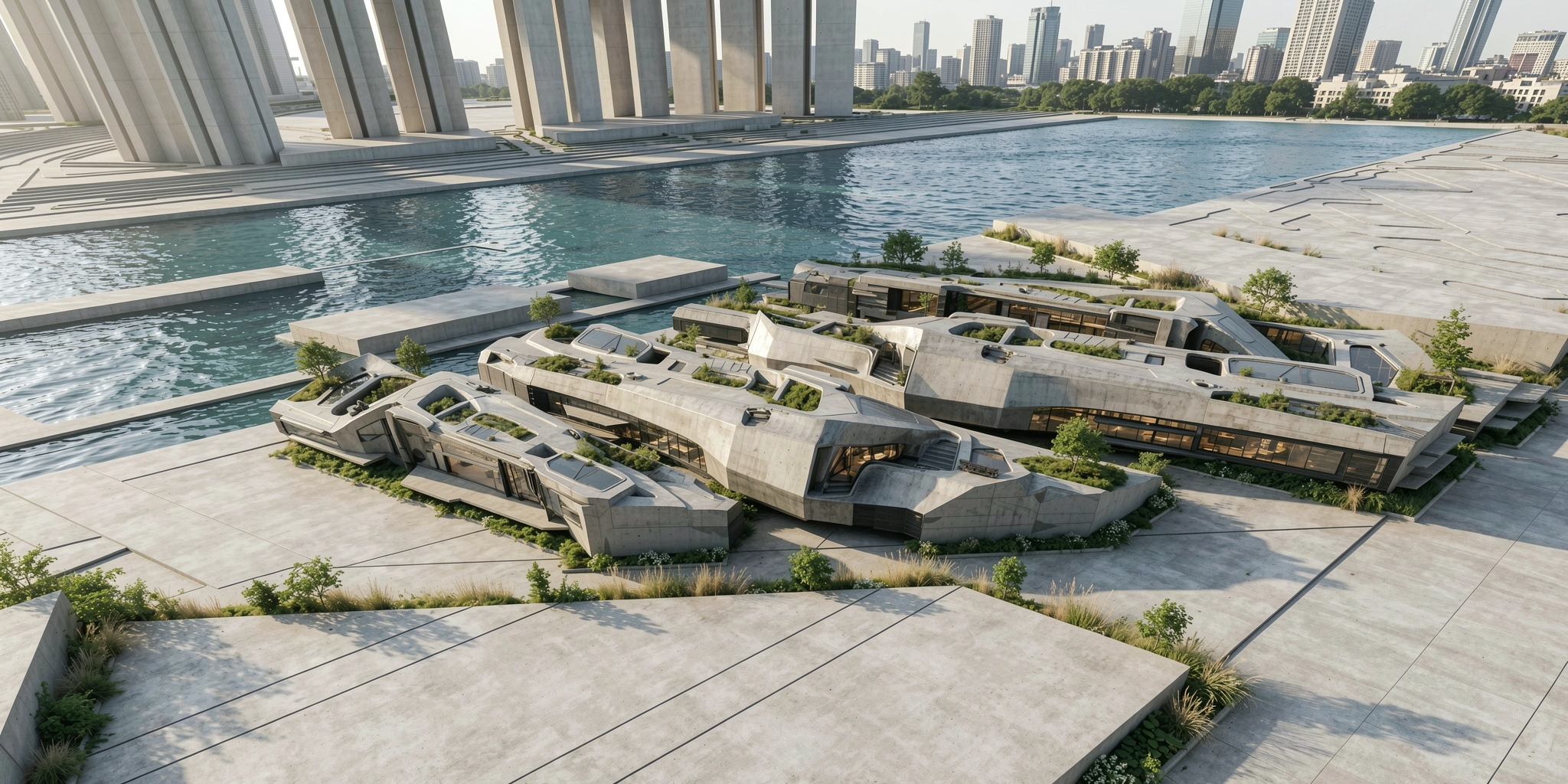
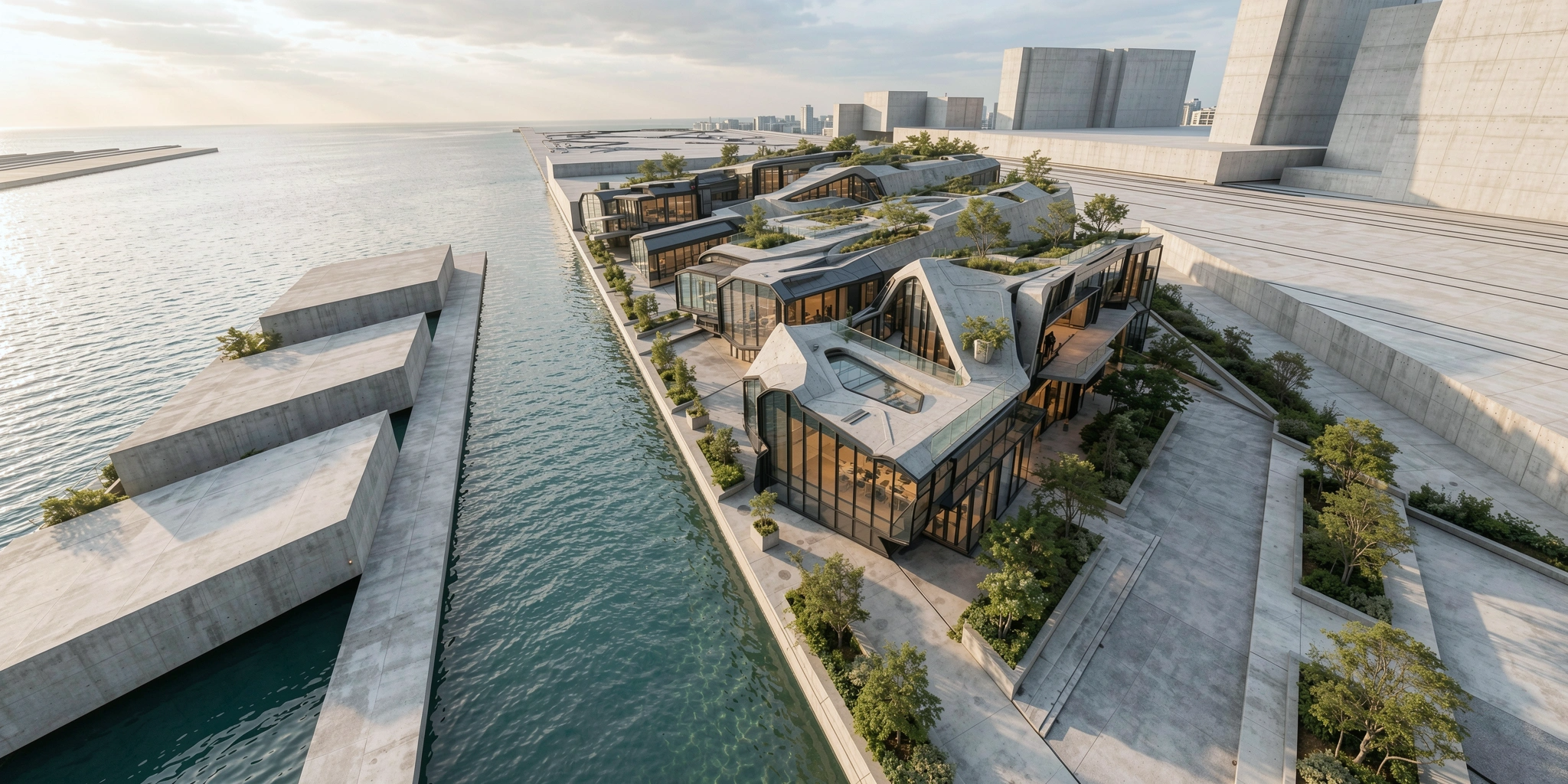
The waterfront provides the opportunity for this new form of urban organisation. Instead of treating land and water as separate conditions, the project integrates them within a shared framework. The district extends beyond the existing shoreline through elevated platforms, bridges and lightweight structures that create new opportunities for occupation, movement and public life while maintaining strong connections to the river environment.
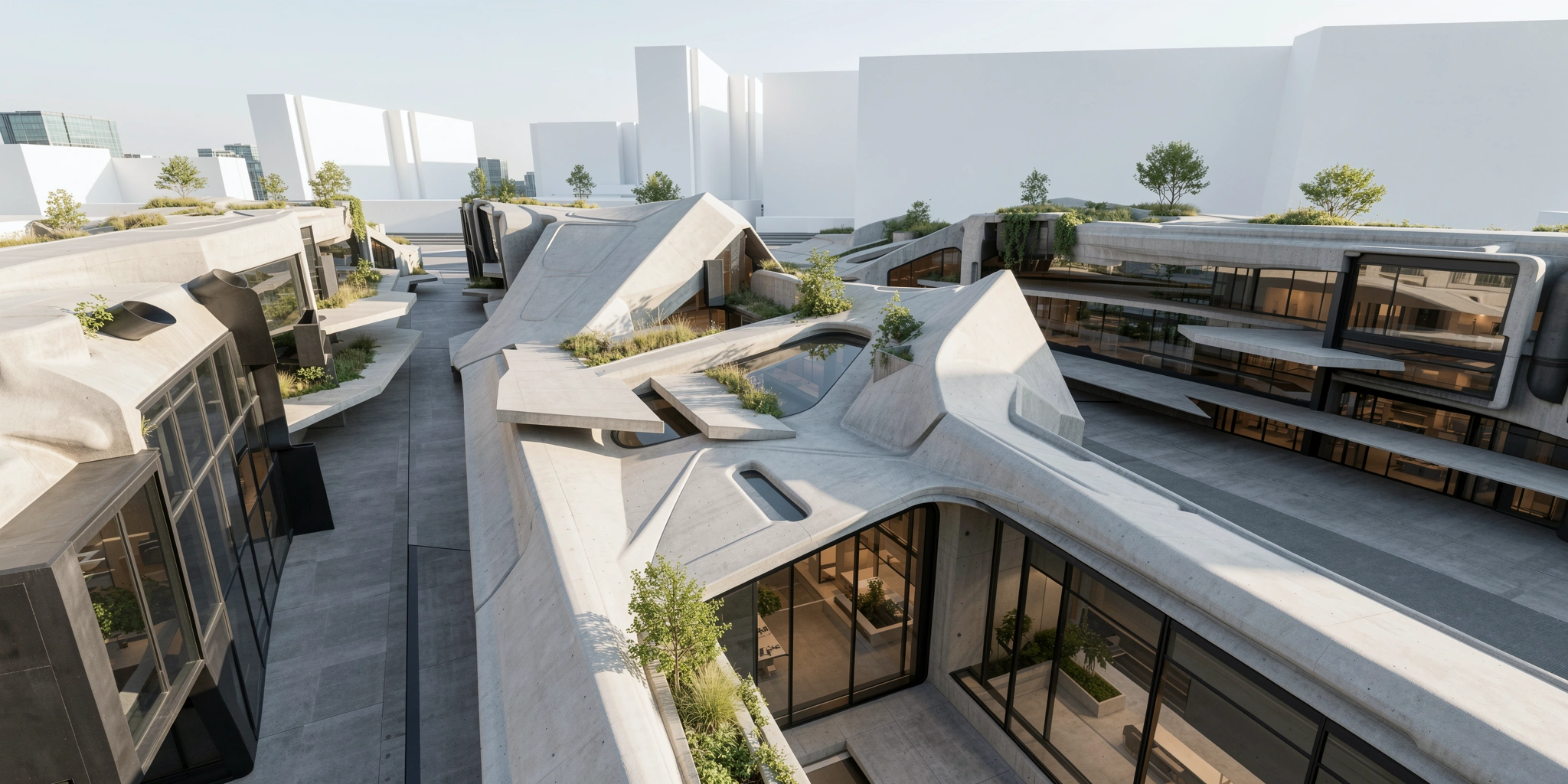
A defining characteristic of the proposal is its layered network of public spaces and circulation routes. Movement unfolds through a sequence of ramps, terraces, bridges and elevated walkways that connect different parts of the district while creating changing views across the city and waterfront. Public space is integrated throughout the development rather than concentrated at ground level, allowing activity, gathering and movement to occur across multiple layers of the urban environment.
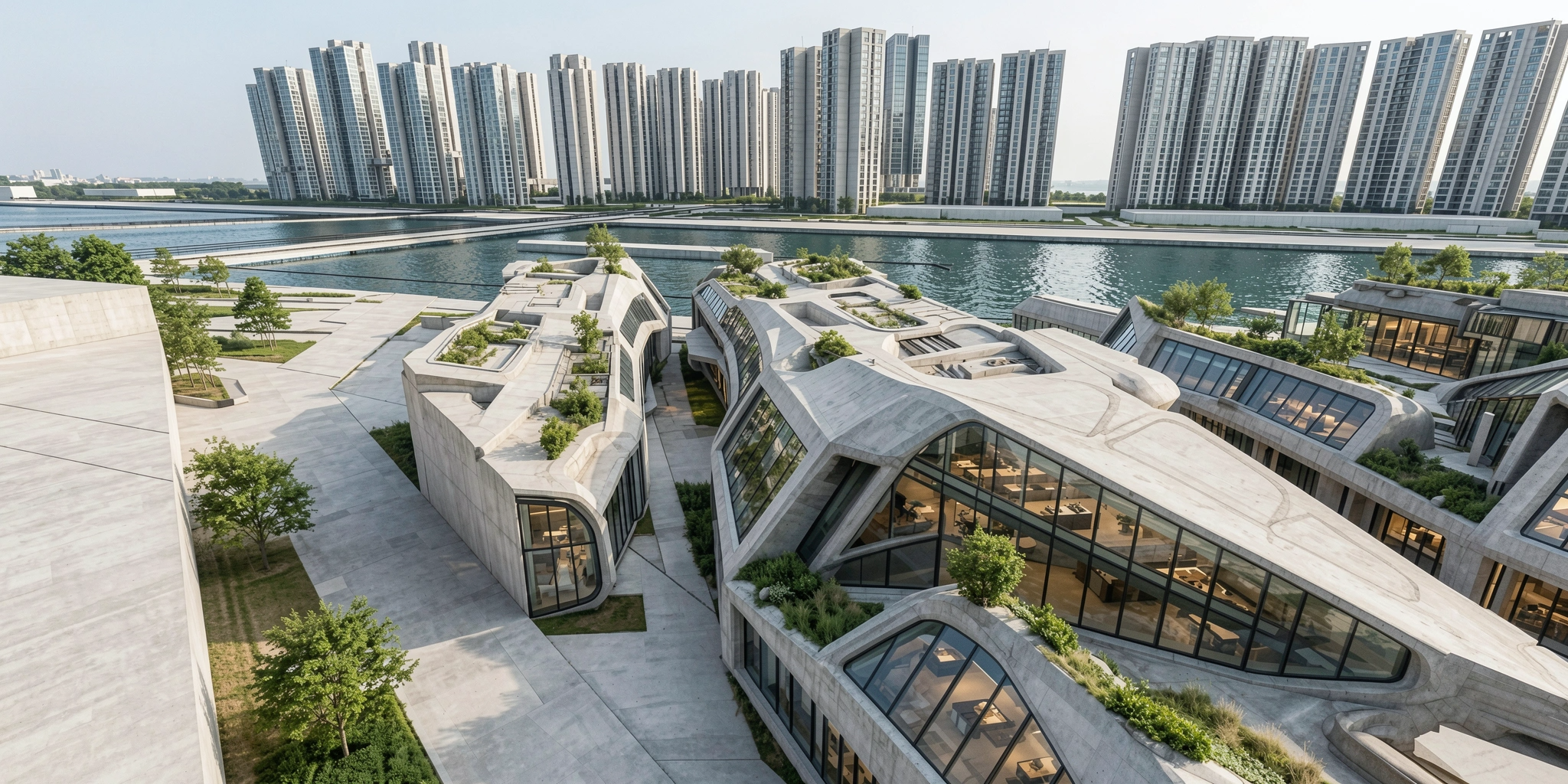
The district accommodates a diverse range of uses, including design studios, creative industries, cultural venues, exhibition spaces, public facilities, retail environments and workplaces. These activities are distributed throughout the project in ways that encourage interaction and exchange, creating a vibrant urban environment capable of supporting a broad range of social, cultural and economic activity.
The relationship with water is fundamental to the project's identity. Rather than separating development from the waterfront through defensive barriers or rigid boundaries, the proposal establishes direct engagement with the river. Buildings, landscapes and public spaces are designed to maintain strong visual and physical connections to the water, allowing the waterfront to become an active component of everyday urban life.
Environmental adaptability is embedded throughout the design. Modular systems, flexible infrastructure and lightweight construction allow the district to evolve over time in response to changing patterns of occupation, environmental conditions and future urban requirements. The project recognises that cities must increasingly accommodate uncertainty and change, creating frameworks capable of adaptation rather than fixed solutions designed for a single moment in time.
The proposal also challenges conventional distinctions between architecture and urbanism. Individual buildings are conceived as components within a larger interconnected system rather than as autonomous objects. Public space, infrastructure, circulation and built form are developed together, creating an urban environment whose coherence emerges through integration rather than through singular architectural gestures.
The layered organisation of the district creates a rich spatial experience shaped by changing levels, overlapping activities and continuous movement. Visitors encounter the city as a sequence of interconnected environments rather than a collection of separate buildings. Architecture, landscape and infrastructure combine to create an urban experience defined by connectivity, diversity and exchange.
This project proposes a new model for waterfront development in high-density cities. By integrating public space at multiple levels, extending urban activity across land and water and creating a flexible framework for future growth, it demonstrates how architecture, infrastructure and landscape can work together to create resilient and adaptable urban environments.
Rather than viewing water as a boundary, the project treats it as an integral component of the city. The result is a district that responds to the challenges of density, climate change and land scarcity while opening new possibilities for how urban environments may develop in the future.