
Regional Terminal
Further information and case study for this project can be found at the De Gruyter Birkhäuser Modern Construction Online database
The following architectural case study is not available at Modern Construction Online
Regional Airport Terminal — Adaptive Reuse and Environmental Transformation
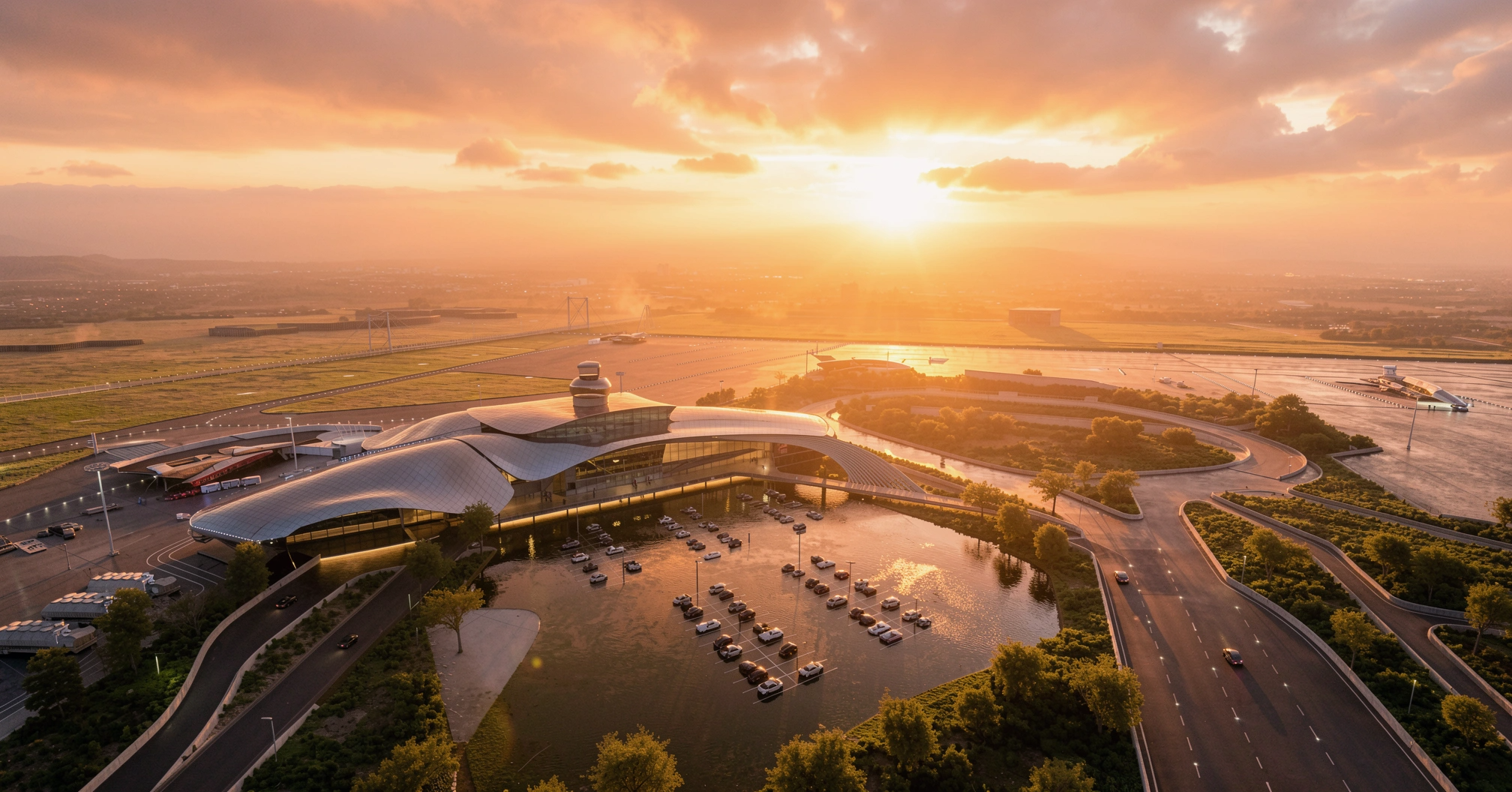
The refurbishment of the Regional Airport Terminal demonstrates how existing infrastructure can be transformed through the integration of architecture, engineering and environmental performance. Rather than replacing the original building, the project extends its operational life through the addition of a new envelope and the reorganisation of key public spaces, creating a contemporary terminal while retaining the value embedded within the existing structure.
The project is founded on the belief that adaptive reuse can be a creative act rather than a compromise. The existing concrete frame provides the basis for a new architectural intervention that improves environmental performance, enhances the passenger experience and establishes a renewed civic identity for the terminal. Existing and new construction are therefore conceived as complementary components of a single architectural system.
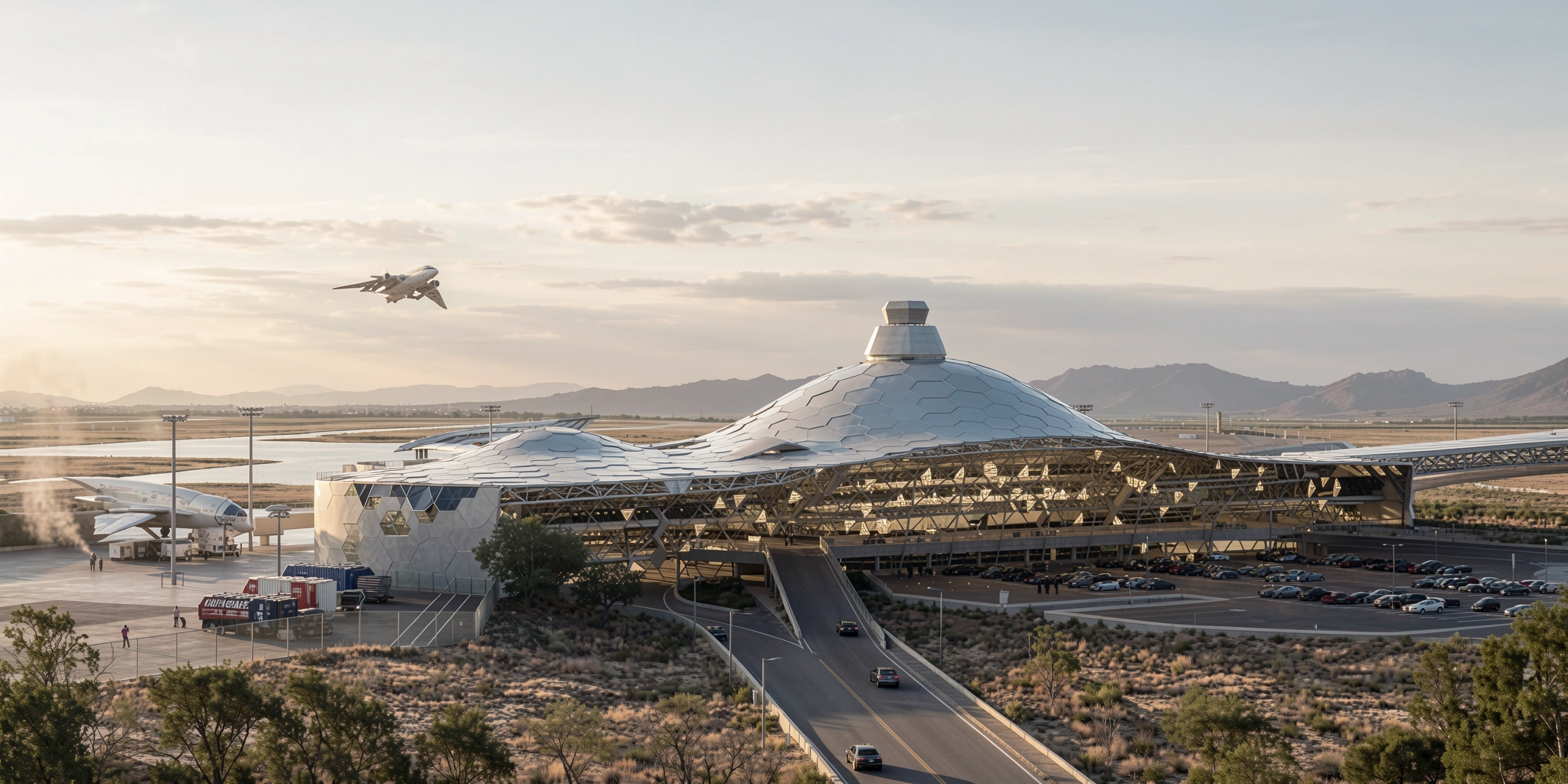
A new external envelope wraps the retained structure, providing environmental protection, solar control and a coherent architectural expression. The envelope is developed as an environmental mediator rather than a decorative skin, responding to climate, daylight and operational requirements while establishing a clear visual identity for the building. Architecture and environmental performance are consequently integrated within a single design strategy.
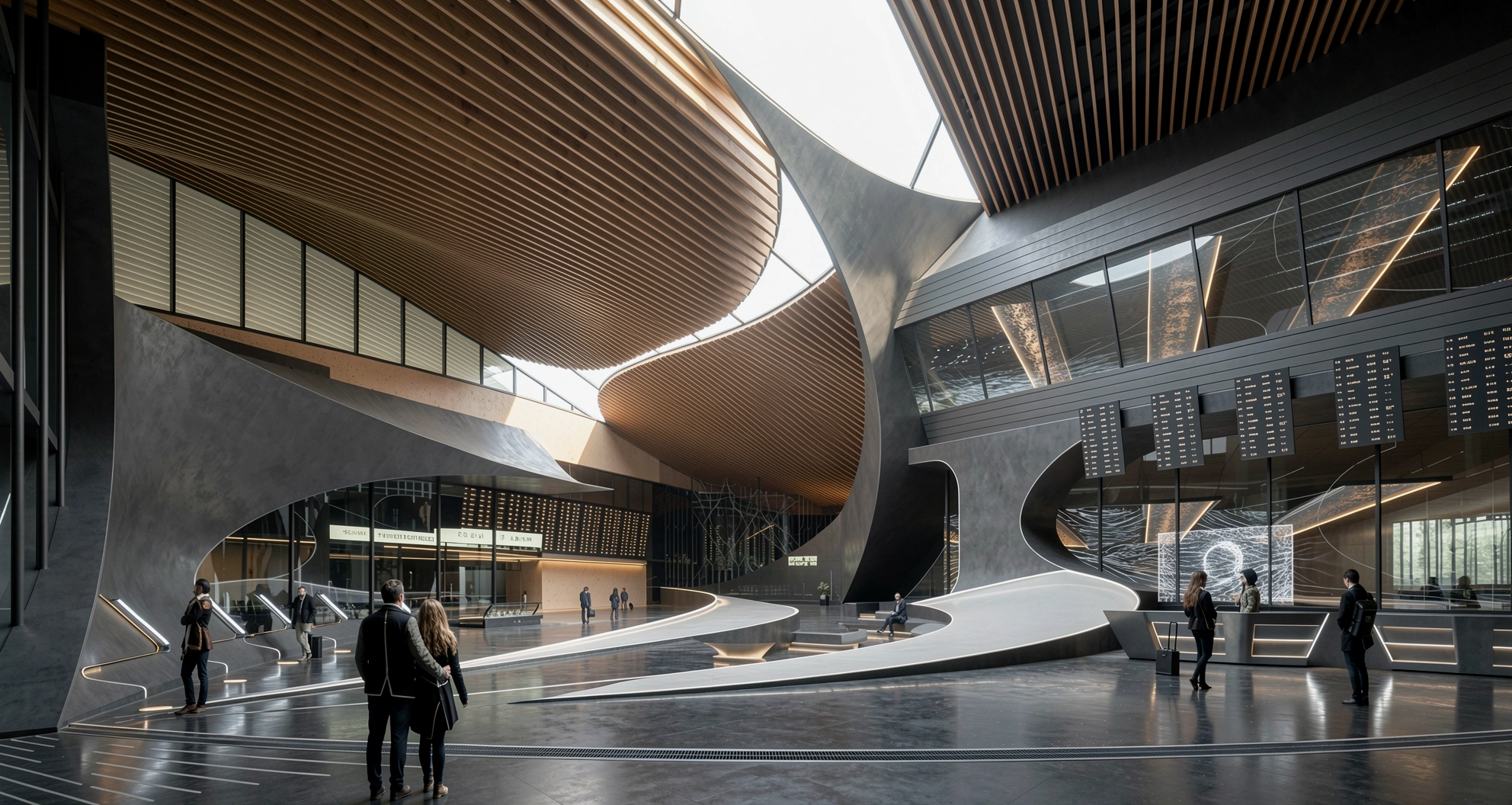
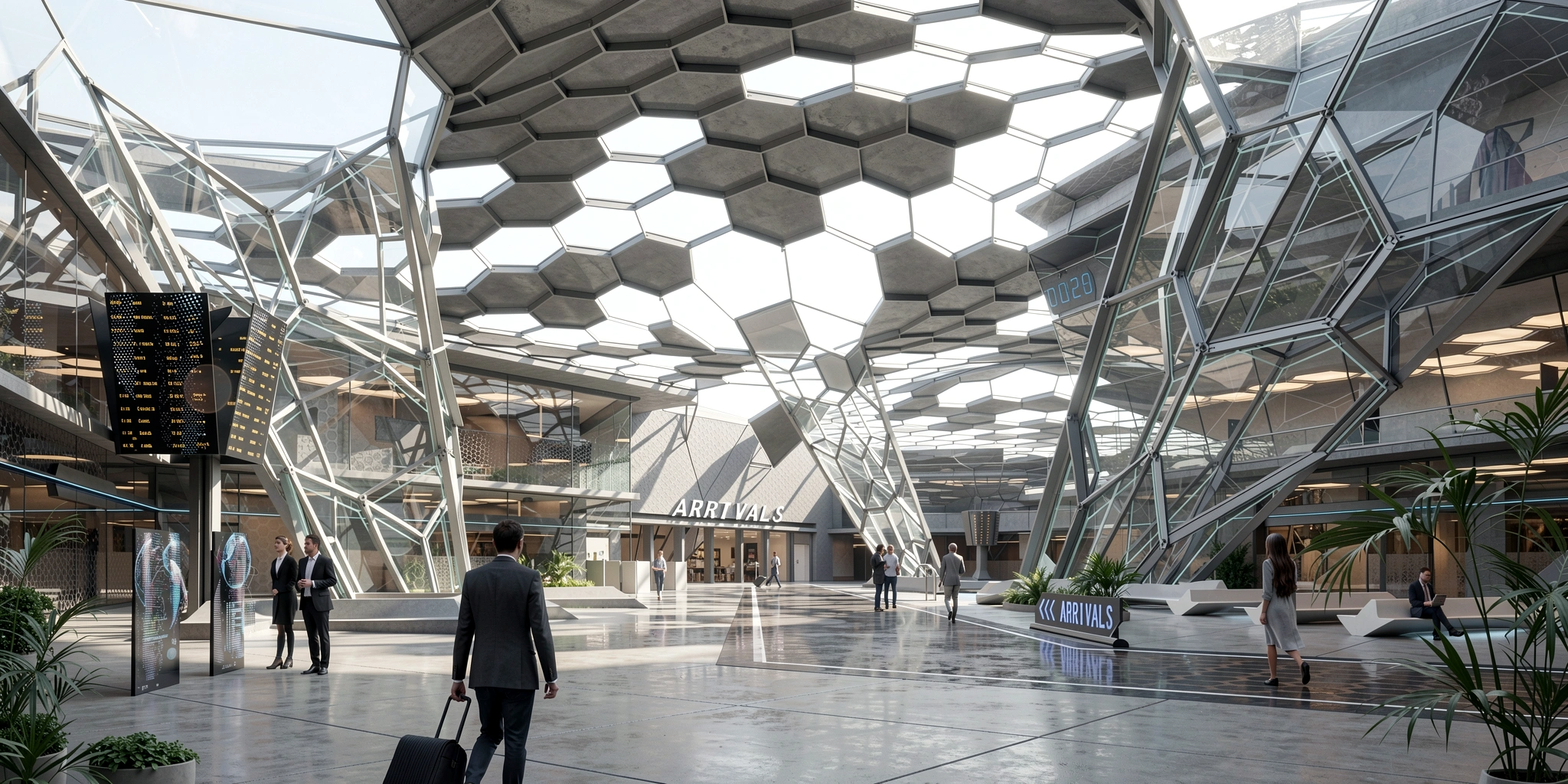
The intervention also reconsiders the relationship between circulation, orientation and public space. New atria, rooflights and visual connections introduce daylight deep into the building and improve legibility throughout the terminal. Passengers move through a sequence of naturally lit spaces that support intuitive navigation while creating a more generous and welcoming environment.
The architectural language emerges through the coordinated development of structure, enclosure and environmental systems. Curved roof forms and carefully integrated façade elements establish continuity across the building while accommodating the varied operational requirements of the terminal. The resulting architecture is contemporary in expression yet closely connected to the realities of construction, performance and long-term operation.
Particular emphasis is placed on constructability and efficient delivery. New structural elements are integrated with the retained building in ways that minimise disruption while allowing significant improvements in environmental performance and spatial quality. The project demonstrates how advanced design and engineering can be used to unlock the potential of existing assets rather than replace them.
At a broader level, the refurbishment explores the role of architecture within contemporary infrastructure. Airports are often understood primarily as technical facilities, yet they also serve as gateways to cities and regions. The project therefore seeks to balance operational efficiency with civic presence, creating a building that supports movement while contributing positively to its wider context.
The Regional Airport Terminal demonstrates how adaptive reuse can provide an alternative to demolition and replacement. By combining environmental improvement, architectural transformation and construction intelligence within a single integrated strategy, the project creates a renewed public building that is efficient, durable and responsive to future needs.