
Science Center, FL, USA
Science Visitor Centre — Discovery Through Movement
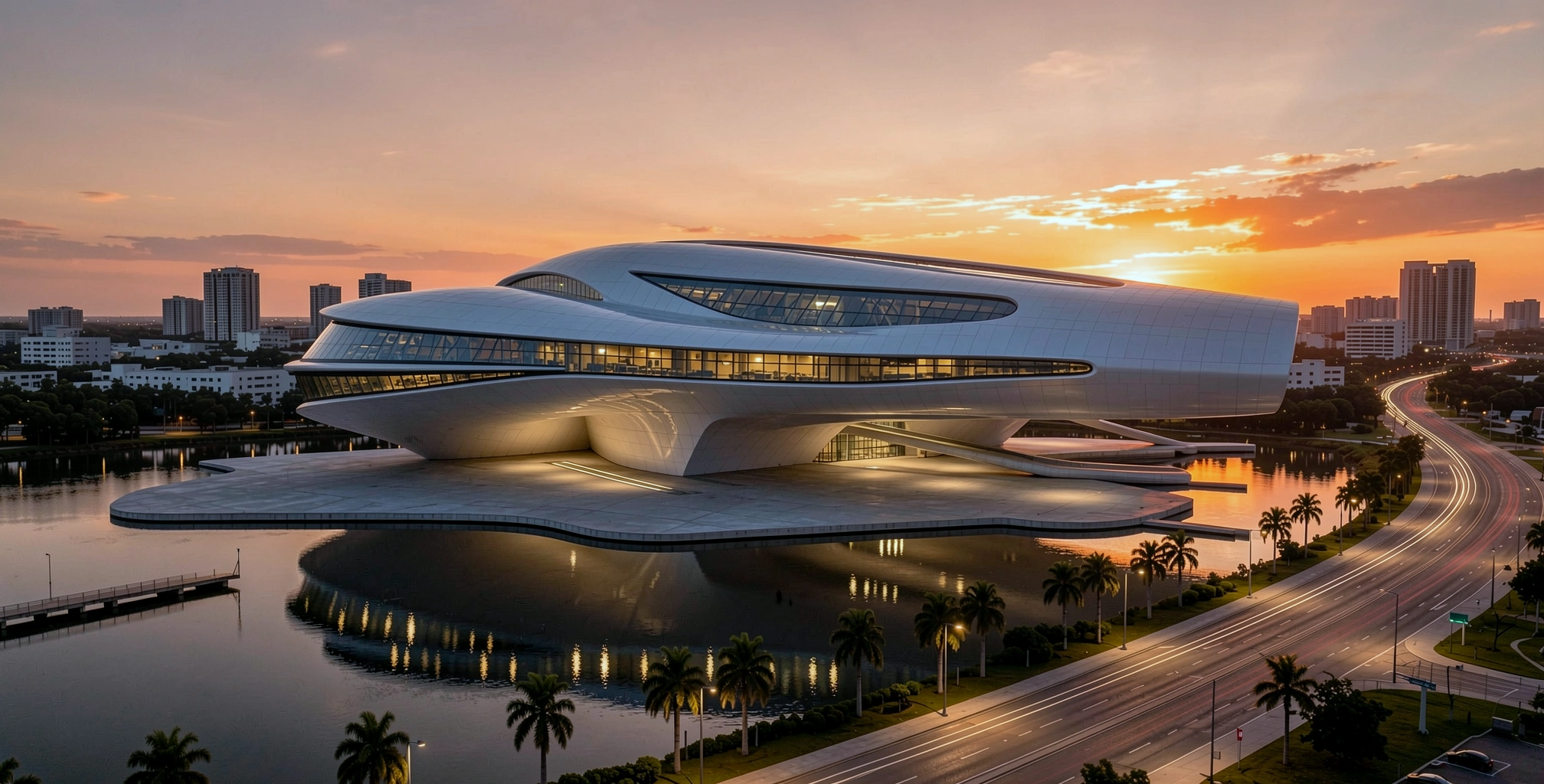
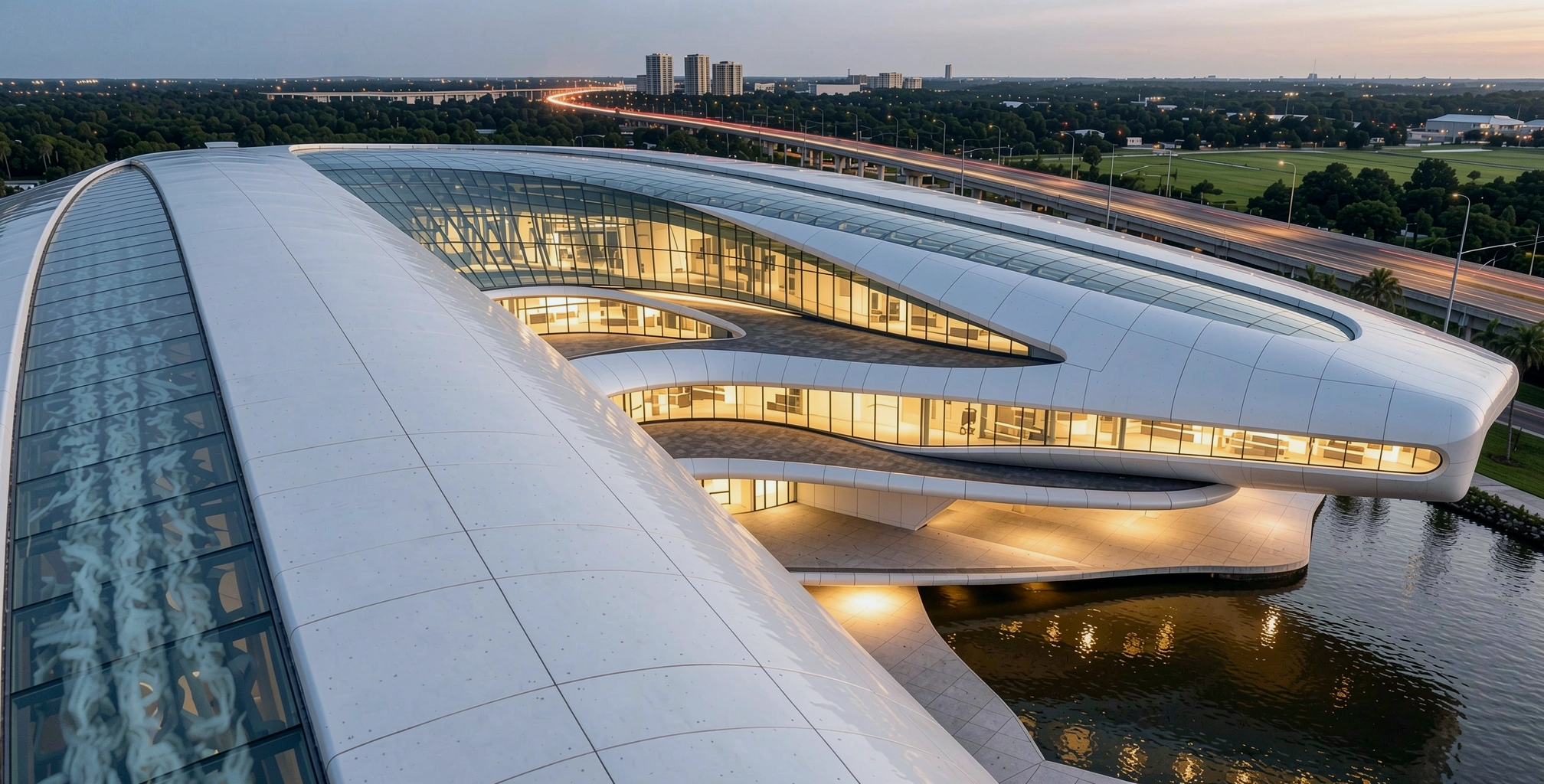
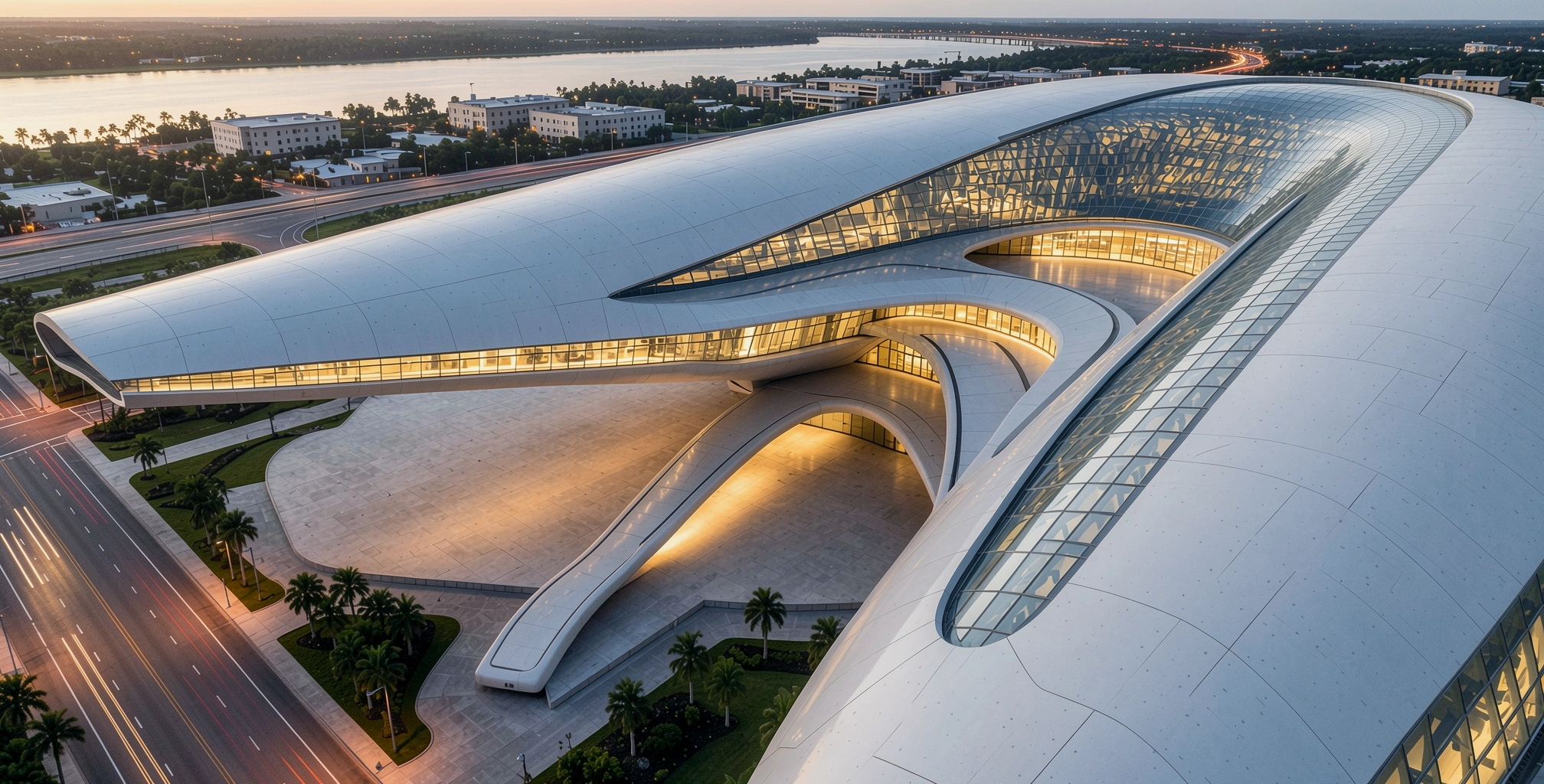
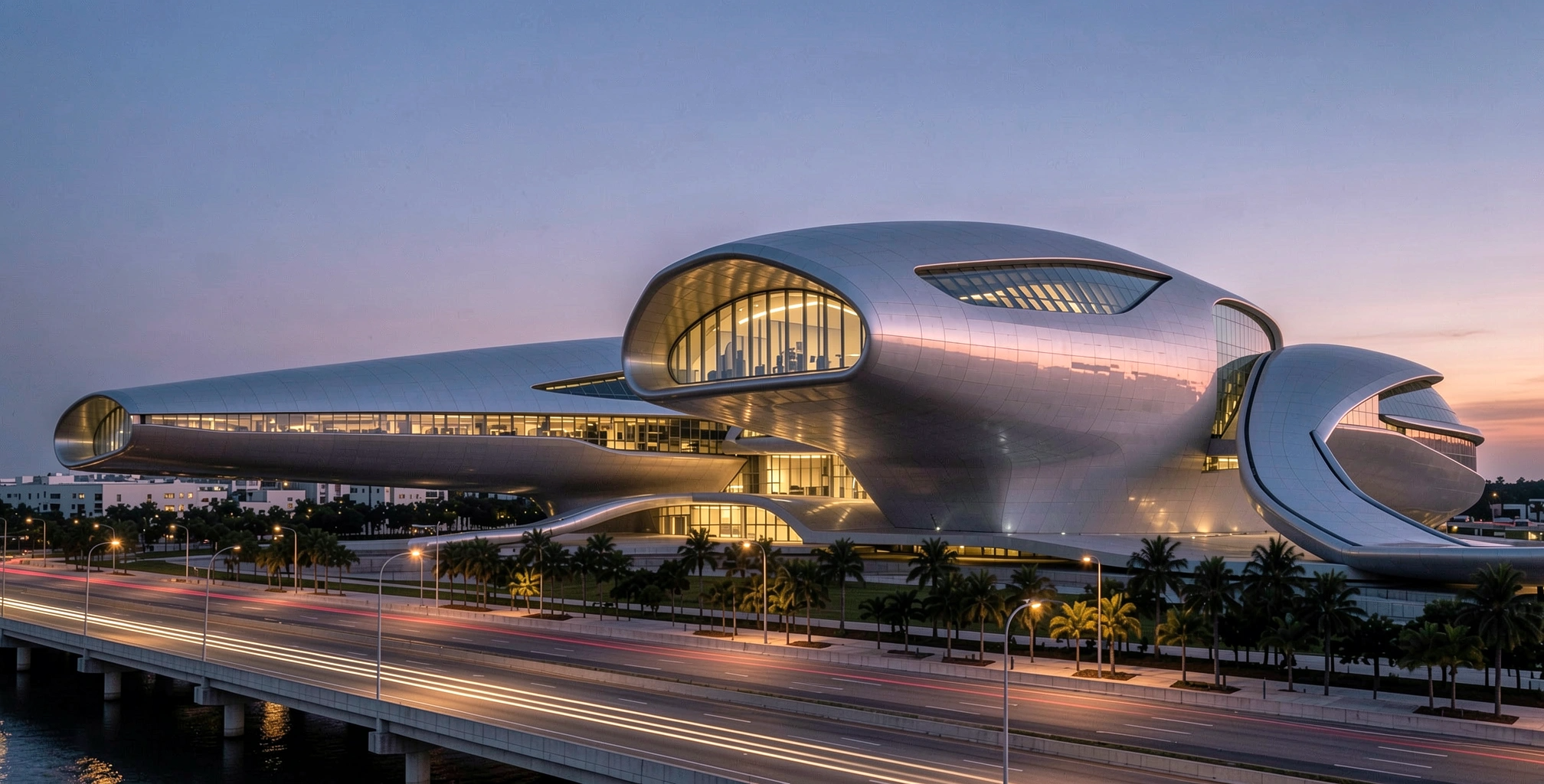
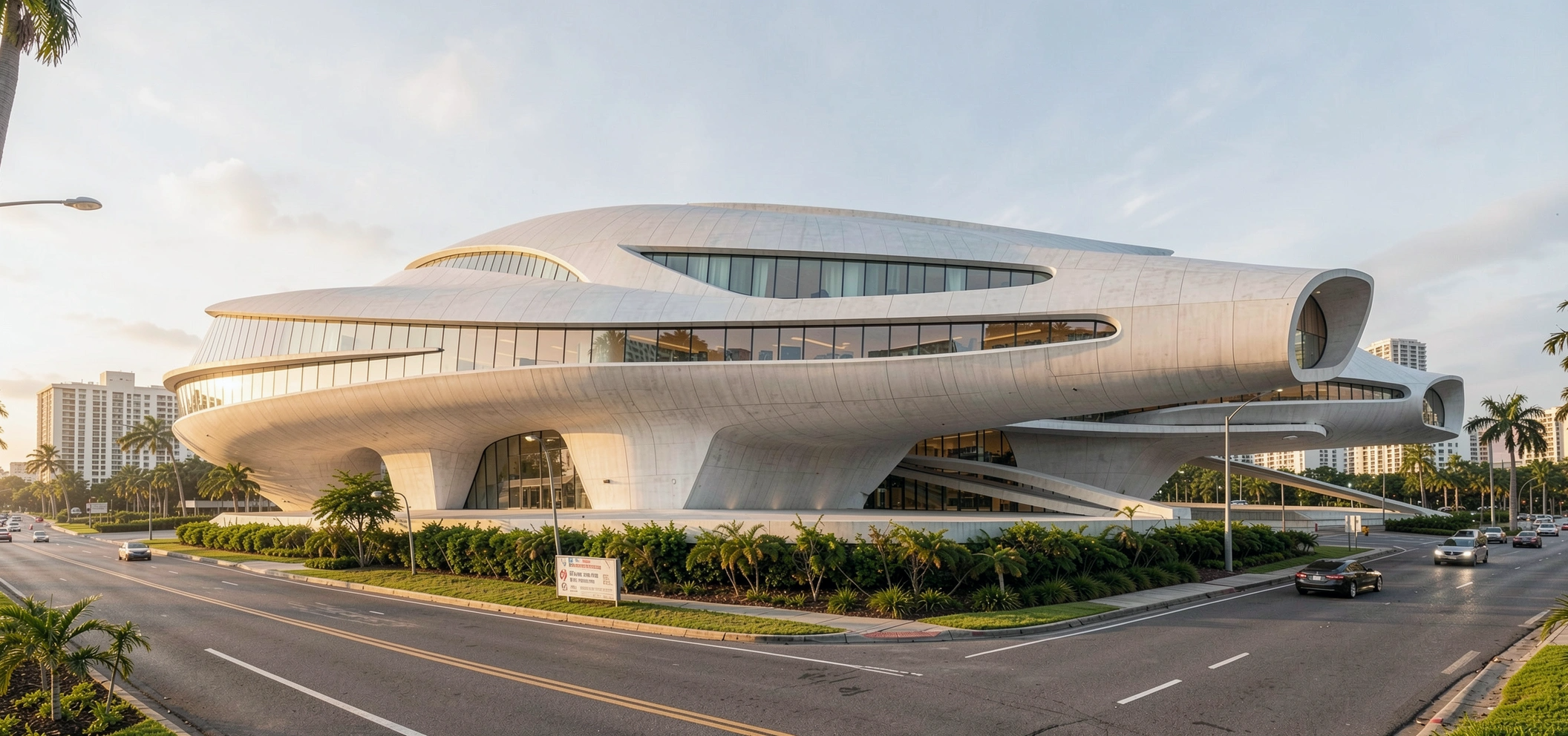
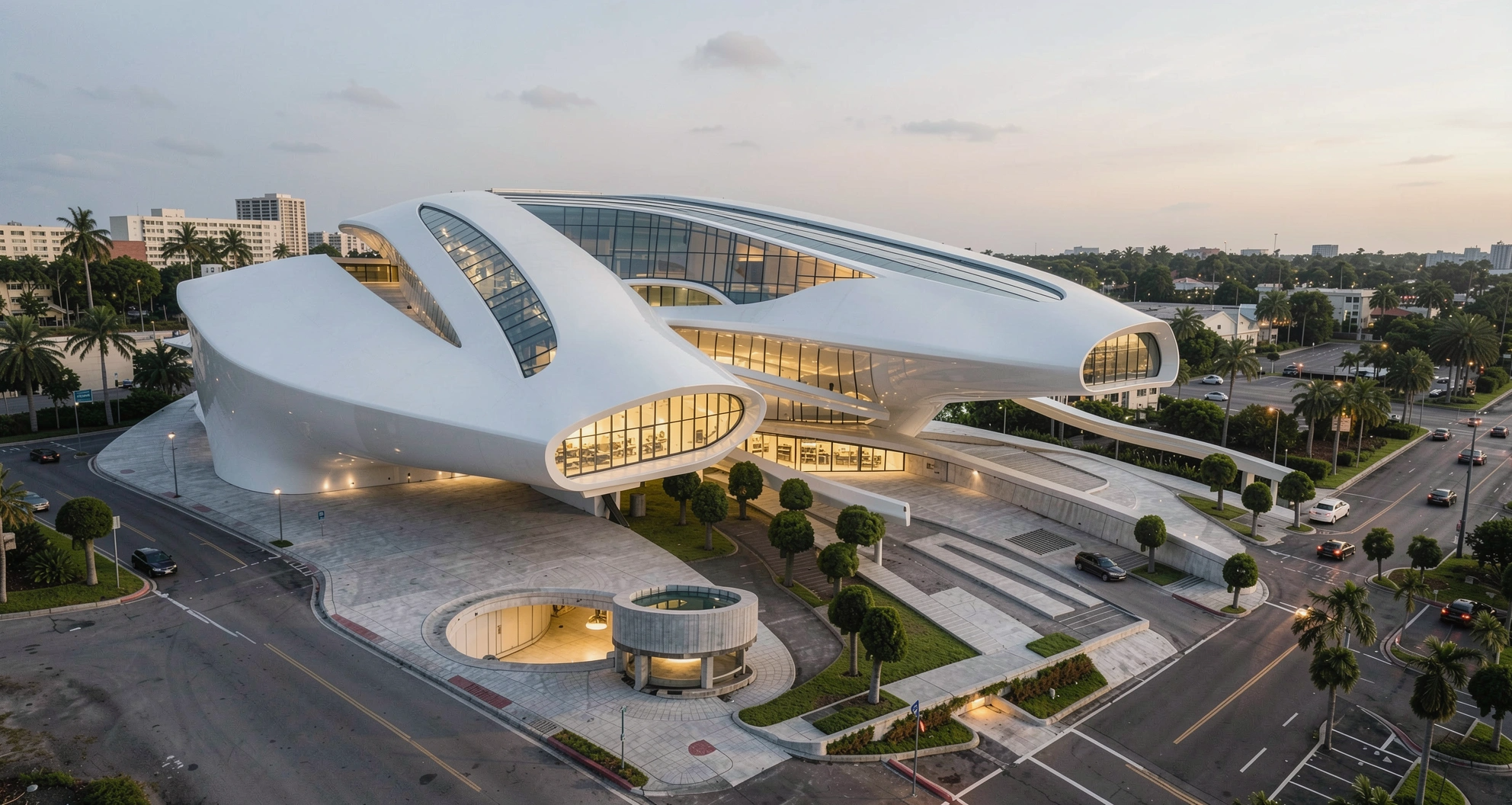
The Science Visitor Centre explores the relationship between architecture, landscape and scientific discovery on the edge of Miami. Conceived as a fluid, U-shaped building, its continuous metal-clad form establishes a distinctive presence within its waterfront setting. The architecture occupies and shapes the landscape, creating a sequence of public spaces through which visitors experience the relationship between building, water and the surrounding city.
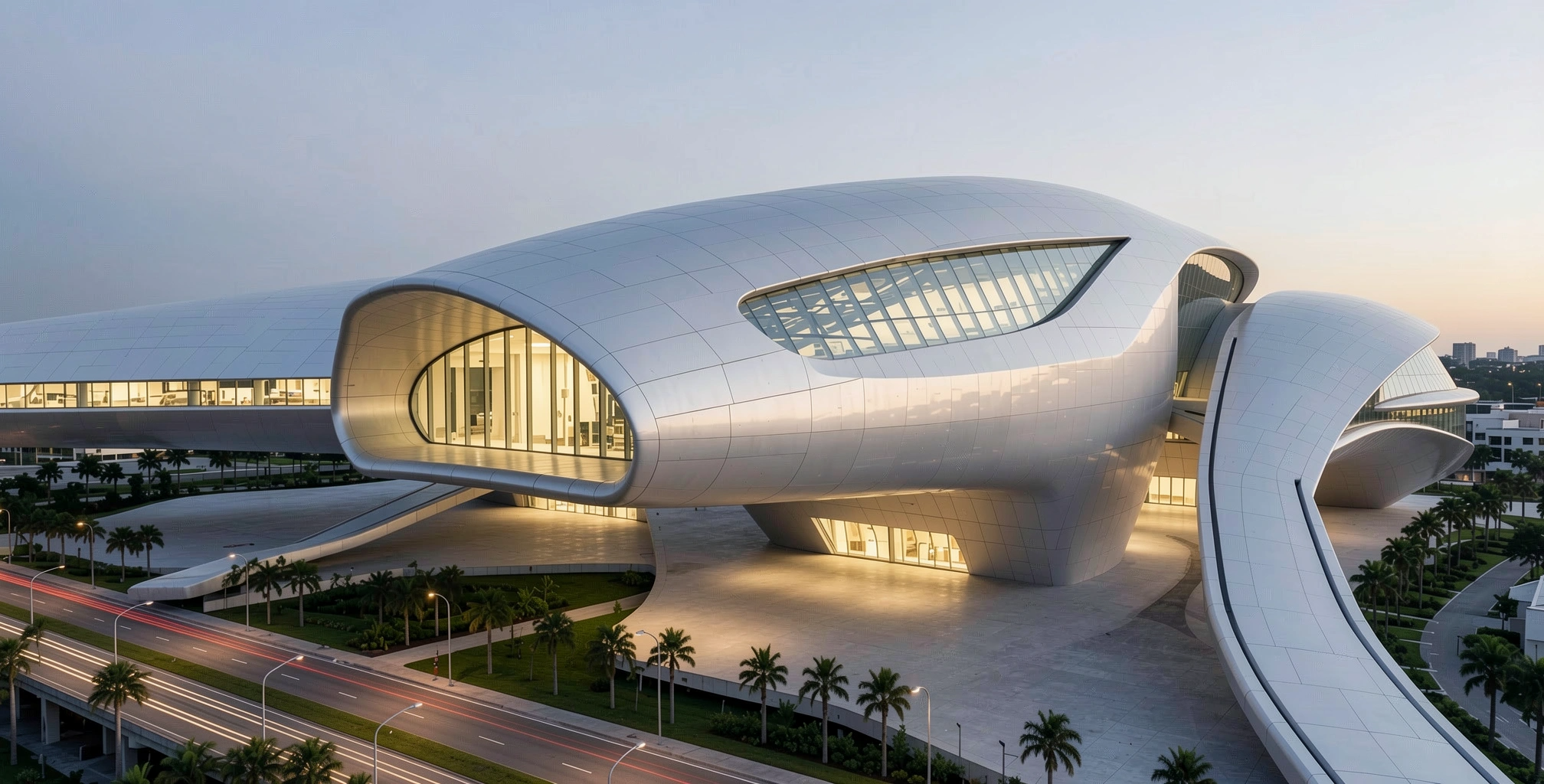
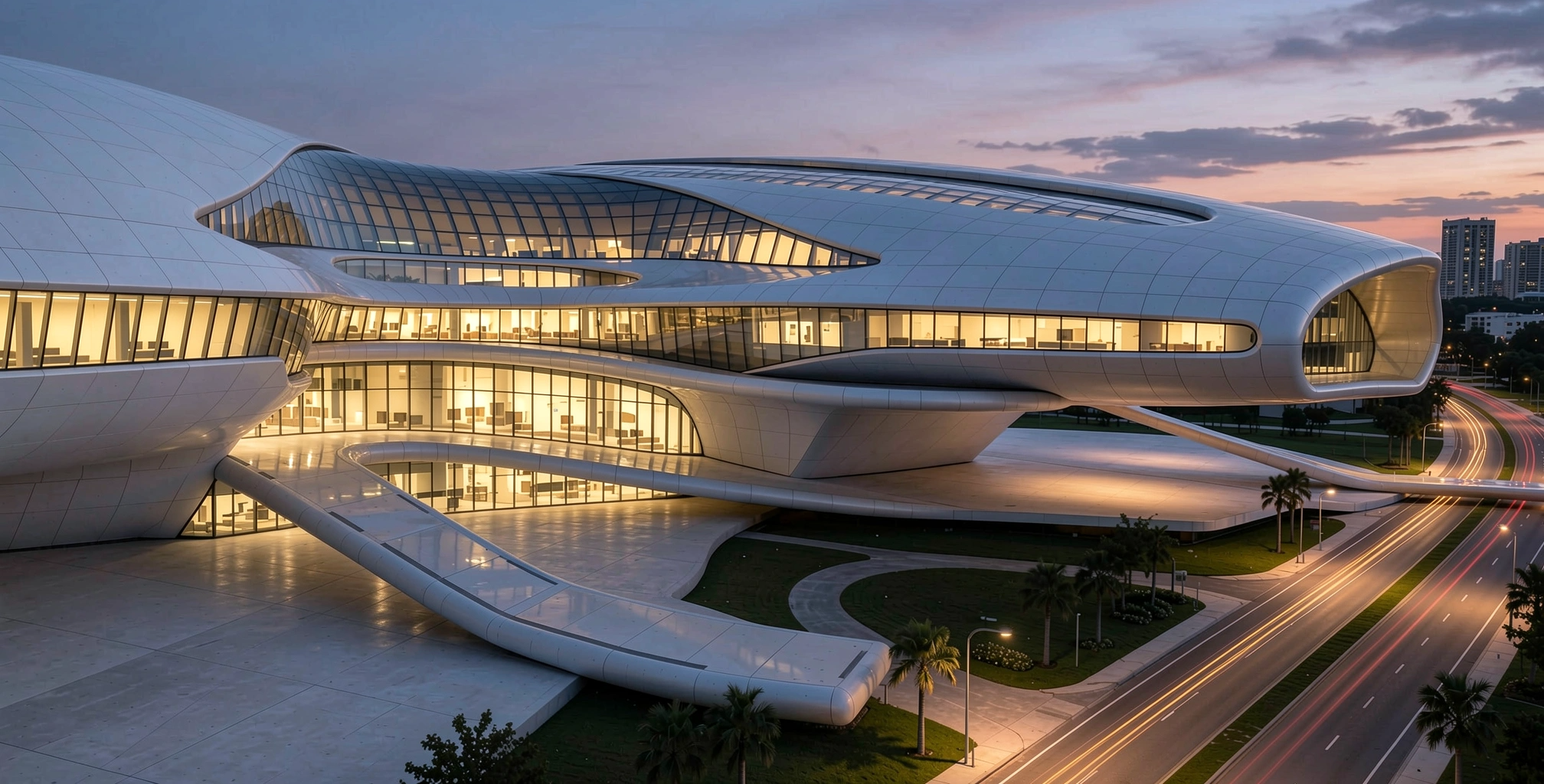
The building is recognised through its sweeping horizontal geometry. Curved surfaces extend across the site, bringing different parts of the programme into a unified architectural form. The metal enclosure gives the building a continuous character, while long bands of glazing reveal the occupied spaces within. Solid surfaces, openings and sheltered ground establish changing relationships as the building is approached from different directions.
The visitor experience develops through movement around and through the building. Arrival introduces its overall scale, while the internal organisation is revealed progressively. Curving elevations lead visitors towards entrances and sheltered public spaces, and the U-shaped arrangement establishes connections between different parts of the centre. Changing views, spatial transitions and the gradual disclosure of internal spaces encourage exploration.
At the heart of the project is a shared public realm around which exhibition spaces, learning environments, research facilities and visitor amenities are organised. The building’s geometry brings these activities into a recognisable whole while allowing individual spaces to respond to their particular requirements. Visual connections support orientation and encourage movement between scientific, educational and public activities.
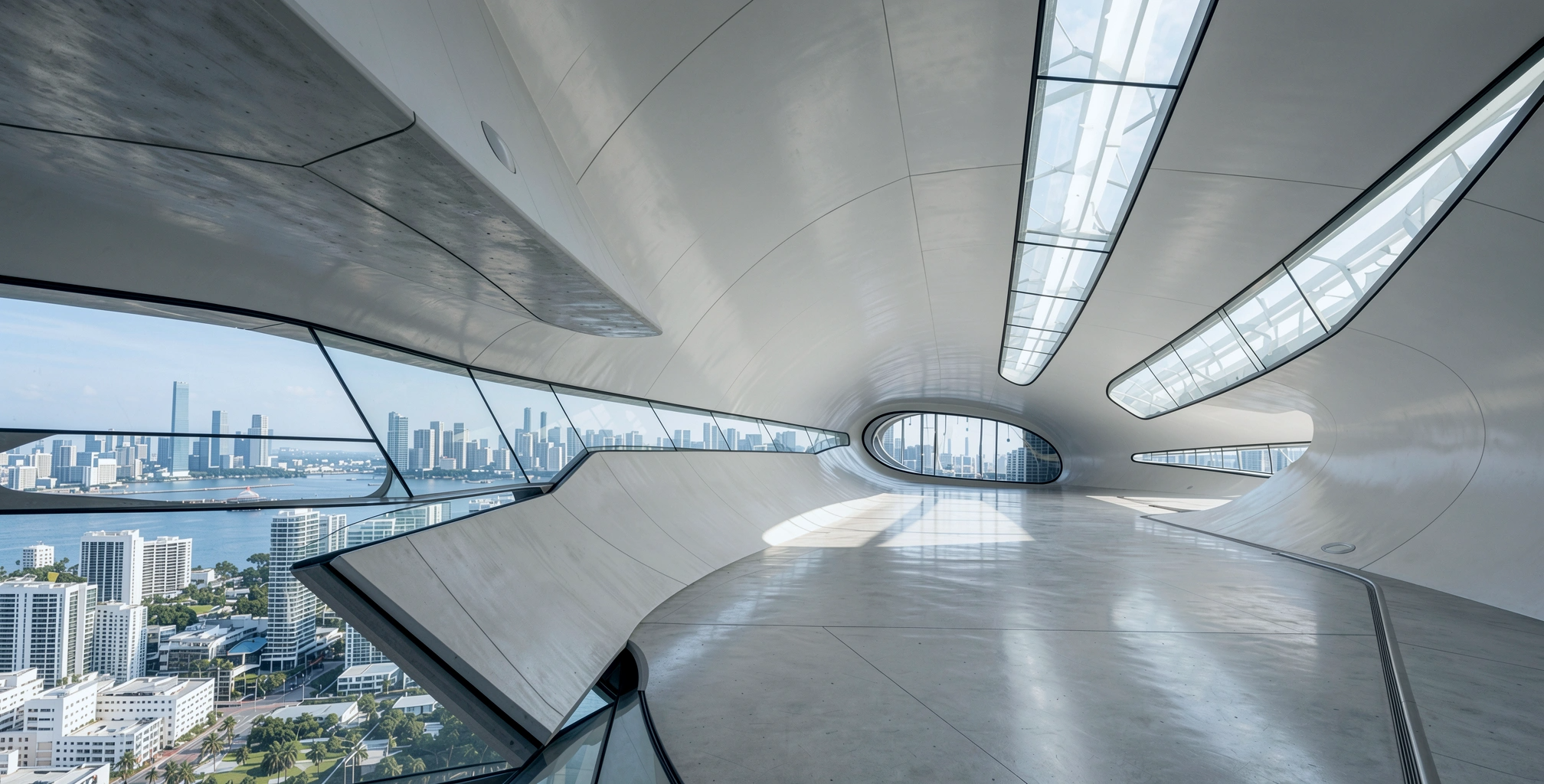
The waterfront contributes directly to the architectural experience. Open views across the water contrast with the enclosed and sheltered conditions of the building, while Miami’s expansive skies and changing light provide a setting for its continuous form. The relationship between ground, water and architecture extends the centre’s public character beyond its enclosed programme.
The metal-clad envelope is central to the architectural expression. Its curved surfaces establish continuity between volumes and levels, while glazing introduces a horizontal order that reveals the building’s scale and occupation. The apparent fluidity of the enclosure depends upon the coordinated development of geometry, component subdivision, support and environmental performance.
South Florida’s climate introduces further architectural considerations. Intense sunlight, heat, humidity and seasonal rainfall influence the relationship between enclosure, opening and occupied space. Projecting volumes and recessed glazing provide opportunities for shade, while sheltered external areas maintain connections between the building and its surroundings.
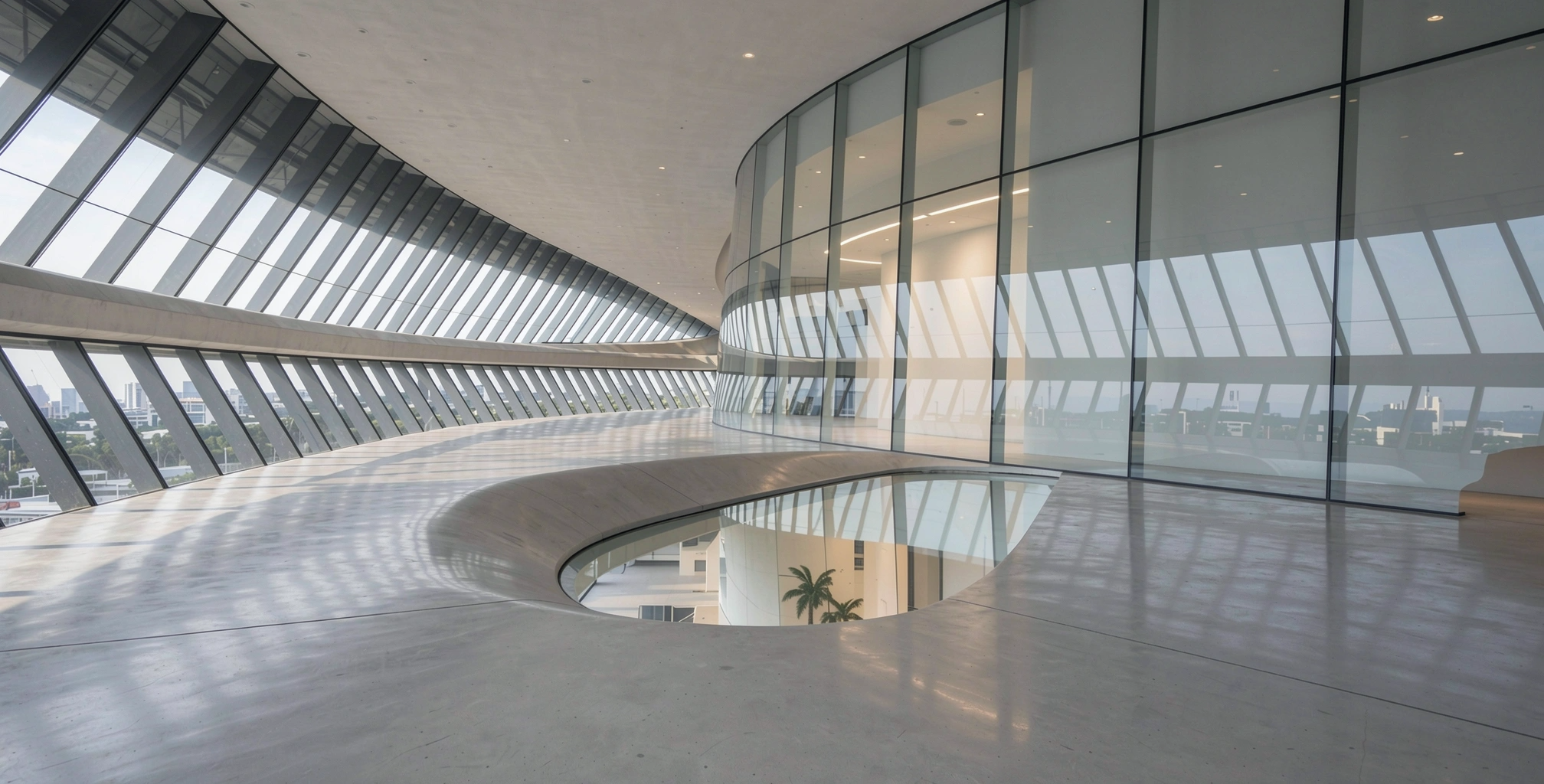
Natural light reinforces the experience of discovery. Continuous glazed openings connect circulation and exhibition spaces with the landscape, while projecting surfaces and recessed areas create variations in brightness and shade. Movement through the centre reveals changing relationships between interior space, building geometry and the environment beyond.
Structure, environmental performance and spatial organisation are developed as interconnected considerations. The fluid form requires the primary structural framework, enclosure, glazing and occupied spaces to be understood together. Its architectural continuity depends upon the careful definition of components, supporting relationships and interfaces between building systems.
The Science Visitor Centre establishes a distinctive public identity through form, movement and landscape. Its continuous architecture provides a coherent framework for scientific exploration, revealing spatial complexity through changing relationships between water, light, enclosure and occupation. Discovery becomes an experience of moving through architecture rather than simply arriving at a destination.