
Wangjing SOHO, China
Further information and case study for this project can be found at the De Gruyter Birkhäuser Modern Construction Online database
The following text is not available at Modern Construction Online
Coherence Through Variation
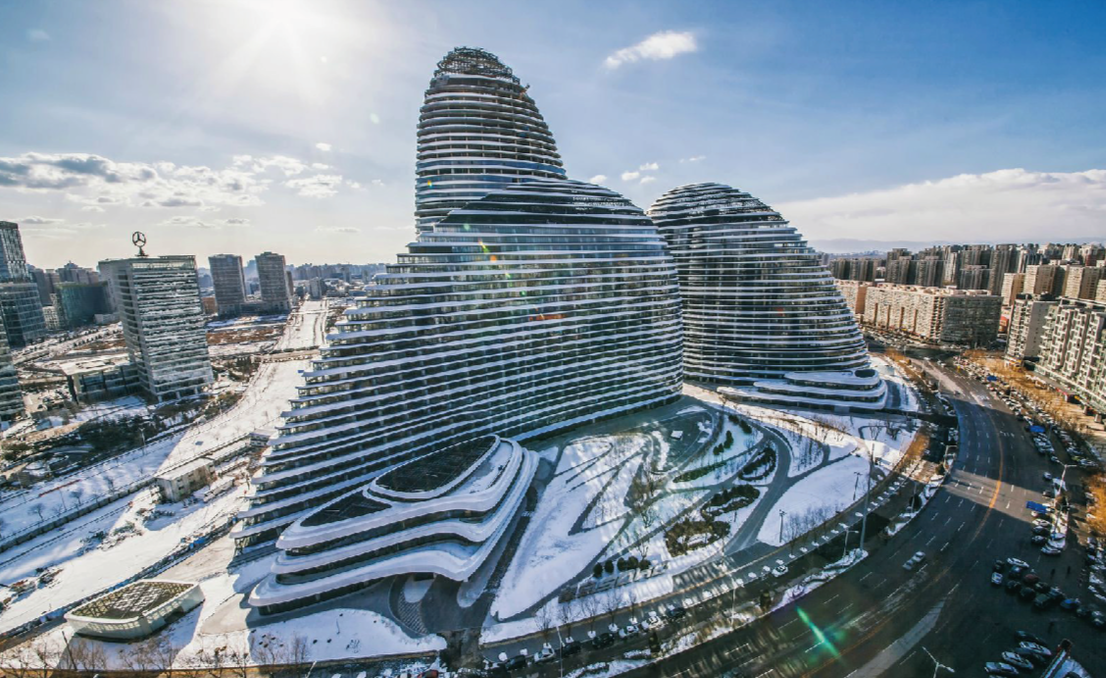
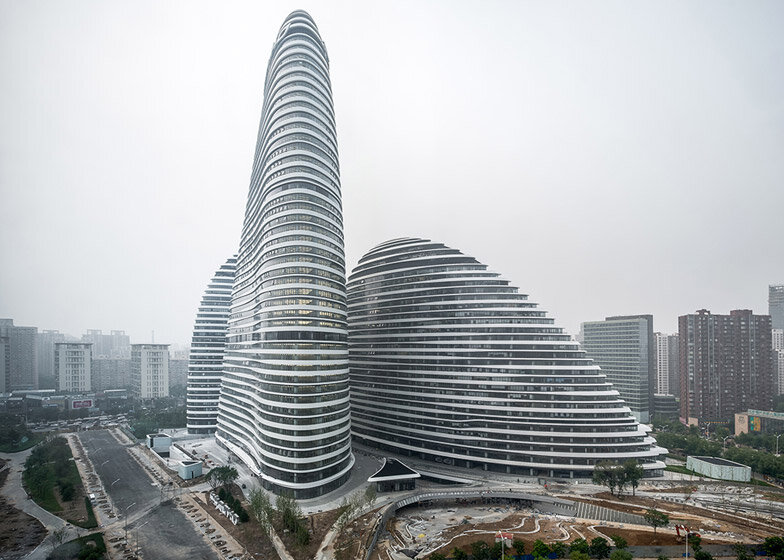
Wangjing SOHO occupies a prominent position within Beijing's rapidly expanding commercial district. Designed by Zaha Hadid Architects, the development comprises three interconnected towers rising from a shared podium and public realm. Together they form a distinctive urban ensemble that has become one of the defining landmarks of contemporary Beijing.
Newtecnic provided façade engineering for the project, developing envelope systems capable of translating the architectural vision into a practical and buildable construction solution.
The significance of Wangjing SOHO lies not only in the design of the individual towers but in the relationships established between them. Rather than creating a single monumental building, the project explores how multiple buildings can operate together as a unified architectural composition.
In doing so, it addresses an important architectural question: how can coherence be achieved across complexity?
The answer offered by Wangjing SOHO is that coherence emerges not through repetition of identical forms but through the coordination of shared principles.
Beyond the Isolated Building
Much architectural design focuses upon individual buildings.
The building is often treated as a self-contained object with its own identity, programme and formal language. Large urban developments introduce a different challenge. Multiple buildings must coexist while maintaining both individuality and collective order.
This challenge becomes increasingly important as cities grow in scale and complexity.
Wangjing SOHO responds by treating the three towers as members of a family rather than as independent objects. Each building possesses its own proportions, height and programme. Yet all participate within a common architectural language.
The project therefore shifts attention from the design of objects to the design of relationships.
Architecture becomes an exercise in coordination rather than composition alone.
The Family of Forms
The three towers are clearly related, yet none is identical to the others.
Each building responds to its own position within the site, its own orientation and its own functional requirements. Differences in height, scale and geometry allow each tower to establish its own character.
At the same time, common formal principles create a sense of belonging.
The towers share similar surface treatments, geometric logic and organisational strategies. Their forms appear to have evolved from the same set of generative rules.
This relationship is significant.
Architectural coherence does not require uniformity.
Indeed, excessive repetition can often weaken urban environments by reducing diversity and diminishing legibility. Wangjing SOHO demonstrates that variation can strengthen coherence when it occurs within an organised framework.
The project therefore offers a model for managing complexity through shared relationships rather than identical solutions.
Architecture as System
Underlying the visual coherence of the development is a systemic approach to design.
The towers were not developed independently and then assembled into a masterplan. Instead, common organisational principles informed the development of all three buildings from the outset.
This distinction is important.
When architecture is understood as a system, decisions made at one scale influence decisions at another. Geometry, structure, façade design, environmental performance and construction methodology become interconnected rather than isolated concerns.
The façade plays a central role within this process because it provides the most visible expression of these relationships.
Its purpose extends beyond enclosure.
It becomes the medium through which coherence is communicated across the development.
The Façade as Unifying Element
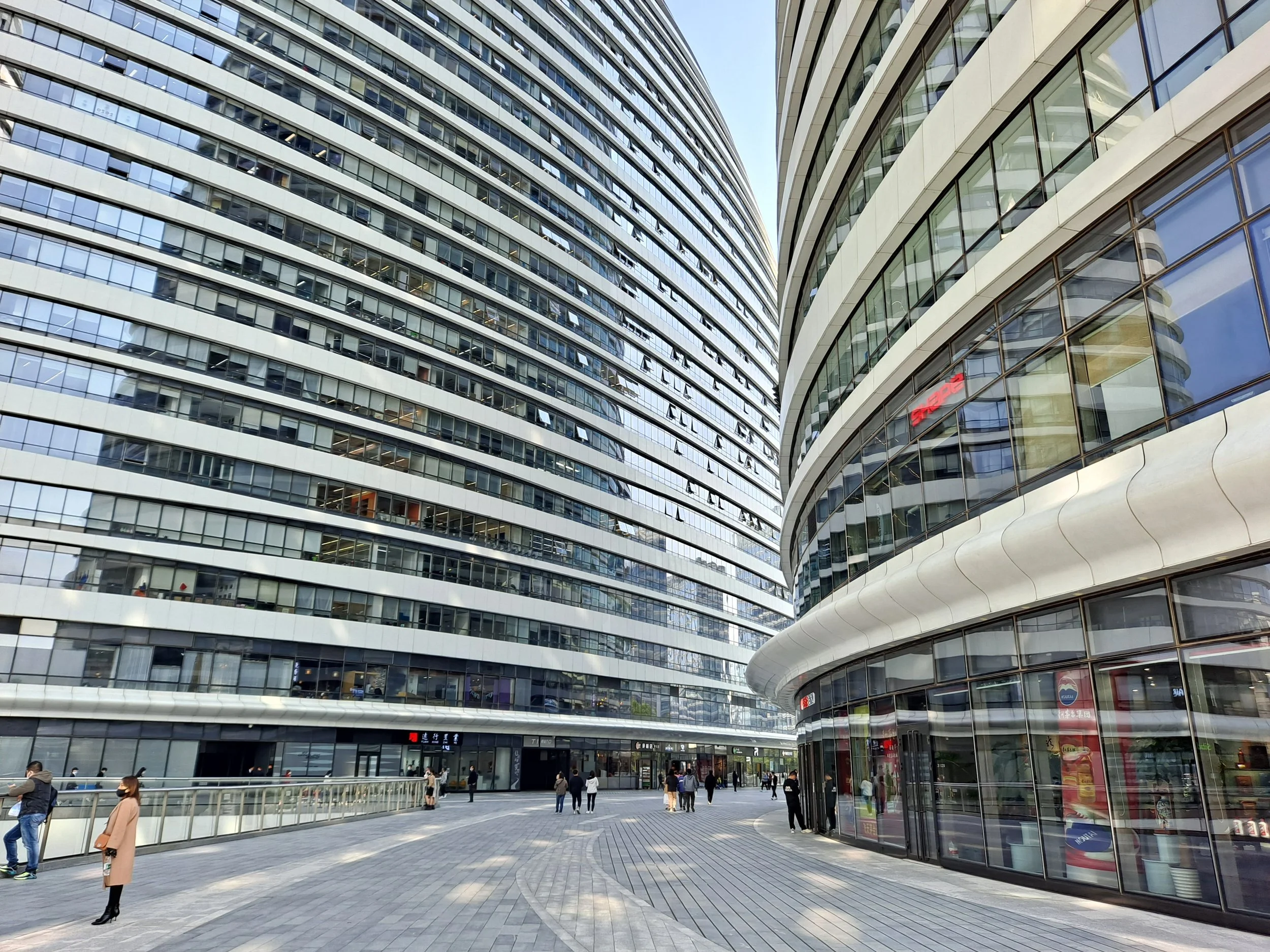
The envelope establishes a common architectural language across all three towers.
Glazing, metal cladding and supporting systems are organised through a consistent set of principles that operate throughout the project. Although individual conditions vary, the underlying logic remains recognisable.
This consistency allows the towers to be read collectively rather than separately.
The façade therefore acts as a connective tissue between buildings.
Rather than emphasising difference, it reveals underlying continuity.
This approach illustrates an important lesson for students. Architectural identity is often established less through individual components than through the relationships between components.
Coherence emerges from organisational consistency rather than visual repetition.
Rationalising Complex Geometry
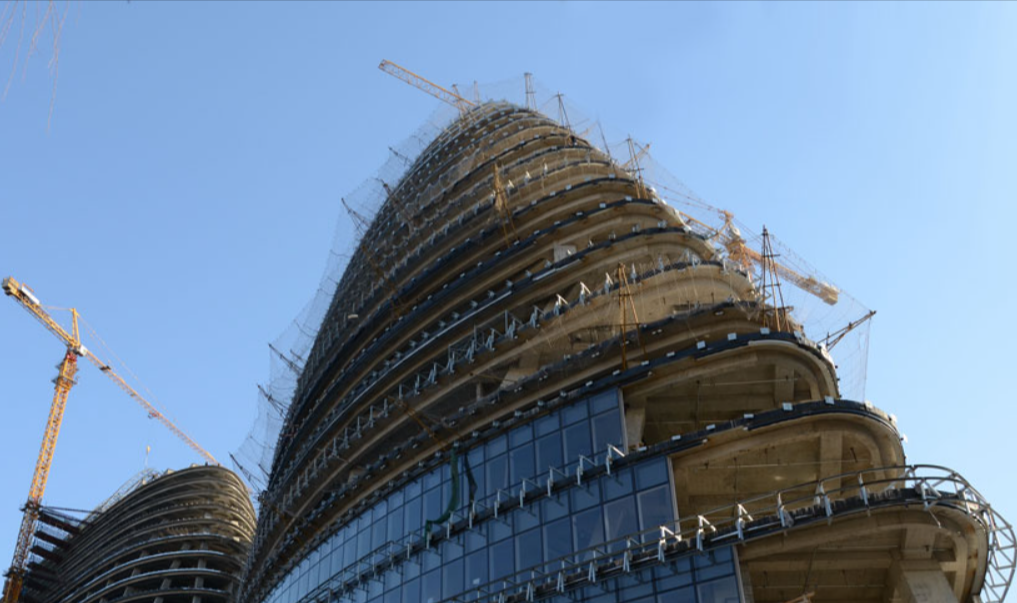
The architectural forms of Wangjing SOHO appear fluid and continuous. Such geometries present significant challenges for fabrication and construction.
Without careful rationalisation, complex forms can lead to excessive variation, increased costs and construction difficulties.
The project addressed these challenges through the development of carefully organised panel systems capable of translating complex geometry into repeatable and manufacturable components.
This process is central to contemporary façade engineering.
Architectural geometry must ultimately become fabrication information. Curves become panels. Surfaces become support systems. Formal intentions become construction assemblies.
The success of the project depended upon maintaining the visual continuity of the architecture while introducing the discipline required for manufacture and installation.
The result demonstrates how expressive geometry can be reconciled with practical construction requirements.
Digital Coordination Across Multiple Buildings
The scale of the development required a level of coordination extending beyond that of a single building.
Geometry, structure, environmental performance and fabrication had to be considered simultaneously across all three towers. Decisions affecting one building frequently influenced the others.
Digital modelling provided the framework through which these relationships could be managed.
Importantly, the digital model functioned as more than a geometric representation.
It became a coordination platform linking architectural design, structural engineering, fabrication and construction planning.
This reflects a broader transformation within architectural practice.
Digital tools increasingly operate as instruments of integration rather than simply instruments of representation.
Their value lies in enabling different systems to be understood collectively.
Repetition, Variation and Economy
One of the most significant achievements of Wangjing SOHO lies in its balance between variation and repetition.
The development required sufficient variation to establish distinct identities for each tower. At the same time, construction efficiency depended upon a degree of standardisation.
The façade strategy resolved this tension by organising variation within repeatable systems.
Component families, support strategies and fabrication methods were developed to accommodate differences while maintaining consistency where possible.
This approach demonstrates a recurring principle of contemporary construction.
Efficiency rarely depends upon eliminating variation entirely. Instead, it depends upon controlling variation intelligently.
The objective is not uniformity but organised diversity.
Movement and Adaptation
Large commercial towers are subject to movement arising from wind loading, thermal expansion and structural behaviour.
The façade systems therefore had to accommodate these conditions while preserving visual continuity across the development.
Adjustable support systems and coordinated connection strategies allowed movement to occur without compromising performance or appearance.
These elements are rarely visible yet play a critical role in the long-term success of the project.
Their presence illustrates a broader lesson.
Architecture depends not only upon the creation of form but also upon the management of change. Buildings must adapt to environmental and structural conditions throughout their lifespan.
Successful façades acknowledge this reality rather than resisting it.
Urban Identity Through Coordination
The collective presence of the three towers contributes significantly to the identity of the surrounding district.
Importantly, this identity is achieved without relying upon a singular iconic object.
Instead, the development establishes a coherent urban figure through the interaction of multiple elements.
This approach reflects a more sophisticated understanding of urban architecture.
Cities are rarely defined by individual buildings alone. They are shaped by relationships between buildings, spaces, infrastructures and landscapes.
Wangjing SOHO demonstrates how coordinated architectural systems can contribute to urban identity at a scale larger than the individual structure.
The project therefore operates simultaneously as architecture and urbanism.
The Evolution of Integrated Design
The project represents a mature stage in the development of integrated design methodologies.
Earlier projects often focused on resolving individual technical challenges. Wangjing SOHO demonstrates how coordination can operate across entire building families and urban districts.
Geometry, fabrication, environmental performance and construction methodology are not treated as separate disciplines. They become interconnected parts of a larger organisational framework.
The façade serves as the visible expression of this integration.
Its smooth and continuous surfaces conceal a highly coordinated system of relationships linking design intent with construction reality.
Project Significance
Wangjing SOHO demonstrates how architectural coherence can be achieved across a large and complex development through the integration of design, engineering and construction.
The project illustrates Newtecnic's approach to façade engineering, where geometry, performance and buildability are developed together to create architecture that is both expressive and practical.
More broadly, it demonstrates that coherence does not depend upon sameness. Through the careful coordination of shared principles, multiple buildings can operate as a unified architectural composition while retaining their individual identities.
The project therefore offers an important lesson for contemporary practice. As developments increase in scale and complexity, architectural quality depends increasingly upon the design of relationships. Wangjing SOHO shows how those relationships can be organised through a coordinated façade strategy that contributes simultaneously to identity, environmental performance and urban presence.
In doing so, it establishes a model for architecture understood not as isolated objects, but as interconnected systems operating across multiple scales.